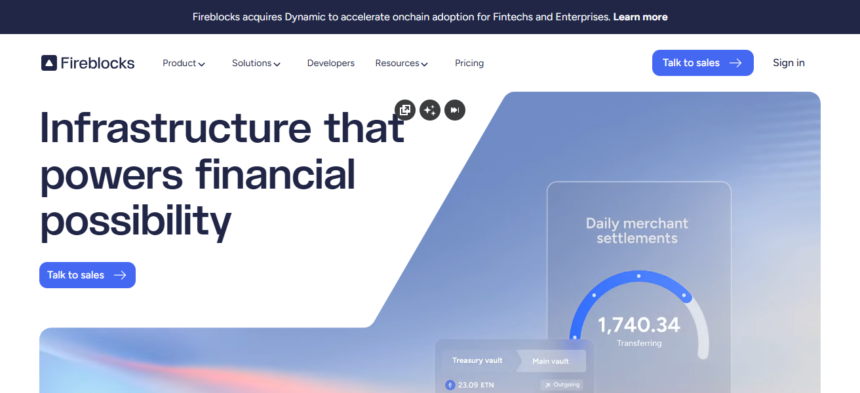
This article will explore the top alternatives to Fireblocks B2B Pay that offer businesses secure, efficient, and scalable solutions to process and manage crypto payments.
With the rise of enterprise payments in digital assets, B2B crypto payments solutions have become more attractive.
Many of these solutions offer automation, compliance, and security features that Fireblocks holds, making them efficient and secure alternatives.
Key Points & 10 Best Fireblocks B2B Pay Alternatives
| Alternative | Key Point |
|---|---|
| BitGo | Institutional-grade custody and liquidity solutions |
| Zengo Wallet | User-friendly wallet with MPC security |
| Dfns | API-first custody with advanced security |
| Coinbase Custody | Trusted brand with regulated custody services |
| Coinbase Wallet | Retail and enterprise crypto wallet integration |
| Chainalysis KYT | Compliance-focused transaction monitoring |
| Ripple | Cross-border payments and liquidity network |
| Ethereum | Smart contract platform for decentralized finance |
| Stellar | Fast, low-cost cross-border payment rails |
| Blockstream | Bitcoin-focused financial infrastructure |
10 Best Fireblocks B2B Pay Alternatives
1. BitGo
It’s strong multi-signature wallet infrastructure and institutional-grade security allow BitGo to stand out as one of the primary alternatives to Fireblocks B2B Pay.
BitGo’s combination of cold hot and hot wallet management to key custodian features is a rarity among peer wallet providers and offers optimal wallet protection.
Businesses obtain a quick and reliable means to automated payment and settlement and compliance using BitGo’s seamless API.
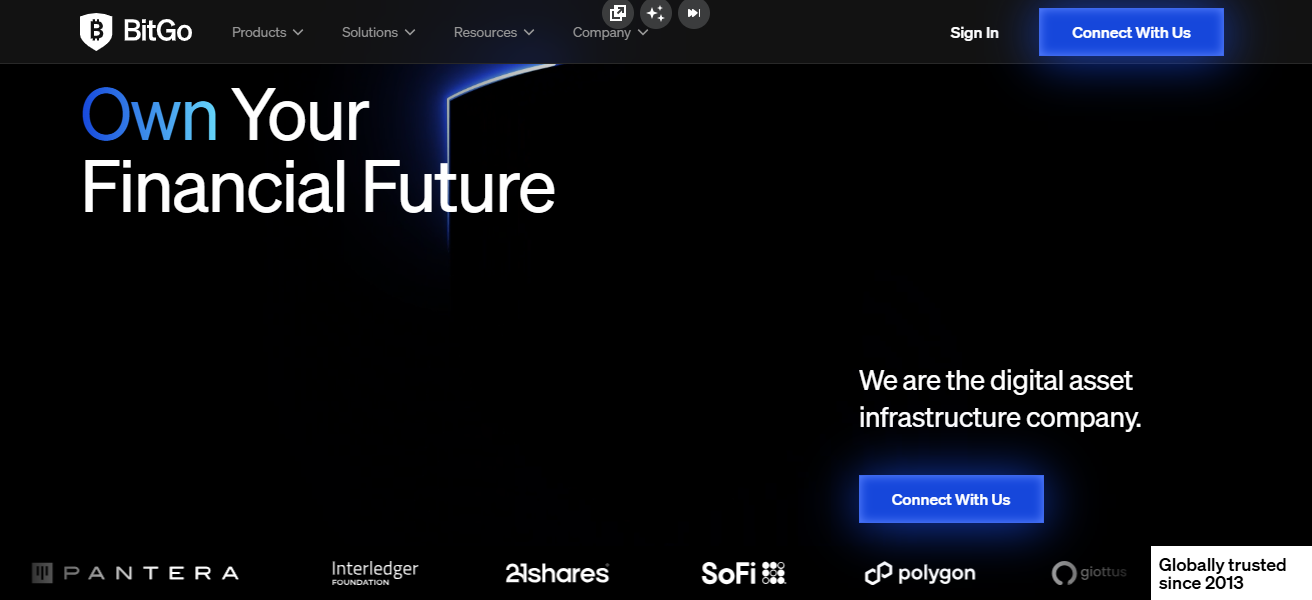
Real-time monitoring of transactions, insurance, and regulatory assistance make BitGo a trusted partner for enterprises managing real-time, high-value crypto transactions.
Operational strength, security, and flexibility balance evenly to make the platform one of the best choices for B2B crypto payments.
| Feature | Description |
|---|---|
| Multi-Signature Wallets | Ensures high security by requiring multiple approvals for transactions. |
| Cold & Hot Wallet Management | Combines secure offline storage with active wallets for business operations. |
| API Integration | Automates payments, settlements, and portfolio management. |
| Insurance Coverage | Provides protection against theft or loss of digital assets. |
| Compliance Support | KYC/AML-ready and supports enterprise regulatory requirements. |
| Multi-Currency Support | Handles major cryptocurrencies for enterprise payments. |
Pros And Cons BitGo
Pros:
- Top Tier Security: Multi signature wallets and cold storage protect valuable assets from potential hacks.
- Easy to Integration: Fully automating payments and settlements for enterprises is easy.
- Insured Digital Assets: Digital assets stored with the company will be insured from loss and theft.
- Assured Compliance: With KYC and AML Compliance, it is assured to be useful for enterprises.
Cons:
- Difficult Configuration: Implementation of some advanced functionalities might be a little challenging.
- Costlier Option: Premium pricing comes with more security and insurance.
- Narrowed Blockchain Offering: They’re primarily focused on more established cryptocurrencies.
- Decentralized Custodianship: While it is secure, it will require some faith in a third party for the most of the asset management.
2. Zengo Wallet
The innovative keyless security model implemented at Zengo Wallet provides peace of mind compared to the risks posed by private key management systems at Fireblocks B2B Pay.
Zengo utilizes specialized multi-party computation (MPC) technology, whereby no single entity can claim possession of the entire private key, resulting in the utmost security in completing transactions.
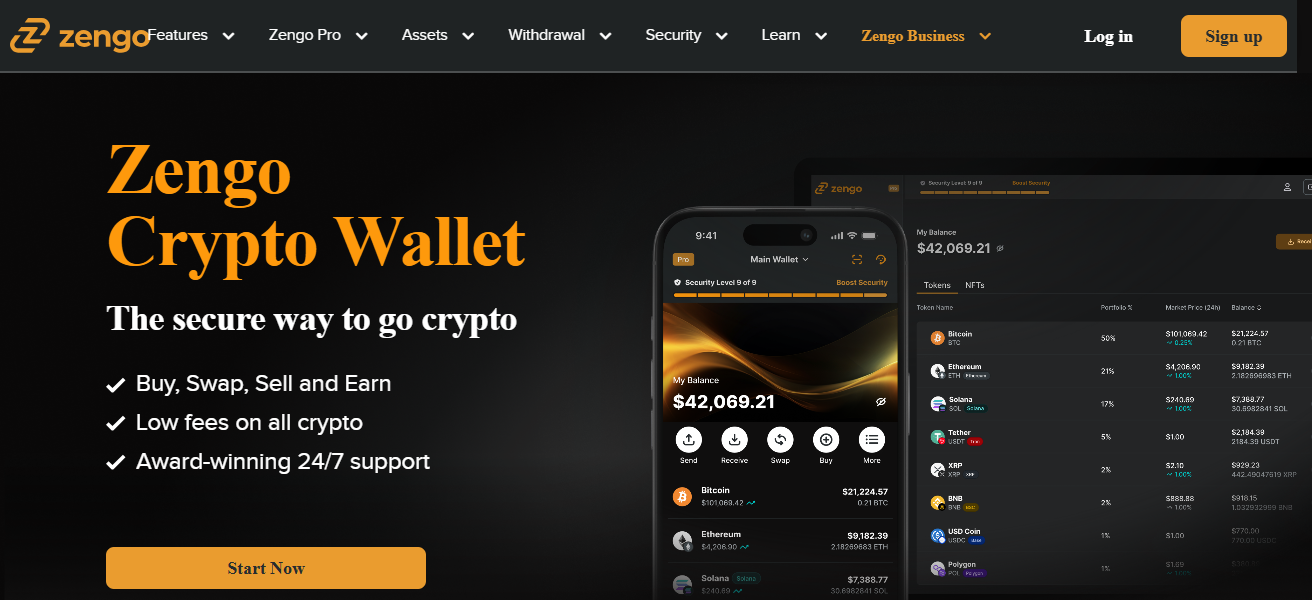
Zengo Wallet’s capabilities and features, combined with a simple interface and seamless API integration, allow businesses to automate crypto payments and efficiently manage several accounts.
Zengo Wallet provides security with convenience, offering enterprises a modern and reliable solution with real-time monitoring, biometric authentication, and compliance features. Zengo Wallet’s innovative and compliant offering stands out as the best option for B2B crypto payments.
| Feature | Description |
|---|---|
| Keyless Security (MPC) | Uses multi-party computation to ensure private keys are never fully exposed. |
| Biometric Authentication | Adds extra security using face or fingerprint recognition. |
| API Integration | Enables automated B2B payments and account management. |
| Cross-Platform Access | Available on mobile and web for flexible enterprise use. |
| User-Friendly Interface | Simplifies crypto operations for businesses without technical expertise. |
| Secure Recovery | Innovative key recovery system without compromising security. |
Pros And Cons Zengo Wallet
Pros:
- No Keys: Private keys will never be fully signed, thanks to MP C.
- No Learning Curve: Excellent user interface allows enterprises to utilize the platform without much training.
- APIs for Automated Transactions: Streamlined B2B payments with the automated transaction capability of the integrations.
- Biometric Security: Each transaction receives an additional security layer.
Cons:
- Narrowed Asset Offering: Digital assets and tokens supported may not include all that businesses utilize.
- Lack of Sufficient Infrastructure: Deeply dependent on specific MPC infrastructures and if they have downtime, that could negatively affect operational capabilities.
- Not Widely Recognized: This is a more nascent player in the space as compared to bigger, more established custodians.
- No Native Insurance: An additional layer of protection might be required from a third-party provider.
3. Dfns
Unlike Fireblocks B2B Pay, DFNS is a leader in the industry, as a result of its advanced cryptography and modular custody solutions, which enable companies to personalize security based on operational requirements.
DFNS employs a one-of-a-kind method that incorporates multi-party computation (MPC) and threshold cryptography, where full private keys are never exposed, minimizing the potential for hacks.
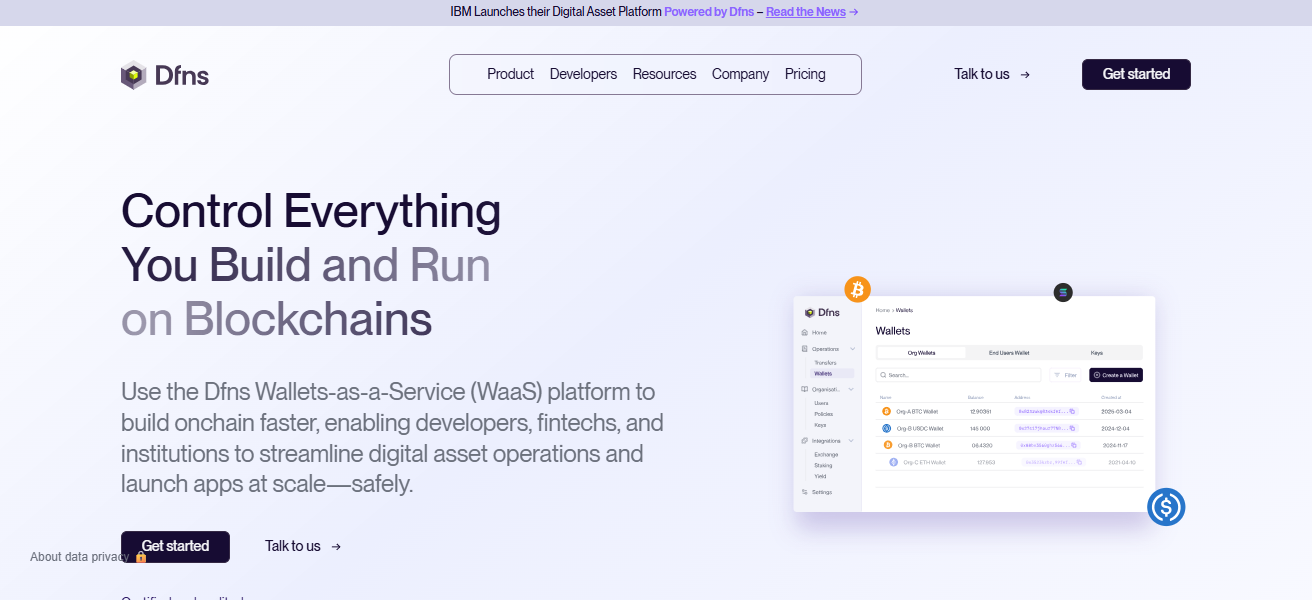
DFNS integrates easily with existing enterprise solutions to provide automated transactional payments, settlement, and compliance.
DFNS puts a premium on transparent and regulatory compliant solutions with cross-chain capabilities, making DFNS a premium supplier for enterprises in need of extensive B2B crypto transaction processing.
| Feature | Description |
|---|---|
| Modular Custody | Allows businesses to customize security according to their needs. |
| MPC & Threshold Signatures | Ensures private keys are never fully exposed, reducing hacks. |
| Cross-Chain Support | Supports multiple cryptocurrencies and tokenized assets. |
| Compliance Tools | Built-in audit and regulatory reporting features. |
| API Integration | Facilitates automated payments and liquidity management. |
| Enterprise Focus | Designed for high-value and large-scale crypto operations. |
Pros And Cons DFNS
Pros:
- Flexible Custody: Businesses can customize security configurations due to modularity.
- Layered Security: Their use of MPC and threshold signatures mitigates the risk of disclosing private keys.
- Cross-Chain: Supports the management of several different crypto assets.
- Proactive Compliance: Self-serve compliance and regulatory reporting is built in.
Cons:
- Resource Intensive: Customization of custody solutions can be time and resource intensive.
- Less Experienced: Compared to traditional custodians, they have a shorter presence in the market.
- Not Affordable: The features available are most beneficial to enterprises and thus come with a price tag.
- Modular Confusion: Additional training might be required to fully adopt the use of modular solutions.
4. Coinbase Custody
Because of institutional-level security and the reputation of the world’s most trusted crypto exchange, Coinbase Custody is the most significant competitor to Fireblocks B2B Pay.
Coinbase Custody offers fully insured, segregated cold storage, and offers peace of mind to clients, knowing that their digital assets are fully safeguarded against any potential theft or loss.
The platform offers strong compliance capabilities which includes regulatory reporting, proof-of-reserves, and is vital for enterprise activities.
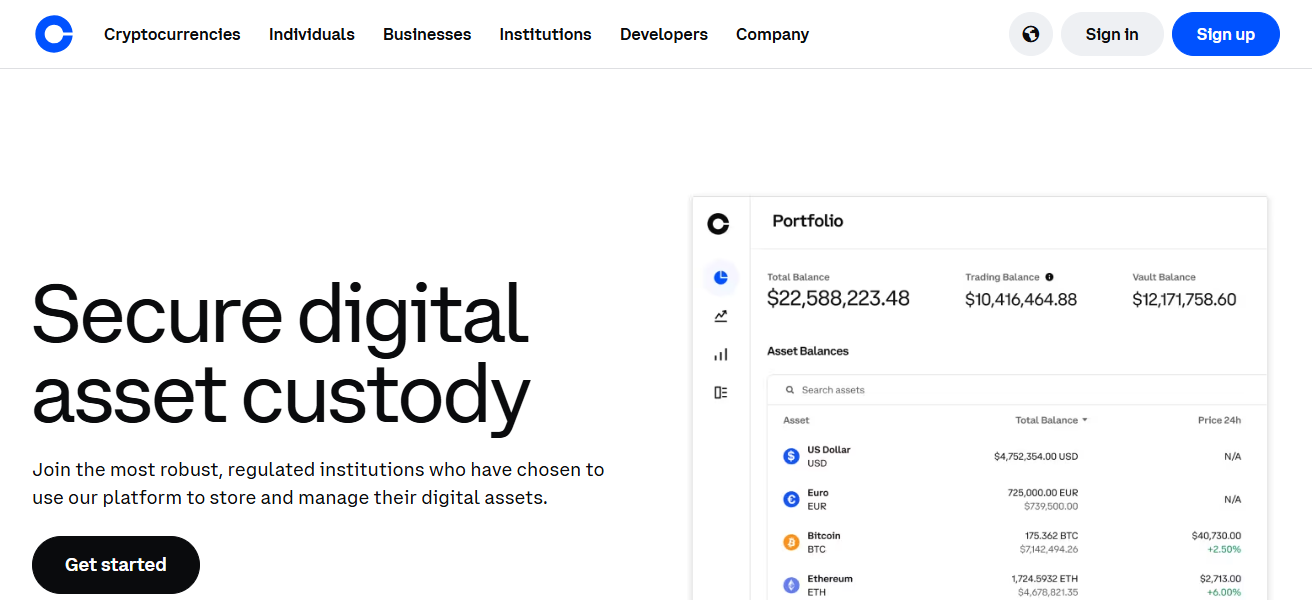
Clients can automate payments, handle substantial portfolios, and perform cross-chain transactions with ease due to instantaneous API connectivity.
Coinbase Custody is trusted and regulatory compliant, and due to their operational adaptability, is the premier selection for B2B cryptocurrency payments.
| Feature | Description |
|---|---|
| Institutional-Grade Security | Secure cold storage with multi-sig wallets. |
| Full Insurance | Digital assets are insured against theft or loss. |
| Regulatory Compliance | Proof-of-reserves, KYC/AML integration, and audit-ready. |
| API Access | Automates enterprise payment processes. |
| Multi-Asset Support | Handles a wide range of popular cryptocurrencies. |
| Enterprise Integration | Works with accounting, trading, and treasury systems. |
Pros And Cons Coinbase Custody
Pros:
- Decision Reliability: Worth the trust, they are a secure and dependable company.
- No Cost Liability: The assets in custody have insurance coverage for any theft or loss.
- Translational Transparency: Offers proof of reserves, complies with reporting requirements, and provides features to support regulatory compliance.
- Automated Processes: Facilitates automated B2B payments and other features for extensive portfolio management.
Cons:
- Trust Limitation: Coinbase has control of the assets, and customers must trust their custody of these assets.
- Significantly Expensive: There is a significant price to pay for additional security and insurance coverage.
- Limited Blockchain Support: This service only supports a few leading cryptocurrencies.
- Slower Innovation: New features may be released at a slower pace than newer services.
5. Coinbase Wallet
Coinbase Wallet is highly compatible with Fireblocks B2B Pay due to its self-custody integration and self-custody and custodial enterprise-grade security features, ensuring safekeeping of business’ digital assets.
Conjoined with Coinbase’s ecosystem, transfers, payments, and access to automated payable and receivable DeFi and cross-chain transactions are instant.
Coinbase Wallet is especially geared to B2B high security and high complexity operations, because of the bank-grade B2B encryption, biometric signature, and enterprise-key protection.
Moreover, its simplistic flows and advanced scripting tools are easily taught to enterprises to configure tailored payments, and therefore remains a trusted and primary choice of crypto firms.
| Feature | Description |
|---|---|
| Self-Custody | Users retain complete control of private keys. |
| Cross-Platform Support | Mobile and web access for enterprise flexibility. |
| DeFi & Token Access | Supports DeFi, NFTs, and tokenized assets for business workflows. |
| Biometric Security | Face ID or fingerprint authentication for secure access. |
| API Integration | Enables automated B2B payment management. |
| Coinbase Ecosystem Integration | Works seamlessly with Coinbase exchange services. |
Pros And Cons Coinbase Wallet
Pros:
- Self-Custody Control: Businesses have complete control of their private keys.
- Integration: Has strong integration with all other Coinbase products.
- DeFi Access: Supports cross-chain transfers and programmable payments.
- Strong Security: Your assets are protected through encryption and biometric authentication.
Cons:
- Responsibility on Users: Poorly executed security measures may lead to loss of funds.
- Limited Enterprise Features: Other services are a better fit for large corporates than this one.
- No Insurance: Users’ funds are not insured due to self custody.
- Complex for Large Teams: For many employees, managing keys may become a cumbersome process.
6. Chainalysis KYT
When it comes to focusing on real-time transaction spending as well as risk management for crypto payment processing, there is no other option that comes close to Chainlaysis’s KYT offering.
Chainlayis KYT is not like other custodial offerings since they emphasize compliance and regulatory standards by identifying and halting regulatory non-compliant transactions in real-time.
Chainlayis’s powerful analytics KYT engine offers actionable, real-time insights and empowers transaction-funding companies and enterprises to successfully combat fraud, crypto money laundering, and close opaque audit loops.
Chainlayis’s KYT offering is an industry leader and supports enterprises in fully automating compliant B2B crypto transactions.
| Feature | Description |
|---|---|
| Real-Time Transaction Monitoring | Flags suspicious transactions instantly. |
| AML/KYC Compliance | Ensures enterprise transactions meet regulatory standards. |
| Cross-Chain Support | Monitors multiple cryptocurrencies and token types. |
| API Integration | Automates alerts, reporting, and compliance workflows. |
| Risk Scoring | Assigns risk levels to counterparties and transactions. |
| Audit Trail | Provides transparent, traceable transaction history. |
Pros And Cons Chainalysis KYT
Pros:
- Real-Time Monitoring: Automatically complies with the requirement to monitor suspicious transactions.
- Regulatory Compliance: Can help adhere to many compliance requirements including AML/KYC by preventing fraud.
- Cross-Chain Support: Supports the monitoring of a variety of cryptocurrencies, tokens and chains.
- Automation: Allows for automated risk management through the use of an API.
Cons:
- Not a Custody Solution: They do not offer any asset storage services.
- Subscription Cost: This service may not be feasible for very small businesses.
- Limited Payment Automation: This is primarily a compliance tool and not a payments solution.
- Learning Curve: Staffing may be a challenge due to the requirement of significant compliance and blockchain analytics knowledge.
7. Ripple
Ripple stands out as a competitor to Fireblocks B2B Pay mainly due to its ability to achieve low-cost and real-time international transactions that are reliable since its blockchain technology.
other cryptocurrency custody solutions, Ripple can settle across several currencies and decrease transaction and liquidity costs.
On-Demand Liquidity (ODL) lets companies transfer currency without the need to prefund accounts thereby enhancing the cash flow and efficiencies in the operations.
Ripple is highly adaptable and is able to rapidly comply with the existing regulations, automating payment and transaction reconciliation for the enterprise as a seamless system. All these factors are what make Ripple a fast and effective choice, especially in the B2B space.
| Feature | Description |
|---|---|
| Fast Cross-Border Payments | Settles transactions in seconds instead of days. |
| Low Transaction Fees | Reduces costs for international B2B transfers. |
| On-Demand Liquidity (ODL) | Moves funds without pre-funding accounts. |
| API Integration | Automates enterprise payment workflows. |
| Multi-Currency Support | Transfers fiat and digital currencies across borders. |
| Regulatory Compliance | Provides transparency and reporting tools for businesses. |
Pros And Cons Ripple
Pros:
- Fast Settlements: Instant cross-border payments are extremely time-efficient.
- Low Transaction Costs: Transfers are completed with significant cost reductions.
- On-Demand Liquidity: For payments, it’s not necessary to have accounts pre-funded.
- Enterprise Integration: B2B payments automation are seamless.
Cons:
- Centralized Network: More governance centralization compared to blockchain alternatives.
- Regulatory Scrutiny: Some countries’ legal challenges may affect adoption.
- Limited Asset Types: Ripple focuses only on XRP and a few leading currencies.
- Dependence on Network Adoption: RippleNet participants are required to achieve speed and liquidity
8. Ethereum
Ethereum is one of the most appealing programmable blockchains. Through the use of smart contracts, businesses can automate and optimize payment processes.
Unlike other custodial solutions, Ethereum provides enterprises with the ability to set up trustless, programmable payment systems.

This reduces the need of operational intermediaries and workflows delays. Its ecosystem is diverse. It allows for cross-chain transactions and integrates with DeFi.
It is used for numerous tokenized assets and B2B cross-border transactions. Given the intricacies of the network, the numerous payment transactions to be processed, and the need to maintain compliance, Ethereum is a great mix of automation, decentralization, and flexibility.
| Feature | Description |
|---|---|
| Smart Contracts | Automates payments and business logic securely. |
| DeFi & Token Ecosystem | Supports tokenized assets, stablecoins, and DeFi workflows. |
| Decentralized Security | Reduces reliance on third-party custodians. |
| Cross-Chain Integrations | Bridges and interoperability with other blockchain networks. |
| Enterprise Developer Tools | APIs and SDKs for custom B2B solutions. |
| Transparency & Auditability | All transactions are publicly verifiable. |
Pros And Cons Ethereum
Pros
- Smart Contracts : B2B payments workflow is automated and secured in a trustless manner.
- DeFi Integration : Allows cross-chain transactions with tokenized assets.
- Decentralized Security : Less reliance on a third-party custodian.
- Large Ecosystem : Great community of developers and enterprises backing them.
Cons :
- High Gas Fees : Costs of transactions are high and even more so during congestion.
- Scalability Issues : High utilization by enterprises leads to delays and issues.
- Complex Implementation : Smart contract systems require more than just a basic level of technical skills.
- Regulatory Uncertainty : Ethereum assets have rules that are evolving in certain jurisdictions.
9. Stellar
Stellar is an ideal option for Fireblocks B2B Pay competitor because of their focus on fast, inexpensive, and borderless transactions that are specifically catered for businesses.
Unlike other traditional crypto payment businesses, Stellar’s network allows for payments across several currencies, including both digital and fiat currencies, and are settled in real-time, reducing operational friction and liquidity issues.
Stellar’s in-built compliance features, anchored stablecoins, and smart contracts help businesses automate B2B payments in a regulated environment.
Stellar is a clear and efficient option for businesses that need a low-cost, scalable, and reliable global payment platform, making B2B crypto payments a no-brainer.
| Feature | Description |
|---|---|
| Fast & Low-Cost Transactions | Near-instant settlements with minimal fees. |
| Stablecoin & Fiat Support | Anchors allow businesses to use fiat-backed tokens. |
| Smart Contract Support | Automates payments while maintaining compliance. |
| Multi-Currency Transactions | Supports global B2B payments across currencies. |
| API & SDK Integration | Facilitates automated payment solutions for enterprises. |
| Scalable Network | Can handle high transaction volumes efficiently. |
Pros And Cons Stellar
Pros
- Low Transaction Costs : Great for payments which are high in volume but low in fees.
- Fast Settlement : Immediate transfers that are instant and cross-border.
- Stablecoin Support : Anchors allow payments that are backed by fiat.
- Automated Compliance and Smart Contracts: Provides automated B2B payment solutions while maintaining regulatory governance.
Cons:
- The Variety of Tokens Available is Limited: They primarily deal with Stellar and a few other of the larger tokens.
- The Developer Ecosystem is Small: Not as large as that of other networks like Ethereum.
- Decentralization Issues: Some of the validators in the network are centralized.
- Enterprise Adoption is Low: Less adoption in large corporate integrations.
10. Blockstream
Blockstream is a very able competitor to Fireblocks B2B Pay due to the integration of Bitcoin and blockchain services with the security and scalability of enterprise systems.
With Blockstream’s Liquid Network, businesses are able to execute fast, secure, and confidential transactions in bulk with reduced settlement times and less operational friction.
Blockstream’s custody solutions enable true asset interoperability with the unrestricted movement of digital assets across blockchains and full transparency and adherence to regulations.
Blockstream’s large multi-signature functionality, proactive supervision, and exceptional developer utilities render the automation of corporate payments, liquidity management, and complex financial processes seamless.
Blockstream’s asset/cryptocurrency management capabilities are unmatched due primarily to their security, interoperability, and liquidity.
| Feature | Description |
|---|---|
| Liquid Network | Enables confidential, fast, high-volume transactions. |
| Multi-Signature Security | Ensures asset safety through advanced cryptography. |
| Cross-Chain Transfers | Supports movement of assets across different blockchain networks. |
| Enterprise API | Automates payments, liquidity, and settlement processes. |
| Confidential Transactions | Protects transaction details for enterprise privacy. |
| Developer Tools | Supports integration with custom business workflows. |
Pros And Cons Blockstream
Pros:
- Enterprise-Grade Security: Includes multi-signature support with secure network infrastructure.
- Fast Liquid Network: Allows for fast, private, instant, and confidential transactions in large amounts.
- Cross-Chain Capabilities: Moves assets effectively across multiple chains.
- Developer Tools: Automation of workflows in B2B and liquidity management.
Cons:
- Bitcoin-Focused: More oriented toward Liquid assets and BTC, reducing versatility for other currencies.
- Complex Setup: Greater technical oversight needed when integrating the enterprise.
- Smaller Adoption: Not as popularly utilized as Ethereum or Coinbase.
- Cost: Smaller companies may find it challenging to pay for the advanced infrastructure.
Reasons To Choose Best Fireblocks B2B Pay Alternatives
Lower Costs In the case of Stellar and Ripple, for example, the alternatives of Fireblocks B2B Pay are cheaper and their speed of transaction settlements are way faster.
Personalized Security Measures Businesses using BitGo and Zengo Wallet platforms have the option to customize their security measures.
Real-Time Monitoring A solution like the Coinbase Custody provides you the ability to comply with various stages of KYC/AML regulations due to the real-time audit trail.
Greater Asset Control and Decentralization Self-custody and smart contract automation solutions like Ethereum and Coinbase Wallet give you the freedom of controlling your assets without having to rely on a third party, thereby increasing your decentralization.
Instant Payments Certain Blockstream products such as Stellar and Ripple allow instant cross-border transactions and for the settlements to occur in various currencies.
Conclusion
In summation, the greatest possible choices comparable to Fireblocks B2B Pay offer a combination of superior protection, rapid payments across borders, compliant with legal regulations, and adaptable collaboration
As with, BitGo, Zengo, DFNS, Ripple and Stellar, B2B crypto transactions can be securely and efficiently customized in automated, cost-effective, and versatile investment frameworks.
FAQ
They are platforms that offer secure, efficient, and compliant crypto payment and custody solutions for businesses.
BitGo, Zengo Wallet, DFNS, Coinbase Custody, Coinbase Wallet, Chainalysis KYT, Ripple, Ethereum, Stellar, and Blockstream.
They provide lower fees, faster settlements, flexible custody, and enhanced compliance compared to Fireblocks.
Yes, most offer institutional-grade security, multi-signature wallets, MPC key management, and insurance options.
Platforms like Ripple, Stellar, and Blockstream specialize in fast, low-cost international transactions.