This article will cover the Best Games With In-Game Trading Marketplace and player-centric economies and trading systems across games.
From space sims to fantasy MMORPGs, these games feature player marketplaces that inspire crafting, resource gathering, and trading.
They are well suited to casual and hardcore players, while each title offers different trading mechanics that help provide an immersive experience.
Key Points & Best Games With In-Game Trading Marketplace
EVE Online Players trade ships, minerals, and blueprints in a complex economy mirroring real-world markets.
World of Warcraft Auction House lets adventurers buy, sell, and profit from gear, materials, and consumables.
RuneScape (Old School & Modern) Grand Exchange enables trading rare items, resources, and cosmetics, fostering merchanting and economic gameplay.
Diablo III Players once traded legendary loot via Auction House, shaping gameplay until Blizzard removed the system.
Path of Exile Deep barter-based economy where currency items replace gold, encouraging strategic trades between skilled players.
Ragnarok Online Classic MMO with trading, crafting, and currency systems central to its long-lasting player economy.
New World Amazon’s MMO emphasizes resource gathering, crafting, and trading through player-driven settlements and marketplaces.
Star Citizen Massive space sim with evolving economy, allowing trading of ships, cargo, and rare commodities.
Final Fantasy XIV Robust market board system lets crafters and gatherers profit from gear, materials, and consumables.
Albion Online Sandbox MMO with player-driven economy, trading crafted gear, resources, and silver across global markets.
10 Best Games With In-Game Trading Marketplace
1. EVE Online
The economics of EVE Online are world famous, as players’ involvement in the economy, where they trade in goods and services, is as important as players’ involvement in the shooting and blowing up of other players’ virtual spaceships.
Individual players can build up or deplete the available supply of virtual goods–ships, minerals, blueprints, modules, etc. that players can trade–in a marketplace system that is designed to function like the economy of the real world.
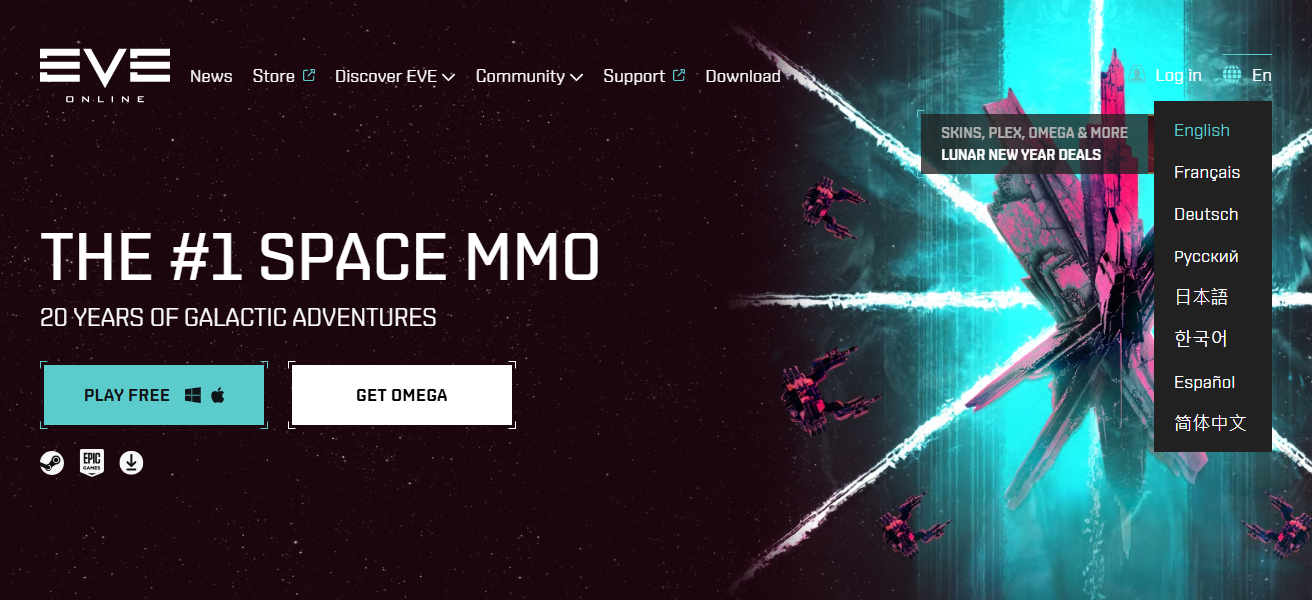
Players can even join corporations or alliances, where they can collude and implement strategies to manipulate supply and demand in the economy.
The game is so detailed that real world economists use the game as a case study in virtual capitalism, and the game, with its virtual interstellar trade routes, made market speculation,
Resource control, and trade smuggling, allows players to build up wealth and trade in all forms of virtual goods. EVE Online has the most advanced economy of any gaming platform available.
EVE Online Features
- Player-run economies allow trading of ships, materials, and blueprints.
- Supply chain management and market speculation for trading also exist with real world trade practices.
- Some market manipulation is done by Corporations and Alliances.
- Trading is a role that expands player experiences beyond fighting, and allows for industrial or commercial roles.
| Pros | Cons |
|---|---|
| Deep, realistic economy studied by economists | Steep learning curve for new players |
| Player-driven markets create endless opportunities | Market manipulation by large alliances |
| Trading roles add variety beyond combat | Time-consuming to master trading systems |
| Complex supply chains mirror real-world capitalism | Can feel overwhelming without guidance |
2. World of Warcraft
In World of Warcraft, the Auction House is one of the main features of the game. Players can buy and sell equipment, consumables, crafting materials, and more.
Players can develop an economic specialization by fully committing to farming or crafting specific items to sell for a profit.
Trading can be a profitable venture as the market, and prices, are driven by the server’s population, and the items’ supply and demand.
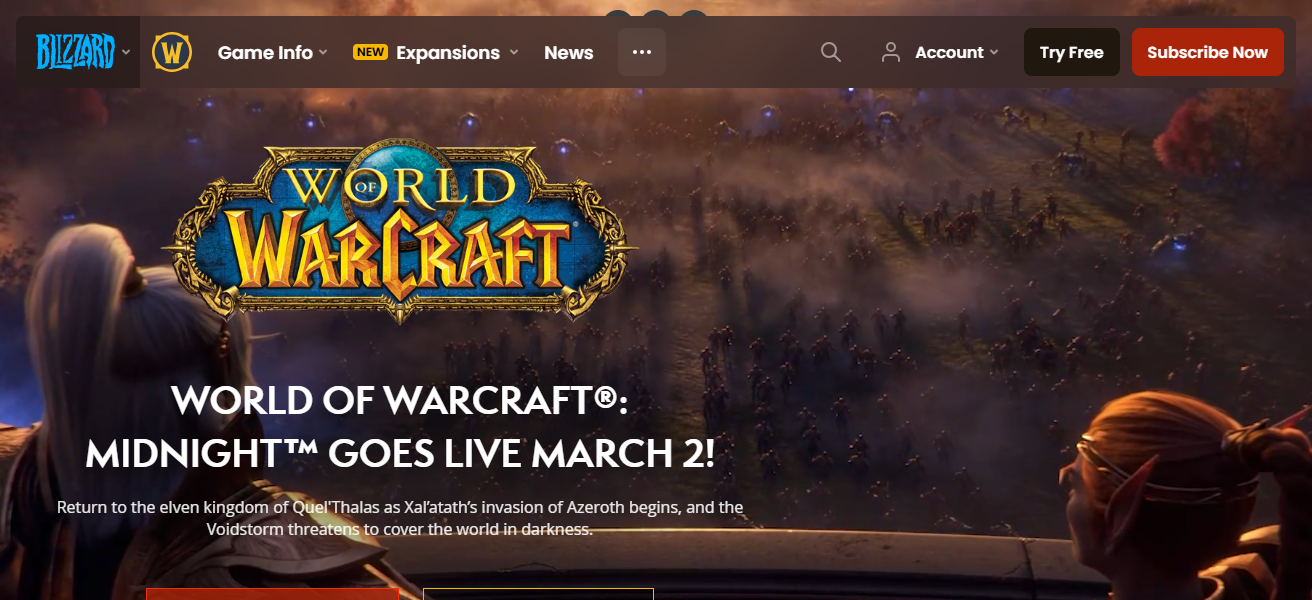
Understanding the Auction House as a market encourages community interdependence as people rely on one another for resources and items of varying rarity.
WoW marketplace system has shifted and changed with each expansion and has introduced new items and currencies but the Auction House marketplace continues to be the focal point for commerce and economic strategy.
World of Warcraft Features
- Auction House allows for player trading of gear, consumables, and crafting.
- Price changes depending on server population and player demand for the item.
- Economic specialization, crafting, and item farming.
- Player driven community commerce enhances interaction and cooperation between players.
| Pros | Cons |
|---|---|
| Auction House is easy to use | Prices fluctuate heavily across servers |
| Encourages crafting and resource farming | Bots and gold sellers disrupt economy |
| Strong community interaction via trading | Inflation reduces value of older items |
| Expansions keep marketplace fresh | Requires grinding for competitive trading |
3. RuneScape (Old School & Modern)
The Grand Exchange in RuneScape transformed player trading into more of a commerce system. It was the first centralized system where players can buy and sell items instantly.
Instead of the more chaotic player-to-player trading, they streamlined the process and made it more accessible.
Players can trade resources, weapons, armor, and cosmetics, with prices that change with the market and increase with demand.
Fighting players is not required as you can merchant by buying and selling items for a profit. Old School RuneScape and the newer version of the game both still have plenty of players.
They still have rare items often from holiday events that can sell for a lot of in-game money. The Grand Exchange changed the trading system in game for the better.
RuneScape (Old School & Modern) Features
- Grand Exchange is the trading hotspot for instant trading of various items.
- Buying an item at a low price and selling it at a higher price is a strategy known as Merchanting.
- High cosmetic and rare item markets.
- Hardcore and casual players have equal access to the gaming economy.
| Pros | Cons |
|---|---|
| Grand Exchange simplifies trading | Market prices can be unstable |
| Merchanting offers profit without combat | Rare items often overpriced |
| Accessible to both casual and hardcore players | External tools sometimes needed for efficiency |
| Iconic system shaping MMORPG economies | Can encourage speculative hoarding |
4. Diablo III
When Diablo III started, players were able to use real money to buy and sell loot through the game’s Auction House. This placed emphasis on a trading system players wanted.
Although Diablo III developers removed the Auction House to keep gameplay intact, players could still use trading through item drops and players given items.
The Auction House showed players trading would help game progression even if that meant buying gear to skip game grinding.
Although removed, Diablo III trading system has impacted the player’s satisfaction and game monetization while creating debates on the fairness of game economies and the use of player trading setting the standard for action RPG games.
Diablo III Features
- Originally, that game had a real money auction house for trading loot.
- Progressing in the game when trading is necessary to bypass the grind of gear.
- The demand for an economy built on loot drove the marketplace.
- Although the auction house was removed, there is still player trading.
| Pros | Cons |
|---|---|
| Auction House allowed real-money trading | Removed due to balance issues |
| Easy access to powerful loot | Trading bypassed progression unfairly |
| Highlighted demand for loot marketplaces | Controversial monetization practices |
| Player exchanges still possible | Limited compared to other RPG economies |
5. Path of Exile
Path of Exile has a unique system for trading without the use of gold or other traditional forms of currency. Instead players use items with a crafting value, called currency items, and use these for trading.
Players must then think strategically about what items they need for the crafting value and what they can trade for it. Player to player trading is the bulk of the trade web and is supplemented by third party trade web sites.
Economically, the trade system rewards players that buy and sell based on the items that are in demand based on the value they possess.
The trade system in Path of Exile is elaborate, but worth it, offering complexity to those who want to trade and is balanced by mandating a need to trade and use the systems that allow trading and crafting to create value.
Path of Exile Features
- Currency items can be used for crafting or trading.
- The marketplace is fueled by player-to-player transactions.
- Strong mechanics for crafting integration and trading of rare items.
- The economy is barter based and uses currency items in the form of Orbs.
| Pros | Cons |
|---|---|
| Unique barter-based economy | Complex for beginners to understand |
| Currency items have dual gameplay value | Requires external websites for smooth trading |
| Deep, rewarding trading strategies | Can feel grind-heavy for casual players |
| Strong integration with crafting mechanics | Market volatility affects progression |
6. Ragnarok Online
It was a $MMO called Ragnarok Online where people would trade and sell mint items to players. People would gather supplies, craft items, and sell them to players.
Merchants would sell mats and gear needed to level up. There was a lot of crafting and gathering needed to be done, and the trading and crafting was done to earn zeny, the in-game currency.
This created a player driven economy to trade with each other which formed a community. It is also one of the first MMOs to allow true player trading, allowing the player community to thrive and interact. This is why Ragnarok Online’s economy is such a beloved part of the player experience.
Ragnarok Online Features
- Players can create personal stores for selling made gear.
- Zeny is the core of the economy.
- Integrated trading and progression/resource collection.
- User-created trade locations promoted social activity.
| Pros | Cons |
|---|---|
| Nostalgic, simple trading system | Outdated compared to modern MMOs |
| Personal shops encourage social interaction | Inflation of zeny reduces accessibility |
| Crafting and resource gathering tied to economy | Limited item diversity in trading |
| Community-driven trade hubs | Vulnerable to bot farming |
7. New World
In New World, a player-run economy is core to the gameplay experience. Players can buy and sell crafted items, materials, and consumable items at player-run marketplaces within player-run settlements.
Each settlement can have its own governing faction, and marketplace taxes can be adjusted through settlement control and faction wars, making the player-run economy and territory control systems work together.
Trading is a natural extension of the central gathering and crafting mechanics. The player-run economy is responsive to the number of active players and ongoing faction wars.
New World demonstrates the potential of player run markets by showing how they can utilise elements of world-building, politics, and crafting.
New World Features
- Player-controlled economy linked to marketplace in the settlements.
- Taxes and fees shift based on whom the faction controls.
- Central to the trading system is crafting and gathering.
- Wars and population create a new state of trade post settlements.
| Pros | Cons |
|---|---|
| Player-driven economy tied to territory control | Taxes vary, creating imbalance |
| Crafting and gathering central to gameplay | Market depends heavily on server population |
| Dynamic supply and demand | Can feel grindy for solo players |
| Immersive integration with politics | Economy destabilized by faction dominance |
8. Star Citizen
Star Citizen features an evolving marketplace where players can buy and sell ships, cargo, and hard-to-find items in an expansive universe.
Resources and availability of tradeable items change due to player interactions, simulate scarcity and respond to in-game events.
Trading can be profitable, but is also linked to exploration, smuggling and faction standing. Players can determine their place in the economy by focusing on roles such as trade, mining, and transport.

Star Citizen is still in development, but is working to create a living economy. Smart basis for an economy are still in development.
Star reserves are proposed, but overseas trade liberalization offers the potential for an economy that sustains itself.
Star Citizen Features
- Players can trade ships, cargo, and commodities in the marketplace.
- World economy is reactive to player trading activity and scarcity.
- Trade is linked to exploration, smuggling, and faction reputation.
- Focus on a specific activity is like trading or mining.
| Pros | Cons |
|---|---|
| Ambitious, evolving marketplace vision | Still incomplete and in development |
| Trading tied to exploration and smuggling | Requires significant investment of time and money |
| Dynamic economy responds to player activity | Unstable due to ongoing updates |
| Specialization in trading roles | Limited accessibility for casual players |
9. Final Fantasy XIV
Final Fantasy XIV has an impressive trading system called the Market Board. Crafters and gatherers are able to make a lot of profit with it.
The Market Board lets users sell basically anything; gear, crafting materials, consumables, cosmetics, etc. The economy of the game is very active because of the game’s crafting recipes, raids, and seasonal events.
The trade system also encourages players to specialize in certain areas, and dedicated crafters often become the preferred seller in the market for a specific item.

The Market Board also integrates well with crafting and professions, allowing players to gain a nice incentive for spending their time leveling a profession and creating items.
The prices for items listed on the Market Board are affected by the game’s server population and its players, along with the time of day.
All of these factors create opportunities for the players to make a profit. The Market Board is an excellent example of a player-driven economy, and it is at the center of the game’s community.
Final Fantasy XIV Features
- Trading gear, material, and cosmetic items is done through Market Board.
- Crafting recipe, raid, or event driven demand fluctuate on the trade.
- Specialization in crafting and gathering professions is encouraged.
- Server activity and population direct trade price.
| Pros | Cons |
|---|---|
| Robust Market Board system | Prices fluctuate based on server population |
| Encourages crafting and gathering professions | Requires heavy time investment to dominate markets |
| Seasonal events drive demand | Market monopolies by dedicated players |
| Seamless integration with gameplay | Can feel overwhelming for newcomers |
10. Albion Online
Albion Online’s economy is player-driven, and every item that is put up on the market is crafted by players.
There is a global marketplace, but some cities and territories have different resource supplies which encourage trading. Silver is the main currency, trading gear, consumables, and materials.
There is a strong tie between the economy and PvP, and controlling territories, where guilds control part of the market.
Sandbox games like Albion are designed for trading to be part of the design, and in Albion it means that the marketplace is an integral part of the game. Albion’s economy is integrated well with the combat and crafting systems, which makes it very realistic and deep
Albion Online Features
- All items are player-created for a completely player-driven economy.
- Varied resources across regions promotes trade between cities.
- Transactions use silver as base currency.
- Economy linked with PvP, guilds, and zone ownership.
| Pros | Cons |
|---|---|
| Fully player-driven economy | Requires constant engagement to stay competitive |
| Regional resource differences encourage trade | PvP risks affect trading routes |
| Sandbox design makes trading essential | Market manipulation by large guilds |
| Deep integration with crafting and combat | Can be punishing for solo traders |
.
Conclusion
To summarize, Best Games With In-Game Trading Marketplaces exemplify the benefits of player-created economies.
Each game is unique in the depth of trading it offers, from the in-game trading and grand exchange of player-run markets of EVE Online and RuneScape, to the sandbox economy of Albion Online.
Trading and economy games encourage players to interact, strategize, and immerse themselves in the game, demonstrating the importance of player-created economies in games.
FAQ
It’s a system where players buy, sell, or exchange items, resources, and gear.
EVE Online is widely considered the most complex and realistic player-driven economy.
Most are player-driven, though some include developer-set rules to maintain balance.
Yes, trading often accelerates progression by providing access to rare gear and resources.
Some games experimented with it, like Diablo III, but most restrict real-money trading.