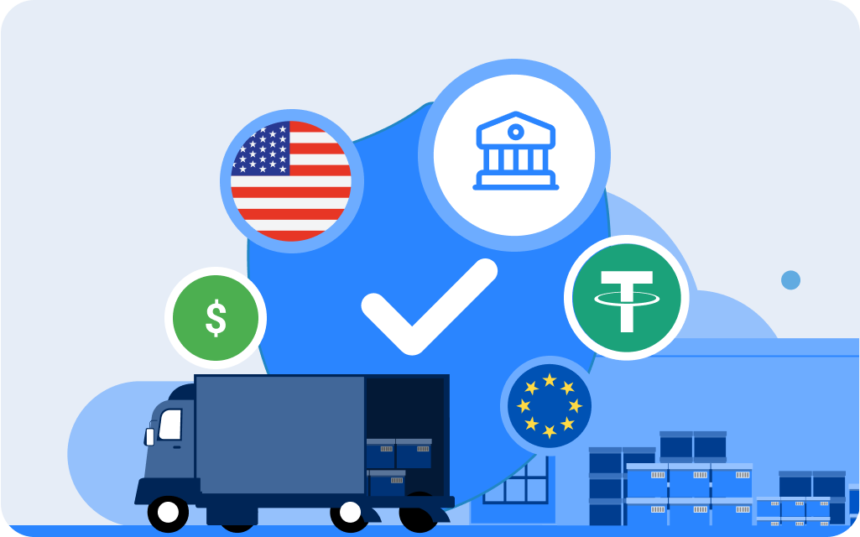
In this article, I will discuss the top global payment processing platforms for online marketplaces and how they streamline the payments for businesses.
As online marketplaces continue their global expansion, the complexity involved in deciding the right payment processing solution to use for cross-border transactions, compliance
Multi-currency payments, and quick, secure payments to sellers, continues to grow. This also includes the reduction of operational complexity and costs to the business.
Key Points & Best Global Payout Platforms For Marketplaces
| Platform | Key Point |
|---|---|
| Airwallex | Borderless accounts enabling businesses to collect and pay in multiple currencies seamlessly |
| Rapyd | Local payment rails in 100+ countries, supporting cards, wallets, and bank transfers |
| Nium | Real-time payouts to bank accounts and cards across 190+ markets |
| MangoPay | Escrow and wallet infrastructure tailored for marketplaces and crowdfunding platforms |
| Payoneer | Integrated compliance tools for KYC and AML in cross-border payouts |
| Thunes | Cash pickup and mobile money options for unbanked regions |
| Checkout.com | Unified API for payments and payouts with advanced fraud detection |
| Worldline | Strong European coverage with SEPA and local payment schemes |
| Adyen | Instant settlement for marketplace sellers with flexible payout scheduling |
| Tipalti | End-to-end automation including tax form collection and supplier onboarding |
10 Best Global Payout Platforms For Marketplaces
1. Airwallex
Airwallex is a global payment management technology services provider operating in over 130 global currencies and automating real-time payment distribution and compliance across borders.
With over one hundred sixty payment methods available and multiple bank and payment processor licenses across jurisdictions, Airwallex offers cross-border payment services with lower FX spreads and instant or batched cloud payments.
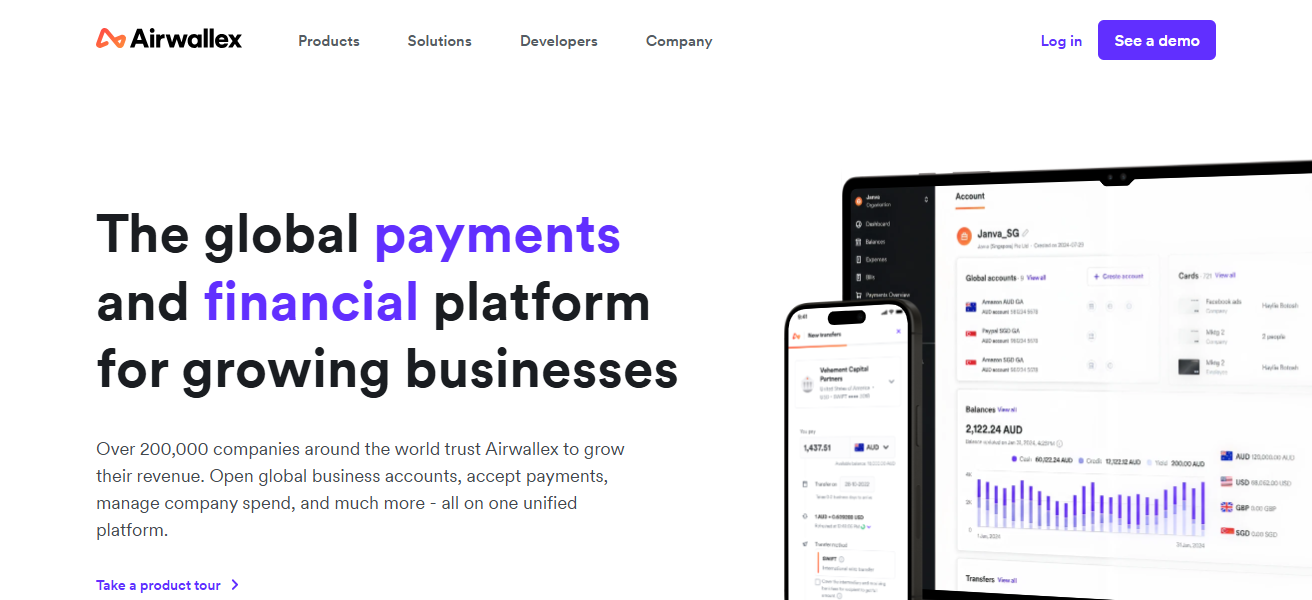
Transaction visibility services improve fraud prevention, payment compliance, and management across international sellers.
The platform is built for large, high-growth sellers, and offers an efficient, compliant, and easy-to-use payment processor and bank account alternative for international cross-border payments with advanced payment compliance and management services.
Features Airwallex
Global Multi-Currency Support – This feature makes it easier for marketplaces to manage sending and receiving payments in over 130 currencies and improves on reducing the complexity and costs associated with FX.
Automated Payouts & Split Routing – These features help platforms manage commission and payout on funds distributed to sellers automatically post transaction and do so without any manual work.
Real-Time Tracking & Reporting – This feature improves financial control and visibility with the help of dashboards and APIs, to track in real-time the payouts, balances and foreign exchange rates.
Regulatory Compliance Tools – These internal regulations and fraud checks assist marketplaces in adhering to global financial regulations with greater ease.
| Pros | Cons |
|---|---|
| Multi-currency support with competitive FX rates. | Can be complex to implement without developer support. |
| Strong global payout coverage (130+ currencies). | Not ideal for very small marketplaces with low volume. |
| Automated payouts and split routing. | Some advanced features require custom integration. |
| Real-time transaction tracking and compliance tools. | Fewer local acquiring options in some regions. |
| Good API and modern developer experience. | Pricing transparency can be unclear upfront. |
2. Rapyd
Rapyd provides a modular stack built on a single API that allows market places to handle global pay-ins and pay-outs in an integrated and customizable way.
The Rapyd product suite covers collections, disbursement, wallet, and issuing services to help marketplaces receive and distribute funds in multiple local currencies.

Rapyd optimizes local payment and pay-out transactions, especially in emerging markets, which allows platforms to fine-tune and lower unit economics in regions where bank coverage is thin.
Rapyd streamlines compliance and currency management for international growing marketplaces through a single API.
Features Rapyd
Unified API for Pay-Ins & Payouts – This feature reduces platform development complexity by providing single integration for various payment and payout systems around the world.
Local Payment Methods – This feature is important for connecting to local cash-based systems of emerging markets.
Wallet & Disbursement Services – This feature includes the provision of hosted user wallets, which allow for balance retention and payout scheduling.
Scalable Global Infrastructure – This feature is adaptable to high capacity and flexible routing systems and to accommodating various countries.
| Pros | Cons |
|---|---|
| Wide range of local payment & payout methods globally. | API integration can be time-consuming. |
| All-in-one fintech platform (wallets, disbursements). | Support quality varies by region. |
| Flexible payout rails (bank, wallets, cash pickup). | Higher fees in some emerging markets. |
| Strong coverage in emerging economies. | Compliance burden still falls on platform in some use cases. |
| Unified API simplifies multi-rail access. | Limited analytics reporting for advanced use. |
3. Nium
Nium allows enterprises and marketplaces to send/receive real-time money transfers and manage payments and disbursements across borders.
Through one API, enterprises can onboard and manage seller compliance at a global level and send real-time payments across 100 currencies and local and international payment rails.
Nium’s payment infrastructure gives marketplaces the ability to disburse funds to their sellers by directly transferring funds to a bank, digital wallets, and cards.
Nium’s transparent processing and strong direct banking partnerships eliminate the slow processing times and hidden fees associated with global payment transfers.
Nium is a strong FX alternative. Nium is best suited for marketplaces that have sellers distributed across multiple continents.
Features Nium
Cross-Border Money Movement – Nium helps process international payments at an instant. Works with various foreign currencies at an affordable rate.
Comprehensive Currency Coverage – Helpful to global marketplaces to be able to pay their sellers in different local currencies.
Direct Banking Rails – Nium is directly connected to a large network of local banks.
Compliance & Risk Management – Nium’s built-in compliance and risk management allows marketplaces to automatically comply with the regulatory requirements of different jurisdictions and at the same time, mitigate fraudulent activities.
| Pros | Cons |
|---|---|
| Fast cross-border payouts with broad currency support. | Documentation can be dense for beginners. |
| Direct bank & wallet transfers. | Onboarding verification may be lengthy. |
| Competitive FX with transparent pricing. | Smaller developer ecosystem compared to big PSPs. |
| Built for enterprise scaling. | Less retail-focused features for micro-marketplaces. |
| Strong compliance and local licensing. | Advanced reconciliation tools are basic. |
4. MangoPay
MangoPay primarily caters to marketplace, crowdfunding, and platform businesses in Europe. Indeed, it is a Fintech solution, and it is also licensed by CSSF and FCA, which attests to the solidity of the infrastructure.
It offers escrow services, split payments, and multi-currency account payments. For marketplace operators, it offers ease of payment solutions for seller payments, as it regulates the compliance, fund segregation, automation of payment flows.
With its technology, it enables marketplaces to accept customer payments, fund it, and make payments to sellers after the service is accessed.
Although it is highly integrated within the European framework, for businesses in Europe, it offers comprehensive marketplace solutions, and thus, it is an excellent option for businesses that require payment orchestration and seller payout services.
Features MangoPay
Marketplace-Centric Escrow Accounts – Escrow accounts helps keeps platforms compliant with the regulation of holding funds and boosts trust as they can withhold payment until the service is rendered.
Split Payments – According to the allocation rules set by the marketplaces, the system automatically makes payments to the marketplace, the sellers, and other integrated business partners.
Multi-Currency Processing – Vital for international marketplace transactions as it allows for transactions in different currencies.
Strong Regulatory Licensing – Complying with key jurisdictions is mandatory due to limited licensing in other jurisdictions, providing security with compliance coverage.
| Pros | Cons |
|---|---|
| Tailored for marketplaces & escrow flows. | Primarily focused on Europe. |
| Regulated and licensed (e.g., FCA, CSSF). | Limited payout options outside core regions. |
| Supports split payments & wallets. | Fewer value-add features (cards, lending). |
| Funds segregation increases security. | Onboarding can require stricter documentation. |
| Good for SaaS + marketplace combos. | Smaller partner ecosystem vs global PSPs. |
5. Payoneer
Payoneer has built a reputation in cross border payments, allowing different marketplaces to send and receive payments anywhere in the world.
They have the capacity to process payments in 150 currencies, have local receiving accounts, and can send out mass payments to thousands of recipients.
Freelance and ecommerce so marketplace partners use Payoneer to automate and facilitate the payouts to sellers, freelancers, and ecosystem partners.
Payoneer has developed integrated e-wallets and debit cards which allow users in different regions to withdraw access and funds conveniently.
With automated tax form collection and easy integrations with accounting systems, Payoneer is built for marketplaces that require efficient and compliant mass payment systems.
Features Payoneer
Global Receiving Accounts – Sellers, as well as marketplace owners, can possess local accounts in regions using currencies such as the USD and EUR.
Batch Payments – Allows operational efficiency as it offers large-scale payments in a single file upload or API call.
Integrated Wallet & Debit Card – Users can maintain accounts and make purchases using their Payoneer cards.
Tax & Compliance Tools – Support for the automated collection of tax forms and compliance for global payment disbursements.
| Pros | Cons |
|---|---|
| Large global user base; familiar to freelancers. | Wallet-to-bank fees can be high. |
| Local receiving accounts in many currencies. | FX conversion charges add up. |
| Batch payouts and scheduled disbursements. | API capabilities less advanced than some fintech APIs. |
| Debit card access for recipients. | Customer support varies by region. |
| Strong compliance & tax form handling. | Not best for micropayments. |
6. Thunes
Facilitating international cross-border payments for the marketplace, Thunes connects Banks, PSPs, Mobile wallets and merchants via its’ global business to business payment API.
Thunes allows its customers to instantly and economically send payments to multiple countries, and to various payment methods including bank accounts, mobile wallets and other local alternatives.
Thunes excels in providing payments to hard to reach and underserved target markets due to its’ unrivaled global reach and local payment partnerships. Thunes global compliance and regulatory licenses address security and regulatory compliant global payouts.
Features Thunes
Extensive Global Payout Network – Offers connections to a plethora of global banks and payment options for global disbursements.
Diverse Rails Support – Supports a wide variety of mobile wallet and bank transfer payments, plus local disbursement options in various developing countries.
Fast Settlement Options – Provides quick payout timing and settlement options, often quicker than conventional bank payment methods.
API-First Infrastructure – Seamless integrations for highly automated platforms.
| Pros | Cons |
|---|---|
| Extensive global payout network. | Pricing complexity (varies by rail & region). |
| Supports mobile wallets & bank accounts. | Integration can require deep technical work. |
| Good reach in hard-to-access countries. | Less brand recognition than major PSPs. |
| Fast, localized disbursements. | Limited marketplace-specific SDKs. |
| Built for high-volume payout use cases. | Reporting tools are basic. |
7. Checkout.com
Checkout.com is a worldwide payment processor with integrated payment functionality for large marketplaces. With the marketplaces offering, platforms can onboard sellers, automate split payments, and send instant payouts to any bank or card worldwide.
Powered by a single API, Checkout.com enables marketplaces to handle all pay-in and payouts, simplifying operational overhead and integration challenges.
Checkout.com also has tools for advanced fraud prevention, compliance, and reporting to ensure secure and efficient disbursement of funds.
Checkout.com has the ability to customize the timing of disbursement, as well as the commission structure, making it a good option for marketplaces looking for performance and reliability, as well as a great experience for their sellers.
Features Checkout.com
Unified Payout & Pay-In Processing – Provides end-to-end functionality with marketplace payment and payout orchestration, and payment acceptance.
Advanced Analytics & Dashboard – Provides transaction performance and settlement insights.
Robust Fraud Management – Risk management features secure payments from unauthorized transactions.
Global Coverage with Local Methods – Offers key markets localized payment and payout solutions to boost seller satisfaction.
| Pros | Cons |
|---|---|
| Enterprise-grade payout + payment orchestration. | Best suited for larger marketplaces. |
| Advanced fraud & risk tools. | Costs can be higher for small volumes. |
| Real-time analytics & dashboards. | Onboarding takes time for compliance. |
| Excellent API & developer tools. | Limited alternative payout rails in some regions. |
| Combined payouts + pay-ins in one platform. | Setup fees vary by region. |
8. Worldline
Worldline is a worldwide supplier of payments and transactions services and provides its clients with sophisticated payment and disbursement functionalities for their marketplaces.
As a seasoned player in the financial infrastructure industry, Worldline offers a range of services covering payment processing, acquiring, and disbursement of payments across varying regions and methods.
Worldline also often provides services that include local settlement and disbursement which assist in the facilitation of the platform’s multi-currency operational, compliance, and reconciliation activities.
Due to Worldline’s remarkable compliance capabilities and extensive coverage of the European markets, the company is well-positioned to support marketplaces with complex payout
Orchestration and local acquiring coupled with payment disbursement functionalities. (General industry knowledge; worldline widely recognized as global PSP and acquirer.)
Features Worldline
All-in-one transactions — complete collection, processing, and distribution of seamless payments for marketplace integration across different regions.
Localized Settlement Solutions – Settlement accounts are provided locally to expedite payments and ease currency conversion.
Trusted Financial Network – Supported by decades of experience in reliable infrastructure and compliance, as well as robust security.
Custom Reporting and Reconciliation Tools – Provides downloadable reports and insights to assist the marketplace in keeping their books in order.
| Pros | Cons |
|---|---|
| Strong European payout and acquiring coverage. | Not as API-centric as pure fintech providers. |
| End-to-end payment + payout services. | Less focus on cutting-edge toolkit. |
| Local settlement options. | Limited global wallet support. |
| Trusted legacy financial infrastructure. | More suitable for established players. |
| Supports compliance and reconciliation. | Integration may feel traditional vs modern APIs. |
9. Adyen
Adyen for Platforms provides enterprise-level payment functionalities to marketplace and platform businesses operating on a global scale. With this service, businesses can get payment processing, seller onboarding, automated split payments, and scheduled payments.
Furthermore, Adyen provides businesses with risk management, data analytics, and payment method support to help optimize payment processing.
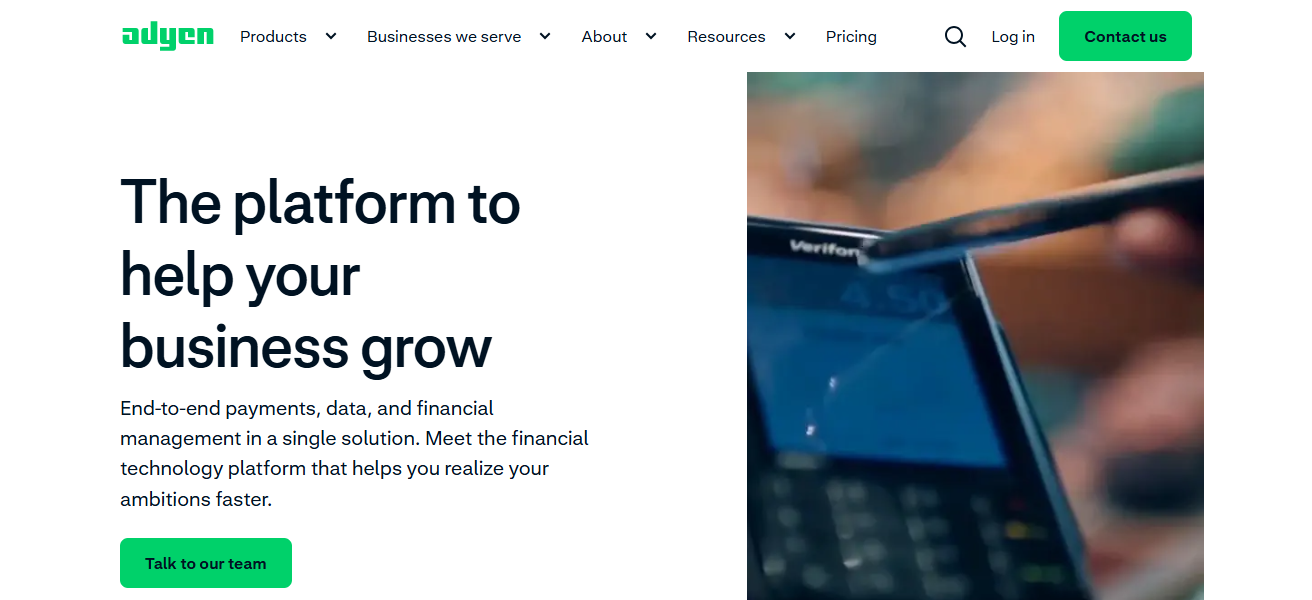
By maintaining all the processing, payment disbursement, and automated functionalities on a singular platform,
Adyen provides businesses with the tools to operate internationally without worry. Large scale businesses will benefit from the infrastructure Adyen provides.
Features Adyen
All-in-One Platform – Unified solution for marketplace pay-ins, pay-out, risk management, and reconciliation.
Global Local Methods – In a number of countries, accepts and disburses funds according to local preferences (cards, digital wallets, bank transfers).
Smart Routing and Analytics – Analyzes data to improve routing for faster disbursements and successful payments.
Built-In Compliance and KYC – Facilitates seller verification and regulatory compliance tied to one single dashboard.
| Pros | Cons |
|---|---|
| Unified global payouts & pay-ins. | Higher threshold for entry (enterprise focus). |
| Excellent risk management & insights. | Pricing can be opaque for low volume. |
| Native support for many local methods. | Developer implementation requires planning. |
| Strong analytics and data tools. | Not ideal for very small marketplaces. |
| Single API for global scale. | Minimum revenue requirements may apply. |
10. Tipalti
Tipalti is a payment automation platform that specializes in mass payouts and accounts payable for businesses paying multiple operators around the world.
It connects to pay-in service providers and assists businesses in automating their subcontractor and vendor payments in over 200 countries.
Tipalti handles tax compliance, foreign currency exchange, reconciliation, and reporting, thus mitigating manual labor and operational risk.
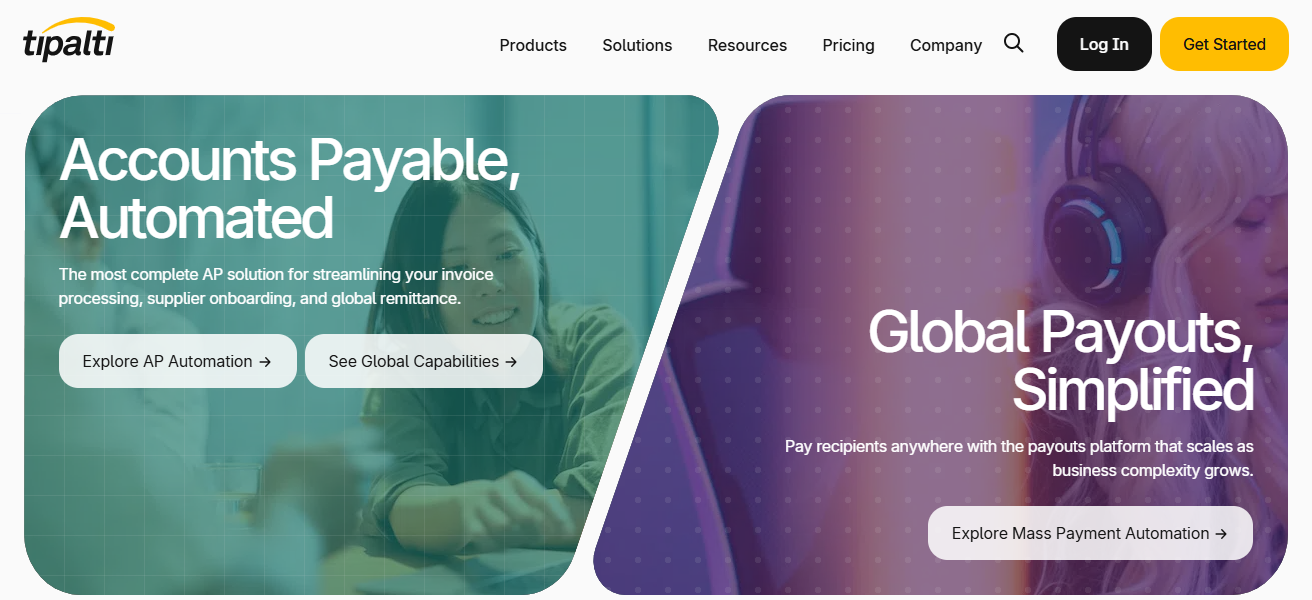
Its advanced automation and compliance features make it especially attractive to marketplaces with high volume and complex payout requirements.
By consolidating payout orchestration and the associated financial processes, Tipalti enables marketplaces to improve operational efficiencies, and it guarantees accurate and timely global payouts.
Features Tipalti
Mass Global Payout Processing – Manages payments to thousands of sellers or contractors through a single unified interface.
Automated Compliance and Tax Management – Tax form (1099/W-8 etc.) collection and compliance validation are fully automated.
Multi-Currency and FX Support – Provides payments in local currency and handles conversion efficiently.
Reconciliation and AP Automation – Minimizes manual effort through automated matching of invoices, payments, and accounting records.
| Pros | Cons |
|---|---|
| Focused on automating mass global payouts. | Not a payment acceptance platform (needs other provider). |
| Excellent tax compliance automation. | Advanced features add to cost. |
| Supports 200+ countries/regions. | Primarily for payouts, not pay-ins. |
| Reconciliation & reporting automation. | Not ideal for marketplaces needing unified pay-in + payout tool. |
| Good for high-volume disbursements. | Requires integration with other systems for full flow. |
How To Choose Best Global Payout Platforms for Marketplaces
Global presence: Check if the platform can process payments in all countries your sellers are based in.
Ready for compliance: Check this platform to have KYC, AML, and tax reporting functionalities so that you are on the right side of the law.
Fees transparency: Choose providers that have honest pricing and reasonable rates for currency conversions.
Settlement faster: Select the platform that can process payments in real-time or same-day to improve the trust of your sellers.
Integrations ease: The marketplace system must be able to easily connect to the site’s APIs or plug-ins.
Different payout methods: Availability of bank transfers, cards, and digital wallets as well as mobile money increases payout accessibility.
Easily scalable: Remember that your marketplace would continue growing and that high transaction volume would be the norm.
Fraud prevention: Good safety features can minimize the likelihood of chargebacks and losing money.
Sellers experience: Good onboarding process and trackable payout systems improve satisfaction.
Support reliability: 24/7 support and high proven uptime are critical for smooth operations.
Conclusion
In summary, the Best Global Payout Platforms for Marketplaces in 2026 enable companies to grow and expand internationally with flexible, safe, and legally compliant payout functionalities.
Selecting the appropriate provider guarantees effortless multi-currency payments, rapid transfers, and ease of compliance.
For a developing marketplace to an enterprise-level system, the appropriate payout system helps to improve operational ease, seller satisfaction, and stimulate frictionless commercial expansion.
FAQ
A global payout platform helps marketplaces send payments to sellers, vendors, or partners across different countries, currencies, and payment methods securely
They simplify cross-border payments, reduce FX costs, ensure compliance, and enable fast payouts to international sellers
Key features include multi-currency support, multiple payout methods, compliance tools, API integration, and detailed reporting.
Yes, most platforms use advanced security measures, encryption, and regulatory compliance such as KYC, AML, and PCI-DSS standards.
Yes, many platforms offer scalable pricing and flexible features suitable for startups and small marketplaces.