
This article will talk about the Global Tax Automation Platforms for Online Businesses that streamline tax compliance, minimize errors, and save time.
- Key Points & Best Global Tax Automation Platforms for Online Businesses
- 10 Best Global Tax Automation Platforms for Online Businesses
- 1. Avalara
- 2. TaxJar
- 3. Vertex
- 4. Thomson Reuters ONESOURCE
- 5. Sovos Compliance
- 6. Xero
- 7. Taxually
- 8. Commenda
- 9. QuickBooks Online
- 10. SAP Tax Compliance
- How To Choose Best Global Tax Automation Platforms for Online Businesses
- Conclusion
- FAQ
The online selling market is spread globally, and so is the complexity in managing VAT, GST, and sales tax in different countries.
Picking the right option allows for precise calculations, automated filings, and easy integrtion with accounting and ERP systems, making global business operations effortless.
Key Points & Best Global Tax Automation Platforms for Online Businesses
| Platform | Key Point |
|---|---|
| Avalara | Comprehensive global tax compliance with automated filings and integrations for ecommerce. |
| TaxJar | Real-time sales tax calculations and reporting tailored for online retailers. |
| Vertex | Enterprise-grade indirect tax automation with strong ERP integrations. |
| Thomson Reuters ONESOURCE | Robust corporate tax management including transfer pricing and global compliance. |
| Sovos Compliance | Cloud-based tax reporting across VAT, sales tax, and e-invoicing worldwide. |
| Xero | Built-in tax tools for SMEs with easy accounting and compliance automation. |
| Taxually | Specialized in VAT automation for cross-border ecommerce sellers. |
| Commenda | Global tax engine that monitors exposure and automates filings for ecommerce. |
| QuickBooks Online | Integrated tax tracking for small businesses with automated reporting. |
| SAP Tax Compliance | Advanced compliance monitoring for multinational corporations with ERP integration. |
10 Best Global Tax Automation Platforms for Online Businesses
1. Avalara
Avalara is a fully automated cloud-based tax system and was made for multi-jurisdictional online sellers. It helps with computing taxes for different levels, filing taxes, and remitting taxes for different levels as well as different countries.
Remitting taxes can be sales tax, VAT, GST, customs, and many others. Furthermore, the system is constantly changing.
Avalara is configurable and can be used for small to enterprise businesses. It is integrated with hundreds of platforms, including accounting, e-commerce, and ERP systems, including Quickbooks, Shopify, and Netsuite.
Avalara needs little to no user involvement for it to function. It also helps with exemption certificates and return filings.
This helps reduce the amount of work and compliance risk for businesses. The work is done automatically as Avalara expands and operates globally.
Avalara Features:
Tax Calculation in Real Time – Automatically calculates the correct tax rate – sales, VAT, GST, and others – in thousands of foreign jurisdictions based on the address and product information.
Filing Returns is Automated – Assists in the preparation of tax returns and files them with relevant tax authorities in order to lessen compliance risks and manual tasks.
Managing Exemption Certificates – Checks, updates, and validates tax exempt transactions in order to validate tax exempt transactions.
Integration – Automates the exchange of information between e-commerce (Shopify, Magento), ERP systems (NetSuite, SAP), and accounting applications like QuickBooks.
| Pros | Cons |
|---|---|
| Extensive global tax content (VAT, GST, sales tax) and automatic rate updates. | Can be expensive for small businesses due to per‑transaction pricing. |
| Integrates with hundreds of ERP, e‑commerce, and accounting platforms. | Setup and configuration may require technical support. |
| Automates filings, exemption certificate management, and return preparation. | Reporting UI is powerful but can be complex for new users. |
| Scales from small sellers to enterprises needing global compliance. | Advanced features may require separate modules or add‑ons. |
2. TaxJar
TaxJar assists small to mid-sized online businesses and e-commerce sellers with their sales tax automation.
They help with sales tax calculations, tracking of economic nexus requirements across all U.S. states, and automate the tax return filing process with their AutoFile feature.
They assist their merchants with integrations into large platforms such as: Amazon, Shopify, WooCommerce, and Stripe to sync transactions and reduce manual entry.
TaxJar is built to help businesses with minimal payroll to automate cumbersome compliance tasks while focusing efforts on growth.
Though their support of global taxation is lacking in comparison to larger enterprise solutions, most online sellers in the U.S. prefer to have TaxJar as their solution.
TaxJar Features:
Sales Tax Calculation is Automated – Can calculate instantaneous sales tax in the U.S. on a state and local level.
Returns are Automatically Filed – Automatically files state sales tax returns for states where the business is nexus.
Monitoring Economic Nexus – Tracks sales in order to monitor sales tax obligations in all U.S. states.
Integration with Platforms – Provides automated access to sales activity data and collaborates with marketplace and shopping platforms (Amazon, Shopify, WooCommerce, and Stripe).
| Pros | Cons |
|---|---|
| Easy to use with strong U.S. sales tax automation and AutoFile features. | Limited support for non‑U.S. VAT/GST compared to global platforms. |
| Integrates seamlessly with Amazon, Shopify, WooCommerce, and payment gateways. | Not ideal for large enterprises with complex multi‑jurisdictional needs. |
| Helps manage economic nexus tracking per state. | Features geared toward e‑commerce sellers; less robust for direct tax. |
| Affordable pricing for small to mid‑sized businesses. | Fewer deep analytics capabilities than enterprise tax solutions. |
3. Vertex
Vertex is an enterprise tax automation engine built for high-demand transactional environments, especially for organizations using ERP systems like SAP, Oracle, or Microsoft Dynamics.
It offers customized tax logic for complex multi-jurisdictional tax calculations, global indirect tax automation (VAT, GST), and advanced reporting for scenarios involving sales and use tax.

It is most effective in large, complex tax environments with unique industry tax rules and offers workflow automation for return preparation and compliance.
While its implementation and management often require significant resources and technical skills, its strong functionality and extensive integration make Vertex an industry leader among global organizations.
Vertex Features:
High-Performance Tax Engine – Assesses intricate tax logic, multi-geo rules, and vast volumes of transactions.
Global Indirect Tax Support – Determines VAT, GST, and other indirect taxes among countries with local compliance regulations.
ERP Integration – Seamlessly connects with systems such as SAP, Oracle, and Microsoft Dynamics for integrated business process management.
Configurable Tax Rules – Facilitates the modification of tax logic to satisfy certain sector or geographical demands.
| Pros | Cons |
|---|---|
| Robust tax engine for complex, high‑volume enterprise environments. | Higher cost and implementation time than small‑business tools. |
| Deep integrations with SAP, Oracle, and Microsoft Dynamics. | Requires trained staff or consultants for setup. |
| Handles global indirect taxes (VAT, GST) and detailed reporting. | Customization may increase complexity. |
| Highly accurate tax logic for multi‑jurisdiction compliance. | Not ideal for small businesses with simple tax needs. |
4. Thomson Reuters ONESOURCE
Thomson Reuters ONESOURCE is designed for multinational organizations and intricate tax configurations.
It automates the processes of calculation and reporting of both indirect taxes (sales taxes, VAT, and GST) and direct taxes along with reporting compliance.
The software has centralized workstream analytics and data management which help the tax units to mitigate risk and efficiently handle compliance.
ONESOURCE has deep integrations with ERP and accounting platforms. It optimizes global compliance with its content and automation system to efficiently manage corporate processes and let teams work on more valuable tasks.
Thomson Reuters ONESOURCE Features:
Comprehensive Tax Suite – Encompasses indirect taxes (sales/VAT) and direct taxes (corporate tax/direct tax provision).
Centralized Data Management – Consolidates tax data, reporting and workflow across global entities.
Automated Compliance – Facilitates compliance through the automation of calculations, returns and filings as well as regulatory reporting.
Audit & Analytics Tools – Produces compliance analytical insights and reporting dashboards to support compliance review and strategy development.
| Pros | Cons |
|---|---|
| Full corporate tax suite with indirect & direct tax capabilities. | Expensive and more complex than most SMB tools. |
| Centralized data, workflows, and global compliance coverage. | Requires significant training for tax teams. |
| Strong analytics and audit support. | Best suited for larger companies with complex tax departments. |
| Automates tax reporting across many jurisdictions. | Integration may need professional services. |
5. Sovos Compliance
Sovos Compliance offers a globally recognized scalable tax automation platform. This platform assists companies to report, file and remit a variety of indirect taxes, such as VAT, GST, and Sales/ use tax.
Compliance Cloud by Sovos processes billions of transactions and achieves compliance in gloablly in around 200 countries.
The platform is designed to minimize regulatory risk by incorporating info from tax content and regulatory updates.
The platform fosters e-invoicing, information reporting, and falls within compliance of withholding, and is designed to meet the needs of large multi-national companies
Which face complex tax requirements. The platform APIs to already in use finance and ERP environments for automated compliance workflows.
Sovos Compliance Features:
Global Tax Automation – Offers compliance solutions for VAT, GST, sales tax, and e-invoicing across multiple jurisdictions.
Continuous Content Updates – Provides current tax rules and rates for compliance.
Integration Capabilities – Offers the ability to automate compliance processes with other finance and ERP systems in place.
e-Invoicing Support – Provides automated solutions for e-invoicing where e-invoicing is required.
| Pros | Cons |
|---|---|
| Comprehensive global tax automation across many countries. | Pricing can be high for smaller businesses. |
| Covers VAT, GST, e‑invoicing, filings, and reporting. | Some users find configuration complicated. |
| Scales well for enterprises with complex compliance needs. | UI/UX may feel less intuitive than lightweight tools. |
| Supports high‑volume data processing. | Requires integration expertise for full value. |
6. Xero
Xero is a widely used accounting software for small to medium-sized businesses that operates entirely online and has tax compliance features.
It automatically computes taxes, including VAT, GST, and sales taxes based on transactions entered into the system and can prepare regulatory reports and pre-completed paperwork to aid in filing.
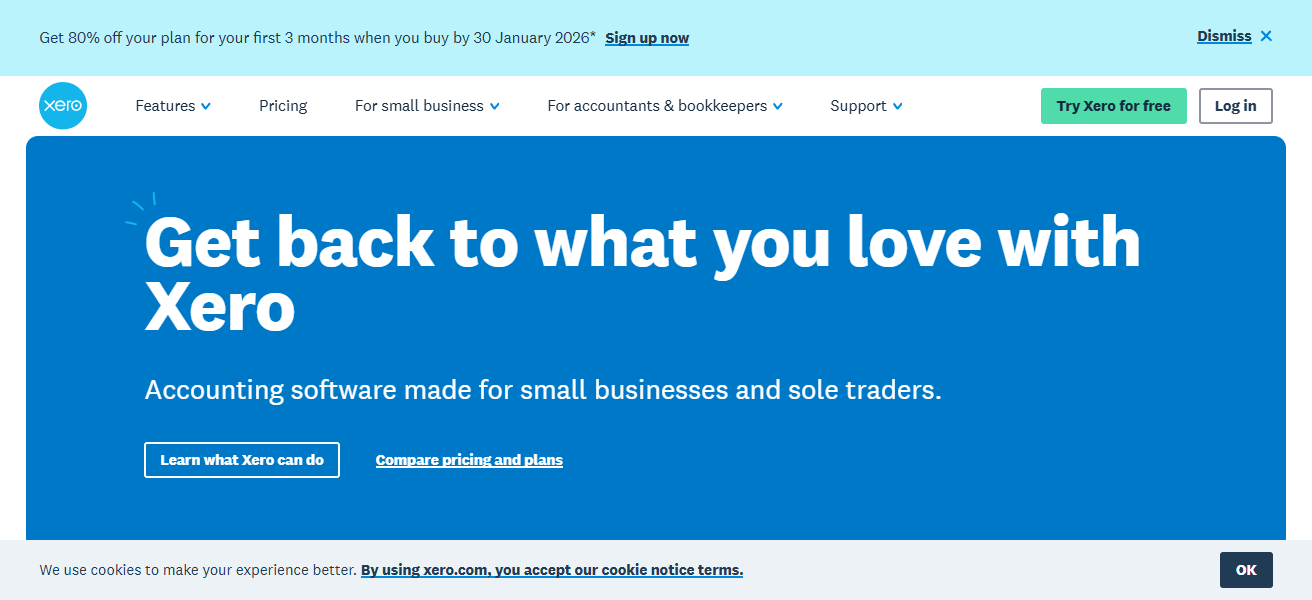
Xero’s marketplace features integrations with other tax compliance software to extend automation for different taxes, making the service a good fit for progressive online businesses looking to combine accounting and tax duties.
Recent improvements further simplify tax filing tasks and approval processes within the platform, allowing businesses to handle compliance with minimal manual work.
Xero Features:
Built-In Tax Calculations: Automatically computes VAT, GST, or sales based on recorded transaction data.
Tax Reporting Tools: Creates summary reports as well as tax forms to assist users with filing deadlines.
Integration Marketplace: Connects to tax automation add-ons along with sales platforms for broader functionality.
Unified Accounting & Tax: Merged bookkeeping along with tax awareness for small to mid-sized businesses.
| Pros | Cons |
|---|---|
| Easy accounting platform with built‑in tax calculations. | Tax automation is more basic compared to dedicated engines. |
| Unified accounting + tax view for smaller businesses. | Limited global VAT/GST automation without add‑ons. |
| Affordable and user‑friendly. | May need other apps for full tax compliance functionality. |
| Good for small to mid‑sized companies. | Not ideal for large multinational compliance. |
7. Taxually
Taxually automates the process of complying with the regulation of VAT and sales tax with ease. They integrate with your accounts payables and sales data programs and reduce the need for manual reporting.
If you’re a cross-border business, Taxually is a fantastic tool that helps reduce the regulatory administration and error reporting so you are able to focus on your business. Working in close to real time, it helps your business keep regulatory compliance up.
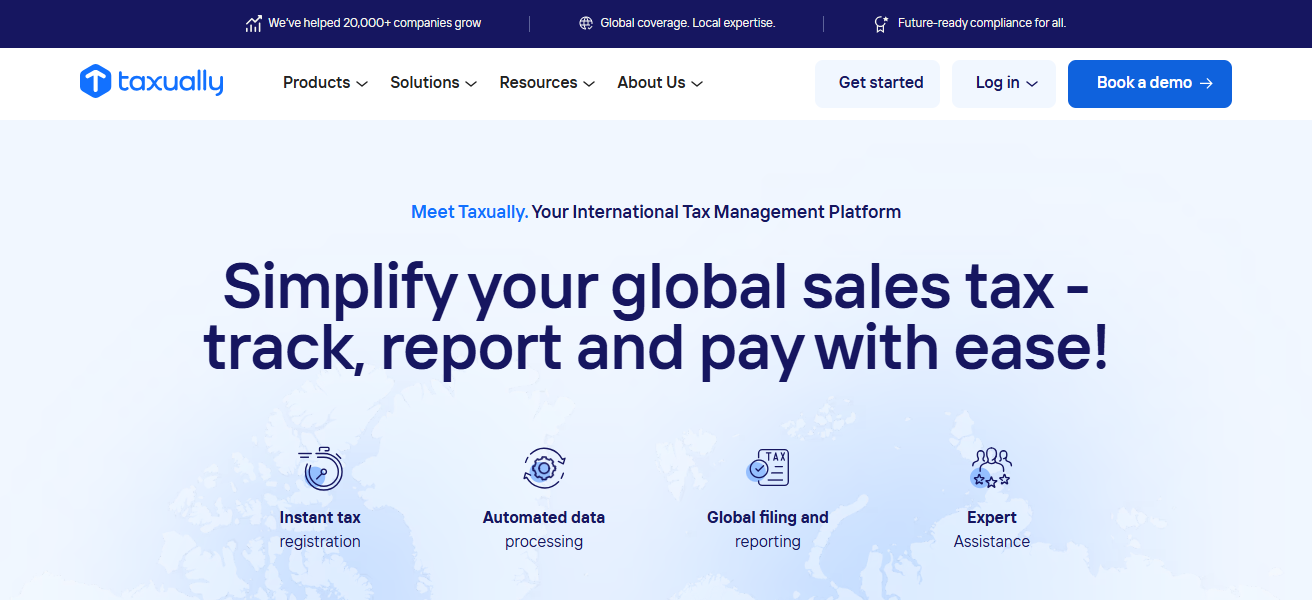
Taxually automates and streamlines tax compliance in real time. It is a fantastic tool for easing tax regulatory compliance for cross border online sellers.
Taxually Features:
Global Compliance Automation: Handles VAT along with sales tax reporting for multiple countries with regulatory updates.
Real-Time Rate Calculation: At checkout or invoice generation, the system uses current tax rules to calculate tax.
Sales & Transaction Syncing: Works along with e-commerce and accounting apps to automate the capture of tax data.
Filing Submission Tools: In supported jurisdictions, the system prepares and submits tax returns.
| Pros | Cons |
|---|---|
| Global VAT and sales tax automation for cross‑border sellers. | Newer/less established than legacy providers. |
| Real‑time compliance updates and integration with sales systems. | Feature set may be smaller than enterprise‑focused engines. |
| Reduces manual filings and compliance risk. | Pricing may vary based on jurisdictions supported. |
| Suited for international e‑commerce businesses. | May require additional tools for deep analytics. |
8. Commenda
Commenda automates serious real-time calculations of e sales tax, VAT, and GST obligations and impacts for e commerce and international sellers, easing the burden on them and keeping them compliant with their flaky rules.
He can track and alert on the physical and economic nexus thresholds activities of clients. It automates the filing of tax returns, the management of exemption certificates, and the integration of tax data across multiple platforms, including QuickBooks Online
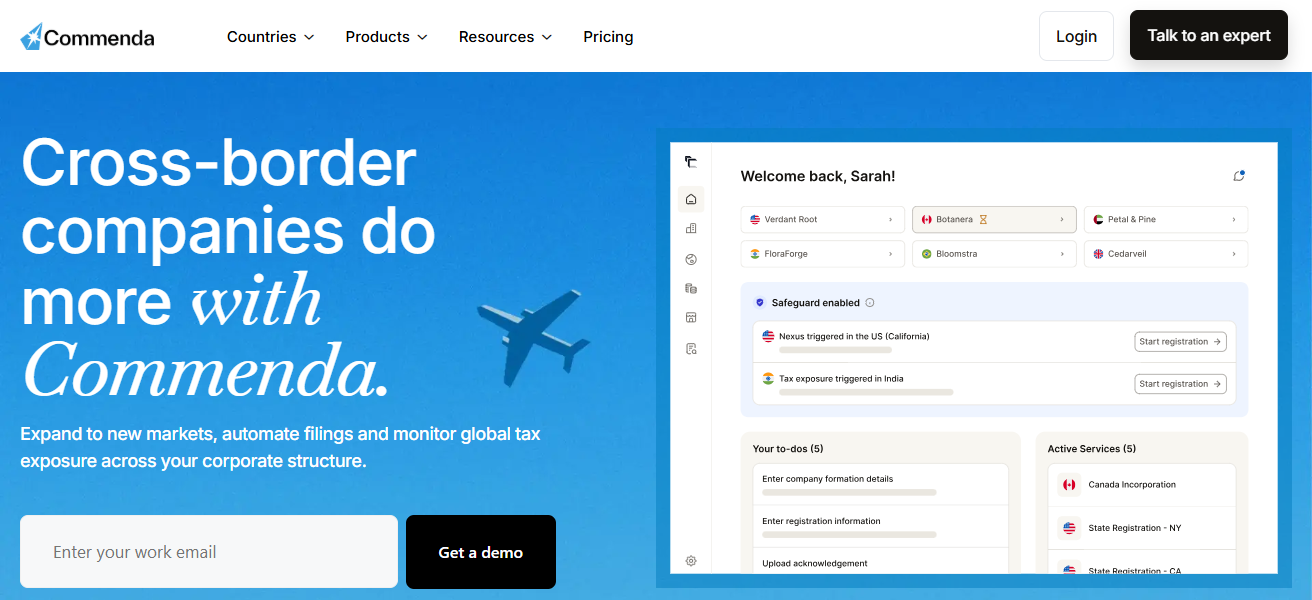
Shopify, and Amazon. Its centralized dashboard that allows the tax manager of the business to monitor all tax obligations and deadlines makes it fundamental for all dynamically growing online businesses.
Commenda Features:
Accurate Tax Calculation Engine: Third party plugins to calculate VAT, sales tax, and GST rates across regions in real time.
Multi-Channel Data Consolidation: Tax data aggregating marketplace, carts, and accounting systems.
Nexus Monitoring Alerts: Alerts businesses when they hit new tax nexus thresholds.
Compliance Dashboard: Single view of obligations, deadlines, and liabilities.
| Pros | Cons |
|---|---|
| Real‑time tax calculations with multi‑channel data consolidation. | More focused on indirect tax; limited direct tax functionality. |
| Alerts when nexus thresholds are reached. | May need integrations for full lifecycle automation. |
| Good for fast‑growing cross‑border sellers. | Not as widely adopted or known as some legacy vendors. |
| Central compliance dashboard for visibility. | Smaller ecosystem of add‑ons than larger vendors. |
9. QuickBooks Online
Small and mid-sized companies often use QuickBooks Online because of its cloud-based setups. The software does tax automation which simplifies how users handle sales tax and sales tax reporting.
Using QuickBooks and its plugins like Avalara, users can automatically compute landing tax due as transactions are entered.
Users can also retrieve summary tax reports for submission. QuickBooks allows users to automate the compliance of integrated financial data because of how seamlessly tax and accounting functions work together.
While tax automation systems offered by larger companies are more complex, QuickBooks Online paired with its plugins provide adequate solutions for tax automation for businesses who desire a more simplified approach.
QuickBooks Online Features:
Sales Tax Calculation – calculates sales order tax and tax liability automatically.
Basic Tax Reports – prepares tax reports for tax return filings and for accountants.
System Integrations – automates tax reporting and filings using tax systems like Avalara or TaxJar.
Accounting First System – tax and bookkeeping are integrated in a single platform.
| Pros | Cons |
|---|---|
| Combines accounting and basic sales tax calc/filing support. | Not a dedicated tax automation engine. |
| Syncs with many payment and sales platforms. | Needs add‑ons for advanced tax compliance. |
| Affordable for small businesses. | Limited global tax capabilities without integrations. |
| Easy to use and popular among startups and SMBs. | Sales tax features are relatively basic. |
10. SAP Tax Compliance
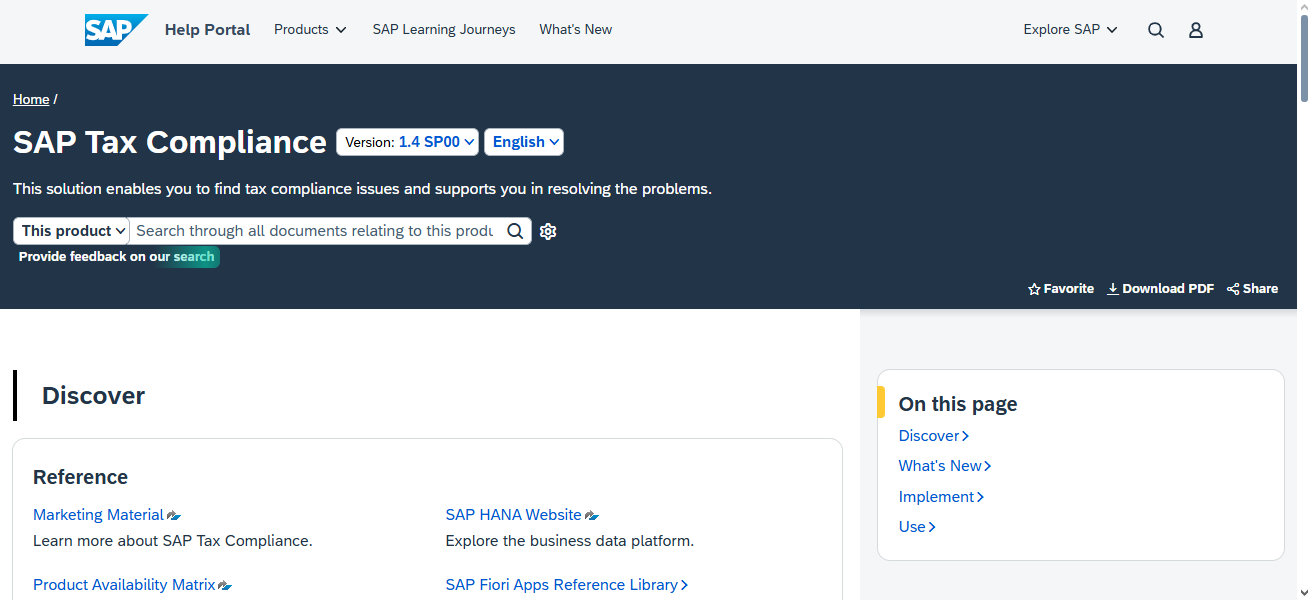
SAP tax compliance provides tax automation services within SAP’s Enterprise Resource Planning system configured for large companies who need automation for tax determination, tax reporting, & tax compliance within their core financial systems.
SAP’s partnerships with Sovos & Vertex enable the platform’s automated calculations for indirect & direct taxes, proper e-invoicing, & real-time global VAT management.
Firms using SAP achieve seamless accounting data & tax compliance data streams & thus derive operational efficiencies as data flows across the system.
Those efficiencies become more beneficial for organizations who operate internationally & must meet regulatory compliance within multiple jurisdictions.
SAP Tax Compliance Features:
ERP Natively Tax Automated – built in to SAP finance modules for seamless integration.
Global Tax Complexity Support – large enterprises have VAT/GST/sales and withholding tax rules support.
Third Party Tax Engines Integration – Compliance becomes more sophisticated with Vertex, Sovos or similar systems.
Automated Tax Reports and Filing – cross border subsidiaries with integrated tax workflows becomes seamless.
| Pros | Cons |
|---|---|
| Built into SAP ERP ecosystem for tight financial integration. | High implementation and maintenance cost. |
| Supports complex global indirect tax and compliance. | Requires SAP expertise to configure and optimize. |
| Can leverage powerful third‑party engines (Sovos, Vertex). | Not practical for small businesses. |
| Excellent for multinational corporations. | Complex licensing and deployment. |
How To Choose Best Global Tax Automation Platforms for Online Businesses
Business Size & Complexity – For straightforward operations, select SMB-friendly options such as QuickBooks or Xero. Vertex, Avalara, or ONESOURCE may be required by larger companies.
Global Tax Coverage – Check if the platform covers the countries and tax types (VAT, GST, sales tax) related to your operations.
Integration Capabilities – It should be able to merge with your e-commerce, ERP, and accounting systems to ensure smooth data transfer.
Automation Features – Find tax automation solutions to help with real-time tax calculations, tax return filing, exemption and debt management, and nexus tracking.
Ease of Use – A simple and intuitive user interface minimizes the likelihood of errors and lowers training costs.
Scalability – the system should be able to expand with the business and manage a growing volume of transactions.
Cost & ROI – weigh subscription or transaction costs against the time saved and reduced risk of compliance issues.
Support & Compliance Updates – make sure you have access to responsive support and tax compliance automation systems that update automatically.
Conclusion
To summarize, it is vital for online businesses to select the appropriate tax automation platform to improve accuracy, compliance, and effectiveness.
Avalara, TaxJar, Vertex, and ONESOURCE operate at different scales and cater to different regions, providing various services to calculate taxes, and automate tax submissions.
Risk and regulation evolve at different paces, but picking a platform that is able to merge easily, adapt with growth, and is updated with regulation, the risk is mitigated, and time is saved.
FAQ
A software solution that calculates, reports, and files taxes automatically, reducing manual errors and compliance risk.
E-commerce businesses deal with multi-jurisdiction taxes; automation ensures accuracy, saves time, and avoids penalties.
QuickBooks Online, Xero, or TaxJar are ideal for SMBs due to affordability and ease of use.
Vertex, Avalara, Sovos, and Thomson Reuters ONESOURCE support complex, multi-country compliance needs.
Yes, platforms like Avalara, Sovos, and Taxually cover VAT, GST, and sales tax globally.