In this article, I will explore the Best HR Software and its usefulness in helping companies manage their employees, payroll, employee performance, and compliance more efficiently.
Selecting the appropriate HR software is critical in facilitating seamless operational processes, enhanced productivity of the workforce, and better employee experience.
Regardless of being small business or large corporation, the best HR management systems will provide smarter business decisions and aid in the growing of the organization.
Key Points & Best HR Management Software
| HR Software | Key Point |
|---|---|
| BambooHR | Strong employee data management |
| Workday | Enterprise-grade scalability |
| Rippling | Unified HR, IT, and finance automation |
| Gusto | Simplified payroll and benefits |
| Zenefits | All-in-one HR solution for SMBs |
| Namely | Tailored for growing companies |
| Paylocity | Employee engagement focus |
| ADP Workforce Now | Comprehensive HR and payroll suite |
| Factorial HR | Modern HR platform for European businesses |
| Zoho People | Affordable HR with strong integrations |
10 Best HR Management Software
1. BambooHR
BambooHR is an HR management system aimed at small and medium-sized businesses. It consolidates employee information and onboarding and performance review management. Its automation helps alleviate the HR department s administrative burden.
It offers advanced user reporting and customizable automation. It even allows HR to work on the go. It is easy to set up, offers satisfied users, and is great for companies looking for their HR to work more efficient and improve employee satisfaction.
Features BambooHR
Employee Database: Keeps employee records with the ability to store data in a centralized manner, making it easier to locate and update records.
Onboarding & Offboarding: Automated workflows for managing documents and ensuring a smooth process automation of tracking hires and exits.
Performance Management: Availability of goal setting, performance appraisals, and review/purpose of feedback to help talent and on active management.
Reporting & Analytics: Available tools for HR to create custom reports for tracking turnover and headcount engagement analytics.
| Pros | Cons |
|---|---|
| User-friendly interface with intuitive navigation. | Payroll features are limited or require third-party integration. |
| Strong onboarding, performance management, and employee self-service. | Can be expensive for very small teams. |
| Good reporting and analytics for HR insights. | Some advanced features require higher pricing tiers. |
2. Workday
Workday is a fully integrated cloud-based HR and finance software used by some of the largest companies in the world.
It provides a single system for managing core HR functions, talent management, workforce planning, payroll, and analytics.
The real-time data and predictive analytics tools available in Workday give HR managers the data they need to make educated, strategic decisions.
The system’s adaptable framework addresses the sophisticated operational and regulatory requirements of multinational establishments.
The software as a services provides regular updates, assisting very large companies in data-driven HR
Optimizing the performance of working talent, and actively managing the development of available talent.
Features Workday
Unified HR & Finance: HR, payroll, and financial planning are consolidated to allow for better cross functionally.
Workforce Planning: Sophisticated workforce tools for forecasting, budgeting, and planning for objectives.
Talent Management: Comprehensive talent management functionality to support recruitment, learning, succession planning, and performance management.
Global Compliance: Able to comply with every labor law around the world as well as tax laws and payroll in different currencies.
| Pros | Cons |
|---|---|
| Enterprise-grade HR + finance + analytics in one platform. | Very high cost and complex implementation. |
| Powerful global compliance and workforce planning tools. | Steep learning curve for administrators and users. |
| Real-time data insights and forecasting. | Longer deployment timelines compared to others. |
3. Rippling
Rippling is a comprehensive solution for managing HR and IT functions. All HR functions and devices and applications used by employees are synchronized and managed by Rippling.
Payroll functions, employee benefits, onboarding, time tracking, and compliance reporting are managed by Rippling from one platform.
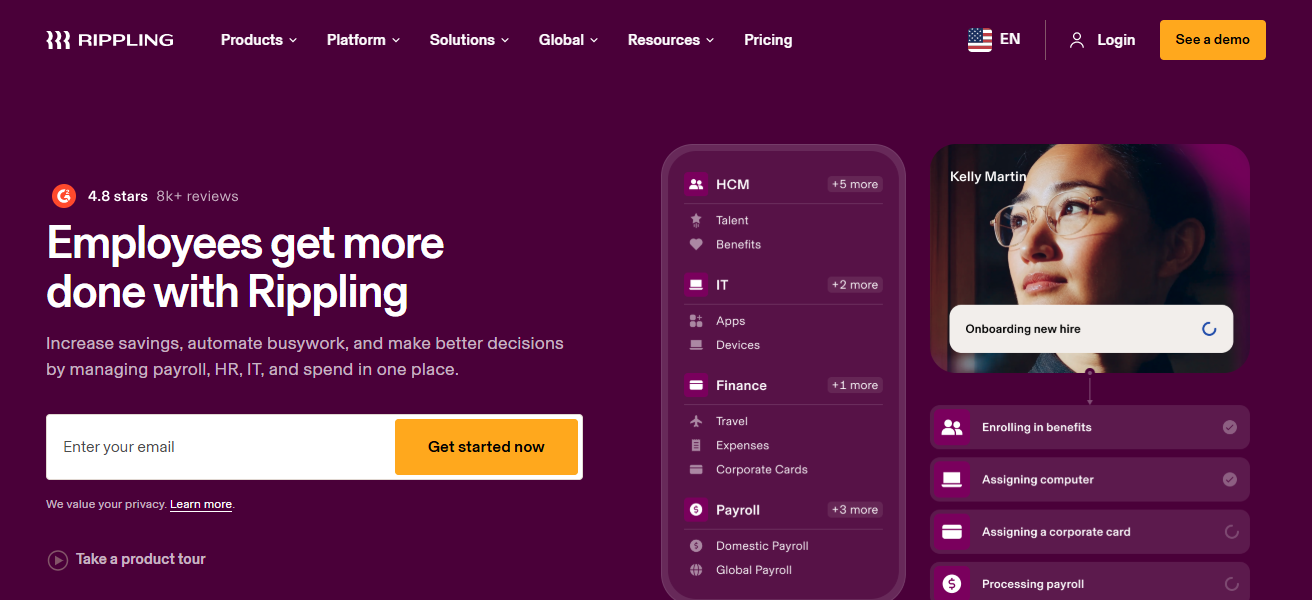
The Instant Device Provisioning by Rippling is a great feature where devices and applications are provisioned based on employee HR workflows.
This is great for relieving employee administrative burden and also improves security. Rippling is a good option for the rapidly growing company to gain efficiency in HR and IT coordination.
Features Rippling
HR + IT Integration: Brings together automation of IT tasks and HR.
Payroll & Benefits: Single dashboard to manage payroll, deductions, tasks on federal and state filings, and enrollment in benefits.
Employee Management: Fully tracks employee records with very hands-off process including workflow for onboarding tasks.
| Pros | Cons |
|---|---|
| Combines HR with IT (device/app provisioning). | Interface may feel complex for non-technical teams. |
| Automated processes reduce manual tasks. | Some advanced features best suited for tech-focused companies. |
| Modular pricing with flexible add-ons. | Customer support experiences vary. |
4. Gusto
Gusto is a very easy-to-navigate HR, payroll, and benefits hub focused on small businesses. It makes running payroll easier because it calculates tax automatically and even files them for you, making compliance easier.
Gusto handles benefits, health, and retirement insurance. Gusto’s dashboard makes it easy to manage employees, PTO, and onboarding.
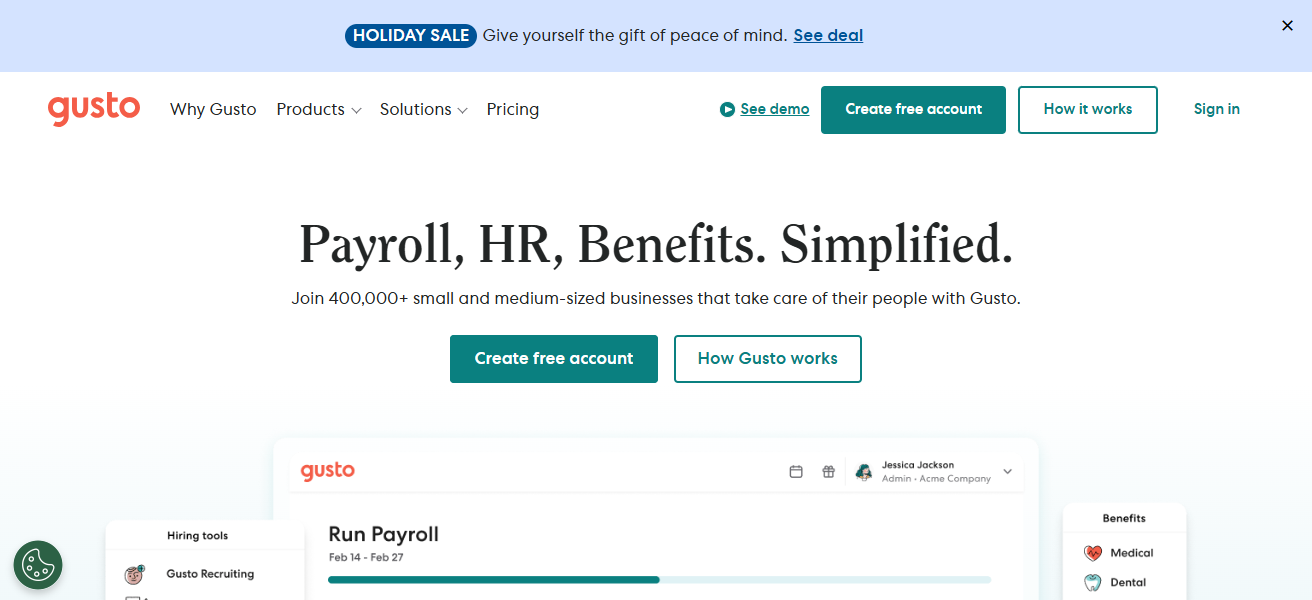
Gusto’s customer support is top tier, and their pricing is reasonable, which makes it easier for smaller teams to manage HR tasks without a lot of experience.
Gusto is a great option for organizations that want to avoid complications and have a dependable system.
Features Gusto
Automated Payroll: Streamlined payroll with tax calculation and submission to federal and state offices.
Benefits Administration: Facilitates the setup of health insurance, retirement plans, and comp for small workgroups.
Employee Self-Service: A system that allows employees to access pay slips, benefits, and other personal records.
Easy Setup: Intuitive software targeted at small businesses with no HR staff.
| Pros | Cons |
|---|---|
| Extremely user-friendly and easy to set up. | Limited advanced HR features compared to enterprise tools. |
| Excellent payroll automation and tax filings. | Benefits options vary by region. |
| Transparent pricing with strong support. | Not ideal for large or global organizations. |
5. Zenefits
Zenefits has removed the barriers between benefits, payroll, and employee lifecycle management, creating one streamlined HR platform.
Best offers individualized benefits management, ACA compliance, and automatic enrollment features.
Zenefits further offers time management and performance management tools. These features allow the platform to help organizations manage their efficiency within the organization.
Its various modules let customers customize the rollout to fit their needs. Zenefits makes HR processes easier, helps organization spend less time on compliance, and increases employee engagement.
Features Zenefits
Benefits Management: Solutions for health insurance and other benefits with compliance and eligibility management.
Time & Attendance: Includes hour tracking, PTO and schedule requests, and other PTO management features.
Payroll Integration: Pays employees for work time and includes benefits and other payroll integrations.
Compliance Tools: Automated compliance notifications and ACA reporting features for compliance management.
| Pros | Cons |
|---|---|
| Comprehensive benefits administration tools. | Interface can feel dated or cluttered. |
| ACA compliance and eligibility tracking. | Pricing increases as modules are added. |
| Includes payroll, time tracking, and HR in one. | Some users report inconsistent support quality. |
6. Namely
Particularly, Namely is an HR platform that caters to the mid market segment, emphasizing the personalization of services and customer satisfaction.
Some of the essential services that an HR vendor should possess include payroll, benefits, performance and talent management, and administration of HR services.
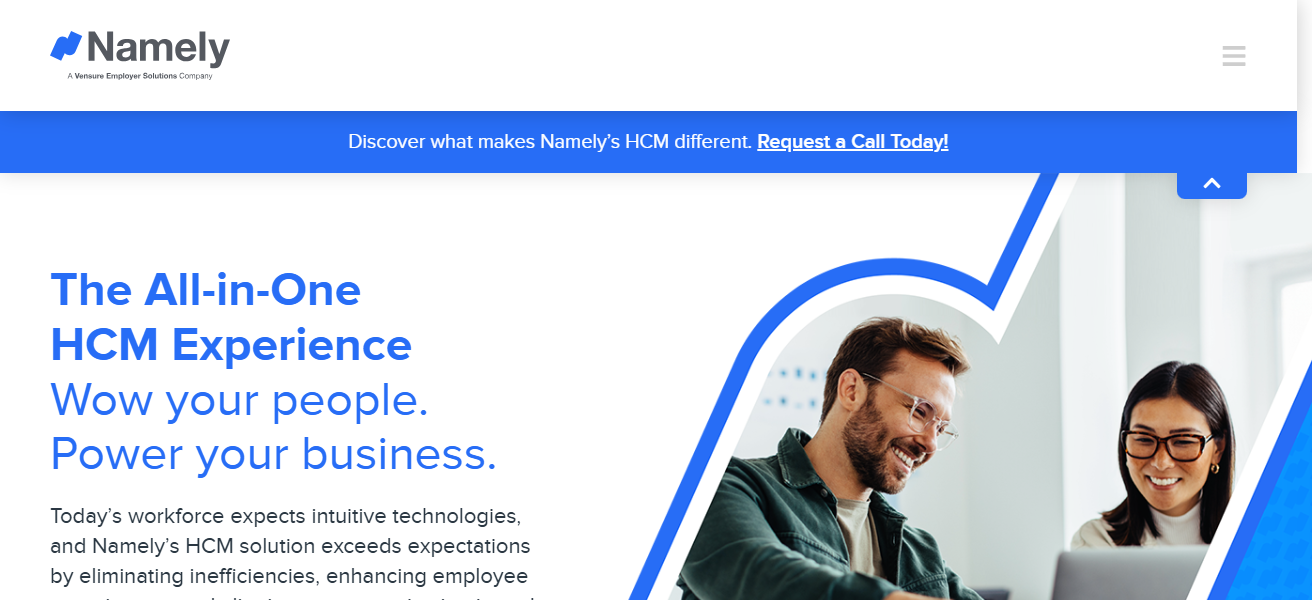
Namely has a hands-on approach to design which helps customers and support teams achieve a smooth and rapid implementation of HR processes.
Namely is great for developing organizations that want the right amount of automation, personalization, and support to efficiently handle the the services and functions of HR.
Features Namely
Core HR Functions: A system of all employee records and documents; includes employees’ org chart.
Payroll & Benefits: Benefits and payroll management for the mid-market space.
Performance & Reviews: Tools available for setting, tracking, and reviewing goals and performance.
HR Support Services: Support to HR teams is offered in a concierge model
| Pros | Cons |
|---|---|
| Personalized service and HR concierge support. | Not as scalable for international enterprises. |
| Solid reporting and compliance tools. | Pricing not fully transparent upfront. |
| Good for middle-market HR needs. | Customization can feel limited in places. |
7. Paylocity
Paylocity offers an all-encompassing HR and payroll service however, they mostly deal with mid and large companies. It offers payroll processing, employee benefits, time tracking, and employee analytics.
The employee self-service portals and mobile applications reduce employee HR queries, and instead direct question to the self-service.
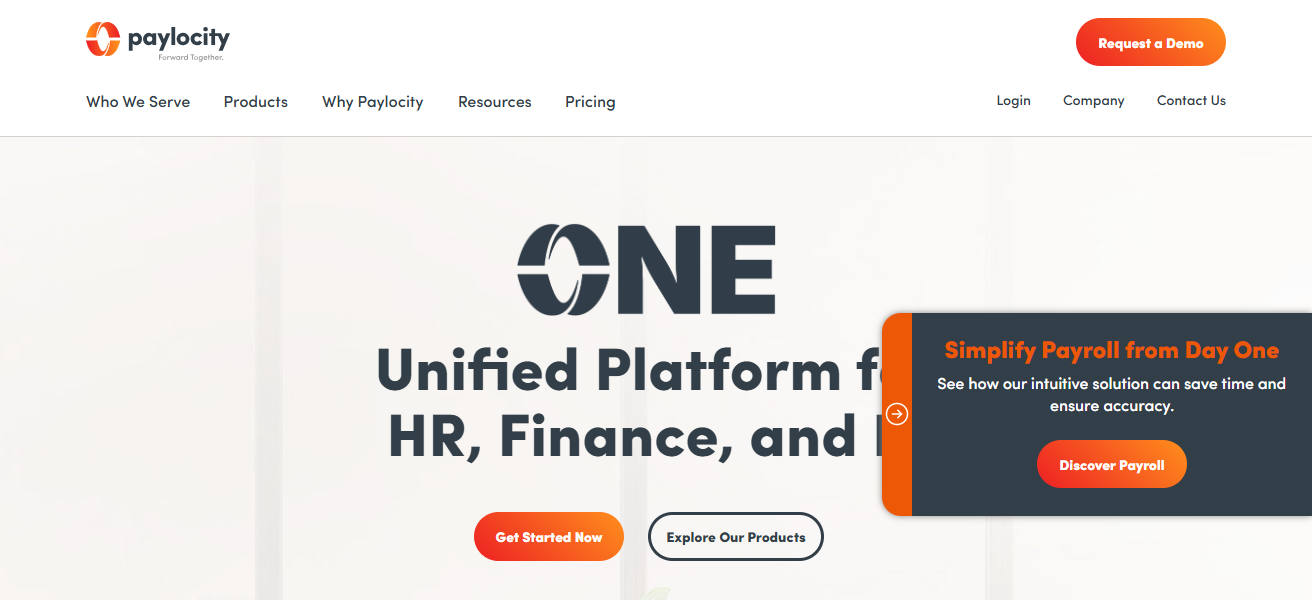
It is useful for any business, but especially those with complex labor laws due to the advanced scheduling and compliance features.
The custom dashboards provide HR teams and other departments with the tools to obtain and analyze key metrics, and strengthen overall compliance.
Features Paylocity
Payroll & Tax: Payroll processing is seamless while tax filing, calculation, and garnishment to default tax rates is automated.
Workforce Management: Tools for the employees of the company whose work is paid by the hour. Scheduling, time clocks, tracking of labor.
Employee Engagement: Tools for employees engagement, portable connection, and social media feeds.
Analytics & Reporting: dashboards, compliance, and costs of labor.
| Pros | Cons |
|---|---|
| Strong workforce management and scheduling. | User interface may be challenging initially. |
| Payroll + benefits admin with rich features. | Pricing is higher for smaller teams. |
| Employee self-service and mobile app. | Implementation support varies in quality. |
8. ADP Workforce Now
ADP Workforce Now is an all-in-one employee management system built for organizations of all sizes. It consolidates HR, payroll, benefits, time, employee tracking, and compliance management.
ADP is Workforce Now’s most prominent international competitor due to their global reach and regulatory compliance.
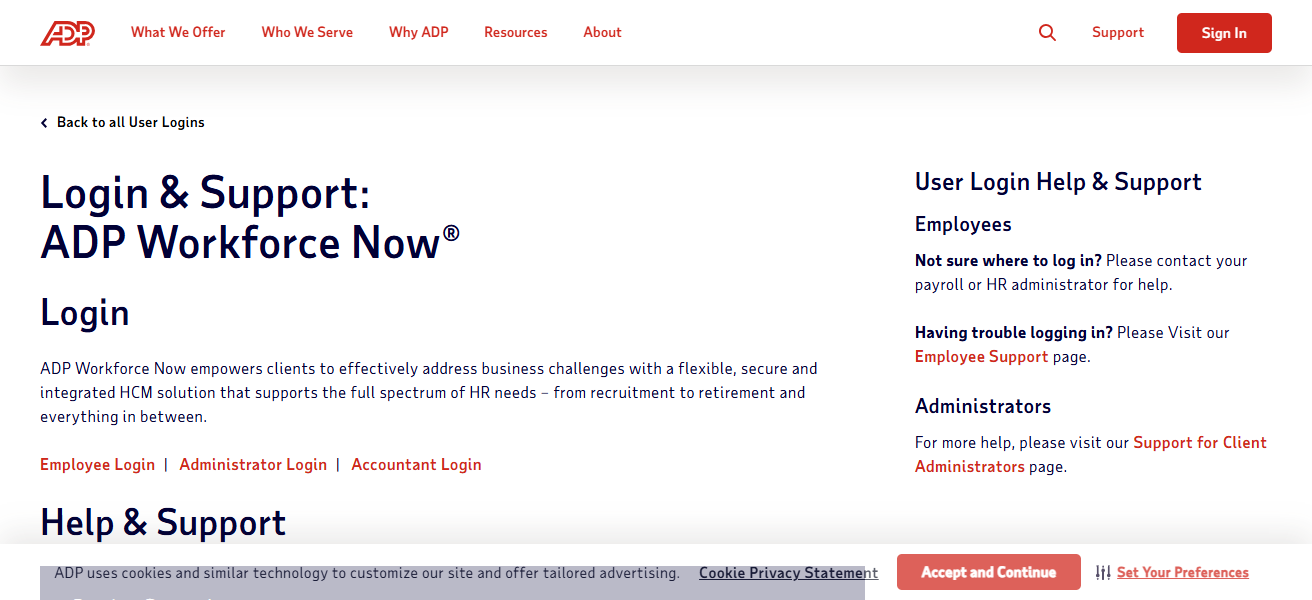
Workforce Now communicates mobility, integration, operational HR assistance, data accuracy, and user experience to employees to streamline analytics and reporting for strategic development of the workforce.
Features ADP Workforce Now
Comprehensive Payroll: 401k Reports and Trusted Engines of Payroll, Taxes, and Compliance for Multiple Jurisdictions.
HR Management: Management of employees, automation of HR processes, and document management are all part of one system.
Talent & Performance: Recruitment, performance management, and development of the workforce.
Global Support: Built for companies with a presence in several countries and regions.
| Pros | Cons |
|---|---|
| Deep payroll expertise and compliance backing. | Can be expensive for smaller businesses. |
| Great for large and multinational operations. | Some features feel dated in design. |
| Strong reporting and integration capabilities. | Support responsiveness can vary by region. |
9. Factorial HR
Factorial HR is a user-friendly HR platform that is ideal for small and growing businesses as it streamlines employee data management, time tracking
leave requests, and performance reviews. The software uses automation to remove manual tasks and decrease the likelihood of human error.
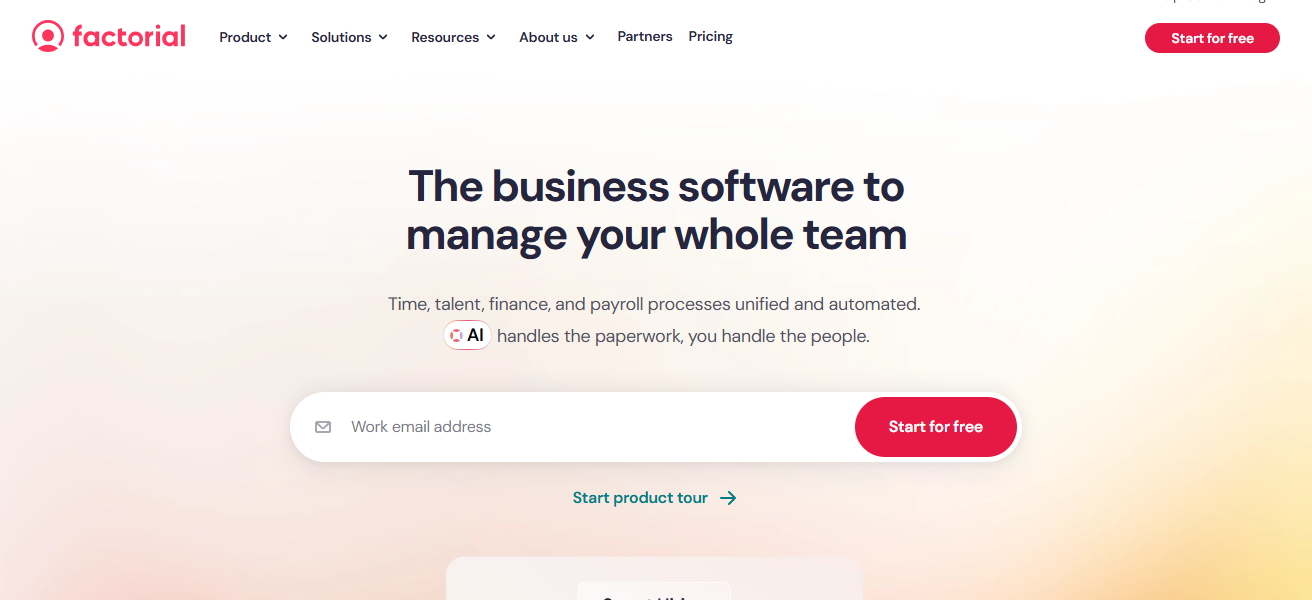
Managers are able to monitor employee activity and report on workforce trends as a result of the software’s analytical functions.
The system is easy to use and employers are able to get it for a competitive price, making it a good platform for businesses needing the fundamentals of HR and are on a budget. The system is easy for HR teams to use, the interface is simple, and customer support is responsive.
Features Factorial HR
Leave & Time Tracking: Straightforward tools for managing time off and absences
Employee Records: Centralized system for the storage of personal details and HR records.
Performance Reviews: Basic tools for performance reviews and feedback.
Automation Tools: Automated reminders and triggers to minimize work.
| Pros | Cons |
|---|---|
| Affordable and easy to use for small teams. | Limited advanced enterprise features. |
| Simplifies leave, time tracking, and performance. | Integrations aren’t as extensive as bigger tools. |
| Clean interface & automation reduce manual work. | Reporting depth is limited compared to larger solutions. |
10. Zoho People
As a part of Zoho Ecosystem, People is also a configurable product. As an HR product, Zoho People covers majority of the core HR features such as employee database management, attendance, leave management, performance reviews, etc.
Organizational needs can be met by customizing workflows and drawings using the process automation capabilities of the product. Mobility of the self-service HR tools is significant, as automation in administration processes.
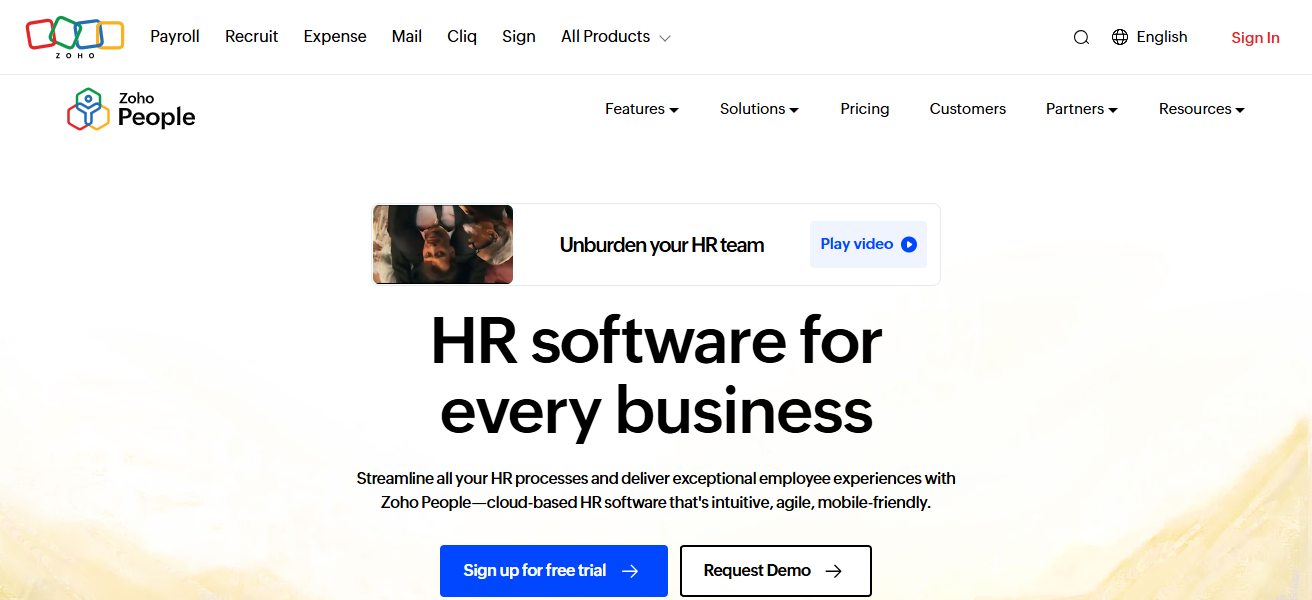
There is a strong logic behind using the product because People is integrated with other systems, and there are good analytics features.
People is a good HR product for small and medium sized companies because it is a low cost investment and can be scaled easily.
Features Zoho People
Custom Workflows: Design and automate processes in HR to match the processes of your organization.
Time & Attendance: Manage work hours, attendance, and shift assignments.
Performance Management: Tool for tracking goals, reviews, and development of employees.
Integration: Zoho applications (CRM, Payroll, Projects) and various others function together without interruption.
| Pros | Cons |
|---|---|
| Highly customizable workflows and automation. | Interface sometimes feels cluttered. |
| Integrates well with Zoho ecosystem. | Some advanced HR features need higher plans. |
| Affordable pricing with useful self-service. | Customization has a learning curve. |
How To Choose Best HR Management Software
Identify Your Needs Determine core components necessary (payroll, time tracking, employee onboarding, performance evaluations) to expand functionality on a per employee basis.
Scalability Determine if the software is capable to be deployed on a expanding basis starting with basic HR functionality, thereby allowing the software to be used without the need to switch as the functionality of the software becomes a core part of the operations.
User Friendliness Determine if the interface has functionality to be used without steep training by HR teams as well as the employees using the software
Integration Capabilities Verify if the software has functionality of integrating itself with other tools (payroll systems, emails, calendars, accounting software)
Compliance Support Determine if the software has built features that assist in tracking the compliance of the software, such as compliance with timeline filing of labor compliance, compliance with tax filing, compliance with other laws/issues that are regional (more critical for companies that have a multinational approach to business)
Cocnlusion
In cocnlusion Choosing the right HR management software is ideal for organizations that want to improve the management of employees and streamline HR work.
The right program easily accomplishes and reduces time and error spent on payroll, onboarding, tracking of work performance, and compliance.
Investing in reliable HR management software is key to productivity, support, and positive employee experience whether you operate a small business of an enterprise, and long-term business growth is inevitable.
FAQ
HR management software is a digital tool that helps businesses manage employee data, payroll, recruitment, onboarding, performance, benefits, and compliance in one place.
It streamlines HR processes, reduces paperwork and errors, improves data accuracy, and saves time—letting HR teams focus on strategy and employee experience.
Key features include payroll, time tracking, onboarding, performance reviews, benefits management, compliance tools, reporting, and employee self-service.
Define your HR needs, check scalability, integrations, user-friendliness, support quality, and compare pricing before choosing.
Yes—many tools like Gusto, Zoho People, and Factorial HR are affordable and designed specifically for small teams