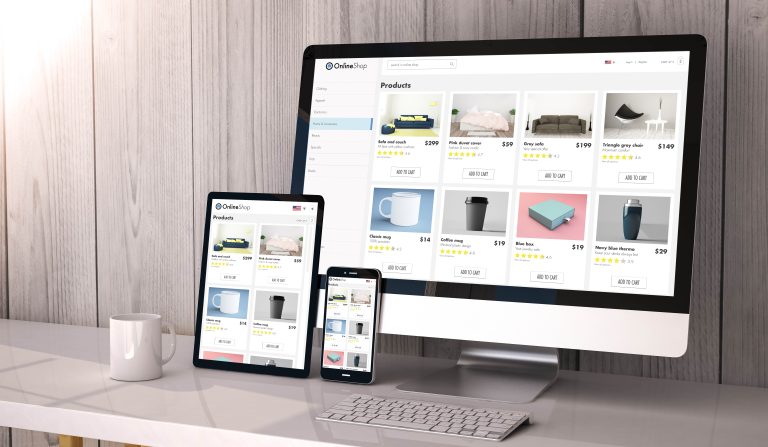
This article will focus on the most effective influencer commerce platforms that assist brands in all facets of working with creators, campaign management, and performance tracking, as well as influencer discovery, workflow automation, and selling creator content.
In today’s digital marketing environment, the right influencer commerce platform will help brands increase their visibility, drive conversions, and create sustainable partnerships.
Key Points & Best Influencer Commerce Platforms
| Platform | Key Point |
|---|---|
| Influencer Hero | Comprehensive campaign management with discovery, analytics, and ROI tracking |
| AspireIQ | Community-driven approach enabling long-term influencer-brand relationships |
| Upfluence | Data-rich influencer discovery with advanced filtering and e-commerce integrations |
| Grin | E-commerce native platform built for Shopify and direct-to-consumer brands |
| CreatorIQ | Enterprise-grade analytics trusted by global brands for scalability |
| Tagger | AI-powered insights for influencer selection and campaign optimization |
| Klear | Influencer relationship management with strong social listening tools |
| Impact.com | Affiliate + influencer commerce combining partnerships with performance tracking |
| HYPR | Audience authenticity verification ensuring real engagement and fraud detection |
| Mavrck | Full-funnel influencer activation from nano to celebrity creators |
10 Best Influencer Commerce Platforms
1. Influencer Hero
Influencer Hero functions as an all-in-one influencer commerce and marketing solution that streamlines the automation of discovery, outreach, campaign management, affiliate tracking, and performance analytics—all from a consolidated dashboard.
The platform employs AI-based tools to assess audience validity and eliminate low-quality or underperforming influencers, which helps brands in maintaining optimized spend.
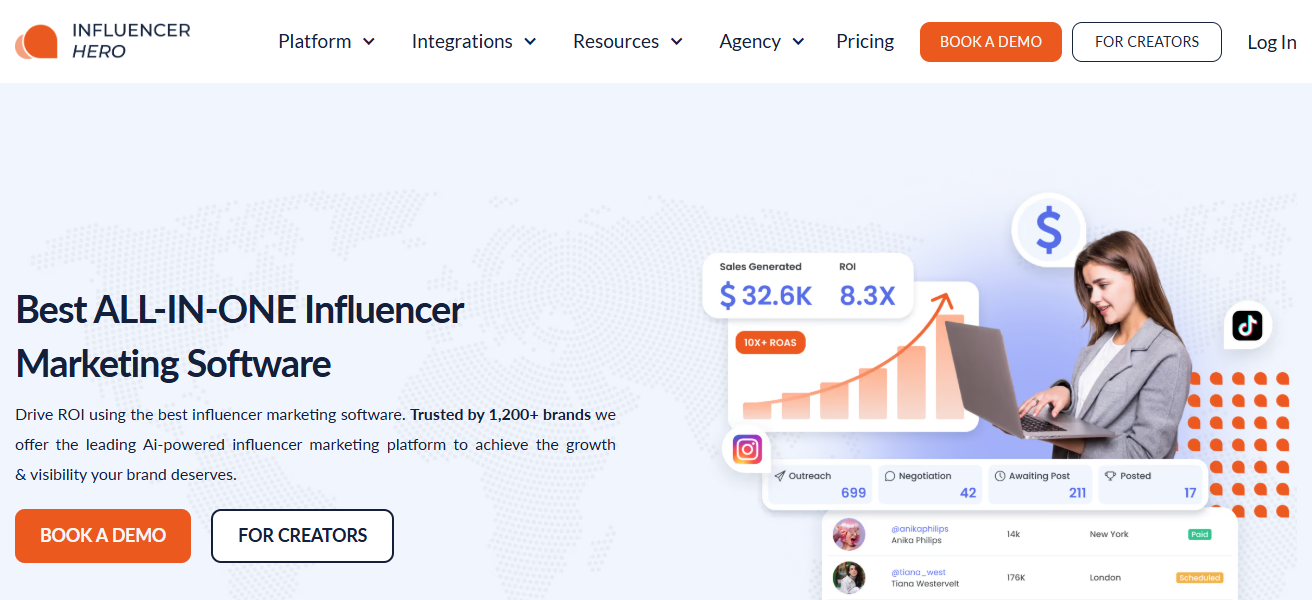
The platform’s comprehensive workflow is perfectly suited for e-commerce teams and agencies looking to manage creator programs efficiently while tracking ROI across different platforms, eliminating the need for multiple tools.
Influencer Hero Features
- Influencer Discovery: Find with help of optimized filters relevant creators by niche, audience size, engagement, and audience.
- Campaign Automation: All-in-one tools to streamline outreach, communication, and campaign workflows.
- Affiliate & Performance Tracking: Monitors affiliate links, conversions, and campaign overall ROI.
- Audience Quality Scoring: Verify and ensure the audience is real to eliminate fake or lower tier influences
| Pros | Cons |
|---|---|
| All-in-one platform for discovery, outreach, campaign management, and affiliate tracking, simplifying workflow. | Newer platform with fewer advanced enterprise features than long-established competitors. |
| Strong automation and ROI tracking tailored for e-commerce and influencer commerce. | Reporting depth may not match larger legacy platforms. |
| Audience authenticity checks help reduce fake influencers and wasted spend. | Pricing can be high depending on feature tier. |
2. AspireIQ
AspireIQ, now commonly referred to as Aspire, prioritizes long-term partnerships with creators and brand ambassadors over short-term promotional activities.
Its expertise in community-based strategies allows brands to cultivate creators as long-term collaborators, producing user-generated content and fostering genuine audience interactions.
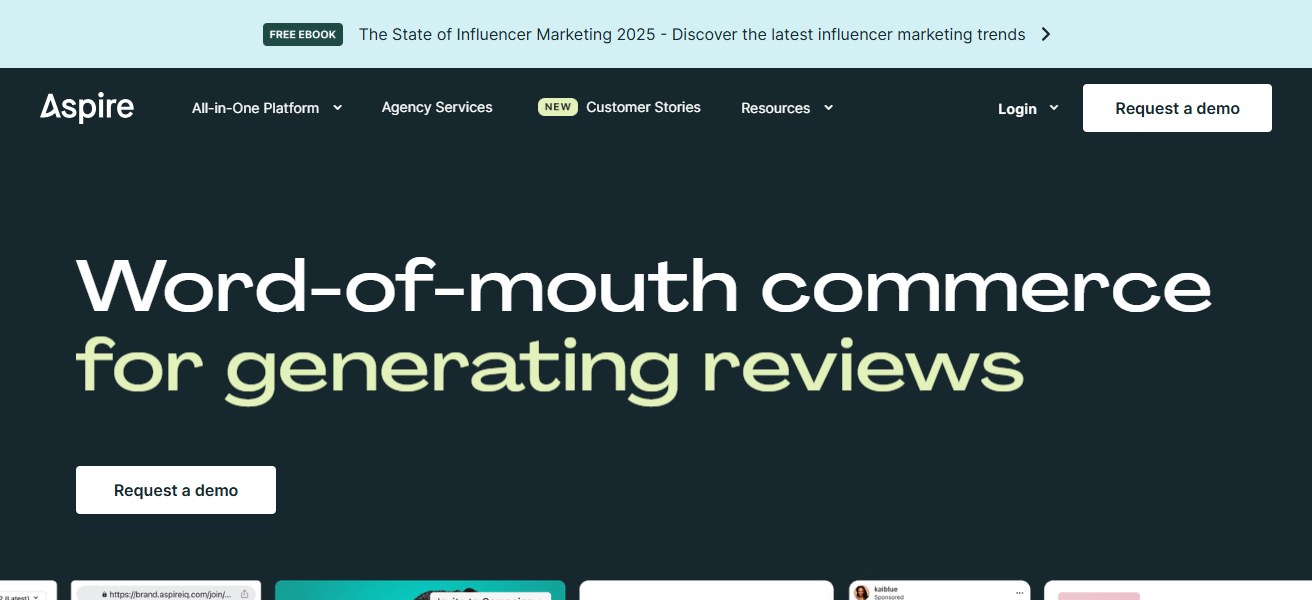
Aspire seamlessly connects to e-commerce platforms like Shopify to provide brands with campaign results relative to sales.
Its marketplace and CRM tools simplify the processes of creator discovery, content approvals, and performance tracking.
Aspire IQ Features
- Creator Marketplace: Influencer’s applications to collaborate with your brand decreases your outbound search efforts.
- Relationship Management (CRM): Contact and workflow centralization fosters the building of creator partnerships.
- Automated Workflows: Campaign execution is simplified by content approvals, payment, and scheduling streamlining.
- Performance Analytics: Engagement, conversions and long-term impact of the ambassador program reports.
| Pros | Cons |
|---|---|
| Excellent for building long-term relationships and ambassador programs. | Pricing isn’t always transparent and can be costly for small teams. |
| Marketplace with creator applications reduces outbound outreach workload. | Filtering inbound applications can be time-intensive. |
| User-friendly interface and solid campaign workflow tools. | Advanced attribution reporting takes time to master. |
3. Upfluence
Upfluence is unique for its breadth of e-commerce integrations and large influencer database, which allows brands to link influencer activity to sales and revenue.
Brands can search for influencers based on niche, geography, audience size, engagement, and other metrics to find the best influencers for their campaigns.
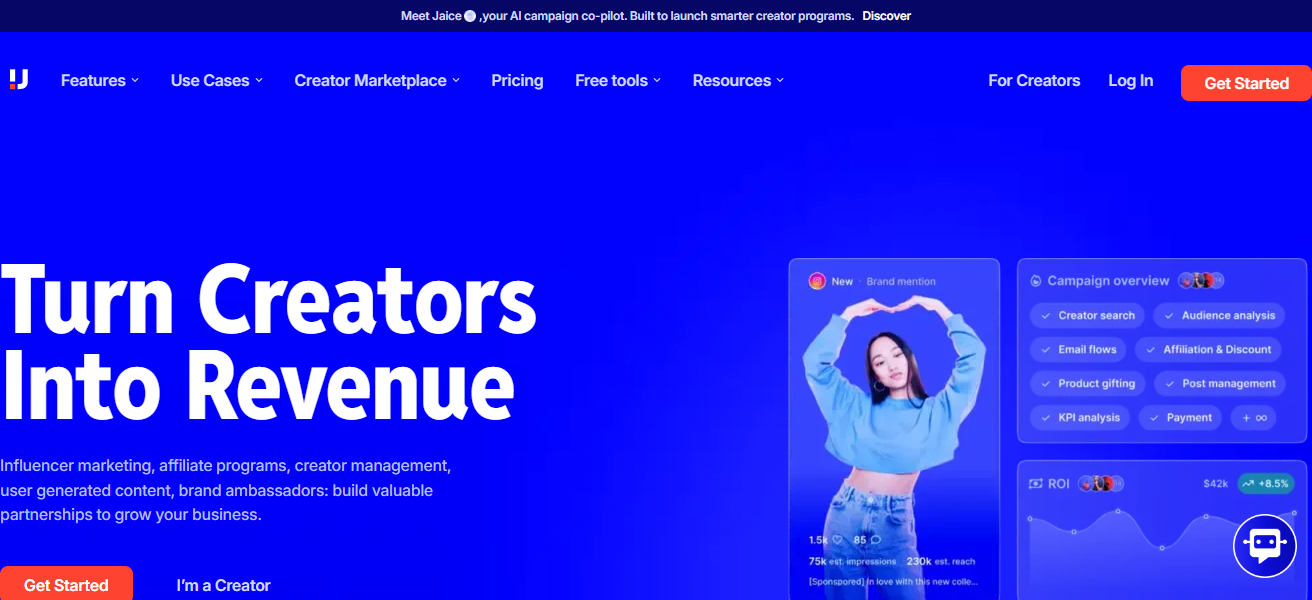
For large and growing brands who want to take a more analytical approach to influencer marketing and measure the outcomes, Upfluence is an ideal partner. They provide analytics, bulk outreach, and affiliate management tools.
Upfluence Features
- Influencer Directory: Searchable influencer database with filters like location, audience, and engagement.
- E-Commerce Integrations: Directly links influencer actions to sales with Shopify and other platform integrations.
- Live Capture: Generates outreach opportunities by tracking influencer actions and site visitors.
- Affiliate & Tracking Tools: Automated generation of affiliate links and tracking of sales to assign revenue.
| Pros | Cons |
|---|---|
| Massive influencer database with detailed filters for precise targeting. | Higher price point, especially for smaller brands with limited budgets. |
| Deep integrations with e-commerce platforms and affiliate systems. | Some influencer profiles may be outdated or need manual verification. |
| Live capture tools help identify influencers from site traffic. | CRM features can be less intuitive for beginners. |
4. Grin
Grin specializes in influencer commerce. eCommerce and direct-to-consumer brands use Grin because it’s designed to streamline their operations.
The features Grin offers includes influencer discovery, relationship management, content tracking, affiliate link management, and ROI analytics.
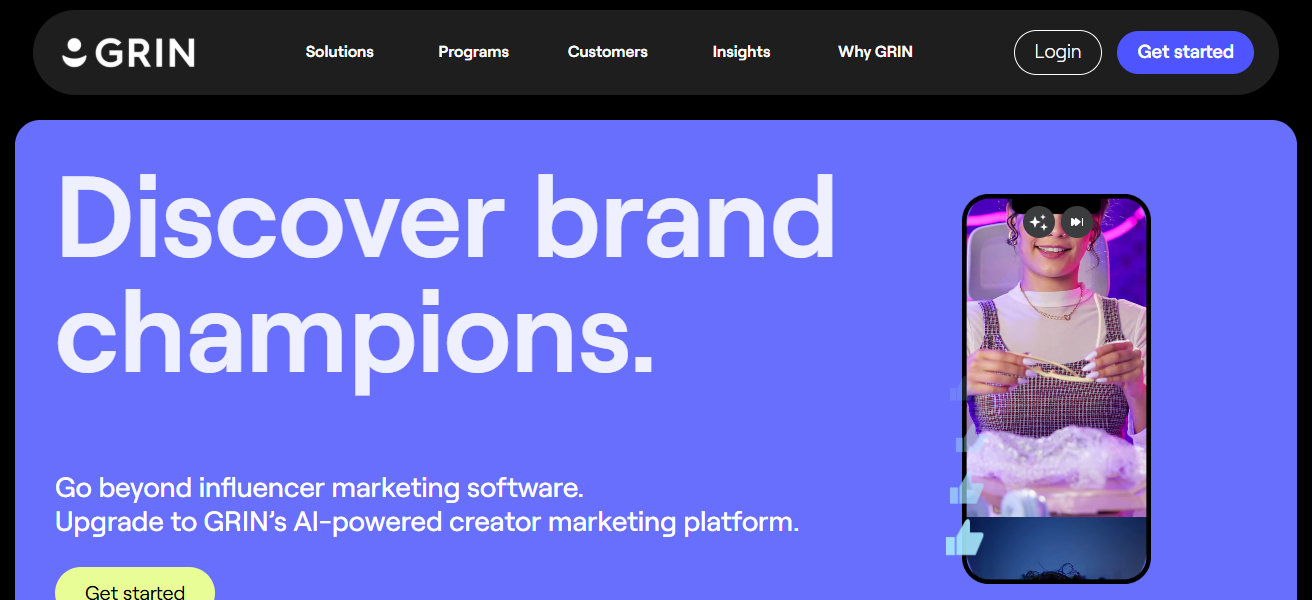
Marketers can oversee product seeding, campaign workflows, and performance attribution, thanks to Grin’s extensive integrations with tools such as Shopify.
Grin simplifies turning influencer marketing into actual sales with its focus on long-term partnerships and reporting.
Grin Features
- Deep E-commerce Integration: Connects with major online shop platforms to assess influencer effect on real sales.
- Influencer CRM: Consolidates influencer contact info, content bundles, and communication records on a singular dashboard.
- Automated Gifting & Payments: Streamlines product seeding, payment, and fulfillment automation.
- Campaign Tracking: Engagement, conversion, and ROI analytics for influencer marketing available in real-time.
| Pros | Cons |
|---|---|
| Seamless e-commerce integrations with real-time tracking tied to revenue. | Designed more for established e-commerce, not ideal for service-based brands. |
| Strong CRM for influencer relationship management. | Higher cost and complexity for small teams or startups. |
| Automates gifting, payments, and reporting in one place. | Certain campaign workflows can feel rigid. |
5. CreatorIQ
CreatorIQ is an influencer marketing and commerce platform designed for major businesses and international agencies.
CreatorIQ provides strong influencer marketing services, and incorporates AI for influencer forecasting and cross-channel analytics, and security measures for multi-market campaigns.
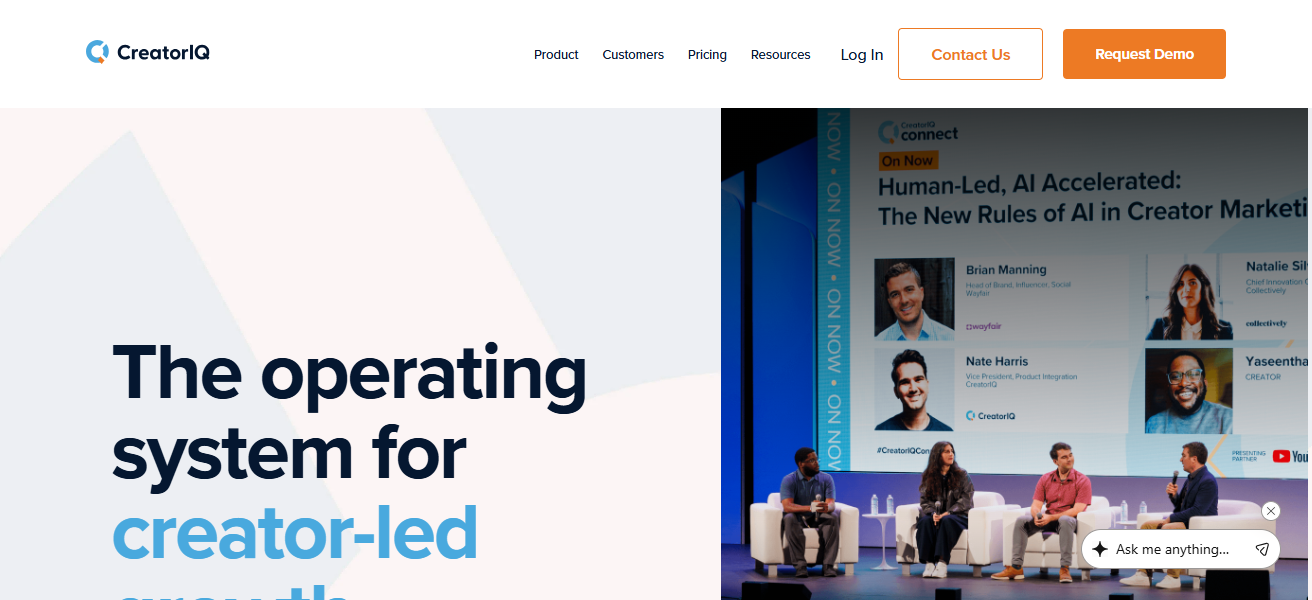
CreatorIQ is best for large teams that need scalability and cross-channel governance. Their platform is able to consolidate influencer data, campaign workflows
Content approvals, and performance reports while integrating with additional marketing systems. Tools like these foster deep measurement and broad cross-channel analytics.
CreatorIQ Features
- Enterprise-Grade Analytics: Tier-one analytics, AI-driven insights and benchmarks for large-scale campaigns.
- Worldwide Creator Discovery: Discovers influencers globally with audience data and scoring.
- Fraud Detection & Compliance: Ensures authentic audience and campaign safety at large scale.
- Workflow & Approval Tools: Integrated content review, campaign timeline, and cooperation cross-team.
| Pros | Cons |
|---|---|
| Enterprise-grade analytics and AI-based performance scoring. | High cost and steep learning curve for smaller operations. |
| Excellent for global and multi-market campaigns. | Platform setup and integration can be time-intensive. |
| Advanced fraud detection and compliance tools provide confidence. | Interface complexity makes onboarding slower. |
6. Tagger
Tagger, or Tagger Media, describes itself as a data-driven influencer commerce and campaign management platform, now a partner of Sprout Social. It integrates influencer discovery, audience profiling, and CRM with outreach and analytics.
Tagger helps brands identify creators that best fit the target demographics and campaign objectives.
Its extensive reporting functions assist planners, performance evaluators, and ROI reporters on all the major social platforms. It serves brands and agencies that require advanced analytics.
Tagger Features
- Data-Driven Discovery: Audience and influencer analytics to match creators for specific campaign objectives.
- Cross-Channel Analytics: Insights and analytics on all social media for macro and micro influencer performance.
- CRM & Campaign Tools: Integrated planning, management, and assessment of influencer campaigns for a complete solution.
- Audience Segmentation: Filters and categorizes influencer audiences for outreach and relevance.
| Pros | Cons |
|---|---|
| Sophisticated data-driven discovery with strong audience insights. | May be more complex than needed for small campaigns. |
| Built-in CRM and workflow tools to manage campaigns end-to-end. | Analytics reports can be overwhelming for new users. |
| Useful segmentation tools for niche targeting. | Pricing tends toward the premium side. |
7. Klear
Klear, which recently became part of Meltwater, has integrated influencer commerce with analytics, social listening, and audience analytics.
It assists companies in discovering social media influencers pertaining to specific niches and managing all campaign activities including outreach, tracking, and performance.

Klear offers analytics that aid in Public Relations and reputation management, which is helpful for teams that wish to consolidate influencer marketing with other media strategies. Its multi-channel support provides insight into effectiveness across different platforms.
Klear Features
- Social Listening: Tracks campaign buzz and identifies creators by monitoring trends and conversations.
- Audience Profiling: Comprehensive demographic breakdowns help with audience fit and alignment.
- Multi-Platform Support: Analyses influencer performance on Instagram, TikTok, YouTube, and other platforms.
- Campaign Analytics: Provides dashboards to evaluate performance and engagement on campaigns.
| Pros | Cons |
|---|---|
| Powerful social listening and audience profile analytics. | May require additional tools for full investor commerce automation. |
| Good cross-platform support to view influencer impact across channels. | Interface can be outdated compared to newer competitors. |
| Strong for PR-integrated influencer strategies. | Not as tailored for pure e-commerce attribution. |
8. Impact.com
Impact.com is a partnership automation platform that goes beyond conventional affiliate and performance marketing to include influencer commerce.
It consolidates contracts, payment systems, and performance tracking for influencers and other partners within a single platform.
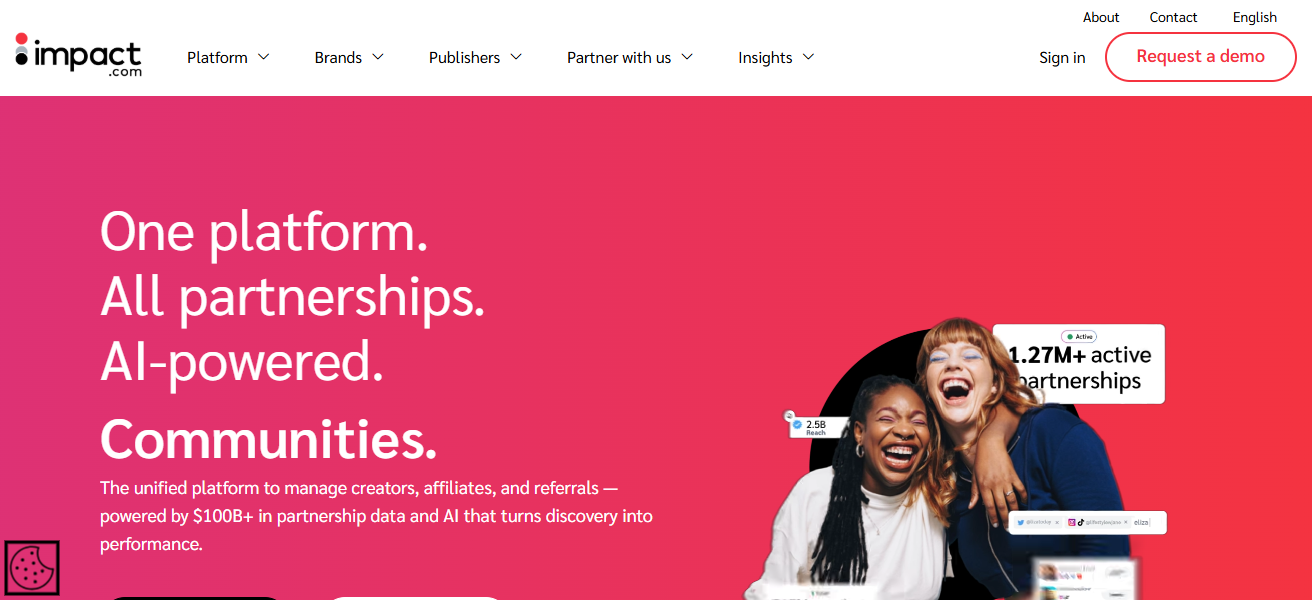
By providing the necessary tools to evaluate, manage, and measure multiple creators alongside affiliate partners, Impact.com allows brands to grow influencer programs with a focus on measurable results.
Its adaptable systems are especially appealing to large corporations looking for integrated partner management across campaigns.
Impact.com Features
- Partnership Automation: Handles influencers within the scope of affiliate and partner programs.
- Contract & Payment Tools: Consolidates contracts, payments, and performance tiers.
- Tracking & Attribution: Comprehensive analytics on conversions, revenue, and influencer sales contributions.
- Scalability & Workflow Control: Designed to scale partner programs with flexible automation.
| Pros | Cons |
|---|---|
| Unified system for affiliate and influencer commerce partnerships. | Can be too enterprise-oriented or complex for smaller brands. |
| Centralized contract, payout, and tracking workflows. | Setup effort is high for full partner program activation. |
| Excellent for scalable performance and measurable ROI. | Customization can require technical support. |
9. HYPR
HYPR is focused on data-driven influencer marketing and commerce platforms that assist brands in identifying, vetting, and building relationships with influencers through audience analytics.
Marketers can be directed to influencers, partners, and audience segments by applying audience data and marketing objectives to millions of profiles.
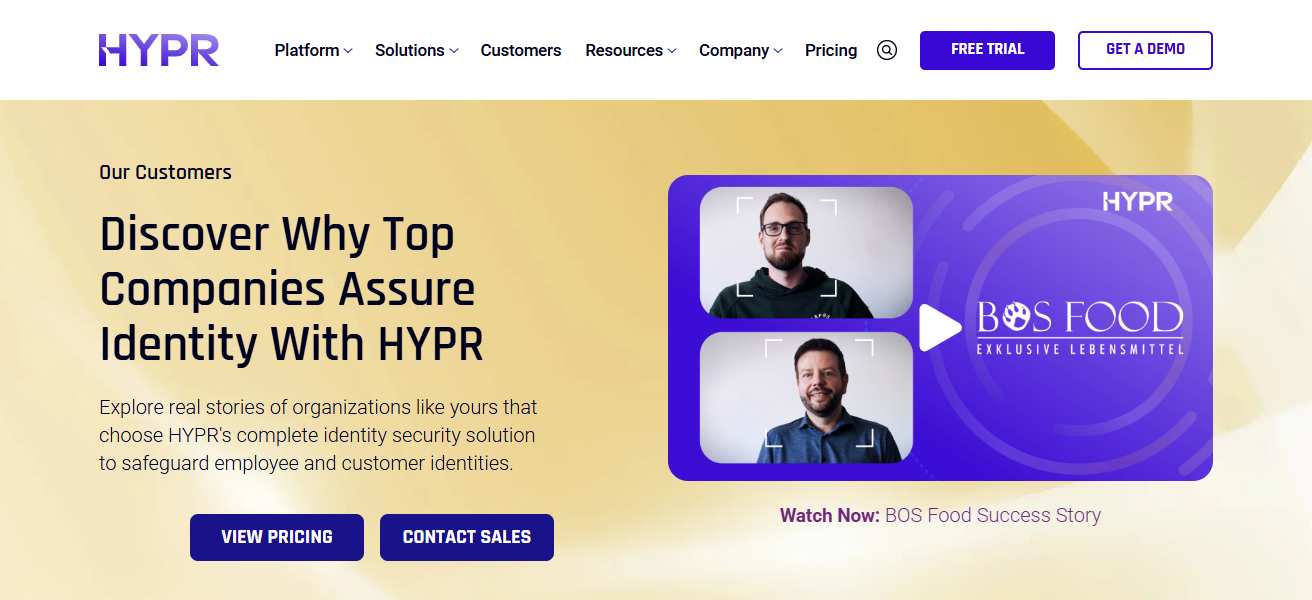
Beyond that, HYPR provides data analytics and campaign management solutions to evaluate and monitor campaign performance and engagement.
For marketing teams that value data, automation, and focused authentic influencer marketing, HYPR is a preferred vendor.
HYPR Features
- Audience Demographics: Detailed influencer audience insights for targeting and alignment.
- Extensive Influencer Index: Creators across numerous niches and platforms within a searchable database.
- Campaign Monitoring: Tools to evaluate and track engagement, reach, and performance of content.
- Audience Authenticity Metrics: Follower quality assessments to mitigate the risk of fake or inactive engagement
| Pros | Cons |
|---|---|
| Highly data-centric with detailed audience demographics. | Platform learning curve can be steep for new users. |
| Large searchable influencer database. | May lack some advanced workflow automation found in other tools. |
| Good analytics for matching influencer audiences to brand goals. | Not always the best fit for creators with micro communities. |
10. Mavrck
Mavrck (sometimes linked with Later) assists brands with influencer commerce by allowing them to leverage advocates, micro-influencers, and UGC creators for word-of-mouth and social proof.
Mavrck specializes in the automation of influencer recruitment, campaign management, and performance attribution.
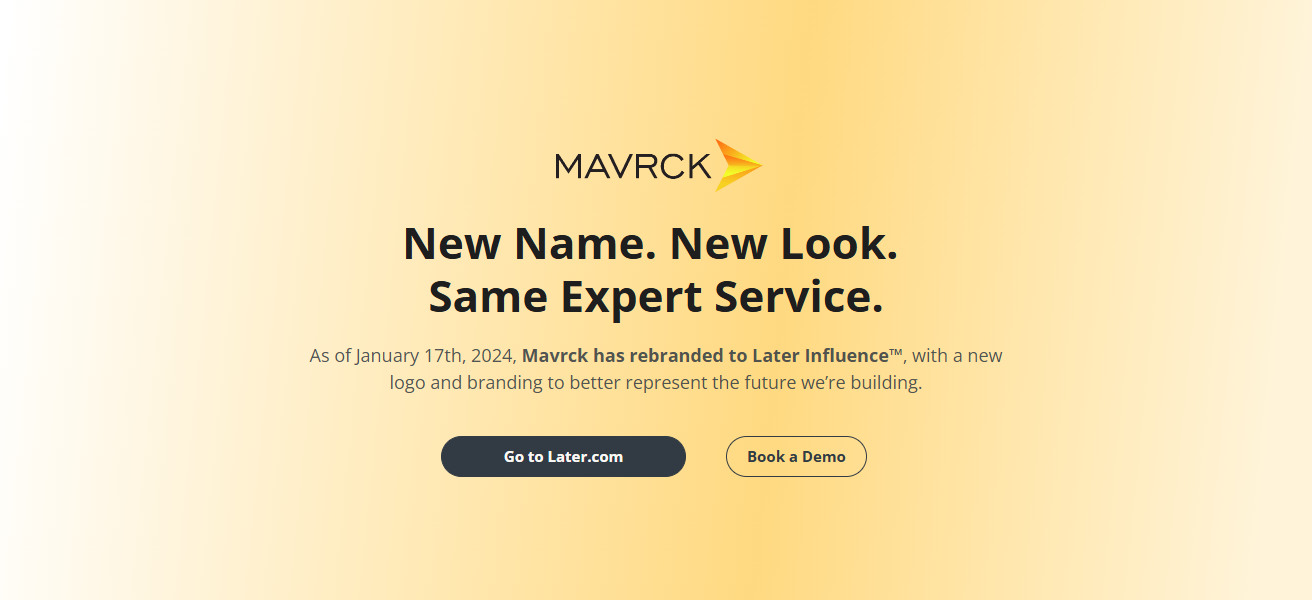
Mavrck’s solutions enable brands to construct community-centric activities that extend beyond one-off posts to sustained engagement and measurable results.
Its focus on micro-influencers and evangelists is particularly beneficial for brands seeking to drive engagement and build genuine connections with their audiences.
Mavrck Features
- Micro-Influencer Focus: Empowers brands to work with smaller, more engaged creators and advocates.
- Advocate Recruitment: Streamlines the automation of discovery and onboarding for brand advocates and community creators.
- Campaign Automation: Automation features for outreach, review of content, and the management of tasks.
- User-Generated Content (UGC) Tools: Tools that, amongst other things, records and reuses original UGC for wider marketing applications.
| Pros | Cons |
|---|---|
| Great for community-centric and micro-influencer campaigns. | Smaller creator network than some competitors. |
| Strong automation for recruitment and campaign management. | Campaign measurement tools can be less advanced. |
| Focuses on advocates and user-generated content as conversion drivers. | Micro-influencer focus may not suit all brands. |
How To Choose Best Influencer Commerce Platforms
Define Your Goals Shortlist platforms considering if you need brand awareness, sales, leads, or partnerships.
Budget & Pricing Look for platforms where pricing aligns with anticipated ROI and team headcount.
Audience Targeting Ensure each platform has filters for finding relevant audience demographics among influencers.
Integration Needs Ensure the platform integrates with your e-commerce, CRM, and analytics tools.
Campaign Automation Choose platforms that automate outreach, approval, posting, tracking, and reporting.
Performance Tracking Look for platforms that provide analytics to measure performance, impact, and revenue.
Creator Management Look for CRM attributes to manage communications and relationships with influencers effectively.
Scalability Ensure the platform scales with your brand’s complexity and volume of campaigns.
Conclusion
To conclude, most influencer commerce platforms combine influencer discovery, campaign management, and performance tracking which helps brands increase ROI.
These platforms help brands of all sizes Streamline performance workflows, audience verification, and sales-linked influencer content to drive partnerships.
In the current digital marketing ecosystems, selecting the appropriate platform drives greater engagement, authentic reach, and measurable outcomes.
FAQ
They help brands manage influencer partnerships, track sales, and measure campaign performance.
E-commerce brands, agencies, startups, and enterprises working with influencers.
They connect influencer content directly to conversions using tracking and analytics.
Costs vary based on features, scale, and campaign requirements.