In this article, I will talk about the best insider threat detection platforms, which assist companies in recognizing, tracking, and managing risks that originate from within the business.
- Key Points & Best Insider Threat Detection Platforms
- 10 Best Insider Threat Detection Platforms
- 1. Exabeam
- 2. Varonis
- 3. Proofpoint ITM
- 4. ObserveIT
- 5. Ekran System
- 6. DTEX InTERCEPT
- 7. Forcepoint Insider Threat
- 8. Microsoft Insider Risk Management
- 9. Splunk UBA
- 10. Netwrix Auditor
- How We Choose Best Insider Threat Detection Platforms
- Conclsuion
- FAQ
Such platforms utilize cutting-edge technologies, including behavioral analytics, real-time user monitoring, and real-time notification.
They strengthen organizations’ ability to safeguard sensitive information and respond to the imminent threats to the information systems in their organizations.
Key Points & Best Insider Threat Detection Platforms
| Platform | Key Point |
|---|---|
| Exabeam | Behavior analytics for detecting anomalous insider activity |
| Varonis | File system monitoring with deep visibility into sensitive data access |
| Proofpoint ITM | Screenshots and session recording for insider investigations |
| ObserveIT | User activity monitoring with lightweight endpoint agents |
| Ekran System | Privileged user monitoring and keystroke logging |
| DTEX InTERCEPT | Scalable workforce telemetry with privacy‑aware analytics |
| Forcepoint Insider Threat | Risk‑adaptive protection based on contextual user behavior |
| Microsoft Insider Risk Management | Integration with Microsoft 365 compliance and collaboration tools |
| Splunk UBA | Machine learning models for detecting hidden insider patterns |
| Netwrix Auditor | Audit trails and reporting for regulatory compliance |
10 Best Insider Threat Detection Platforms
1. Exabeam
Exabeam is ranked as the top insider threats detection service. It has specialized in the deployment of UEBA technology that focuses on the detection and analysis of unusual behavior.
With the help of machine learning, Exabeam can target unauthorized entry or exfiltration of sensitive data in an organization.

Exabeam helps users document, temporalize, and automate incident response and add risk scores so that security teams can threat triage and investigate faster.
Also, the flexibility of deployment makes Exabeam useful for flows of business of any kind and for any company that requires enhanced internal security.
Features Exabeam
- User and Entity Behavior Analytics: This tool applies machine learning for behavior baseline creation and then identifies anomalies for users and across systems.
- Automated Incident Storytelling: This tool classifies and connects activities for narrative construction for chronological sequence automation.
- Prioritization of True Threats through Risk Assignments: This tool attributes levels of users or events risk to true threats prioritized for.
- Integration with SIEM: This tool augments the detection and response SIEM tool workflows and actions.
| Pros | Cons |
|---|---|
| Uses advanced UEBA and machine learning to detect anomalies accurately. | Can be complex to set up and tune for smaller teams. |
| Automated incident timelines make investigations faster. | Requires skilled analysts for best results. |
| Integrates well with SIEM and existing security stacks. | Licensing costs may be high for mid‑sized organizations. |
2. Varonis
Varonis emphasizes data security and identifying internal security risks by examining files, permissions, and user actions.
Its software tracks user behavior when accessing various central documents, emails, and cloud industries and flags suspicious activities like escalated permissions and abnormal file downloads.

Varonis applies machine learning to determine standard operational behaviors to identify and address deviations during a working day, lowering the likelihood of a breach.
Further, it provides businesses with automated surveillance and corrective actions, allowing them to comply with data protection regulations while avoiding the risks of internal data breaches.
Features Varonis
- Monitoring Data Access: This tool lifts blind spots across to tracks who accessed which files at what times and the access methods.
- Weak Permissions: This tool identifies over privileged users, and over permissioning.
- Operations and Access Patterns: This tool identifies distinct access behaviors and modifications to files.
- Reporting for Compliance: This tool makes available audit reports to standards, for reports as GDPR and HIPAA.
| Pros | Cons |
|---|---|
| Excellent at monitoring file access, permissions, and unstructured data. | Focuses more on data stores than endpoint activity. |
| Provides real‑time alerts on risky user behavior. | Can be resource‑intensive in large infrastructures. |
| Strong audit and compliance reporting capabilities. | Steeper learning curve for non‑security staff. |
3. Proofpoint ITM
Proofpoint Insider Threat Management (ITM) aims at identifying and countering risks posed by employees or contractors.
For its detection of risks, Proofpoint ITM uses a combination of email, messaging and endpoint behavioral monitoring, as well as analytics, to flag risks, such as data exfiltration or other breaches of company policy.
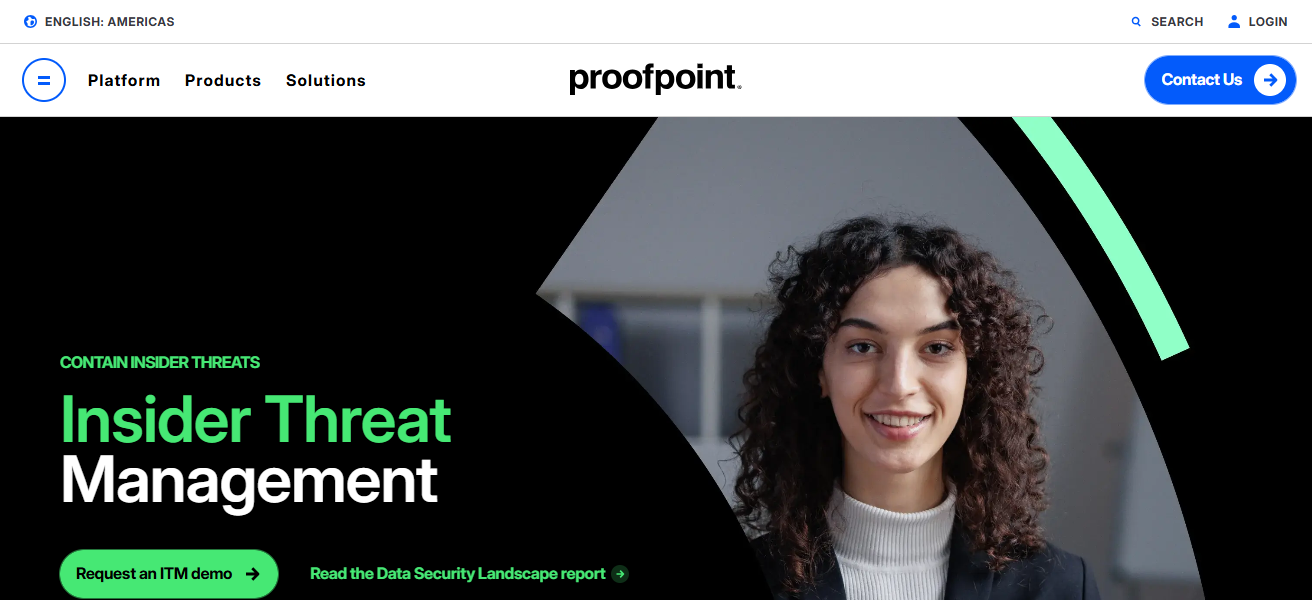
Proofpoint ITM includes risk scoring and alerts as well as integrated workflow automation to assist security teams with triaging investigative work.
The platform embraces incidents response as much as technology in a balanced manner to help organizations mitigate risks while preventing breaches of employee privacy and compliance with applicable regulations.
Features Proofpoint ITM
- Monitoring Risky Messaging: This tool analyzes to detect communication pattern risks across email and messaging systems.
- Tracking Behavior at End Points: This tool identifies actions at endpoints which are off-standard, and that can indicate risk for users.
- Alerting and Risk Scoring: This tool uses info to generate accumulated risk for levels, and alerts in real time.
- Work and Case Management: This tool supports structural workflows for automation of investigations, and response actions.
| Pros | Cons |
|---|---|
| Monitors email, messaging, and endpoint behavior. | Less deep analytics than pure UEBA platforms. |
| Risk scoring and alerts help prioritize investigations. | Best results within the Proofpoint ecosystem. |
| Supports workflow management for risk cases. | Advanced features may need higher‑tier licenses. |
4. ObserveIT
Proofpoint, and previously ObserveIT, offers user activity monitoring and insider threat detection.
The platform logs user activities on various endpoints, including but not limited to, file access, changes to systems, and applications being used.
The solution uses behavioral analytics to help customers identify potential data loss or breach of policies.
ObserveIT includes risk scoring, real-time alerts, and comprehensive reports that allow security teams to respond to threats and focus on investigations.
The user of the system will not notice the use of the system, due to its lightweight agent and centralized interface.
Features ObserveIT
- User Session Recording: Records user activity from keystrokes to screen capture.
- Behavior Baselines: Identifies what ‘normal activity’ looks like user to user.
- Real-Time Alerts: Notifications to security personnel whenever risk altimeters violate threshold.
- Forensic Playback: User sessions can be played back to piece together what took place.
| Pros | Cons |
|---|---|
| Captures detailed user sessions and activity logs. | Generates large volumes of data requiring storage planning. |
| Session playback aids forensic analysis. | Can feel heavy for small or lean environments. |
| Detects deviations from normal user behavior. | Requires ongoing customization of policies. |
5. Ekran System
Ekran System is an insider threat management solution that specializes in the real-time tracking of user activity. This includes monitoring endpoints, servers, and resident cloud networks.
Ekran System provides full transparency through its comprehensive recording of user activity, including extensive logging of keystrokes, screen captures, and command execution.
Ekran provides a user activity logging service that offers a sophisticated system of risk scoring and alerting, which expedites the detection of aberrant behavioral.
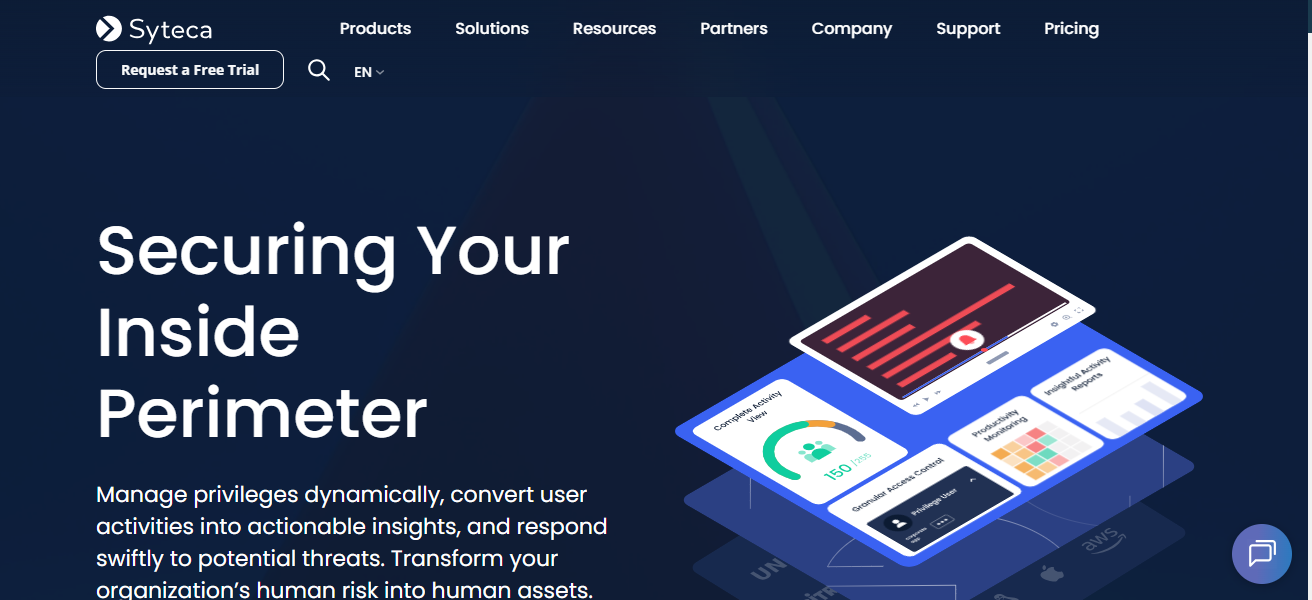
Furthermore, its session recording/playback functionality is tailored for accurate intervention. Ekran provides a complete package solution that encompasses access control
Policy enforcement, and policy audit compliance, facilitating a robust interface for insider threat prevention and data protection without the friction of reduced organizational productivity.
Features Ekran System
- Continuous Monitoring: Able to logs activity from all the endpoints, servers, and even in the virtual sessions.
- Session Playback: Each replay from an incident can be played and viewed like a video.
- Role-Based Access Control: Access and actions on sensitive systems are control by a policy.
- Risk Scoring & Alerts: Uses built-in heuristics to determine and alert suspicious activity.
| Pros | Cons |
|---|---|
| Continuous session monitoring across endpoints and servers. | Full session recording can be costly for storage. |
| Offers risk scores and real‑time alerts. | Some advanced features need manual tuning. |
| Includes access control and policy enforcement. | Interface may feel less modern than competitors. |
6. DTEX InTERCEPT
DTEX InTERCEPT focuses on monitoring endpoints to detect insider threats and data exfiltration.
The platform analyzes behavioral patterns and uses machine learning to detect anomalies such as unusual file transfers or activity during off-hours.
DTEX focuses on actable insights and alerts in real time to enable security teams to respond. The services are offered in the cloud and non-invasively which allows DTEX to deploy their services to enterprises of all sizes.
Risk mitigation by preventing insider threats from turning into data breaches has also contributed to DTEX InTERCEPT’s compliance reporting and risk mitigation.
Features DTEX InTERCEPT
- Lightweight Endpoint Agents: Designing to reduces the performance impact when collecting user behavioral data.
- Machine Learning Analytics: By using AI to determine what is ‘normal’ user behavioral to identify deviations.
- Real-Time Detection: Alerts are triggered when ‘unusual’ data transfer is detected, especially when done during off-hours.
- Cloud-Ready Platform: Easily scalable for disconnected business environments.
| Pros | Cons |
|---|---|
| Lightweight endpoint monitoring with real‑time detection. | Focused mainly on endpoint activity, not all data sources. |
| Uses machine learning for behavior analysis. | Alerts may need initial tuning to reduce noise. |
| Cloud‑ready and scalable for larger teams. | Newer platform compared to veterans in the space. |
7. Forcepoint Insider Threat
The purpose of the ForcePoint Insider Threat program is to detect and mitigate potential risks or malicious acts by employees and other insiders using behavioral analytics and machine learning.
ForcePoint records and analyzes the movement of various business files, sent and received emails, and other cloud and program activities to recognize policy abuse and other anomalous behaviors that may indicate data corruption.

Risk scoring, automated alerts, and task organization assist the security team in sorting which cases of risk to investigate first.
ForcePoint stores, updates, and integrates with other security systems. This provides enterprise clients with flexibility to save insider data and threats to employee and workplace compliance and productivity.
Features Forcepoint Insider Threat
- Behavioral Analytics + DLP: Identifies user behavior along with data loss prevention.
- Policy‑Driven Alerts: Can be set to trigger based on a number of controllable risk policies.
- Hybrid Support: Functions in both cloud and on-prem systems.
- Automated Response: Can restrict or stop certain actions automatically according to policy when risk is deemed too high.
| Pros | Cons |
|---|---|
| Combines behavioral analytics with DLP capabilities. | Integration complexity with existing tools. |
| Good detection of risky policy violations. | Requires careful tuning to avoid false positives. |
| Scales well for hybrid cloud environments. | Licensing can be confusing based on modules. |
8. Microsoft Insider Risk Management
Microsoft Insider Risk Management is one of the components of Microsoft 365’s compliance suite that enables organizations to identify, analyze, and address insider risk incidents.
It employs ML to monitor user activity, user communications, and user engagement with documents to detect threats such as intellectual property theft and/or violations of company policies.
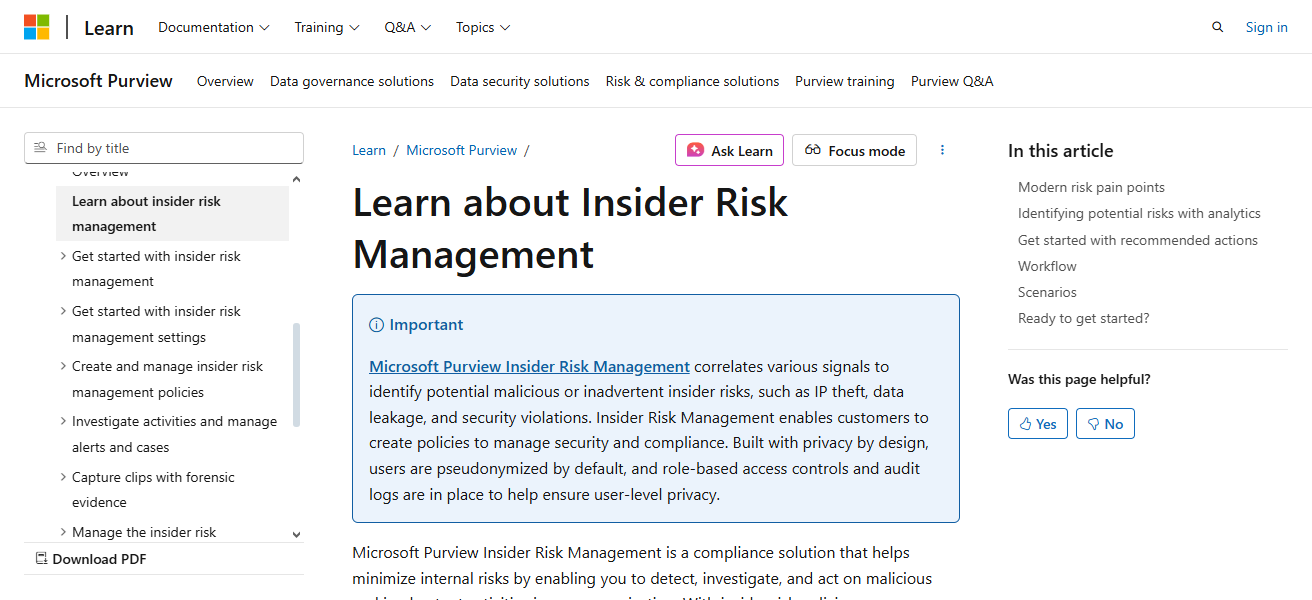
The system offers automated alerting and risk scoring, as well as case management, all of which are fully compliant with privacy regulations thanks to user data anonymization.
Its strong connectivity with the services of Microsoft 365 makes it perfect for organizations that are Microsoft ecosystem centric and want to streamline the management of insider risk.
Features Microsoft Insider Risk Management
- System 365 Integration: Proprietary imports activities from Microsoft 365 applications and services.
- Automated Risk Scoring: Depends on signals from emails, documents, and communications.
- Case Management: Assigns, monitors, and documents case related insider risk investigations.
- Privacy Controls: Protection and privacy controls are included.
| Pros | Cons |
|---|---|
| Seamless integration with Microsoft 365 tools. | Best suited for Microsoft‑centric environments. |
| Automated alerts and risk scoring. | Less deep behavior detection compared to dedicated UEBA tools. |
| Built‑in case management and privacy protections. | Requires add‑ons to ingest non‑Microsoft logs. |
9. Splunk UBA
The user behavior analytics module of Splunk detects possible insider threats by recording logs, activities, and user conduct of employees throughout an organization’s IT infrastructure.
Splunk detects atypical behavior using machine learning, such as profile elevation and unauthorized access of documents, as well as assigning them risk values and sifting them for urgent attention.
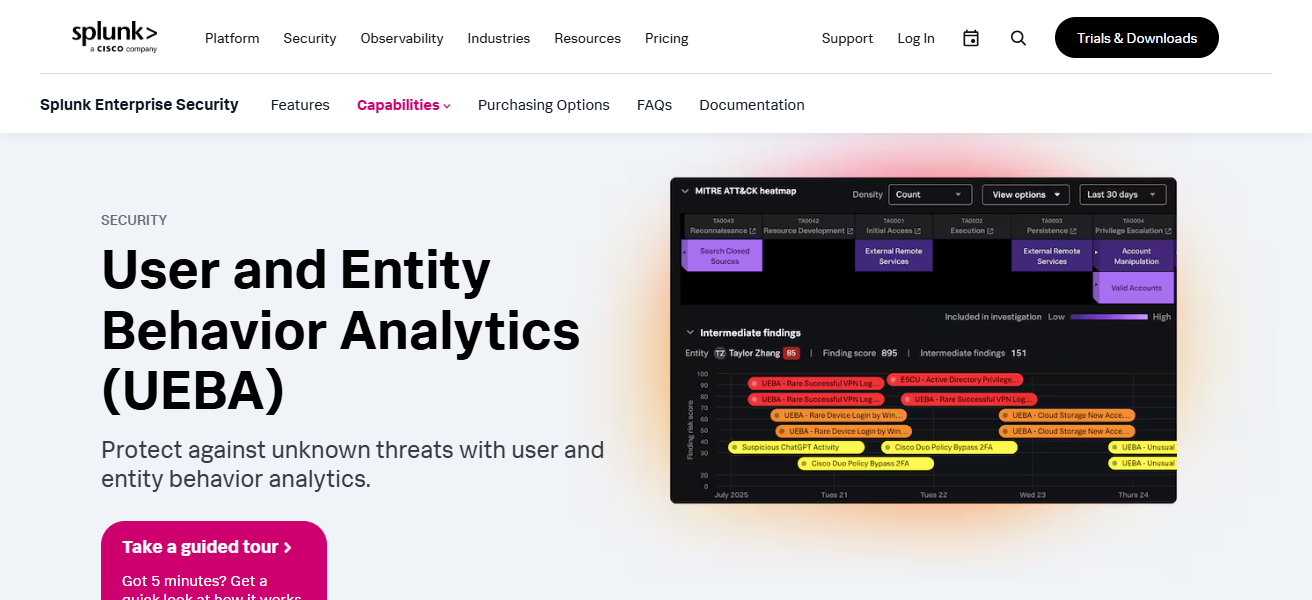
Splunk UBA works as an add on for Splunk Enterprise, allowing cross-sectioned detailed analysis and investigation of security incidents.
The system equips security personnel with the ability to quickly take action on internal threats and remain compliant with regulations.
Features Splunk UBA
- Log correlation: Synthesizes and reviews logs from diverse, broad IT systems.
- Machine learning detection: Implements machine learning systems to identify and detect unusual patterns across individuals.
- Risk Scoring and Visualization: Uses dashboards and risk score systems to identify and document the most critical threats.
- Splunk SIEM Integration: Integrates with Splunk Enterprise for enriched contextual insight.
| Pros | Cons |
|---|---|
| Powerful analytics and correlation across logs. | Requires Splunk infrastructure and licensing. |
| UEBA makes abnormal behavior detection strong. | Steep learning curve for new users. |
| Excellent visualization and dashboards. | Needs careful tuning to reduce alert noise. |
10. Netwrix Auditor
Netwrix Auditor prioritizes monitoring of changes, access, and usage on critical system files and configurations to help prevent possible insider threats.
The Auditor product provides visibility to user activities, spotlighting actions such as unauthorized access to and over-privileged access toward suspicious files.
The system provides the user with the ability to generate reports, provides alerts, and offers compliance analytics to facilitate organizational investigative activities concerning the threat.
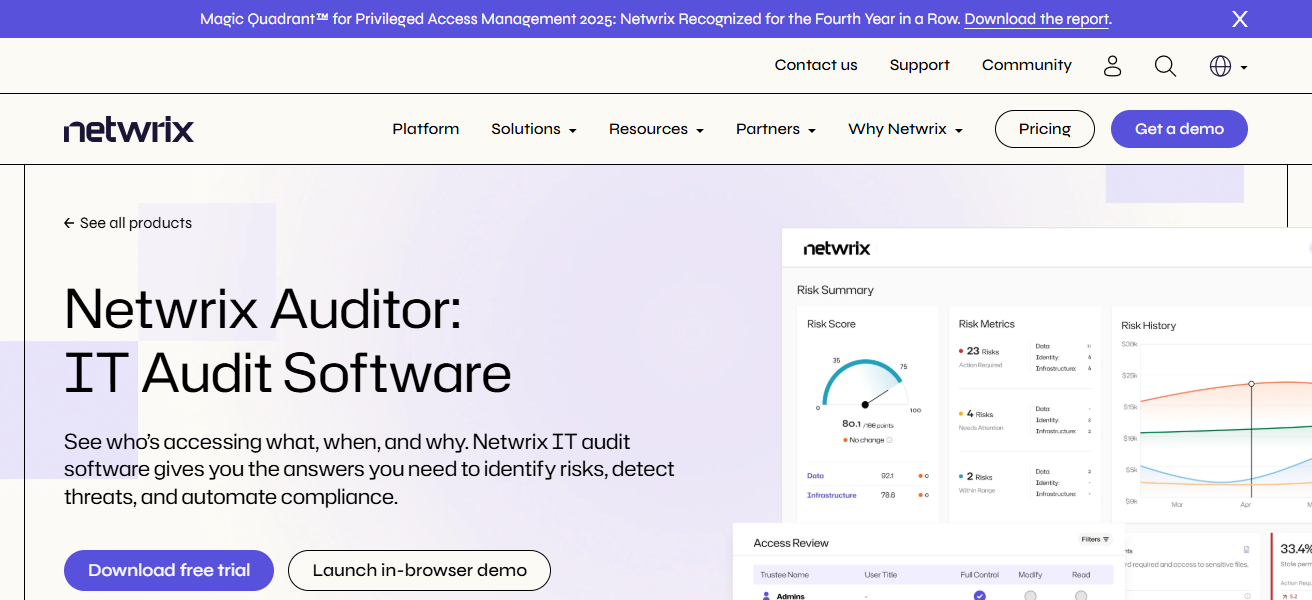
Netdrix Auditor provides support for on-prem, as well as, cloud environments, making it applicable for hybrid infrastructures.
By monitoring and informing users of risky activity, it allows organizations to safeguard sensitive data and continue to maintain compliance.
Features Netwrix Auditor
- Change Auditing: Monitors changes to documents, user access, and systems.
- Access Monitoring: Demonstrates who accessed the resources and when.
- Alerting Engine: Provides notifications on unusual and unauthorized activities.
- Compliance Reporting: Provides standard report templates for compliance with SOX, PCI DSS, and HIPAA.
| Pros | Cons |
|---|---|
| Strong auditing of changes and access events. | Focuses more on auditing than advanced UEBA. |
| Good compliance and report‑ready outputs. | Alerts require configuration to reduce noise. |
| Works across on‑prem and cloud hybrid systems. | Not as deep for behavior anomaly detection. |
How We Choose Best Insider Threat Detection Platforms
Determine the Purpose: Is it data access monitoring, email and messaging monitoring, or endpoint monitoring?
Determine the Type: For data anomaly detection, look for UEBA, behavioral, and ML.
Determine the Type of Deployment: Is it cloud, hybrid, or on-premise?
Determine the Type of Integration: Do they have or plan to have integrations for DLP, SIEM, and IT security?
Determine the Type of Scalability: Is it a provider that will scale to fit your organization?
Determine the Type of Compliance and Reporting: Do they provide out of the box GDPR, HIPAA, or other audit-ready reports?
Determine the Type of Ease of Use and Ease of Management: Is it efficient dashboards, alerts, and investigation workflows?
Determine Value vs Cost: Do the licensing, operational, and storage costs appropriately align with the value provided in securing your organization?
Conclsuion
In conclusion, the best avid insider threat detection platforms mitigate security risks. Leveraging user behavior analytics, platforms conduct real-time monitoring and automate alerts to mitigate suspicious activities.
Each selected platform contributes to the organization\’s security by protecting data, remaining compliant, and strengthens the overall cyber defense. These insider threat detection platforms continue to play an important role in overall security.
FAQ
A security tool that monitors user behavior, data access, and system activity to detect potential internal threats or malicious activity.
To prevent data breaches, intellectual property theft, and compliance violations caused by employees, contractors, or privileged users.
Through UEBA (User and Entity Behavior Analytics), machine learning, anomaly detection, and monitoring of endpoints, emails, and file systems.
Yes, many offer real-time alerts, automated risk scoring, and response workflows to block or mitigate suspicious activity.
Some are scalable for SMBs, but feature-rich platforms like Exabeam or Splunk UBA are best for mid-to-large enterprises.