
In this article, I am going to focus on High Volume E-Commerce Inventory Financing Options. Ensuring cash flow, restocking on time, and managing sustainable growth are critical components to scaling an online business.
Strategic financing solutions allow businesses to manage all three. From marketplace-based programs to revenue-based funding, sellers are empowered to manage the growth of their operations financially.
Key Poinst & Best Inventory Financing Options For High-Volume E-commerce
Onramp Funds Provides cash advances for marketing and inventory, repaid automatically from daily sales revenue streams.
8fig Offers growth capital with flexible repayment schedules, tailored for scaling e-commerce supply chain operations.
Wayflyer Revenue-based financing solution helping e-commerce businesses access funds quickly for inventory and advertising.
Shopify Capital Integrated financing option for Shopify merchants, offering quick access to funds directly within platform.
Payability Provides instant daily payouts and working capital advances, improving cash flow for marketplace sellers.
CrediLinq AI-driven financing platform offering fast credit assessments and tailored funding solutions for online businesses.
Clearco Revenue-share financing model, providing capital for marketing and inventory without requiring equity or collateral.
Kickfurther Crowdfunding-style inventory financing, enabling brands to raise funds directly from supportive community investors.
Amazon Lending Exclusive financing program for Amazon sellers, offering loans based on sales performance and marketplace history.
Business Line of Credit Flexible revolving credit option, allowing businesses to draw funds as needed for inventory purchases.
10 Best Inventory Financing Options For High-Volume E-commerce
1. Onramp Funds
Onramp Funds lends money to online businesses to help them pay their marketing costs and buy inventory. The company does streamlining of their payment system.
Payment is taken automatically from sales and this means less strain on their cash flow. This is also a way to help businesses scale because there are no fixed repayment schedules.

The payments are flexible and based on how much the company is selling. Since they did over on-demand sales, this model worked best for. Having financing without a traditional loan becomes a way to invest in economic growth.
Onramp Funds Features
- A cash advance is provided for advertising and marketing costs.
- Sales for marketing costs are deducted daily from drives.
- There is an adjustable flexible schedule for repayment.
- Constructed for consistent working capital for volume business.
| Pros | Cons |
|---|---|
| Automated repayment tied to daily sales revenue. | Limited availability outside major marketplaces. |
| Flexible repayment aligned with business performance. | May not suit businesses with inconsistent sales. |
| Quick access to working capital for inventory. | Cash advance amounts depend on sales history. |
| Ideal for high-volume sellers with fluctuating demand. | Less beneficial for startups with low revenue. |
2. 8fig
8fig offers growth capital specifically for e-commerce businesses, focusing on supply chain financing and cash flow management.
While traditional loans are typically one-size-fits-all, 8fig’s platform comes with flexible repayment plans based on the seller’s revenue, enabling businesses to grow sustainably.
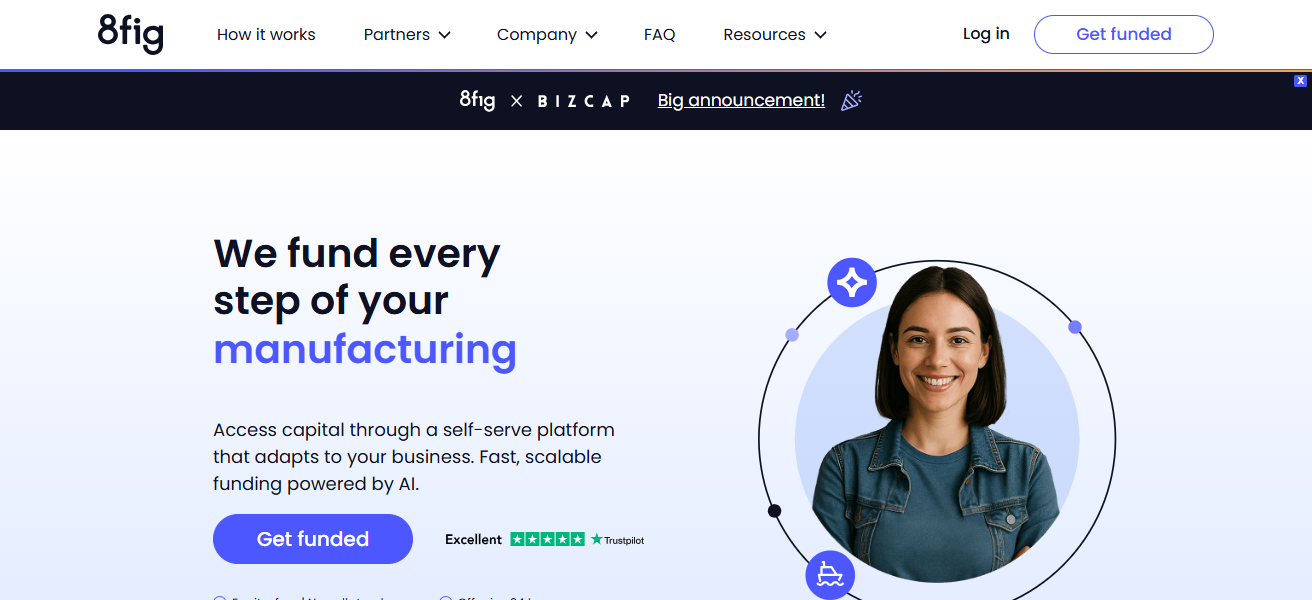
8fig’s financing is structured around inventory cycles and operational needs, making the partnership ideal for high-volume sellers who need to consistently invest in stock, supply chain logistics, and operational flow.
8fig uses a data-driven approach to help sellers understand patterns in consumer demand so sellers can plan financing to alleviate the risks of rapid growth. 8fig’s adaptable financing model helps sellers scale without the stress of inflexible repayment plans.
8fig Features
- Growth capital is provided and is specialized for e-commerce and supply chain.
- Revenue-dependent flexible schedule for repayment.
- Funds are specifically tailored to inventory and logistics.
- Predictive analytics is provided to minimize risk and forecast demand.
| Pros | Cons |
|---|---|
| Flexible repayment schedules tailored to revenue streams. | Requires detailed forecasting and planning. |
| Focused on supply chain and inventory financing. | May be complex for small sellers to manage. |
| Data-driven insights reduce risks of expansion. | Funding tied to operational cycles, limiting flexibility. |
| Supports long-term sustainable growth. | Not ideal for businesses needing immediate short-term cash. |
3. Wayflyer
Wayflyer offers revenue-based financing options, giving e-commerce companies the chance to obtain funds for inventory and ads.
They offer analytics tools to assist merchants in optimizing advertising efforts and increasing profit. Because analytics and financing are paired together, Wayflyer is one of the best options for advertising-dependent, high-volume e-commerce companies.
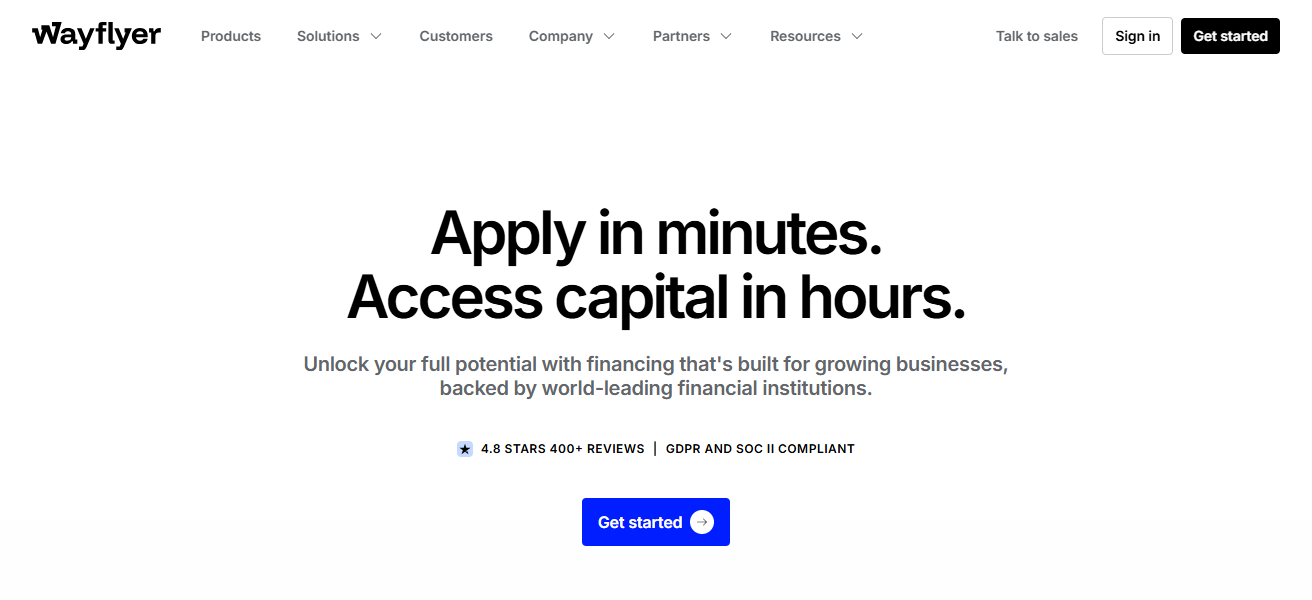
Wayflyer positions themselves as the most flexible partner for e-commerce companies by financing growth without taking collateral or equity.
Their revenue-based financing models offers a unique structure where business repayment is based on a percentage of future income, allowing owners to focus on aggressive growth.
With Wayflyer, businesses enjoy a seamless financing experience where funds are obtained swiftly to capitalize on business opportunities.
Wayflyer Features
- Revenue-based financing is provided for future sales.
- Money is readily available without advertising.
- Marketing analytics are available for sales.
- There is no collateral or equity required for financing.
| Pros | Cons |
|---|---|
| Revenue-based financing tied to future sales. | Repayment depends heavily on sales performance. |
| Fast access to funds for inventory and ads. | Higher costs compared to traditional loans. |
| Provides analytics tools for marketing optimization. | Limited to businesses with proven sales history. |
| No collateral or equity required. | May not suit early-stage businesses. |
4. Shopify Capital
Sellers on the Shopify platform can use Shopify Capital, a financing solution integrated into the Shopify ecosystem.
Sellers can rest easy knowing that there are no long application processes to worry about. Shopify Capital’s automated repayment system takes a predetermined percentage of the seller’s daily revenue, which alleviates concerns about cash flow during slow sales.
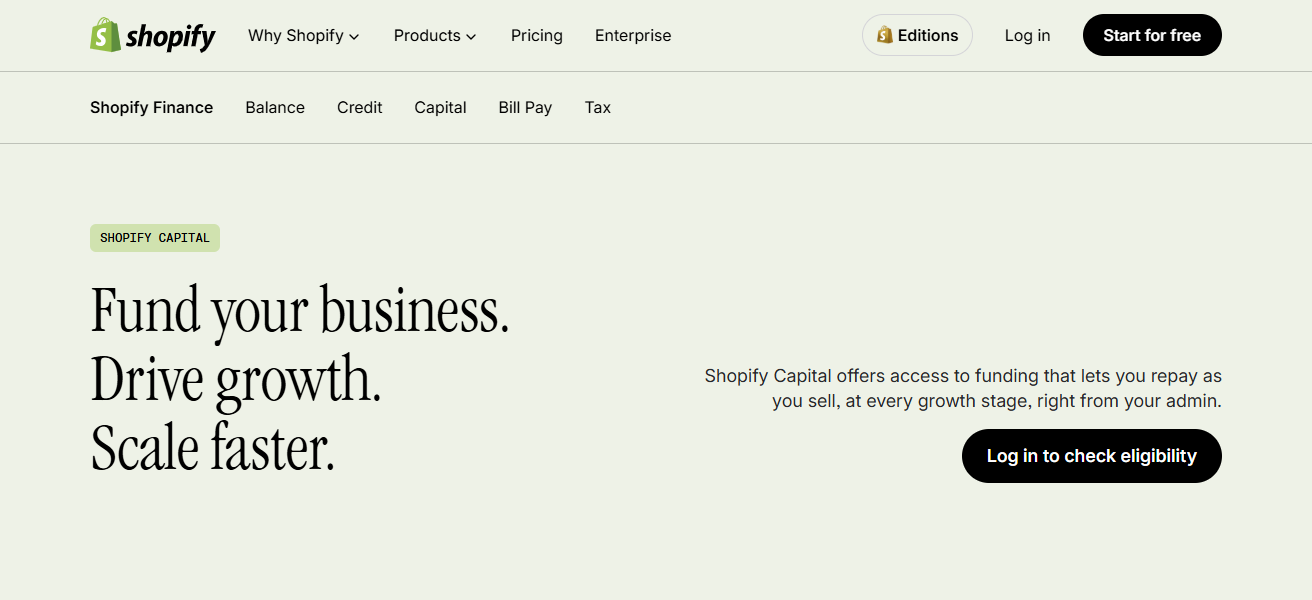
This financing solution works best for high-volume Shopify stores that require additional funding to support marketing efforts or to replenish inventory.
Sellers value the integrated nature of Shopify Capital, which allows for easy management. The reputation that Shopify Capital has earned for speed and simplicity makes it a preferred choice among sellers for financing.
Shopify Capital Features
- Financing that is embedded into the Shopify ecosystem.
- Funds are available without a long application process.
- A part of daily sales goes to repayment.
- Shopify merchants can easily manage and access funds.
| Pros | Cons |
|---|---|
| Integrated directly into Shopify platform. | Only available to Shopify merchants. |
| Quick funding without lengthy applications. | Limited flexibility compared to external lenders. |
| Repayment through percentage of daily sales. | Funding amounts depend on Shopify sales volume. |
| Seamless access and management. | Not suitable for non-Shopify sellers. |
5. Payability
Payability helps sellers on online marketplaces manage their cash flow by providing instantaneous daily payments and capital advance solutions.
Marketplace sellers do not need to wait weeks to receive their disbursements; with Payability, they can get their earnings immediately and reinvest into their inventory.
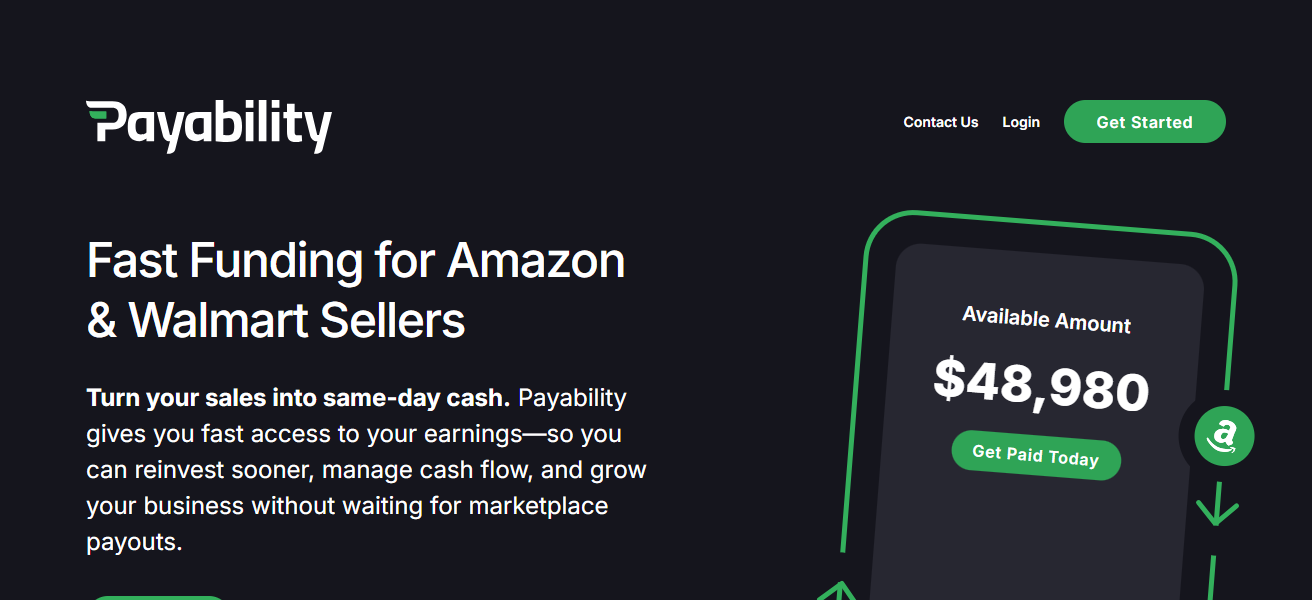
Payability also helps high-volume sellers by providing them with flexible financing solutions that grow with their business. This model helps merchants avoid financial stagnation.
Payability is able to boost sellers’ operational capacity by providing them with faster capital access, cash flow, and inventory replenishment. Payability is especially beneficial to sellers on Amazon and other marketplaces.
Payability Features
- Daily instant access is available to marketplace sellers.
- Cash flow is improved by working capital advances.
- Flexible sales-based financing.
- Bottlenecks and inventory are improved.
| Pros | Cons |
|---|---|
| Instant daily payouts improve cash flow. | Fees can be higher than traditional financing. |
| Provides working capital advances. | Limited to marketplace sellers. |
| Flexible financing scaling with sales. | Repayment tied to marketplace performance. |
| Helps avoid cash flow bottlenecks. | Less beneficial for businesses outside marketplaces. |
6. CrediLinq
CrediLinq leverages AI technology to help e-commerce businesses get credit assessments and customized funding solutions quickly.
Fast approvals and flexible financing options are provided to sellers as per their growth trajectory.
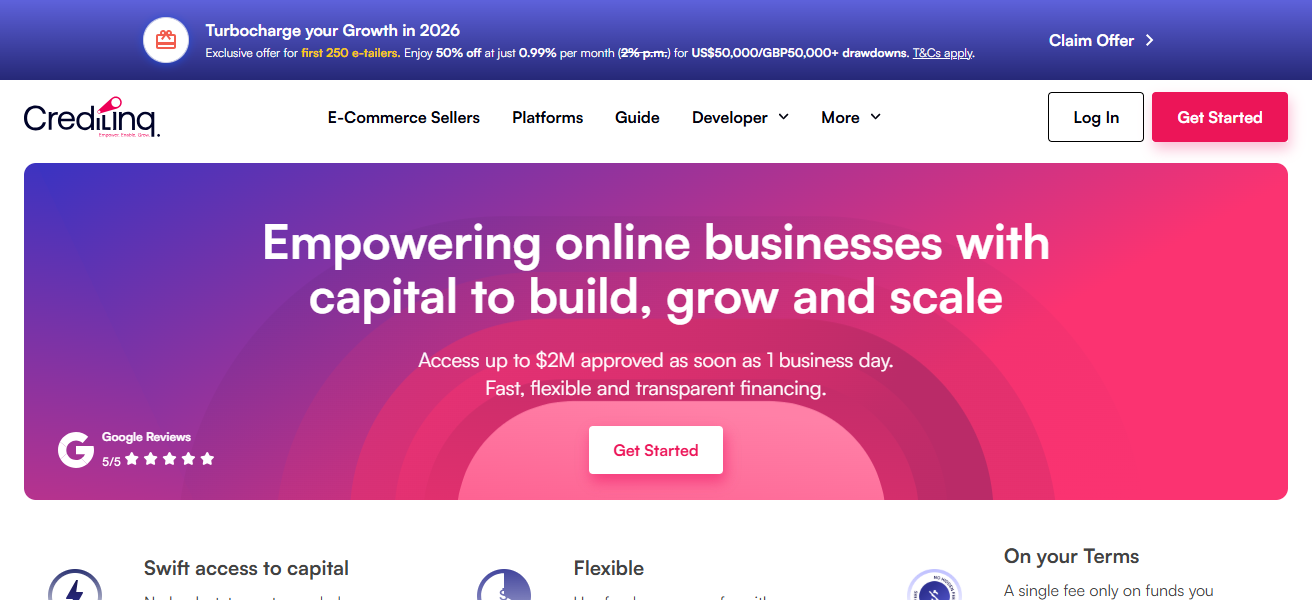
Since CrediLinq analyzes data to identify funding opportunities, high volume sellers can avoid lack of funding for their operational and inventory needs.
With its digital-first approach, CrediLinq eliminates the need for traditional paperwork and process delays. e-commerce businesses can get smart financing solutions that are aligned with their growth through adaptive financing.
CrediLinq Features
- Quick credit assessments are created by the use of AI.
- E-commerce businesses are provided with custom funding solutions.
- Suggested financing structures that fit your business are created by performance data analytics.- A digital-first approach means no more paperwork or delays.
| Pros | Cons |
|---|---|
| AI-driven fast credit assessments. | Relatively new platform with limited track record. |
| Tailored funding solutions for e-commerce. | May require strong performance data for approval. |
| Digital-first approach eliminates paperwork. | Not widely available in all regions. |
| Adaptive financing reduces over-leveraging risks. | May not suit businesses preferring traditional lenders. |
7. Clearco
Clearco offers revenue-share financing, offering marketing and inventory financing with no equity or collateral requirements.
Their flexible repayment plans are aligned with business performance, as it is based on a percentage of future sales.
Clearco is particularly appealing to e-commerce sellers of high sales volume who want to grow without losing ownership.
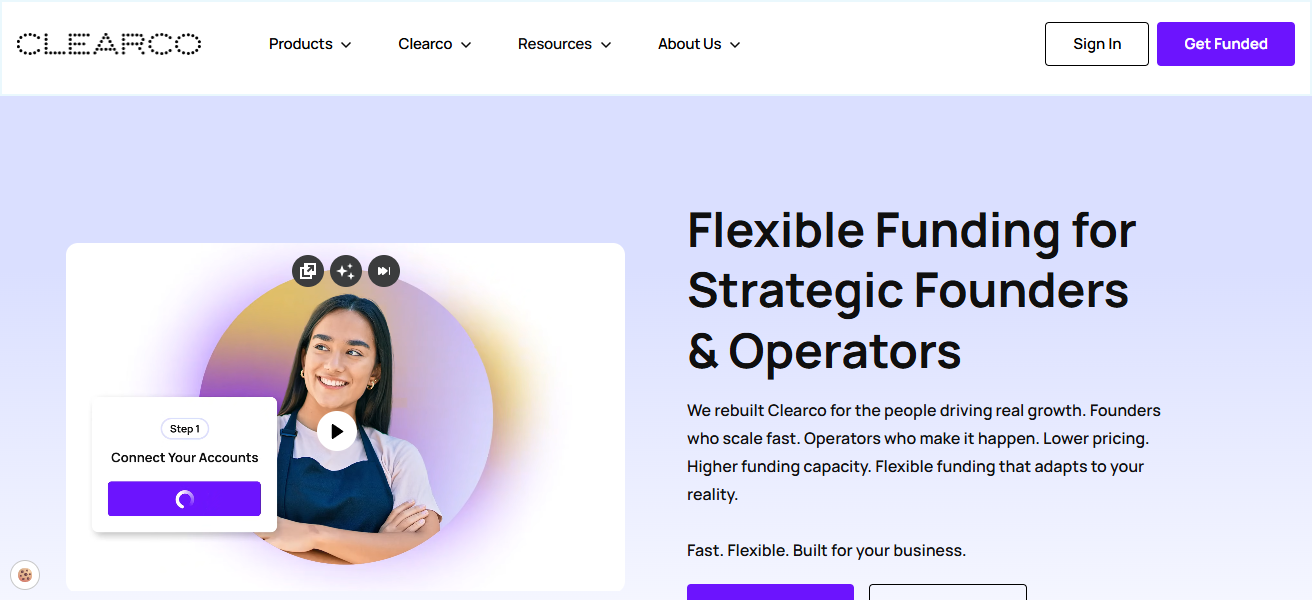
Beyond financing, Clearco provides tools and insights to help businesses refine growth strategies. This funding combined with guidance makes Clearco a valuable growth partner.
By eliminating traditional financing setbacks, Clearco allows sellers to regain control of their business and access financing quickly.
Clearco Features
- Future sales-revenue share financing model.
- No equity or collateral requirements.
- Growth optimization tools are provided.
- Funds quickly while keeping business ownership.
| Pros | Cons |
|---|---|
| Revenue-share financing tied to future sales. | Repayment can be costly during high sales periods. |
| Provides capital without equity or collateral. | Limited to businesses with consistent revenue. |
| Offers insights and tools for growth. | Funding amounts depend on sales performance. |
| Fast access to capital while maintaining ownership. | Not ideal for startups with minimal revenue. |
8. Kickfurther
Kickfurther is a brand partner that arranges funding through a crowdfunding method to allow brands to directly secure community investors.
Brands gain access to financial resources needed to acquire stock. Community investors are paid back as the company’s goods move through the community.
This method is a unique approach to funding flexibility and lessens the need to rely on traditional lenders.

E-commerce businesses that sell higher volumes stock more inventory thanks to Kickfurther’s capability to finance bigger orders, unencumbered by restrictive loan agreements.
The community gets involved as the brand advocates; this is due to the investors. This model keeps repayment in alignment to the company’s growth by ensuring that the community’s advocates are in line with the company’s sales repayments.
Kickfurther Features
- Financing from a network of community investors, like crowdfunding.
- Capital for inventory purchases is provided to businesses upfront.
- Repayment is based on product sales.
- Community engagement and brand advocacy are strengthened.
| Pros | Cons |
|---|---|
| Crowdfunding-style financing from community investors. | Repayment depends on product sales success. |
| Upfront capital for inventory purchases. | Requires strong community engagement. |
| Flexible repayment aligned with sales. | May take time to raise funds. |
| Builds investor advocacy and brand loyalty. | Less predictable compared to traditional financing. |
9. Amazon Lending
Amazon Lending is a unique financing program for Amazon sellers. They offer loans based on sales history and performance in the marketplace.
Sellers get quick access to funds for inventory purchases, allowing them to grow in the Amazon marketplace. Repayment terms are simple and eligibility is based on sales which reflects tailoring to marketplace success.
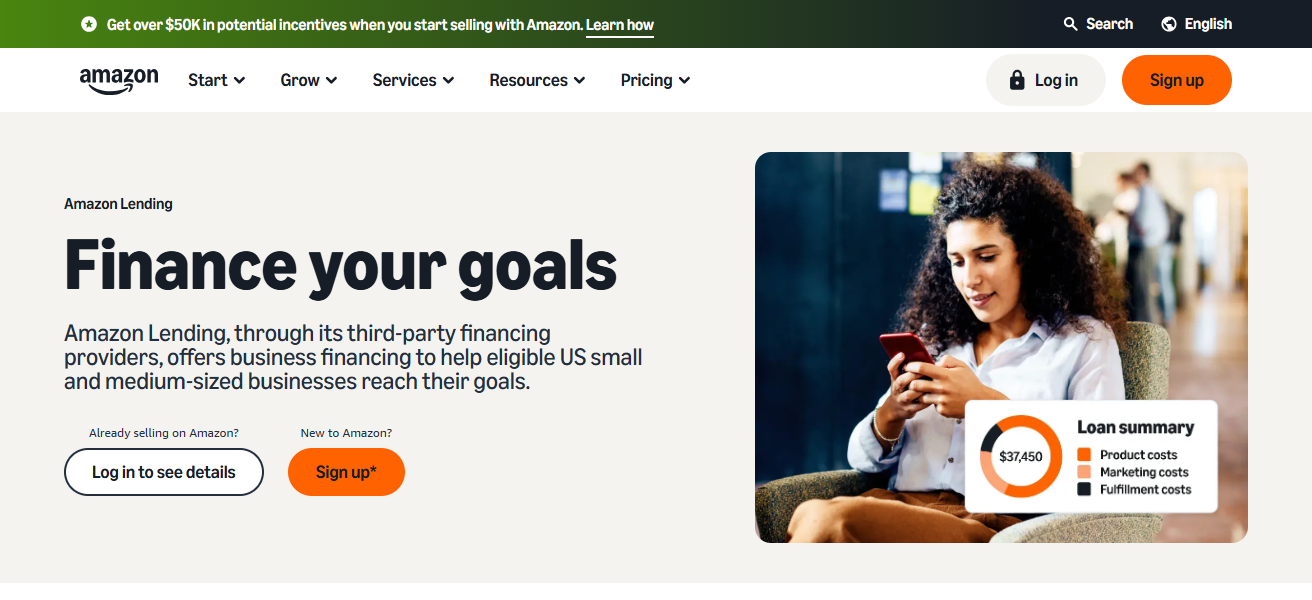
Amazon Lending is particularly beneficial to high-volume sellers because there is better synergy. The program is data-driven so financing is available based on business activity.
This is a great option for sellers that want to expand their operations and avoid the hassle of outside financing.
Amazon Lending Features
- Financing for Amazon sellers only.
- Loans based on sales and marketplace history.
- Funds for inventory purchases are readily available.
- Amazon ecosystem operations are integrated seamlessly.
| Pros | Cons |
|---|---|
| Exclusive program for Amazon sellers. | Only available within Amazon ecosystem. |
| Loans based on sales performance. | Limited flexibility outside Amazon. |
| Quick access to inventory financing. | Funding amounts depend on Amazon sales metrics. |
| Seamless integration with seller accounts. | Not suitable for non-Amazon businesses. |
10. Business Line of Credit
A business line of credit provides a flexible structure that allows for borrowing as little or as much as needed to keep business operating expenses to a minimum.
For this reason it is a popular lending tool for high-volume e-commerce sellers during peak selling seasons when inventory purchases are critical. These sellers need flexible funding to cover numerous inventory purchases.

With a business line of credit, a borrowing business only pays interest and incurs repayment obligations on the funds that have been borrowed, meaning timely repayment is easily accomplished.
This type of business credit product will keep funds available, maintaining the value of the credit as the business can take quick advantage of new opportunities to sell in the marketplace.
Business Line of Credit Features
- Access to revolving funds when required is flexible.
- Borrow only what you need and avoid debt.
- Interest is only applicable to borrowed amounts.
- Provides liquidity for inventory during peak demand.
| Pros | Cons |
|---|---|
| Flexible revolving access to funds. | Requires strong credit history for approval. |
| Borrow only what is needed. | Interest rates may vary significantly. |
| Interest charged only on borrowed funds. | Can lead to overuse if not managed carefully. |
| Ensures liquidity during peak demand. | Less tailored to e-commerce-specific needs. |
Conclusion
To sum up, Best Inventory Financing Options for High-Volume E-Commerce support selling partners in managing cash flow, restocking inventory, and scaling operations without financial pressure.
Financing alternatives range from revenue-based models like Wayflyer and Clearco to marketplace-specific solutions, including Amazon Lending and Shopify Capital.
These alternatives provide differing degrees of flexibility, enabling sellers to sustain business growth while gaining and maintaining customer demand.
FAQ
Inventory financing provides funds to purchase stock, ensuring businesses can meet demand without cash flow issues.
They require consistent capital to restock quickly, scale operations, and handle seasonal or sudden demand spikes.
Repayment is tied to future sales, offering flexibility and reducing strain during slower business periods.
It automates repayment directly from daily sales, aligning financing with business performance naturally.