
This article will cover the Liquid Staking Platforms for Ethereum, including their features, pros, and cons.
As Liquid staking allows Ethereum holders to earn rewards while keeping flexibility and liquid, its popularity is increasing.
Lido, Rocket Pool, Coinbase, Binance, Kraken, Bybit, MEXC, Ledger, Trust Wallet, and Ankr are the platforms discussed. Each investor will be able to select the best one for their needs.
Key Points & Best Liquid Staking Platforms for Ethereum
Lido: Offers decentralized liquid staking with stETH tokens, strong community governance, and high liquidity access.
Rocket Pool: Decentralized staking protocol allowing node operators and users to stake ETH flexibly with rETH.
Coinbase: User-friendly platform offering ETH staking with cbETH tokens, strong security, and institutional-grade infrastructure.
Binance: Provides liquid staking through BETH tokens, competitive yields, and integration with Binance’s vast ecosystem.
Kraken: Trusted exchange offering ETH staking with flexible liquidity options and strong regulatory compliance worldwide.
Bybit: Popular exchange offering ETH staking with high APY rewards and seamless trading-staking integration.
MEXC: Global exchange providing ETH staking services with competitive yields and easy-to-use staking interface.
Ledger: Hardware wallet enabling secure ETH staking through partnered services, ensuring maximum safety for assets.
Trust Wallet: Mobile wallet offering ETH staking with liquid tokens, decentralized access, and strong user control.
Ankr: Decentralized infrastructure provider offering liquid staking with aETH tokens and multi-chain staking support.
10 Best Liquid Staking Platforms for Ethereum
1. Lido
Lido is the biggest Ethereum liquid staking platform. Users can stake their ETH with Lido and will receive stETH tokens in return.
stETH tokens can be used and traded just like any other token. The tokens can even be used in DeFi to earn liquidity while earning staking rewards.
Lido is run by a decentralized autonomous organization (DAO), meaning that decisions are made by the community directly.
Lido’s popularity can be attributed to its great liquidity, ease of use, and widespread use across DeFi protocols. With billions of dollars in total value locked, Lido is the most dominant player in Ethereum staking.
This appeals to both retail and institutional investors who want to earn a yield while having the flexibility to not lock their ETH.
Lido Features
- Issues stETH tokens representing staked ETH and liquidity
- Biggest liquid staking platform and has a wide integration in DeFi
- Community driven governance through a DAO
- Good user interface for beginners and institutions
| Pros | Cons |
|---|---|
| Largest liquid staking platform with strong liquidity | Centralized dominance raises decentralization concerns |
| Widely integrated across DeFi protocols | Smart contract risks remain |
| Easy-to-use interface for beginners | Governance decisions may favor large holders |
2. Rocket Pool
Rocket Pool is a pivotal Ethereum staking protocol for democratizing Ethereum staking. Users stake ETH and get rETH tokens in return for the ETH staked and for staking rewards.
Unlike centralized staking protocols, Rocket Pool allows for true decentralization since node operators can control validators with lower deposits.
This builds network resiliency and decreases the barrier to entry for becoming a validator. Their model for liquid staking allows users to maintain flexibility while supporting Ethereum’s decentralization.
Rocket Pool is a top contender for ETH stakers, especially those interested in decentralized protocols, due to the community governance model, transparency, and protocol innovation, especially when compared to Lido.
Rocket Pool Features
- Provides rETH tokens as rewards for staked ETH
- Decentralized model that sponsors small node operators
- Excellent focus on decentralization of Ethereum
- Community based transparent governance
| Pros | Cons |
|---|---|
| Decentralized staking model supporting Ethereum’s ethos | Smaller liquidity compared to Lido |
| Allows node operators with reduced ETH requirements | Rewards slightly lower than centralized platforms |
| Community-driven governance | More complex setup for node operators |
3. Coinbase
Coinbase has Ethereum liquid staking with cbETH tokens, securing a simplified process for millions and complying with regulations as one of the biggest exchanges.
cbETH tokens can also be utilized in DeFi, creating liquidity and staking profits. Stakeholders earn profits with cbETH and liquidity in DeFi, while non-tech savvy cbETH investors have a regulated platform.

Ethereum staking may be considered stressful, and the decentralized alternative may be seen as a loss of control.
Stakeholders who prefer a regulated decentralized platform with the Ethereum staking process will consider their Ethereum staking needs met.
Coinbase Features
- Issues cbETH tokens for liquid staking
- Exchange platform that is secure and highly regulated
- Simple interface for beginners
- Strong compliance and institutional-grade infrastructure
| Pros | Cons |
|---|---|
| Highly secure and regulated exchange | Centralized control limits decentralization |
| User-friendly for beginners | cbETH adoption smaller than stETH |
| Strong institutional-grade infrastructure | Fees higher than decentralized alternatives |
4. Binance
Binance offers Ethereum liquid staking through BETH tokens, which allows users to earn high yields while also getting the benefits of the extensive services offered in the Binance ecosystem.
Users can stake ETH and BETH can be traded and utilized within the services of Binance. Binance offers a competitive staking reward, strong liquidity, and easy access to lending, trading, and DeFi.
Its global reach and ease of use have made it one of the largest staking providers. Despite being centralised, it;s scale and innovation simplifies the user experience to a large degree.
Liquid staking with BETH allows users to maximize the benefits within the Binance ecosystem while providing the convenience of staked assets being flexible.
Binance Features
- Provides staked ETH as BETH tokens
- Part of the entire ecosystem of Binance
- Strong liquidity and competitive yields
- User friendly and available in most countries
| Pros | Cons |
|---|---|
| Large ecosystem with BETH integration | Centralized governance |
| Competitive yields and strong liquidity | Regulatory scrutiny in multiple regions |
| Easy access for global users | Limited DeFi adoption outside Binance ecosystem |
5. Kraken
Kraken offers Ethereum staking alongside other cryptocurrencies, and prioritizes security and regulatory compliance.
Customers can stake ETH and choose from several liquidity options, however, compared to rivals, Kraken’s liquid staking model is less integrated with DeFi.
Kraken is known for its transparency and strong customer safeguarding, which makes its platform attractive for both institutional and retail investors.
Kraken’s rewards for staking ETH are on par with its rivals, and its trading platform is regarded as one of the most reliable in the industry.
Kraken may be less decentralized than its rivals, Rocket Pool and Lido, but offers safety and compliance to users which makes it a good option for ETH staking.
Kraken Features
- Offers liquidity staking with ETH at Kraken
- Good for compliance and security
- Institutions trust their infrastructure
- Users are given good rewards for staking
| Pros | Cons |
|---|---|
| Strong reputation for security and compliance | Less integrated with DeFi protocols |
| Transparent and reliable infrastructure | Centralized staking model |
| Competitive staking rewards | Lower liquidity compared to Lido or Binance |
6. Bybit
Bybit is rapidly expanding its offerings in Ethereum liquid staking and its APY rewards and features are attractive to users.
They offer the liquid staking service which allows stakers to receive liquid tokens that can be traded or used in DeFi.
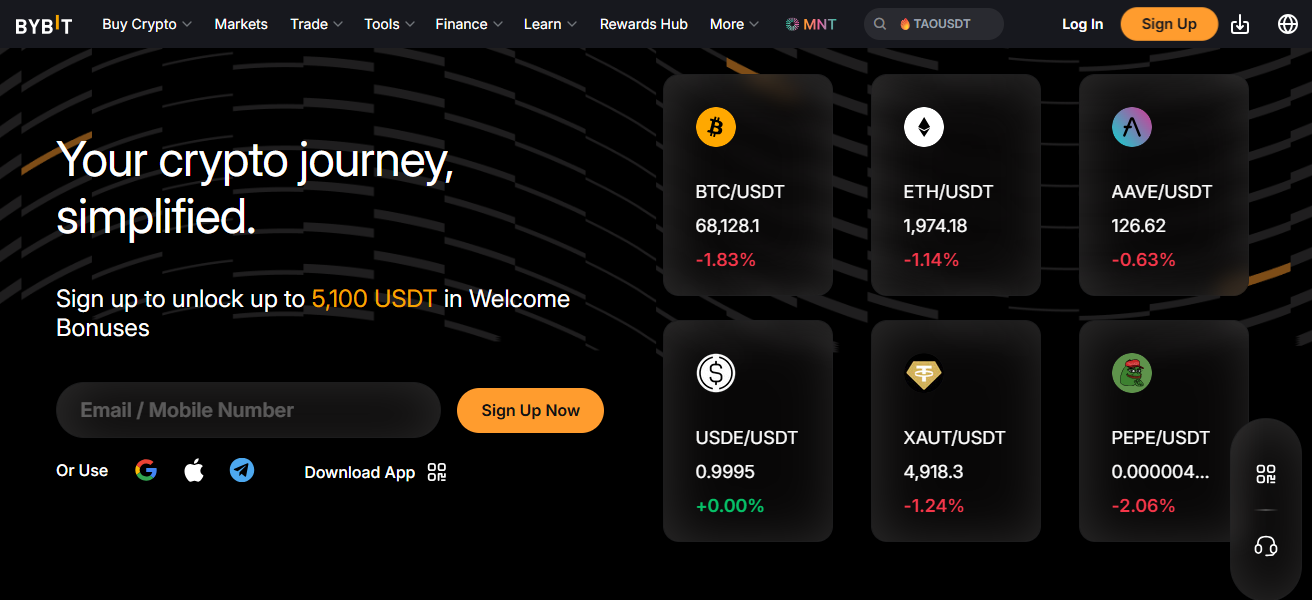
Bybit makes stakers out of traders in a unique way as they can stake and trade (engage in other crypto pursuits) to ‘make the most of their money’ as the platform is built in a way that users can trade and ‘make the most of their money’ in other crypto pursuits.
Bybit is centered and as a new platform is developing its centralized trading. Bybit is a liquid Ethereum staking platform and for users who value rewards and easy navigation, the platform is a good compromise between liquid, profitable, and easy.
Bybit Features
- Provides staking with good APY rewards
- Good integration with their trade platform
- Good interface for investors
- Ecosystem that is expanding and goes together with staking
| Pros | Cons |
|---|---|
| Attractive APY rewards | Centralized exchange risks |
| Seamless integration with trading platform | Smaller ecosystem than Binance or Coinbase |
| User-friendly interface | Regulatory uncertainty in some regions |
7. MEXC
MEXC promises users global access to Ethereum staking, with liquid staking rewards and ETH staking/ liquid token staking rewards on MEXC.
Users are able to retain their liquidity and make flexible investments. MEXC’s emphasis on simplicity means that it is easy to use for beginner users, and advanced users have access to additional trading options.
DeFi app integrations and liquidity ecosystem growing integrations are strong ecosystem growing integrations that add to the advanced trading options.
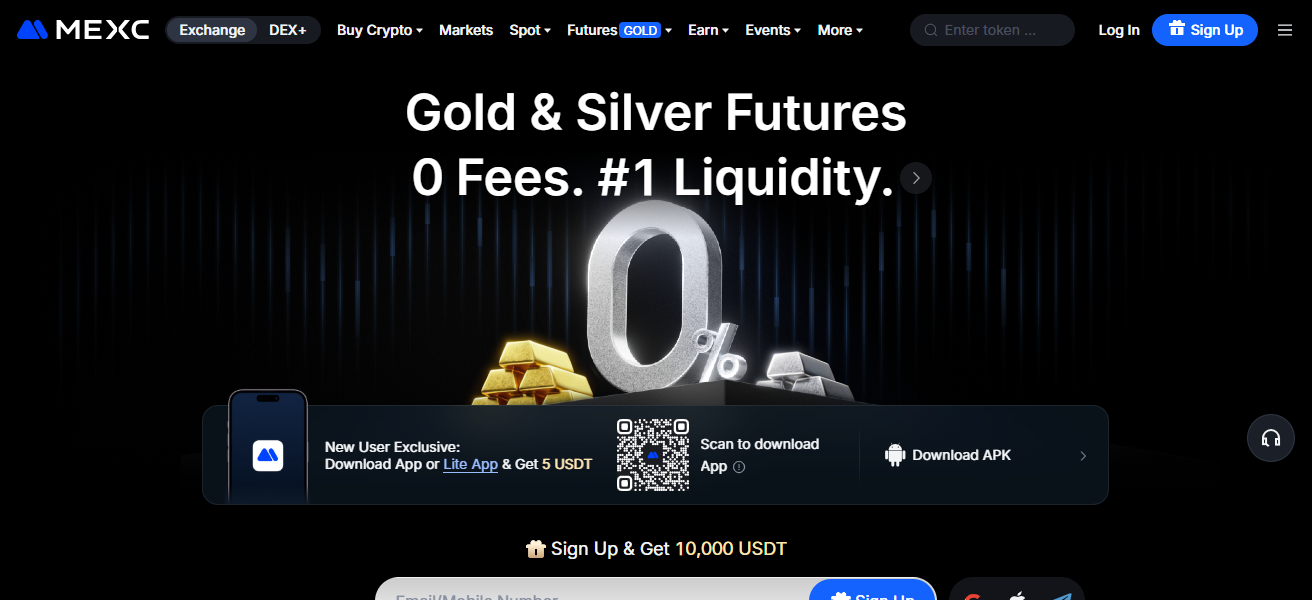
MEXC is less well known when compared to the high trading volume exchange Binance and exchange volume Coinbase, but MEXC’s high trading volume and competitive trading volume make it easy to use.
Ethereum liquid staking is the best investment option for the high balance investors looking for high trading volume and liquid staking rewards.
MEXC Features
- Allows ETH staking with liquid tokens.
- Global users can receive competitive yield.
- Good for beginners as the interface is straightforward.
- Offers DeFi integration with a growing ecosystem.
| Pros | Cons |
|---|---|
| Competitive yields for ETH staking | Less popular compared to top exchanges |
| Easy-to-use staking interface | Limited DeFi integrations |
| Accessible for global users | Liquidity smaller than Binance or Lido |
8. Ledger
Ledger is a hardware wallet that allows users to stake ETH securely on their devices. They have partnered with liquid staking providers to give users the ability to stake their ETH through their Ledger devices.
Because of this, users do not have to worry about the safety of their private keys. The liquid staking options give users the ability to receive liquid tokens that represent their staked assets.
With the integration of providers, such as Lido, users have the ability to stake ETH through Ledger, without risking the safety of their tokens.
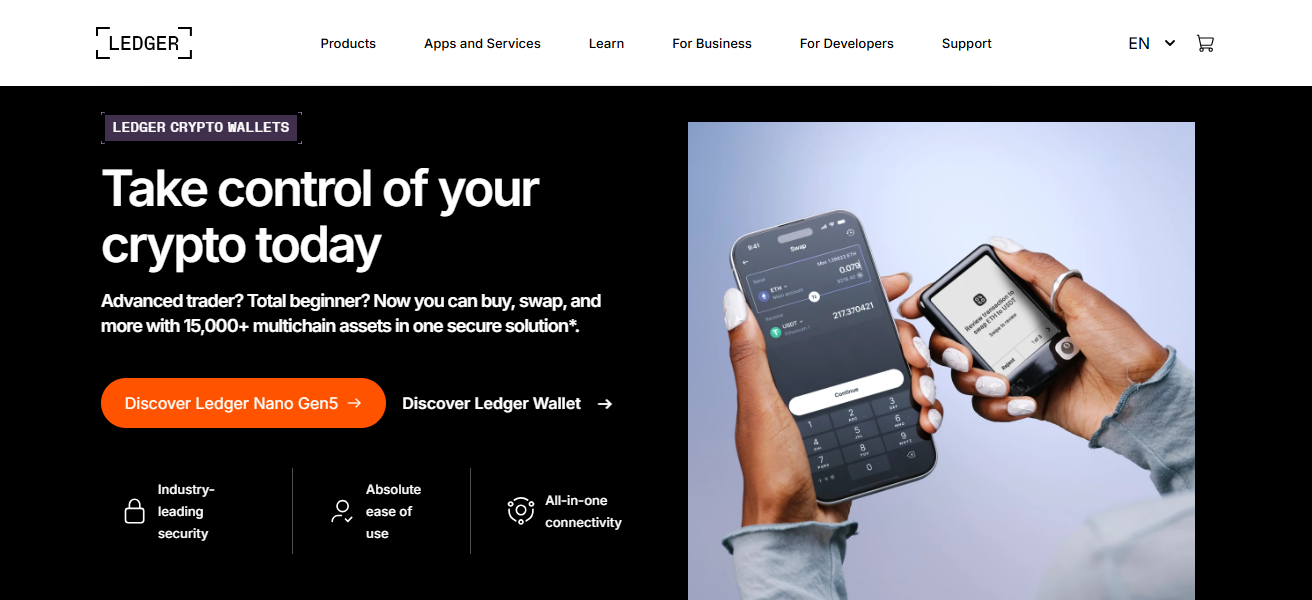
Ledger is appealing to users because it is one of the first hardware wallets that has combined institutional-grade protection with DeFi services.
Liquid staking with staking ETH through Ledger gives users protection with one of the safest options available.
Ledger Features
- Requires hardware wallet for ETH staking.
- Works with Lido, among other providers.
- Users control their private keys.
- Offers both security and access to liquidity.
| Pros | Cons |
|---|---|
| Maximum security via hardware wallet | Requires external integrations for liquid staking |
| Private keys remain under user control | Less convenient than exchange-based staking |
| Supports partnerships with Lido and others | Limited liquidity compared to exchanges |
9. Trust Wallet
Trust Wallet is a mobile wallet that provides Ethereum staking with liquid tokens. This means that users gain decentralized control over their tokens.
In addition, users are able to stake tokens via the app and earn rewards while keeping their tokens liquid. Private keys are managed exclusively by the user.
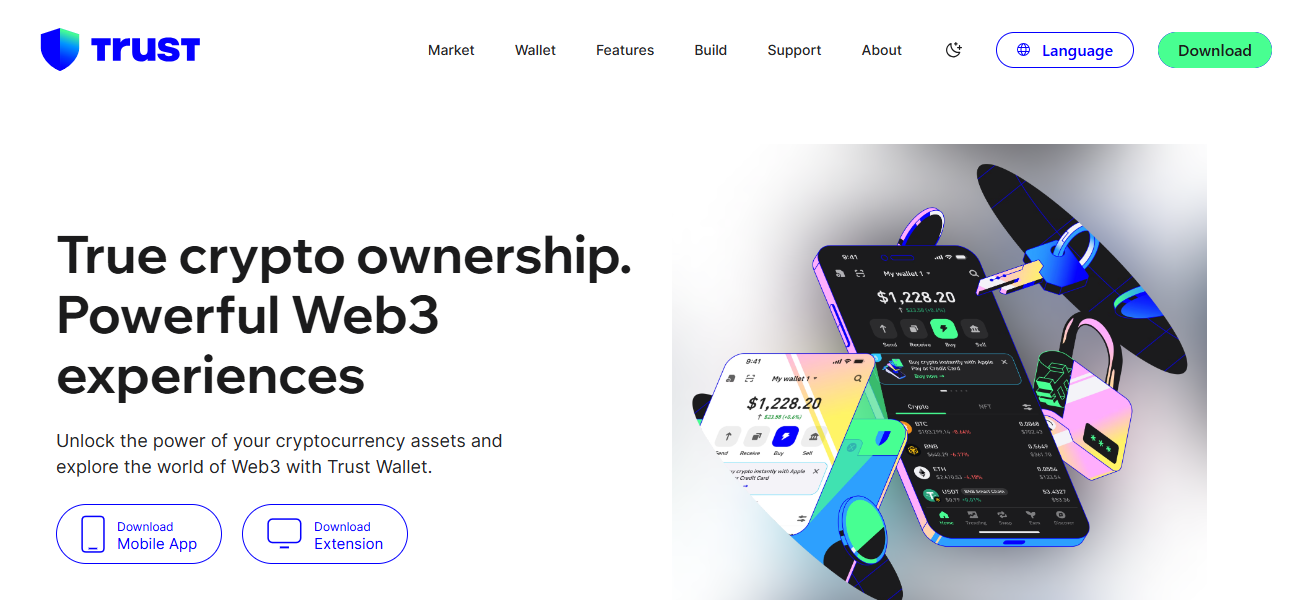
This level of control increases popularity of the wallet among retail users. The wallets also simplify access to DeFi protocols, increasing their overall usefulness.
At the same time, liquid staking through Trust Wallet provides mobile-first flexibility. For users wishing to have decentralized control of their funds, Trust Wallet provides a safe and effortless Ethereum staking solution.
Trust Wallet Features
- First staking solution on mobile with liquid tokens.
- Users have strong control over their private keys.
- Offers access to DeFi protocols.
- Allows decentralized access for retail investors.
| Pros | Cons |
|---|---|
| Decentralized mobile-first staking solution | Smaller ecosystem than major exchanges |
| Strong user control over private keys | Limited institutional adoption |
| Integration with DeFi protocols | Rewards vary depending on provider integration |
10. Ankr
Ankr provides decentralized infrastructure services and Ethereum liquid staking via aETH tokens. Users can stake ETH and receive aETH in return.
The aETH tokens can then be utilized in various DeFi platforms. Ankr prioritizes decentralization, scalability, and multi-chain capability, which makes them stand out amongst other staking providers.
Their infrastructure services go beyond staking to include support for blockchain nodes and Web3 services.
Ankr offers liquid staking with competitive yields and flexibility. Their DeFi protocol integrations support additional utility for stakers.
Users looking for a decentralized solution with extensive ecosystem integrations can access Ankr’s Ethereum staking with staking rewards and infrastructure-level new solutions.
Ankr Features
- Provides liquid staking using aETH tokens.
- Offers cross-chain decentralized infrastructure.
- Strong DeFi integration for stakers.
- Offers competitive yield with flexible staking.
| Pros | Cons |
|---|---|
| Decentralized infrastructure provider with aETH tokens | Smaller liquidity compared to Lido |
| Multi-chain staking support | Less beginner-friendly than exchanges |
| Strong DeFi integrations | Rewards fluctuate with network conditions |
FAQ
Liquid staking lets users earn rewards while keeping staked ETH accessible through tradable tokens.
It provides flexibility, liquidity, and the ability to use staked assets in DeFi.
Lido is currently the largest and most widely integrated liquid staking provider.
Yes, Rocket Pool emphasizes decentralization by allowing smaller node operators to participate.