In this article, I will discuss the best Meta Quest alternatives for Web3 metaverse users. I will focus on the platforms that offer genuine digital ownership, decentralization, and advanced immersive experiences.
Unlike the ‘traditional’ VR systems, these alternatives give users the reigns of their assets, allowing them to build their own virtual worlds and participate in cross-device interactions.
Web3 face these enthusiasts dot in the Metaverse, and if you seek that freedom, creativity, and monetization, this guide was designed for you.
Key Poinst & Best Meta Quest Alternatives for Web3 metaverse Users
| Alternative | Key Point |
|---|---|
| Webaverse | Open-source Web3 metaverse engine enabling anyone to host immersive worlds |
| Genies | Avatar creation platform for personalized digital identity in metaverse |
| reNFT | NFT rental protocol allowing temporary access to digital assets |
| OMI Group | Interoperable identity & social graph bridging multiple virtual worlds |
| Colyseus Arena | Multiplayer server solution for scalable metaverse gaming |
| Decentraland | Ethereum-based virtual world with land ownership via NFTs |
| The Sandbox | Voxel-style metaverse focused on play-to-earn and NFT assets |
| Somnium Space | VR-first metaverse supporting blockchain-based land and assets |
| Cryptovoxels | User-built voxel worlds with NFT-based parcels |
| Spatial | Cross-platform metaverse for social collaboration and NFT galleries |
10 Best Meta Quest Alternatives for Web3 metaverse Users
1. Webaverse
First and foremost, Webaverse is one of the best alternatives for Meta Quest for Web3 metaverse users because of how it is developed entirely around open, user-owned digital worlds.
In contrast to closed VR ecosystems, Webaverse allows users to take their NFTs, avatars, and other assets and immerse themselves into the open platform of Webaverse.
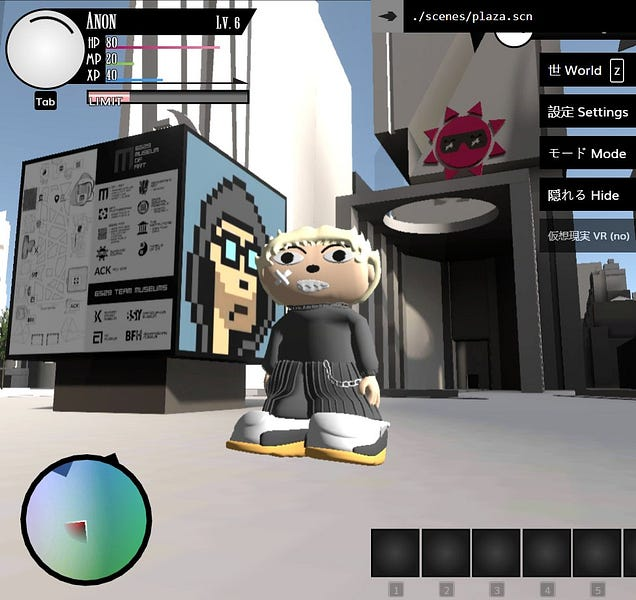
Because of it being browser based, there are no hardware restrictions and users can access the platform from any device, still supporting VR ready experiences.
On chain asset portability is a platform strength for creators and gamers to own, trade, and utilize their digital assets freely within the metaverse. This is why Webaverse is a powerful alternative for users of Web3.
| Pros | Cons |
|---|---|
| Open, browser-based metaverse accessible on multiple devices. | Graphics and VR immersion may not match high-end VR platforms. |
| Full NFT and digital asset portability. | Smaller community compared to larger metaverse platforms. |
| Supports user-created worlds and assets freely. | Limited enterprise or brand-focused tools. |
2. Genies
Web3 metaverse users recognize Genies as a top alternative to Meta Quest due to offering users complete creative control over their digital identity.
Genies does not use a centralized avatar system; instead, users are able to create their own fully customizable avatars as well as own blockchain-backed wearable assets.
Genies one-of-a-kind advantage lies in the creator economies focused on digital avatars, allowing users to custom create, mint and sell fashion and accessories on the platform.
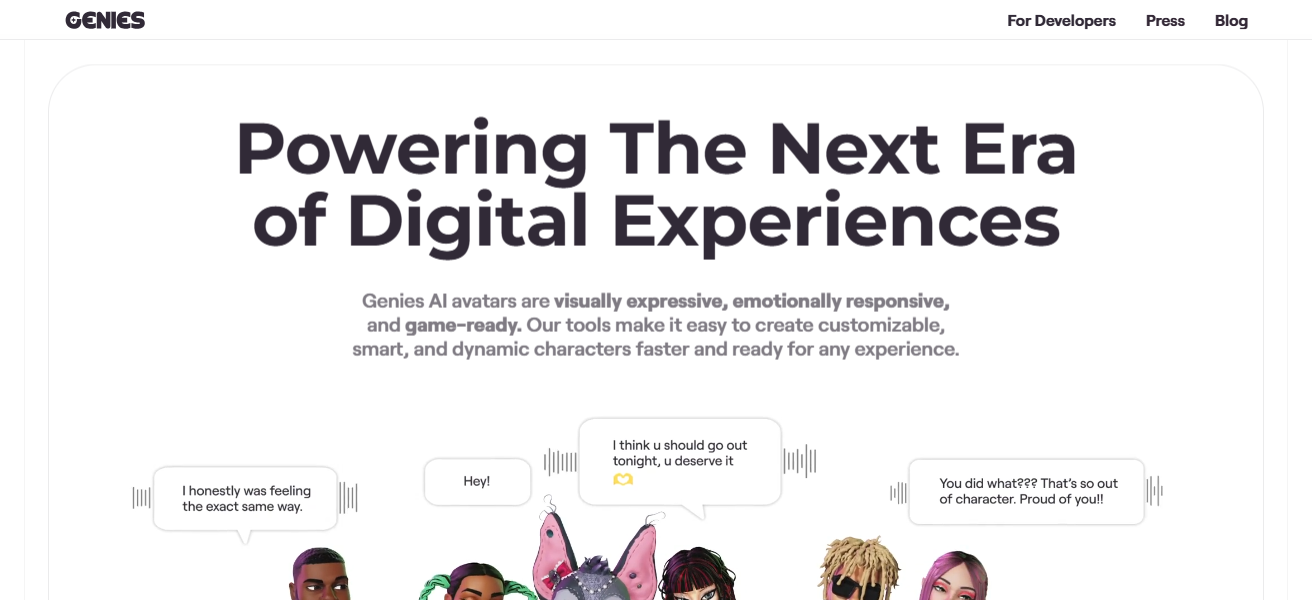
This approach differentiates Genies from others as avatar customization becomes a fully functional Web3 marketplace instead of a mere aesthetic in the ecosystem.
With the ability to fully own, customize, and monetize their avatars, Genies stands as the best alternative for users seeking unrestricted metaverse identity.
| Pros | Cons |
|---|---|
| Highly customizable avatars with NFT ownership. | Focused mainly on avatars, limited full-world experiences. |
| Creator-led economy for selling digital fashion and accessories. | Less emphasis on VR immersion or interactive worlds. |
| Strong Web3 identity and asset ownership features. | Not ideal for full-scale metaverse gaming. |
3. reNFT
reNFT is a great alternative for Meta Quest for users in Web3 metaverse, as it turns digital ownership into flexible, utility-based experiences.
Instead of locking users into permanent purchases of assets, reNFT implements trustless NFT rental, letting players and creators borrow assets, avatars and tools for the metaverse without upfront ownership costs.
This opens the metaverse to the highly under-served previously users, while owners gain passive income through the metaverse assets.

The main advantage is the sustainable sector of the economy рrovided for Web3 – if access is to be prioritised over ownership.
For users looking for true utility of their assets, affordable access to them and freedom reNFT is a great alternative.
| Pros | Cons |
|---|---|
| Enables trustless NFT rentals for metaverse items. | Limited to asset rental, not full metaverse creation. |
| Affordable access to premium assets for users. | Smaller user base compared to major metaverse platforms. |
| Supports passive income for NFT owners. | Less immersive VR experience. |
4. OMI Group
Users looking for a Meta Quest alternative for Web3 metaverse have a great option in OMI Group. They have built a reputation for creating immersive digital ecosystems that integrate blockchain-based digital assets in a seamless, one-step process.
Unlike most competitors, OMI Group does not implement closed VR environments but rather user-controlled, portable digital assets that can travel across the ecosystem.

OMI Group’s most significant strength is its enterprise-grade Web3 infrastructure that supports brands, builders, and digital communities in creating and maintaining programmable virtual ecosystems that revolve around true digital assets.
OMI Group has a great ratio of value to customizable ecosystem design in comparison to competitors allowing decentralized metaverse builders to avoid traditional VR offerings.
| Pros | Cons |
|---|---|
| Enterprise-grade infrastructure for scalable worlds. | Can be more complex for casual users. |
| Interoperable, user-owned assets across environments. | Community size is smaller than mainstream VR platforms. |
| Strong focus on Web3 decentralization. | Limited ready-to-use VR content. |
5. Colyseus Arena
Colyseus Arena is an exciting Meta Quest alternative for Web3 metaverse gamers since it offers a real-time multiplayer world-building decentralized framework that is powerful.
Instead of using prefab VR worlds, it lets developers and creators design custom metaverse uses from state-of-the-art scalable server technology.
Its multiplayer infrastructure is especially noteworthy for decentralized Web3 worlds, and lets games and virtual places support large communities with low latency and on-chain asset ownership.
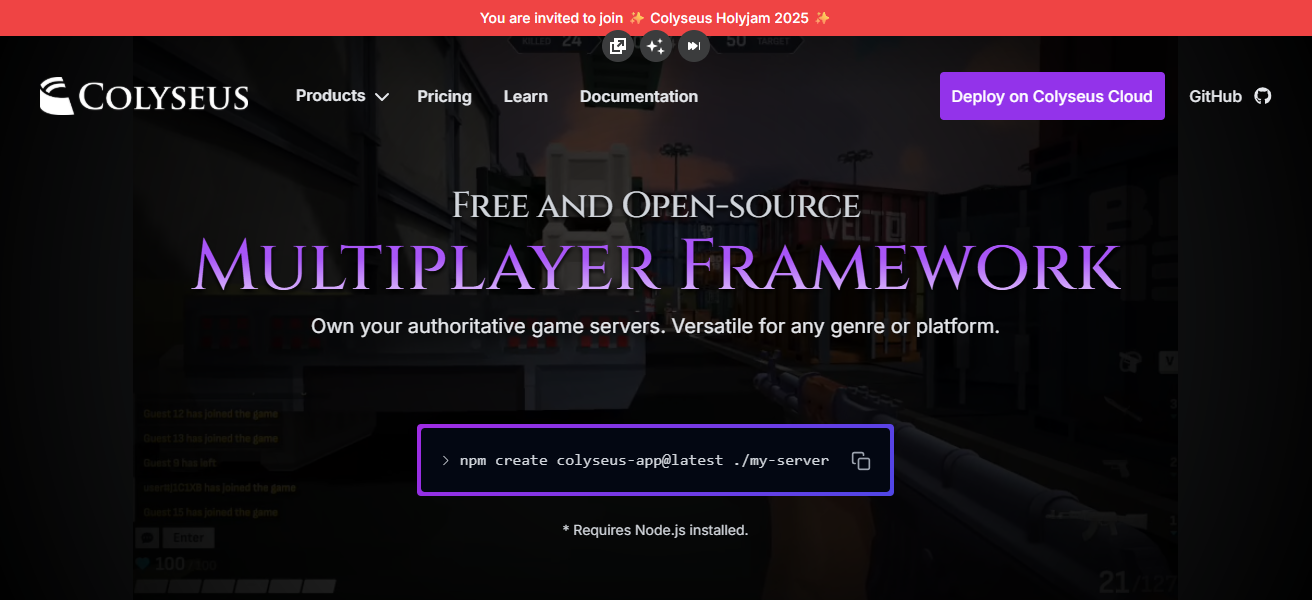
This flexibility empowers people to experience immersive, multiplayer worlds without needing expensive hardware.
This is particularly true for Web3 natives, making metaverse innovation places like Colyseus Arena popular and used.
| Pros | Cons |
|---|---|
| Open-source multiplayer infrastructure for custom worlds. | Requires developer knowledge to fully utilize. |
| Supports large communities with low-latency performance. | Not a plug-and-play VR experience for casual users. |
| Flexible and scalable for Web3 games and metaverse projects. | Less visual polish compared to mainstream VR platforms. |
6. Decentraland
Users of Web3 metaverses looking for alternatives with Open World functionality will appreciate Decentraland for its true open-world decentralization.
Every parcel of land, asset, and avatar are owned and governed by its own individual DAO. Every user is empowered to own, create, trade, and monetize experiences and assets and to govern those assets by having their own DAO.
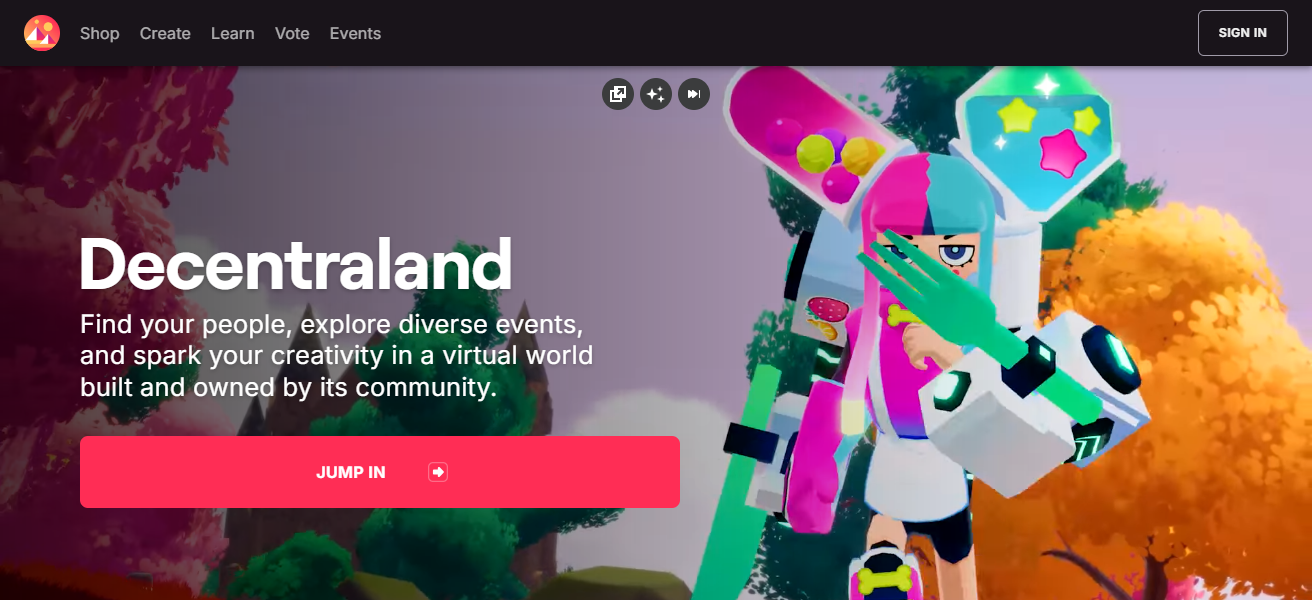
Decentraland’s Governance is its most distinct feature, allowing participants to vote, and shape the rules and destiny of the entire metaverse.
Absolute control, transparency, and ownership are, for Decentraland users, unmatched by any other Web3 platform. Decentraland can truly be considered the digital universe of your dreams.
| Pros | Cons |
|---|---|
| Fully decentralized virtual world with DAO governance. | Graphics are voxel-style, may feel basic for some users. |
| True ownership of land, avatars, and digital assets. | Learning curve for new users and creators. |
| Community-driven platform decisions and upgrades. | Requires some crypto knowledge to interact fully. |
7. The Sandbox
The Sandbox is a metaquest alternative. It features user ownership. It features user creation. It features play-to-earn mechanics. It is a decentralized virtual world, is blockchain integrated.
It is not a closed vr platform like competitors. Users can build and own voxel-based experiences and truly own all of their land, their avatars and all in-game assets.

Its economy is a user creator economy. Users can design games and constructive assets. Users can also earn assets and revenue from their creations.
Player builders. Player entrepreneurs. It is a desert of freedom and monetization. There is nothing like it.
| Pros | Cons |
|---|---|
| Voxel-based world with strong creator-first economy. | Graphics may not match high-end VR experiences. |
| Supports play-to-earn and monetization of assets. | Can be complex for new users to start building. |
| True ownership of land, assets, and in-game items. | Requires some blockchain knowledge for full benefits. |
8. Somnium Space
For Web3 metaverse users, Somnium Space is among the best alternatives to Meta. Somnium Space has an open, fully persistent VR universe.
Somnium Space also ensures true digital ownership unlike other ecosystems. Users can own on-chain assets such as avatars, land, and other items.

Somnium Space’s unique and most powerful strength is the fully immersive and integrated environment on the blockchain in which all parcels exist in an unbroken world with no loading zones.
The Seamless presence is maintained in a Web3 environment that upholds the values of decentralization, as well as freedom of assets. Somnium Space is the best option for users that want an immersive and user-controlled metaverse.
| Pros | Cons |
|---|---|
| Fully immersive VR world with blockchain asset integration. | Requires VR hardware for the full experience. |
| Persistent, open metaverse environment. | Smaller community than giants like Meta Quest. |
| True digital ownership of land and avatars. | Can be resource-intensive for devices. |
9. Cryptovoxels
For Web3 users, Cryptovoxels is a good alternative to Meta Quest because, while voicing user content, it is a good metaverse that is easy to design and powerful to operate.
In contrast to traditional ecosystems that employ VR, Cryptovoxels allocates portions of land that users can own, build structures upon, and showcase digital content that is interwoven within the real-world blockchain.
The lightweight browser-based interface and voxel environment is singular in its design because it enables quick access without the need for any special software.
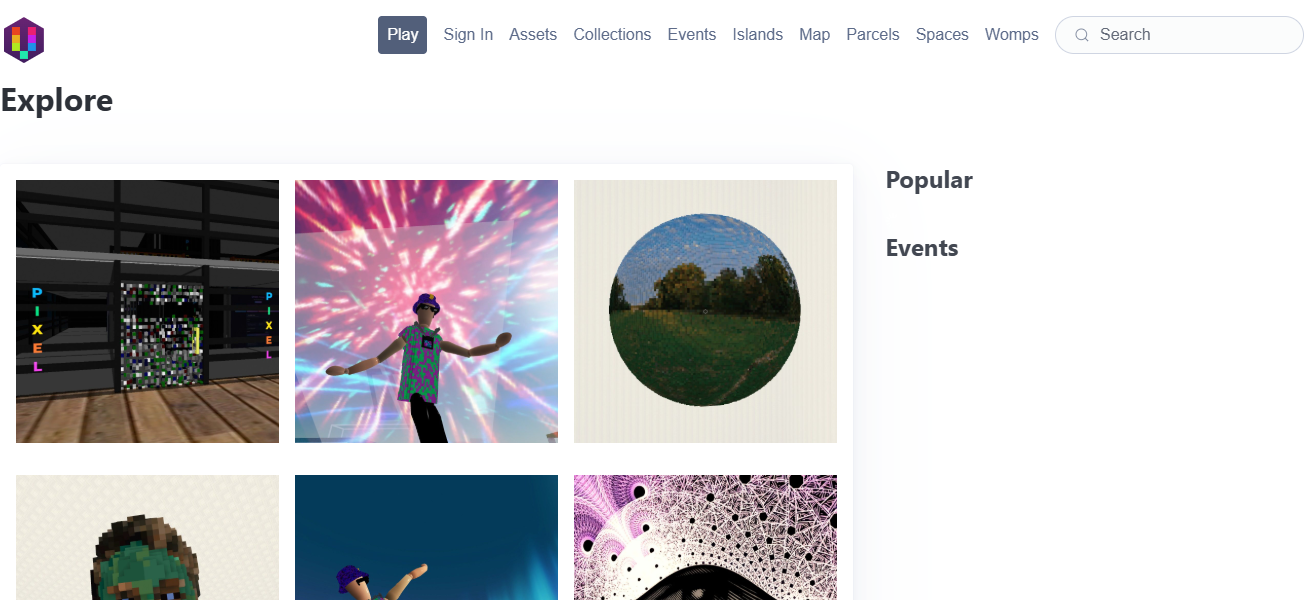
NFTs and edited spaces are easily supported. This enables collectors, creators, and Web3 users to construct an open metaverse that is ideal.
In a world that is completely open, Cryptovoxels provides real, unhindered, and unrestricted ownership, a canvas for creators, and self-expression.
| Pros | Cons |
|---|---|
| Lightweight, browser-based voxel world accessible easily. | Graphics are simple and voxel-style. |
| Full ownership of parcels, assets, and NFTs. | Less immersive for VR enthusiasts. |
| Quick entry without high-end hardware. | Smaller ecosystem compared to larger metaverses. |
10. Spatial
Supporting Spatial as an alternative to Meta Quest in Web3’s metaverse is an easy task. It provides imprinted 3D spaces while also adding blockchain-enabled ownership.
Unlike most VR spaces, Spatial allows creators and communities to embed NFTs during the experience in the immersive galleries, social spaces, and worlds they build.
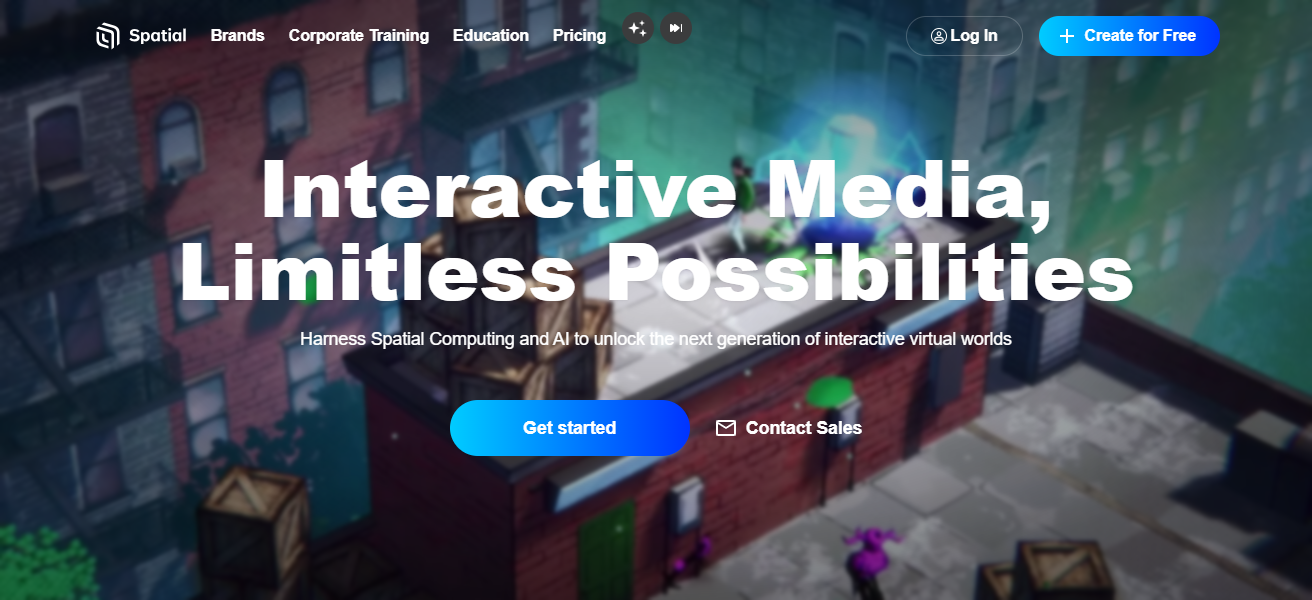
Its most unique feature is the ability to join the metaverse via VR, mobile, or browser. Users are not hindered the loss of visual quality.
This is great for Web3 as they value autonomy, interoperability, and creative freedom. Spatial is a great representation of a User-controlled world compared to other VR spaces created in a metaverse for decentralization.
| Pros | Cons |
|---|---|
| High-quality 3D environments with NFT integration. | Requires some VR or AR hardware for best experience. |
| Cross-platform accessibility (VR, mobile, browser). | Limited gaming-focused features. |
| Ideal for social, gallery, and community experiences. | Smaller focus on asset creation and play-to-earn. |
Conclusion
To summarize, the greatest Meta Quest alternatives for the users of Web3 metaverse offer authentic digital ownership, immersive experience, and creative liberty.
Webaverse, Decentraland, the Sandbox, Somnium Space, and similar service providers let users create, buy and sell, travel in, and dominate the universe.
These alternatives enable Web3 fans needing flexibility, monetization, and multi-platform availability to experience a user-oriented and futuristic metaverse.
FAQ
They are VR and metaverse platforms that focus on decentralized ownership, NFTs, and cross-platform accessibility.
Alternatives offer true digital ownership, Web3 integration, and more freedom for creators and users.
Yes, many like Webaverse, Cryptovoxels, and Spatial are accessible via browsers and mobile devices.
Yes, most support NFT assets, avatars, and in-world items that users can fully own.
Absolutely. Platforms like The Sandbox and Genies allow users to build, sell, and monetize assets.