
In this article, I will present the most optimal choices for Nansen, focusing on different platforms with unique approaches to blockchain analysis, risk assessment, visualization of data, and market intelligence, in addition to the smart-money tracking.
Key Points & Nansen Alternatives
| Alternative | Key Point |
|---|---|
| TRM Labs | Blockchain compliance and risk monitoring |
| Moralis Web3 | Developer-friendly APIs for Web3 apps |
| MADANA | Privacy-preserving data analytics |
| Chainalysis KYT | Real-time transaction monitoring |
| Dune Analytics | Community-driven blockchain dashboards |
| Messari | Institutional-grade crypto market intelligence |
| Delphi Digital | Deep research and investment insights |
| Parsec Finance | Detailed wallet and transaction analytics |
| Credmark | Risk modeling for DeFi protocols |
| Footprint Analytics | Data visualization for DeFi and NF |
10 Nansen Alternatives
1. TRM Labs
For compliance and blockchain risk intelligence, unlike Nansen, TRM Labs is an alternative solution.
While Nansen is focused on smart money movement and wallet tagging, TRM Labs is focused on monitoring transactions, fraud, and compliance.
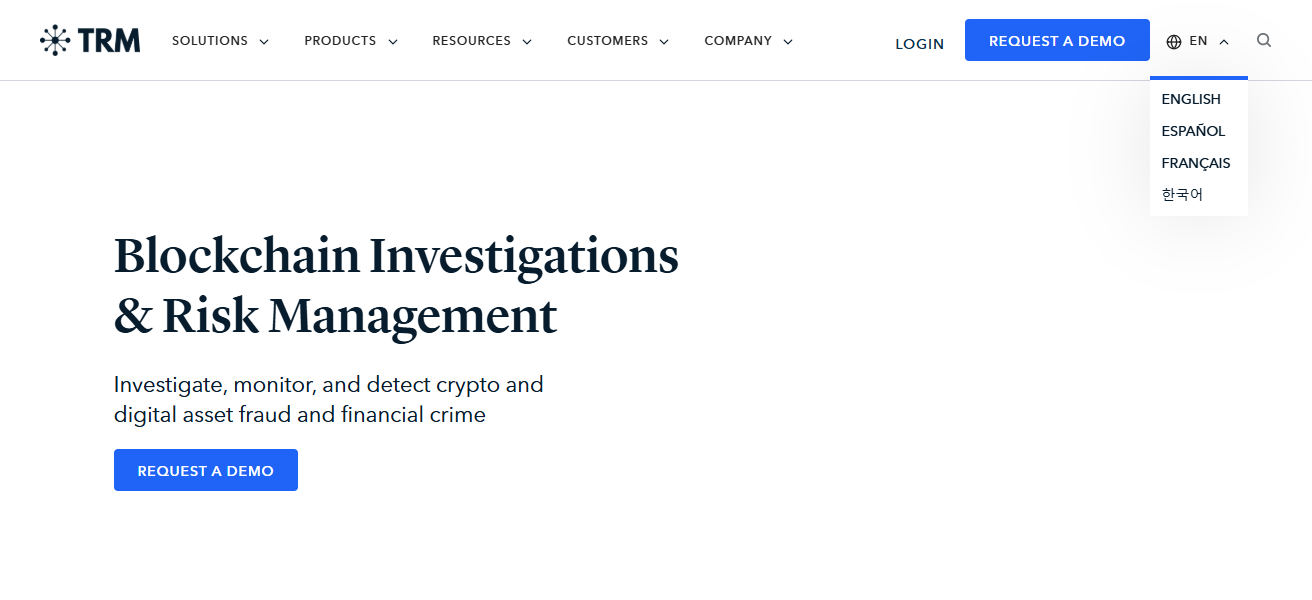
This is very useful for institutions, exchanges, and regulators focused on AML compliance, and a threat analysis, rather than market sentiment and portfolio discovery.
TRM Labs Key Features
- Transaction Risk Monitoring: Tracks a blockchain’s transactions in real time for fraudulent activities, sanctions, and other illicit activities.
- Advanced Wallet Screening: Uses a behavioral and historical risk analysis to flag risky addresses.
- Compliance Intelligence: Regulatory reporting and AML support for institutions and exchanges.
- Cross-Chain Coverage: Tracks transactions across all major blockchains.
| Pros | Cons |
|---|---|
| Strong focus on AML, fraud detection, and risk intelligence | Not designed for investor or trading insights |
| Trusted by regulators and large institutions | Limited smart-money or wallet behavior analysis |
| Real-time monitoring of suspicious transactions | Expensive for small teams or individuals |
| Excellent compliance and investigative tools | Less useful for market trend discovery |
2. Moralis Web3
Moralis Web3 works as a Nansen alternative because it provides developers APIs for on-chain data instead of dashboards.
While Nansen takes an analytics-first approach, it seems like Moralis is tackling the backend Web3 app infrastructure challenge first.
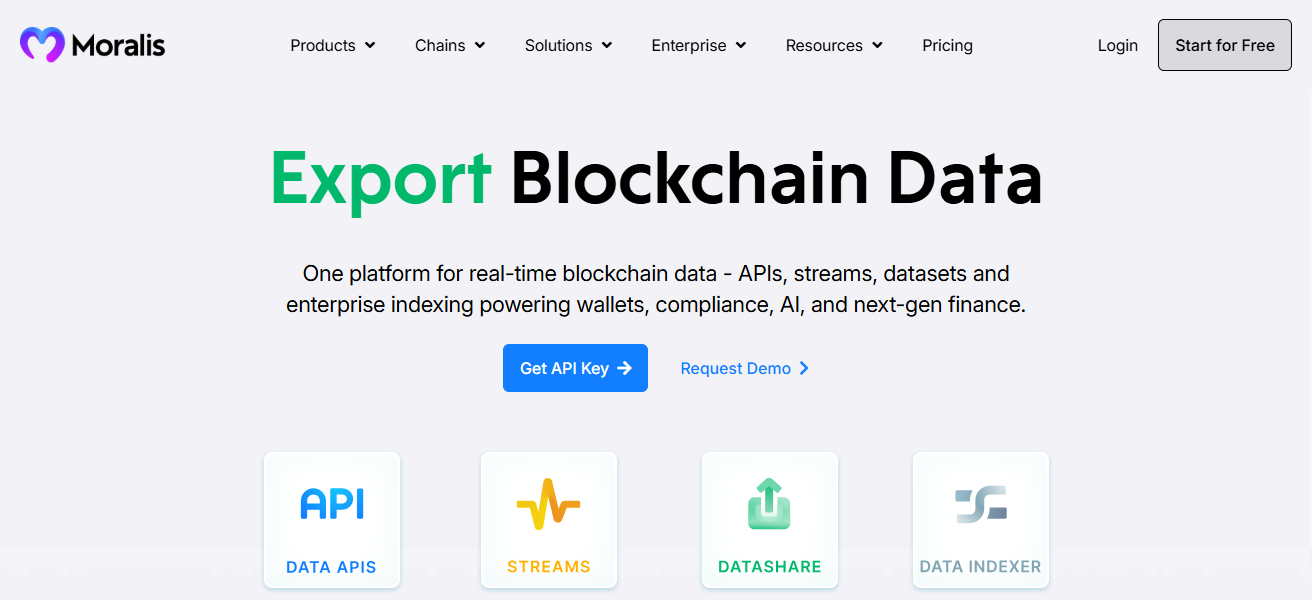
With real-time blockchain data, wallet auth, and cross-chain support, it helps builders who want to offer custom analytics tools, dApps, and avoid using built-in visual analytics and investor metrics.
Moralis Web3 Key Features
- Web3 Data APIs: Offers real time updates of blockchain records including wallets, tokens, and smart contracts.
- User Authentication: Provides a secure wallet-based login for decentralized applications.
- Multi-Chain Support: Compatible with a variety of blockchains, including Ethereum, Solana, and BNB Chain.
- Developer-Friendly Tools: Provides simplified backend infrastructure for Web3 application development.
| Pros | Cons |
|---|---|
| Powerful APIs for real-time on-chain data | Lacks ready-made analytics dashboards |
| Ideal for Web3 and dApp developers | Requires technical knowledge |
| Supports multiple blockchains | Not focused on investor behavior |
| Fast backend infrastructure | Limited research or market insights |
3. MADANA
MADANA asserts itself as a privacy-first alternative to Nansen by providing secure and permissioned access to blockchain and off-chain data.
Unlike public wallet labeling and open analytics, MADANA focuses on data and sharing control. This uniquely positions MADANA in the marketplace, especially for enterprises and data

Providers needing to monetize or analyze sensitive data, as it does not expose raw data sets, which contrasts with Nansen’s transparent market intelligence approach.
MADANA Key Features
- Privacy-Preserving Data Access: Allows secure raw data analytics without exposure.
- Permissioned Data Sharing: Data owners have complete control of insight access.
- Enterprise-Grade Security: Fully regulatory compliant for sensitive and regulated data.
- Decentralized Data Marketplace: Facilitates a collaboration and monetization of data in a more ethical way.
| Pros | Cons |
|---|---|
| Strong privacy-first and data ownership model | Smaller ecosystem compared to competitors |
| Secure and permissioned data sharing | Limited public market analytics |
| Suitable for enterprise use cases | Less known among retail users |
| Focuses on ethical data usage | Not ideal for traders or investors |
4. Chainalysis KYT
For compliance-driven businesses, Chainalysis KYT is a credible alternative to Nansen. While Nansen is focused on tracking market behavior and smart capital
Chainalysis KYT is focused on the scoring of real-time transaction risks and the identification of fraudulent activities.

Chainalysis’ primary strength is in assisting exchanges and financial institutions with meeting regulations, monitoring value transfers, and managing risk pertaining to high-risk wallets. Therefore, the company is focused on risk management rather than on investment decisions.
Chainalysis KYT – Key Features
- Real-Time Transaction Monitoring: Identifies and acts on potential problems as they arise.
- Risk Scoring System: Identifies and categorizes wallets and transactions by level of risk.
- Regulatory Compliance Tools: Assists companies in adhering to international anti-money-laundering (AML) protocols.
- Extensive Address Attribution: Keeps comprehensive records of known addresses.
| Pros | Cons |
|---|---|
| Industry leader in transaction monitoring | Very costly subscription plans |
| Excellent for regulatory compliance | Not designed for portfolio tracking |
| Real-time risk scoring of wallets | Minimal market or trading insights |
| Trusted by major exchanges | Complex for beginners |
5. Dune Analytics
Dune Analytics vs Nansen – Dune side offers customizable and community-based blockchain analytics. Nansen offers pre-made insights and tagged wallet addresses.
Dune gives users the freedom to write their own SQL queries and create their own dashboards using any on-chain data.

This offers the greatest flexibility to analysts and researchers so they can determine their own metrics, assumptions, and visualizations rather than being limited to preset metrics and visualizations.
Dune Analytics – Key Features
- Custom SQL Queries: Empowers users to examine and analyze unprocessed data on the blockchain.
- Community Dashboards: Use and disseminate data analytics created by other community members.
- Multi-Chain Data Access: Works with Ethereum and various Layer 2 solutions.
- Open Data Transparency: Users can construct and confirm analyses in an efficient manner.
| Pros | Cons |
|---|---|
| Fully customizable dashboards | Requires SQL knowledge |
| Community-driven and transparent data | No built-in wallet labeling like Nansen |
| Free and paid plans available | Time-consuming for complex analysis |
| Supports multiple chains | Less beginner-friendly |
6. Messari
While Nansen focuses more on real-time tracking of crypto wallets, Messari acts as a Nansen alternative with a more structured research, fundamental, and metric-based reporting approach.
Just as Nansen provides wallet tracking, Messari provides deep reporting, tokenomics, and protocol comparison.
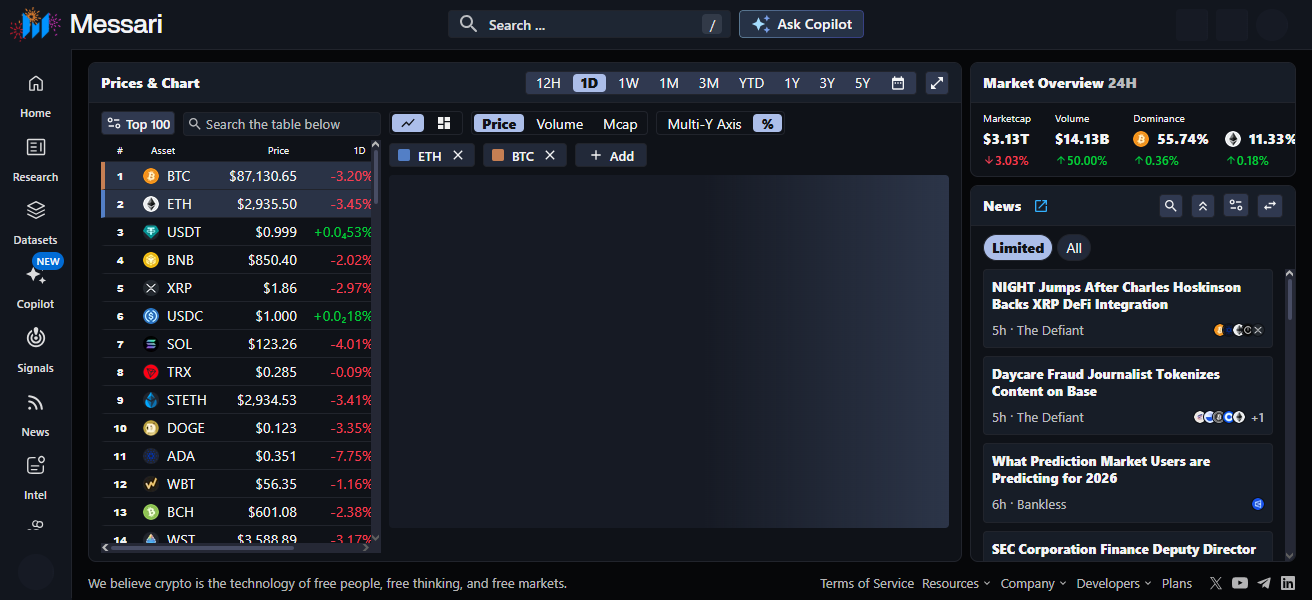
For long-term investors and institutions looking for story-based reporting with contextual insights, Messari is more suited than Nansen, which focuses on short-term capital wallet tracking and wallet-level intelligence.
Messari – Key Features
- In-Depth Research Reports: analyzes specific topics, assets, and segments within the markets.
- Standardized Metrics: Offers the same datasets, ensuring ease of comparison.
- Governance & Token Analysis: Dissects the economics behind the tokens and the power governance structures.
- Market Intelligence Tools: Curates and summarizes the developments and stories within/outside the crypto ecosystem.
| Pros | Cons |
|---|---|
| High-quality research and reports | Limited real-time on-chain data |
| Strong focus on fundamentals | Premium plans are expensive |
| Useful for long-term investors | Not ideal for active traders |
| Clean and structured data | Less wallet-level intelligence |
7. Delphi Digital
Delphi Digital stands apart from Nansen by thesis-driven research and developing insights rather than on-chain analytics.
It focuses on the macro perspective, sectors, and investment narratives in DeFi, NFTs, and the Web3 ecosystem. ‘
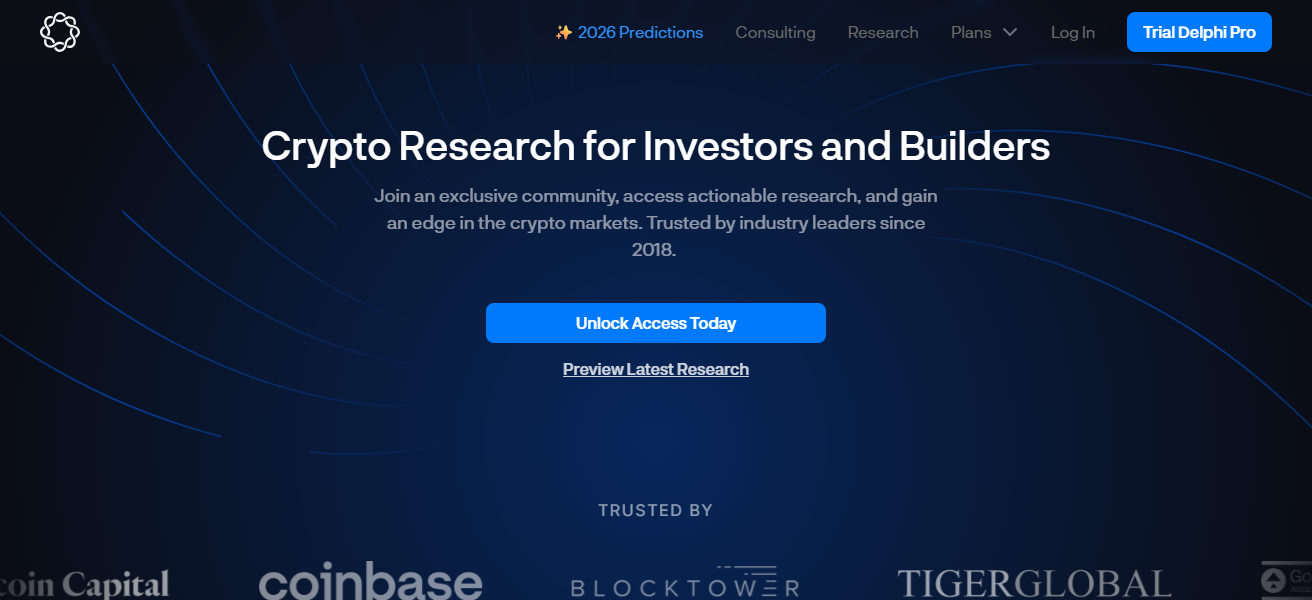
For these reasons, Delphi Digital, as a Nansen alternative, best suits customers appreciating the value of analysis, prediction, and a more qualitative approach rather than dashboards, wallet-monitoring, and transactional data visualizations.
Delphi Digital – Key Features
- Thesis-Driven Research: Identifies and examines proposed long-range patterns and investment stories.
- Sector-Level Insights: Offers analytics on DeFi, NFTs, gaming, and ecosystem.
- Institutional-Grade Reports: Tailored for funds and other professional market participants.
- Forward-Looking Analysis: Prioritizes strategy over pure, data-based analytics tracking.
| Pros | Cons |
|---|---|
| Deep, thesis-driven crypto research | Not an analytics dashboard platform |
| Strong insights on emerging trends | Content mostly behind a paywall |
| Ideal for institutional investors | Limited real-time data |
| Focus on strategic foresight | Not suitable for beginners |
8. Parsec Finance
Parsec Finance provides a real-time DeFi analytics alternative to Nansen, focusing on live protocol analytics, alerts, and risk metric monitoring.
Nansen offers historical analytics and behavioral tracking. Parsec, on the other hand, monitors yields, positions, and the real-time status of protocols.
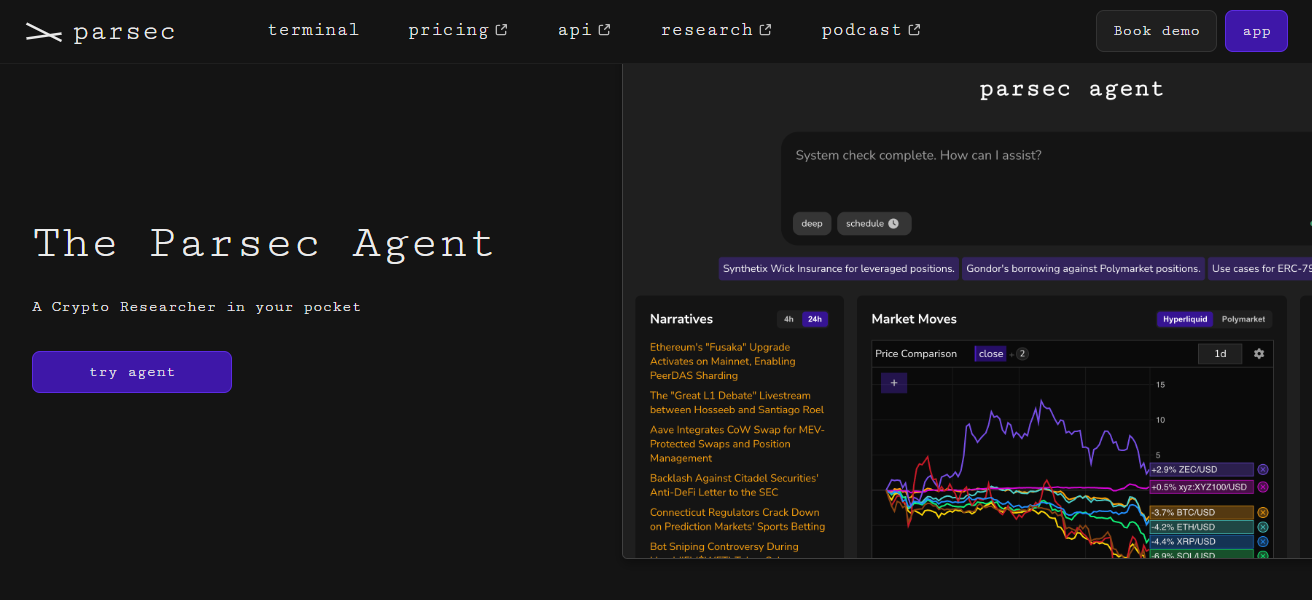
This service is especially valuable to active traders and DeFi risk managers as it offers immediate signals instead of general intelligence on the market or investor activity.
Parsec Finance – Key Features
- Real-Time DeFi Dashboards: Provides users with protocol metrics as they change in real-time.
- Custom Alerts: Updates users on shifts within the market and protocol.
- Yield & Position Tracking: Assists traders in monitoring their exposure in DeFi.
- Risk Monitoring Tools: Alerts users on the level of health and volatility of the protocols.
| Pros | Cons |
|---|---|
| Real-time DeFi monitoring and alerts | Narrow focus on DeFi only |
| Useful for active traders | Smaller data coverage than Nansen |
| Tracks protocol health and yields | Less historical analysis |
| Fast and responsive interface | Limited research content |
9. Credmark
Since Nansen has a reputation for financial modeling and risk assessment regarding DeFi protocols, Credmark has positioned itself as a more quantitative alternative by emphasizing Nansen’s financial modeling and risk assessment.
Instead of providing wallet tagging and smart money analytics, Credmark models, assesses, and prices volatility and smart open-source models for protocol risk.
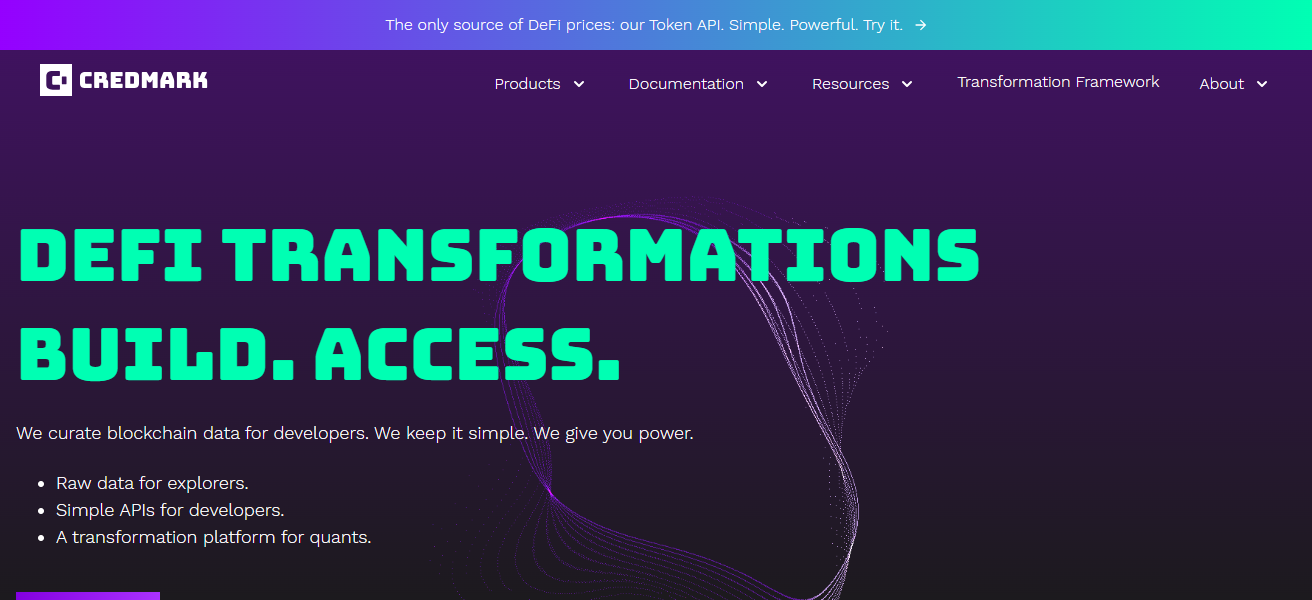
This is a good service for developers, DAOS, and analysts who value empirical information over market sentiment.
Credmark – Key Features
- DeFi Risk Models: Transparency in providing models on pricing and volatility.
- Open-Source Framework: Users can customize their own analytics and verify it.
- Protocol Financial Analysis: The assessment of liquidity, leverage, and exposure.
- DAO-Focused Tools: Enhances governing and the integration of risk-related decisions.
| Pros | Cons |
|---|---|
| Transparent and open-source models | Not beginner-friendly |
| Strong DeFi risk and pricing analysis | Limited UI compared to competitors |
| Useful for DAOs and developers | Smaller community adoption |
| Focus on quantitative accuracy | Not focused on wallet tracking |
10. Footprint Analytics
Up until October 2023, Footprint Analytics offered multi-chain, user-friendly blockchain data analysis focusing on growth metrics and user behavior, which helped them compete with Nansen Analytics.
Nansen primarily focuses on capital flows and tracking elite wallets, whereas Footprint Analytics gives more emphasis to ecosystem adoption, retention, and overall protocol performance.
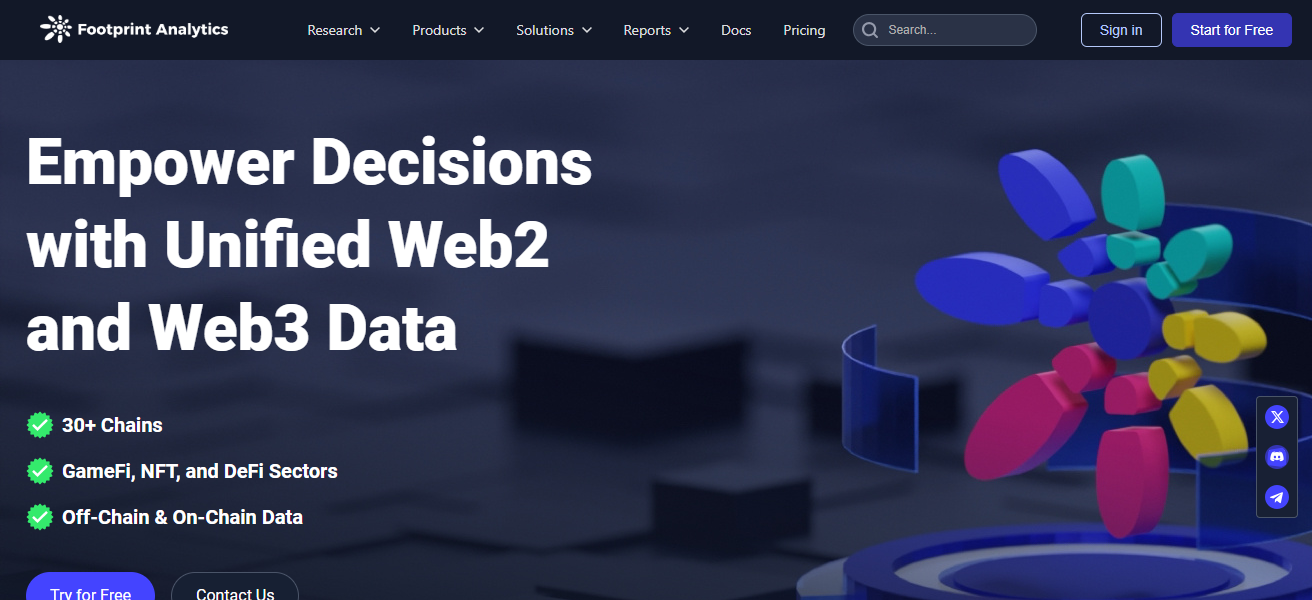
Marketers, researchers, and product teams trying to comprehend user interactions with Web3 platforms at scale will find their low-code tools and visual dashboards accessible.
Footprint Analytics – Key Features
- Low-Code Analytics Platform: Fosters the ability to perform analytics without the need for extensive technical knowledge.
- User Behavior Insights: Analyzes the patterns of user adoption, retention, and activity.
- Multi-Chain Coverage: Interoperable with various Layer 1 and Layer 2 blockchains.
- Visual Dashboards: Provides a snapshot of complicated blockchain data and analytics for the ease of use of various teams.
| Pros | Cons |
|---|---|
| User-friendly and low-code analytics | Less depth in smart money tracking |
| Strong focus on user and growth metrics | Advanced features require paid plans |
| Multi-chain data support | Slower updates than real-time tools |
| Good for marketers and researchers | Limited compliance features |
How We Choose Nansen Alternatives
- Accuracy and Depth of Data: Each platform has to provide reliable on-chain data along with valuable analysis.
- Primary Use Case Fit: Each tool is assessed based on whether it targets traders, developers, enterprises, or researchers.
- Unique Feature Set: Each alternative must provide unique value in addition to wallet tracking, tailored to different user classes.
- Blockchain Accessibility: It is a must for them to support a wide array of chains and ecosystems.
- User Friendliness: We assess how user-friendly interfaces, dashboards, and APIs are.
- Security and Trust: We prefer solutions that have a robust security framework and have been widely accepted in the market.
- Cost and Scalability: It is a must for the tool to be justifiable in terms of pricing and to be able to grow with the user.
Cocnlsuion
In cocnlsuion Selecting the most appropriate Nansen alternatives mostly depends on your crypto objectives, be it compliance, research, DeFi trading, or Web3 development.
TRM Labs, Dune Analytics, Messari, and Moralis Web3 provide valuable services outside of wallet tracking. After analyzing features, usability, and use cases, users can identify the most suitable tools for streamlined and comprehensive blockchain insights.
FAQ
Nansen alternatives are blockchain analytics tools that offer on-chain data, research, compliance, or DeFi insights beyond Nansen’s features.
They may better suit specific needs like compliance, development, research, or real-time DeFi monitoring.
TRM Labs and Chainalysis KYT are best for AML and transaction risk monitoring.
Moralis Web3 is ideal for developers needing APIs and backend Web3 infrastructure.
Dune Analytics offers free access with community-built dashboards.