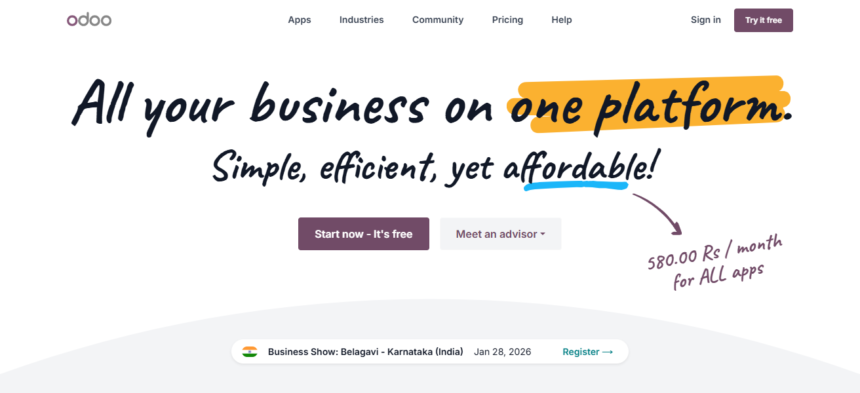
In this article I will review the different Odoo Alternatives for Retail Businesses that can assist in the management of operations, inventory, and customer feedback.
Whether you are a small single store or a expanding multi-location retailer, these alternatives help in providing scalable, adaptable, and cost-effective solutions in the management of sales, stock, and finances for a more efficient daily retail operations.
Key Poinst & Best Odoo Alternatives for Retail Businesses
| Alternative | Key Point |
|---|---|
| NetSuite ERP | Comprehensive ERP with strong retail integrations |
| SAP Business One | Enterprise-grade inventory and supply chain management |
| Microsoft Dynamics 365 | Omnichannel retail and CRM capabilities |
| Zoho Inventory | Affordable cloud solution with multichannel sales |
| Bitrix24 | CRM-focused platform with collaboration tools |
| Acumatica | Cloud ERP with strong retail and distribution features |
| Unleashed Software | Real-time inventory visibility and analytics |
| Megaventory | User-friendly order and stock management |
| QuickBooks Commerce | Easy integration with accounting and e-commerce |
| Lightspeed Retail | POS-focused solution tailored for retail businesses |
10 Best Odoo Alternatives for Retail Businesses
1. NetSuite ERP
NetSuite ERP provides an excellent alternative to Odoo for retail businesses because of its comprehensive cloud solution that integrates inventory, sales, and finance management.
NetSuite, unlike Odoo, provides real-time reporting and advanced analytics, which are highly scalable and help retailers make quicker, data-driven decisions.
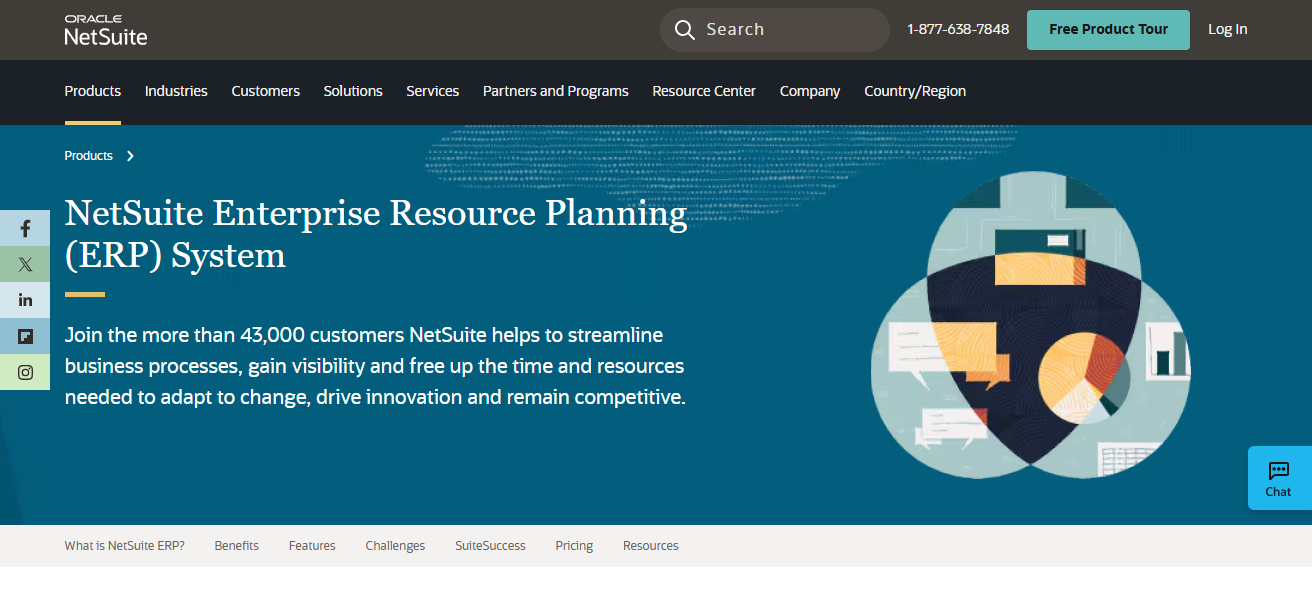
The ERP’s retail-specific capabilities, such as demand planning, omnichannel management, and automated order processing, reduce operational errors.
The platform’s ability to consolidate all business functions in one system makes it highly efficient, scalable, and ideal for expanding retailers that require complete operational visibility.
NetSuite ERP Features
- Cloud-Based Platform: NetSuite delivers a complete ERP solution that is hosted in the cloud, allowing you to track all of your inventory, sales, and finances in real-time from any location.
- Advanced Analytics & Reporting: With the built-in reporting features, retailers can respond to business needs more quickly with actionable reports and dashboards.
- Omnichannel Management: Supports online and in-store sales and provides unified order and inventory management across all channels.
- Scalable Operations: Handles additional users, locations, and transactions with ease, making it a good fit for expanding retail companies.
| Pros | Cons |
|---|---|
| Cloud-based, scalable, suitable for large retail operations | High cost, not ideal for very small businesses |
| Real-time analytics and reporting for data-driven decisions | Implementation can be complex and time-consuming |
| Integrated inventory, finance, and CRM for unified operations | Requires training for staff due to advanced features |
| Advanced demand planning and omnichannel management | Customization may require consulting support |
2. SAP Business One
SAP Business One serves as the best Odoo alternative for retail businesses as it is the only top retail-focused ERP designed as a full operational solution for small and mid-sized retailers.
One of its primary differentiators is its capability for real-time tracking of sales and inventory, complemented with analytics that allows retailers to optimize inventory to meet demand.
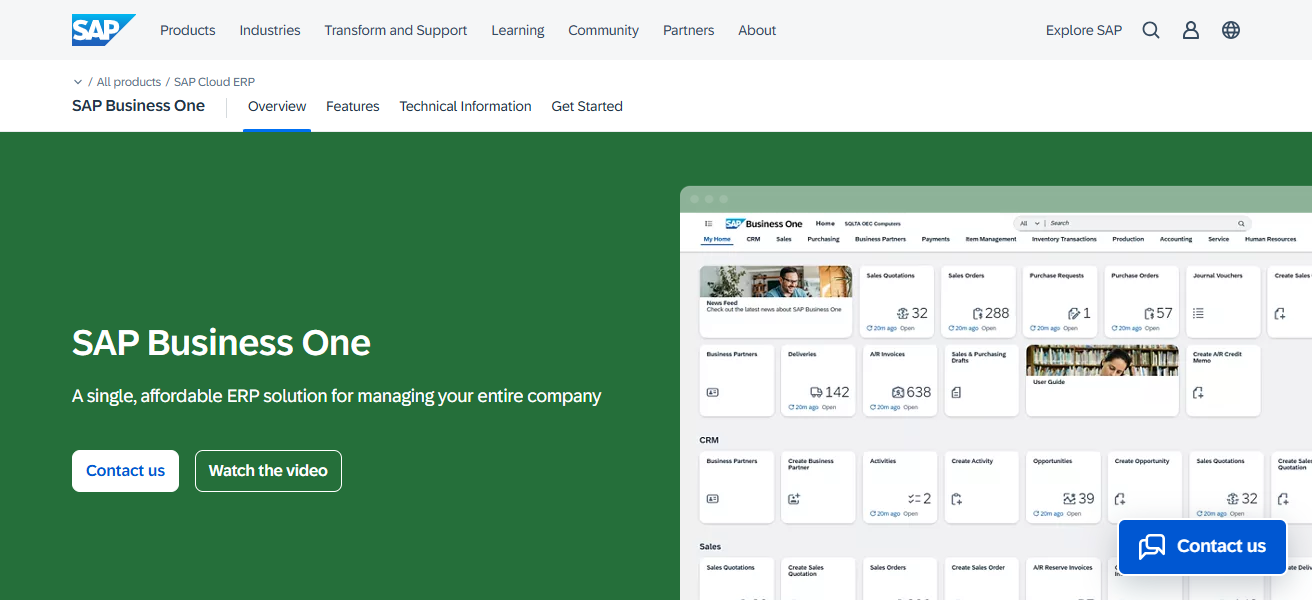
In contrast to Odoo, SAP Business One’s workflow customization and integration with POS systems, e-commerce, and supply chains is best for retailers focused on operational efficiency, scalability, and an integrated view of their businesses.
SAP Business One Features
- Real-time Inventory Tracking: Tracks stock levels and sales in real-time, allowing more control over adding to or removing from the inventory to avoid stockouts or overstocks.
- Customizable Workflows: Retailers can modify processes to fit their needs in areas like purchasing, sales, and reporting.
- Integration with POS & Accounting: Works seamlessly with POS and financial software systems for integrated operations.
- Reporting and Analytics: Provides dashboards and insights into trends related to sales, profit, and customers.
| Pros | Cons |
|---|---|
| User-friendly ERP tailored for small to mid-sized retailers | Can be expensive for small businesses |
| Real-time inventory and sales tracking | Limited cloud functionality compared to modern cloud ERP |
| Customizable workflows and integration with POS systems | Some advanced modules require additional costs |
| Strong reporting and analytics capabilities | Implementation may be time-consuming |
3. Microsoft Dynamics 365
Microsoft Dynamics 365 is an outstanding alternative to Odoo for retail companies, as it seamlessly unifies ERP with CRM on one cloud-based solution.
Its core value is in AI-based analytics and tailored engagement, providing the ability to help retailers predict demand, streamline inventory, and automate promotions.
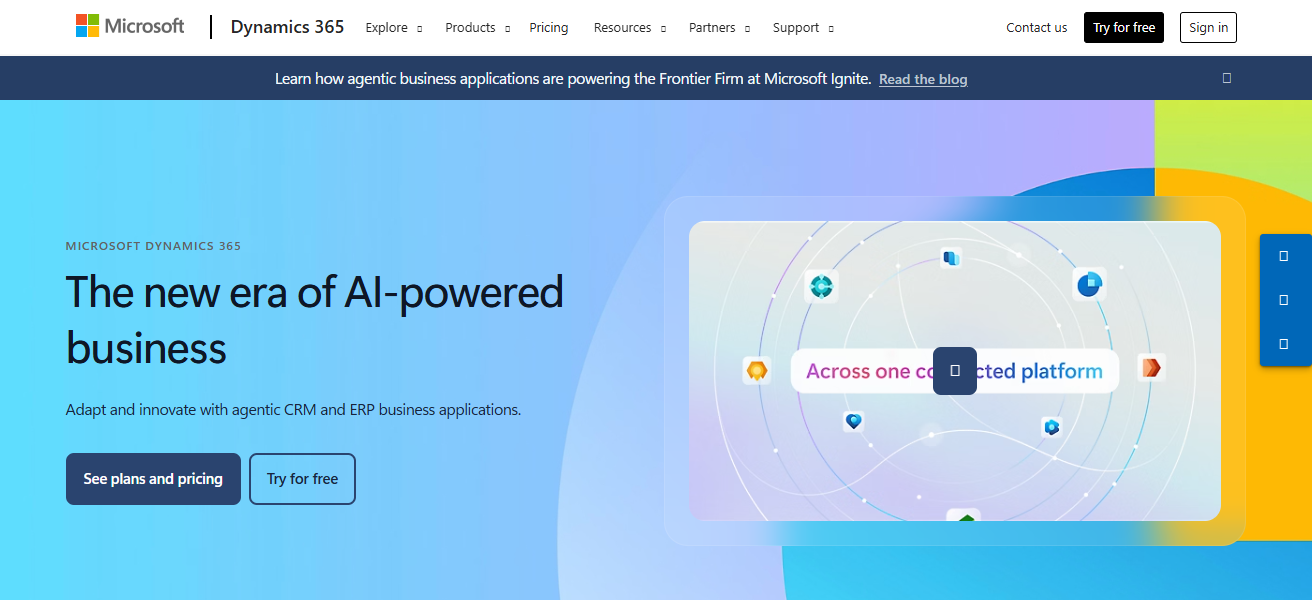
Dynamics 365, unlike Odoo, has the additional benefit of integration with Microsoft Teams and Power BI, facilitating better collaboration and reporting.
Its varying modules for finance, supply chain, and sales are tailored for retailers who want an adaptable, data-centric solution to streamline operations and enhance customer experience.
Microsoft Dynamics 365 Features
- ERP + CRM in One: Integrates enterprise resource planning with customer relationship management for holistic business control.
- AI-Powered Insights: Dynamics 365 uses artificial intelligence to forecast demand, optimize inventory, and enhance customer engagement.
- Microsoft Ecosystem Integration: Works seamlessly with Teams, Excel, and Power BI for enhanced collaboration and reporting.
- Flexible Modules: Offers modular functionality for finance, supply chain, sales, and retail management.
| Pros | Cons |
|---|---|
| Combines ERP and CRM in one cloud-based platform | Higher pricing for small businesses |
| AI-driven insights for inventory and sales optimization | May require technical expertise for setup |
| Seamless integration with Microsoft tools (Teams, Power BI) | Customization can be complex |
| Flexible modules for finance, supply chain, and sales | Overwhelming for very small retailers |
4. Zoho Inventory
Odoo is an excellent alternative for retail businesses using Zoho Inventory for its simplicity, affordability, and cloud-based inventory management features.
Its main strength is automating order management, stock tracking, and multi-channel sales from a central dashboard, streamlining retail operational efficiency.
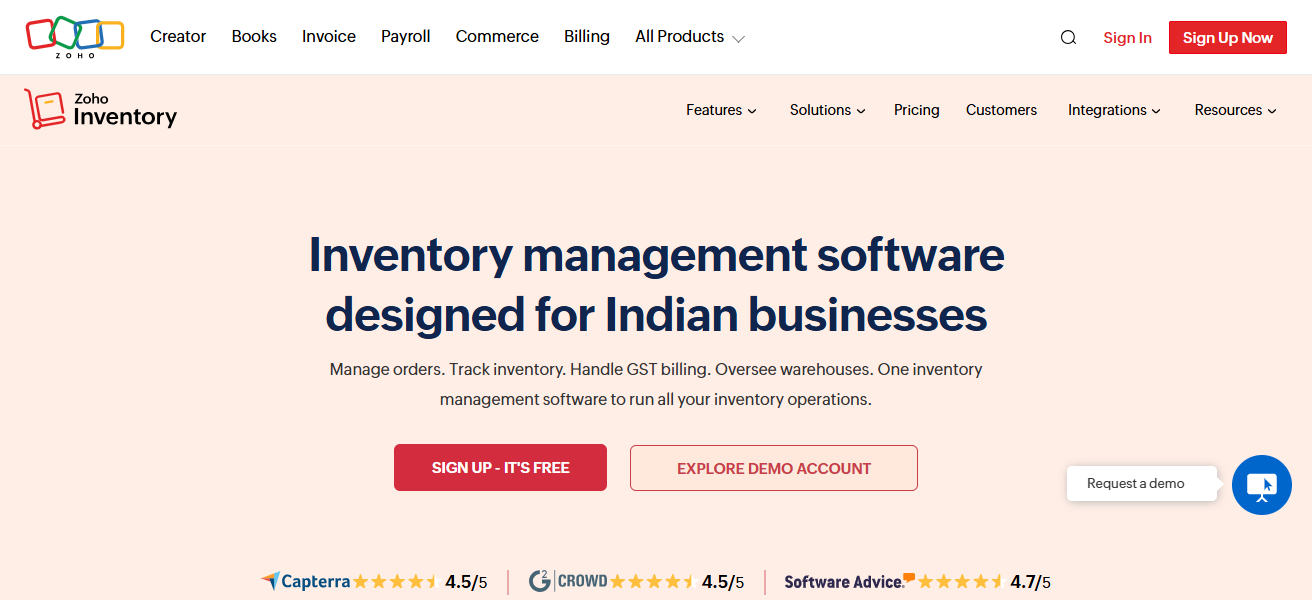
Unlike Odoo, Zoho Inventory provides excellent automation for e-commerce integration, shipping, and accounting, leading to minimized manual effort, reduced errors, and optimized retail operational efficiency for small and mid-sized retailers.
Zoho Inventory Features
- Order & Stock Automation: Streamline time-intensive and error-prone processes like tracking stock, purchase orders, and sales orders.
- Multi-Channel Integration: Inventory sync across eCommerce, marketplace, and POS systems.
- Budget-Friendly & Cloud-Based: Small to mid-sized retailers can easily deploy.
- Simple Reporting Tools: Stock level, sales, and order fulfillment insights.
| Pros | Cons |
|---|---|
| Affordable and easy to use for small and mid-sized retailers | Limited advanced ERP features |
| Automates order management and stock tracking | Reporting features are basic compared to larger ERPs |
| Integrates with e-commerce, shipping, and accounting platforms | Not ideal for very complex retail operations |
| Cloud-based, accessible from anywhere | May require Zoho ecosystem for full efficiency |
5. Bitrix24
For retail businesses, Bitrix24 is a good alternative to Odoo, primarily because of its combination of CRM, project management, and collaboration tools with inventory and sales management.
One of its strongest differentiating factors is that it is an all-in-one solution where retailers can perform customer relationship management, order tracking, and communicate with their teams seamlessly.
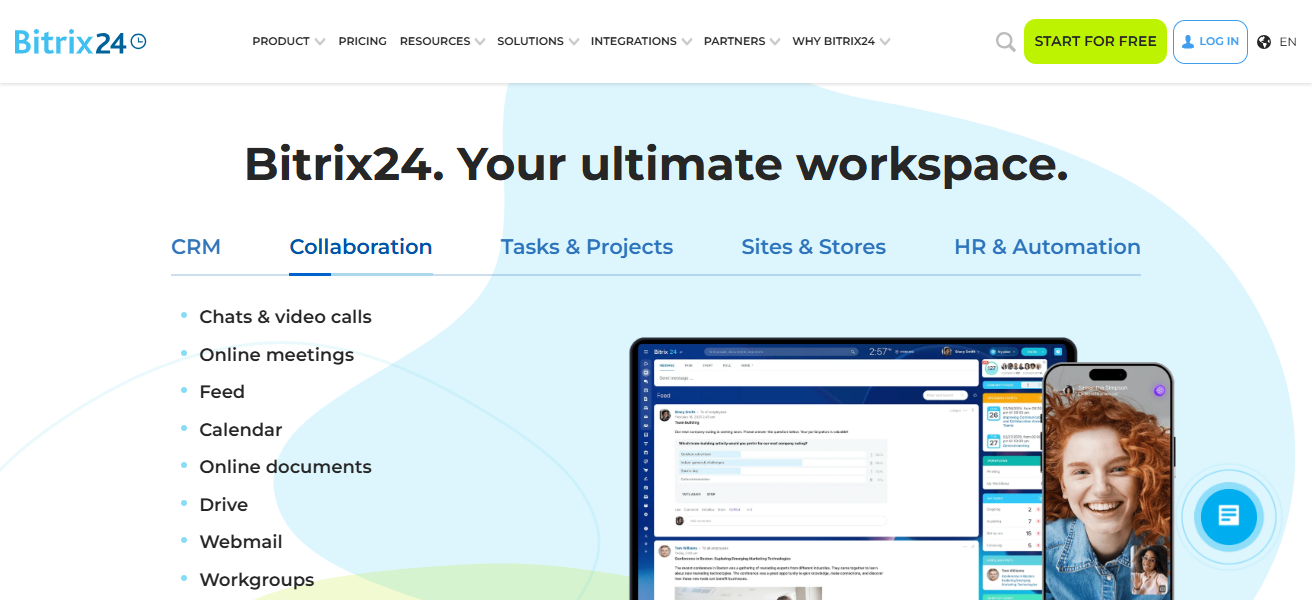
Bitrix24 has integrated communication tools, like chat, video calls, and task management, that Odoo does not have, which supports retail processes.
Multi-channel communication can lower the cost while improving productivity and direct customer engagement and making day-to-day management effortless.
Bitrix24 Features
- All-in-One Platform: Unifies CRM, team collaboration, and retail management in one platform.
- Integrated Communication Tools: Team collaboration made easy with chat, video, and task management.
- Sales & Order Tracking: Supports retailers in tracking customer orders and sales.
- Affordable Cloud Option: Small and mid-sized retail businesses benefit from low-cost plans.
| Pros | Cons |
|---|---|
| All-in-one platform: CRM, communication, and retail management | Inventory management is less advanced than dedicated ERPs |
| Integrated chat, video calls, and task management | Can feel cluttered due to many features |
| Affordable and cloud-based | Customization is limited in lower-tier plans |
| Streamlines both operations and team collaboration | Reporting features are basic for large retailers |
6. Acumatica
For retail companies, Acumatica is a top alternative to Odoo, as it cloud-based and fully-scalable ERP is tailored to modern retailers.
It is differentiated by its real-time management of inventory, orders, and finances across different locations, which enables retailers to adapt to changing market conditions.
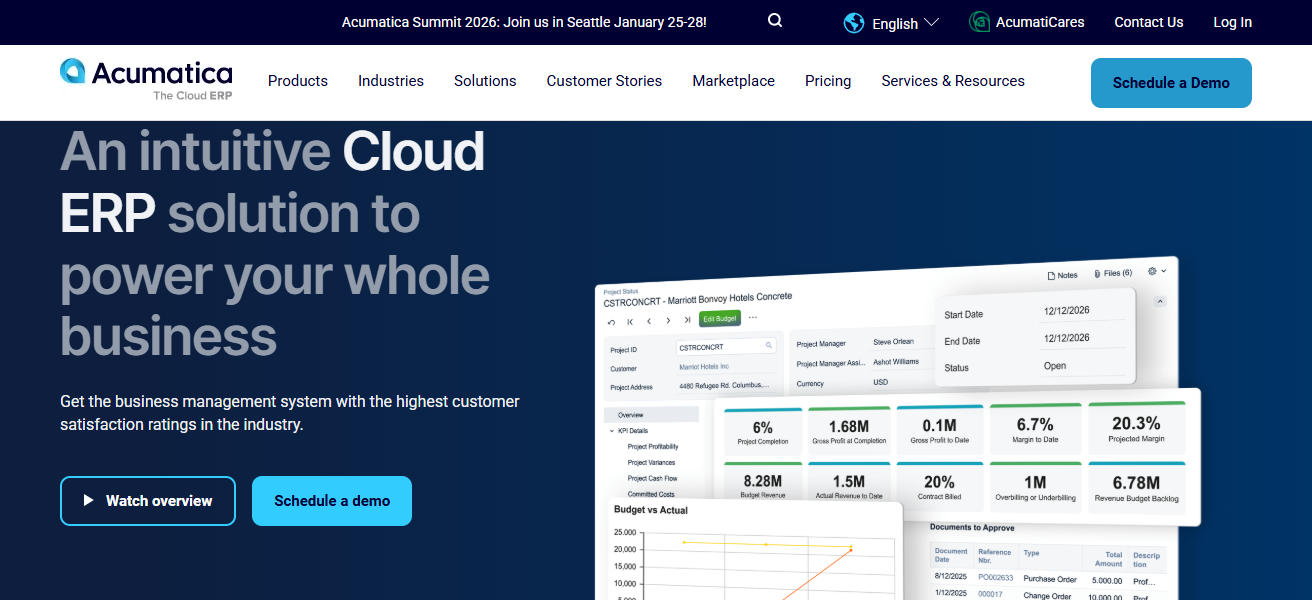
Compared to Odoo, Acumatica offers more flexible deployment, better reporting, and more integrated e-commerce and POS systems.
It is suited for growing retail companies that need a more complete solution that is data centric. It helps improve operational efficiency, customer experience, and growth potential by removing the boundaries of traditional ERPs.
Acumatica Features
- Cloud-Based & Scalable: Supports growing businesses, especially multi-location retail.
- Real-Time Inventory & Financial Management: Integrates stock, sales, and finance data for actionable insights.
- Flexible Integration: Integrates with POS, e-commerce, and other third-party systems.
- Advanced Reporting & Analytics: Customizable dashboards and reports for strategic insights.
| Pros | Cons |
|---|---|
| Cloud-based and highly scalable for growing retailers | Licensing cost can be high for small businesses |
| Real-time inventory, order, and financial management | Implementation requires expert support |
| Flexible deployment and integration with POS/e-commerce | Complexity can overwhelm smaller teams |
| Advanced reporting and analytics for informed decisions | Some features need additional modules |
7. Unleashed Software
For retail businesses, Unleashed Software is among the best Odoo alternatives because it has specialized advanced inventory management and real-time tracking of products.
Inventory is managed without hassle. Integration with e-commerce platforms, accounting software, and POS systems is seamless and unlike Odoo.
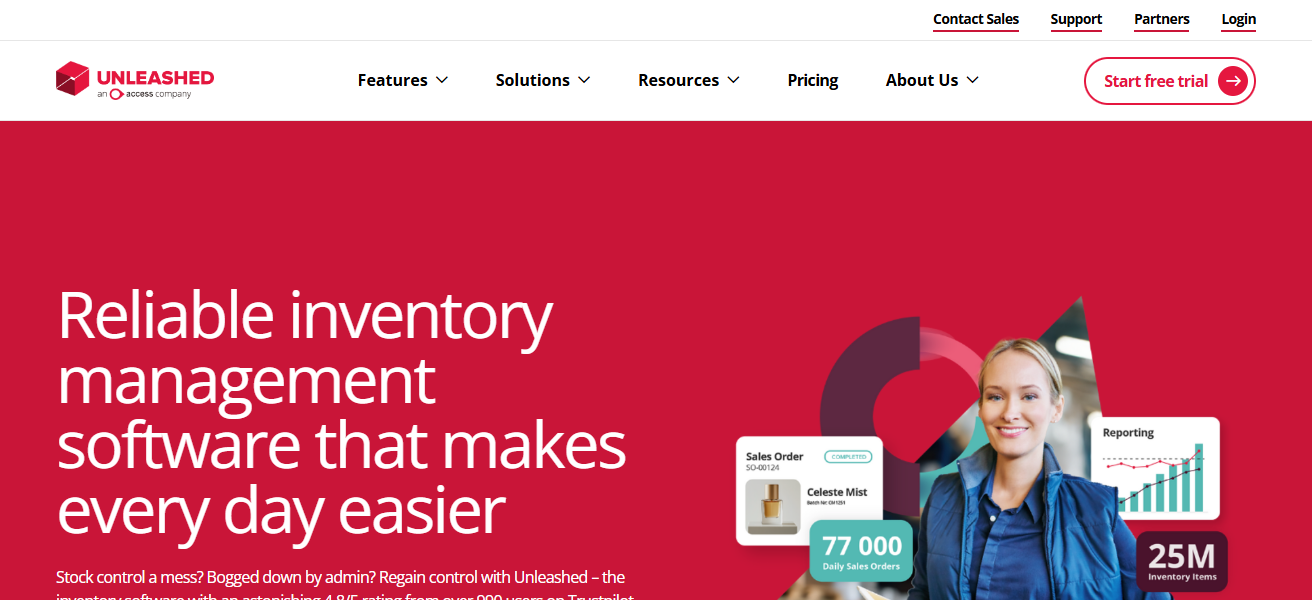
Unleashed’s distinct competitive advantage is the complete visibility it offers of stock levels, purchasing orders, and sales across channels.
This helps retailers eliminate stock out and overstock problems. For retail businesses that value operational accuracy, efficiency, and scaling, Unleashed ensures seamless operations, better purchasing decisions, and profitability across all sales channels.
Unleashed Software Features
- Advanced Inventory Management: Complete visibility into stock levels, stock locations, and product movement.
- Real-Time Order Tracking: Real-time tracking for purchase orders, sales orders, and shipments.
- Multi-Channel Integration: Unified operations with e-commerce, POS, and accounting software.
- Reduces Stock Issues: Accurate forecasting and alerts to help avoid overstock and stockout situations.
| Pros | Cons |
|---|---|
| Specializes in inventory management and product tracking | Primarily focused on inventory, limited financial features |
| Real-time visibility across stock, orders, and channels | Less suitable as a full ERP solution |
| Integrates with e-commerce, POS, and accounting software | Pricing grows with the number of users and SKUs |
| Helps reduce stockouts and overstock issues | Custom reporting can be limited |
8. Megaventory
Megaventory is a great Odoo alternative for retail businesses because of its cloud-based inventory and order management system specifically designed for growing retailers.
unique selling point is its simplicity and flexibility which allows businesses to manage stock, and track orders and warehouses.
In contrast to Odoo, Megaventory has better reporting, seamless e-commerce integration, and real-time updates which facilitates better and quicker decision making for retailers.
Because of this, Megaventory is great for small and mid-sized retail businesses looking for a more affordable solution which is simple and improves operational efficiency and reduces errors.
Megaventory Features
- User Friendly Inventory System: Management of products, warehouses, and orders with an easy-to-use interface.
- Multi-Warehouse Management: Effectively tracks stock and orders across multiple locations.
- Real-Time Updates: Instant visibility on stock levels, order fulfillment, and shipments.
- E-Commerce Integration: Integration with online stores for efficient order and inventory management.
| Pros | Cons |
|---|---|
| Cloud-based, user-friendly inventory and order management | Limited advanced ERP capabilities |
| Multi-warehouse management and real-time updates | Reporting and analytics are basic |
| Easy integration with e-commerce platforms | Not ideal for very large retailers |
| Cost-effective for small to mid-sized retailers | Customization options are limited |
9. QuickBooks Commerce
QuickBooks Commerce is the best Odoo alternative for retail businesses because it provides seamless integration of inventory management, order processing, and financial tracking.
Unlike Odoo, QuickBooks Commerce provides integration with QuickBooks Accounting and helps retailers automatically track and sync sales, expenses, and inventory.
This helps in reducing manual data entry and errors. QuickBooks Commerce provides retail businesses with cash flow and product performance insights, along with sales trend data.
This helps businesses make informed decisions. Retail businesses focused on operational efficiency and growth will benefit from QuickBooks Commerce, especially small to mid-sized businesses.
QuickBooks Commerce Features
- Integration with QuickBooks Accounting: Sales, stock, and financial data automatically synced for accurate accounting.
- Inventory & Order Management: Unprocessed orders are tracked, inventory maintained, and manual data entry is reduced.
- Real-Time Sales Insights: Visibility into cash flow, sales trends, and product performance.
- Cloud-Based for Remote Access: Accessed from any location, accommodating multi-location retail operations.
| Pros | Cons |
|---|---|
| Seamless integration with QuickBooks Accounting | Limited advanced ERP features |
| Automates inventory, orders, and financial tracking | Best suited for small to mid-sized retailers |
| Real-time insights into cash flow and sales trends | Customization is limited |
| Reduces manual data entry and errors | Fewer multi-location features than large ERPs |
10. Lightspeed Retail
Lightspeed Retail is a top alternative to Odoo for retail businesses as it provides an adaptable cloud-based POS and inventory management system built specifically for retail.
The versatility of Lightspeed Retail comes from its ability to pair advanced analytics with the ability to combine in-store and online sales.
Furthermore, the seamless omnichannel operations set Lightspeed Retail apart from Odoo. Lightspeed provides superior integrated customer management and loyalty tools
As well as advanced loyalty program analytics, to empower retailers to optimize customer engagement and sales.
Overall, Lightspeed Retail is great for retail businesses looking to improve operational efficiency, cross-channel customer experience, and analytics capabilities with a simplified, integrated solution.
Lightspeed Retail Features
- POS and Inventory Synchronization: Merges inventory management and point-of-sale systems into one.
- Omnichannel Retail Management: Connects online and in-store sales for a streamlined customer journey.
- Customer Management & Loyalty Programs: Assists in customer tracking, promotions, and driving repeat purchases.
- Advanced Reporting Tools: Analyzes and presents data on sales, product sales, and operational efficiency.
| Pros | Cons |
|---|---|
| Powerful cloud-based POS and inventory system | Can be expensive for very small retailers |
| Seamless omnichannel management | Advanced reporting may require add-ons |
| Customer management and loyalty programs included | Limited financial accounting features |
| Intuitive and user-friendly interface | Best suited for retail-specific operations only |
Conclusion
To sum up, when considering Odoo alternatives for retail, your selection will be influenced by your business size, budget, and how you operate.
If you are looking for scalable and efficient solutions, NetSuite ERP, SAP Business One, and Lightspeed Retail have powerful features.
Nond the other hand, Zoho Inventory, Megaventory, and Bitrix24 yield accessible and pocket-friendly solutions.
These alternatives will help you streamline operations, improve inventory management, and enhance customer satisfaction.
FAQ
Yes, it integrates seamlessly with QuickBooks Accounting, automatically syncing sales, inventory, and financial data.
Yes, it combines ERP and CRM, allowing retailers to manage inventory, sales, and customer relationships in one platform.
NetSuite ERP is ideal for large retailers due to its scalability, advanced analytics, and omnichannel management.
SAP Business One and Zoho Inventory are suitable because they are affordable, easy to use, and provide essential retail features.