
In this article, I will show you the Best Passive Income Options in Asia, most of which involve making money with little effort.
- Key Points & Best Passive Income Options In Asia
- 10 Best Passive Income Options In Asia
- 1. Dividend Stocks
- 2. Real Estate Rentals
- 3. REITs (Real Estate Investment Trusts)
- 4. Peer-to-Peer Lending
- 5. Digital Products
- 6. Affiliate Marketing
- 7. YouTube/Content Creation
- 8. High-Yield Savings Accounts
- 9. Stock Market Index Funds
- 10. Dropshipping/E-commerce Automation
- How To Choose The Best Passive Income Options in Asia
- Conclusion
- FAQ
Dividend stocks, real estate rentals, digital products, affiliate marketing, etc., are types of income that an investor, and/or entrepreneur, can earn in Asia.
Regardless of whether you are looking for long term appreciation or regular income, these options can help in the establishment of sustainable passive income.
Key Points & Best Passive Income Options In Asia
| Passive Income Option | Key Point |
|---|---|
| Dividend Stocks | Regular payouts from established companies |
| Real Estate Rentals | Steady rental income from property investments |
| REITs (Real Estate Investment Trusts) | Diversified property exposure without direct ownership |
| Peer-to-Peer Lending | Earn interest by funding loans online |
| Digital Products | Sell e-books, courses, or templates repeatedly |
| Affiliate Marketing | Earn commissions by promoting products/services |
| YouTube/Content Creation | Ad revenue and sponsorships from online content |
| High-Yield Savings Accounts | Low-risk interest income from banks |
| Stock Market Index Funds | Long-term growth with minimal management |
| Dropshipping/E-commerce Automation | Online store with outsourced logistics |
10 Best Passive Income Options In Asia
1. Dividend Stocks
Dividend stocks represent a type of share in a company that regularly allocates part of its profit to its investors.
Companies that distribute dividends at regular intervals are available in Singapore, Japan and Hongkong among other Asian countries, leading to reliable income.
By purchasing shares in blue-chip companies or dividend aristocrats, investors receive compounded returns.
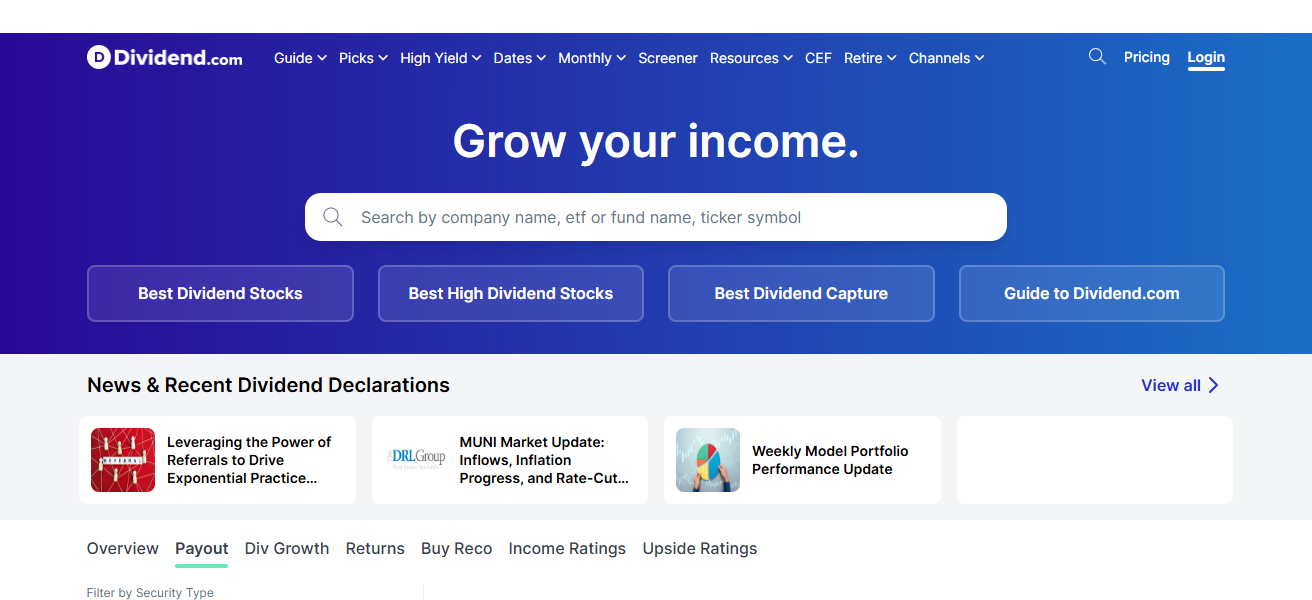
Picking dividend stocks requires some research in order to zero in on companies that are financially stable, and in sectors that are likely to grow.
The passive income associated with dividend stocks is derived through a reinvestment strategy that uses dividends to purchase additional shares of the dividend paying stock.
This provides a snowball effect in the accumulation of wealth, and requires little to no ongoing involvement.
Features Dividend Stocks
Regular Income – Earn money with little management through periodic dividends.
Capital Growth Potential – Earn money through the appreciation of shares.
Liquidity – Buying and selling shares at the owners’ discretion.
Diversification – Ability to invest in a variety of industries and sectors.
| Pros | Cons |
|---|---|
| Provides regular cash flow through dividends. | Stock prices can be volatile, affecting capital value. |
| Potential for long-term capital appreciation. | Requires research to pick stable, high-dividend companies. |
| Can reinvest dividends for compounded growth. | Dividend yields may fluctuate with company performance. |
| Offers exposure to different industries and markets. | Some companies may cut dividends during economic downturns. |
| Can be bought and managed online via brokerage accounts. | Foreign investors may face tax implications on dividends. |
2. Real Estate Rentals
Investing in rental properties in Asia, particularly Thailand, Malaysia, or Vietnam, can enable people to earn passive income from tenants.
Real estate, whether residential or commercial, have the ability to generate monthly cash flow through rent, not to mention the appreciation in property values over time.
Investors need to choose regions where rental demand is high, property vacancy rates are low, and there is sustained economic growth.

Although there are property management agencies to help, investors need to consider their capital, the property, and maintenance costs.
It is a reliable income stream because real estate will give cash flow, and there will be long-term capital appreciation. Some Asian countries have tax incentives which can further aid in enhancing returns.
Features Real Estate Rentals
Monthly Cash Flow – Passive income by renting the property to tenants.
Appreciation Potential – Earn passive income through the increasing value of the property.
Tangible Asset – Having the property as physical collateral for the investment.
Leverage Opportunities – Using loans to acquire properties and increase the money made.
| Pros | Cons |
|---|---|
| Provides consistent monthly rental income. | Requires significant upfront capital investment. |
| Property value can appreciate over time. | Managing tenants and maintenance can be time-consuming. |
| Can leverage loans to increase returns. | Property taxes and regulatory issues vary by country. |
| Potential tax benefits and depreciation deductions. | Market fluctuations can affect rental demand. |
| Can outsource property management to reduce effort. | Vacancy periods may reduce income. |
3. REITs (Real Estate Investment Trusts)
Investors can earn passive income by owning shares in Large real estate portfolios in the form of REITs. In Asia, Singapore and Hong Kong has established REITs sectors. They also pay out attractive dividends.
REITs make investments in commercial buildings such as malls, hotels, and logistics facilities, which they generate income through rent and capial gains.
REITs Also has the ability to be traded like stocks. This allows for diversification and helps provide liquidity in the fund.

Professional property management is available to investors along with higher costs of entry, less compared to owning real estate.
There is also the ability to pay out a large portion of earnings, in the form of dividends, making it attractive to income focused investors to provide long income with less work.
Features Real Estate Investment Trusts (REITs)
Indirect Property Investment – Investment in shares of large property corporations.
High Liquidity – Buying and selling shares on organized exchanges.
Professional Management – Less work than managing the properties themselves.
Regular Dividends – REITs are required by law to pay out dividends to shareholders.
| Pros | Cons |
|---|---|
| Provides exposure to real estate without physical property ownership. | Dividend income depends on property performance. |
| Professionally managed by experts. | Market prices of REITs can be volatile. |
| Liquid and easy to buy/sell like stocks. | Fees and management costs reduce net returns. |
| Offers diversification across multiple properties. | Some REITs are concentrated in one sector, increasing risk. |
| Attractive for long-term, income-focused investors. | Dividend payouts may vary depending on the market. |
4. Peer-to-Peer Lending
P2P lending platforms offer interest-earning opportunities for individuals willing to lend to consumers and businesses.
In Asia’s P2P lending market, Singapore, India and Indonesia have lending platforms that offer interest rates higher than most traditional banks.
In Asia, Singapore, India, and Indonesia, P2P lending platforms provide opportunities to lend to individuals and businesses at a higher interest rate than traditional banks.

To mitigate the risk of P2P lending, some lending platforms conduct credit checks and risk assessments, but borrowers may still default.
P2P lending requires very little daily attention and is accessible through the Internet. To lend, investors need a small amount of money to begin building a loan portfolio.
In turn, investors make a predictable monthly return, lending to entrepreneurs and small businesses in the area.
Features Peer to Peer Lending
Higher Interest Returns – It frequently has a higher return compared to conventional banks.
Diversification – Mitigates risk by lending small sums to several borrowers.
Online Accessibility – Offers simple lending and tracking solutions.
Predictable Cash Flow – Regular interest payments ensure steady cash flow.
| Pros | Cons |
|---|---|
| Can earn higher returns than traditional savings or bonds. | Risk of borrower defaults and loss of capital. |
| Online platforms make investing easy. | Not all platforms are regulated or insured. |
| Diversification possible by lending small amounts across many borrowers. | Interest rates can fluctuate based on economic conditions. |
| Regular interest payments provide predictable cash flow. | Platform fees reduce net returns. |
| Supports small businesses and entrepreneurs in Asia. | Requires careful research to select trustworthy platforms. |
5. Digital Products
The activity of designing and selling e-books, courses, templates, and software applications generates an automatic stream of passive income.
There is an overwhelming demand for educational material, productivity and entertainment software in the Asian markets.
Once the digital product is created, it can be sold an unlimited number of times on Udemy, Shopify, and Amazon, needing little maintenance and oversight.

Good marketing and SEO will facilitate automation of the sales stream. A creator can combine the effort of creating high-quality content with the usage of automation
Tools and online marketplaces, and will be able to effortlessly generate income in the future. Over time, the digital product will be an evergreen offering.
Features Digital Products
Scalable Revenue – Available for global sales without the need for physical inventory.
Low Overhead Costs – After the product is created, there are minimal expenses.
Automation Friendly – Products and sales can occur with little to no human intervention.
Evergreen Potential – Revenue can be generated for the long-term with little to no maintenance.
| Pros | Cons |
|---|---|
| Scalable and can be sold globally without physical inventory. | Initial creation requires significant time and effort. |
| Passive income continues after launch. | Marketing and promotion are crucial for sales. |
| Low ongoing costs compared to physical products. | Competition is high in popular niches. |
| Automation and online platforms simplify distribution. | Piracy or content theft can affect revenue. |
| Can generate long-term recurring income. | Updates or support may be required to maintain value. |
6. Affiliate Marketing
Affiliate marketing entails recommending a product or service on the web and receiving a commission for every lead or sale that comes as a result of your referral.
Programs of big e-commerce companies like Amazon, Lazada, and Shopee have started to branch out to Asia and have lucrative earning possibilities. One of the ways this can be done is through content marketing such as social media posts, blogs, or newsletters.
Picking the right niche, audience retention, and SEO are some of the ways to optimize the process for recurring passive income, although this model is usually very profitable.

The system does not need a lot of investment, but results do rely on the amount of content created, and the quality of the partnerships.
The most popular affiliates make the most passive income from a system that has a very low entry barrier. This makes it an excellent passive income source.
Features Affiliate Marketing
Low Startup Costs – Requires no investments in inventory or product development.
Flexible Work – A remote job performed completely online.
Recurring Commissions – Ongoing cash flow can be generated from sales or subscriptions.
Multiple Channels – Promotion can be done with social media, blogs, email, or even YouTube.
| Pros | Cons |
|---|---|
| Low startup cost and minimal inventory needed. | Earnings depend on traffic and conversions. |
| Can scale across multiple platforms and niches. | Requires ongoing content creation and marketing. |
| Commissions can be recurring for subscription products. | Income can fluctuate with affiliate program changes. |
| Flexible work, can be done anywhere online. | Competition in popular niches can be high. |
| Builds passive revenue stream over time. | Requires SEO and digital marketing skills for success. |
7. YouTube/Content Creation
YouTube as well as other similar content-sharing sites allow producers to make passive profits through advertising, sponsorship, and membership opportunities.
Content producers in the Asian countries of India, South Korea, and the Philippines have been able to tap into local and global audiences to make money on various forms of content including educational and entertainment.
Even after making content, there’s the potential to earn passive revenue. Although content production takes a lot of creativity and continual work, as time goes on, work-earning videos become the larger portion of passive, continual earnings.

Selling Patreon subscriptions, merchandise, and using affiliate marketing can further supplement earned income.
By using trending subjects and proper retention techniques, many influencers in the region have been able to turn Youtube and other content-creating platforms into sources of passive income.
Features YouTube/Content Creation
Monetization Diversity – Revenue can be generated in multiple ways.
Long-Term Income – Once published, videos can provide income for the long term.
Global Reach – Content can reach an international audience.
Brand Building – Useful for enhancing reputation.
| Pros | Cons |
|---|---|
| Multiple monetization channels: ads, sponsorships, memberships. | Initial content creation requires time, effort, and consistency. |
| Videos can generate revenue for years after publishing. | Income can fluctuate based on views and platform policies. |
| Global audience reach increases potential revenue. | Algorithm changes can affect visibility and earnings. |
| Builds personal brand and credibility. | High competition for popular content niches. |
| Can leverage affiliate marketing and merchandise for additional income. | Requires basic technical and video editing skills. |
8. High-Yield Savings Accounts
High-yield savings accounts provide competitive interest rates that allow account holders to make money with little risk.
Countries like Singapore, Malaysia, and Hong Kong have digital banks and fintech that provide instant and electronically managed accounts.

For risk-averse, steady, and liquid interest income, HYSAs are perfect. Most countries insure extreme amounts with little risk, making funds absolutely safe.
Obviously, returns are much higher than those accounts on investments like property or stocks, but those accounts give extreme amounts of flexibility. An account like that could be used as savings that are always available, as an emergency fund.
Features High-Yield Savings Accounts
Low Risk – Typically backed by government insurance.
Liquidity – Money is always accessible.
Steady Interest Income – Obtains interest without any activity.
Ease of Use – Opening and Managing Accounts is Hands Off and Computerized.
| Pros | Cons |
|---|---|
| Very low risk, often insured by government schemes. | Interest rates are lower than stocks or real estate. |
| Provides liquid, easily accessible funds. | Returns may not keep pace with inflation. |
| Requires minimal effort; fully passive. | Some accounts have withdrawal limits or minimum balances. |
| Can serve as an emergency fund while earning interest. | Limited growth potential compared to investments. |
| Easy to open online with many banks and fintech platforms. | High-yield offers can change over time. |
9. Stock Market Index Funds
Nikkei 225 and Nifty 50 are examples of stock market indexes that index funds invest in and earn passive income through dividends and value increase.
With index funds, there is a lower risk in comparison to picking individual stocks. Asian investors also gain exposure to international markets through the ETFs.

Dividends help in wealth accumulation. Funds are professionally managed, resulting in little to zero management of individual investors.
Investing in index funds over a long period of time results in steady passive income. This is perfect for investors wanting a “set-and-forget” strategy while growing economically in Asia.
Features Stock Market Index Funds
Diversified Investment – Lessens risk by following a wide array of securities.
Low Fees – Less expensive than funds with active management.
Long-Term Growth – Gains occur with appreciated value of the market.
Passive Management – All decisions of the portfolio are taken by fund managers.
| Pros | Cons |
|---|---|
| Provides diversification across multiple companies. | Market downturns can reduce short-term value. |
| Low fees compared to actively managed funds. | Requires patience for long-term growth. |
| Tracks broad market performance for consistent returns. | Dividend yields may be lower than individual high-dividend stocks. |
| Can reinvest dividends for compounded growth. | Less control over specific investments. |
| “Set-and-forget” investment, ideal for passive income. | Currency fluctuations may affect returns for foreign investors. |
10. Dropshipping/E-commerce Automation
Dropshipping is a business model in which e-commerce store owners sell products without ever touching them or dealing with inventory. In addition, automation systems handle all of the orders, fulfillment, and marketing.
In Asia, Shopify, Lazada, and Shopee are platforms that support the creation of growing and scalable online businesses that can target customers both domestically and internationally. Profit is made by marketing the product at a higher price than what the supplier charges.

The business is mostly passive due to the automation systems. Selecting the right product, marketing successfully, and having a reliable supplier are factors that determine the ultimate success.
There are certain high-demand, trending, and seasonal niches that can boost the profit, some of which are driven by social media.
With the right systems in place, a dropshipping business can serve as a passive income source, a business model that takes advantage of the growing e-commerce of Asia.
Features Dropshipping/E-commerce Automation
Low Inventory Risk – Physical products do not have to be kept.
Automation Potential – Order and fulfillment processing can be done with software.
Global Market Access – Online platforms allow selling to customers from anywhere.
Scalable Business Model – Expanding the marketing and product range is easy.
| Pros | Cons |
|---|---|
| Low upfront investment compared to traditional retail. | Profit margins can be thin due to supplier costs. |
| No need to hold inventory physically. | Quality control depends on supplier reliability. |
| Automation tools handle orders, fulfillment, and marketing. | Customer service still requires attention. |
| Scalable business model with global reach. | Highly competitive market with frequent saturation. |
| Flexible location-independent business. | Marketing and traffic acquisition are critical for success. |
How To Choose The Best Passive Income Options in Asia
Assess Your Capital. Decide how much you are willing to invest. Some options (like real estate) require a high initial investment while others (like digital products or affiliate marketing) need much less.
Evaluate Risk Tolerance. Some options (like stocks or P2P lending) come with market/credit risks while others (like high-yield savings or REITs) are much safer.
Consider Time Commitment. Some options like rentals and dropshipping require a lot of active management while others like index funds or dividend stocks are more or less hands-off.
Check Market Demand. Make sure there is demand for what you are targeting (rentals, digital products, e-commerce) in your area.
Diversify Income Sources. To spread out risk and gain more stability you should try and combine more than one passive income source.
Understand Tax & Legal Implications. Consider local taxes, regulations, and legal aspects for domestic and foreign investors.
Focus on Long-Term Sustainability. Look for passive income sources that are recurring and have the ability to scale and grow.
Conclusion
In conclusion, in Asia, there are many different options for passive income, including dividend stocks, REITs, digital products, and dropshipping.
Depending on the capital, risk tolerance, and effort put in, options would vary. There is added stability, however, if a combination of options is used.
With the combination enhancing the stability and long-term growth of the income stream. By using modern platforms and regional market, investors in Asia are able to create a hands-free and sustainable source of income that allows financial freedom.
FAQ
Passive income is money earned with minimal active effort, such as dividends, rental income, or online sales.
High-yield savings accounts and REITs are generally low-risk and stable.
Yes, options like affiliate marketing, digital products, and P2P lending require minimal investment.
Some options need skills—content creation, dropshipping, or digital marketing—while stocks or savings accounts require basic knowledge.
It depends; digital products or YouTube may take months, while dividend stocks and savings accounts provide gradual income.