In this article, I am going to tell you about The Best Systems for Handling Payment Downtime Mitigation. Whether it involves intelligent routing or real-time monitoring, these systems contribute to high availability support
Minimizing failures and protecting revenue by promptly detecting problems as they arise and automatically switching between providers to maintain the payment process.
Key Points & Best Systems for Handling Payment Downtime Mitigation
- Adyen: Global payment platform enabling businesses to accept, process, and settle transactions across multiple channels.
- Gr4vy: Cloud-native payment orchestration platform simplifying integrations, routing, and management of multiple payment providers.
- Spreedly: Payment orchestration service offering secure vaulting, tokenization, and connectivity to diverse payment gateways.
- Razorpay: Indian fintech company providing payment solutions, subscriptions, payroll, and financial services for businesses.
- Stripe: Leading payment processor offering APIs for online payments, billing, fraud prevention, and financial infrastructure.
- Braintree: PayPal-owned payment gateway supporting credit cards, digital wallets, and global commerce solutions.
- PayU: Fintech company offering online payment solutions across emerging markets with localized transaction support.
- Datadog: Cloud monitoring and security platform providing observability, metrics, logs, and application performance insights.
- UptimeRobot: Website monitoring tool tracking uptime, downtime, and performance with instant alerts and reporting.
- Better Stack: Modern observability platform combining logging, monitoring, and incident management for engineering teams.
10 Best Systems for Handling Payment Downtime Mitigation
1. Adyen
Adyen let you avoid downtime via a single infrastructure – it is a global payment platform. It shrewdly directs transactions through multiple acquiring banks, which means continuity even if one provider goes down.
By providing real-time monitoring and automatic failover, it helps businesses achieve high payment success rates. Adyen additionally provides complete analytics, so merchants can identify and resolve issues quickly.
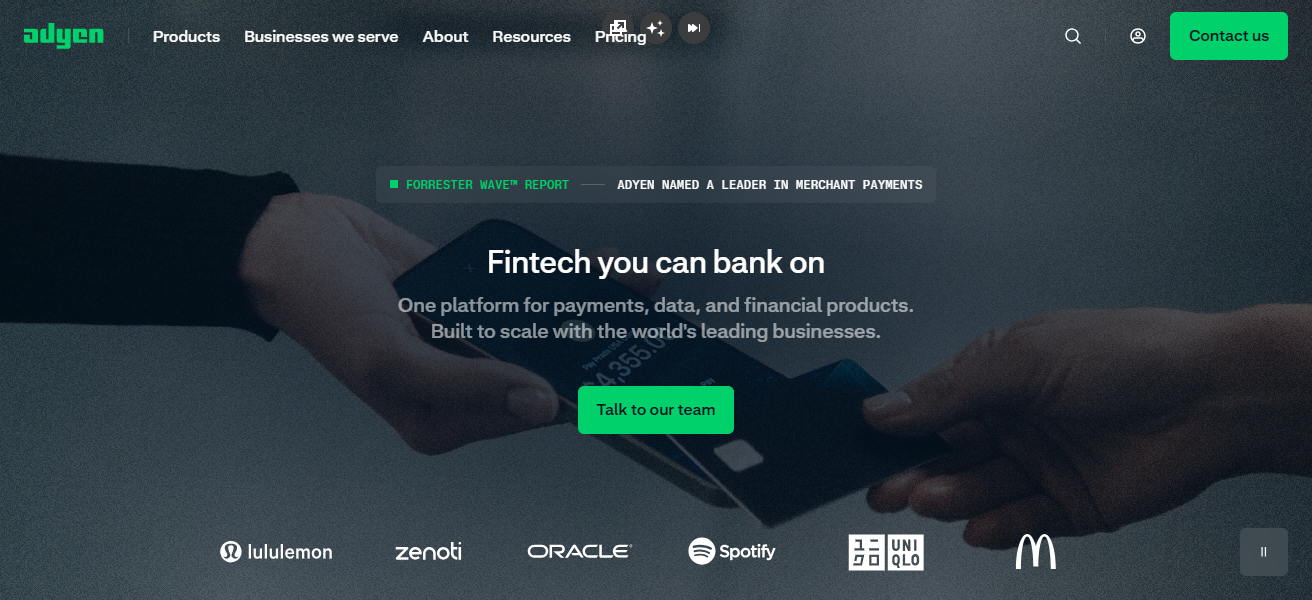
It also offers a single integration for multiple payment methods worldwide, reducing reliance on a single processor.
By doing so, Adyen is best suited for enterprises looking for resilience, scalability and seamless payment experiences across borders and channels.
| Pros | Cons |
|---|---|
| Unified global platform reduces integration complexity | Expensive for small businesses |
| Intelligent routing improves transaction success rates | Complex setup for beginners |
| Strong redundancy and failover systems | Requires technical expertise |
| Advanced analytics and reporting | Limited customization for smaller users |
| Supports multiple payment methods worldwide | Not ideal for startups with low volume |
2. Gr4vy
Gr4vy, a cloud-native payment orchestration platform that allows businesses to easily error-proof their setup by using multiple providers and swiftly switch between them if something goes wrong.
It functions as distributed cloud instances to minimize single points of failure. Gr4vy lets merchants create specific routing rules so that if one provider goes down, the transactions will automatically be routed elsewhere.
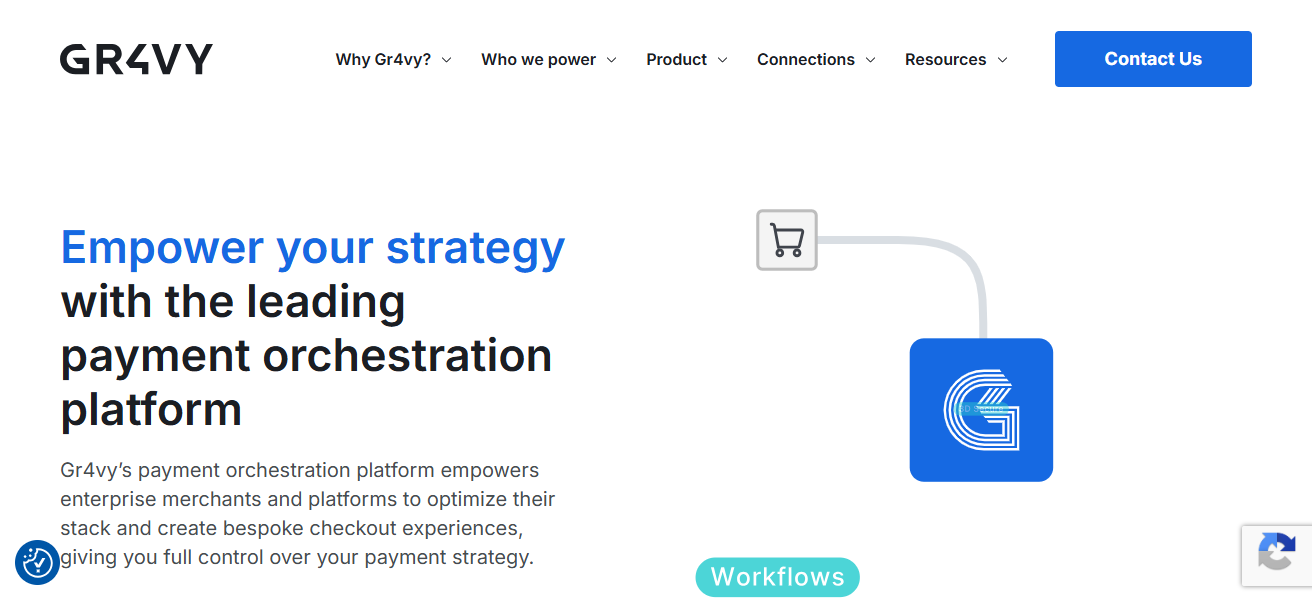
Its no-code orchestration layer streamlines integration and increases flexibility. Gr4vy also has built-in redundancy and real-time performance monitoring to help ensure high availability of payment services.
Additionally, this system is particularly beneficial for enterprises that depend on multiple gateways as it provides them with a reliable fallback without complex infrastructure management.
| Pros | Cons |
|---|---|
| Easy switching between providers | Relatively new compared to competitors |
| No-code orchestration simplifies setup | Limited ecosystem integrations |
| Distributed cloud reduces downtime risk | Pricing may be high for small firms |
| Custom routing rules flexibility | Requires multiple gateways to maximize value |
| Built-in redundancy and monitoring | Learning curve for orchestration logic |
3. Spreedly
Spreedly is a payment orchestration platform — the middle layer between your business and multiple payment gateways, allowing you to connect to as many as you’d like with just one integration.
This improves downtime mitigation, offering capabilities for intelligent transaction routing and tokenization services.
If one payment gateway experiences failure, Spreedly can fallback automatically to another without interrupting customer checkout flow.
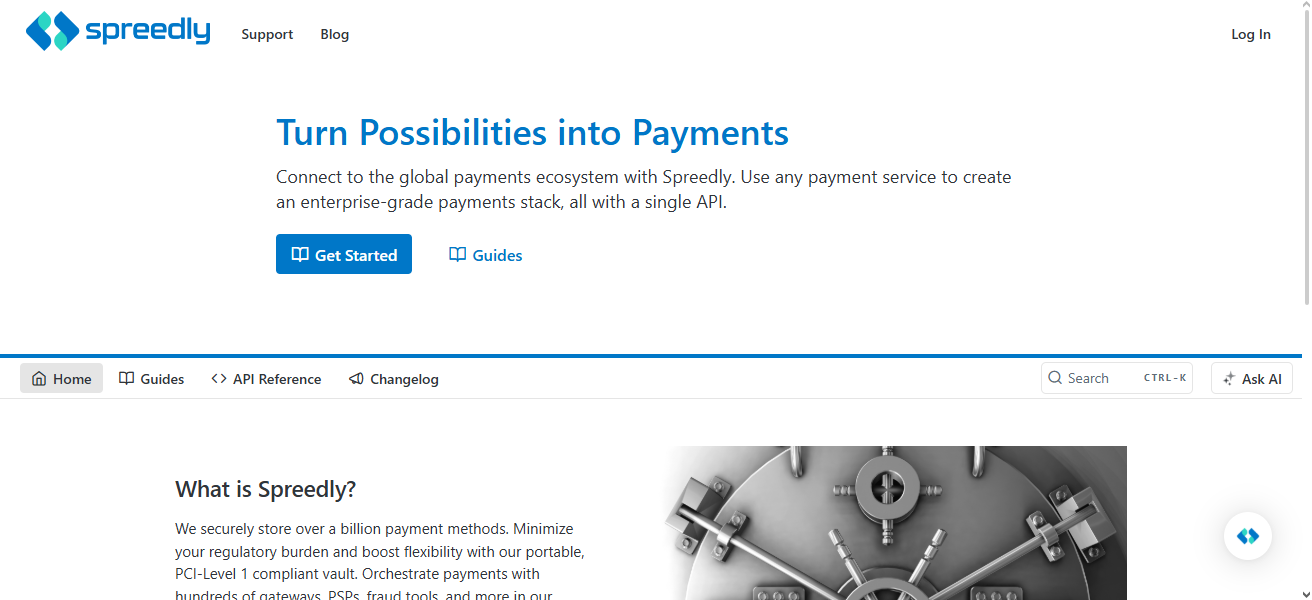
Its secure vault saves payment data, making repeat attempts seamless across providers. Spreedly also gives you deep reporting and monitoring capabilities to address potential issues before they arise.
This flexibility will help businesses keep high uptimes and minimize revenue loss because of payment failures or service downtimes.
| Pros | Cons |
|---|---|
| Single integration for multiple gateways | Additional cost layer on top of gateways |
| Secure tokenization vault | Setup can be complex |
| Intelligent failover and retry logic | Limited direct payment processing features |
| Strong reporting and monitoring | Requires technical resources |
| Enhances uptime and flexibility | Not ideal for very small businesses |
4. Razorpay
One such payment gateway is Razorpay, which we at Best Mobile Technologies consider to be one of the best payment processing solutions available in India.
It provides intelligent routing capabilities that direct transactions to the best-performing bank or network, thus minimizing failure rates.
Razorpay’s system features automatic retries and fallback mechanisms to ensure that transactions remain successful even in the event of outages.
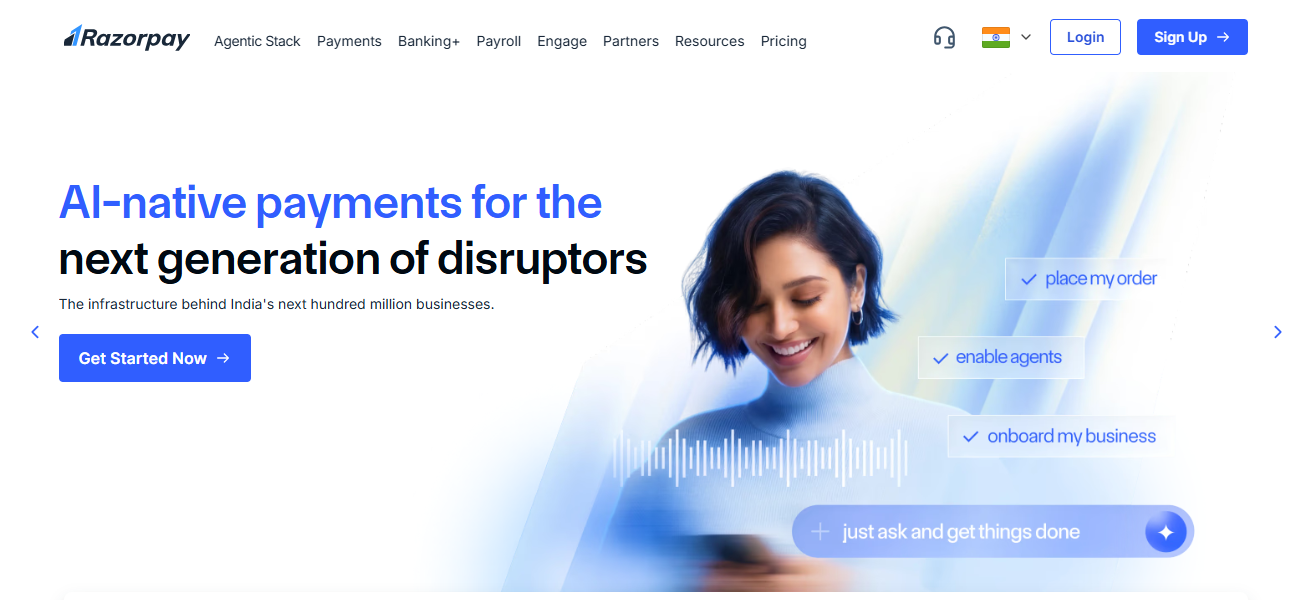
Its real-time dashboard allows merchants to track performance and act on issues immediately. Razorpay supports multiple payment methods and banks, reducing dependence on a single channel.
This is extremely beneficial to Indian businesses who want to ensure uninterrupted payment transactions in the event of a banking, or network availability shutdown.
| Pros | Cons |
|---|---|
| Strong support for Indian payment methods | Limited global reach |
| Smart routing reduces failures | Occasional bank dependency issues |
| Easy integration and user-friendly dashboard | Customer support delays reported |
| Automatic retries and fallback systems | Limited advanced customization |
| Competitive pricing for startups | Less suited for international scaling |
5. Stripe
Stripe is one of the most popular, reliable and uptime optimized payment processing platforms. To achieve this, it employs intelligent machine learning algorithms that dynamically route payments to boost success rates and minimize downtime impact.
Stripe’s infrastructure is global and redundant, meaning that its services can continue in the face of failure in individual systems.
It also provides automatic retries, fallback mechanisms, and detailed error reporting. Its flexible APIs allow developers to implement custom failover logic.
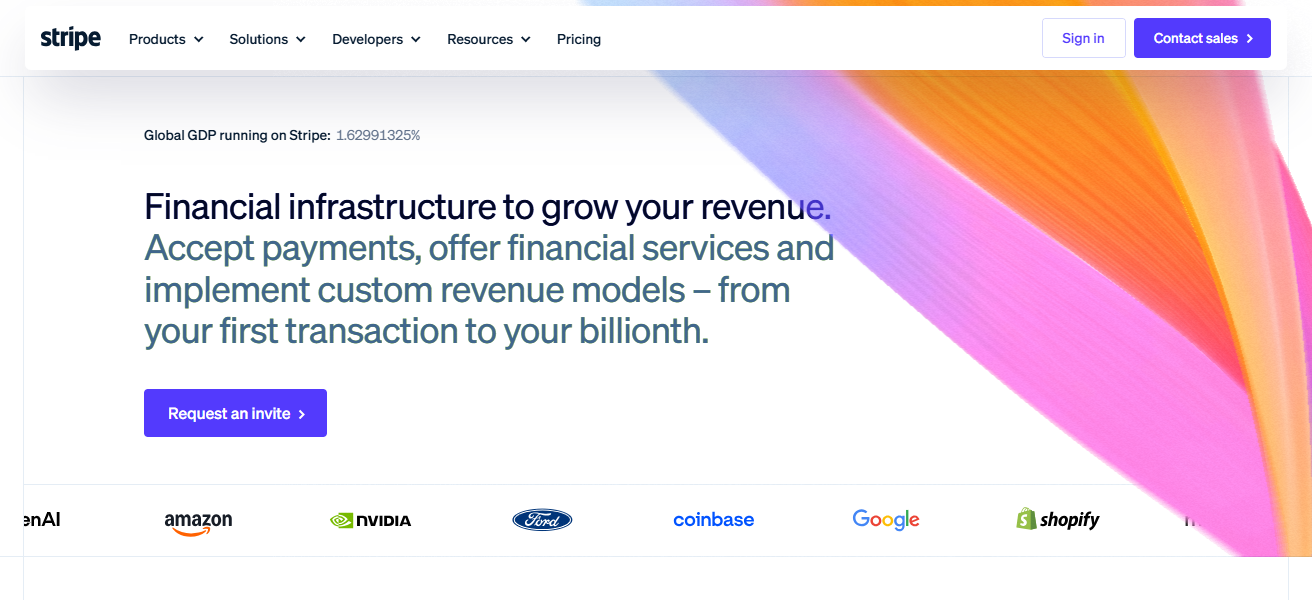
With Stripe’s continuous monitoring, highly available architecture, and ability to automatically determine the best approach for ongoing transactions following a service disruption
It’s better suited than most platforms to let businesses scale while minimizing the risk of interruption during unexpected outages.
| Pros | Cons |
|---|---|
| Developer-friendly APIs | Complex for non-technical users |
| Global infrastructure and redundancy | Transaction fees can be high |
| Machine learning-based routing | Limited support in some regions |
| Detailed reporting and insights | Account holds/issues sometimes reported |
| Highly scalable platform | Requires customization for full optimization |
6. Braintree
Braintree by PayPal As the subsidiary of PayPal, Braintree offers a highly proven payment platform with on-board redundancy to lower risk of downtime.
It supports a wide range of payment methods and currencies, providing flexibility during times of disruption.
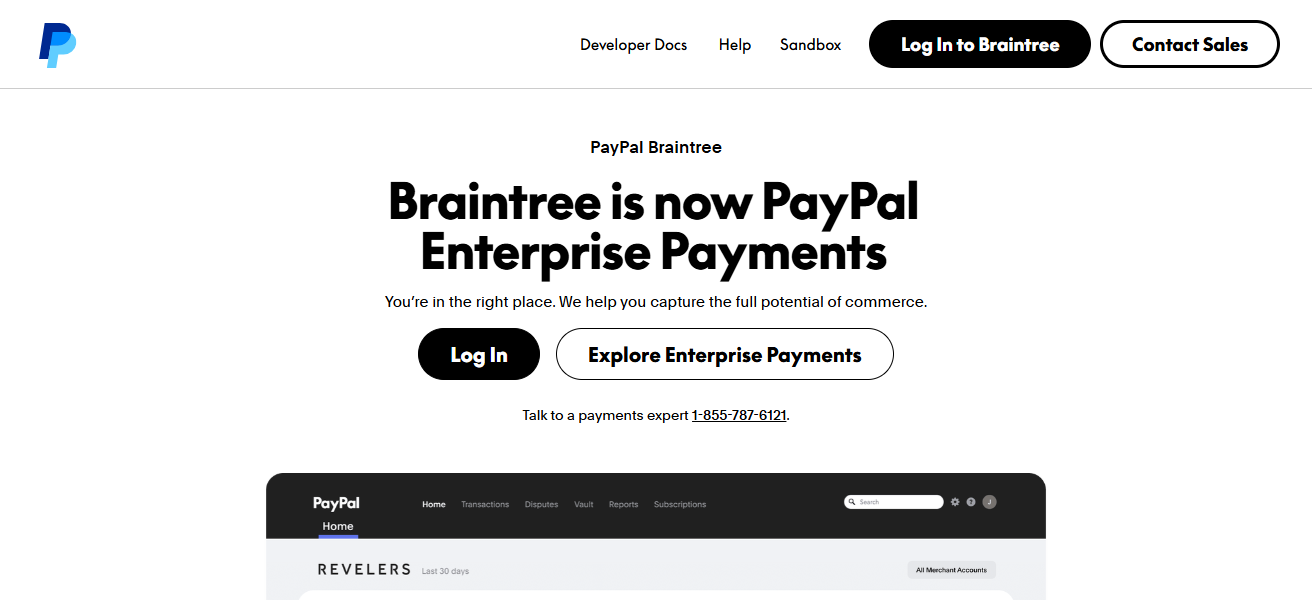
And Braintree’s infrastructure can handle high transaction volumes while remaining reliable. Its intelligent retry logic helps to recover failed transactions, and PayPal integration provides another fallback option. It also offers in-depth analysis of transaction performance.
It is built on a robust architecture that ensures continuity of payment in case of gateway or network outages, thereby minimizing lost revenue for businesses.
| Pros | Cons |
|---|---|
| Backed by PayPal reliability | Limited advanced features vs Stripe |
| Supports multiple payment methods | Slower innovation pace |
| Strong retry logic and fallback | Complex documentation |
| Global payment support | Less flexible APIs |
| Good for subscription billing | UI and dashboard less intuitive |
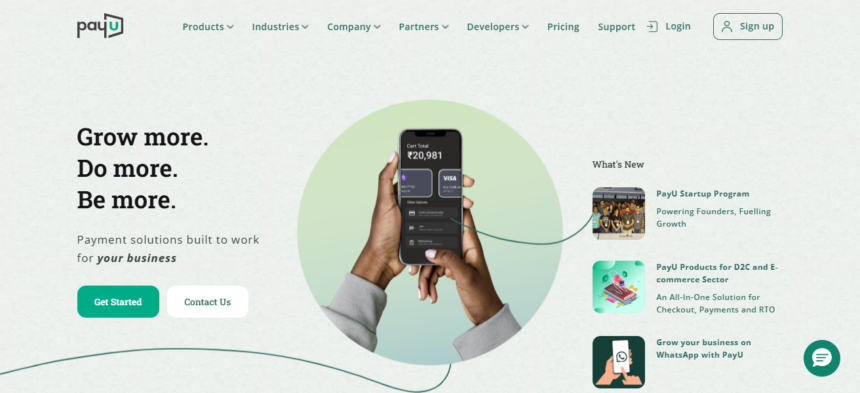
7. PayU
As a global payment service provider, PayU specializes in ensuring high transaction success rates and minimizing downtime.
It also provides smart routing and multiple bank integrations — even if one of them fails, payments can still be processed.
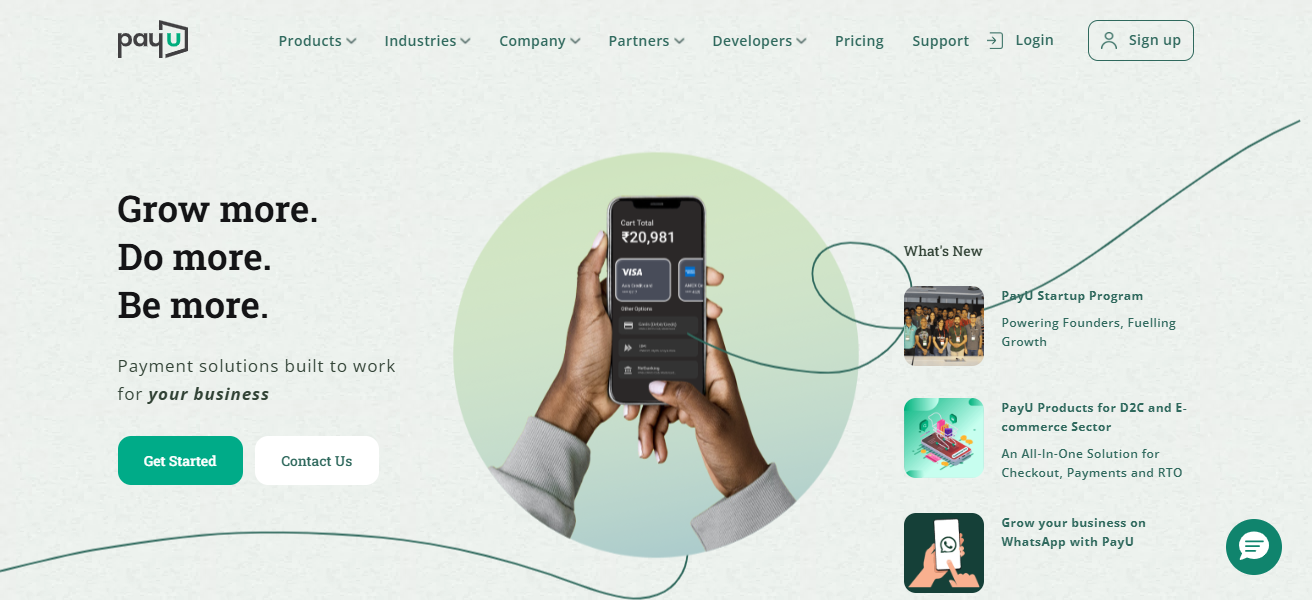
PayU’s system has auto-retry mechanisms and real-time monitoring tools that detect issues quickly.
Takes various payment options to serve different markets. PayU accelerates the growth of businesses by offering country-specific optimizations, such as local payments for India, to ensure a standardized payment performance.
Its redundancy strategies and analytics tools ensure it is a reliable choice when reducing interruptions.
| Pros | Cons |
|---|---|
| Strong presence in emerging markets | Interface can feel outdated |
| Multiple bank integrations | Limited advanced developer tools |
| High transaction success rates | Customer support inconsistencies |
| Auto-retry and smart routing | Not ideal for global enterprises |
| Localized optimization (India, etc.) | Integration can be complex |
8. Datadog
Payment downtime mitigation involves using a monitoring and analytics tool such as Datadog. It enables monitoring of applications and systems to ensure their availability, performance, and reliability.
And with alerts and dashboards that teams can customize, they can respond to potential payment failures before they affect customers.
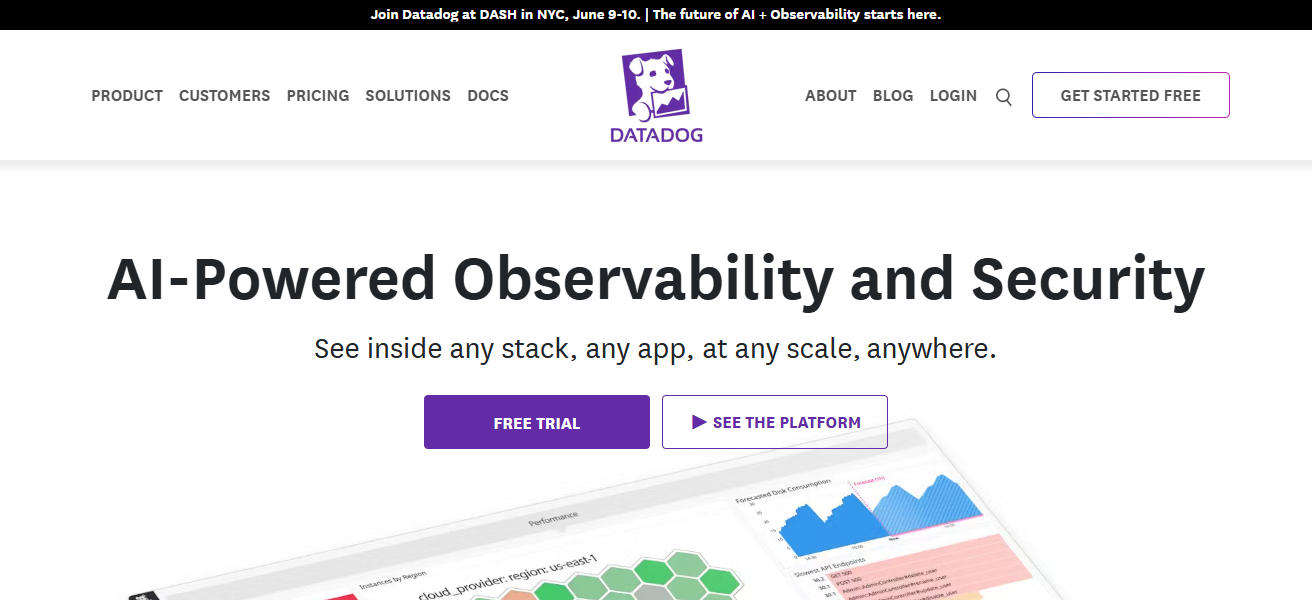
With Datadog integration with various payment systems, you can achieve complete observability of your infrastructure and application.
With its anomaly detection and AI-driven insights spot the root cause without delay. Datadog significantly reduces the risk of outages lasting for extended periods and loss of revenue by using proactive monitoring.
| Pros | Cons |
|---|---|
| Real-time monitoring and alerts | Expensive at scale |
| AI-driven anomaly detection | Steep learning curve |
| Integrates with many systems | Requires configuration effort |
| Detailed dashboards and insights | Overkill for small businesses |
| Proactive issue detection | Not a payment processor |
9. UptimeRobot
UptimeRobot is a set-and-forget monitoring tool that tells businesses if their payment systems are up or down. It monitors your endpoints every few minutes and alerts users immediately when downtime is discovered.
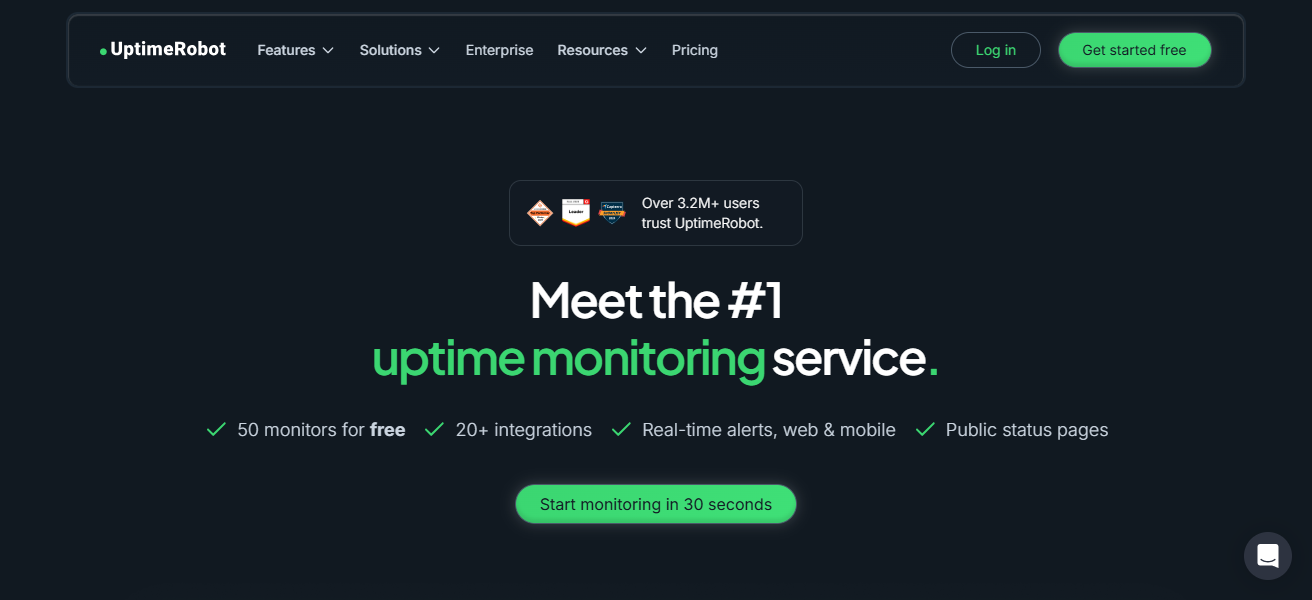
This gives teams an immediate warning to take action and prevents disruption. It can alert you through a number of channels such as email and SMS, depending if they are enabled in your plan.
It isn’t a payment processor but its critical function is the mitigation of downtime through better visibility around system health. It is affordable and easy to implement, making it perfect for startups and small businesses.
| Pros | Cons |
|---|---|
| Easy to use and quick setup | Limited advanced features |
| Affordable pricing | Basic analytics |
| Instant downtime alerts | Not suitable for complex systems |
| Multiple alert channels | No deep root cause analysis |
| Great for small businesses | Not a payment processing tool |
10. Better Stack
Better Stack is an incident monitoring and management platform that aims to minimize downtime through rapid detection and response.
It offers real-time uptime monitoring, incident alerts and on-call scheduling for fast issue resolution.
Better Stack’s logs and observability tools assist teams in analyzing failures in payment systems and tracking root causes.
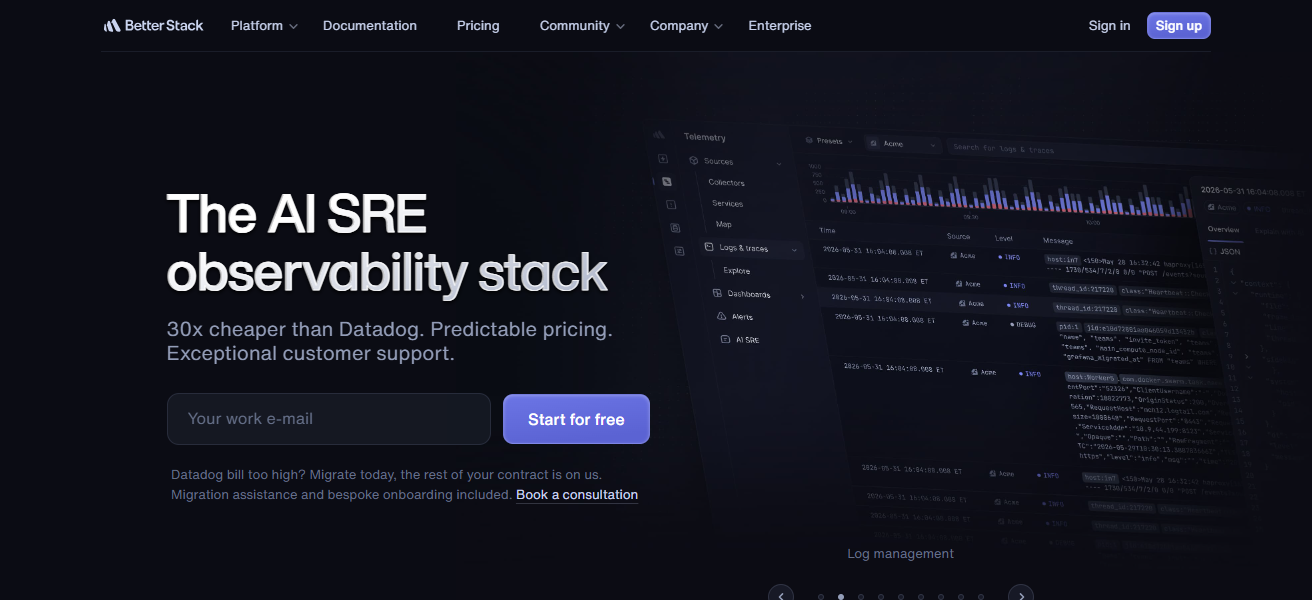
Its user-friendly interface and automation capabilities help simplify incident management. Better Stack combines monitoring and incident resolution capabilities so businesses can maintain high availability.
This is particularly valuable for teams wanting to improve reliability and keep payment operations flowing during unexpected outages.
| Pros | Cons |
|---|---|
| Combined monitoring and incident response | Still growing feature set |
| Real-time alerts and uptime tracking | Requires setup effort |
| Log management and observability tools | Pricing may increase with scale |
| On-call scheduling support | Not a payment processor |
| User-friendly interface | Limited integrations compared to giants |
Conclusion
In conclusion, the best systems for handling payment downtime mitigation combine smart routing, failover mechanisms, and real-time monitoring to ensure uninterrupted transactions.
Solutions like Stripe, Adyen, and Datadog help businesses reduce failures, protect revenue, and deliver a seamless customer experience even during unexpected outages.
FAQ
Payment downtime mitigation refers to strategies and systems that ensure transactions continue smoothly even when a payment gateway or bank fails.
It can lead to failed transactions, lost revenue, poor customer experience, and damage to brand reputation.
Platforms like Gr4vy and Spreedly route transactions across multiple providers, reducing dependency on a single gateway.
Smart routing automatically directs transactions to the best-performing bank or gateway, improving success rates and minimizing failures.