
This article will examine the best payment orchestration software for large enterprises, concentrating on tools that assist businesses in handling several payment service providers, refining transaction routing, and managing cross-border payment operations at scale.
- Key Points & Best Payment Orchestration Software For Large Enterprises
- 10 Best Payment Orchestration Software For Large Enterprises
- 1. Spreedly
- 2. Stripe
- 3. Adyen
- 4. ACI Worldwide
- 5. Nuvei
- 6. Corefy
- 7. BlueSnap
- 8. PayFirmly
- 9. Payoneer Enterprise
- 10. CellPoint Digital
- How To Choose Best Payment Orchestration Software for Large Enterprises
- Cocnlsuion
- FAQ
Such solutions help enterprises improve their payment experiences and optimize security and cost efficiencies while improving payment and authorization rates, and providing payments seamlessly across geographies and channels.
Key Points & Best Payment Orchestration Software For Large Enterprises
| Platform | Key Point / Strength |
|---|---|
| Spreedly | API-first payment orchestration with single integration to dozens of gateways and global PSPs—best for flexible, vendor-agnostic routing and centralized control. |
| Stripe | Enterprise-grade orchestration via Stripe Connect with global marketplace payments, automated onboarding, payouts, compliance, and multi-party flows. |
| Adyen | Full-stack platform combining global payment processing + orchestration with direct acquiring, 250+ payment methods, and optimized routing for large enterprise volumes. |
| ACI Worldwide | Enterprise payment orchestration with intelligent routing, fraud prevention, global method support, and deep integration into existing merchant systems. |
| Nuvei | Global payment provider with orchestration-like features and broad method support; often cited for flexible pricing and integration options (though integration complexity can vary). |
| Corefy | Feature-rich orchestration hub that unifies multiple PSPs, currencies, and payout options, giving enterprises control of routing, payouts, and analytics. |
| BlueSnap | Comprehensive global orchestration + payment processing with intelligent routing, fraud tools, chargeback management, and modular services for cross-border scalability. |
| PayFirmly | Global POP with 500+ payment methods, intelligent routing, built-in fraud prevention, multi-currency & local options — suited for enterprises and high-risk verticals. |
| Payoneer Enterprise | Enterprise-focused global payouts & payment solutions with massive cross-border currency support and mass payout capabilities (often used by marketplaces and platforms). |
| CellPoint Digital | Flexible orchestration for high-volume merchants with customizable integrations, smart routing, FX optimization, fraud controls, and split/instalment payments. |
10 Best Payment Orchestration Software For Large Enterprises
1. Spreedly
Spreedly facilitates managers integrating with over 120 payment service providers with one connection as an agnostic payment orchestration service. You gained expertise in tokenization, vaulting, credential rerouting and efficient processor flexibility.
Spreedly truly benefits businesses with global technical complexities and transcending use of SamrtFX. Merchants vaulting and customer payment stable processor.
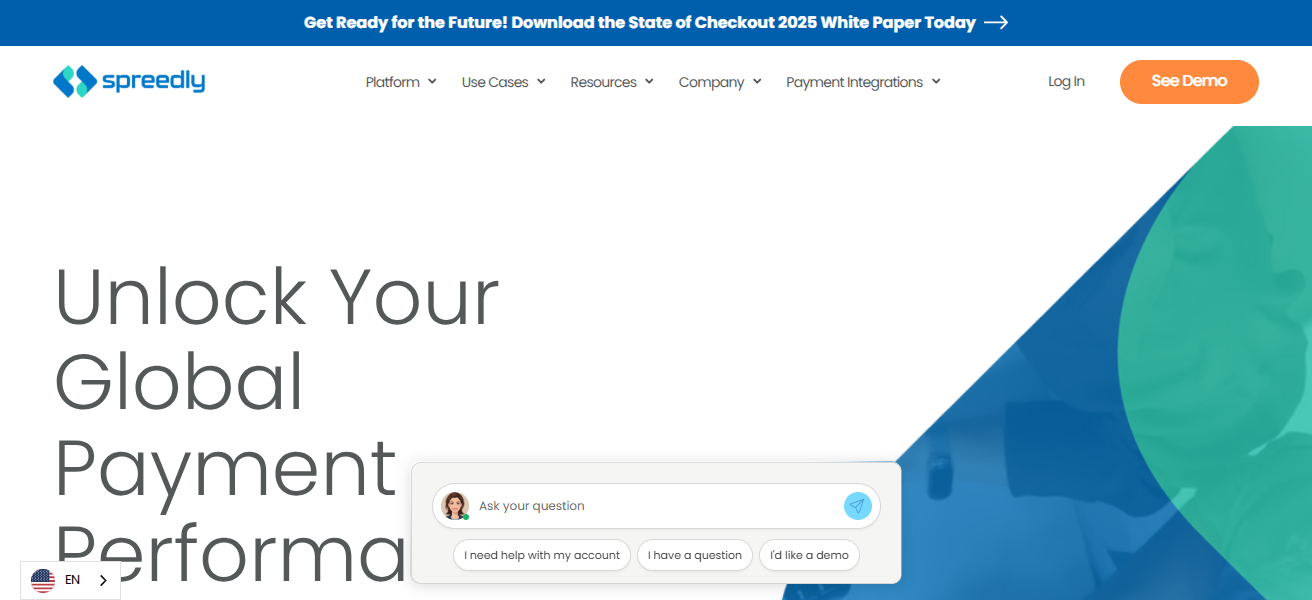
Providing. Your development complexities are offset with analytics from payment streamlined. Enterprises gain from seamless analytics and reconciliation services for regional payment performance.
Features Spreedly
Universal API Integration – Connects to a sole API and integrates with 120+ payment gateways, PSPs, and processors, resulting in lower engineering costs.
Global Token Vault – Tokenizes and stores payment credentials securely across processors, enhancing PCI compliance and lowering the risk of fraud.
Smart Routing & Failover – Permits rule-based routing and fallback logic to maximize authorization rates and minimize declines.
Payment Analytics & Insights – Consolidated dashboard with analytics, success rates, routing results, and disputes for optimization.
| Pros | Cons |
|---|---|
| Supports multiple gateways for flexibility | Requires technical expertise to integrate |
| Tokenization & vaulting for secure card storage | Limited built-in fraud tools compared to competitors |
| Global reach with 100+ payment providers | May be costly for smaller enterprises |
2. Stripe
The payment orchestration features Stripe, especially Stripe Connect, offers businesses are flexible and API-enabled services for sophisticated marketplace and international payment processing.
Connect allows Stripe to combine orchestration and full-stack payment services (billing, fraud, and reporting) to ease the burdens of high-volume merchants.
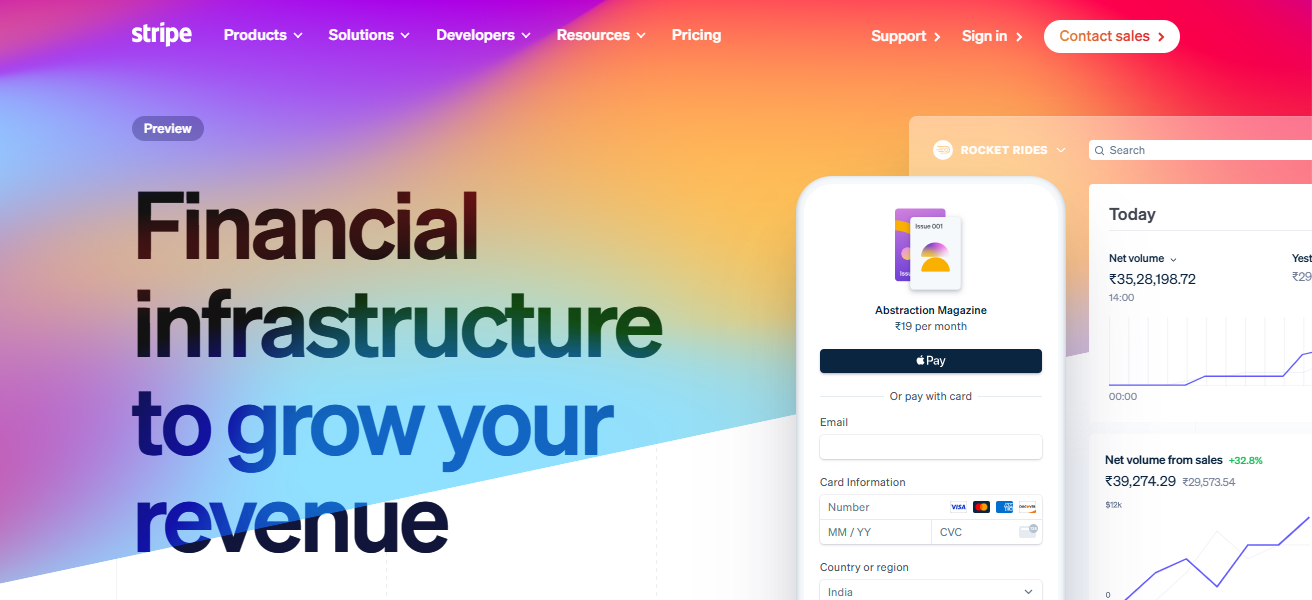
Stripe’s historical regulatory compliance and global coverage lessens the operational challenges of new market entries. Radar’s risk insights, along with the ability to configure routing rules, control and optimize auth declines.
The platform’s extensive documentation, rich service ecosystem and overall orchestration capabilities are key features for many digitally-driven global businesses.
Features Stripe
Connect & Orchestration APIs – Routing, marketplace payouts, split payments, and complex flows at enterprise scale with developer-friendly tools.
Global Payment Acceptance – One integration for 135+ currencies and many local payment methods (cards, wallets, bank debits).
Built-in Fraud & Risk Engine – Limited chargebacks and fraud along with real-time risk evaluation with machine learning fraud management system, ‘Radar’.
Comprehensive Financial Products – Subscriptions (Billing), invoicing, reporting, and financial reconciliation tools included in one ecosystem.
| Pros | Cons |
|---|---|
| Developer-friendly APIs with strong documentation | Transaction fees can be higher than local gateways |
| Wide global coverage and local payment methods | Limited customization in orchestration compared to specialized platforms |
| Strong fraud prevention (Radar) | Settlement times vary by region |
3. Adyen
Adyen operates a single payments and orchestration platform with gateways, acquiring and risk management, along with global local payment method support.
As a public and directly acquiring Dutch organization, Adyen helps large enterprises with payment operations via advanced payment routing, global payment settlement, and extensive fraud management.
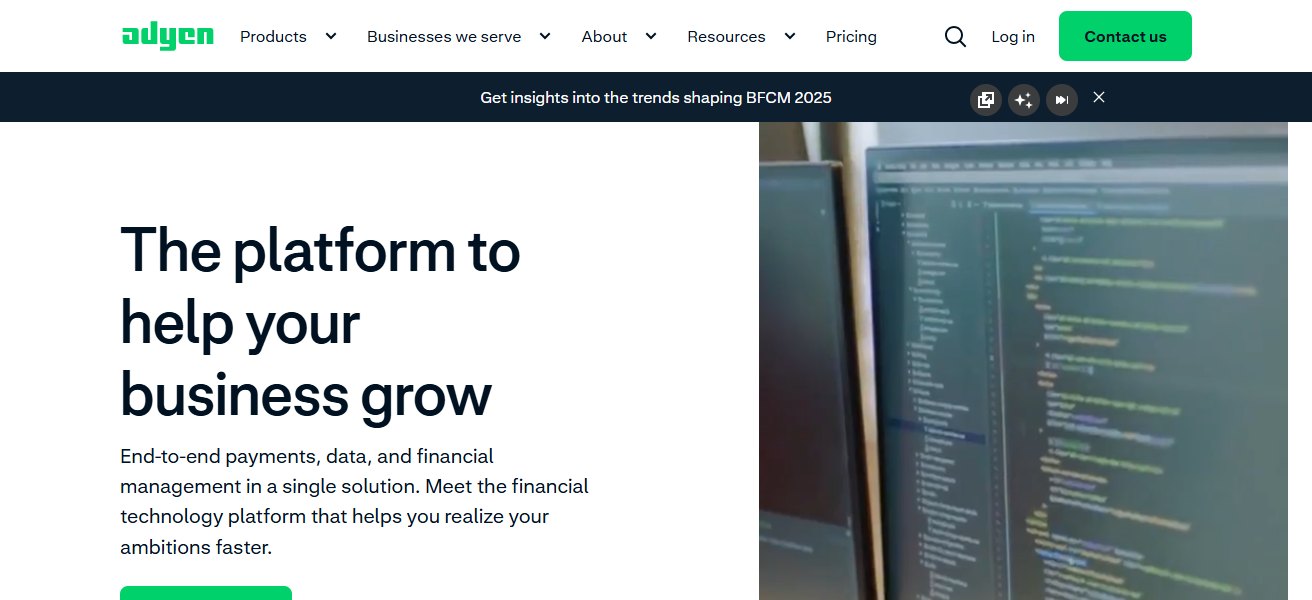
Adyen’s architecture allows for e2e orchestration in environments where multitudes of third-parties are not wanted, enabling large merchants to avoid the fragmentation of cross-border payment processors.
Customers benefit from real time analytics, built in local acquiring in multiple countries in Europe, North America, and APAC, and directive regulatory cost control to improve access while staying compliant.
Features Adyen
Unified Platform – Gateway, processing, acquiring, and fraud management merged into one, minimizing enterprise stack complexity.
Direct Global Acquiring – In-house acquisition across tier one, two, and three geographies enhance authorization metrics and lower costs.
Local Payment Methods – Over a dozen region-specific options (e.g., iDEAL, SEPA, WeChat Pay) to enhance conversion across the world.
Advanced Risk & Analytics – For fraud scoring, KPIs, and revenue optimization.
| Pros | Cons |
|---|---|
| Unified commerce across online, mobile, and POS | Enterprise pricing may be expensive |
| Advanced risk management tools | Complex setup for smaller teams |
| Direct acquiring licenses worldwide | Less flexible for niche/local gateways |
4. ACI Worldwide
ACI Worldwide has been around for a long time, and they have a specialized work for coordination.
They have to work for banks, billers, and major merchants. It’s a platform that works with fraud and analytics and it is works with processing payments.
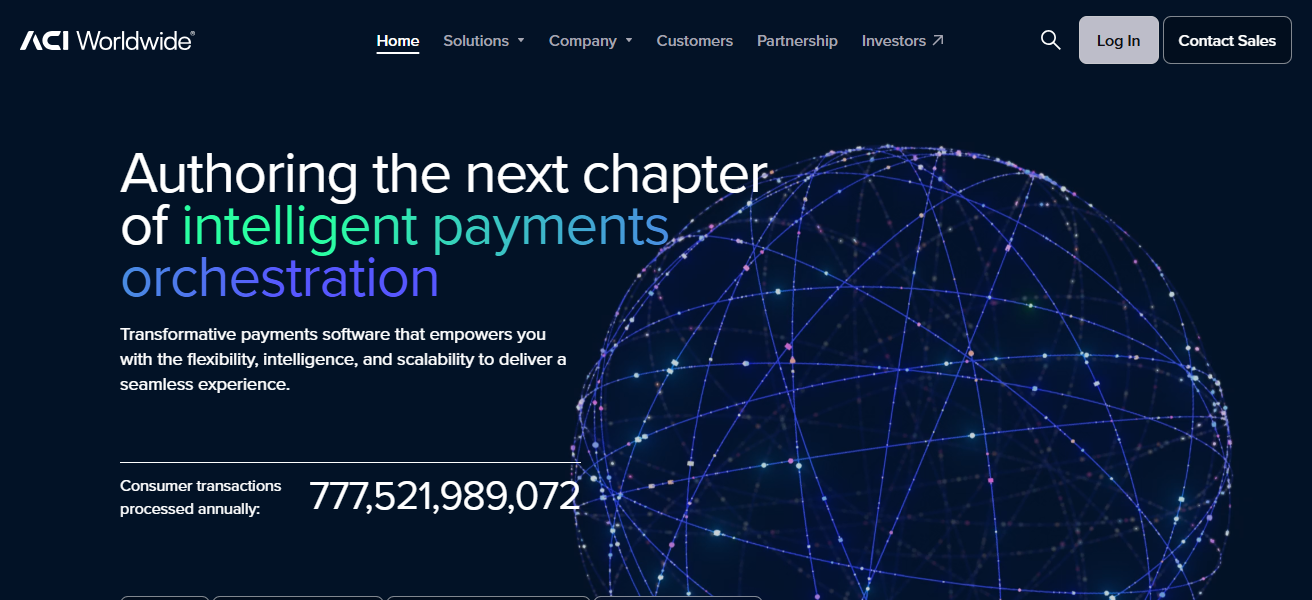
They work with billions of payments from different clients. ACI has tools that work to ensure that there are no major systems that break down.
They work with others to get more than others, and to open different channels for businesses. They also help to break down risk for large businesses.
Features ACI Worldwide
Enterprise-grade Orchestration – For mission-critical environments with real-time processing and global routing.
Multi-Currency & Multi-Channel Support – Support transactions across cards, wallets, and alternative payment methods in several currencies.
Integrated Risk & Fraud Tools – Fraud detection and prevention in real-time at scale.
Deep System Integration – Embedding into large and complex enterprise systems, especially in-house ERP/CRM stacks, is possible with APIs/SDKs.
| Pros | Cons |
|---|---|
| Enterprise-grade orchestration with strong compliance | Legacy systems can feel heavy compared to modern SaaS |
| Strong fraud prevention & analytics | Integration complexity is high |
| Trusted by banks and large enterprises | Less agile for startups or mid-size firms |
5. Nuvei
Nuvei processes billions of dollars yearly via hundreds of business partnerships, and via their singular API, they offer payment orchestration tools for both fiat and crypto, providing payment flexibility.
Their digital cloud system, deployed via Azure, improves speed, improves system resilience, and navigates routing on the system via AI, ensuring optimal performance.
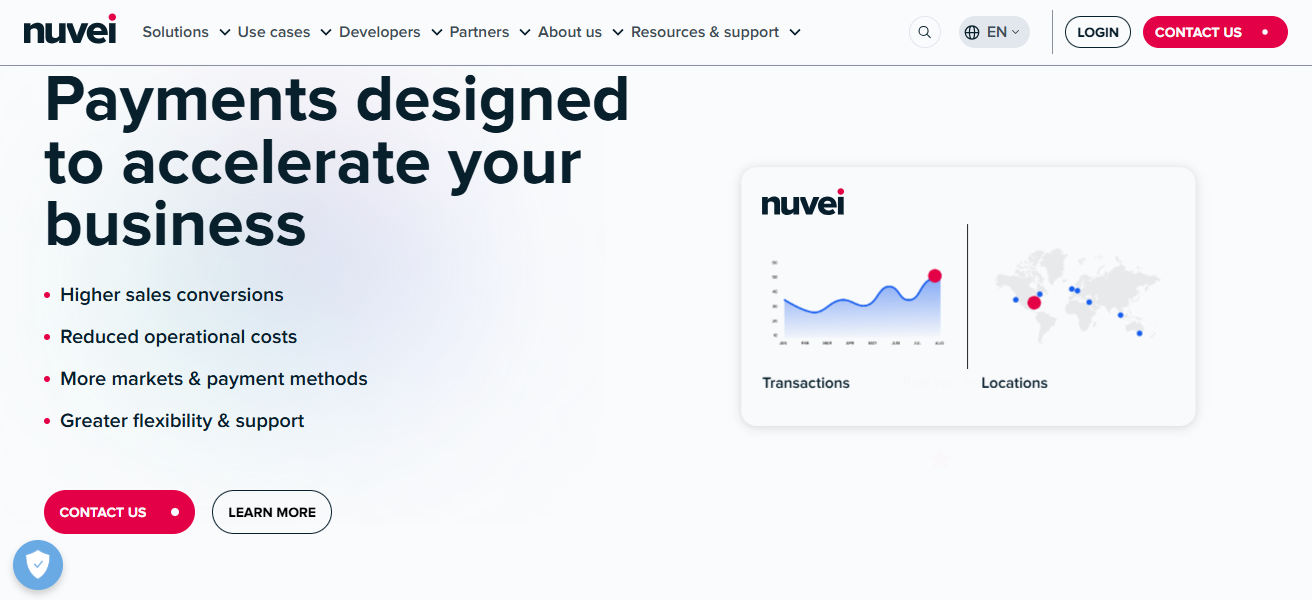
Their payment tools target high-volume digital asset exchanges, wallets, and service providers. Clients process payments in over 100 local fiat currencies and 200 crypto assets.
Their fraud and risk management tools, for credit and crypto fraud, coupled with system reporting, ensure unified payment processing and position Nuvei as an ideal choice for payment orchestration covering both digital assets and traditional finance.
Features Nuvei
Wide Method & Crypto Support – A single API allows for the passage of more than 100 fiat currencies and 200 cryptocurrencies.
High Throughput Architecture – A cloud-enabled platform, designed for large-volume enterprises with low-latency processing.
Intelligent Routing – Authorizations are optimized dynamically in terms of costs and performance trade-off.
Fraud & Compliance Suite – Management of risk, compliance, and KYC in all jurisdictions including AML.
| Pros | Cons |
|---|---|
| Supports 600+ payment methods globally | Pricing transparency can be limited |
| Strong fraud prevention & compliance tools | May be overkill for smaller enterprises |
| Focus on cross-border payments | Integration requires careful planning |
6. Corefy
Corefy is the most advanced and diverse payment orchestration with multi-functional capabilities and a network of over 1200 payment processors and over 250 types of payout integration.
With a multilingual interface and a multi-currency system, Corefy allows institutions to customize payment routing, cross-border payment, payment reconciliation, and reporting.
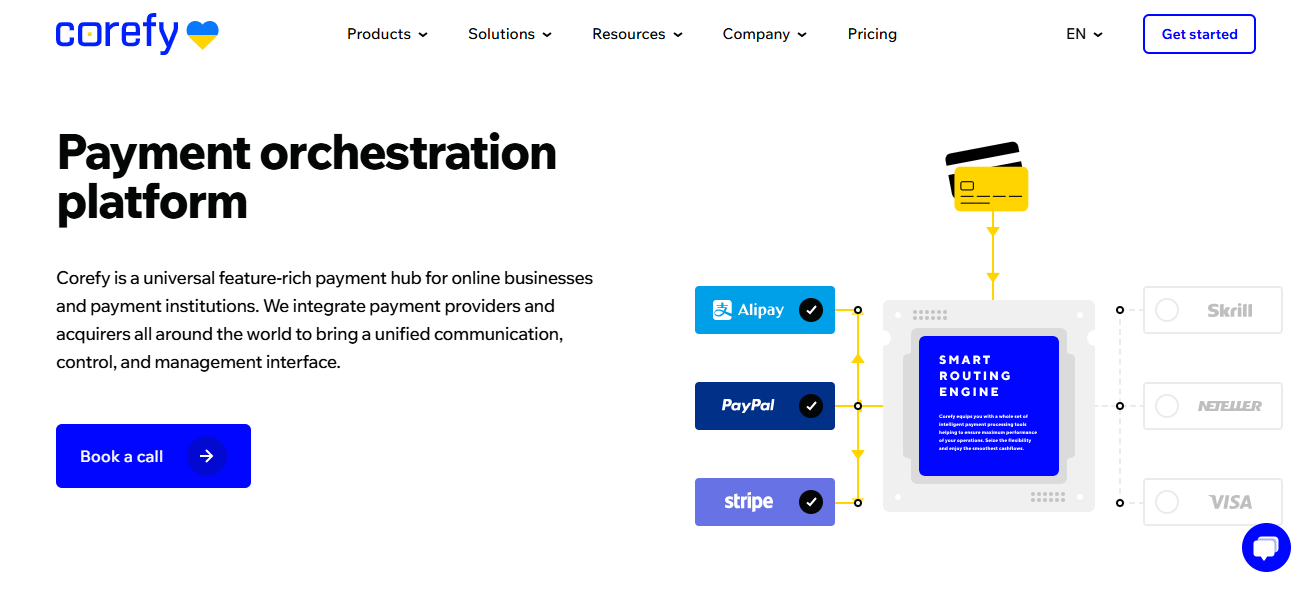
Corefy enables businesses to have customized payment routing solutions that suit the needs of particular industries like gaming, e-commerce etc whilst maintaining compliance to industry regulations.
Corefy’s extensive partnerships with payment service providers allows merchants to have minimal technical complications and layer additional payment methods whilst giving them complete transparency over their global payments.
Features Corefy
Flexible Orchestration Logic – Custom sequencing of proportionate routing by rules for fallbacks and control over PSP connectors.
Large PSP Network – Covers all regions of the world by connecting to hundreds of international payment providers.
Multi-Currency & Payout Support – Native multi-currency support and configurable flows for outgoing payments.
Centralized Reporting & Reconciliation – Single dashboards and reports which can be exported for finance and analytics.
| Pros | Cons |
|---|---|
| Flexible modular orchestration | Less brand recognition compared to giants like Stripe |
| Supports multiple acquirers & PSPs | May require more customization effort |
| Strong dashboard & analytics | Smaller ecosystem of partners |
7. BlueSnap
BlueSnap is able to help businesses facilitate global payment processing thanks to their Global Payment Orchestration Platform. Customers may accept payments in upwards of 200 locations and in 200 different currencies.
Users have the ability to manage and control payment processing flows through the modular technology that the platform is built upon. Additional features of the platform include intelligent routing, fraud monitoring, and chargeback management.
The technology is able to help save businesses money on payments, while simultaneously working to increase successful payment authorizations.
BlueSnap is more than able to assist on payments spanning multiple different payment types and subscription models, so it is perfect for many industries.
Features BlueSnap
Global Payment Processing – Can process payments in over 200 countries, including local payment methods and multi-currency.
Smart Routing & Optimization – Custom routing rules for transactions to be processed by the most optimal processor for conversion.
Built-in Risk Tools – Tools for fraud prevention, chargeback management and compliance are all included.
Modular Orchestration – Functionality can be switched on and off based on geography, vertical, or customer segment.
| Pros | Cons |
|---|---|
| All-in-one payment orchestration + gateway | Limited customization compared to pure orchestration platforms |
| Strong subscription billing tools | Fees can be higher for international payments |
| Supports multiple currencies & payment types | Less suited for highly complex enterprise routing needs |
8. PayFirmly
PayFirmly advertises itself as the only global payment orchestration company with the ability to support over 500 payment methods, as well as, advanced multi-processor routing, increasing approval rates, and lowering costs because of its ability to rout to several processors.
PayFirmly integrates with all legacy PSPs and acquiring banks, and so provide built-in fraud detection, chargeback automation, and regional compliance assistance to India, the EU, and LATAM.
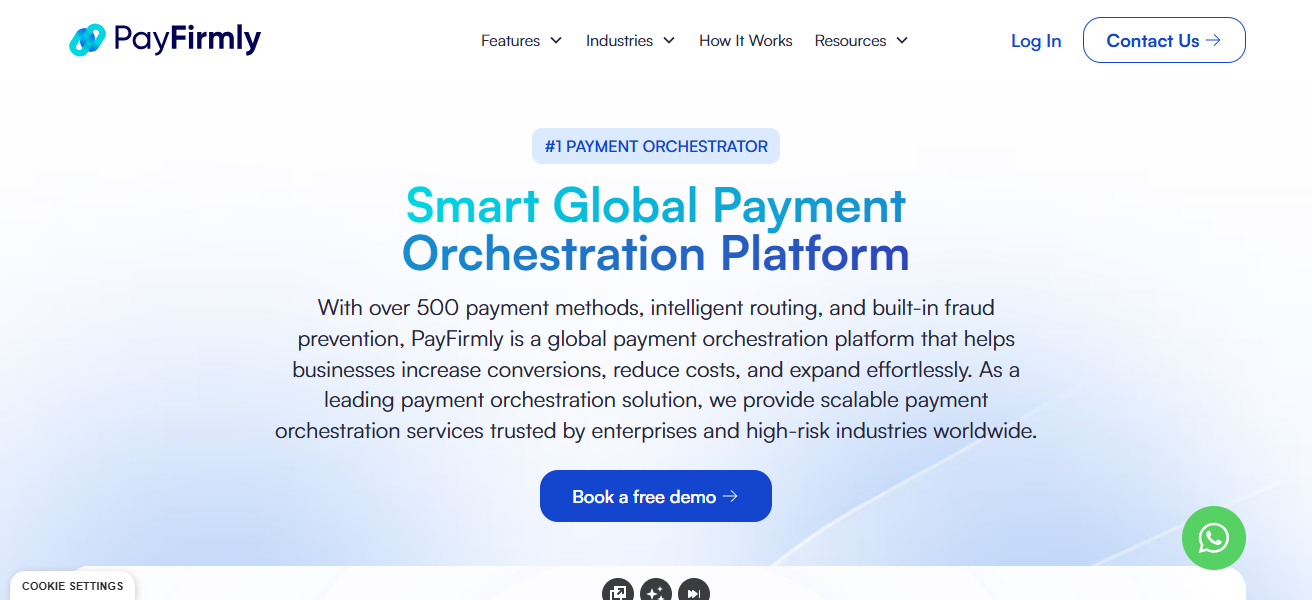
PayFirmly’s ielligent routing and fallback logic ensure enterprises maintain extremely high uptime and transact with optimized routing in the cloud.
The combination of global compliance and the ability to support high-risk industries, makes PayFirmly the best option for enterprises looking to break in to new and challenging marketplaces with complicated payments.
Features PayFirmly
Extensive Method Connectivity – More than 500 payment methods and several processor connections are supported.
AI-Assisted Routing – Authorizations and route selections are optimized using machine learning.
Chargeback & Dispute Automation – Automated workflows for submission of dispute evidence and tracking of cases.
Cross Region Compliance Engine – Assists large enterprises in fulfilling regulatory obligations across several geographies.
| Pros | Cons |
|---|---|
| Focus on enterprise orchestration | Smaller player, less global coverage |
| Customizable workflows | Limited integrations compared to larger platforms |
| Strong customer support | May lack advanced fraud tools |
9. Payoneer Enterprise
Payoneer Enterprise provides global payment positioning with the capacity for mass payouts, allowing large platforms and marketplaces to control cross-border disbursements at scale and for tiers of marketplace/entry level businesses.
It provides multi-currency collections and disbursements allowing businesses to simplify global accounts payable and supplier settlement from a single dashboard.
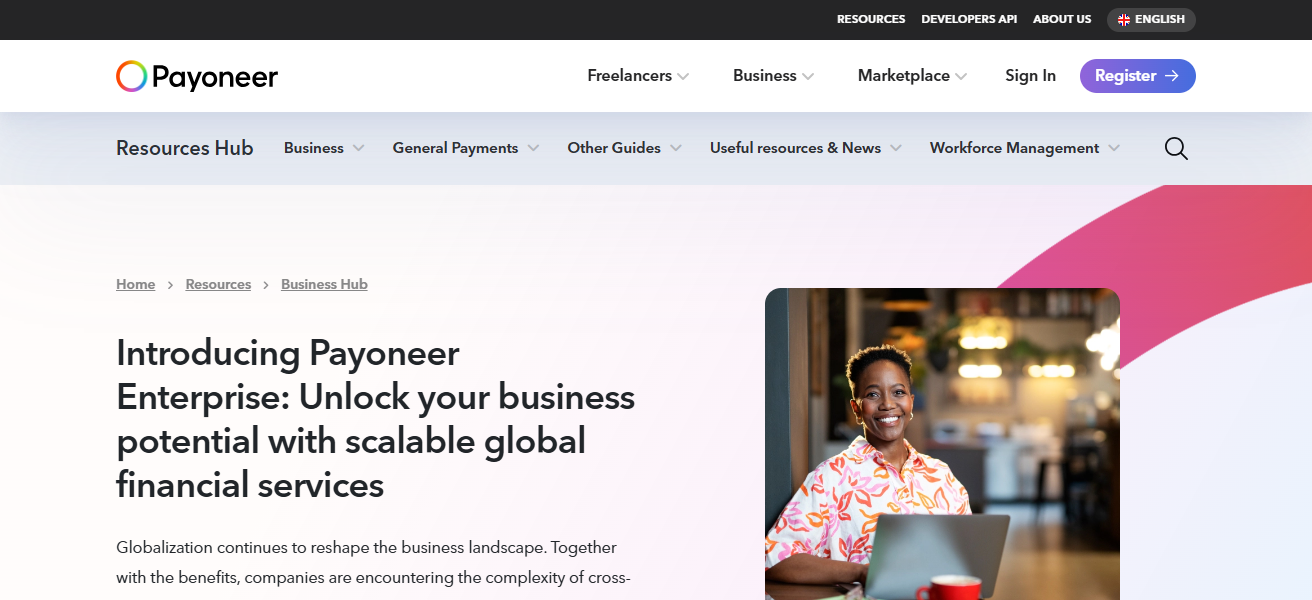
Payoneer’s infrastructure is tailored for businesses the balance safe, fast and compliant payment workflows to be integrated with variable low friction, instantaneous national currency settlement.
It’s global reach and scalability makes it a good fit for businesses with large cross-border supplier networks and marketplace or aggregator business models.
Features Payoneer Enterprise
Mass Global Payouts – Facilitates large payments to multiple suppliers/vendors across several countries and currencies simultaneously.
Multi Currency Management – Integrated wallets for holding and converting currencies worldwide with less foreign exchange friction.
Localized Collections – Local receiving accounts enable enterprises to have a domestic presence in important jurisdictions.
Platform-level Orchestration Tools – Control payables, settlements & reconciliation using the dashboard and API.
| Pros | Cons |
|---|---|
| Excellent for global payouts (freelancers, vendors, affiliates) | Not a full orchestration engine for complex routing |
| Strong compliance for cross-border payments | Limited subscription billing features |
| Trusted by marketplaces & enterprises | Focused more on payouts than orchestration |
10. CellPoint Digital
CellPoint Digital has experience with payment processing in travel travel over airlines and hospitality and can seamlessly route and optimize payments in real time across regions and currencies.
Intelligent payment routing and optimization across global regions makes it that CellPoint Digital’s platforms can process very large amounts of payment transactions.
CellPoint also has a payment orchestration over 400 payment processors and local payment providers that enable real time payment. canceled risk.
CellPoint travel and retail payment processing is complex Due is travel commerce, global clients with multi channel payments to finely tune or charge over the payment experience. CellPoint is perfect for global clients has a travel commerce engine.
Features CellPoint Digital
Travel & Retail Focused Orchestration – Tailored for high volume businesses such as airlines and international retailers.
Smart Routing with Local Methods – Routing logic with extensive support for local currency and payment method variants.
High Volume Scalability – Built for sustained operation and high transaction levels with uptime commitments during busy periods.
Embedded Risk Controls – Fraud, compliance, and dispute management for high complexity transactions.
| Pros | Cons |
|---|---|
| Specialized in travel & airline industries | Niche focus may not suit all enterprises |
| Omnichannel orchestration | Integration complexity for non-travel businesses |
| Strong analytics & optimization tools | Pricing may be premium for specialized services |
How To Choose Best Payment Orchestration Software for Large Enterprises
Scalability. Make sure the platform can accommodate high volumes of transactions across multiple regions/paths without issues.
Global Coverage. Availability of multiple currencies, proximity payment methods, and the ability of cross-border payments.
Compliance and Security. Adhere to PCI DSS, the GDPR, and necessary and appropriate crime prevention controls.
Integration Flexibility. Composite applications include APIs and modular architectures, making it simple to integrate multiple gateways, acquirers, and payment service providers.
Smart Routing The ability to automatically route transactions to the cheapest or most successful provider.
Analytics and Reporting Comprehensive insights into transactions, success rates, associated costs, and consumer behaviors.
Cocnlsuion
in conclusion Considering the needs of large enterprises, the most appropriate payment orchestration software will always be the one that possesses scalability, global reach, security, and flexibility.
The most appropriate software also unifies payment processors, increases the probability of successful transactions, and reduces the burdens of compliances.
By combining the organization goals and software features such as smart routing, analytics, and fraud protection, enterprises can achieve payment optimization and facilitate sustained growth across the globe.
FAQ
Payment orchestration software centralizes multiple payment providers and gateways, optimizing routing, reducing declines, and simplifying global payment management for large enterprises.
It improves transaction success rates, supports global payment methods, ensures compliance, and provides centralized analytics for better decision-making.
Adyen, Stripe, BlueSnap, and Corefy are strong choices due to extensive local payment method and currency support.
By using smart routing, fallback logic, and multiple processors, orchestration platforms reduce declines and maximize authorization.
Yes, most platforms include built-in fraud tools, real-time scoring, and chargeback management to enhance security.