In this article, I will discuss the Best Platforms for Managing Payment Processing Rules Engines and how they help businesses optimize payment workflows.
Platforms like Stripe, Adyen, and Corefy offer smart routing, automation, and real-time decision-making to improve transaction success rates and enhance overall payment performance efficiently.
Key Points & Best Platforms for Managing Payment Processing Rules Engines
- Corefy: Provides full ownership of routing logic, cascading flows, and connections above PSPs and acquirers.
- Primer: Enables rapid provider connections and payment logic management through intuitive, drag-and-drop orchestration workflows.
- Gr4vy: API-first orchestration platform offering enterprise merchants control, with dedicated cloud instances ensuring sovereignty.
- IXOPAY: Modular orchestration platform allowing configurable routing rules based on geography, card data, risk, or cost.
- Solidgate: Combines orchestration and processing, optimized for high-volume businesses with advanced AI-driven routing capabilities.
- Spreedly: Specializes in tokenization and portability, empowering merchants to securely switch PSPs while maintaining routing control.
- ProcessOut: Checkout.com-owned orchestration platform delivering AI-driven routing and real-time analytics for optimized performance.
- Adyen: PSP with orchestration features, enabling global enterprises unified routing across multiple providers seamlessly.
- Stripe: Flexible APIs empower developers to manage complex payment rules, subscriptions, and global payment methods.
- Norbr: White-label infrastructure platform offering connector marketplaces and customizable, dynamic payment flows for businesses.
10 Best Platforms for Managing Payment Processing Rules Engines
1. Corefy
Corefy is a top payment orchestration platform that really shines through its advanced rules engine and smart routing.
It also helps businesses build custom payment processing rules according to geography, currency, payment method, and risk profile.
By automating the retrying of failed transactions, its clever cascading system enhances approval rates and minimizes revenue losses.
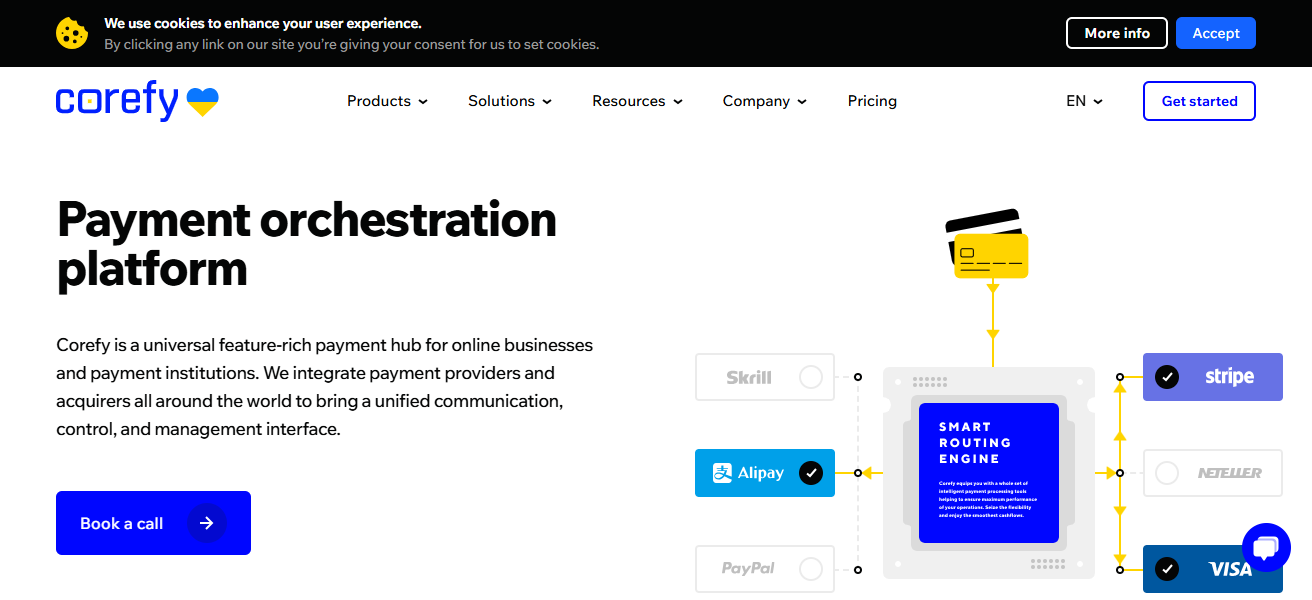
Additionally, Corefy employs algorithmic balancing that learns from actual routes, thus further optimizing the routing decision making process.
By supporting 200+ currencies and several providers, it allows for fully integrated payment flows around the globe.
This is an ideal solution for businesses that prefer the maximum flexibility in their payment routing logic and would like to optimize performance across multiple gateways.
| Feature | Explanation |
|---|---|
| Unified Payment Hub | Connects hundreds of payment providers into one centralized system, simplifying payment management and control. |
| Advanced Routing Engine | Enables custom routing and cascading logic to optimize transaction success rates. |
| Multi-Provider Integration | Supports multiple PSPs and acquirers, reducing dependency on a single provider. |
| Global Coverage | Supports 200+ currencies and global payment methods for international scalability. |
| Analytics & Dashboard | Provides real-time monitoring, reporting, and performance insights in one interface. |
2. Primer
Primer is the no-code/low-code payment automation platform that enables you to quickly build and manage your own payment workflows.
Its rules engine lets businesses create complex logic for routing transactions, retrying them and applying fraud checks without requiring a lot of engineering effort.
Primer is a unified API for different payment providers with dynamic switching and orchestration functionalities.
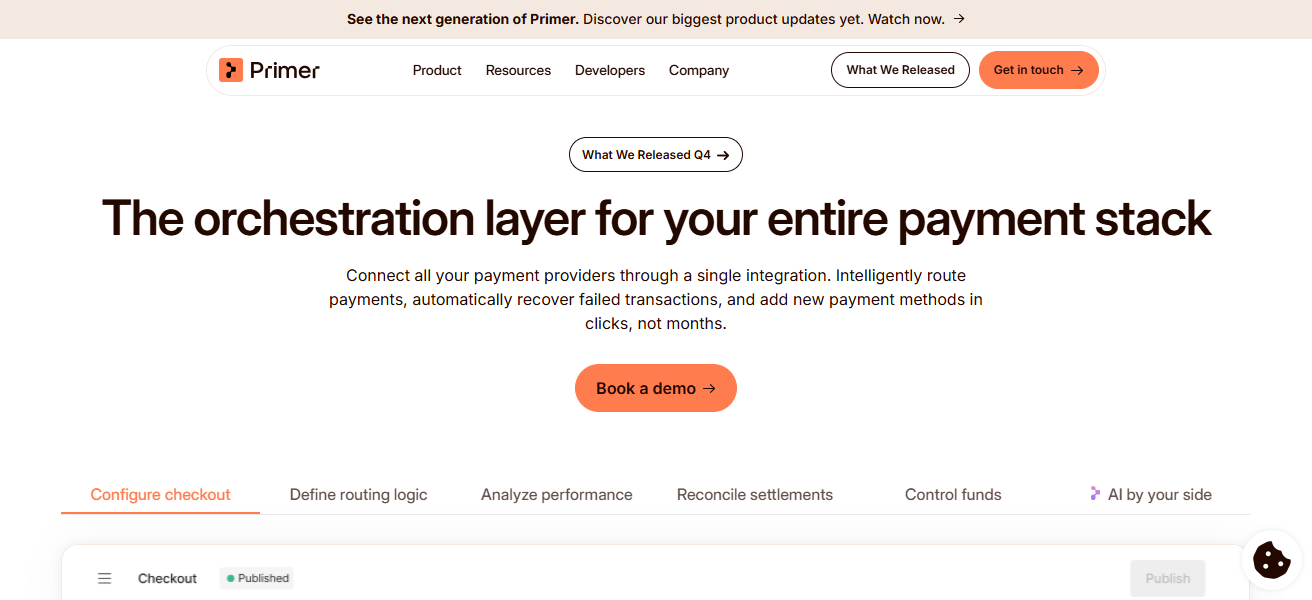
It enables A/B testing of payment flows and real-time decision-making, contributing to better conversion rates.
The platform is particularly well suited for scaling companies that prioritize flexibility and rapid experimentation.
But its infrastructure is modular, to ensure that businesses can quickly adapt to emerging forms of payment, new markets and compliance at all levels.
| Feature | Explanation |
|---|---|
| No-Code Workflow Builder | Allows businesses to create payment rules and flows without coding using drag-and-drop tools. |
| Unified API | Integrates multiple payment providers into a single API for easier management |
| Real-Time Observability | Provides instant visibility into payment performance and routing decisions. |
| Dynamic Routing & Fallbacks | Automatically routes transactions and retries failed payments efficiently. |
| A/B Testing | Enables testing of different payment flows to optimize conversion rates. |
3. Gr4vy
Gr4vy provides a cloud-native payment orchestration platform with particular emphasis placed on rules-based routing and scalability.
Its rules engine enables merchants to set payment flows, based on business logic such as customer locale, transaction value or payment method.
Tokenization, secure handling of data, and easy switching between providers are among what Gr4vy enables.
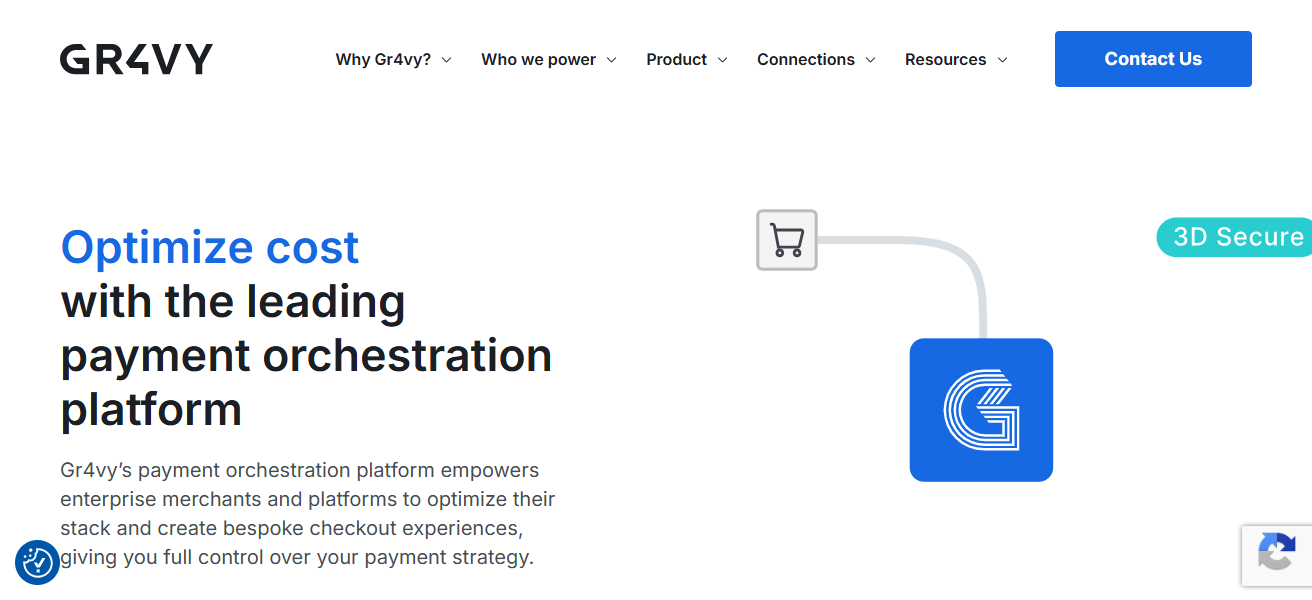
Its “Flows” function automates routing decisions and fallback strategies to achieve high success rates. It also supports features such as auto-rescue retries of failed payments and flexible integrations.
This makes it perfect for enterprises looking for a decentralized, cloud-based solution to efficiently manage complex payment ecosystems.
| Feature | Explanation |
|---|---|
| API-First Architecture | Designed for developers to build custom payment experiences with flexibility. |
| Configurable Routing Logic | Routes transactions based on geography, method, or performance metrics. |
| Multi-PSP Integration | Connects multiple payment providers through a single integration layer. |
| Failover & Retry System | Ensures high success rates with automatic fallback strategies. |
4. IXOPAY
IXOPAY is an enterprise-grade payment orchestration platform that streamlines the management of complex payment infrastructures.
And its rules engine allows for smart transaction routing, load balancing, and failover handling with multiple payment providers.
Businesses can set rules depending on key factors such as transaction type, geographical location, and risk level.
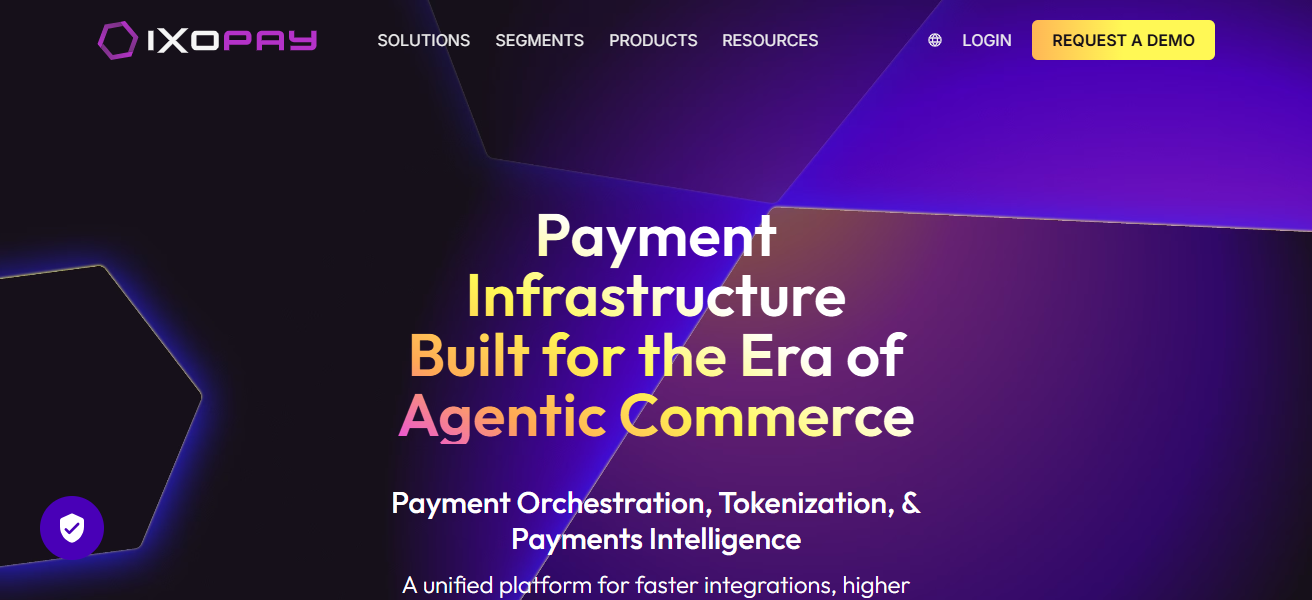
Tokenization & Vaulting Advanced Tokenization and Vaulting features for secure data storage while still remaining PCI compliant.
It is also popular with payment service providers and large merchants due to its white-label capabilities.
By providing advanced analytics and reporting tools, IXOPAY enables smarter routing strategies to optimize payment performance and reduce processing costs.
| Feature | Explanation |
|---|---|
| Intelligent Routing Engine | Routes transactions based on location, risk, and cost factors. |
| White-Label Capability | Allows businesses to offer branded payment solutions. |
| Tokenization & Vaulting | Securely stores payment data with PCI compliance. |
| Risk & Fraud Management | Includes built-in risk tools and third-party integrations. |
| Advanced Analytics | Provides dashboards and KPIs across multiple providers. |
5. Solidgate
Solidgate is a modern payment infrastructure for high-growth digital businesses. It features a rules engine to route and cascade transactions dynamically across dozens of acquirers to boost approval rates.
Solidgate focuses on real-time decision-making so that businesses can modify payment flows, particularly given performance metrics. It also includes fraud prevention tools and accommodates subscription-based billing models.
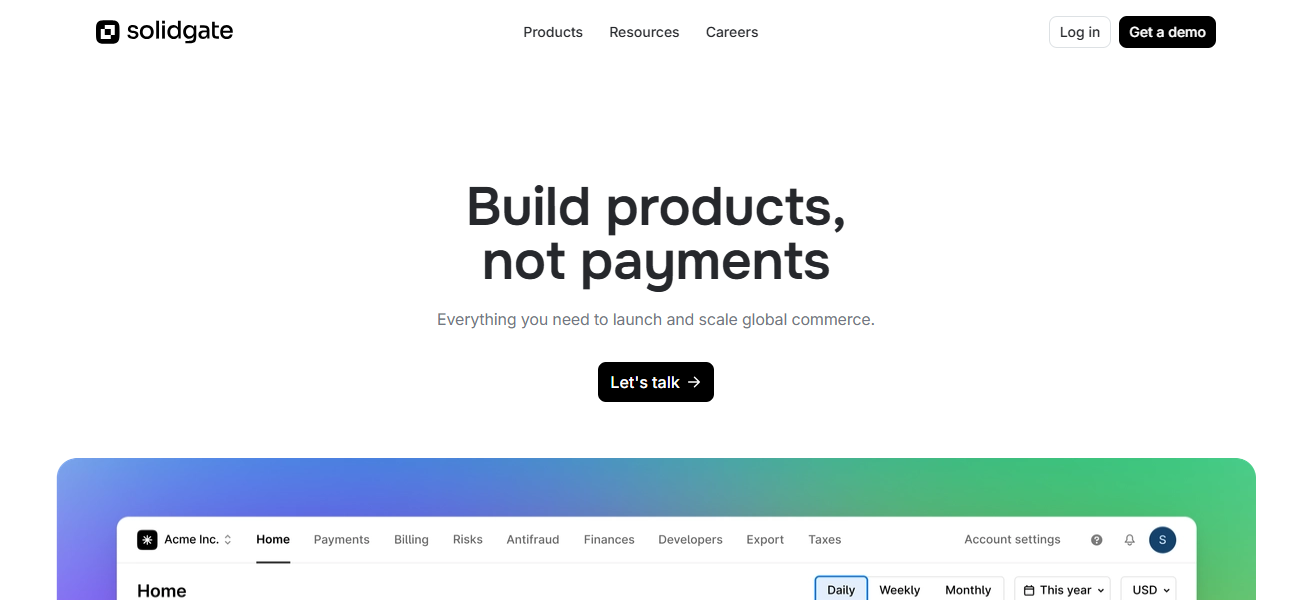
Qpay is a particularly powerful platform when it comes to managing high-risk or high-volume transactions.
Solidgate’s powerful API and analytics dashboard enable businesses to achieve higher payment success rates, minimized declines, and enhanced overall revenue performance via smart orchestration.
| Feature | Explanation |
|---|---|
| Built-in Payment Infrastructure | Combines orchestration and direct acquiring in one platform. |
| Custom Payment Forms | Offers customizable checkout forms for better user experience. |
| Multi-Acquirer Routing | Routes transactions across different acquirers to improve approval rates. |
| Subscription Billing Support | Handles recurring payments and billing workflows efficiently. |
| Chargeback & Risk Tools | Provides tools to manage disputes and reduce fraud risks. |
6. Spreedly
Spreedly is a payment orchestration platform known for its universal tokenization & flexible rules engine.
It enables transactions to be routed across various gateways and payment services without sensitive data storage.
But its rules engine allows for dynamic routing, failover strategies and payment optimization based on real-time conditions.
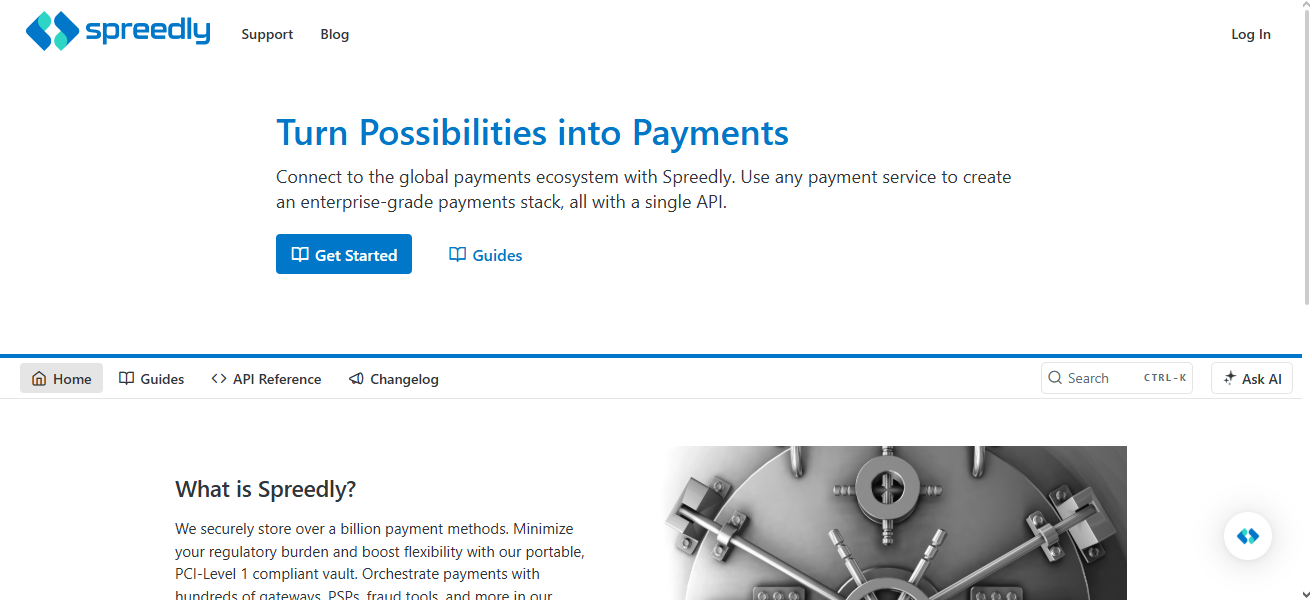
It supports various payment methods and offers easy integration of all your global providers. Its secure token vaulting enables PCI compliance with a flexible approach.
Perfect for the business required to manage multiple payment providers without sacrificing security and scalability.
| Feature | Explanation |
|---|---|
| Universal Tokenization | Stores payment data securely and enables reuse across providers |
| Multi-Gateway Connectivity | Connects 100+ gateways for flexible payment routing. |
| Vendor-Agnostic Layer | Allows switching providers without major integration changes. |
| Dynamic Routing | Routes transactions based on rules and real-time conditions. |
| High Scalability | Handles global payment processing with reliable performance. |
7. ProcessOut
ProcessOut — a data-centric payment orchestration platform focused on analytics-based optimization.
Its rules engine allows for intelligent routing, retry logic and transaction prioritization based on performance metrics.
The payment rules can be adjusted in real time based on the success rates seen from businesses. In addition, ProcessOut provides detailed insights on declines to help merchants increase approval rates and lower costs.
The vendor-agnostic integration makes it connect easily to various payment provider. This, in turn, makes it suited for organizations seeking to exploit data and automation to better payment performance and customer experience.
| Feature | Explanation |
|---|---|
| Data-Driven Routing | Uses performance data to optimize transaction routing decisions. |
| Smart Retry Logic | Automatically retries failed transactions to improve success rates. |
| Advanced Analytics Dashboard | Provides deep insights into payment performance and trends. |
| Vendor-Agnostic Integration | Works with multiple PSPs without lock-in limitations. |
| Decline Analysis Tools | Identifies reasons for failed payments and suggests improvements. |
8. Adyen
Adyen is a global payment provider that unifies gateway, processing and acquiring in one solution.
Its rules engine capabilities go hand in hand with its optimization tools, giving businesses control of routing, authentication and fraud prevention strategies.
Adyen allows access to numerous payment methods and currencies which enhance global scalability. It provides optimization using machine-learning techniques to maximize authorization rates and minimize fraud.
Unified commerce services allow businesses to touch online and in-store payments with real-time customer experience (CX) metrics.
Adyen’s unified foundation facilitates streamlined payment systems but retains enhanced power over transaction performance and handling.
| Feature | Explanation |
|---|---|
| All-in-One Payment Stack | Combines gateway, processing, and acquiring in one platform. |
| Global Payment Methods | Supports 100+ payment methods across multiple regions. |
| Machine Learning Optimization | Improves authorization rates and reduces fraud automatically. |
| Unified Commerce | Manages online, mobile, and in-store payments in one system. |
| High Scalability | Handles large transaction volumes globally with high reliability. |
9. Stripe
Stripe is a very popular payment platform with an array of programmable APIs and rules engine for processing payments.
Business can implement custom logic for routing, retries, fraud detection and authentication. Stripe’s machine learning tools like Radar and Adaptive
Acceptance automatically optimize transactions to help boost success rates. International Business Good for Binary Options Website Genial platform supports 100+ payment methods and global currencies.
Stripe enables A/B testing and dynamic displaying of payment methods to increase conversions. With its developer-focused API and broad ecosystem, it’s also an appealing offering for companies looking for customer payment solutions that are truly scalable and customizable.
| Feature | Explanation |
|---|---|
| Developer-Friendly APIs | Offers easy integration with powerful and flexible APIs. |
| Machine Learning Tools | Tools like Radar optimize fraud detection and approvals. |
| Global Payment Support | Supports 100+ payment methods and multiple currencies. |
| Custom Payment Logic | Allows businesses to build custom routing and workflows. |
| Fast Integration | Quick setup and deployment for businesses of all sizes. |
10. Norbr
Norbr, as a relatively new payment orchestration platform, is positioned to solve complex payment ecosystems.
Its rules engine empowers businesses to create and govern payment workflows with extreme flexibility, such as determining routing paths, enabling retries and selecting providers.
Norbr has a no-code interface enabling teams to set up the logic for their payments without in-depth technical knowledge. It enables businesses to scale globally with multi-payment provider and method support.
Additionally, the platform offers real-time analytics and monitoring features to enhance performance.
Norbr is especially a great fit for fast-growing companies that want agile, customizable payment orchestration without much development overhead.
| Feature | Explanation |
|---|---|
| No-Code Rules Engine | Enables easy creation of payment workflows without technical expertise. |
| Multi-Provider Routing | Supports routing across multiple payment providers dynamically. |
| Real-Time Monitoring | Tracks payment performance and routing decisions instantly. |
| Scalable Infrastructure | Supports global expansion with flexible architecture. |
| User-Friendly Interface | Designed for non-technical teams to manage payment operations easily. |
Conclsuion
To summarize, good payment processing rules engines help businesses find the best route for transactions, lower failures and enhance approval rates.
These solutions are based on Stripe, Adyen, and Corefy so no doubt about flexibility it gives an automation tool to help payment institutions.
In a competitive digital landscape, selecting the right platform is fundamental to ensuring familiar payment flows for customer experience, as well as ultimately where and how quickly your revenue grows.
FAQ
Rules engines help optimize payment flows by selecting the best processor, reducing failures, and improving authorization rates. They also enable automation, reducing manual intervention in payment operations.
They use rules engines to evaluate each transaction in real time and route it based on factors like geography, cost, and success probability. This ensures optimal performance and reliability.
Key features include smart routing, failover handling, retry logic, real-time analytics, and multi-provider integration. These features help improve payment success rates and reduce downtime.
Yes, they automatically retry failed transactions using alternative providers and routes, which helps recover lost payments and increase approval rates.