In this article, I will talk about the Best Technology Platforms for Enterprise API Monetization. As APIs become more central to revenue generation, enterprises need powerful platforms to manage, secure, and monetize them.
- Key Points & Best Technology Platforms for Enterprise API Monetization
- 10 Best Technology Platforms For Enterprise API Monetization
- 1. Apigee (Google Cloud)
- Apigee (Google Cloud)
- 2. Mulesoft Anypoint Platform
- MuleSoft Anypoint Platform
- 3. Kong Enterprise
- Kong Enterprise
- 4. WSO2 API Manager
- WSO2 API Manager
- 5. Axway Amplify
- Axway Amplify
- 6. Tyk
- Tyk
- 7. IBM API Connect
- IBM API Connect
- 8. Postman API Platform
- Postman API Platform
- 9. RapidAPI Enterprise Hub
- RapidAPI Enterprise Hub
- 10. Oracle API Platform Cloud Service
- Oracle API Platform Cloud Service
- Conclusion
- FAQ
These platforms support a wide range of monetization strategies, including subscriptions and usage-based pricing.
Additional features include analytics, tools for fostering developer relationships, and governance. Here, we review leading solutions for helping enterprises convert APIs to valuable digital assets.
Key Points & Best Technology Platforms for Enterprise API Monetization
Apigee (Google Cloud) Apigee delivers comprehensive API management, enabling enterprises to monetize APIs with analytics-driven subscription models.
Mulesoft Anypoint Platform Mulesoft connects applications seamlessly, offering flexible governance, pricing, and strong integration for enterprise API monetization.
Kong Enterprise Kong provides scalable API gateway solutions with advanced traffic control, billing, and enterprise-grade monetization features.
WSO2 API Manager WSO2 offers open-source flexibility, supporting subscription-based and usage-driven monetization with strong customization options.
Axway Amplify Axway enables unified API catalog management, leveraging analytics-driven strategies for effective enterprise API monetization.
Tyk Tyk is a lightweight gateway offering developer portals, pay-per-use options, and flexible monetization capabilities.
IBM API Connect IBM API Connect ensures enterprise-grade governance, automated billing, reporting, and secure monetization of APIs.
Postman API Platform Postman empowers developers to productize APIs, enabling marketplace sales and subscription-based monetization opportunities.
RapidAPI Enterprise Hub RapidAPI provides marketplace reach with built-in subscription tiers, pricing flexibility, and enterprise API monetization.
Oracle API Platform Cloud Service Oracle delivers cloud-native API management, integrating monetization workflows directly into enterprise applications seamlessly.
10 Best Technology Platforms For Enterprise API Monetization
1. Apigee (Google Cloud)
Apigee provides end-to-end API management, allowing businesses to transform APIs into monetizable assets using subscription models, pay-per-use, or tiered access.
Users can manage the complete API lifecycle, including API security, performance, and adoption analytics. The Google Cloud partnership offers integrated services with detailed actionable insights and AI optimization.
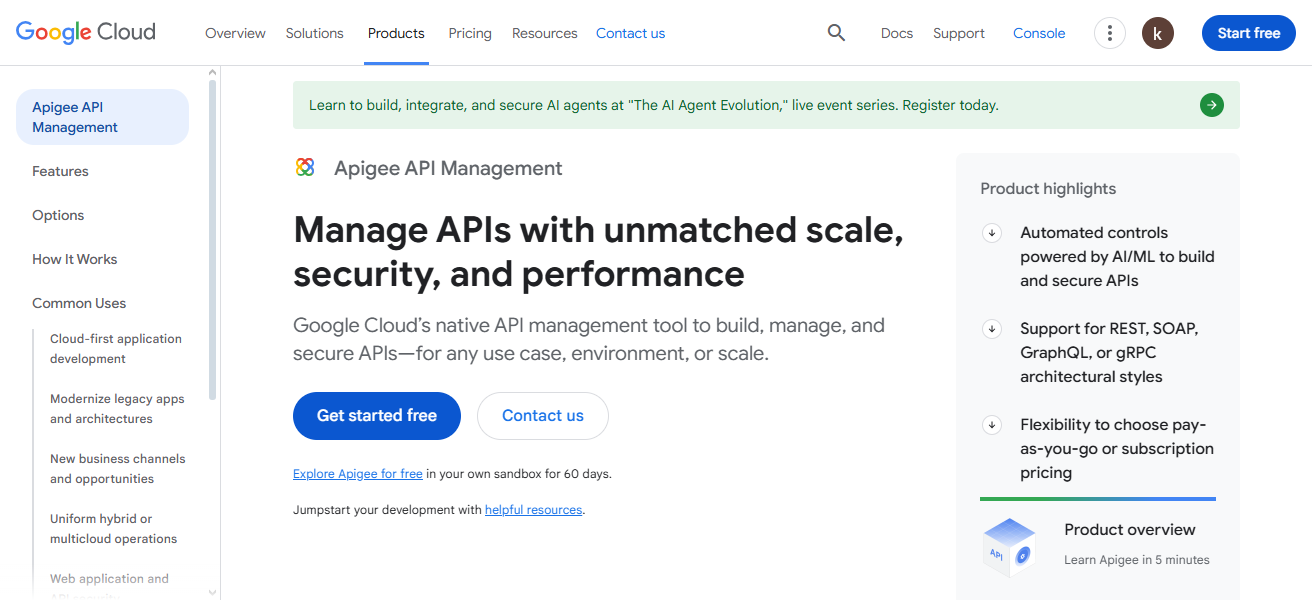
With customizable developer portals, and security policy enforcement, Apigee enables businesses to manage, scale, and secure APIs in a cost-effective way.
Apigee (Google Cloud)
- API life cycle management: Assists with creation, development, deployment, and management of the entire life cycle of an API.
- API Monetization: Users can create subscription plans (e.g., pay-per-use, tiered pricing, etc.)
- Analytics and Insights: Users can obtain a real time overview and analytics of an API’s performance, adoption, etc. and its revenue.
- Security and Governance: Manages and enforces API security exposure (e.g., OAuth, API keys, traffic control, etc.)
| Pros | Cons |
|---|---|
| Comprehensive API lifecycle management from design to analytics. | Can be expensive for small or mid-size enterprises. |
| Robust monetization options: subscription, pay-per-use, tiered models. | Steeper learning curve for non-technical teams. |
| Strong integration with Google Cloud services, including AI and analytics. | Some advanced features require separate Google Cloud services. |
| Excellent security, governance, and developer portal support. | UI can feel complex for first-time users. |
| Scalable and enterprise-ready for global deployments. | Customization beyond standard templates may require development expertise. |
2. Mulesoft Anypoint Platform
MuleSoft offers extensive tools for monetization, integration, and API Management on their Anypoint Platform. Businesses can create APIs, implement policies, and design monetization strategies based on subscriptions or usage.
The platform’s unified interface works with both cloud and on-premises systems, allowing secure connectivity throughout the enterprise.
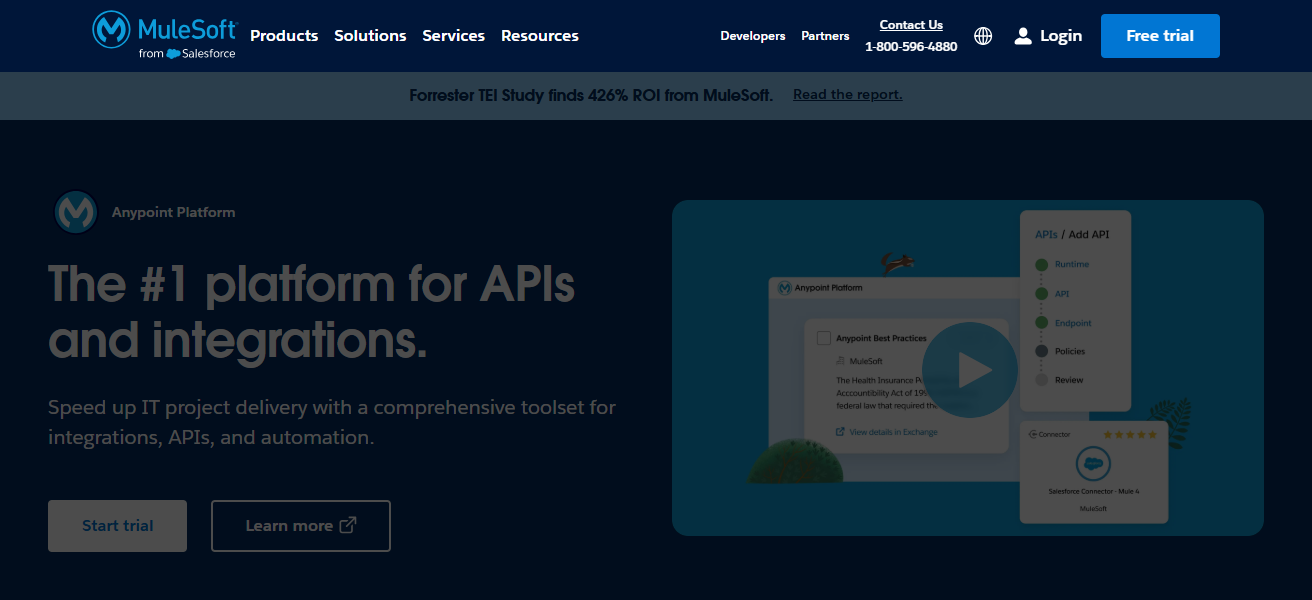
With Anypoint’s suite of tools for API analytics, monitoring, and developer engagement, enterprises can drive revenue and adoption.
With integration and monetization capabilities, MuleSoft empowers businesses to turn their APIs into valuable digital assets while controlling the full lifecycle of their APIs.
MuleSoft Anypoint Platform
- Integration and API Management: Combines management of APIs with enterprise integration is the differentiating factor.
- Monetization Plans: Users can create subscription plans (e.g., pay-per-use, tiered pricing, etc. for APIs.)
- Analytics and Monitoring: Users can obtain an overview of API adoption, performance, and revenue.
- Developer Engagement: API adoption is supported through the provision of portals, documentation, and other resources.
| Pros | Cons |
|---|---|
| Unified platform for API management, integration, and monetization. | High cost compared to other platforms. |
| Supports subscription and usage-based monetization plans. | Complex setup for hybrid environments. |
| Cloud and on-premises integration capabilities. | Can require significant technical expertise for custom workflows. |
| Strong analytics and developer engagement features. | Some integrations may require additional connectors. |
| Secure API exposure with policy enforcement and monitoring. | Advanced monetization reporting can be limited without add-ons. |
3. Kong Enterprise
Kong Enterprise is an API management and gateway solution focused on monetization and scalability. Enterprises can monitor traffic, adoption, and revenue via API models such as pay-per-use, subscriptions, and tiered APIs.
Kong supports hybrid and multi-cloud infrastructures, real-time analytics, and policy enforcement. Kong is lightweight and secure, with a plugin-based architecture and real-time policy enforcement.
Kong also provides developer portals for operational control so that complex enterprises can sustain performance and scalability while monetizing APIs.
Kong Enterprise
- High-Performance API Gateway: Lightweight and efficient among hybrid and multi-cloud deployments.
- Flexible Monetization: Users can create subscription plans (e.g., tiered pricing, usage-based, etc. for APIs.)
- Extensibility: plug-in architecture can be used to provide additional functionality for authentication, traffic management, and logging control.
- Real-Time Monitoring: Dashboards can be used to obtain an overview of performance, traffic, and revenue.
| Pros | Cons |
|---|---|
| Lightweight, high-performance API gateway. | Requires technical knowledge for plugin configurations. |
| Flexible monetization: subscription, pay-per-use, tiered plans. | Enterprise features can be costly. |
| Supports hybrid and multi-cloud deployments. | Some advanced analytics require additional tools. |
| Extensible via plugins for security, traffic, and logging. | Developer portal setup can be less intuitive. |
| Real-time traffic monitoring and policy enforcement. | Open-source base may require ongoing maintenance. |
4. WSO2 API Manager
WSO2 API Manager is an open-source tool that supports the full lifecycle of API management and monetization.
Businesses can build subscription monetization models and manage access by creating revenue-driving APIs and monitoring usage.
It offers hybrid and cloud deployments, as well as on-premises deployment, while security and governance policies are enforced. Analytics offers insights into performance, adoption and monetization strategy optimization.
With WSO2’s developer portals and integration, businesses are able to create outstanding user engagements and increase API usage and consumption.
This makes WSO2 API Manager an excellent choice for businesses that want to create reliable and digital monetized products.
WSO2 API Manager
- Open-Source Platform: Fully customizable API Management and Monetization.
- Subscription & Usage Plans: Supports tiered access and subscription-based monetization.
- Analytics & Insights: Tracks adoption, performance, and revenue generation.
- Security & Governance: Throttling policy enforcement and secure API exposure.
| Pros | Cons |
|---|---|
| Open-source and highly customizable. | Implementation can be complex for beginners. |
| Supports subscription-based monetization and usage tracking. | May require additional modules for enterprise features. |
| Hybrid, cloud, and on-premises deployment support. | UI is not as modern or user-friendly. |
| Strong analytics for API adoption and performance. | Limited commercial support in community editions. |
| Secure API management with throttling and policy enforcement. | Some integrations require coding effort. |
5. Axway Amplify
Axway Amplify helps businesses oversee, protect, and profit from APIs. It offers various monetization options, including usage, subscription, and tiered models, supplemented by detailed adoption and revenue analytics.
Amplify offers comprehensive management of the API lifecycle, including developer portals and secure gateways for internal and external use. Its hybrid deployment options offer seamless integrations with enterprise systems.
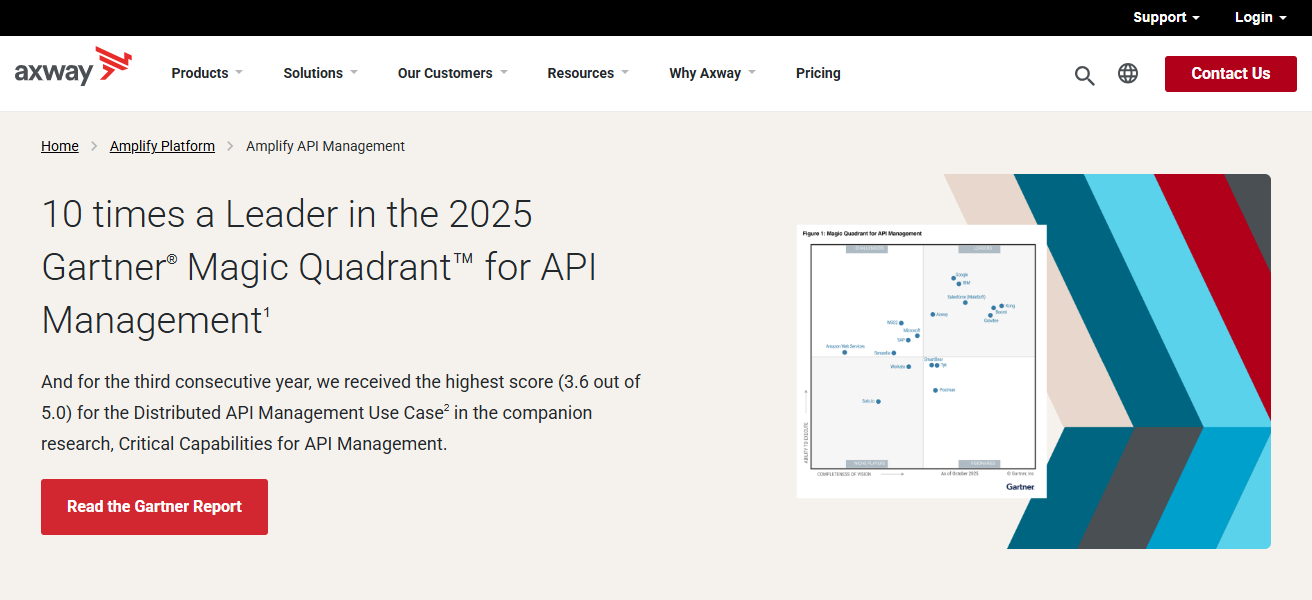
With the combination of the Governance, Performance, and Monetization tools, Axway Amplify assists enterprises in keeping control and compliance across all API activities while transforming APIs into profitable business.
Axway Amplify
- API Lifecycle Management: Complete autonomy over design, deployment, monitoring, and retirement.
- Monetization Support: Subscription, pay-per-use, and tiered pricing.
- Developer Portal: Documentation and workflows for internal and external developers.
- Analytics & Reporting: Adoption metrics, revenue tracking, and performance monitoring.
| Pros | Cons |
|---|---|
| Supports subscription, tiered, and usage-based monetization models. | Pricing may be high for smaller organizations. |
| End-to-end API lifecycle management with governance and security. | Onboarding and configuration can be complex. |
| Developer portal improves API adoption and engagement. | Some integrations need technical support. |
| Hybrid deployment capability for cloud and on-premises. | Analytics and reporting may require additional modules. |
| Centralized API management for large enterprise ecosystems. | Customization options can be limited in some pre-built workflows. |
6. Tyk
Tyk is an open-source API gateway that has implemented monetization strategies for its users. Companies can manage their API traffic and billing policies through usage plans, subscription levels, and rate control.
Tyk can be deployed on the cloud, in a hybrid environment, or on-premises to allow integration with a customer’s existing infrastructure.
Analytics tools offer insights regarding the adoption and performance of new features as well as the optimization of revenue.
Tyk’s secure API exposure, customizable developer portals, and robust infrastructure help organizations efficiently manage their operations and improve developer productivity.
Tyk
- Open-Source API Gateway: Lightweight and flexible yet enterprise-grade.
- Monetization Features: Subscription, pay-per-use, and tiered API pricing.
- Real-Time Analytics: Tracks API performance and monetization metrics.
- Deployment Flexibility: Cloud, on-premises, and hybrid solutions.
| Pros | Cons |
|---|---|
| Open-source and lightweight, easy to deploy. | Advanced features may require enterprise edition. |
| Flexible monetization: subscriptions, usage-based, tiered plans. | Documentation can be fragmented for complex use cases. |
| Cloud, on-premises, and hybrid deployment support. | Some integrations require technical expertise. |
| Real-time analytics for API adoption and revenue optimization. | Developer portal functionality is basic in open-source edition. |
| Secure API exposure with policy enforcement and throttling. | Custom plugins may require development skills. |
7. IBM API Connect
IBM API Connect provides enterprises with sustainable API management, monetization, and all necessary security and scalability features.
It supports subscription, usage, and tiered monetization models, as well as analytics tools to optimize revenue.
API lifecycle management, analytics, developer engagement, and IBM Cloud & AI integrations are all part of the API Connect ecosystem.
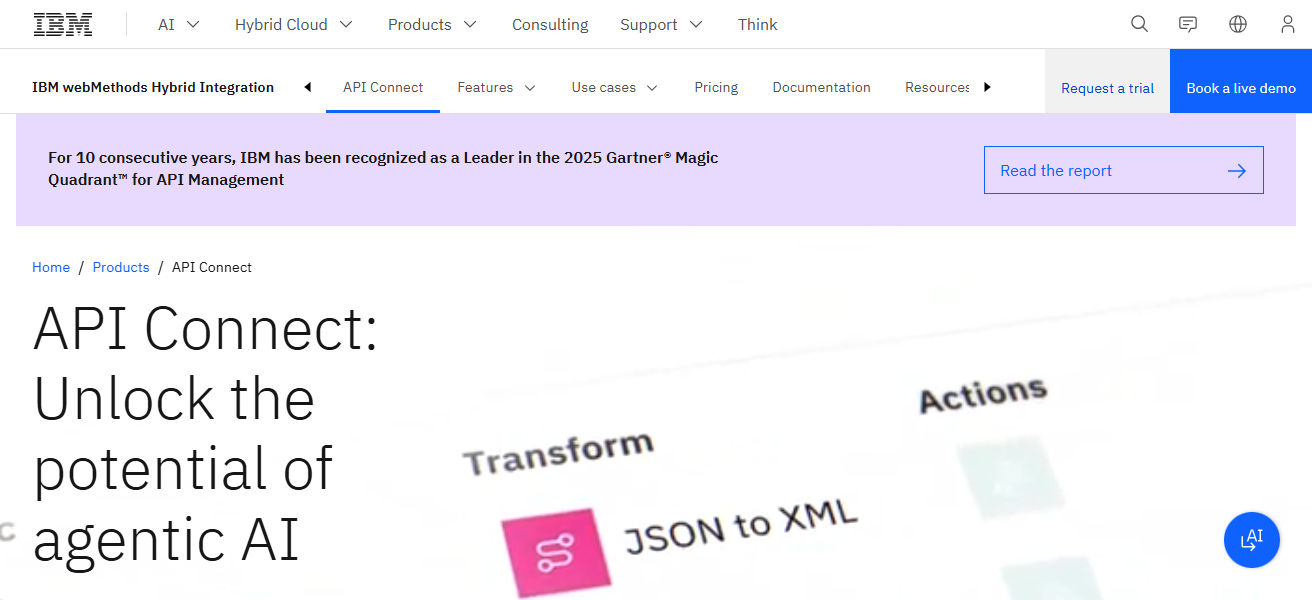
IBM API Connect’s robust governance, security, monitoring, and reporting tools ensure that customers can manage their API’s monetization and revenue-driving potential, whether customers want to externalize or internalize their APIs.
IBM API Connect
- Full Lifecycle Management: Design, deploy, secure, monitor, and retire APIs.
- Monetization Options: Subscription, usage-based, and tiered pricing.
- Security & Governance: Strong policy enforcement, authentication, and access control.
- Analytics & Insights: API performance, adoption, and revenue tracking.
| Pros | Cons |
|---|---|
| Full API lifecycle management with strong governance. | Can be costly for smaller enterprises. |
| Multiple monetization options: subscription, pay-per-use, tiered. | Deployment and configuration can be complex. |
| Integration with IBM Cloud and AI services. | Learning curve for non-IBM environments. |
| Robust security and policy enforcement. | Analytics customization can be limited. |
| Developer engagement features to boost adoption. | UI may feel dated compared to newer platforms. |
8. Postman API Platform
Postman API Platform integrates API testing, design, and management with enterprise monetization features. It enables companies to publish APIs and manage plans for subscriptions or usage, and analyze consumption.
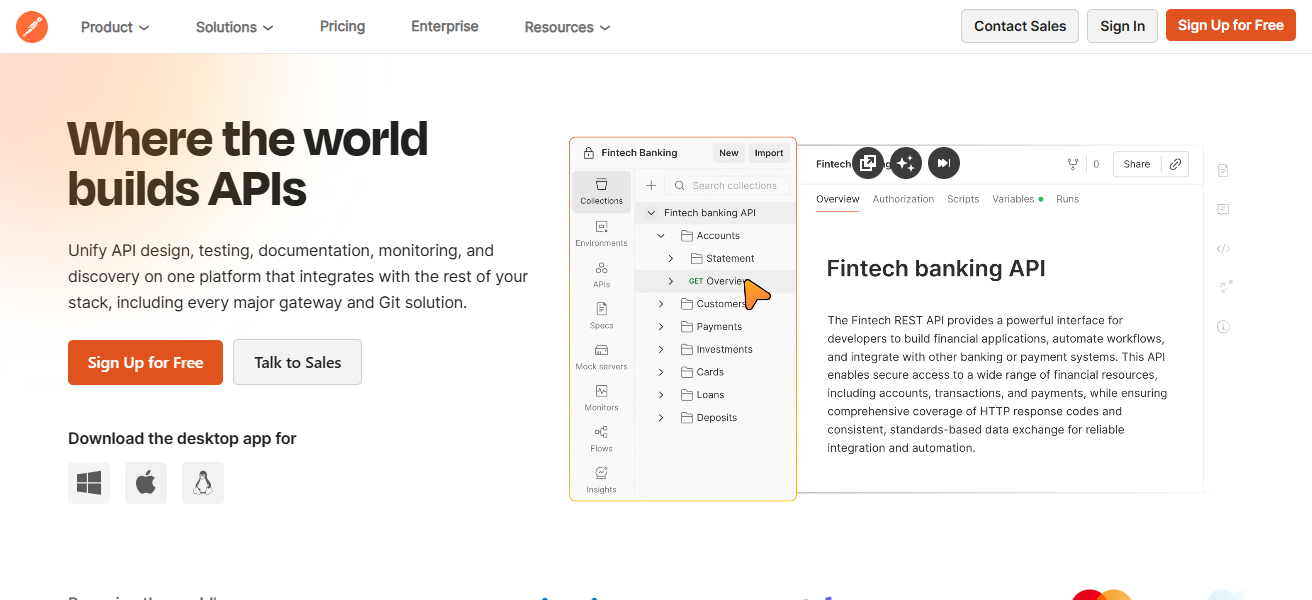
The workflows and developer portals promote engagement and adoption. To ensure safe and reliable exposure of APIs, Postman offers security and monitoring tools.
With adoption, performance, and revenue control, Postman integrates monetization, analytics, and usability, empowering enterprises to transform APIs into manageable, valuable digital assets.
Postman API Platform
- API Design & Testing: Tools for building, testing, and documenting APIs.
- Monetization Plans: Enables subscription and usage-based models for APIs.
- Developer Engagement: Collaboration, portals, and documentation for API adoption.
- Analytics & Monitoring: Tracks API performance, usage patterns, and monetization metrics.
| Pros | Cons |
|---|---|
| Excellent API testing and collaboration tools. | Monetization features are more limited compared to others. |
| Developer portals and analytics improve adoption and tracking. | Not ideal for large-scale enterprise API gateways. |
| Supports subscription and usage-based monetization. | Performance monitoring may lack depth. |
| Easy to design, document, and deploy APIs. | Advanced governance features are limited. |
| Intuitive interface for developers and teams. | Large enterprise deployments may require integration with other tools. |
9. RapidAPI Enterprise Hub
RapidAPI Enterprise Hub streamlines the management and monetization of APIs for large-scale enterprises. It provides detailed adoption and revenue analytics and supports subscription, usage, and tiered monetization models.
The Hub includes developer portals, workflow automation, and access management, helping organizations streamline API engagement and integration.
RapidAPI simplifies hybrid and multi-cloud environments. Coupled with governance and analytics, it allows enterprises to optimize operational control and performance while building scalable and profitable API ecosystems.
RapidAPI Enterprise Hub
- Centralized API Management: Single platform to manage all enterprise APIs.
- Monetization Flexibility: Subscription, pay-per-use, and tiered plans for APIs.
- Developer Portal: Engages internal and external developers for API adoption.
- Analytics & Reporting: Tracks API performance, revenue, and adoption trends.
| Pros | Cons |
|---|---|
| Centralized API management for enterprise ecosystems. | Can be expensive for smaller teams. |
| Supports subscription, usage-based, and tiered monetization models. | Integration with legacy systems may be complex. |
| Developer portal and workflow automation for engagement. | Analytics for advanced monetization may require add-ons. |
| Secure API exposure and access control. | UI can feel cluttered with many APIs. |
| Scalable across multi-cloud and hybrid environments. | Some features may require technical expertise to configure. |
10. Oracle API Platform Cloud Service
Oracle API Platform Cloud Service is an enterprise-grade API management and monetization solution that supports hybrid and cloud deployments.
It also offers subscription, usage-based, and tiered monetization strategies. Enterprises can analyze and track API adoption, performance, and revenue.
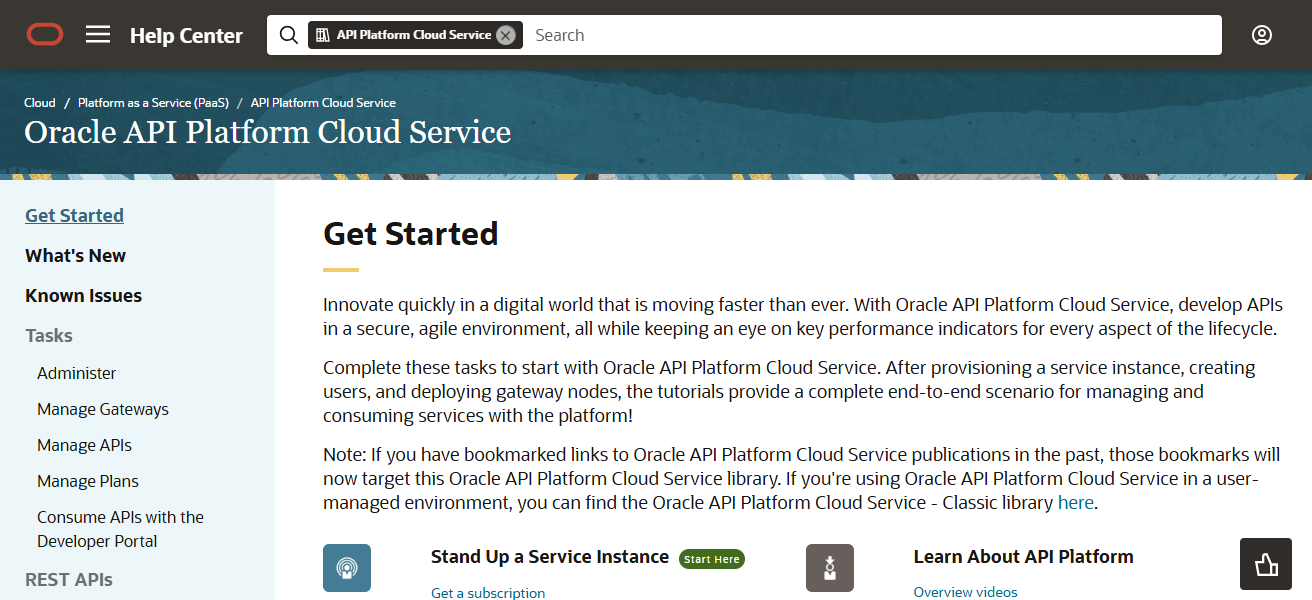
The platform includes extensive security, governance, and developer engagement tools for safe API exposure.
Oracle API Platform focuses on turning APIs into revenue-generating assets by integrating lifecycle management, analytics, and monetization, resulting in operational control, scalability, and business value.
Oracle API Platform Cloud Service
- Full Lifecycle API Management: From design and deployment to monitoring and retirement.
- Monetization Models: Subscription, pay-per-use, and tiered pricing options.
- Security & Governance: Enforces policies, authentication, and access control.
- Analytics & Insights: Tracks adoption, usage, performance, and monetization metrics.
| Pros | Cons |
|---|---|
| Enterprise-grade API lifecycle management with strong monetization options. | Licensing cost can be high. |
| Supports subscription, pay-per-use, and tiered API models. | UI can be complex for new users. |
| Hybrid and cloud deployment support for flexibility. | Advanced analytics may need additional tools. |
| Security, governance, and developer engagement features. | Customization may require technical resources. |
| Scalable solution for large enterprises with global reach. | Learning curve for organizations new to Oracle ecosystem. |
Conclusion
To summarize, API monetization solutions for enterprises, such as Apigee, MuleSoft, Kong, WSO2, Axway, Tyk, IBM, Postman, RapidAPI, and Oracle, allow businesses to capitalize on their APIs as revenue sources.
These solutions include monetization strategies such as subscriptions, usage capture and analytics, as well as protected developer portals.
Overall, these solutions create a positive API ecosystem and enhance adoption, performance, and business value for enterprises.
FAQ
Top platforms include Apigee, MuleSoft Anypoint, Kong Enterprise, WSO2 API Manager, Axway Amplify, Tyk, IBM API Connect, Postman API Platform, RapidAPI Enterprise Hub, and Oracle API Platform Cloud Service.
Yes, but some platforms like Apigee, MuleSoft, and IBM API Connect are better suited for large enterprises due to cost and complexity.
Most platforms support cloud, on-premises, and hybrid deployments to suit enterprise architectures.
Yes, all platforms provide analytics to track API adoption, usage, performance, and monetization revenue.
They offer strong security, including authentication, OAuth, API keys, traffic management, and policy enforcement.