In this article, I will detail the Best Platforms for Enterprise Consent Management, which assist businesses in the collection, management, and documentation of user consent in accordance with global data privacy regulations.
These platforms ensure that enterprises can be transparent, lower compliance risks, and provide consistent consent experiences across websites, applications, and digital channels while also enabling scalable privacy governance.
Key Poinst & Best Platforms For Enterprise Consent Management
| Platform | Key Points |
|---|---|
| Didomi | Strong customization for consent banners, supports GDPR/CCPA compliance, detailed analytics. |
| OneTrust | Comprehensive privacy suite, integrates with enterprise workflows, scalable for global compliance. |
| TrustArc | User-friendly dashboards, automated compliance reporting, strong regulatory coverage. |
| Cookiebot | Automatic cookie scanning, easy deployment, multilingual support for global sites. |
| Crownpeak | Enterprise-grade CMP, integrates with marketing stacks, strong consent tracking. |
| Usercentrics | Flexible consent layers, supports cross-device consent, strong partner ecosystem. |
| Piwik PRO | Privacy-first analytics, combines CMP with analytics, strong EU compliance. |
| Quantcast Choice | Free CMP option, widely adopted, integrates with ad tech ecosystem. |
| Osano | Quick deployment, strong monitoring of vendor compliance, transparent pricing. |
| Termly | Affordable solution for SMEs and enterprises, customizable policies, easy setup. |
10 Best Platforms For Enterprise Consent Management
1. Didomi
Didomi is designed for multinational corporations as an enterprise-grade solution that simplifies complicated workflows for managing consent across various markets and brands.
Didomi processes billions of consents month and provides compliance support with highly configurable consent logic for 25+ global privacy regulations.
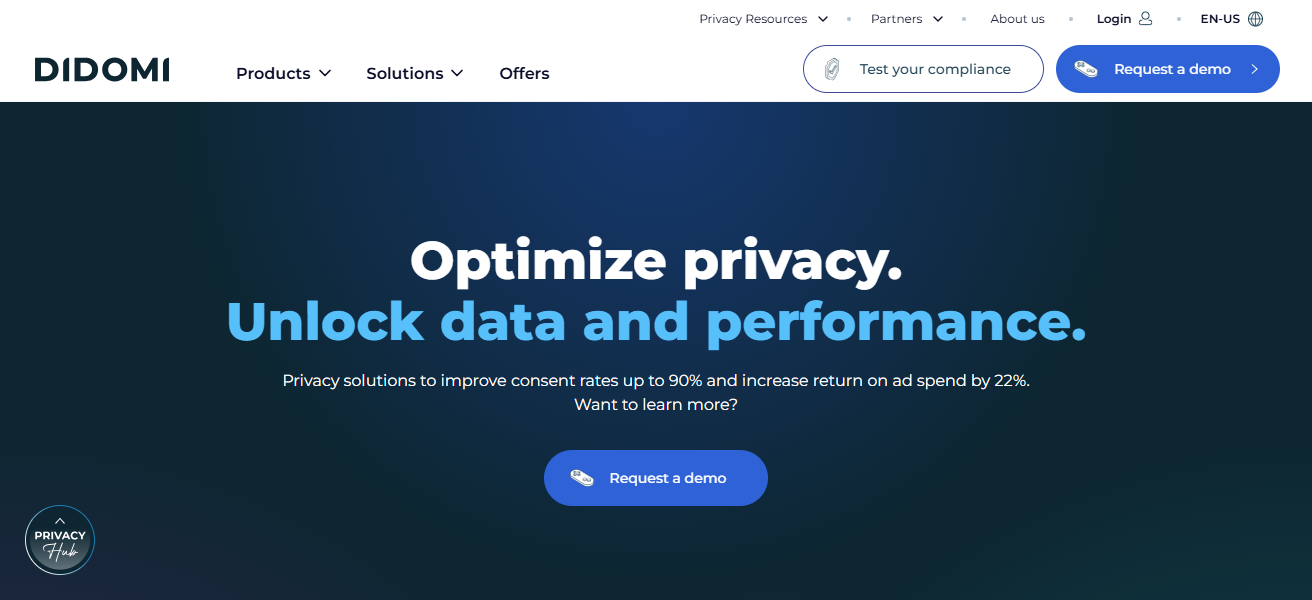
It operates best at cross-device and cross-domain consent management, API integrations, and automated privacy regulation updates for vendors, which makes it great for compliance-focused publishers, advertisers, and large enterprises.
Didomi – Features
- Global Consent Orchestration: Controls and organizes user consent across various devices and applications within a set control layer.
- Customizable Workflows: Detailed configurations for user preference, legal obligations, and consent screens.
- APIs & Integrations: Interfaces with leading CRM, analytics, and marketing tools as well as major tag managers for uninterrupted funnel data flow.
- Regulatory Coverage: Automated updates for compliance with GDPR, CCPA/CPRA, LGPD, and other international and regional regulations.
| Pros | Cons |
|---|---|
| Highly scalable for global enterprise use | Premium pricing can be expensive for smaller teams |
| Strong cross-device, cross-domain consent management | Steep learning curve for implementation |
| Excellent API and integration capabilities | Complex configuration requires technical support |
| Supports many global privacy regulations | Over-featured for simple use cases |
2. OneTrust
OneTrust provides global regulatory compliance, consent capture, preference management, and governance in a single platform. Among privacy and consent management solutions for large enterprises, it is one of the most detailed.
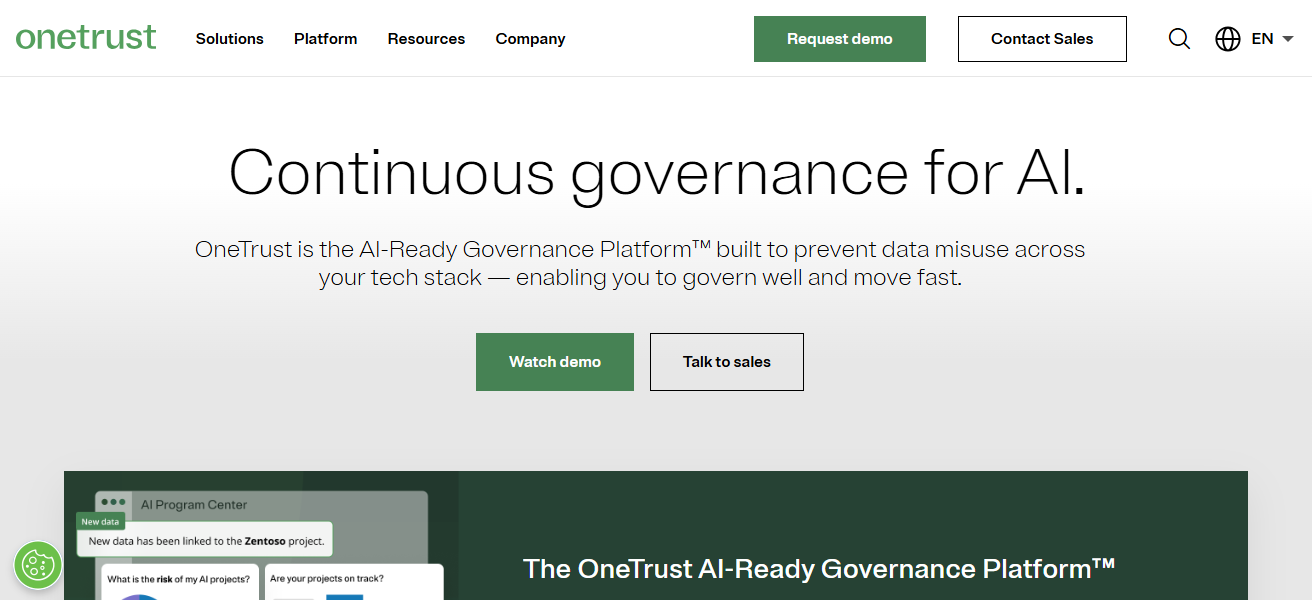
OneTrust is viable for websites, mobile apps, OTT/CTV and digital channels. They offer a strong cookie inventory, vendor management, and comprehensive reporting.
Although it is complex and on the higher end of the pricing spectrum, it is the solution of choice for organizations that need extensive compliance, risk management, and privacy-security programs.
OneTrust – Features
- Enterprise-grade Compliance Suite: Merges consent capture with analytics, governance, and risk/privacy operations.
- Multi-Channel Support: Functions across web, mobile applications, CTV/OTT, email, and other interconnected devices.
- Detailed Reporting: Automated logs and dashboards for internal audits and compliance documentation.
- Vendor & Cookie Inventory: Automatically assesses and risk scores third-party tag vendors and suppliers.
| Pros | Cons |
|---|---|
| Extremely comprehensive privacy and consent suite | Very complex to set up and configure |
| Deep compliance reporting and governance tools | High-end pricing model |
| Supports multiple global regulations | Requires dedicated privacy personnel |
| Integrates with risk and security systems | Slower deployment for basic consent needs |
3. TrustArc
TrustArc offers privacy governance automation and provides services such as compliance workflows, certification tracking, and risk documentation, alongside consent management.
TrustArc’s solution assists legal and compliance teams in policy documentation and regulatory evidence management, streamlining audit preparation.
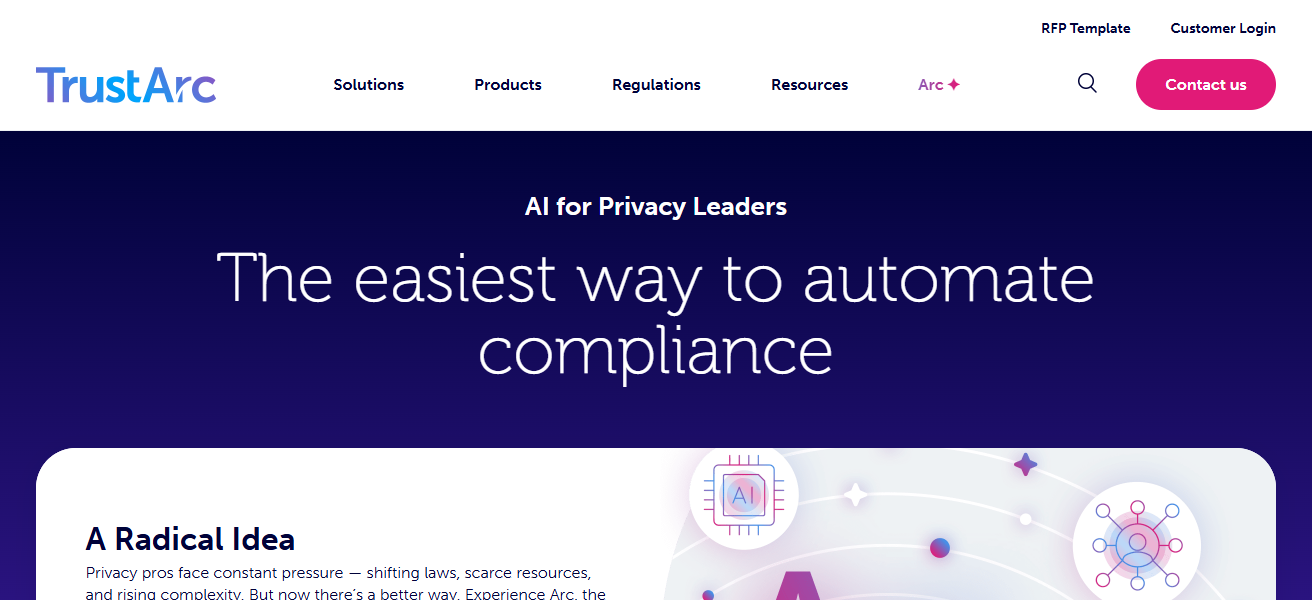
Privacy policy automation, alongside audits, is especially needed in regulated industries that require document management and evidence consolidation.
TrustArc is differentiated by competitors in providing structured governance as opposed to consent banner optimization.
Additionally, the platform offers management and reporting tools for enterprise compliance programs, as well as support for multi-jurisdictional compliance.
TrustArc – Features
- Privacy Governance Tools: Streamlined frameworks for documentation, policy crafting, and compliance/ regulatory mapping.
- Consent Capture & Records: Controls banners and audits user activity to maintain readiness for audits.
- Certification & Audit Support: Evidence of compliance certifications and review documentation are tracked and maintained.
- Risk Assessment Frameworks: Integrates organizational risk profiles with consent practices.
| Pros | Cons |
|---|---|
| Strong focus on privacy governance and documentation | Less intuitive user interface |
| Good audit evidence and certification tracking | Not as marketing-centric |
| Supports multi-jurisdiction regulatory compliance | Limited advanced consent experiences |
| Useful for legal and compliance teams | Requires complementary tools for full suite features |
4. Cookiebot
Cookiebot CMP offers automated cookie scanning, categorization, and deployment of cookie-related consent banners to assist websites in meeting the requirements of the GDPR, CCPA/CPRA, ePrivacy, LGPD, and additional privacy regulations.
It is compatible with Google Consent Mode, Tag Manager, and the leading CMS systems, supports multiple languages, and maintains audit-ready consent logs.
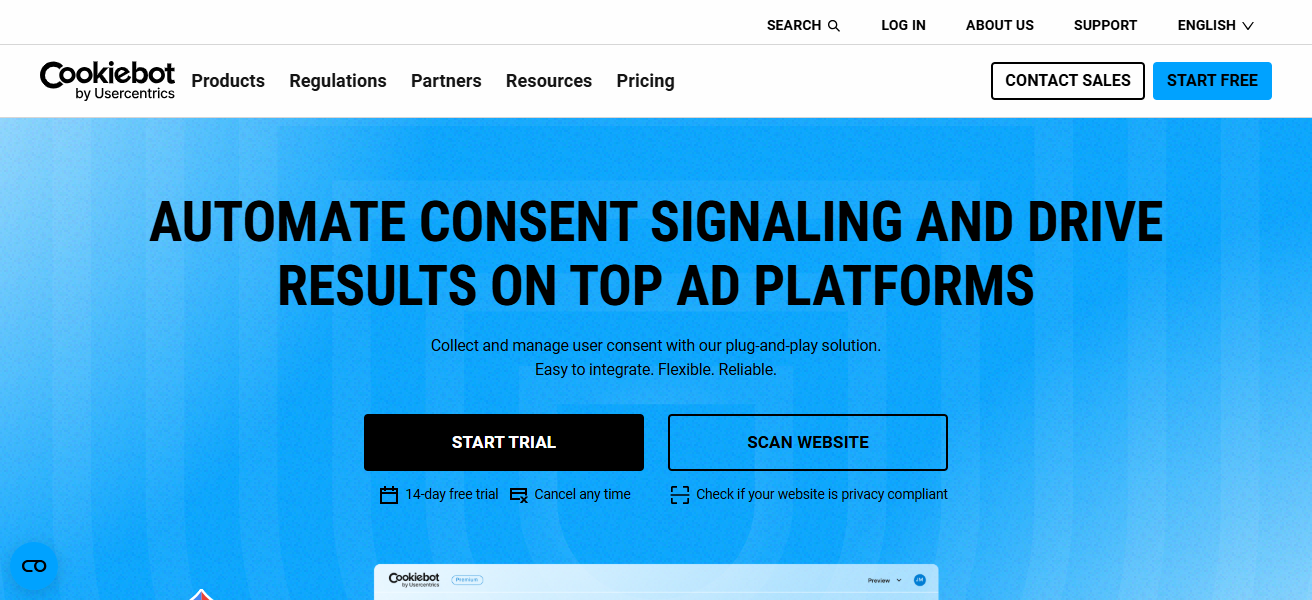
For users to provide explicit consent, Cookiebot CMP automatically blocks all cookies and gives users the ability to customize consent banners.
This CMP is ideal for mid-sized companies wanting clear and automated enforcement of cookie consent.
Cookiebot – Features
- Automated Cookie Scanning: Tracks and identifies cookies and tracking technologies on websites.
- Consent Banner Management: Users can configure banners to block cookies until consent has been given.
- Compliance Logging: Maintains records and timestamps for auditing purposes.
- CMS & Tag Integrations: CMS integrations for most web content platforms are as easy as plug-and-play.
| Pros | Cons |
|---|---|
| Automated cookie scanning and categorization | Limited advanced feature set |
| Easy integration with website platforms | Basic customization options |
| Blocks cookies until user consent | Analytics capabilities are modest |
| Simple setup for GDPR/CCPA compliance | Not ideal for omnichannel consent |
5. Crownpeak
Crownpeak’s Universal Consent Platform is designed for enterprises needing an adaptive cloud-native solution for multi-channel consent administration across websites, mobile applications, and other digital assets.
Its features include intelligent scanning, automatic updating, and connection with major content management and customer data systems.

With consistent consent experiences, policy control, and real-time updates for unpermitted trackers, Crownpeak’s platform is tailored for digital governance professionals who wish to integrate privacy within customer engagement systems.
Crownpeak – Features
- Cloud-Native CMP: Completely managed solution with automatic updates and elastic cloud resources.
- Dynamic Policy Updates: Changes to banner content are made automatically based on policy shifts.
- Multi-Property Support: Facilitates consent management across multiple brands, geographies, and digital properties.
- Governance Controls: Regulatory workflow approvals and compliance evidence management.
| Pros | Cons |
|---|---|
| Cloud-native and scalable consent platform | Pricing may be high for small to mid-sized teams |
| Strong digital governance features | Requires training and planning |
| Dynamic updates for trackers and policies | Complexity for simple use cases |
| Unified consent across web and mobile | Setup can be time-intensive |
6. Usercentrics
Usercentrics, a global company specialized in the provision of consent management solutions, is headquartered in Germany, and assists businesses with the collection, management, and legal documentation of user consent in accordance with GDPR, CCPA, LGPD, POPIA, and additional country-specific regulations.
Customizable banners, preference centers, and a range of analytics and A/B testing tools are part of the service suite.
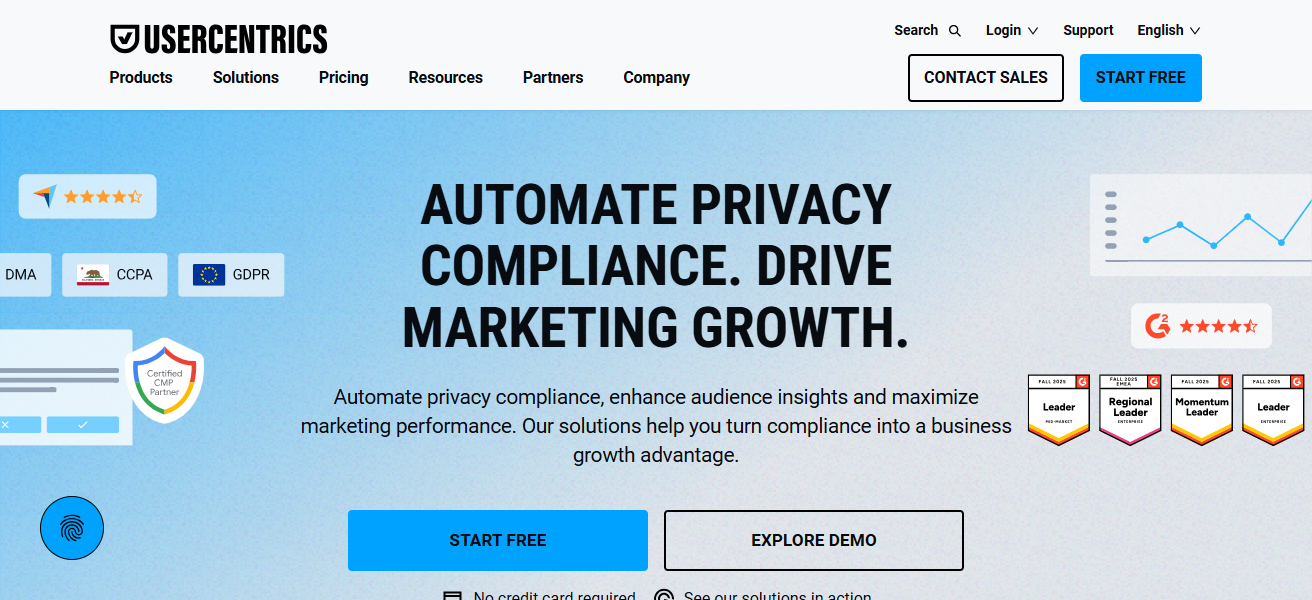
With the acquisition of Cookiebot, Usercentrics is further enhancing its competitive position by offering more feature-rich solutions and integrations.
Usercentrics is one of the best options for privacy-centric marketing and SaaS companies as its platform supports consent management across the web, mobile apps, and varying programming languages.
Usercentrics – Features
- Custom Consent Banners: Banners and preference centers with customizable UI templates and multiple branding options.
- Granular Preferences: Provides the ability for users to consent or decline by category or vendor.
- Performance Analytics: Analytics with actionable insights on opt-in rates and banner performance.
- Multi-Jurisdiction Compliance: Support for a mix of GDPR, CCPA/CPRA, LGPD, and others.
| Pros | Cons |
|---|---|
| Flexible and customizable consent banners | Premium cost for enterprise tier |
| Multi-language and omni-channel support | Moderate complexity to configure |
| Detailed analytics and A/B testing tools | Developer support often required |
| Strong compliance with global privacy laws | Planning needed for multi-brand use |
7. Piwik PRO
Piwik PRO integrates analytics and privacy management by allowing organizations to capture consent, configure tags to be blocked until an agreement is made, and respect users’ choices regarding data collection for analytics.
Its CMP capabilities include configurable consent and withdrawal management, as well as logging for compliance.
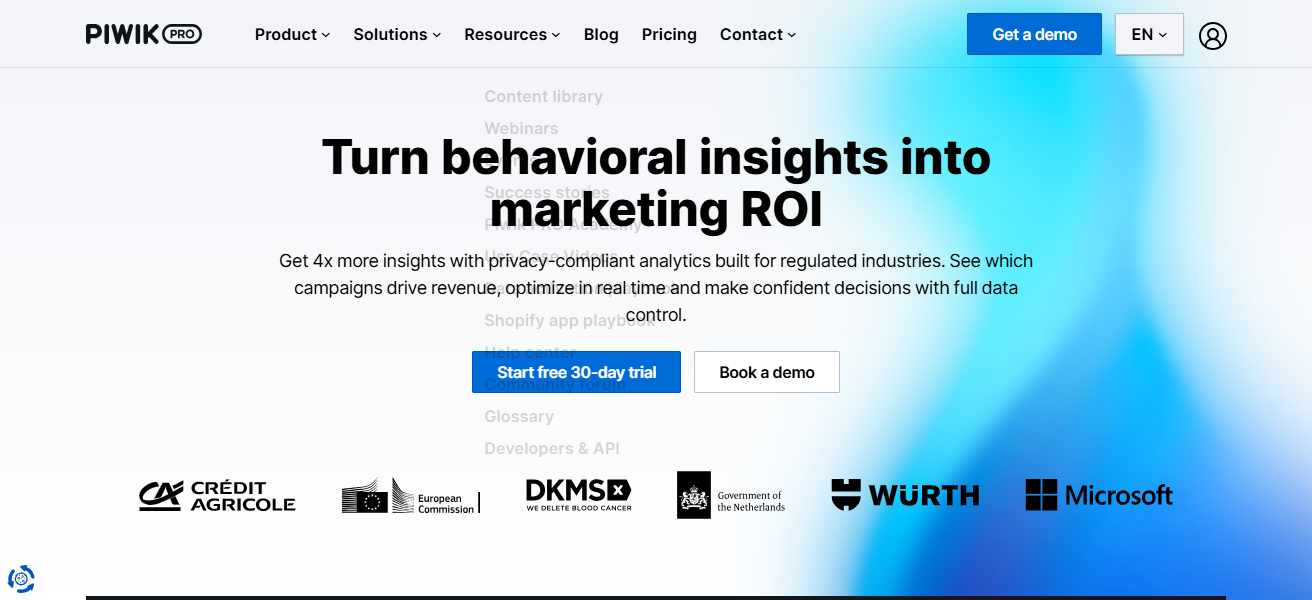
Due to Piwik PRO’s focus on data privacy and options for local data storage, organizations in highly regulated fields, such as healthcare and government, that need data residency and transparency, while still deriving value from analytics, favor Piwik PRO.
Piwik PRO – Features
- Integrated Analytics & CMP: Privacy by design analytics and options for consent blocking.
- Consent Queueing: Allows no annihilation of tags before the user provides consent.
- Customized Policy Management: Enables custom policies depending on location and types of consents.
- Data Residency Options: Stores data on-site to meet security and regulatory guidelines.
| Pros | Cons |
|---|---|
| Combines analytics with consent management | Analytics-centric focus may not suit all users |
| Blocks tags until consent is given | Fewer integrations than bigger platforms |
| Customizable for strict privacy environments | Learning curve for analytics + consent tools |
| Good choice for regulated industries | Not as marketing-oriented |
8. Quantcast Choice
Quantcast Choice is a simple CMP at no cost and is arguably the fastest and lightest tool integrating with IAB TCF for publishers and advertisers.
It manages consent for GDPR and CCPA compliant consent captures, integrates easily with ad tech, and has configurable analytics dashboards.
It has basic features when compared to more CMPs, however, the publishing and advertising site industry is attracted to it because it is cost free and TCF certified.
Quantcast Choice – Features
- Free Consent Platform: A zero-cost solution compatible with various consent frameworks.
- IAB TCF Support: Support for Transparency and Consent Framework certification.
- Lightweight Deployment: Quick loading of the banner with little effect on performance.
- Basic Reporting: Basic dashboards on the rates of consents and selections of users.
| Pros | Cons |
|---|---|
| Free consent management option | Limited enterprise-level features |
| Supports key regulations and frameworks | Basic reporting tools |
| Lightweight and fast performance | Minimal customization |
| Easy integration with ad ecosystems | Requires other tools for more governance |
9. Osano
Osano integrates privacy compliance tools and preference and consent management systems. It helps companies meet and manage compliance for global privacy laws such as GDPR, CCPA/CPRA, LGPD, and PIPEDA.
It provides integrations with tag managers and CMS, customization for banners, cookie classification powered by AI, and audit logs.
Unique to Osano is a preference hub, which tracks user consent and comes with a “No Fines, No Penalties” promise.
With its user-friendly dashboards, Osano is ideal for companies that want to manage compliance and operational complexity.
Osano – Features
- AI Cookie Classification: Applies artificial intelligence to automatically classify cookies and other trackers.
- Unified Preference Hub: Integrated location for users to control all cookie and privacy preferences.
- Audit Logging: Captures user activity and consent records for compliance tracking.
- Multi-Law Compliance: GDPR, CCPA/CPRA, LGPD, and other data protection laws compliance.
| Pros | Cons |
|---|---|
| User-friendly dashboards and setup | Mid-level feature set vs enterprise competitors |
| AI-driven cookie classification | Price increases with scale |
| Unified preference hub and audit logs | Limited advanced customizations |
| Supports major global privacy laws | Needs add-ons for deeper enterprise needs |
10. Termly
Termly is a simple and easy-to-use consent management and policy generator tool for small and growing digital businesses.
It offers a free tier and low-cost plans, making it easy for businesses to comply with GDPR, CCPA, and other privacy regulations.
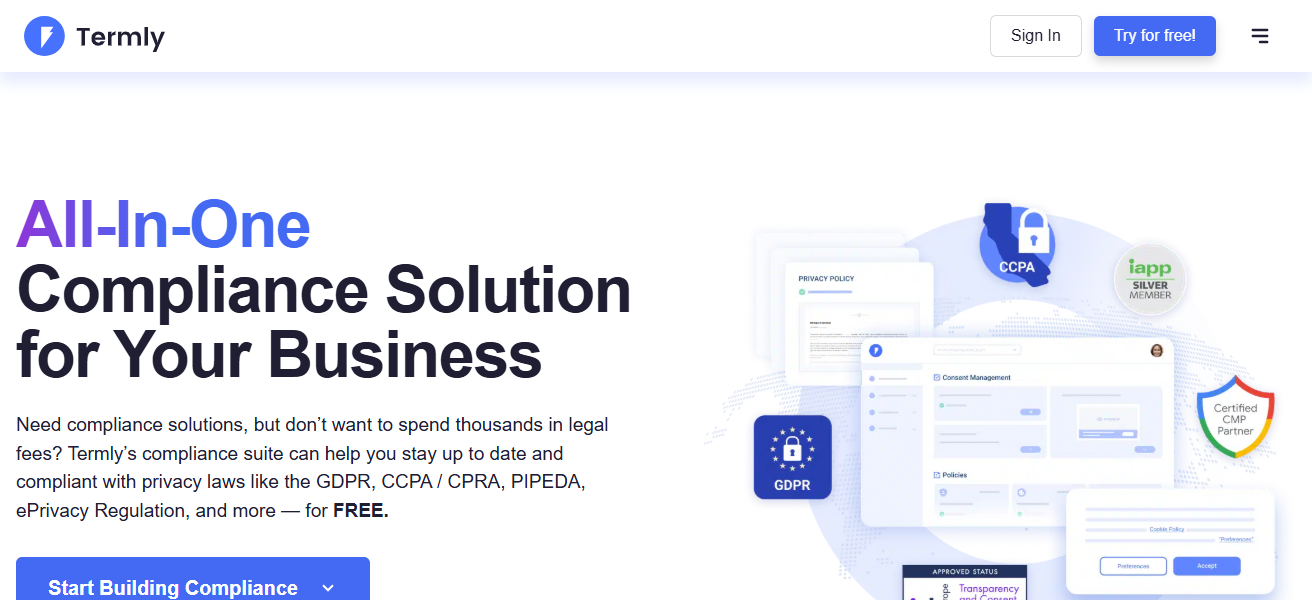
Simply website uploads offer low friction engagements. Customers cite Termly’s easy setup as a reason to recommend it over other compliance tools to their peers.
Termly – Features
- Policy Generators: Automated creation of privacy policies, cookie notices, and requests for DSAR forms.
- Simple Consent Banners: Cookie consent banners that are simple to configure including multi-language options.
- Scans Website Cookies: Detects trackers and sets up automated rules for banners.
- Affordable Plans: Tiers that are free and economical, ideal for small and emerging businesses.
| Pros | Cons |
|---|---|
| Affordable and easy to implement | Not designed for heavy enterprise complexity |
| Automatic cookie scanning | Basic consent features only |
| Multi-language banners and tools | Limited integrations |
| Includes policy and legal templates | Weaker analytics and governance |
Conclusion
To conclude, the optimal technological solutions for the detection of insider threats incorporate sophisticated analytics, user behavior tracking, and real-time notifications, enabling detection of threats before any harm is inflicted.
Utilizing artificial intelligence, machine learning, and constant surveillance, companies are able to safeguard confidential information, lower the threats of internal security, and keep their workplace compliant and safe while also encouraging a trustful environment.
FAQ
It is software that helps large organizations collect, manage, and store user consent for data privacy compliance.
They ensure compliance with global data protection laws and reduce legal and regulatory risks.
Most platforms support GDPR, CCPA/CPRA, LGPD, and other regional privacy laws.
Yes, enterprise solutions can manage consent across multiple domains, brands, and regions.