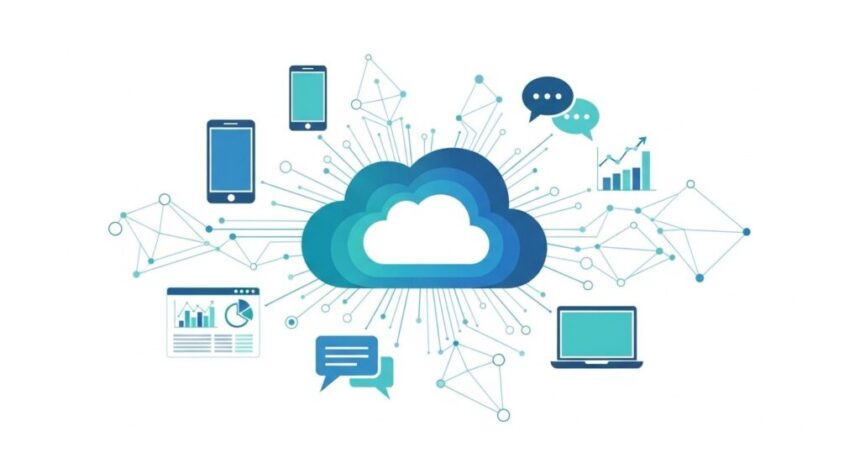
This article will look at the Best Platforms for Managing Subscription Revenue at Scale. With the rise in popularity of recurring revenue models within the business world, selecting an appropriate subscription management platform becomes essential.
- Key Poinst & Best Platforms For Managing Subscription Revenue at Scale
- 10 Best Platforms For Managing Subscription Revenue at Scale
- 1. Stripe Billing
- 2. Chargebee
- 3. Zuora
- 4. Recurly
- 5. Paddle
- 6. Maxio (formerly SaaSOptics)
- 7. Zoho Subscriptions
- 8. Stax Bill
- 9. DealHub.io
- 10. Zenskar
- How We Choose Best Platforms For Managing Subscription Revenue At Scale
- Cocnlsuion
- FAQ
These systems simplify billing, automatically generate invoices, manage tax issues, and offer analytical insights to support business growth.
Whether in SaaS or e-commerce, the right tool will help businesses track revenue precisely and scale operations effectively.
Key Poinst & Best Platforms For Managing Subscription Revenue at Scale
Stripe Billing Automates recurring billing, invoicing, global payments, and analytics with flexible models and developer-friendly API integration.
Chargebee Handles subscriptions, billing, taxes, compliance, revenue recognition, and analytics for scalable SaaS and e-commerce businesses.
Zuora Enterprise subscription management platform supporting complex billing, revenue recognition, analytics, and CRM/ERP integrations for scalability.
Recurly Manages recurring billing, churn reduction, multi-currency payments, revenue analytics, and operational efficiency for growing businesses.
Paddle All-in-one SaaS platform handling global payments, subscription billing, compliance, taxes, and revenue analytics for software companies.
Maxio (formerly SaaSOptics) Automates subscription billing, revenue recognition, analytics, and multi-currency management for B2B SaaS scaling operations.
Zoho Subscriptions Supports recurring billing, taxes, dunning, analytics, and CRM integration for automated subscription management and scalability.
Stax Bill Flexible billing, invoicing, revenue recognition, analytics, and customer self-service for mid-market and enterprise subscription businesses.
DealHub.io Combines CPQ, subscription billing, renewals, analytics, and CRM integration for complex subscription lifecycle management.
Zenskar Automates subscription billing, collections, revenue recognition, analytics, and multi-currency support for growing recurring revenue businesses.
10 Best Platforms For Managing Subscription Revenue at Scale
1. Stripe Billing
Stripe Billing is one of the most used platforms for automating subscription revenue management at scale. It provides various options for automating recurring billing, such as tiered, usage, and flat-rate billing.
It also provides a global payment solution with automated invoicing, proration, and smarts dunning to help increase revenue.
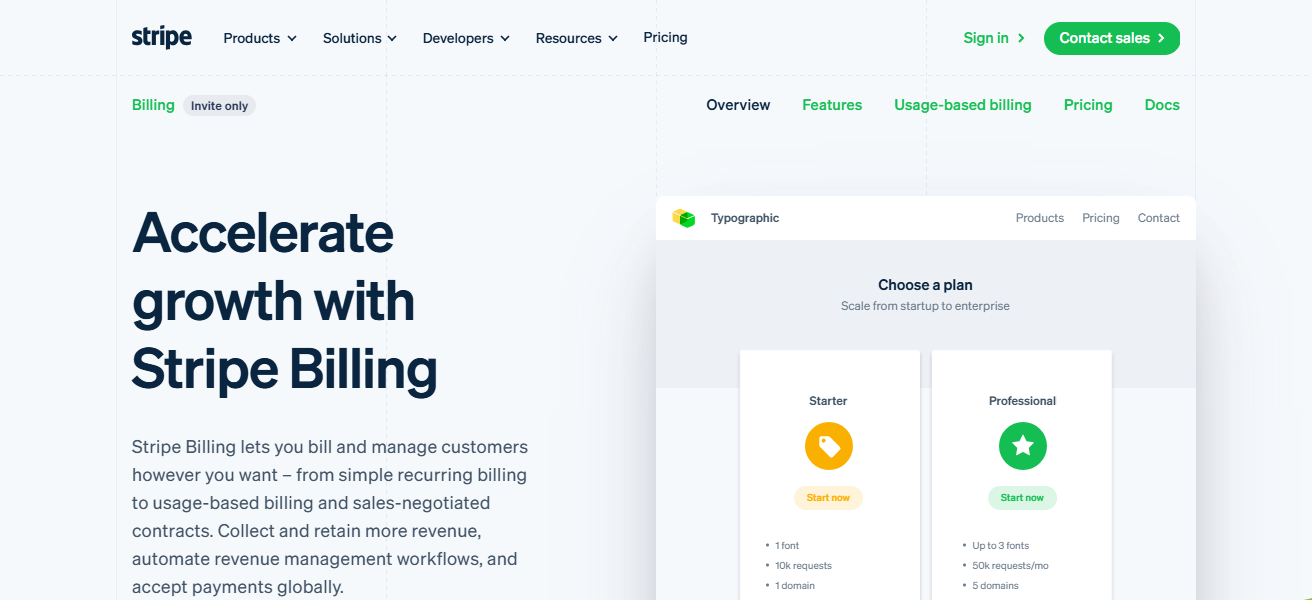
Other advantages include integrated tax assessments with Stripe Tax, as well as various MRR and revenue trend analyzers.
Stripe Billing is top that that meets the needs of SaaS, E-Commerce, and platform-based businesses globally.
| Pros | Cons |
|---|---|
| Flexible billing models: tiered, usage-based, flat-rate | Advanced features require developer knowledge |
| Supports 135+ currencies and global payments | Can be expensive for high-volume businesses |
| Automated invoicing, proration, and smart dunning | Limited native revenue recognition features |
| Integrated tax calculation via Stripe Tax | Customer support can be slower for complex issues |
| Developer-friendly API allows custom workflows | Some advanced reporting requires integration with BI tools |
2. Chargebee
Chargebee is a subscription management and billing platform used by SaaS, E-Commerce, and subscription-first businesses.
It automates recurring billing, proration, trials, ups and downs, and invoicing. It also automates tax compliance, and billing in various currencies.
Chargebee also facilitates revenue recognition in compliance with ASC 606 and IFRS 15, and provides analytics in real time.
Chargebee integrates with accounting, CRM, and payment systems. Chargebee helps self-service and workflow automation to minimize manual operational increases in subscription-based businesses, and helps businesses scale.
| Pros | Cons |
|---|---|
| Handles complex billing, upgrades, trials, proration | Slightly steep learning curve for beginners |
| Compliant with ASC 606 & IFRS 15 for revenue recognition | Pricing can increase with advanced features |
| Multi-currency, multi-gateway support | Custom reporting requires technical setup |
| Real-time analytics for MRR, churn, LTV | Interface may feel overwhelming for small teams |
| Workflow automation and self-service portals | Limited offline payment support |
3. Zuora
Zuora is a subscription management platform designed for B2B enterprises. It allows businesses to automate and manage repeatable revenue and billing activities while allowing businesses to retain and manage complex billing structures.
This includes milestone, consumption, and usage-based billing. Additionally, Zuora’s platform can automate revenue recognition, invoicing, payment collection, and compliance with IFRS 15 & ASC 606.

With advanced analytics, Zuora can drive loyalty and retention while managing grow of Monthly Recurring Revenue (MRR) & Annual Recurring Revenue (ARR). With robust integrations with CRMs, ERPs, and payment processors, businesses can drive operational ease.
With advanced customization, large enterprises managing complex subscription structures globally can control finances, have robust forecasting, and intricate subscription structures.
| Pros | Cons |
|---|---|
| Supports complex and enterprise-level billing models | Expensive for SMBs |
| Automates revenue recognition (ASC 606, IFRS 15) | Implementation can be time-consuming |
| Deep analytics for churn, MRR, ARR | Requires technical expertise for custom workflows |
| Integrates with CRMs, ERPs, payment processors | Overkill for simple subscription businesses |
| Highly customizable for enterprise needs | Advanced features add to operational complexity |
4. Recurly
Designed for B2B SaaS and e-commerce businesses, Recurly targets revenue optimization for subscriptions.
Recurly allows businesses to use flexible billing options for recurring, tiered, and usage-based billing. Additionally, smart dunning, and invoicing automation coupled with payment retro logic can reduce churn of subs and failed payments.
Recurly also can automate revenue recognition with ASC 606 compliance, and provide robust analytics and reporting for MRR, customer segmentation, churn, and provide insight on analytics.
For rapidly growing subscription-based businesses, Recurly’s developer friendly API, operationally efficient design, and configurable service portals support design automation and workflow simplicity.
| Pros | Cons |
|---|---|
| Flexible billing: recurring, tiered, usage-based | Some advanced features require premium plan |
| Automated dunning reduces churn | Reporting interface is less intuitive |
| Multi-currency and global payment support | Limited native accounting integration |
| Revenue recognition ASC 606 compliant | API can be complex for non-developers |
| Self-service portals and workflow automation | Some advanced analytics require add-ons |
5. Paddle
Paddle is a subscription billing and revenue management platform. software companies easily manage VAT and GST. Paddle allows for trial, subscription, and flexible pricing and recurrences.
There are custom checkout, invoicing, and analytics tools. These analytics tools allow tracking of subscription revenue, churn, and customer behavior.

Paddle is an all-in-one software that enables companies to shift focus away from compliance administration, payment processing, and revenue recognition. Paddle is a solid choice for SaaS companies looking to scale globally.
| Pros | Cons |
|---|---|
| All-in-one platform: billing, payments, taxes | Less flexible for very complex B2B pricing models |
| Automates VAT, GST, and international compliance | Fewer native integrations than competitors |
| Customizable checkout and invoicing | Limited advanced revenue recognition features |
| Analytics dashboards track MRR, churn, revenue | Not ideal for large enterprise-scale SaaS |
| Reduces administrative overhead for global expansion | Pricing may scale quickly with growth |
6. Maxio (formerly SaaSOptics)
Maxio (formerly SaaSOptics) is a financial operations and subscription management platform for B2B SaaS companies. This platform automates invoicing, billing, revenue recognition, and finacial reports that are SEC compliant.
Maxio tracks ARR, MRR, churn, and customer lifetime value, among other subscription KPI’s, to provide actionable insights.
There are a number of seamless integrations with other CRMs, ERPs, and payment processors. This allows for ease of collaboration between the sales and finance teams.
It also allows for complex pricing, usage-based billing, and multi-currency billing. Maxio improves accuracy, support scaling, and also improves CFOs capabilities of subscription revenue growth.
| Pros | Cons |
|---|---|
| Automates billing, revenue recognition, financial reporting | Can be costly for small startups |
| Supports ASC 606, IFRS 15 compliance | User interface is less intuitive than competitors |
| Tracks ARR, MRR, churn, LTV | Integrations setup can be complex |
| Supports complex pricing models and multi-currency | Requires finance team familiarity for maximum value |
| Integrates with CRMs, ERPs, and payment gateways | Implementation time is longer for large organizations |
7. Zoho Subscriptions
Specially designed for small and medium-sized enterprises, Zoho Subscriptions is a cloud-based subscription management system.
It adeptly manages automated invoicing, recurring billing, proration, multiple pricing structures, tax management, and dunning.
For comprehensive management of subscription operations, the system provides seamless integration with Zoho CRM, accounting apps, and key payment processors.
Analytics dashboards provide valuable insights about customer activity, monthly recurring revenue (MRR), and customer churn.
Also, customer self-service portals are available to manage subscriptions and payments. For automated management of subscription revenue, Zoho Subscriptions is scalable, inexpensive, and easy to use.
| Pros | Cons |
|---|---|
| Affordable and scalable for SMBs | Limited advanced enterprise-level features |
| Handles billing, taxes, proration, and dunning | Analytics less advanced than competitors |
| Integrates with Zoho CRM and accounting software | Less customization for complex workflows |
| Self-service customer portal | Fewer integrations outside Zoho ecosystem |
| Easy-to-use interface | Limited global payment features compared to Stripe or Paddle |
8. Stax Bill
Stax Bill is a billing and revenue automation platform specializing in subscription services for mid-market and enterprise companies.
It offers invoicing, payment collection, usage-based and recurring subscription billing, and revenue recognition, as well as automated billing and flexible subscriptions.
Relieves clients of management burdens by integrating with CRM, ERP, and payment systems to facilitate the automation of revenue recognition.
Simplicity in managing intricate subscription structures is enhanced to ensure compliance and financial precision, with a focus on MRR and customer churn/retention revenue trends.
| Pros | Cons |
|---|---|
| Supports flexible, usage-based, and recurring billing | Less known, smaller community support |
| Automated invoicing, payments, revenue recognition | Fewer integrations than enterprise competitors |
| CRM, ERP integration for streamlined workflows | User interface can be less intuitive |
| Analytics for MRR, churn, retention | May not suit very small businesses |
| Customer self-service portals | Implementation may need technical support |
9. DealHub.io
DealHub.io merges CPQ (configure-price-quote) with subscription billing and revenue management.
It automates quote generation, contract management, subscription renewals, and billing based on customer usage.
It integrates with major CRMs, ERP systems, and payment gateways for seamless sales-to-finance departmental workflow.
DealHub.io supports analytics for tracking the performance of deals, subscription growth, churn, revenue, and related trends.
With guided selling and digital contract management, errors are reduced, and sales cycles are expedited.
Optimized for subscription lifecycle management, it’s the go-to for operational efficiency for complex enterprise-level subscription products.
| Pros | Cons |
|---|---|
| Combines CPQ, subscription billing, contract automation | Higher learning curve due to multiple functionalities |
| Automates renewals, usage-based billing | Pricing can be high for small teams |
| Integrates with CRMs, ERP, and payment systems | Reporting requires customization |
| Analytics on deal performance, churn, revenue | Focused more on B2B enterprise sales than SMBs |
| Guided selling reduces errors and accelerates sales | Less suitable for simple subscription models |
10. Zenskar
Zenskar is a subscription revenue automation platform. It handles billing, invoicing, collections, and revenue recognition.
Zenskar is equipped with the support of flexible subscription models, usage-based pricing, and multi-currency options.
Zenskar’s automation, operational efficiency, and compliance management, alongside managing compliance and scaling with the growth of the business, Zenskar reduces operational complexity while increasing accuracy.
Zenskar is perfect for subscription management and financial oversight for SaaS and subscription-based companies.
| Pros | Cons |
|---|---|
| Automates billing, collections, revenue recognition | Smaller platform, fewer integrations than top competitors |
| Supports flexible models and usage-based pricing | May lack enterprise-level reporting complexity |
| Multi-currency transactions supported | Learning curve for finance teams |
| Analytics dashboards track MRR, churn, revenue | Fewer resources for onboarding compared to Stripe or Zuora |
| Reduces operational complexity and scales with growth | Limited brand awareness in global market |
How We Choose Best Platforms For Managing Subscription Revenue At Scale
Business Size & Scale – Alignment of platform features with your business size (SMB, mid-market, enterprise).
Billing Flexibility – Support for recurring, tiered, usage, and hybrid pricing.
Global Payments & Tax Compliance – Support for multi currencies, VAT and GST, and automated tax calculations.
Revenue Recognition & Accounting – Compliance with ASC 606 and IFRS 15, and connectivity with ERP/accounting solutions.
Automation & Self-Service – Invoicing, dunning, and subscription management are automated, plus customer self-service portals.
Analytics & Reporting – MRR, ARR, churn, LTV and revenue forecasting dashboards are available in real time.
Integration Ecosystem – Compatible with various CRMs, ERPs, payment processors, and others.
Ease of Use & Support – Simple design, guidance with onboarding, and quick support.
Cost & ROI – Value of features against pricing; ability to scale without incurring excessive costs.
Cocnlsuion
In cocnlusion Selecting the best platform for managing subscription revenue at scale is important for business advancement.
Solutions such as Stripe, Chargebee, and Zuora simplify billing, automate invoicing, help with compliance and offer useful analytics.
By choosing a specific solution for a business’s size, complexity of pricing, and integration requirements, a business can improve recurring revenue, lower churn, and scale effectively.
FAQ
Zoho Subscriptions and Chargebee are affordable and easy to implement for SMBs.
Zuora, Maxio, and Stripe Billing handle complex, high-volume subscription models.
Yes, most support multi-currency payments and tax compliance like VAT/GST.
Yes, platforms like Stripe, Recurly, and Maxio support usage-based and tiered pricing.