In this article, I will cover the most effective POS systems to improve the efficiency of your business, employee performance, customer satisfaction, and inventory control.
- Key Points & Best POS Systems for Retail Chains
- 10 Best POS Systems For Retail Chains
- 1. iBOS
- 2. Manhattan Active® POS
- 3. Lightspeed Retail
- 4. Square POS
- 5. Shopify POS
- 6. Clover POS
- 7. Toast POS
- 8. Revel Systems
- 9. Vend by Lightspeed
- 10. Oracle Retail Xstore
- How We Choose Best POS Systems For Retail Chains
- Cocnlsuion
- FAQ
I will provide information on what differenti the different software, their most important characteristics, and what makes these systems most useful for retail chains.
Choosing the appropriate software is important for businesses which operate in various locations.
It affects the sales tracking, reporting, and omnichannel integration. I will analyze the best systems for retail chains.
Key Points & Best POS Systems for Retail Chains
| POS System | Key Point |
|---|---|
| iBOS | automation-driven retail workflows that reduce manual tasks and boost efficiency |
| Manhattan Active® POS | AI-powered personalization with curated lookbooks and appointment management |
| Lightspeed Retail | advanced inventory management tailored for multi-location retail |
| Square POS | seamless omnichannel integration across online and offline sales |
| Shopify POS | native e-commerce connectivity for unified retail and online operations |
| Clover POS | customizable hardware options for diverse retail environments |
| Toast POS | restaurant-retail hybrid support ideal for chains with food services |
| Revel Systems | enterprise-grade analytics with deep reporting for large chains |
| Vend by Lightspeed | cloud-based scalability enabling rapid expansion across multiple stores |
| Oracle Retail Xstore | global enterprise compliance with robust international retail support |
10 Best POS Systems For Retail Chains
1. iBOS
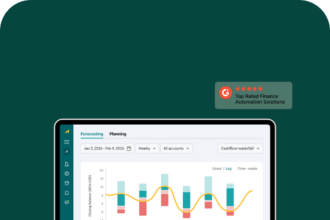
iBOS is a tiered modern retail POS system designed for multi-location chains and growing retail brands. It features real-time inventory management for all stores. This is essential for retail chains with several outlets.
iBOS features a CRM and loyalty management, barcode printing and scanning, and reporting on sales aided by AI tools for decision-making.
It is possible to integrate the system with e-commerce for unified in-store and online operations in omnichannel sales.
iBOS also offers excellent customer service, including staff training and support, to facilitate efficient adoption and scaling.
Features iBOS POS
Multi-Location Inventory Management – Track stock in real-time at every location while having the ability to manually override stock levels and control transfers to prevent stock stagnation and overflow.
Customer CRM & Loyalty Tools – Create and retain new customers thanks to the built in ability to capture customer information and launch reward programs.
Omni-Channel Support – Integrate sales and inventory control to improve oversight and management.
AI Driven Analytics – Automated reporting and analysis create an entirely new way for retailers to monitor business and identify the areas that need operational focus.
| Pros | Cons |
|---|---|
| Powerful multi‑location inventory management for retail chains. | Can be more expensive than basic POS options. |
| Strong CRM & loyalty tools to increase repeat business. | May require training for advanced features. |
| Omnichannel support with e‑commerce integration. | Less widely known than mainstream POS brands. |
| AI‑driven sales insights and reporting. | Smaller third‑party ecosystem compared to big providers. |
| Centralized dashboard for sales, stock, and customer data. | Implementation time longer for complex setups. |
2. Manhattan Active® POS
Among its competitors, Manhattan Active® POS is best suited for treating their customers as enterprise-level clientele for their omnichannel retail operations.
Manhattan Active® POS merges data sets on customers, inventory, orders, and customer engagement to provide store employees tools designed to increase sales and customer retention.
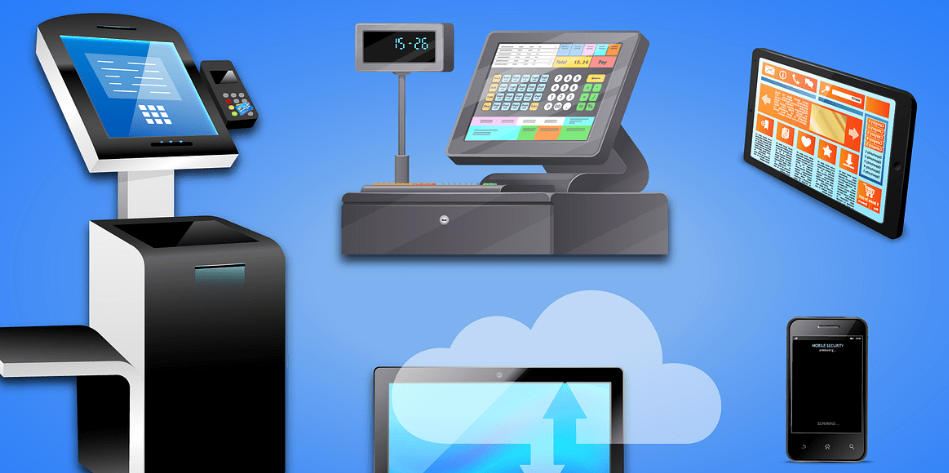
The system’s mobile, tablet, and desk POS flexibility adapt to any store’s needs. Employees can even take customer orders on mobile tablets and fulfill them from any inventory location using a different sales channel.
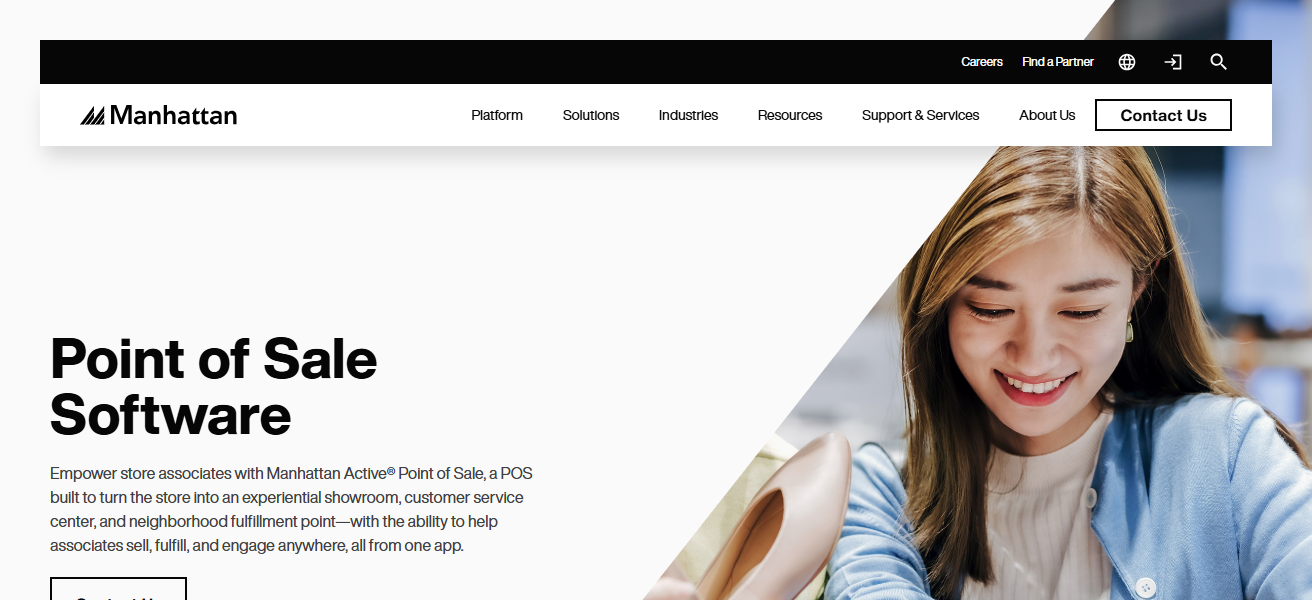
The company’s cloud architecture has many advantages such as frequent updates, a reliably consistent system, and the ability to work during outages. Because of these reasons, Manhattan Active® POS is a best fit enterprise solution to large retailers.
Features Manhattan Active® POS
Cloud-Native Architecture – Guarantees uptime and reliability no matter what, and the benefits of virtual maintenance for the system.
Endless Aisle Selling – Employees are able to complete customer orders from any store or warehouse, and are able to view and fulfill the entire inventory.
Unified Commerce – No matter what channel is used to communicate with the customer, your inventory, and order data, the customer experience will be the same across the board.
Flexible Device Support – The same system can be used on POS terminals, mobile devices, and tablets, which enhances efficiency across the entire store.
| Pros | Cons |
|---|---|
| Designed for enterprise‑grade omnichannel retail operations. | Higher cost, aimed at larger retailers. |
| Enables “endless aisle” selling and true real‑time inventory. | Implementation and onboarding can be complex. |
| Cloud‑native with reliable uptime and updates. | Smaller businesses may not need full features. |
| Helps unify customer, order, and stock data. | Requires dedicated IT support for customization. |
| Flexible on multiple devices (mobile, tablet, terminal). | Less intuitive for beginners vs simpler POS. |
3. Lightspeed Retail
Lightspeed Retail is a popular POS Solution among mid-sized to larger retail chains especially those that require strong inventory and customer management because it is cloud-based.
It tracks centralized inventory, possesses advanced reporting, and has supplier management which assists retailers in keeping stock synchronized across multiple stores and channels.
The system is omnichannel as it integrates with e-commerce and allows retailers to manage sales and orders using unified data.
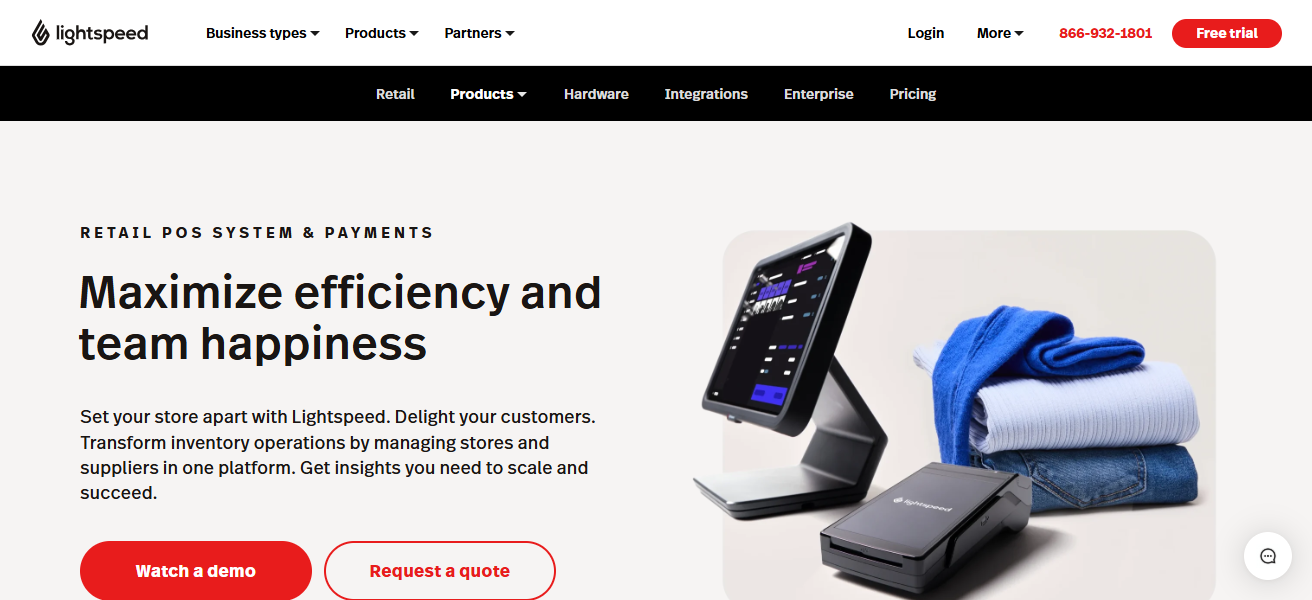
Retaining customers is vital and so to help businesses with this, the system comes with analytics that motivate customers to return and loyalty programs.
The reporting dashboards equip managers with insights on their sales trends and employee effectiveness. The software is ideal for boutique chains, specialty stores, and expanding retailers.
Features Lightspeed Retail
Advanced Inventory Management – Set up automatic orders with stock suppliers, and keep tabs on inventory levels at different locations with low stock alerts.
Enhanced Reporting – In depth sales, employee, and product reports are invaluable for giving insight into data backed decision making.
E Commerce Integration – Syncs inventory and sales with virtual storefronts.
Customer Loyalty & CRM – Ability to divide consumers, control loyalty program initiatives and customize campaigns.
| Pros | Cons |
|---|---|
| Excellent centralized inventory and reporting tools. | Add‑ons and advanced modules can raise costs. |
| Works well for multi‑store retail environments. | Learning curve for advanced analytics. |
| Integrates with e‑commerce and apps. | Some users find interface busy with many features. |
| Strong loyalty and customer management. | Support quality varies by region. |
| Scalable from mid‑sized to larger retailers. | Offline mode limited vs some competitors. |
4. Square POS
Square POS is among the most cost-effective and user-friendly with no monthly software subscription. It also works on tablets and phones.
Square POS offers the bare essentials that every retail business would need like inventory management, tracking sales, employee access permissions, and sales data across multiple locations in real time.

Square is very fast and simple and offers multiple options for affordable hardware and is a good choice for retail chains just starting out, or with light to moderate volume of sales.
Built in payment processing streamlines the transaction, adding optional features like loyalty programs or gift cards.
While simpler than truly enterprise systems, Square is very scalable for small and mid-size retail businesses.
Features Square POS
User Friendly Interface – Design work and operate simply to suit multi palace chains with varying technician expertise.
Integrated Payments – Payment processing is embedded to ease checkout and remove demand for external payment gateways.
Flexible Hardware Compatibility – Can be used across smartphones, tablets and specialized terminals for multiple setups.
Basic Inventory & Sales Tracking – Limited stock and sales insight, reasonable for smaller and average sized chains.
| Pros | Cons |
|---|---|
| Very easy to set up and use. | Not as feature‑rich for large enterprise chains. |
| Affordable (no subscription option). | Limited built‑in advanced inventory features. |
| Integrated payment processing. | Fees can add up with high volume. |
| Works on phones/tablets with flexible hardware. | Add‑ons required for deeper loyalty/CRM. |
| Good for small‑to‑mid retail locations. | Not ideal for complex omnichannel needs. |
5. Shopify POS
Shopify POS works best for retail businesses who have an online shop and a physical store because it automatically updates your inventory and orders from each selling channel.
It even updates your customer information. It solves the problem of overselling because the system keeps track of sales and inventory in unison.
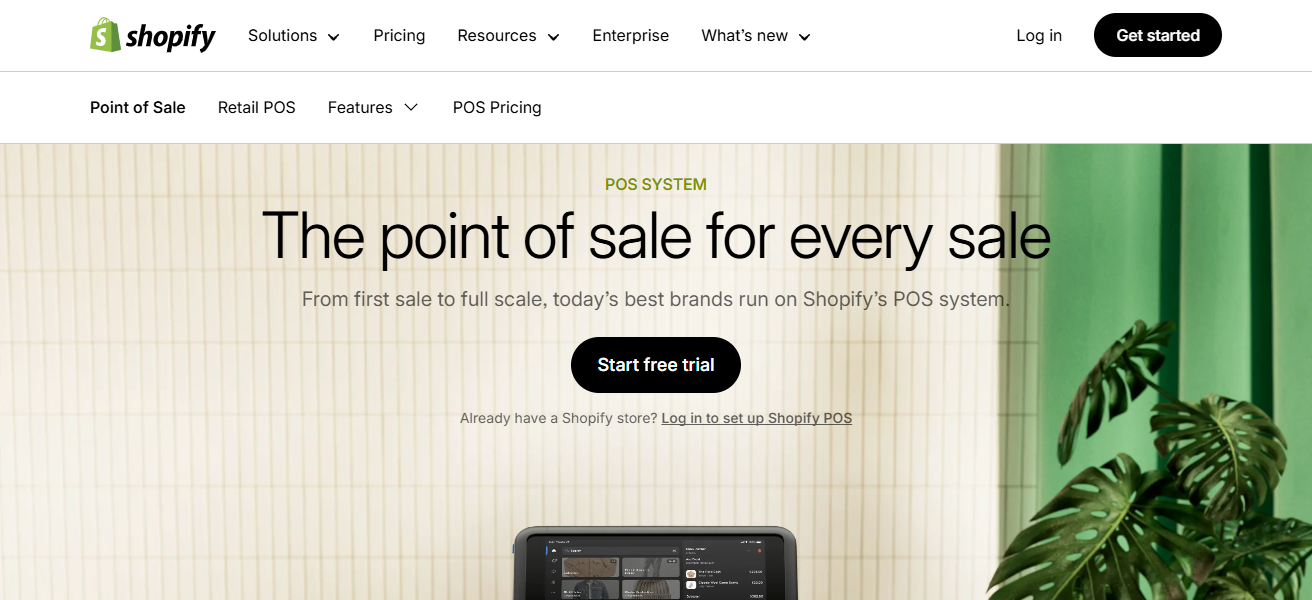
Having Shopify POS is a great advantage for websites with an e-commerce store and omnichannel brands. You can easily track sales and activity with customer profiles.
You can even set staff permissions for the checkout counter. You can use the entire Shopify POS system from one dashboard. It is a valuable tool for retail businesses who have just launched a physical store after selling online.
Features Shopify POS
Seamless Online Offline Sync – Orders and inventory synchronized in real time across multiple physical sites and a central Shopify online store.
The Unified Customer Profile – Purchases and preferences are tracked for each customer.
Flexible Checkout Options – Payment options designed for in store, mobile, and touchless.
Integrated Marketing Tools – Shopify offers loyalty, promotional, and customer engagement integrated tools for marketing.
| Pros | Cons |
|---|---|
| Excellent synchronization with online stores. | Monthly cost increases with advanced plans. |
| Unified inventory across online + offline. | Hardware extras add expense. |
| Strong customer profiles & loyalty tools. | Not as robust standalone retail features vs specialty POS. |
| Easy to use with modern interface. | Reporting limited unless on higher plan. |
| Great choice for omni sellers & brands. | Offline mode weaker than some competitors. |
6. Clover POS
Clover POS seamlessly integrates dependable hardware and adaptable POS software tailored for your multi-lane retail need.
The POS system also provides solid inventory management, employee supervision and real-time reporting, and is engaging for customers, which is perfect for small and medium-sized retail chain.
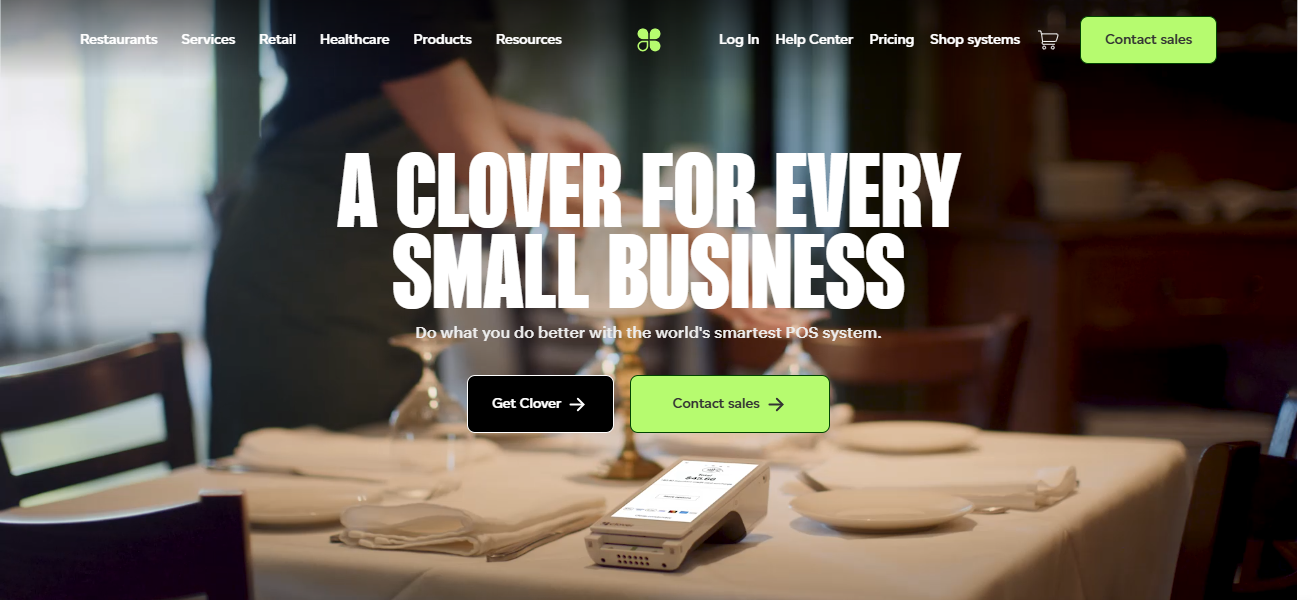
Integration with many add-ons and third-party apps, Clover provides and customizability for payroll, loyalty, and complex analytical programs, enabling businesses to self design their systems.
From countertop hardware to mobile devices, Clover offers its customers tons of hardware options in order to increase the operational efficiencies of their retail stores. Servicingflexibility from Clover is amazing and so with reporting and analytics.
Features Clover POS
Customizable App Marketplace – Add payroll, loyalty, advanced reporting and more to enhance functionality and customization.
Flexibility with Hardware – Ability to provide counter and portable systems to work with any store layout.
Management of Inventory and Employees – Control of stock and setting permissions according to employee roles.
Advanced Reporting – Visual dashboards help managers gain insights through sales and performance reports.
| Pros | Cons |
|---|---|
| Multiple hardware options for varied retail needs. | Can get expensive with add‑ons. |
| Solid inventory, reporting & employee tools. | Limitations with deep omnichannel selling. |
| App marketplace expands functionality. | Not as flexible for custom workflows. |
| Easy daily operations and checkout. | Some integrations require third‑party tools. |
| Good for mid‑sized retail chains. | Support varies by reseller. |
7. Toast POS
Classic Toast POS primarily caters to the foodservice and hospitality industry but has recently adapted to support retail food businesses like in-store cafes and retail food concept hybrids.
It features strong order management, mobile checkout, inventory management and reporting capabilities for both rapid transaction and in-depth sales record.
Toast POS’ hardware and software support fast, mobile, and offline service, which is advantageous for retail businesses with considerable service and hospitality components.
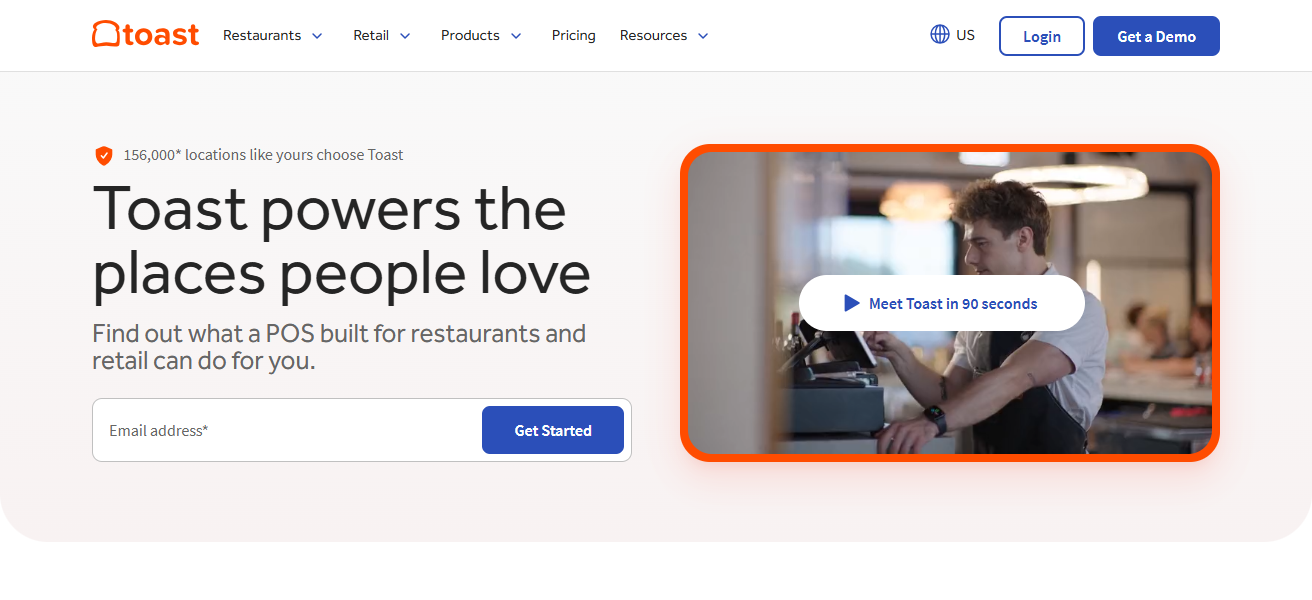
While Toast POS is less specialized for standalone retail than a few others in the list, the ability to integrate retail and food service operations is a gamechanger for businesses where checkout, food preparation and sales are interdependent.
Features Toast POS
Order Management and Checkout – Fast transaction times ideal for businesses in hybrid sectors.
Offline and Mobile Functionality – Mobile POS and offline capability provide outage resilience.
Comprehensive Reporting – Data analytics on sales and employee activities as well as campaigns.
Promotions and Discounts – Create and apply discounts easily during checkout.
| Pros | Cons |
|---|---|
| Excellent for hybrid retail + service/food environments. | Not focused on pure retail inventory. |
| Fast transactions and mobile ordering. | Retail expansions limited vs specialized systems. |
| Built‑in reporting and promotions. | Hardware costs higher. |
| Works offline and syncs later. | Not ideal for large, pure retail catalogs. |
| Strong customer and order visibility. | Extra modules needed for retail loyalty. |
8. Revel Systems
Revel Systems offers an iPad-based Point of Sale system tailored for retail and restaurants of all sizes, and features extremly flexible and customizable functionality for small stores to big chains. Revel Systems has Battle-tested functionality, including: inventory, CRM, and reporting.
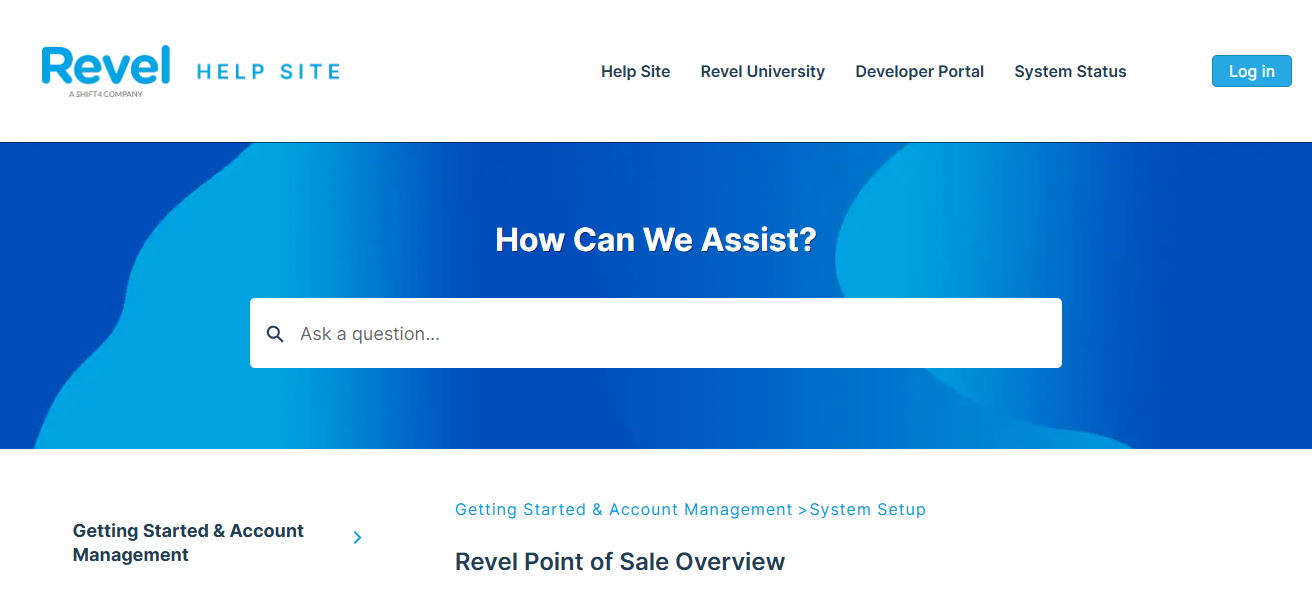
Revel offers far deeper system integration and customization through its open API. Revel Systems mobile payment solutions and Apple iPad/tablet support provide stores and restaurants flexible payment solutions for line busting and POS anywhere.
Their system is built for multi store retailers, with modern security, intuitive design and an easy learning curve for employees.
Features Revel Systems
Customizable Processes – Retailers build proprietary workflows with third-party tools through Open APIs.
Support for Mobile POS – Line-busting and mobile checkout free with use of iPad.
Inventory Management for Multiple Locations – Visibility over stock and movement of items is centralized.
Tools for Customer Management – Personalizing services and tracking loyalty is made easy with CRM capabilities.
| Pros | Cons |
|---|---|
| Highly customizable with open APIs. | Higher price point for full feature set. |
| Works on iPads for flexible checkout. | Setup can be complex. |
| Good for stores needing bespoke workflows. | Requires technical resources for customization. |
| Multi‑location inventory & customer profiles. | Support quality varies. |
| Scalable from small to larger chains. | Some advanced features need third‑party apps. |
9. Vend by Lightspeed
Vend, fully incorporated into Lightspeed Retail, is one of the best cloud-based POS for its ease of use and dependable inventory management across platforms. There are real-time sales reports, customer loyalty programs, and multi-location support is offered.
For growing businesses, support is a must. Vend’s offline mode is essential for businesses located in areas with poor internet. Retailers are able to continue working and the system automatically updates once a connection is established.
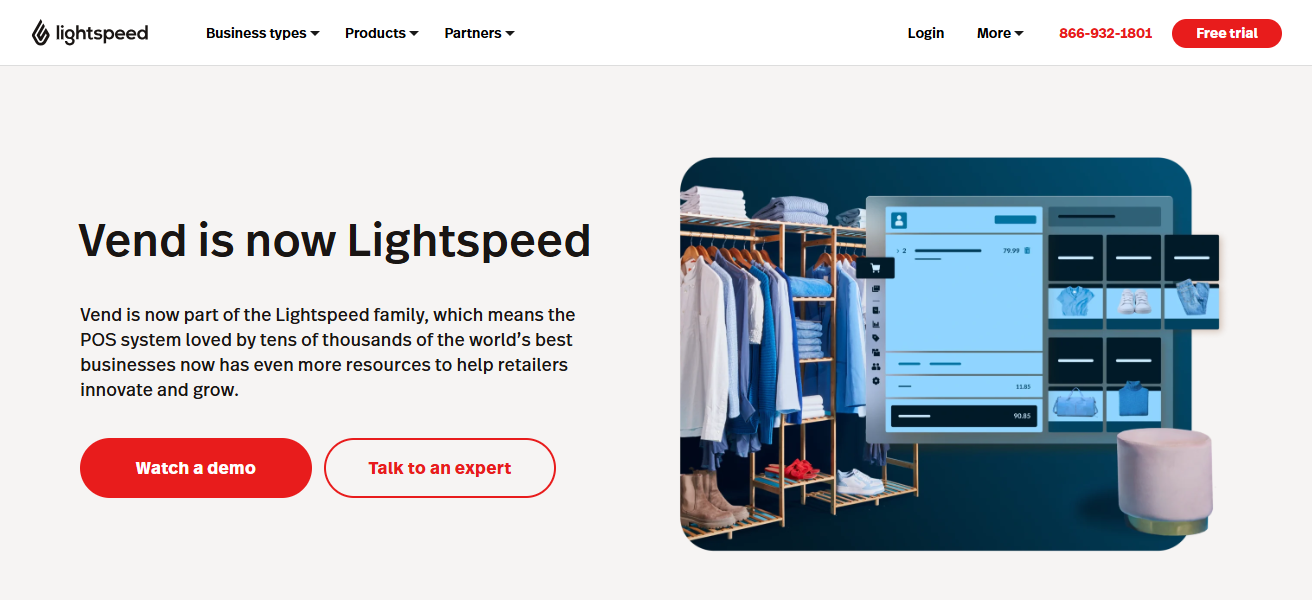
For better operational control and growth, Vend connects with e-commerce and accounting systems for centralized sales, inventory, and financial management.
Features Vend by Lightspeed
Intuitive and Dependable Interface – Minimalist design promotes ease of use and faster onboarding.
Offline Functionality – Sells without internet and later uploads transactions to the system.
Multi-Store Inventory Sync – Monitors inventory across multiple locations and updates in real-time.
E-Commerce Integration – Interfaces with other systems for centralized sales and order management.
| Pros | Cons |
|---|---|
| Simple, reliable inventory & sales interface. | Offline mode still syncs later, not full offline editing. |
| Good multi‑location support. | Basic loyalty features unless paired with apps. |
| Works across devices with easy setup. | Less advanced analytics than enterprise systems. |
| Integrates with e‑commerce platforms easily. | May need add‑ons for full CRM. |
| Great choice for growing retail chains. | Some features now rolled into Lightspeed core. |
10. Oracle Retail Xstore
Oracle Retail Xstore Point of Service is built for large multinational retailers. Xstore supports all store operation functions—sales, returns, promotion management, inventory lookups—on desktops, tablets, and mobile devices.
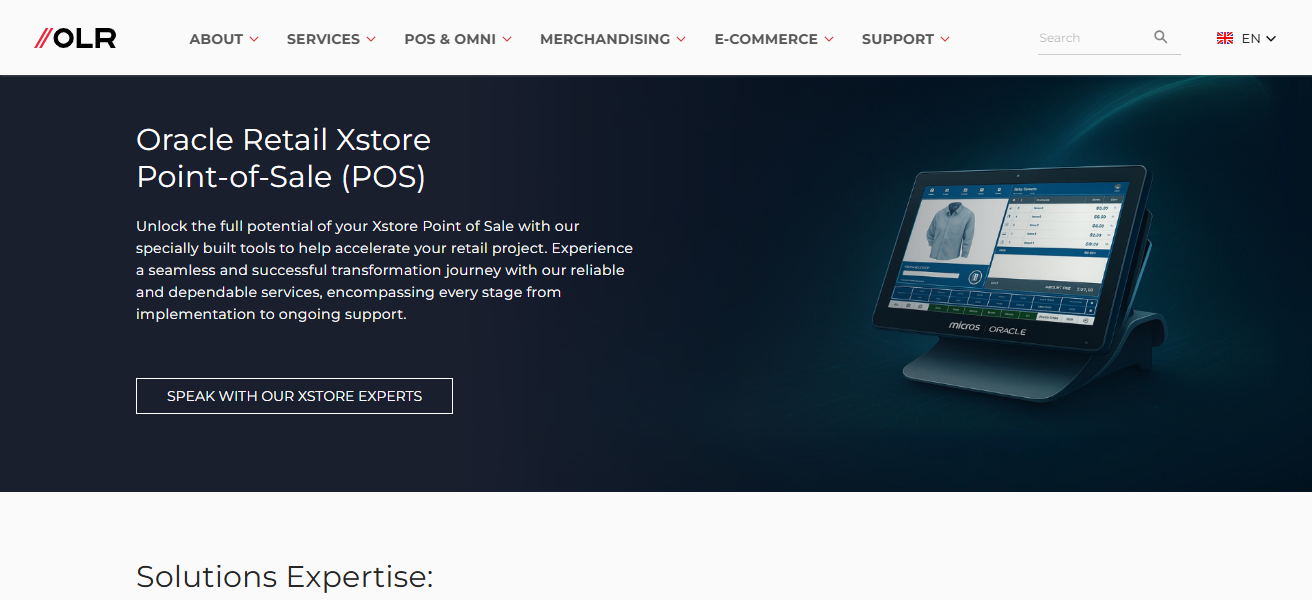
The application unifies inventory visibility and customer data sharing for cross-channel retail. Xstore also supports some labor management and store admin functions. Xstore, built for high-volume, sophisticated retail environments, offers both onsite and cloud solutions.
Features Oracle Retail Xstore
Enterprise-Level Scalability – Designed for active global retail networks with large volumes of transactions.
Omnichannel Order Management – Manages orders from all sources for seamless fulfillment.
Advanced Inventory & Labor Tools – Complete inventory management and labor time scheduling and planning.
Flexible Deployment – Retailers can choose between on-cloud and on-location installation.
| Pros | Cons |
|---|---|
| Enterprise‑grade, built for global retail scale. | Very high cost and complexity. |
| Powerful inventory and omnichannel order flow. | Requires dedicated technical teams. |
| Centralized management for large chains. | Not affordable for small retailers. |
| Flexible deployment: cloud and on‑premises. | Implementation timelines can be long. |
| Deep reporting, labor, and sales management. | Overkill for simple retail operations. |
How We Choose Best POS Systems For Retail Chains
- Business Scale– Identifying the size of your store, how many locations you have, and how many transactions you do is crucial.
- Inventory Control– Make sure you keep tracking your inventory in all locations.
- Support Across Platforms– Ensure your system integrates with your online stores, e-commerce, and mobile sales.
- User Friendly– The faster the interface and system is for your employees, the quicker they can be trained on it and onboarded.
- Analytics– You can’t have too many sales, but knowing who your customers are and how employees are contributing is great knowledge to have.
- Flexible Hardware– Make sure your system is compatible with tablets, mobile phones, and traditional POS terminals so you can select the best devices for your team.
- Customer Engagement– Customers are your primary focus, and engaging with them through a system can drive their purchases.
- Affordable– POS systems can be expensive, so the system you choose should help your business grow.
Cocnlsuion
To conclude, choosing the right POS system is essential for successful operation, effective inventory tracking, and better m customer interactions within retail chains.
There are other systems too such as iBOS, Manhattan Active, Lightspeed, and Shopify POS that provide specialized functionalities that are custom fit for various business scales and demand.
An assessment of the needs of your store will enable you to choose the POS system that is geared towards sustaining your growth, easing the management processes, and improving the retail activities.
FAQ
A POS (Point of Sale) system is software and hardware that manages sales, inventory, and customer data at checkout for retail stores.
POS systems centralize inventory, track sales across multiple locations, enable customer management, and streamline operations.
Yes, most modern POS systems like iBOS, Lightspeed, and Oracle Xstore support real-time inventory and sales across multiple outlets.
Many POS systems, such as Shopify POS and Lightspeed, integrate with e-commerce platforms for omnichannel management.
Costs vary by features, scale, and hardware—from affordable solutions like Square POS to enterprise-level systems like Oracle Retail Xstore.