In this article, I will talk about the Best Restaking Infrastructure Providers that are helping to improve blockchain security and staking opportunities.
We will cover the major platforms like EigenLayer, Ether.fi, Babylon Protocol, Kernel DAO, and Renzo, outlining their main features, networks they support, restaking mechanics, and unique benefits to help you determine which providers are right for you.
Key Points & Best Restaking Infrastructure Providers
| Provider | Explanation |
|---|---|
| EigenLayer | Enables Ethereum stakers to secure additional decentralized services using restaked ETH and liquid staking tokens. |
| Ether.fi | Offers liquid restaking through eETH, allowing users to earn staking rewards and additional restaking opportunities. |
| Babylon Protocol | Extends Bitcoin security to proof-of-stake networks through Bitcoin staking and cryptographic security mechanisms. |
| Kernel DAO | Provides restaking strategies and infrastructure designed to optimize yields across supported blockchain ecosystems. |
| Renzo | Simplifies EigenLayer restaking through ezETH, providing liquid restaking exposure and access to DeFi integrations. |
| Puffer Finance | Offers permissionless Ethereum liquid restaking with validator technology designed to improve accessibility and decentralization. |
| Symbiotic | Provides flexible restaking infrastructure enabling networks to customize collateral, operators, and economic security arrangements. |
| Solayer | Develops Solana-based restaking infrastructure, allowing assets to support network security and enhanced blockchain services. |
| Bedrock | Offers liquid restaking solutions across blockchain ecosystems, helping users access staking rewards and DeFi opportunities. |
| Figment | Provides institutional staking infrastructure, validator operations, and blockchain participation services for cryptocurrency investors and organizations. |
10 Best Restaking Infrastructure Providers In 2026
1. EigenLayer
EigenLayer is the leader in restaking and the biggest protocol in the space. It allows Ethereum stakers to reuse their staked assets to secure further services (called Actively Validated Services, or AVSs) like data availability layers, oracles and bridges. Ethereum Blockchain Support. Supported Assets: native ETH, major liquid staking tokens like stETH, rETH and cbETH and the EIGEN token.

Restaking Mechanism: Users can point their validator withdrawal credentials to EigenLayer (native restaking) or deposit LSTs into its smart contract system, then delegate to node operators running AVS software. Reward Opportunities: Stakers accrue base Ethereum staking rewards, AVS fees and EIGEN incentives. Higher yield also means more risk of slashing.
EigenLayer Feature
| Feature | Explanation |
|---|---|
| Ethereum Restaking | Allows users to restake eligible ETH and liquid staking tokens. |
| Shared Security | Helps additional decentralized services use Ethereum-based economic security. |
| Operator Delegation | Enables stakers to delegate assets to operators supporting network services. |
| Slashing Mechanisms | Supports penalties for defined security violations and operator misconduct. |
2. Ether.fi
Ether.fi is a liquid restaking protocol that offers users non-custodial staking and a liquid token while their ETH is being restaked. Supported Blockchain Ethereum. Its liquid tokens are bridged to multiple layer 2s. Assets supported: ETH, which is transformed into eETH or its yield-bearing counterpart, weETH.
Restaking Mechanism Users keep their validator keys and Ether in their own control.Automatically stake fi re-stakes through EigenLayer. The nodes are run by operators and weETH is still usable in DeFi lending, trading and vault products.

Reward Opportunities: Users can earn yield from staked Ethereum, EigenLayer rewards, loyalty points and ETHFI token incentives. Ether.fi’s Liquid vaults provide DeFi strategies for additional yield.
Ether.fi Feature
| Feature | Explanation |
|---|---|
| Liquid Restaking | Provides liquid restaking through products such as eETH. |
| ETH Staking | Lets users participate in Ethereum staking through its platform. |
| DeFi Integration | Liquid staking tokens can provide access to supported DeFi applications. |
| Reward Opportunities | Offers staking and restaking reward opportunities, subject to product conditions. |
3. Babylon Protocol
Babylon channels Bitcoin’s capital into proof-of-stake security It enables BTC holders to stake their coins to secure other blockchains without custody or bridging. Blockchain Supported: Bitcoin, securing Cosmos-based and other PoS chains. Supported assets: BTC (Bitcoin native) Restaking mechanism: Users lock BTC on the Bitcoin chain with timelock scripts + cryptographic signatures.
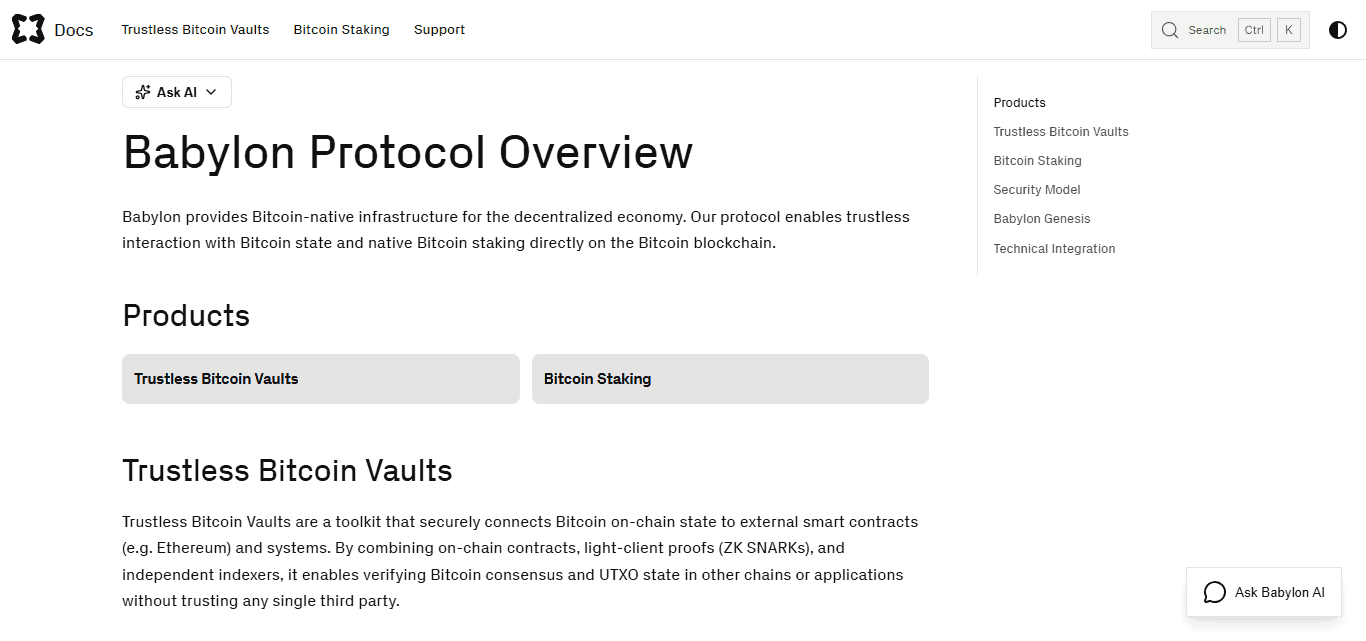
A staker’s key is exposed and the BTC can be slashed if a validator acts badly on a supported PoS chain. The coins never leave bitcoins. Reward Opportunities: BTC stakers earn rewards in the form of the native tokens of the PoS chains they secure and incentives from the Babylon ecosystem, such as its BABY token.
Babylon Protocol Feature
| Feature | Explanation |
|---|---|
| Bitcoin Staking | Enables users to stake native BTC through its Bitcoin staking protocol. |
| Shared Security | Extends Bitcoin-backed economic security to supported proof-of-stake networks. |
| Self-Custody | Uses cryptographic mechanisms to support staking without transferring BTC to custodians. |
| Slashing Mechanisms | Supports protocol-level penalties for specified security violations by participating validators. |
4. Kernel DAO
Kernel DAO is the restaking ecosystem built for BNB Chain, powered by teams behind Kelp and Stader. It aims to offer a common security layer for BNB Chain applications. Supported Blockchain: BNB Chain, soon on Ethereum and other EVM chains Supported Assets BNB, BNB based liquid staking tokens, ETH related assets and BTC wrapped tokens.

Restaking mechanism Users stake supported assets into Kernel vaults. The assets are then routed to modules and validated services which enables composable restaking and liquid restaking tokens. Reward Opportunities: participants accrue Kernel points, KERNEL token incentives, underlying staking yield and partner project rewards from services secured by the network.
Kernel DAO Feature
| Feature | Explanation |
|---|---|
| Shared Security | Kernel provides restaking-based shared security for supported BNB Chain applications. |
| Liquid Restaking | Kelp offers rsETH, representing eligible restaked positions on Ethereum. |
| Automated Vaults | Gain provides non-custodial automated vault strategies for supported assets. |
| DeFi Integrations | Connects its liquid restaking products with supported decentralized finance applications. |
5. Renzo
Renzo is a liquid restaking protocol that abstracts away operator selection and AVS allocation from users wishing to participate in EigenLayer. Blockchains supported: Ethereum, with ezETH on Arbitrum, Base, BNB Chain, Linea and more.
Supported Assets ETH and LSTs such as stETH, wBETH, converted to ezETH; Restaking Mechanism: pooled & restaked through EigenLayer. Renzo distributes delegation across operators and AVSs to balance risk and return, while ezETH remains tradable in DeFi.

Reward Opportunities: ETH staking yield, EigenLayer rewards, ezPoints and REZ token incentives for holders. They can also earn extra yield by providing liquidity for ezETH in DeFi protocols
Renzo Feature
| Feature | Explanation |
|---|---|
| Liquid Restaking | Issues ezETH to represent eligible ETH-based restaking positions. |
| Supported Deposits | Accepts native ETH and supported liquid staking tokens, including stETH. |
| AVS Exposure | Connects restaked positions to supported Actively Validated Services through EigenLayer. |
| Reward Compounding | ezETH reflects accumulated staking and restaking rewards through its value. |
6. Puffer Finance
Puffer Finance is a native liquid restaking protocol designed to lower the barrier to entry for Ethereum validation and reduce slashing risk. Blockchain Supported: Ethereum Supported Assets: ETH, stETH and wstETH deposited to mint pufETH. Restaking Mechanism: Puffer uses Secure-Signer which protects validator keys with trusted hardware to avoid accidental slashing.

It also allows validators to run with less than 32 ETH. Funds are restaked via EigenLayer and can be used across DeFi. Reward Opportunities: Ethereum consensus and execution rewards, EigenLayer incentives, Puffer points and PUFFER token rewards to users. Node operators are also paid validation rewards.
Puffer Finance Feature
| Feature | Explanation |
|---|---|
| Native Restaking | Supports Ethereum validators participating in native restaking through EigenLayer. |
| Restaking Modules | Groups validators into modules that can support selected AVSs. |
| Validator Accessibility | Its module design helps smaller operators participate under defined requirements. |
| Risk Management | Uses controlled AVS selection and operator policies to manage restaking risks. |
7. Symbiotic
Symbiotic is an open, flexible shared-security protocol that supports many assets and customizable restaking options. It keeps users from getting stuck on one design. Supported Blockchain: Ethereum (planned to expand to other chains) Supported Assets: wstETH, rETH, cbETH, sUSDe & Other ERC-20 Collateral Tokens.
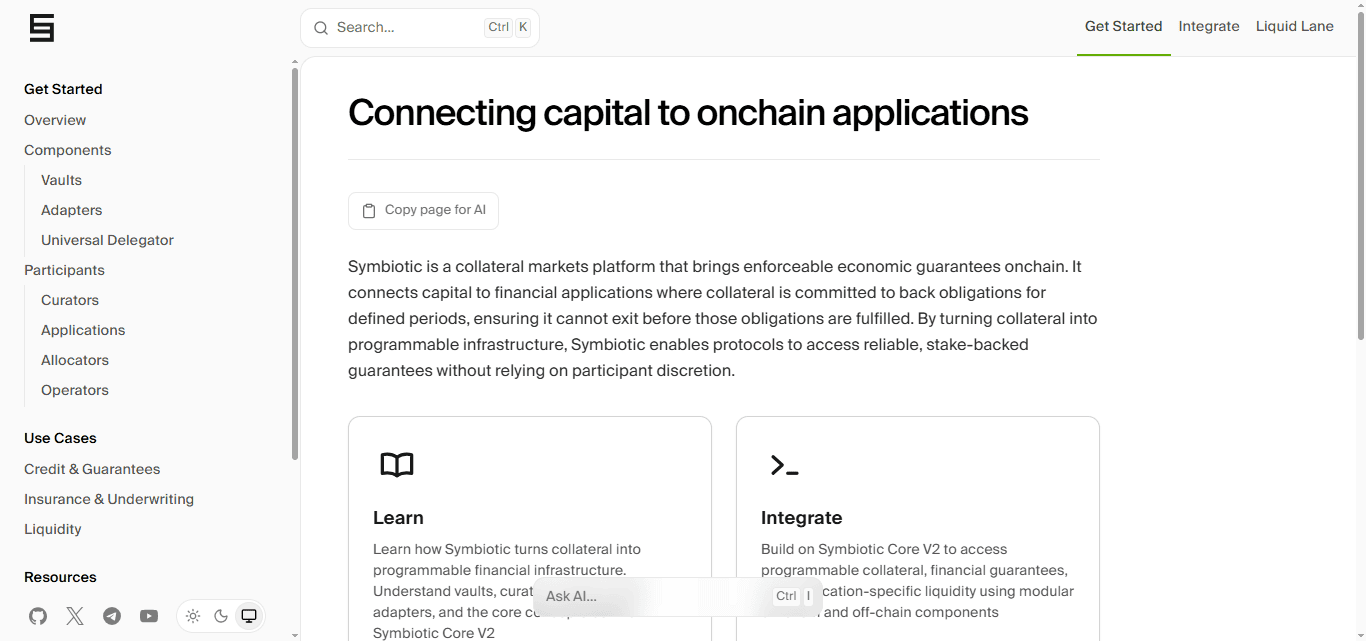
Restaking mechanism: Users stake collateral in vaults. Vault curators assign it to operators that lock networks. Each network has its own set of rules for slashing and rewarding and resolvers settle disputes. Reward Opportunities: rewards are generated from the fees and incentives paid by each secured network, plus the base yield of the deposited asset and ecosystem points. Returns may vary per vault & network.
Symbiotic Feature
| Feature | Explanation |
|---|---|
| Flexible Collateral | Supports configurable vaults holding supported collateral assets for network security. |
| Modular Infrastructure | Separates vault accounting, delegation, and slashing into configurable components. |
| Operator Delegation | Allows vaults to allocate stake to eligible operators supporting applications. |
| Custom Security Policies | Enables applications and curators to configure allocation limits and penalty conditions. |
8. Solayer
Solayer is the most advanced restaking protocol on Solana. It allows stakers to bring Solana’s security to new applications and infrastructure.” Supported blockchains: Solana. Supported Assets: SOL, Solana liquid staking tokens, and stablecoins that can be swapped for Solayer’s liquid tokens such as sSOL.
Restaking Mechanism: users can restake their SOL or LSTs to back Actively Validated Services. Solayer also offers its own hardware-accelerated InfiniSVM environment. The liquid tokens are restaked and can be used in DeFi.

Reward Opportunities: native Solana staking yield, AVS and partner rewards, points and LAYER token incentives for users. Solayer has low fees and high throughput that allows for frequent reward compounding.
Solayer Feature
| Feature | Explanation |
|---|---|
| Solana Restaking | Enables SOL holders to restake assets through its supported infrastructure. |
| Liquid Staking Support | Supports restaking with eligible liquid-staked SOL assets. |
| Delegated Consensus | Routes restaked assets to participating operators supporting other networks. |
| Shared Validator Network | Aims to extend Solana-based economic security and infrastructure to supported systems. |
9. Bedrock
Bedrock is a liquid staking and restaking protocol for multiple assets, most notably its Bitcoin product, uniBTC, along with uniETH. Supported blockchains: Ethereum, Bitcoin-linked networks, BNB Chain and multiple Layer 2s. Supported Assets: BTC wrappers such as WBTC, FBTC and cbBTC which turn into uniBTC ETH which turns into uniETH
Restaking Mechanism: deposits are pooled and used via partner protocols like Babylon and EigenLayer, while the liquid token remains usable across DeFi. Reward Opportunities: Yield from Staking and Restaking, Partner Points, Bedrock Diamonds and BR Token Incentives They can also earn more yield from lending, liquidity provision and vault strategies using uniBTC or uniETH.
Bedrock Feature
| Feature | Explanation |
|---|---|
| Multi-Asset Support | Provides staking and restaking products for supported ETH, BTC-related, and other assets. |
| Liquid Restaking Tokens | Offers products including uniETH and uniBTC for eligible staking strategies. |
| Bitcoin Restaking | Connects supported Bitcoin-related assets with external staking and restaking ecosystems. |
| Non-Custodial Design | Uses a non-custodial architecture intended to reduce reliance on asset custodians. |
10. Figment
Figment is an institutional-grade staking provider that provides restaking infrastructure to funds, exchanges and wallets through professional, compliance-focused services. Supported Blockchain: Ethereum & Bitcoin for restaking , many other proof of stake networks like Solana , Cosmos etc for regular staking.

Supported assets:ETH, LSTs and BTC depending on the restaking protocol used. Restaking Mechanism: Figment supports restaking via protocols such as EigenLayer, Babylon and Symbiotic, with monitoring and slashing-risk management, while running secure validators and node infrastructure. Reward Opportunities: clients earn staking rewards and restaking rewards from AVSs and networks, often with reporting and custody integrations for enterprise users
Figment Feature
| Feature | Explanation |
|---|---|
| Validator Infrastructure | Operates staking infrastructure for supported proof-of-stake blockchain networks. |
| Institutional Staking | Provides staking services designed for institutions and larger asset holders. |
| Staking API | Helps developers integrate staking workflows across supported blockchain protocols. |
| Rewards Reporting | Offers validator monitoring, staking reward tracking, and reporting tools. |
Conclusion
As a conclusion, Best Restaking Infrastructure Providers offer a wide range of solutions for blockchain security, staking rewards, and decentralized applications. Different users get unique features on platforms like EigenLayer, Ether.fi, Babylon Protocol, Renzo, and Symbiotic.
To determine the best restaking solution for your specific needs and investment objectives, evaluate supported assets security measures network compatibility and risks before selecting a provider.
FAQ
What is restaking infrastructure?
It allows staked assets to secure additional blockchain services.
Which provider supports Ethereum restaking?
EigenLayer is a leading Ethereum restaking protocol.
Does Babylon support Bitcoin?
Yes, Babylon enables Bitcoin staking for supported security applications.
Is Ether.fi a liquid restaking platform?
Yes, it offers liquid restaking products.
What does Renzo provide?
Renzo simplifies restaking through liquid restaking tokens.