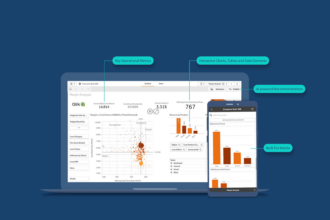
This article will look at the Best Revenue Recognition Automation Platforms, focusing on solutions that simplify intricate revenue procedures, automate the revenue lifecycle, improve compliance with ASC 606 and IFRS 15, and reinstate financial precision.
- Key Points & Best Revenue Recognition Automation Platforms
- 10 Best Revenue Recognition Automation Platforms
- 1. HighRadius
- 2. NetSuite Revenue Recognition
- 3. Sage Intacct
- 4. Oracle Revenue Management Cloud
- 5. Salesforce Revenue Cloud
- 6. SAP Revenue Accounting and Reporting
- 7. Zuora RevPro
- 8. Workday Revenue Management
- 9. Certinia Revenue Cloud
- 10. ScaleXP
- How To Choose Best Revenue Recognition Automation Platforms
- Conclsuion
- FAQ
These tools are invaluable to today’s finance teams responsible for subscriptions, services, or multi-element contracts, as they help automate revenue tracking, forecasting, and reporting, eliminate manual errors, and speed up close cycles.
Key Points & Best Revenue Recognition Automation Platforms
HighRadius – AI-powered revenue automation platform accelerating contract ingestion, scheduling, compliance, and journal entries across financial operations.
NetSuite Revenue Recognition – Cloud ERP solution automating revenue lifecycle processing, delivering real-time visibility, accuracy, and compliance for finance teams.
Sage Intacct – Comprehensive financial system combining billing, contract management, and automated revenue recognition with robust reporting capabilities.
Oracle Revenue Management Cloud – Enterprise-grade revenue automation managing complex contracts, allocations, and regulatory compliance with accuracy and scalability.
Salesforce Revenue Cloud – Unified platform integrating CRM, billing, CPQ, and revenue recognition for streamlined revenue operations.
SAP Revenue Accounting and Reporting – Global revenue solution automating accounting processes with real-time compliance for international revenue standards.
Zuora RevPro – Subscription-focused automation platform efficiently recognizing revenue for recurring, usage-based, and complex billing models.
Workday Revenue Management – Financial management tool automating revenue recognition across enterprises with seamless workflow and compliance support.
Certinia Revenue Cloud – Professional services-focused platform integrating project accounting and automated revenue recognition for service-driven organizations.
ScaleXP – Small and mid-sized business revenue recognition tool automating journal entries, multi-entity reporting, and financial workflow optimization.
10 Best Revenue Recognition Automation Platforms
1. HighRadius
HighRadius helps automate contract ingestion, performance obligation tracking, automatic scheduling of revenue postings and journal entries, and postings to journals, keeping customers compliant with ASC 606 and IFRS 15.
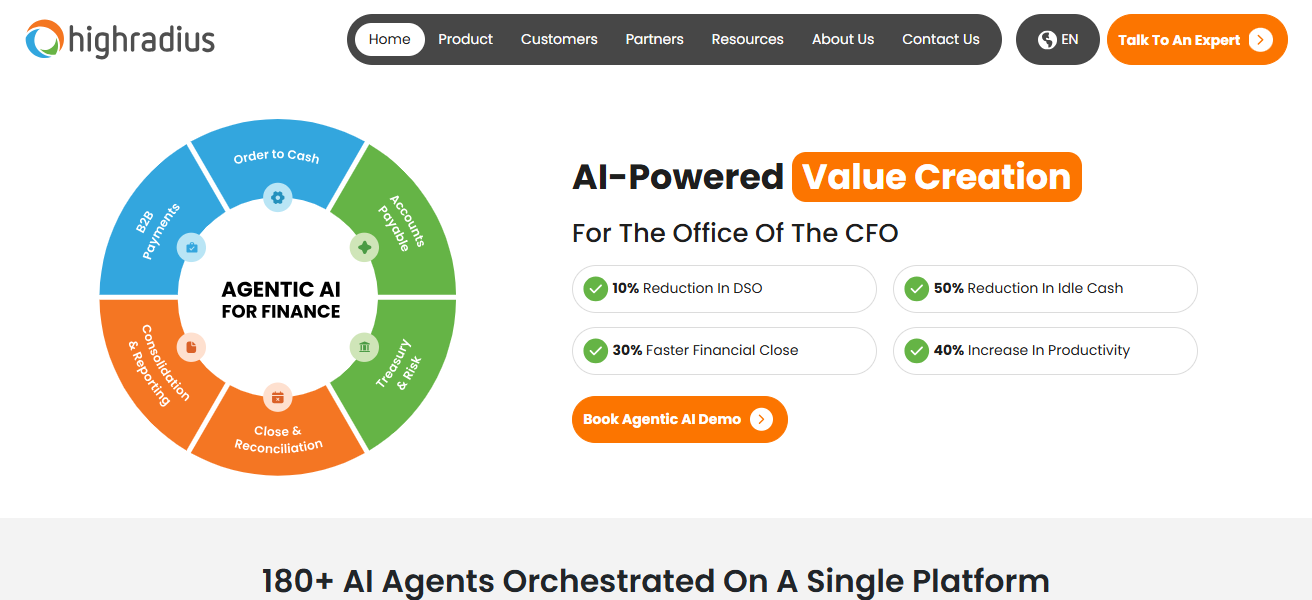
Additionally, it helps with real-time exception tracking and Closed Workflows with 99% recognition accuracy and faster Closing Cycles.
With seamless integration with ERPs, CRMs, and Billing Systems, HighRadius centralizes dashboards of Recognised, Deferred, and Backlog Revenue and reduces manual reconciliation and audit risk.
| Feature | Description | Business Benefit | Real‑World Example |
|---|---|---|---|
| AI‑Powered Matching | Uses machine learning to auto‑match revenue transactions from billing, contracts and ERP data. | Reduces manual matching errors and accelerates close cycles. | Matches 99% of high‑volume contracts automatically vs manual 60‑80%. |
| Continuous Reconciliation | Automatically reconciles revenue daily across AR/AP/GL. | Ensures up‑to‑date books and faster period closes. | Daily reconciliation highlights anomalies before month‑end. |
| Rule‑Based Automation | Custom rules for revenue recognition logic (ASC 606/IFRS 15). | Standardises recognition across entities & products. | Auto‑allocates transaction price to performance obligations. |
| Forecasting & Analytics | Real‑time dashboards showing recognised, deferred, backlog revenue. | Improves forecasting accuracy and data‑backed decisions. | Finance sees expected ARR upsides by segment. |
| ERP & CRM Integrations | Connects with Oracle, SAP, NetSuite, Salesforce. | Eliminates data silos, improves accuracy and audit readiness. | Syncs revenue schedules with NetSuite AR module. |
2. NetSuite Revenue Recognition
From contract generation and the allocation of performance obligations to the automation of recognition scheduling, the Advanced Revenue Management (ARM) module incorporates revenue lifecycle automation into the Oracle NetSuite cloud ERP system.
ARM’s integration offers ASC 606 and IFRS 15 compliance, while also eliminating the need for additional systems and the associated integration issues.
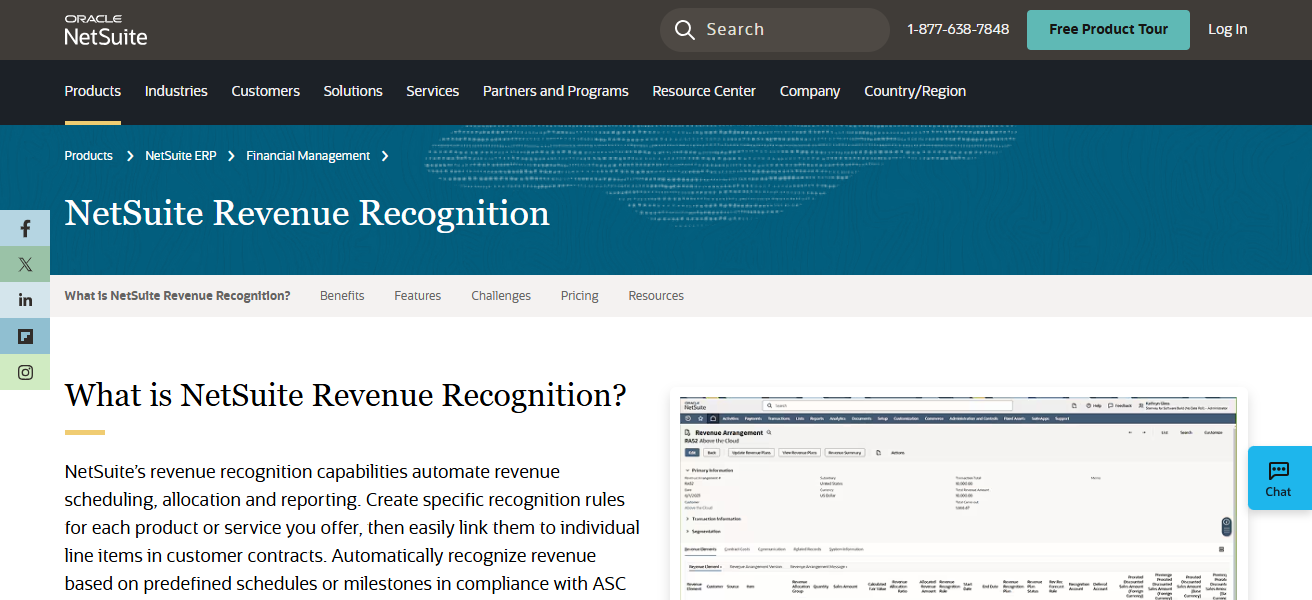
NetSuite’s ERP system offers finance teams real-time recognition, deferral, and backlog revenue visibility, which speeds up the revenue closure process.
Embedded order, billing, and financial modules deliver unified data flows and consistent, audit-ready reports throughout cross-country operations.
| Feature | Description | Business Benefit | Real‑World Example |
|---|---|---|---|
| Native ERP Revenue Engine | Fully embedded revenue recognition inside NetSuite ERP. | Eliminates reconciliation between systems. | Recognises revenue in the same system as billing/orders. |
| ASC 606/IFRS 15 Compliance | Automates all 5 standard steps of revenue recognition. | Maintains compliance without manual interpretation. | Auto‑allocates revenue for bundled services/products. |
| Performance Obligation Tracking | Tracks fulfilment based on contract milestones. | Avoids mis‑recognition and revenue leakage. | Software + support contract splits recognition properly. |
| Real‑Time Reporting | Live dashboards for deferred and recognised revenue. | Improves forecasting and audit reporting. | Teams evaluate monthly MRR using live charts. |
| Contract Amendments | Handles renewals, adjustments and contract changes. | Keeps schedules accurate after contract updates. | Mid‑term changes auto‑adjust future recognition. |
3. Sage Intacct
Sage Intacct Revenue Management natively integrates with the Sage Intacct cloud financial suite and automates revenue recognition for subscription, services, and project-based businesses
It captures contracts, tracks performance obligations, and recognizes revenue using multiple methods (i.e. straight-line, usage-based), while adjusting schedules for contract changes.
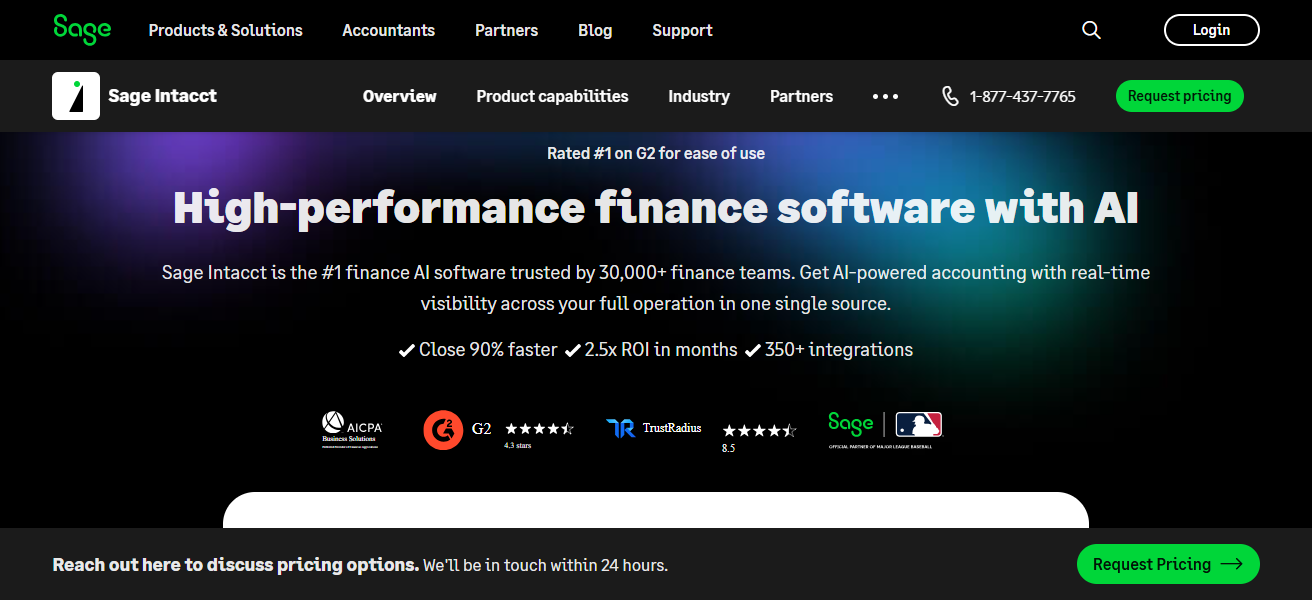
The solution reports real-time on recognized and deferred revenue and integrates with orders, billing, and CRM.
Its dimensional reporting helps finance teams dissect revenue by entity, product line, or department for detailed insights into profitability and audit-compliant reporting.
| Feature | Description | Business Benefit | Real‑World Example |
|---|---|---|---|
| Central Contract Records | Single repository for contracts and subscription terms. | Eliminates data duplication and errors. | All contracts accessible from a central module. |
| Multi‑Method Recognition | Supports straight‑line, usage/percent complete models. | Flexibility for different business models. | Usage‑based telecom billing recognised daily. |
| Automated Schedules | Auto‑generates monthly/quarterly recognition entries. | Streamlines month/quarter‑end close. | Finance team saves hours manually creating entries. |
| Integrated Billing | Billed amounts sync with revenue schedules. | Reduces manual reconciliation. | CRM orders auto populate revenue schedules. |
| Flexible Reporting | Revenue by product, customer, location etc. | Better performance insights by dimension. | Reports show top‑performing segments for upsell. |
4. Oracle Revenue Management Cloud
Oracle Revenue Management Cloud is an automation cloud-based application for revenue management. It is part of Oracle’s enterprise suite of business applications.
It applies automation to revenue recognition, billing, and compliance across complex business structures.
It helps decrease manual reporting efforts and increase the accuracy of reporting by applying ASC 606 and IFRS 15 reporting standards to the identification of performance obligations, the allocation of transaction prices, and the scheduling of revenue.
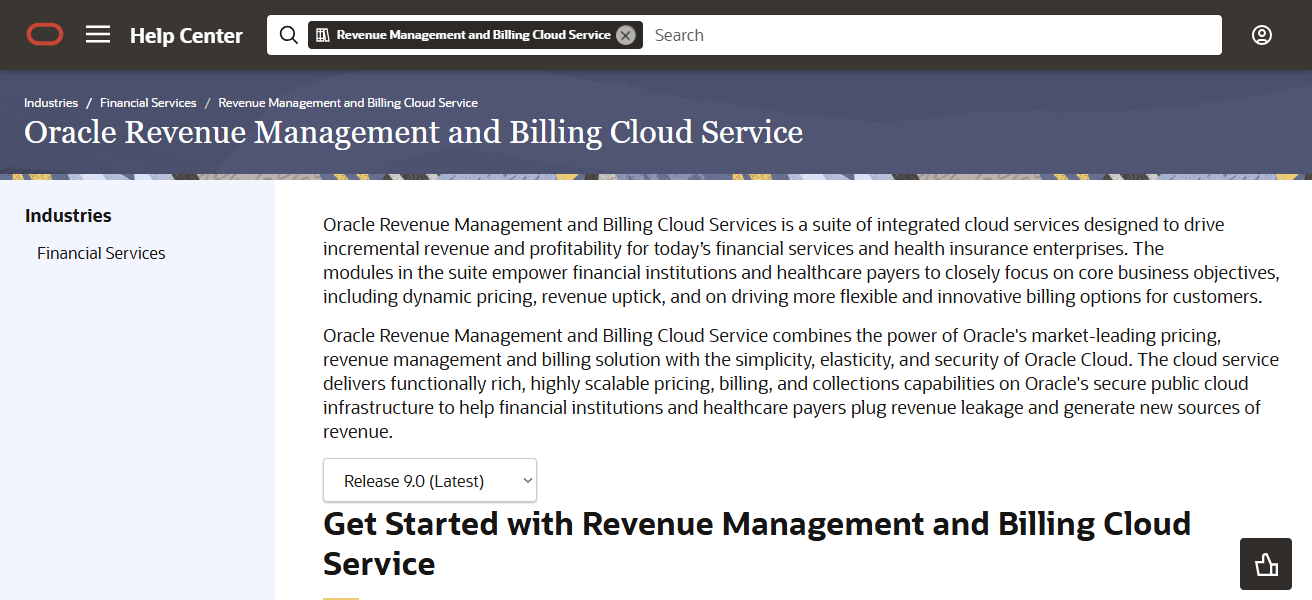
It is designed for global enterprises and improves financial governance and close cycle times. It also integrates with Oracle’s Fusion financial and contract lifecycle management applications
To provide multi-entity, consistent, and real-time visibility of revenue recognition and revenue deferrals.
| Feature | Description | Business Benefit | Real‑World Example |
|---|---|---|---|
| Cloud Native Revenue Engine | Built inside Oracle Cloud with automated workflows. | Scales for global multi‑entity enterprises. | Global rollout standardises revenue processes. |
| Automated Allocation | Splits transaction price to obligations automatically. | Removes manual allocation effort. | Bundled sales revenue allocated correctly. |
| Global Compliance | Supports ASC 606, IFRS & local GAAP. | Ensures multi‑standard compliance. | Auto‑generates compliance disclosures for auditors. |
| Audit Trail & Logs | Detailed change tracking with audit history. | Simplifies audits and regulatory checks. | Auditors review complete revenue change logs. |
| Integrates Oracle ERP/CLM | Syncs with Oracle ERP and contract lifecycle. | One source of truth for financial data. | Contract amendments auto‑flow into revenue. |
5. Salesforce Revenue Cloud
Salesforce Revenue Cloud (recently evolving toward Agentforce Revenue Management) is the latest integrating quoting, pricing, billing, and revenue management solutions on the Salesforce platform.
It integrates CPQ, order management and invoicing with revenue recognition for subscriptions, usage-based, and hybrid models.
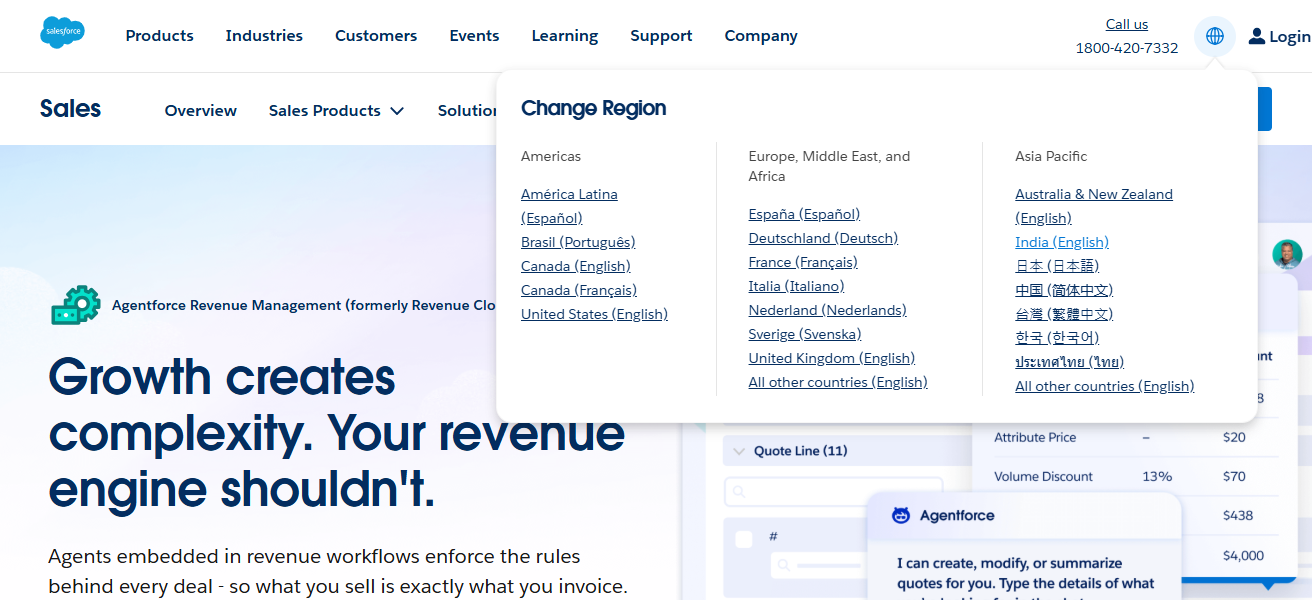
It provides single source of truth with native CRM data, real time dashboards and automation to ASC 606/IFRS 15, thus reducing manual reconciliation and accelerating cash flow.
The composable architecture offers flexible deployment and scalability to growing organizations.
| Feature | Description | Business Benefit | Real‑World Example |
|---|---|---|---|
| CPQ + Revenue Recognition | Connects Configure‑Price‑Quote with revenue processes. | Eliminates re‑entry between quoting and revenue. | Quotes auto‑generate correct future revenue schedules. |
| Subscription Management | Handles subscription lifecycle events. | Improves renewals and reduces churn. | Automated upsell renewals increase retention. |
| Usage‑Based Billing | Captures usage for accurate revenue. | Revenue follows real user usage. | Telecom usage feeds calculate daily revenue. |
| Native Salesforce Data | Revenue tied to CRM lifecycle. | Real‑time insight from pipeline to revenue. | Forecast revenue directly from CRM stages. |
| Compliance Automation | ASC 606/IFRS logic built‑in. | Minimises errors and manual compliance work. | Auto‑recognises over performance periods. |
6. SAP Revenue Accounting and Reporting
SAP Revenue Accounting and Reporting (RAR) is designed to support complex revenue recognition challenges for big enterprises that have large contract volumes and multi-entity structures.
The solution streamlines the five steps of ASC 606 contract identification and posting, and integrates with SAP billing and ERP systems.
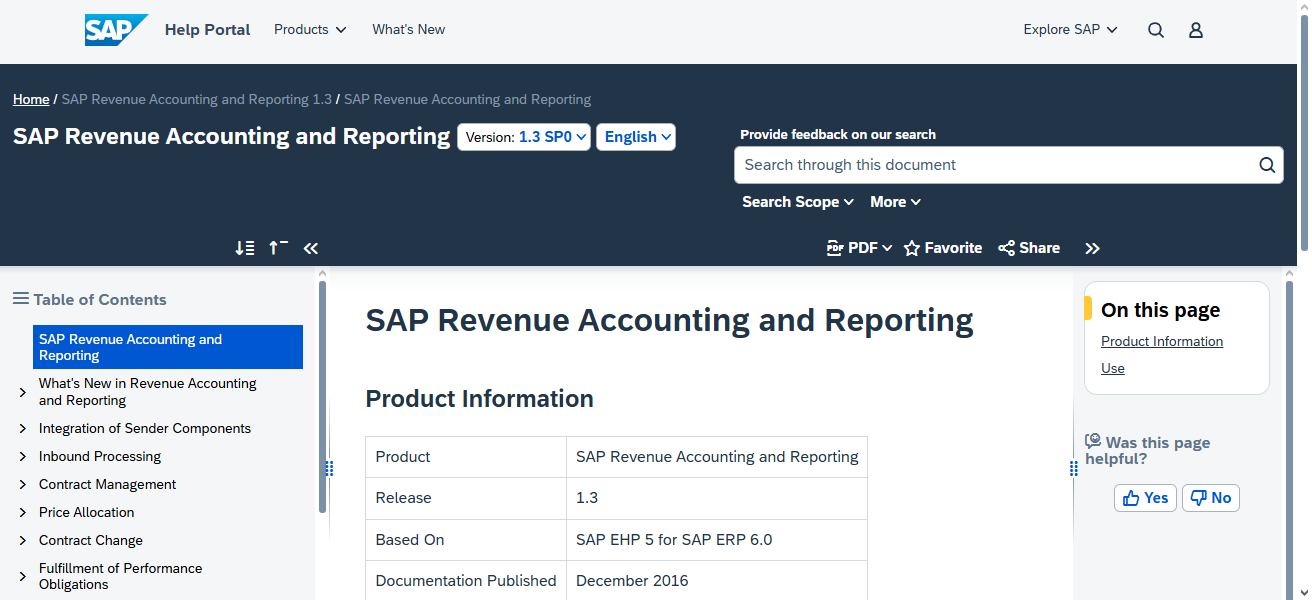
It provides audit-ready disclosures and real-time analytics, and stays compliant with country-specific regulations of the accounting standards.
SAP RAR also handles multi-system inbound processing with contract management, thus streamlining revenue accounting across different business units.
| Feature | Description | Business Benefit | Real‑World Example |
|---|---|---|---|
| Contract to Revenue Lifecycle | Full automation from contract capture to revenue posting. | Eliminates manual cross‑system tasks. | Telecom contracts auto flow into accounting. |
| Multitude of Recognition Rules | Supports complex revenue logic including milestones. | Handles B2B, B2C, subscription and usage. | Projects recognised with percent‑complete. |
| Integration with SAP Billing | Tight connection with SAP billing/documents. | Reduces discrepancies and improves accuracy. | Billing changes instantly update revenue. |
| Real‑Time Analytics | Live dashboard for recognised vs deferred revenue. | Better forecasting and planning. | Finance monitors revenue drivers across regions. |
| Multi‑Entity Capabilities | Consolidates revenue for global businesses. | Simplifies global reporting & compliance. | One dashboard across multiple subsidiaries. |
7. Zuora RevPro
Zuora RevPro streamlines revenue recognition processes with a focus on subscription and usage-based business models.
RevPro ingests data from billing, CRM, and usage systems, and automatically applies ASC 606 logic for standalone selling price (SSP) revenue allocation and reconciles revenue continuously at contract and portfolio levels.
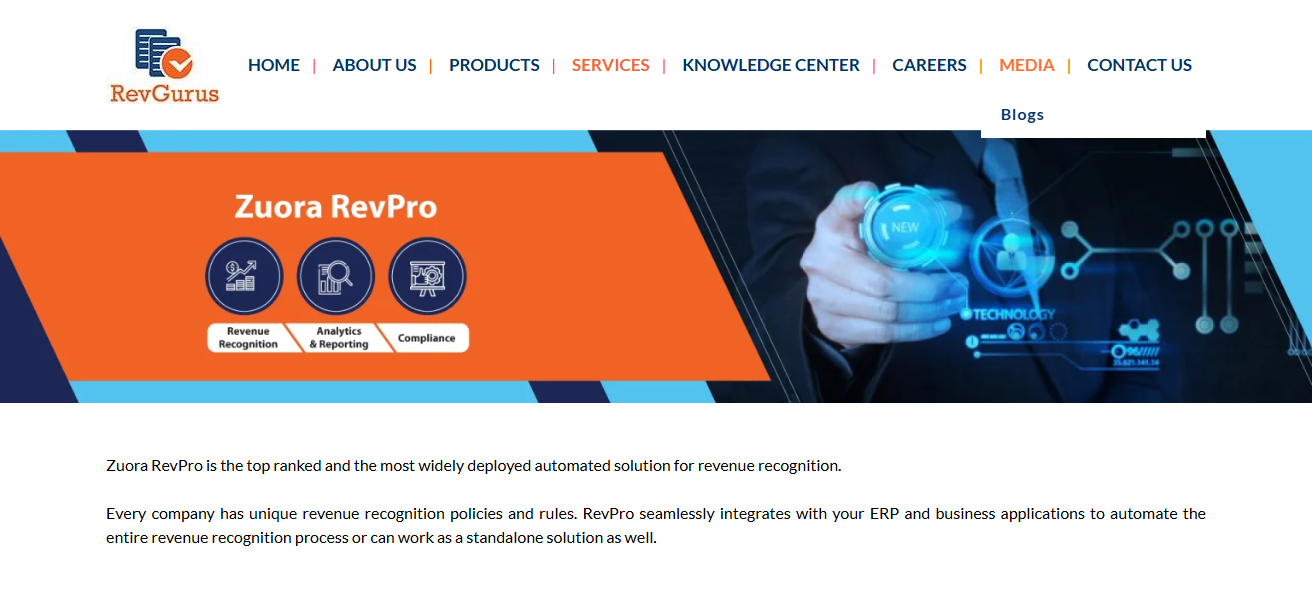
RevPro’s real-time dashboards, revenue trial balances, and analytics improve anomaly detection and book closing speed (up to 50%) and improve recognition and provide visibility on deferred and backlog revenue for complex pricing and contract modifications.
| Feature | Description | Business Benefit | Real‑World Example |
|---|---|---|---|
| Subscription Focused | Built for recurring and usage‑based revenue. | Handles dynamic pricing & frequent changes. | SaaS accounts auto update revenue schedules daily. |
| Auto Data Ingestion | Pulls data from billing/CRM systems. | Removes manual uploads and errors. | Billing system syncs recognition entries nightly. |
| Multi‑Element Arrangement | Allocates revenue across deliverables. | Ensures accurate recognition for bundles. | Hardware + support split into recognised parts. |
| Continuous Close | Near real‑time recognition updates. | Shortens close process with daily checks. | Close happens days earlier vs. month‑end crunch. |
| Deferred Revenue Management | Tracks deferrals and reversals automatically. | Reduces manual adjustments and risks. | Automatically reverses revenue for cancelled orders. |
8. Workday Revenue Management
Workday Revenue Management belongs to the larger Workday Financial Management suite and allows organisations to centralise contract information, billing and revenue schedule to automate recognition as per ASC 606 and IFRS 15.
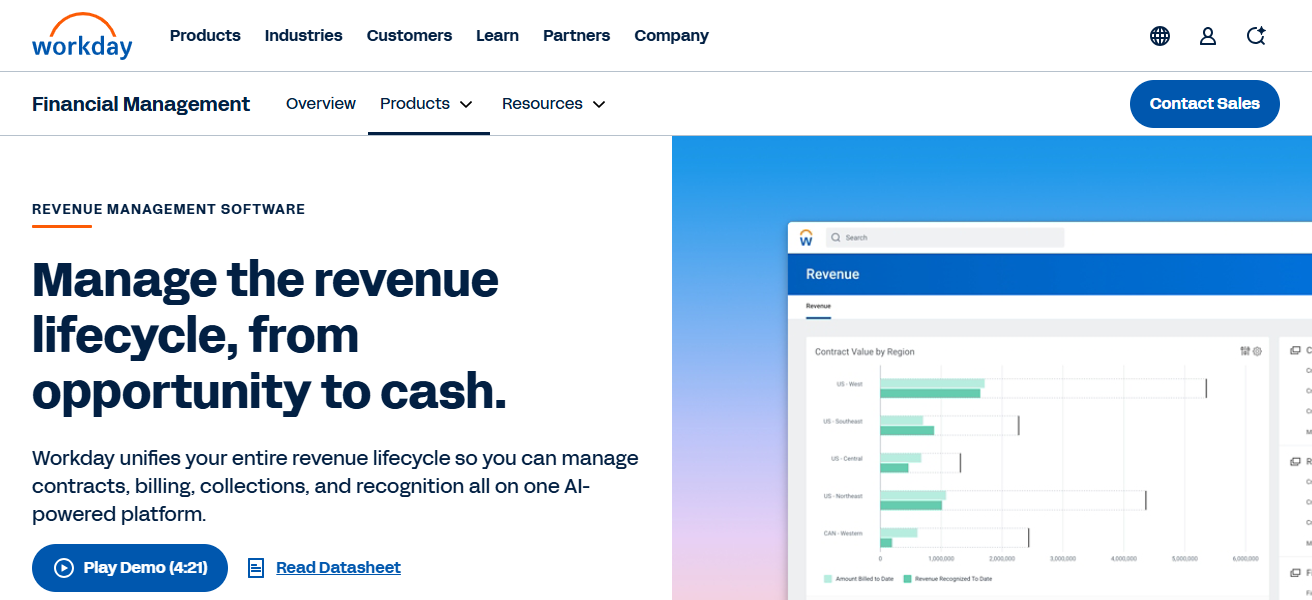
It provides a single cloud platform for the integration of revenue recognition, planning, budgeting, and financial reporting, allowing users to see in real-time revenue that has been recognised and that has been deferred.
The unified data model optimises the accuracy of forecasts and streamlines multi-entity and multi-revenue operations, giving financial teams coherent insights that are ready for audit in complicated global settings.
| Feature | Description | Business Benefit | Real‑World Example |
|---|---|---|---|
| Unified Financial Data | Revenue within unified Workday financial suite. | Eliminates data silos and manual reconciliations. | Expense and revenue analytics in one platform. |
| Real‑Time Revenue Schedules | Auto‑calculates schedules as contracts change. | More accurate forecasting and close cycles. | Revenue adjusts instantly with contract edits. |
| Compliance Engine | Built‑in ASC 606 and IFRS 15 processes. | Dashboard compliance and audit readiness. | Automated disclosure reporting for auditors. |
| Multi‑Currency Support | Handles global revenue across currencies. | Simplifies consolidation and exchange impacts. | Global branches report in global hierarchy. |
| Integration with Planning | Links with planning & budgeting modules. | Aligns revenue with forecasts and budgets. | Revenue shifts update future forecasts dynamically. |
9. Certinia Revenue Cloud
Certinia offers Salesforce-native revenue recognition and financial management that centralizes all revenue streams — subscriptions, services, products, and usage — on a single platform.
It automates performance obligation tracking and revenue schedules, is designed for multi-currency and multi-entity businesses, and accelerates period-end close with real-time dashboards.
Designed for services-driven businesses, Certinia eases the burden of ASC 606/IFRS 15 compliance, integrates deeply with Salesforce CRM for forecasting, and eliminates the spreadsheets that slow down and undermine the accuracy of financial and operational decision-making.
| Feature | Description | Business Benefit | Real‑World Example |
|---|---|---|---|
| Salesforce‑Native Recognition | Built on the Salesforce platform. | Seamless CRM to revenue flow. | Sales pipeline influences revenue forecasts. |
| Multi‑Stream Revenue | Recognises revenue from products, services & usage. | Handles diverse business models. | Auto‑splits recognition for bundled offers. |
| Performance Obligation Tracking | Tracks every deliverable for recognition. | Ensures correct timing of revenue. | Consulting + software recognised properly. |
| Real‑Time Dashboards | Live updates across revenue streams. | Better visibility for finance & sales. | Management sees deferred revenue trends. |
| Compliance Engine | Supports ASC 606 & IFRS standards. | Reduces risk and manual compliance work. | Compliance dashboard for auditors. |
10. ScaleXP
ScaleXP specializes in automating revenue recognition for small and midsize firms in conjunction with leading accounting software tools — Xero, QuickBooks, and CRM software.
It applies OCR and rule‑based logic to capture service dates and contract details from invoices and create journal entries that meet GAAP standards, and to automate monthly deferred revenue schedules.
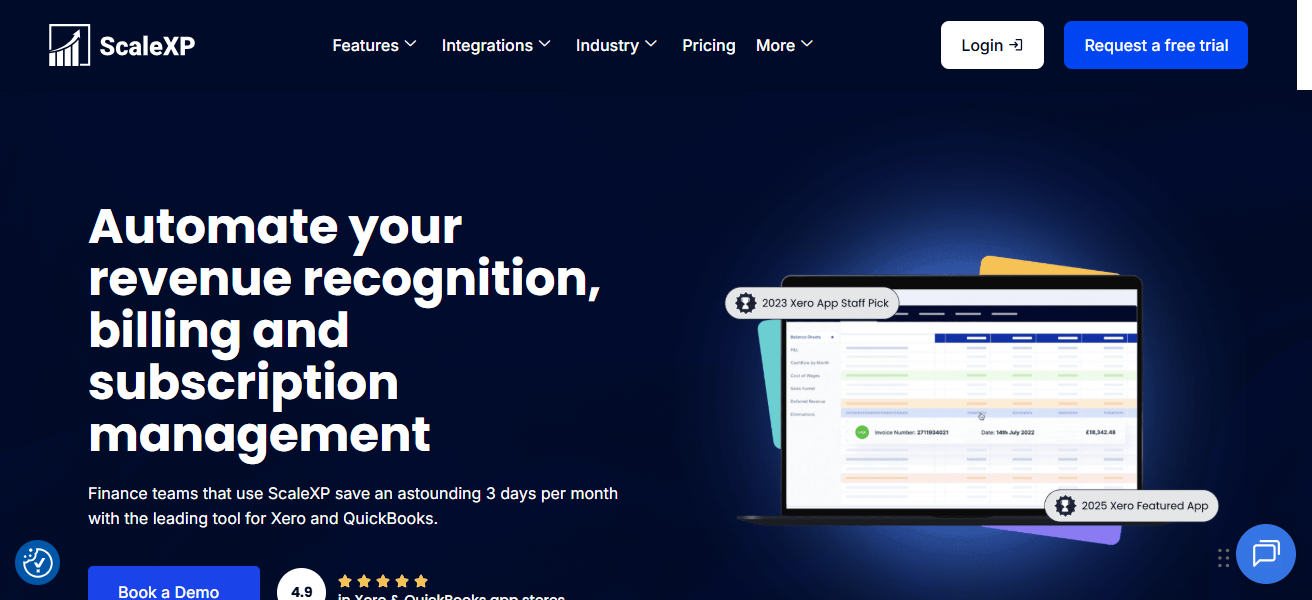
The platform handles flat-line, rule-based and usage-based recognition, supports revenue consolidation across entities and currencies, and allows users to create and customize dashboards and reports on metrics such as MRR and ARR, customer lifetime value, and churn — for SaaS and recurring revenue companies.
| Feature | Description | Business Benefit | Real‑World Example |
|---|---|---|---|
| Accounting System Integration | Connects with QuickBooks, Xero etc. | Revenue recognition inside existing accounting. | Auto entries appear inside QuickBooks monthly. |
| OCR Invoice Capture | Scans invoices for dates & terms. | Reduces manual data entry errors. | Teams upload invoices for automated extraction. |
| Rule‑Based Recognition | Predefined methods (flat, usage, rule‑based). | Flexibility without custom code. | Recognises SaaS monthly revenue per rules. |
| Deferred Revenue Schedules | Auto‑creates monthly schedules & journals. | Saves time & improves accuracy. | Finance closes books faster with auto entries. |
| Subscription Metrics Dashboard | MRR, ARR, churn visibility. | Business performance insight beyond compliance. | Dashboard shows churn & growth trends weekly. |
How To Choose Best Revenue Recognition Automation Platforms
Standards Compliance – Ensure there is support for ASC 606 / IFRS 15 for meeting compliance needs.
Level of Automation – Stronger support for automation for journal entries, schedules, and reconciliations the better.
Integration – Stronger support for integration on ERP, CRM, billing, and contracts the better.
Flexibility – Platforms that provide the support for growth, greater than that, multi-entity, and global are reliable.
Reporting on the Go – Preference should be given to reporting on the go and in the real-time when it comes to dashboards and analysis.
User Interface – With a simple user interface less training and fewer mistakes are to be expected.
Custom Revenue Recognition Rules – Custom revenue recognition rules should be able to be set to support complex revenue recognition models.
Audit Trail – There should be logs and trails that support audits.
Costs and ROI – There should be a careful consideration and balance on the support given and the total cost of ownership.
Vendor Support – Good support, training, and community resources are a plus.
Conclsuion
To sum up, the top platforms for revenue recognition automation enable companies to simplify complicated revenue streams, comply with ASC 606 and IFRS 15, and improve the accuracy of their finances.
These platforms automate recognition, forecasting, and reporting. They are critical for today’s finance teams to manage subscriptions, services, or multi-element contracts, as they minimize errors, speed up close cycles, and improve real-time reporting.
FAQ
SaaS, subscription-based businesses, telecom, manufacturing, and service industries with complex contracts.
Yes, most integrate with ERP, CRM, billing, and contract management systems.
Faster closes, fewer errors, improved audit readiness, and better revenue forecasting.
Most leading solutions like HighRadius, NetSuite, and Zuora are cloud-based for scalability.