To maintain stability and compliance in today’s complicated business environment, businesses need to proactively identify and manage risks. Selecting the Best Risk Management Software for Businesses aids in danger monitoring, streamlines governance procedures, and enhances decision-making.
- Key Point & Best Risk Management Software for Enterprises
- 1. LogicGate Risk Cloud
- LogicGate Risk Cloud Features
- LogicGate Risk Cloud
- 2. OneTrust GRC
- OneTrust GRC Features
- OneTrust GRC
- 3. Mitratech Alyne
- Mitratech Alyne Features
- Mitratech Alyne
- 4. StandardFusion
- StandardFusion Features
- StandardFusion
- 5. Corporater ERM Suite
- Corporater ERM Suite Features
- Corporater ERM Suite
- 6. Resolver
- Resolver Features
- Resolver
- 7. Riskonnect
- Riskonnect Features
- Riskonnect
- 8. ServiceNow Risk Management
- ServiceNow Risk Management Features
- ServiceNow Risk Management
- 9. MetricStream
- MetricStream Features
- MetricStream
- 10. SAP Risk Management
- SAP Risk Management Features
- SAP Risk Management
- Conclusion
- FAQ
I’ll go over the Best Risk Management Software for Enterprises in this post, emphasizing the best systems that assist companies in successfully managing operational, financial, and compliance risks.
Key Point & Best Risk Management Software for Enterprises
| Platform | Key Points |
|---|---|
| LogicGate Risk Cloud | No-code workflow builder, flexible risk management framework, strong automation capabilities, customizable dashboards, scalable for growing organizations. |
| OneTrust GRC | Integrated privacy, compliance, and risk management tools, strong regulatory support, automation for audits and controls, centralized risk visibility. |
| Mitratech Alyne | AI-driven risk insights, regulatory content library, automated assessments, global compliance coverage, easy risk visualization. |
| StandardFusion | Unified GRC dashboard, strong compliance management features, audit tracking, policy management tools, scalable SaaS platform. |
| Corporater ERM Suite | Enterprise risk modeling, strategy-aligned risk management, advanced analytics, integrated performance management, real-time dashboards. |
| Resolver | Incident management, risk intelligence tools, operational risk monitoring, automated reporting, strong investigation workflows. |
| Riskonnect | Enterprise risk integration, third-party risk management, compliance tracking, incident management tools, powerful reporting and analytics. |
| ServiceNow Risk Management | Integrated with ServiceNow platform, automated risk workflows, real-time monitoring, strong IT risk management, scalable enterprise solution. |
| MetricStream | AI-powered risk analytics, enterprise GRC integration, audit management, regulatory compliance tools, strong reporting dashboards. |
| SAP Risk Management | Deep integration with SAP ecosystem, real-time risk monitoring, predictive analytics, compliance automation, enterprise-grade scalability. |
1. LogicGate Risk Cloud
A cutting-edge Governance, Risk, and Compliance (GRC) platform called LogicGate Risk Cloud was created to assist businesses in centralizing and automating corporate risk management procedures. The platform is very versatile and scalable since it provides a no-code workflow builder that enables teams to create risk programs without technical knowledge.
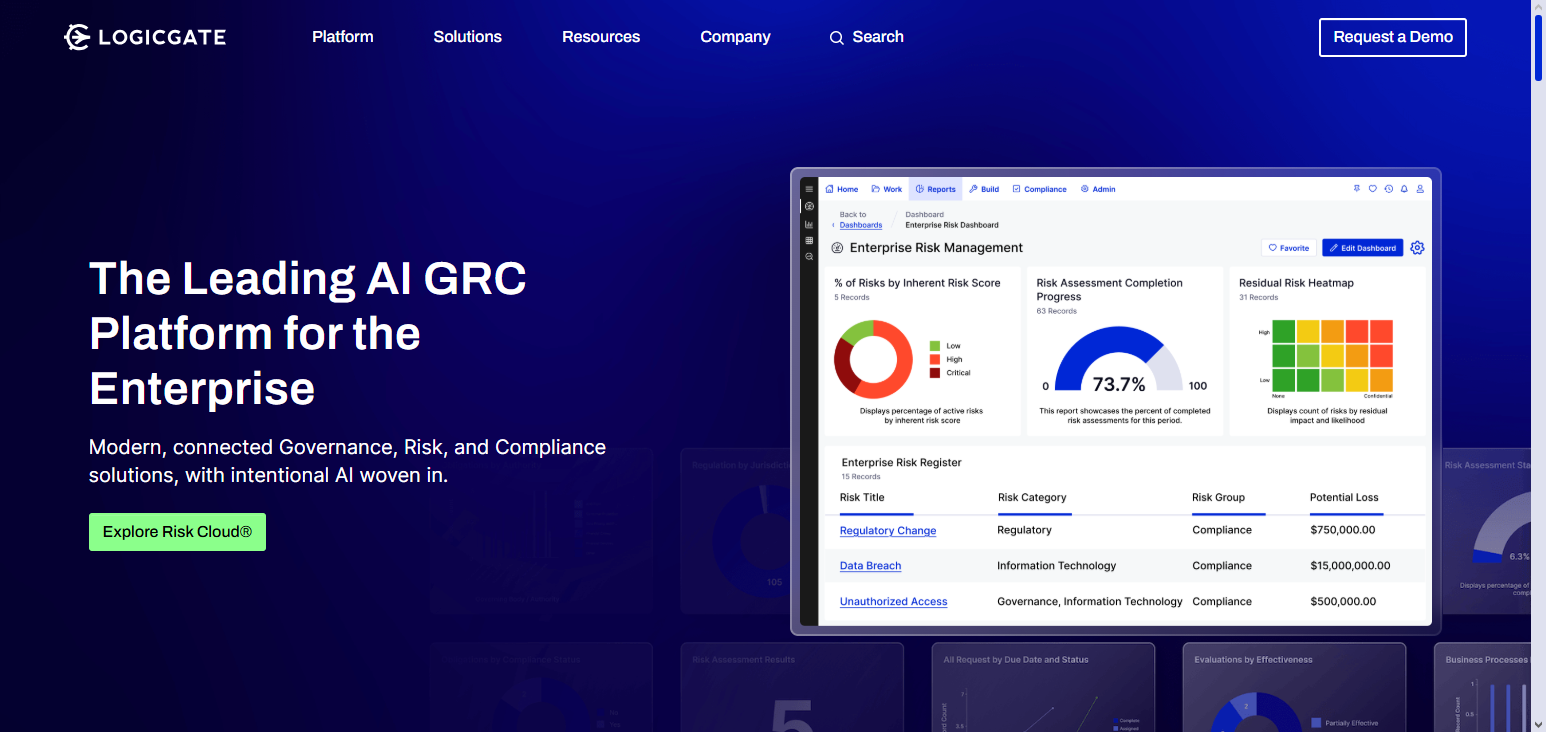
Organizations can identify hazards and prioritize mitigation methods using its automated evidence gathering, risk quantification tools, and AI-driven analytics. Complete visibility into operational, financial, and cybersecurity threats across departments is offered by real-time dashboards.
Because it unifies compliance, policy administration, and risk monitoring into a single cloud platform, LogicGate Risk Cloud is widely regarded as one of the Best Risk administration Software for Enterprises.
LogicGate Risk Cloud Features
- No-Code Platform. You can build and customize governance, risk, and compliance workflows with no coding skills.
- Automated Evidence Collection. Streamline compliance audits and regulatory reviews by automatically collecting documents, audit data, and compliance records.
- Spark AI Risk Insights. AI features automate recommendations for intelligent risk, cross mapping of controls, and gap analyses.
- Risk Quantification Tools. Risk-financial impact assessments can be performed with advanced modeling tools, like, the Monte Carlo method for risk forecasting.
- Real-Time Dashboards & Analytics. This platform offers real-time reporting dashboards for board members and management to assess and monitor risk within and across departments.
LogicGate Risk Cloud
| Pros | Cons |
|---|---|
| Highly customizable no-code platform for building risk workflows. | Initial setup and configuration can be complex for new users. |
| Centralized GRC hub improves visibility of enterprise risks. | Learning curve for teams unfamiliar with GRC platforms. |
| Automated workflows and evidence collection improve efficiency. | Some organizations rely on integrations for full functionality. |
| Strong analytics and dashboards for risk reporting. | Performance issues may occur with very large datasets. |
| Excellent customer support and scalable architecture. | Pricing may be high for smaller companies. |
2. OneTrust GRC
OneTrust GRC is a complete risk and compliance management platform that helps businesses handle operational challenges, privacy hazards, and regulatory requirements. The program allows enterprises to simplify regulatory compliance across several jurisdictions by integrating governance, compliance, privacy, and third-party risk management into a unified ecosystem.
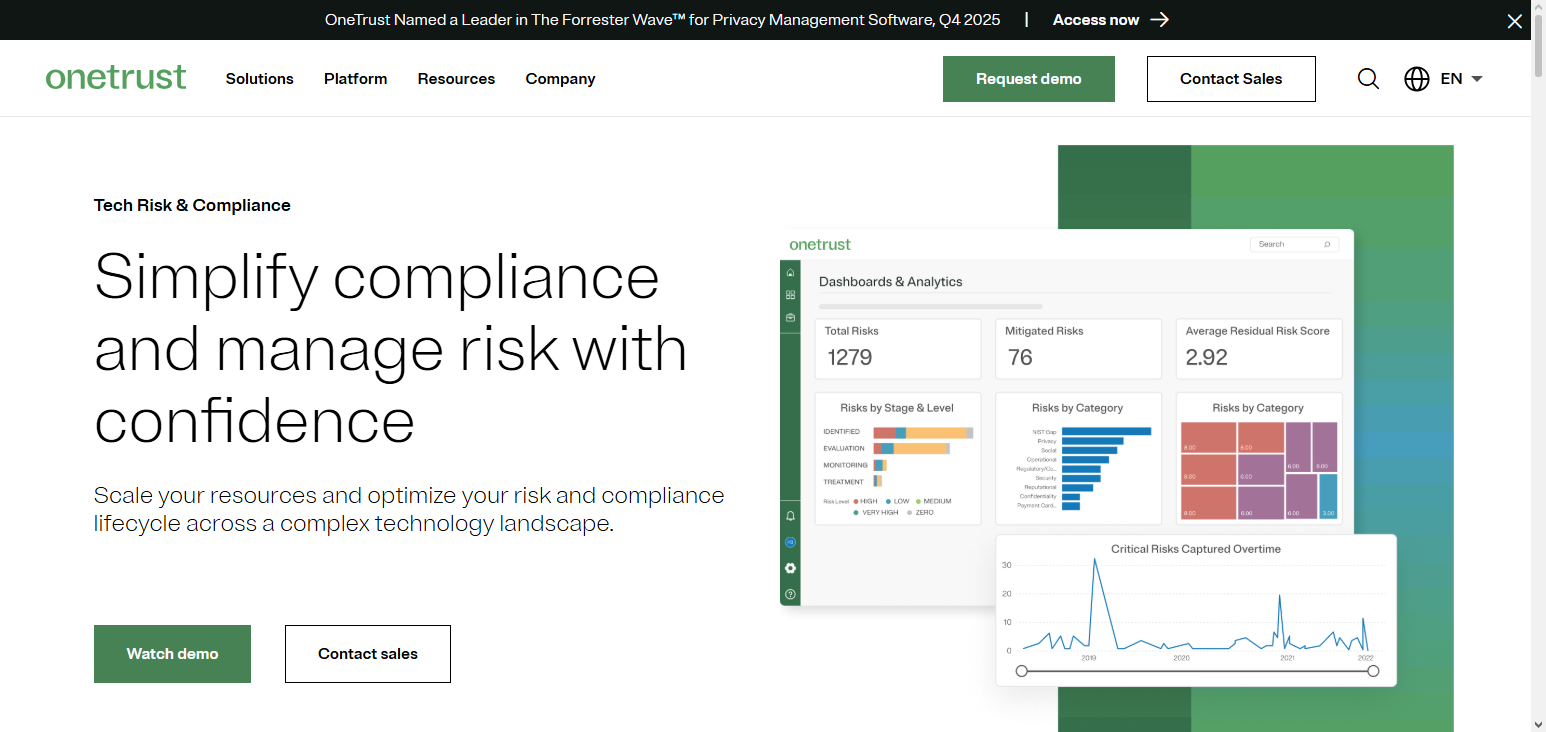
It consists of technologies for policy tracking, audit management, and automated risk assessments that enhance operational accountability and transparency.
Decision-makers may better identify risk exposure and put proactive mitigation measures into action with the aid of advanced analytics and reporting features. OneTrust GRC is frequently regarded as one of the Best Risk Management Software for Enterprises looking for scalable compliance solutions due to its strong focus on privacy and regulatory frameworks.
OneTrust GRC Features
- Integrated Governance Platform. The governance, risk management, compliance, and privacy functions are unified in integrated systems for easy management.
- Automated Risk Assessments. Via automated workflows, risk assessments are simplified and risk mitigation is achieved.
- Third Party Risk Management. Risk assessments of vendors and suppliers are continuously monitored across the organization.
- Regulatory Compliance Management. Compliance with global, GDPR and HIPAA guidelines may vary, and this platform accommodates those varying guidelines.
- Risk Dashboard – Deliver real-time insights into risk metrics and compliance across the enterprise.
OneTrust GRC
| Pros | Cons |
|---|---|
| Unified platform for privacy, compliance, and risk management. | Implementation may require significant time and resources. |
| AI-powered data discovery helps identify compliance risks. | Can be complex for smaller organizations. |
| Strong automation for compliance workflows. | Pricing structure may be expensive for smaller teams. |
| Wide regulatory framework support. | Requires training to use advanced modules. |
| Integrates privacy management with GRC. | Large feature set can overwhelm new users. |
3. Mitratech Alyne
An innovative risk and compliance management software called Mitratech Alyne was created to make complicated regulatory settings easier for multinational corporations. The platform assists enterprises in assessing, tracking, and managing operational and regulatory risks through the use of artificial intelligence and structured risk frameworks.
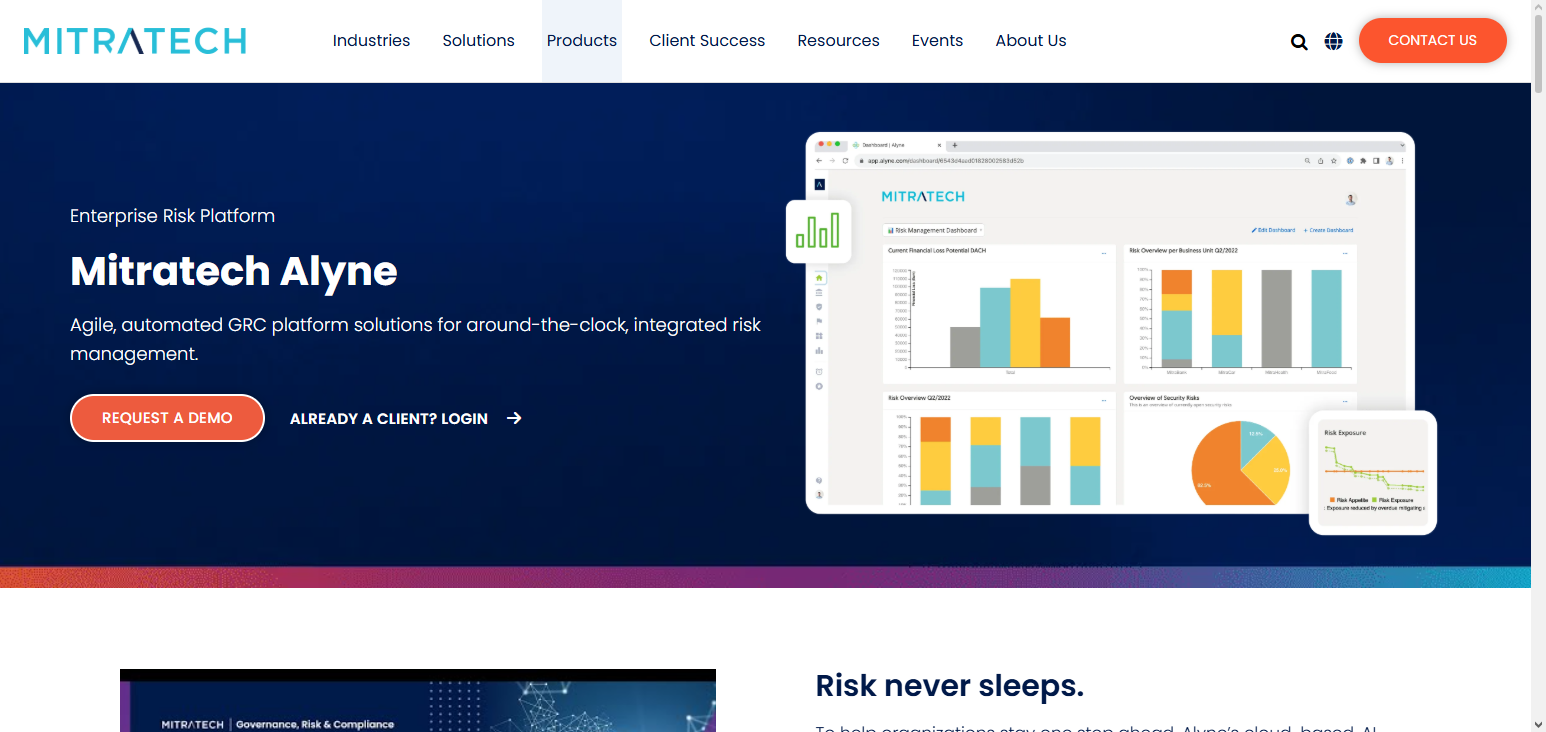
Alyne helps businesses effectively track worldwide compliance needs by providing automated assessments, risk visualization dashboards, and a sizable regulatory knowledge library.
The software allows businesses to keep an eye on operational vulnerabilities, cybersecurity threats, and vendor risks in real time. Mitratech Alyne is regarded as one of the Best Risk Management Software for Enterprises managing complicated worldwide regulatory environments because of its potent analytics and automated compliance capabilities.
Mitratech Alyne Features
- Risk Assessment via AI – Using automation and analytics, this resource assists with identifying and assessing risk exposure and compliance gaps.
- Library of Global Regulation – This resource contains a large collection of global regulations and compliance standards.
- Risk Visualization – This resource provides a dashboard and other visual supports to track and manage enterprise risk at varying levels.
- Risk Assessment of Third Parties – This resource evaluates compliance of vendors and suppliers with applicable regulations.
- Compliance Reporting – This resource creates and automates compliance and audit reports to be submitted to regulators and organizational executives.
Mitratech Alyne
| Pros | Cons |
|---|---|
| AI-driven risk intelligence and regulatory mapping. | Implementation may require strong compliance expertise. |
| Extensive regulatory library for global compliance. | Customization may require configuration effort. |
| Automated risk assessments and reporting. | Advanced features may require training. |
| Visual dashboards simplify risk monitoring. | Pricing may be high for smaller organizations. |
| Strong vendor and third-party risk management tools. | Integration with legacy systems may take time. |
4. StandardFusion
A cloud-based governance, risk, and compliance platform called StandardFusion was created to assist businesses in managing risk assessments, audits, and regulatory frameworks in a cohesive setting. By offering consolidated dashboards, automatic risk scoring, and integrated policy management tools, the platform streamlines compliance administration.
Businesses can more easily manage regulatory compliance by mapping security frameworks like ISO, SOC, and NIST to their internal controls. Additionally, StandardFusion offers reporting tools and workflow automation to assist risk teams in identifying vulnerabilities and promptly addressing new risks. StandardFusion is frequently ranked among the Best Risk Management Software for Enterprises looking for easier compliance and risk oversight due to its robust compliance features and scalable architecture.
StandardFusion Features
- Vertically Integrated GRC Platform – The various components of compliance, risk, and governance can be managed using a single resource.
- Frameworks of Compliance – Standards of compliance such as ISO 27001, SOC 2, NIST, and other related global standards can be integrated.
- Risk Assessment Automation – Risk automation processes can be simplified.
- Management of Policies and Documents – Relevant policies, procedures, and compliance documents can be maintained in a single location.
- Dashboards of Compliance in RealTime – Readiness for audit compliance and risk performance metrics can be assessed in real-time.
StandardFusion
| Pros | Cons |
|---|---|
| Unified cloud platform for governance, risk, and compliance. | Platform setup and configuration may be complex. |
| Automates compliance processes and risk assessments. | Integration with existing systems may require effort. |
| Supports major frameworks such as ISO and SOC. | Some advanced features may require additional modules. |
| Centralized dashboards for risk monitoring. | Learning curve for organizations new to GRC tools. |
| Scalable SaaS infrastructure. | Customization may take time to implement. |
5. Corporater ERM Suite
An enterprise-grade risk management tool called Corporater ERM Suite was created to match company performance and governance goals with risk strategies. Through sophisticated analytics and real-time dashboards, the program helps businesses to recognize, evaluate, and track risks across several business units.
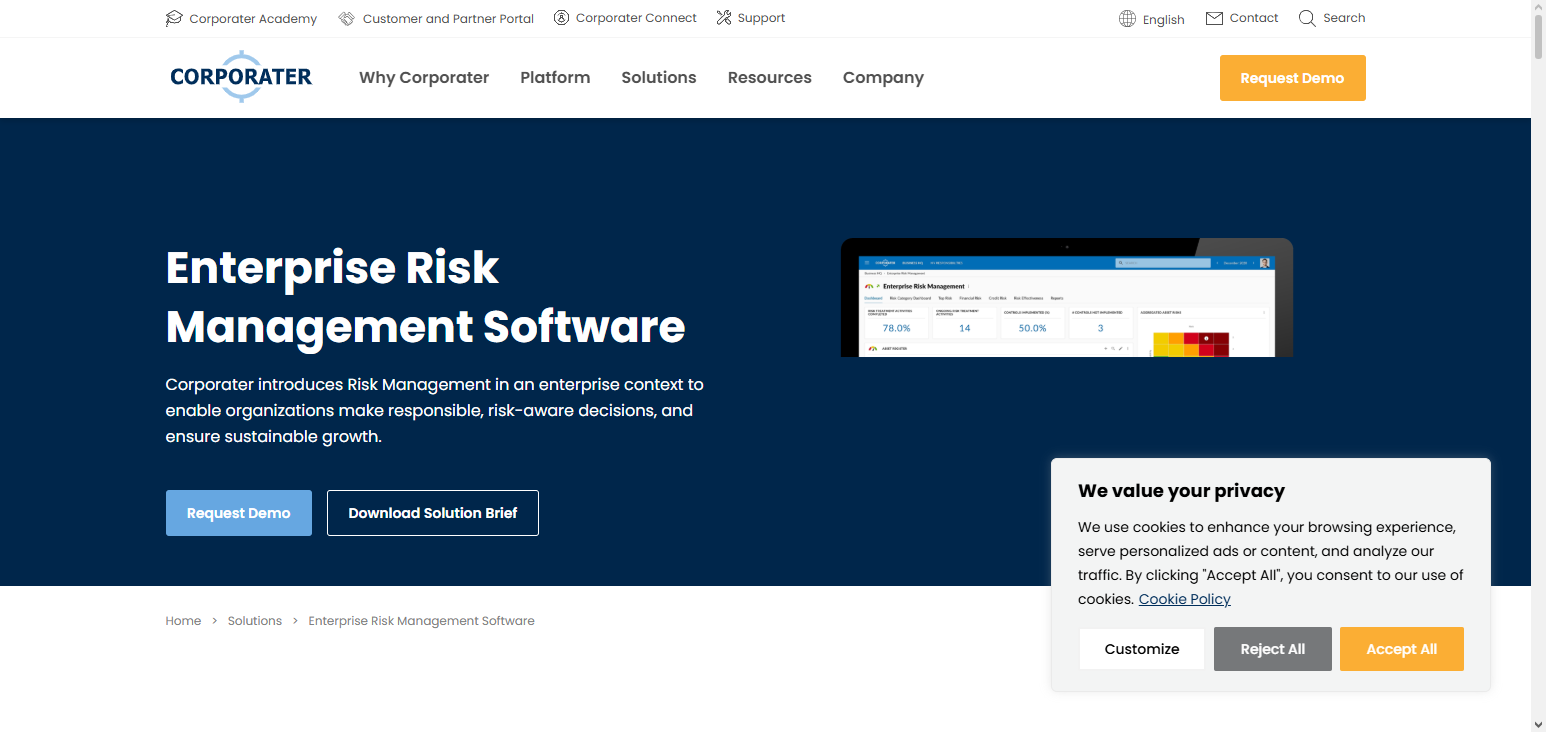
It enables leaders to make well-informed decisions based on thorough risk data by integrating corporate risk management with strategic planning, performance monitoring, and regulatory compliance.
Additionally, Corporater ERM offers scenario modeling and automated risk reporting to assess possible business effects. Corporater ERM Suite is regarded as one of the Best Risk Management Software for Businesses Focused on Strategic Risk Governance because it integrates strategy management with risk analytics.
Corporater ERM Suite Features
- Modeling Risk at the Enterprise Level – The model supports the discovery, analysis, and evaluation of strategic and operational risks of the organization.
- Integrated Strategy & Risk Management – Merges risk management with strategic and performance management.
- Risk Analytics – Offers real-time risk analysis dashboards and forecasting.
- Risk Simulation Tools – Enables businesses to simulate risk scenarios and evaluate the consequences.
- Risk Reporting Automation – Prepares and submits executive risk reports to board and stakeholders.
Corporater ERM Suite
| Pros | Cons |
|---|---|
| Strong integration with enterprise performance management. | Implementation can be complex for large enterprises. |
| Advanced analytics and strategic risk dashboards. | Requires training for full utilization. |
| Real-time monitoring of enterprise risk metrics. | Higher cost compared with basic ERM tools. |
| Supports strategic planning and governance alignment. | Customization may require technical expertise. |
| Enterprise-level scalability for large organizations. | May be excessive for smaller businesses. |
6. Resolver
Organizations can detect, evaluate, and reduce operational and security risks with the aid of Resolver, a comprehensive risk intelligence platform. Within a single system, the platform provides enterprise risk assessment, threat intelligence, incident management, and compliance tracking. With the use of robust analytics and visualization capabilities, Resolver enables businesses to gather risk data from several departments and turn it into actionable insights.
Additionally, the platform facilitates automated reporting and investigative workflows, enabling businesses to react swiftly to problems and legal obligations. Resolver is considered one of the Best Risk Management Software for Enterprises seeking to improve incident response and risk analysis because of its strong emphasis on operational risk visibility and security intelligence.
Resolver Features
- Case & Investigation Management – Consolidates case, threat, and security event management.
- Operational Risk Intelligence – Transforms operational risk data into insights.
- Enterprise Risk Evaluation – Assists organizations in assessing risks with the greatest potential consequences.
- Threat Intelligence – Monitors and identifies business operational threats and risks.
- Reporting Automation – Offers risk management and compliance analytics and reporting.
Resolver
| Pros | Cons |
|---|---|
| Strong incident and investigation management capabilities. | Interface may require training for new users. |
| Centralized risk intelligence and reporting. | Implementation can be time-consuming. |
| Powerful analytics and visualization tools. | Some features require customization. |
| Integrates operational risk with compliance monitoring. | Pricing may be higher for small companies. |
| Effective threat intelligence capabilities. | Integration with some systems may require configuration. |
7. Riskonnect
Organizations can handle corporate risks, regulatory requirements, and third-party interactions with a single system thanks to Riskonnect, a top integrated risk management platform. The program helps companies monitor and reduce risks in supply chains, operations, finance, and cybersecurity by providing sophisticated analytics, risk modeling, and automated workflows.
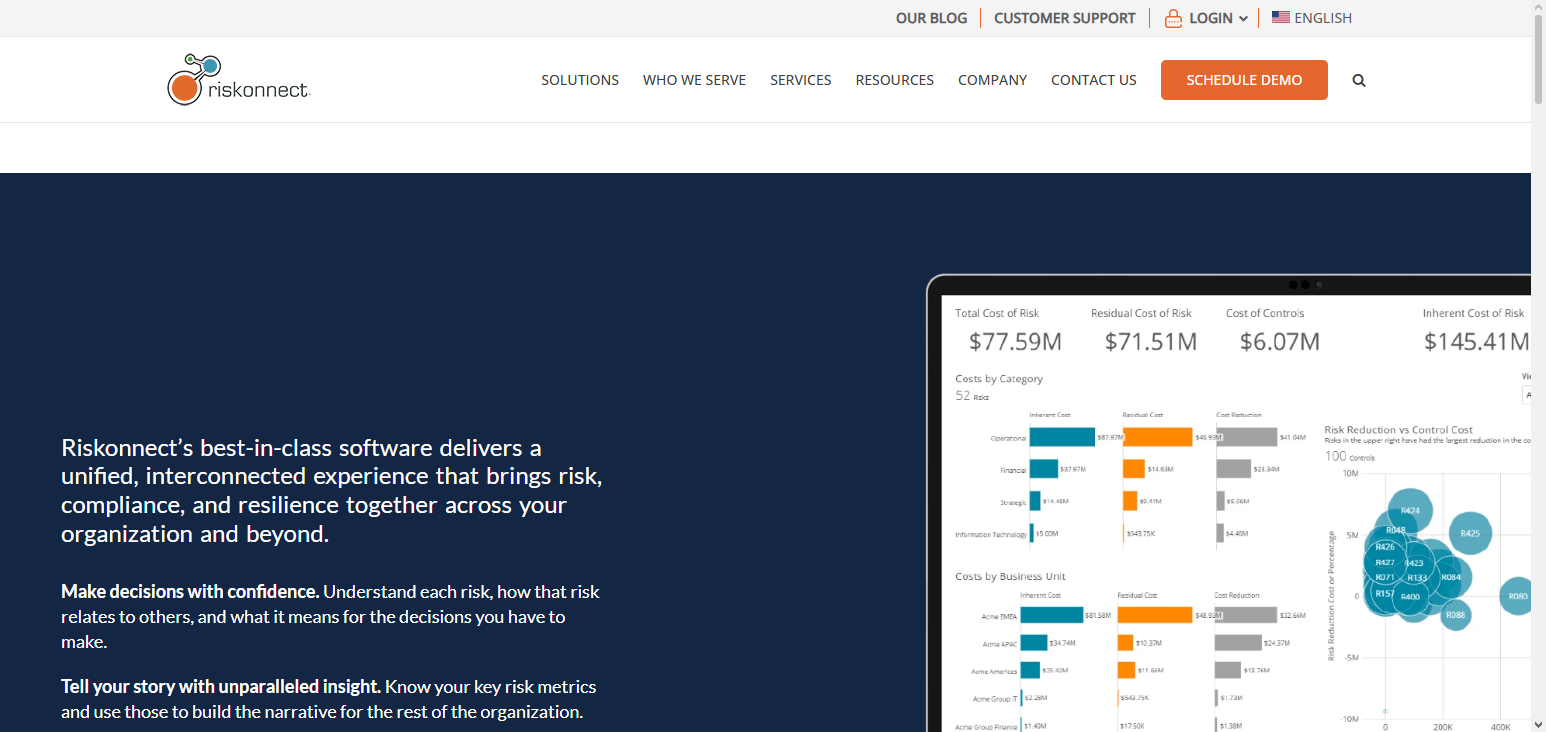
Additionally, Riskonnect offers incident management, audit monitoring, and regulatory reporting features that enhance departmental responsibility and transparency. Organizations may dismantle data silos and obtain a comprehensive understanding of enterprise risks thanks to its unified design. Riskonnect is regarded as one of the best risk management software for businesses looking for centralized risk intelligence due to its integrated features.
Riskonnect Features
- Unified Risk Management Software – Integrates risk management, compliance, and resilience across functions.
- Predictive Risk Analytics – Assists with forecasting analytics for risk management across the enterprise.
- Third Party Risk Management – Assesses risk and exposure for vendors and suppliers.
- Incident & Event Management – Monitors and records risk and event disruptions.
- Automation of Workflows – Automates risk reduction and task management.
Riskonnect
| Pros | Cons |
|---|---|
| Integrated risk management across departments. | Implementation process can be lengthy. |
| Strong analytics and risk modeling tools. | Customization may require technical expertise. |
| Supports third-party risk and compliance monitoring. | Learning curve for new users. |
| Real-time dashboards and reporting. | Higher licensing cost for large deployments. |
| Helps eliminate risk data silos across teams. | Some advanced features require additional configuration. |
8. ServiceNow Risk Management
As a component of the ServiceNow Integrated Risk Management (IRM) platform, ServiceNow Risk Management assists businesses in managing operational, IT, and compliance risks in a single digital workflow environment.
The platform integrates directly with IT service management and security operations tools, automating risk detection, assessment, and mitigation procedures. Visibility into risk exposure across systems, vendors, and business processes is made possible with real-time dashboards.
Additionally, ServiceNow’s automation features speed up response times for risk occurrences and minimize manual compliance activities. ServiceNow Risk Management is regarded as one of the Best Risk Management Software for Enterprises that need IT-driven risk governance and operational resilience because of its robust interface with enterprise IT systems.
ServiceNow Risk Management Features
- Integrated Risk Management (IRM) – Risk management processes are integrated with IT service management and security operations.
- Automated Risk Workflows – Risk assessments, mitigation activities, and investigations are done automatically.
- Continuous Risk Monitoring – Tracks key risk indicators and effectiveness of controls across different systems.
- AI-Driven Issue Management – AI and machine learning are used to identify problems and recommend ways to solve them.
- Centralized Risk Reporting – Risk posture across the organization can be monitored through dashboards and reports.
ServiceNow Risk Management
| Pros | Cons |
|---|---|
| Deep integration with the ServiceNow platform ecosystem. | Licensing costs can be expensive. |
| Highly customizable workflows for risk and compliance. | Implementation can be complex and time-consuming. |
| Strong automation for compliance and control monitoring. | Interface may feel complicated for non-technical users. |
| Real-time risk dashboards and reporting. | Integrations with external systems can require effort. |
| Strong customer support and enterprise scalability. | Requires technical expertise for configuration. |
9. MetricStream
Large businesses may manage risk programs across many business units and regulatory contexts with the aid of MetricStream, a worldwide renowned governance, risk, and compliance platform. Organizations can monitor risk in real time using the platform’s AI-powered analytics, enterprise risk management, audit management, and regulatory compliance solutions.
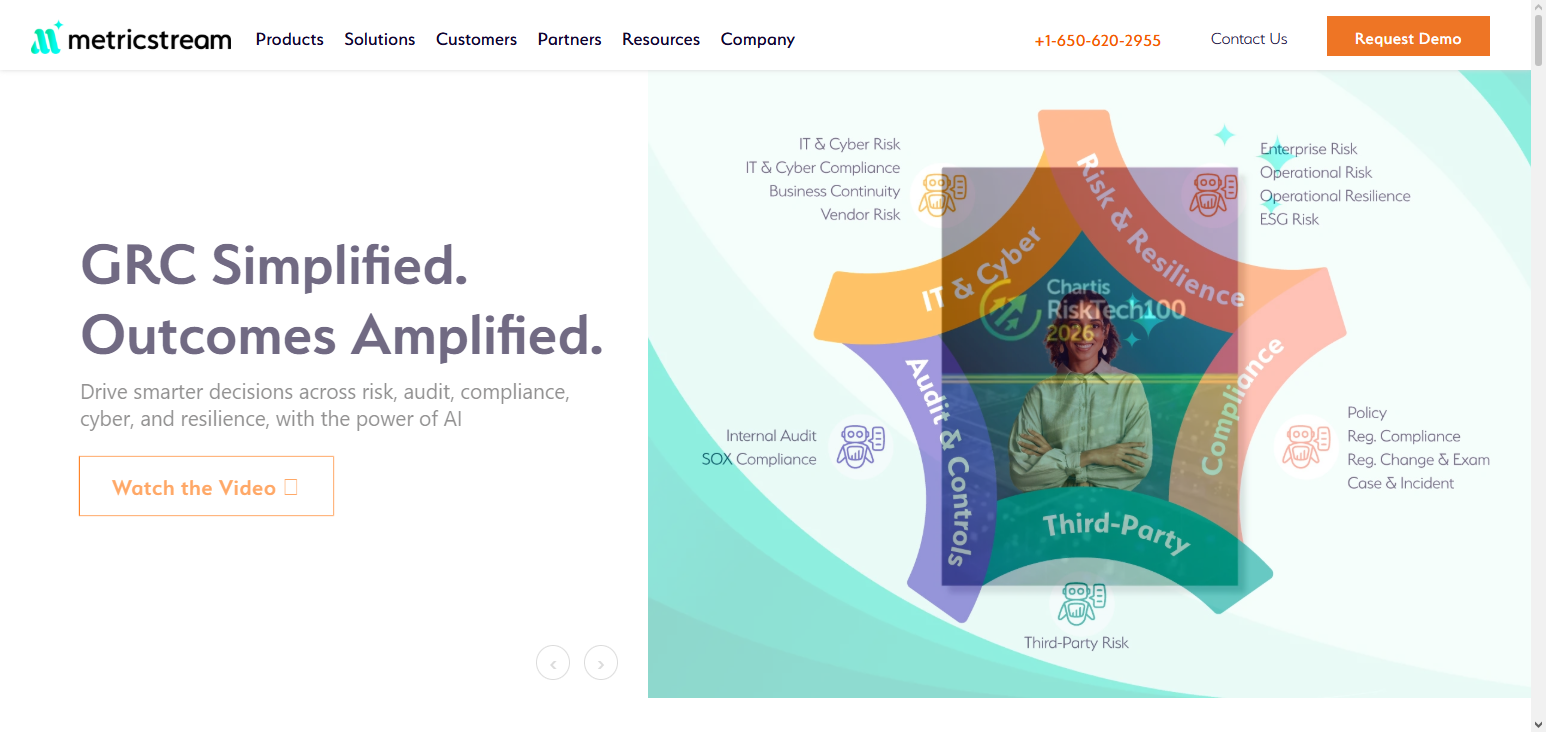
MetricStream helps businesses identify possible risks before they affect operations by offering consolidated dashboards, automated workflows, and predictive analytics. Additionally, it is appropriate for highly regulated industries because it supports industry frameworks like ISO, COSO, and NIST. MetricStream is considered one of the Best Risk Management Software for Enterprises worldwide due to its sophisticated analytics and corporate scalability.
MetricStream Features
- Enterprise GRC Integration – Risk management, compliance, audit, and policy management are integrated into one platform.
- AI-Driven Risk Analytics – Emerging risks are predicted through analytics.
- Internal Audit Management – Audit planning, execution, and reporting are automated.
- Regulatory Compliance Management – Supports compliance globally with different regulatory and compliance frameworks.
- Real-Time Risk Monitoring – Dashboards and analytics are provided to monitor risks across the enterprise.
MetricStream
| Pros | Cons |
|---|---|
| Comprehensive enterprise GRC capabilities. | Interface can be complex for beginners. |
| AI-driven analytics and risk monitoring. | Customization may require technical expertise. |
| Strong audit management and compliance tools. | Training may be required to use all features. |
| Centralized dashboards for enterprise risk. | Reporting customization can be challenging. |
| Supports multiple regulatory frameworks. | Implementation may take longer in large enterprises. |
10. SAP Risk Management
As a component of the SAP Governance, Risk, and Compliance package, SAP Risk Management assists companies in identifying, assessing, and reducing corporate risks while coordinating them with business plans. Companies can monitor operational, financial, and compliance risks from within their business operations thanks to the platform’s seamless integration with SAP ERP systems.
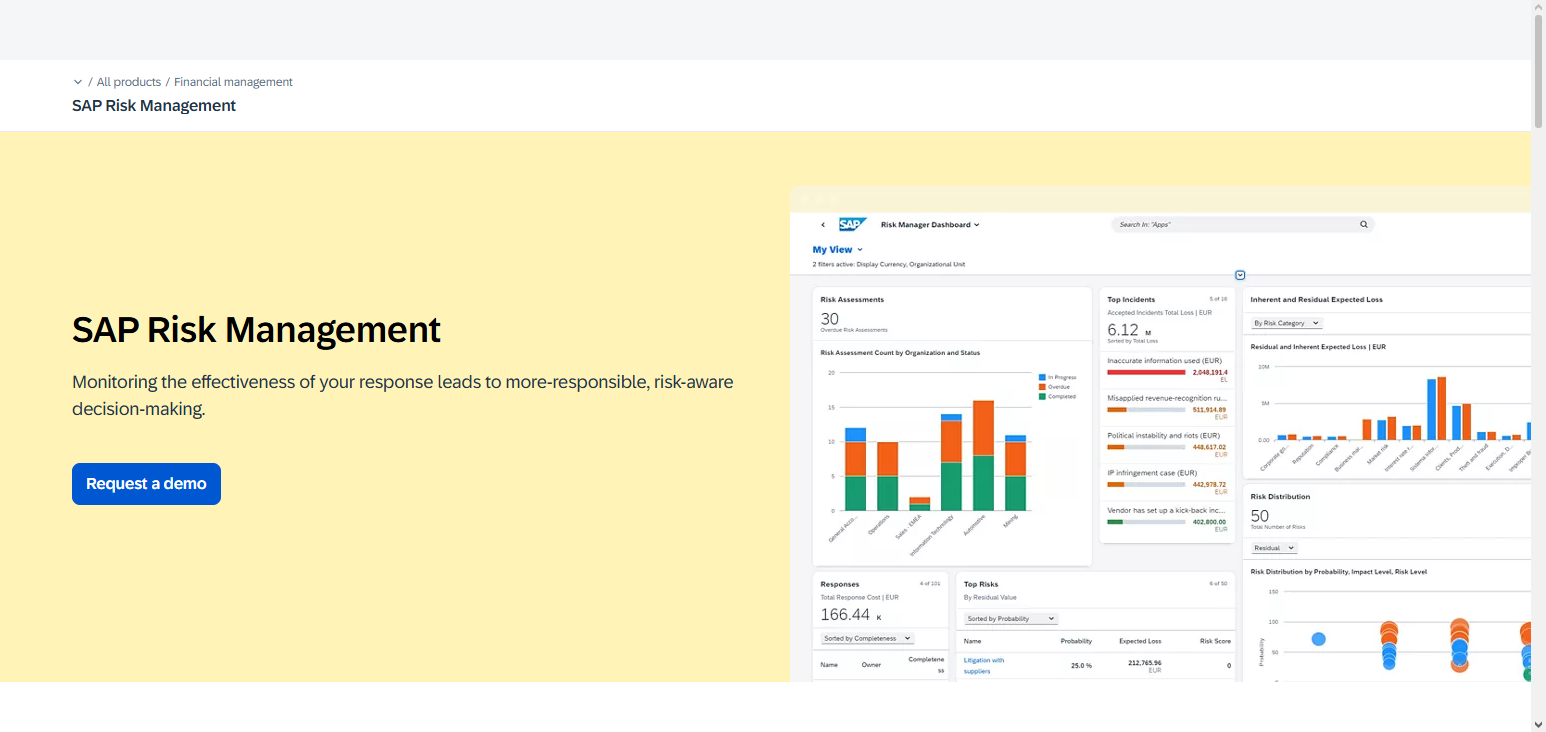
It provides executives with automated reporting tools, predictive risk modeling, and advanced analytics to assess risk exposure and make data-driven choices.
Additionally, the program facilitates internal control management and regulatory compliance throughout international businesses. SAP Risk Management is regarded as one of the best risk management software for businesses utilizing the SAP ecosystem due to its extensive connection with enterprise processes.
SAP Risk Management Features
- SAP Ecosystem Integration – Integration with SAP ERPs for enterprise data management is done effortlessly.
- Predictive Risk Analytics – Potential operational and financial risks are predicted through analytics.
- Automated Risk Assessments – Risks are identified, assessed, and prioritized automatically across different business processes.
- Compliance and Control Monitoring – Assess the effectiveness of internal controls and regulatory compliance.
- Enterprise Risk Reporting – Provides in-depth risk analysis to executives and auditors.
SAP Risk Management
| Pros | Cons |
|---|---|
| Seamless integration with SAP ERP ecosystem. | Implementation can be complex. |
| Advanced analytics and predictive risk modeling. | Requires SAP technical expertise. |
| Enterprise-level scalability and governance tools. | User interface may feel outdated. |
| Strong financial and operational risk monitoring. | Deployment may take significant time. |
| Real-time reporting and compliance automation. | High cost compared to some alternatives. |
Conclusion
Identifying promising risk management software for enterprises helps organizations recognize threats proactively, stay compliant with regulations, and enhance their strategic decision-making processes. LogicGate Risk Cloud, OneTrust GRC, Mitratech Alyne, ServiceNow Risk Management, and MetricStream are excellent enterprise risk management, compliance-automation, and organizational visibility solutions.
Enterprises can consolidate risk information, automate processes, and receive updates on operational, financial, cybersecurity, and regulatory risks with the right software. While the needs of the organization—size, complexity, regulatory obligations, and the need for integration—determine the most appropriate software, modern risk management solutions enhance organizational resilience, governance, and overall business sustainability.
FAQ
Risk management software for enterprises is a digital platform that helps organizations identify, analyze, and mitigate risks across different departments such as finance, operations, cybersecurity, and compliance. These platforms centralize risk data, automate assessments, and provide dashboards for monitoring potential threats. By using Enterprise Risk Management (ERM) tools, companies gain better visibility into risk exposure and can make informed decisions to protect business operations and achieve strategic goals.
Enterprises use risk management software to proactively detect potential risks, reduce financial losses, and ensure regulatory compliance. The software automates risk assessments, tracks mitigation plans, and improves collaboration between departments responsible for governance and compliance. By implementing a structured ERM system, businesses can respond faster to threats and maintain operational stability.
The best risk management software for enterprises typically includes features such as risk identification and assessment tools, automated reporting, real-time dashboards, workflow automation, and compliance management. Many platforms also integrate with governance, risk, and compliance (GRC) systems to provide a unified view of organizational risks. These capabilities allow companies to monitor risk indicators, generate reports for audits, and respond quickly to emerging threats
Enterprise risk management software is widely used in industries such as banking, healthcare, manufacturing, technology, and government. Financial institutions use it to monitor fraud and regulatory compliance, while healthcare organizations manage patient safety and data privacy risks. Manufacturing companies track supply-chain disruptions and operational hazards, making ERM solutions valuable across multiple sectors.