This article will cover the Best Enterprise SaaS Spend Management Platforms for Corporate IT and highlight the top-rated platforms that support enterprises in managing software subscriptions, cutting IT costs, and gaining financial clarity.
It will cover how these platforms make the procurement process easier, automate different processes, and provide the best use of SaaS to allow large enterprises to manage costs easily and drive decisions based on data.
What is SaaS Spend Management?
SaaS spend management refers to the mechanisms by which organizations are able to develop and implement processes and systems to gain control over their subscriptions and related SaaS spend.
SaaS spend management systems typically include tools to help facilitate visibility and automate approval processes. Organizations are able to centralize relevant financial information within the system.
This increases compliance to internal policies and helps organizations budget and forecast more accurately and effectively.
Containment of SaaS spend is not the only advantage of SaaS spend management solutions. Organizations are able to eliminate unnecessary IT spend and increase the overall operational efficiency of the organization.
Key Points & Best Enterprise SaaS Spend Management Platforms for Corporate IT
| Platform | Explanation |
|---|---|
| Coupa | Comprehensive procurement and spend control platform for enterprises globally used |
| SAP Ariba | Enterprise procurement and sourcing solution with strong supplier networks globally |
| Oracle NetSuite | Unified ERP and spend management platform for mid sized enterprises |
| ServiceNow SPM | Automates enterprise spend workflows with integrated IT service management capabilities |
| Apptio | IT financial management platform optimizing cloud and SaaS spending visibility |
| Zluri | AI driven SaaS management platform tracking and optimizing applications usage |
| Zylo | Enterprise SaaS management providing visibility into software subscriptions spend optimization |
| Airbase | All in one spend management platform for corporate card control |
| Ramp | Modern spend management platform automating corporate expenses and approvals quickly |
| Spendesk | Smart spend management solution combining cards, invoices, and an approvals platform |
10 Best Enterprise SaaS Spend Management Platforms for Corporate IT
1. Coupa
Coupa spend management software provides enterprises with control and visibility of spend, expenses, and suppliers.
Coupa uses AI to enhance the compliance and spending decisions of large enterprises. Coupa has a strong community intelligence component, which uses de-identified customer data to create pricing and performance benchmarks.
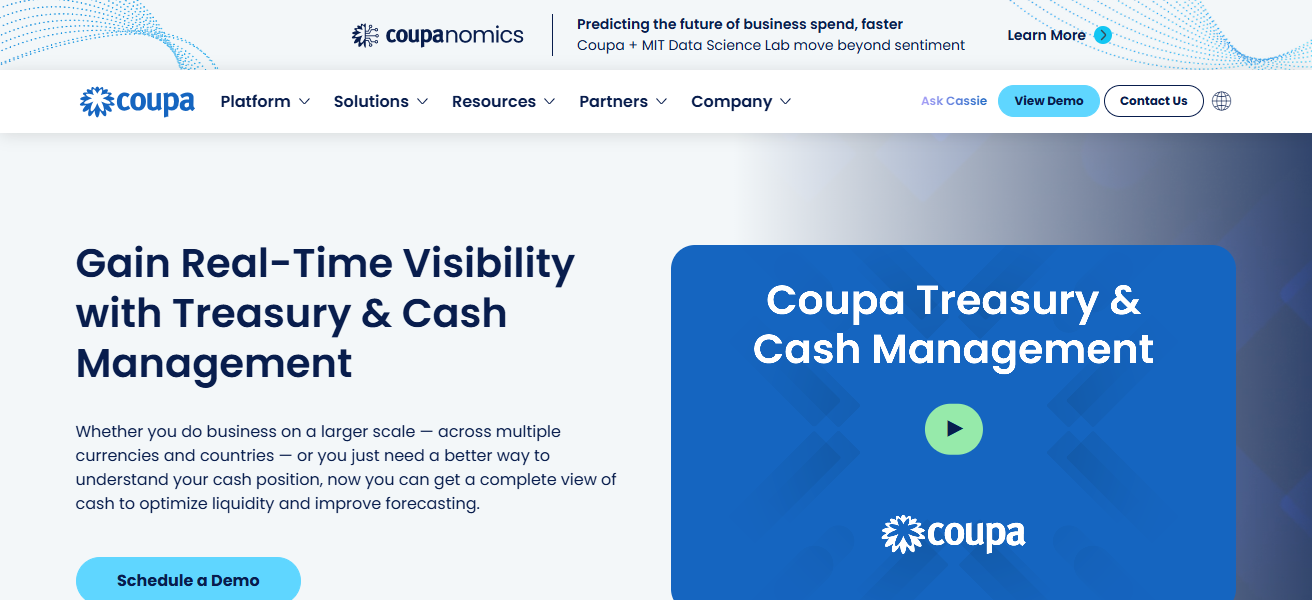
Coupa’s cloud solution combines procurement, invoicing, and expense processing, and can be a great option for large global enterprises wanting to implement a solution that is simple and cost-efficient.
Coupa Pros & Cons
Pros
- AI insights for efficient enterprise spend
- Excellent global supplier benchmarks
- Automates procurement and expenses
- Scalable enterprise solution
Cons
- Complicated implementation and onboarding
- Not affordable for small businesses
- Extensive training necessary for users
2. SAP Ariba
SAP Ariba is a spend management software solution that is built on a global supplier and customer network.
SAP Ariba focuses on automation and compliance of procurement and contracting and simplifies these processes. SAP Ariba works extremely well with the SAP ERP and other SAP solutions.

The Ariba Network helps suppliers gain a better understanding of costs and where savings can be achieved, which helps large enterprises reduce procurement and operational deficiencies.
SAP Ariba Pros & Cons
Pros
- Large global supplier network
- Integrates deeply with SAP ERPs
- Great procurement compliance
- Sophisticated sourcing and contracting
Cons
- Difficult for users to learn
- Costly enterprise licenses
- Slow to implement
- Outdated UI
3. Oracle NetSuite
Oracle NetSuite is an all-in-one cloud ERP with spend management and financial tracking that is designed for the mid-market.
NetSuite offers improved control over spend through procurement and expense management and financial dashboards that provide real time visibility.

NetSuite offers workflows for automation of approvals and integrates purchasing and inventory with accounting.
NetSuite’s controls and compliance make it a good option for growing enterprises that want to manage and optimize corporate spend.
Oracle NetSuite Pros & Cons
Pros
- Unified ERP and finance management
- Spend visibility in real time
- Great automation of workflows
- Scalable cloud offering
Cons
- Costly, and gets more expensive with modules
- Time-consuming to setup and configure
- Not great for small businesses
- Limited customization, and the customization is superficial
4. ServiceNow SPM
ServiceNow SPM (Strategic Portfolio Management) builds on ServiceNow’s IT service management portfolio to include enterprise spend management and portfolio optimization.
With ServiceNow SPM, organizations can align IT expenditures with business needs and implement workflows for demand management, planning, and budgeting.
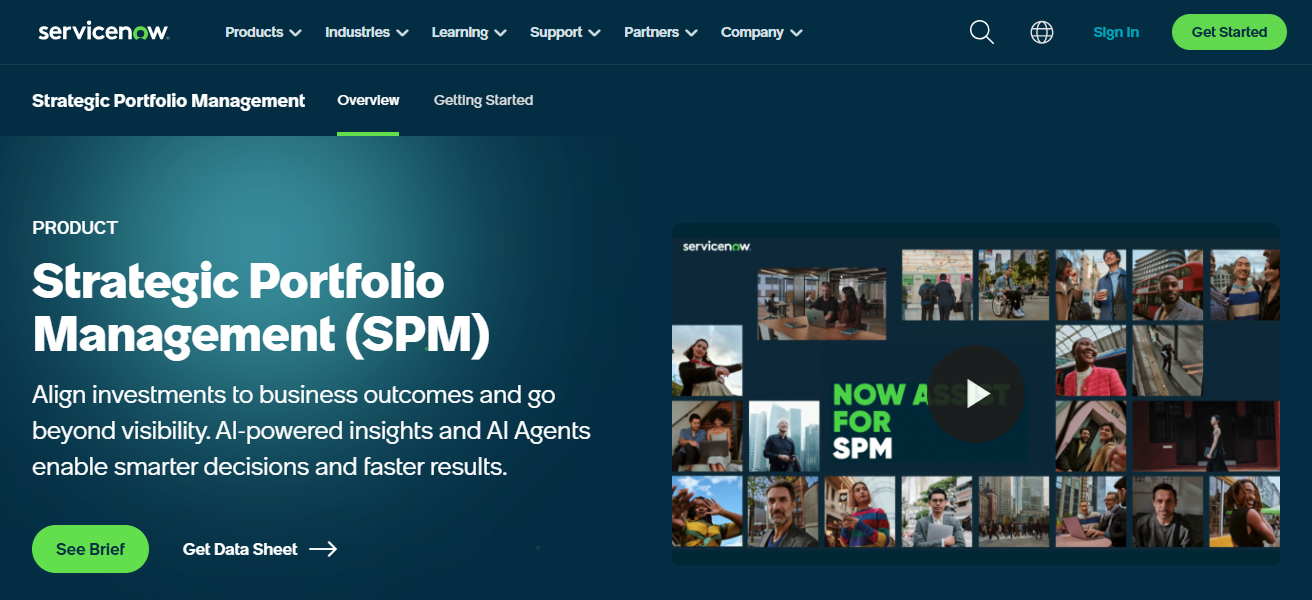
This offering brings greater visibility to IT spend and enables informed decisions backed by data. Automated workflows and augmented management help organizations eliminate redundant
expenditures, optimize resource allocation, and ensure that IT spend achieves desired outcomes for the business.
ServiceNow SPM Pros & Cons
Pros
- Spends IT resources to align with business
- Strong automation of workflows
- Excellent portfolio and demand management
- Built on ServiceNow
Cons
- ServiceNow platform dependent
- High cost and spending to implement
- Complicated to configure
- High need for skilled administrators
5. Apptio
Apptio focuses on IT financial management and the management of IT expenditures, assisting organizations in comprehending and managing their spending on the cloud and SaaS.
With its multi-cloud and hybrid cloud cost visibility and clarity, robust budgeting and forecasting become possible.
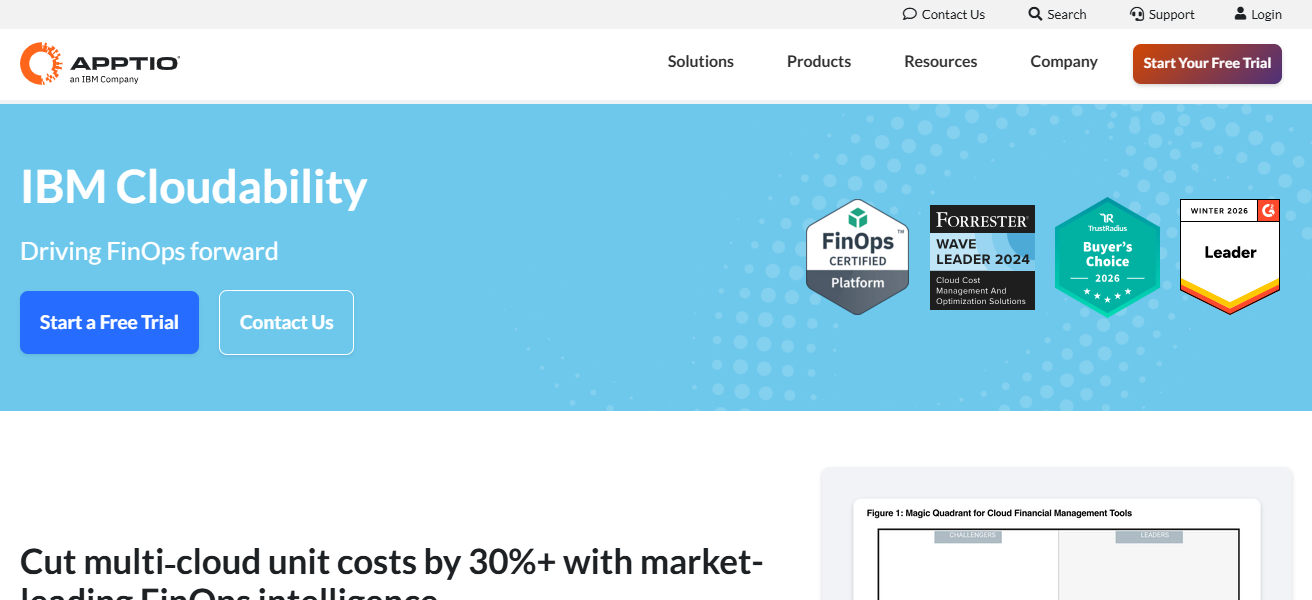
For CIOs and IT executives, Apptio enables alignment of IT spend and business value through the use of more sophisticated cloud cost allocation, control, and accountability.
Apptio Pros & Cons
Pros
- Excellent tools for the transparency of IT spending
- Comprehensive spend analysis
- Advanced analytics and reporting/monitoring
- Flexible analytics
- Focused on maximizing cloud productivity
- Top-tier financial analytical tools
- Can operate in multiple cloud areas
Cons
- High enterprise cost
- Difficult initial data setup
- Primarily for big companies
- Ongoing upkeep needed
6. Zluri
Zluri is an advanced SaaS management tool that enables organizations to discover, control, and optimize their software subscriptions.
Zluri’s visibility into SaaS spending, usage, and renewals is coupled with the automation of the elimination of shadow IT and IT spend on software.

Zluri’s insights are geared towards the renewals and usage of applications that are overrepresented in the corporate software portfolio.
Zluri’s solution is especially valuable for organizations that have rapidly expanding SaaS and software subscriptions.
Zluri Pros & Cons
Pros
- Automates SaaS discovery and tracking
- Shows shadow IT
- Licenses are optimized
- Easy to use
Cons
- Basic enterprise features
- Smaller integration options
- Reports still need work
- Not for large enterprises
7. Zylo
Zylo specializes in enterprise SaaS optimization. Visibility into software subscriptions and SaaS usage is critical for enterprise organizations.
Zylo assists IT and finance teams in controlling Shadow IT, managing renewals, and eliminating redundant tools.
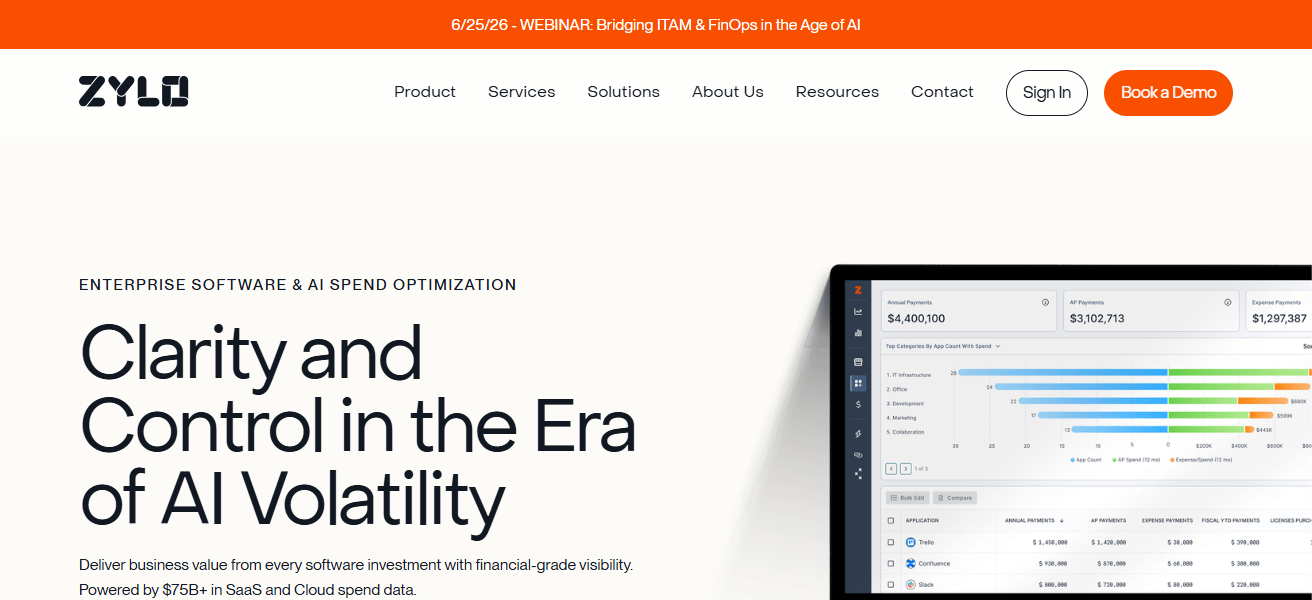
Zylo’s analytics-driven strategy supports the reduction of SaaS waste and more favorable negotiations of SaaS contracts.
With strong integration capabilities, Zylo centralizes the management of SaaS inventories and assists enterprises in controlling SaaS sprawl and optimizing enterprise SaaS investments.
Zylo Pros & Cons
Pros
- Full SaaS catalog
- Excellent subscription management
- No more wasted software funds
- Solid enterprise integrations
Cons
- Pricey for mid-size companies
- Needs a data setup
- Complex UI
- Low workflow automation
8. Airbase
Airbase is an integrated spend management solution that combines corporate cards, expense reimbursement, and AP automation.
With Airbase, teams gain visibility of spend across the enterprise in real time. Automated controls drive spend compliance.

Airbase consolidates spend management tools in a single system, simplifying finance operations for modern finance teams.
The built-in automation and control features of Airbase help reduce manual accounting. Operational spend and budget control are improved through enhanced visibility and spending analytics.
Airbase Pros & Cons
Pros
- Integrated cards, AP, and Expense
- Money tracking in near real-time
- Excellent approval workflows
- Accounting made easy
Cons
- Low advanced procurement
- Not for large enterprises
- Reporting made easy but limited
- Best for finance stacks
9. Ramp
Ramp is a corporate spend management solution with a sharper focus on expense automation and corporate card spend.
Ramp employs artificial intelligence (AI) to assist with approval automation and the identification of expense savings.

Ramp’s spend analytics drive corporations to improve spend efficiency and eliminate wasteful spending.
The user-friendly design and automation of Ramp are the core reasons Ramp is a top solution for spend management among startups and large enterprises.
Ramp Pros & Cons
Pros
- Easy setup and automation
- AI encourages spending less
- Zero-cost corporate card
Cons
- Limited sourcing globally
- Less customization for enterprises
- Banking ecosystem-focused
- Less procurement
10. Spendesk
Spendesk is an all-in-one spend management system that integrates corporate cards, invoice management, and expense approvals all in one system.
Spendesk enables finance teams to gain greater insight into company spending and helps with enforcing policy compliance for company budgets.

Spendesk enables better financial control by reducing manual processes and improving transparency across the entire organization.
Flexible workflows and reporting make Spendesk the best choice for businesses that require a flexible spend management and reporting system to help support planned growth and stay compliant with regulations.
Spendesk Pros & Cons
Pros
- Comprehensive spend management
- Virtual cards
- Easy approvals
- Good financial visibility
Cons
- Limited enterprise scalability
- Lacking advanced analytics tools
- Limited to specific regions
- Limited ability to integrate complex systems
Benefits of SaaS Spend Management for Corporate IT
- Lower IT expenditure: Removes redundant software purchases and avoid licenses.
- Enhanced compliance: Software purchases align with approval workflow steps.
- Increased control: Dashboards serve to control all IT expenditures.
- Improved budgeting: Better forecasting and procurement through data driven budgeting.
- Control of shadow IT: Managed apps help reduce uncontrolled software usage.
- Efficient SaaS: Better subscription with discovering tools whose usage is low.
- Accelerated financial reporting: Improved reporting cycle through prompt tracking of expenses.
Selecting The Top Enterprise SaaS Spend Management Solutions for Corporate IT
- Enterprise scalability: Focused on the platforms that are effective for large and expanding management systems.
- Cost management features: Focused on the platforms that have effective SaaS and IT spend tools.
- Automation capabilities: Focused on the platforms that have automation of workflow, approvals and expenses.
- Integration support: Focused on platforms that support integration to ERP, HR and finance.
- Real-time visibility: Focused on platforms that provide dashboards and insights on spending.
- Security & compliance: Focused on platforms that have robust security and compliance with governance and auditing.
- User experience: Considered ease of use for IT and finance.
- AI & analytics: Included platforms that have insights and optimization of spending.
- Market reputation: Included platforms that provide enterprise solutions and are widely used.
- Innovation & updates: Included platforms that have modern and innovative features and improve continuously.
Conclusion
In conclusion, it is essential to choose the right SaaS spend management platform to control enterprise IT costs and enhance financial efficiency.
The platforms listed above equip organizations to manage their software subscription, automate their purchasing, and access real-time visibility into spending.
These platforms provide anything from AI-based optimization to enterprise-grade compliance to encourage sound decision-making and minimize spending.
Ultimately, the right platform solution will depend on the size, budget, and integration of the company.
FAQ
Can SaaS spend management tools reduce cloud costs?
Yes, many platforms like Apptio and Zluri help optimize cloud and SaaS spending significantly.
Are these tools suitable for small businesses?
Some platforms like Ramp, Airbase, and Spendesk are also suitable for startups and SMBs.
What is shadow IT in SaaS management?
Shadow IT refers to software used without IT approval, often increasing security and cost risks.
Why do companies need SaaS spend management tools?
They help reduce software waste, improve visibility, and control IT budgets efficiently.