In this article, I will cover the Best Software for Internal Controls & Audit Management. Organizations must select the appropriate software in order to simplify the audit process, handle internal control management, compliance management, and risk management.
- Key Points & Best Software For Internal Controls & Audit Management
- 10 Best Software For Internal Controls & Audit Management
- 1. AuditBoard
- 2. Workiva
- 3. Vanta
- 4. Thoropass
- 5. Scrut Automation
- 6. SafetyCulture
- 7. Resolver
- 8. Onspring
- 9. MetricStream
- 10. TeamMate+
- How We Choose Best Software for Internal Controls & Audit Management
- Conclusion
- FAQ
The best software will streamline work processes, evidence will be centralized, and reporting will be in real-time.
The best software will also assist in regulatory reporting, and will support auditors in achieving efficient year-round audit readiness.
Key Points & Best Software For Internal Controls & Audit Management
| Software | Key Point |
|---|---|
| AuditBoard | Best for audit and risk management in regulated industries |
| Workiva | Enterprise reporting and compliance |
| Vanta | Compliance automation for SaaS companies |
| Thoropass | Flexible framework support |
| Scrut Automation | Automated cloud compliance |
| SafetyCulture | Mobile-first inspections and audits |
| Resolver | Risk-based audit planning |
| Onspring | Workflow automation and reporting |
| MetricStream | Comprehensive GRC and compliance integration |
| TeamMate+ | Audit scheduling and documentation management |
10 Best Software For Internal Controls & Audit Management
1. AuditBoard
AuditBoard is the top provider of platforms for the management of audits and internal controls. AuditBoard helps companies consolidate and simplify planning audits, assessing risks, testing controls, and tracking compliance.
AuditBoard streamlines the management of workflows and evidence, providing organizations with audit findings and the status of the audit.
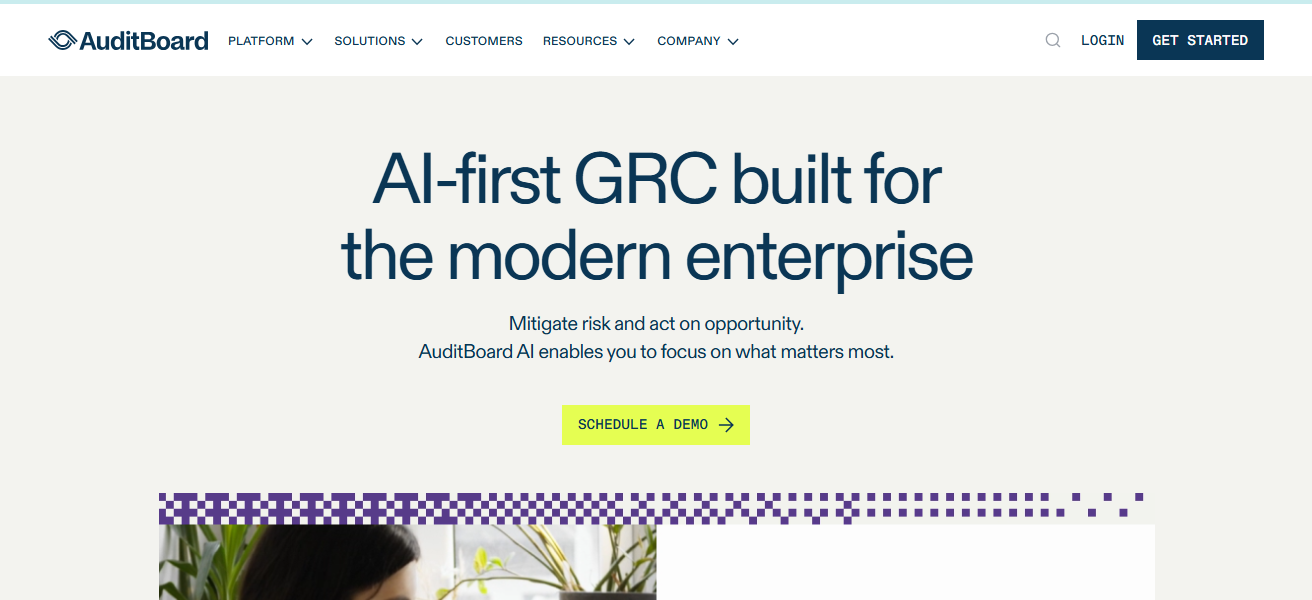
Reporting and dashboards that reflect the status of the audit in real-time help teams reduce risk and remain ready for an audit.
AuditBoard, an automated provider of SOX compliance and risk services, is designed for mid to large companies. AuditBoard minimizes the effort needed for manual work.
Features AuditBoard
- All-in-one Audit Management – plan, execute, and report audits in one platform.
- Audit Evidence and Control Management – Trace audit evidence, test results, and internal controls.
- Task Scheduling – Standardize audit tasks, remediation issues, and approvals.
- Analytics and Dashboards – Visualize audits in real time along with risk status and audit related KPIs.
| Pros | Cons |
|---|---|
| Modern, intuitive UI with high adoption and strong collaboration features across audit, risk, and control functions. | Can be expensive, especially with multiple modules and larger teams. |
| Excellent automation of evidence collection and workflow tracking, reducing manual tasks. | Complex setup and longer implementation time for enterprise environments. |
| Scalable with real-time reporting and dashboard insights for auditors and stakeholders. | Some advanced customizations may require vendor support. |
2. Workiva
Workiva is a business auditing and compliance solution that integrates the reporting of internal controls and the management of risks by using the document-data-insight triad on one cloud system.
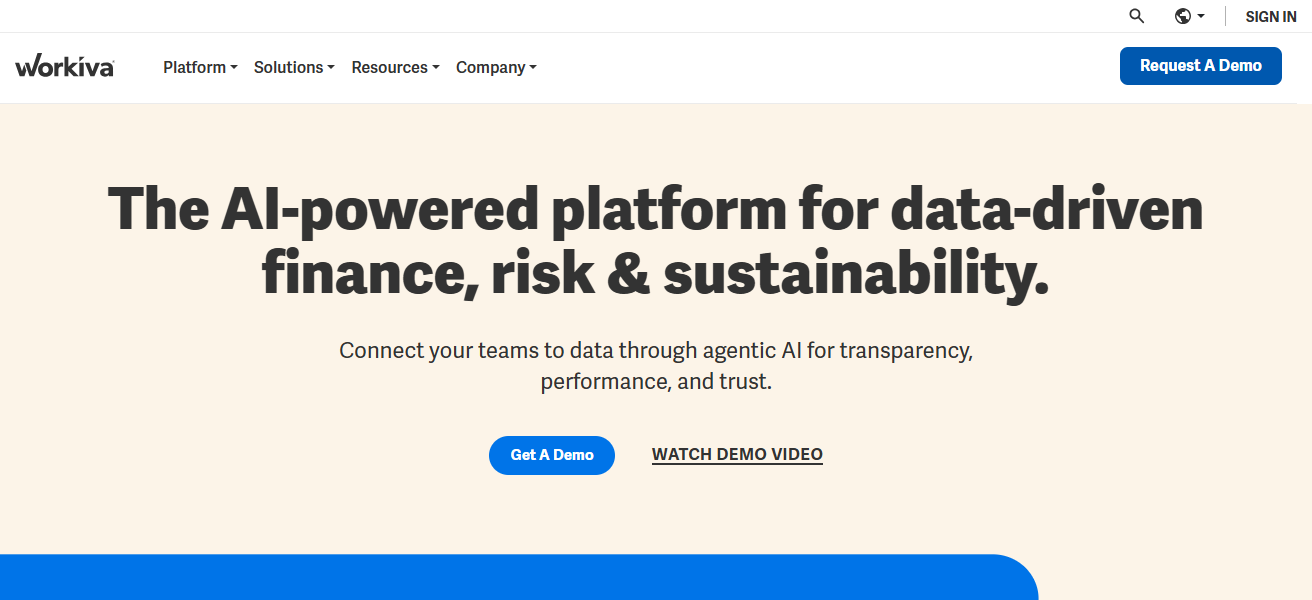
It emphasizes collaboration by using cloud reporting, and versioning, and controlling editing across different teams. It also provides multiple management reporting options and generates audit reports automatically.
It is suited for reporting internal controls and financial reporting because it is easy to use and allows customization.
Features Workiva
- Simultaneous Actions – Several co-workers can work and review changes in real time.
- Unified Compliance Reporting – Audit, risk, and financial/ ESG reporting all in one workspace.
- Workflows – Design tailored workflows for internal processes, and control frameworks.
- Accessibility – Cloud based with role-specific security.
| Pros | Cons |
|---|---|
| Seamless collaboration across teams and documents | Steep learning curve for new users |
| Powerful integrations with data and reporting tools | Pricing unclear and often enterprise-level |
| Audit trail with auto-save and compliance features | Interface complexity can slow adoption |
3. Vanta
Vanta is an audit management and compliance automation platform. Vanta streamlines audit prep by providing automated evidence collection, control monitoring, and framework mapping.
Vanta centralizes audit processes, tracks evidence in real time, and improves collaboration between teams and auditors.
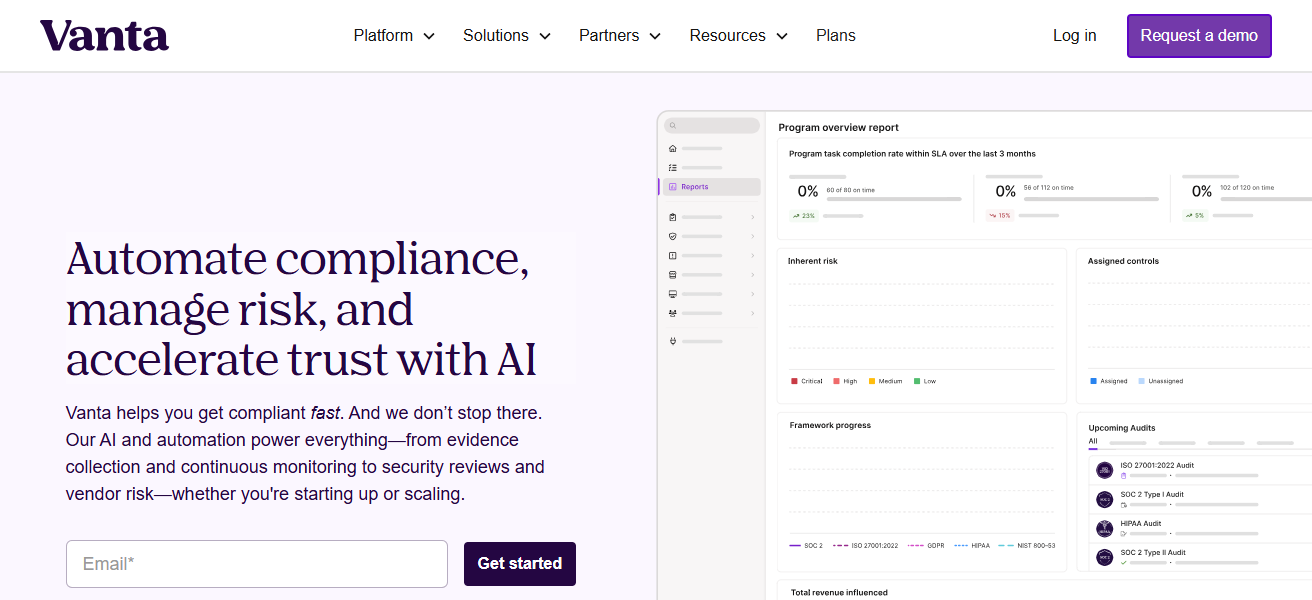
Vanta automates control testing to be in compliance with multiple frameworks, allowing organizations to be audit-ready anytime.
Vanta’s integration and dashboards improve the audit process by eliminating the need for manual spreadsheets.
Features Vanta
- Monitored Automation & Tests – Evaluates performance of controls in real time across all systems
- Control Framing – Several mapped controls for predominant compliance
- Workflows for Automation – Alerts and workflows assist in rapid issue closure.
- Dashboards and Reporting – Overall insight into compliance and risk.
| Pros | Cons |
|---|---|
| Ease of use with intuitive compliance workflows | Hidden costs in pricing model |
| Strong integrations with cloud and SaaS tools | Limited customization for complex enterprises |
| Clear compliance guidance for SOC 2, HIPAA, ISO | Support issues reported during scaling |
4. Thoropass
Thoropass simplifies audit and compliance management with automation and expert guidance. Users can plan, collect evidence, map controls, monitor continuously, and collaborate with auditors all from the same platform.
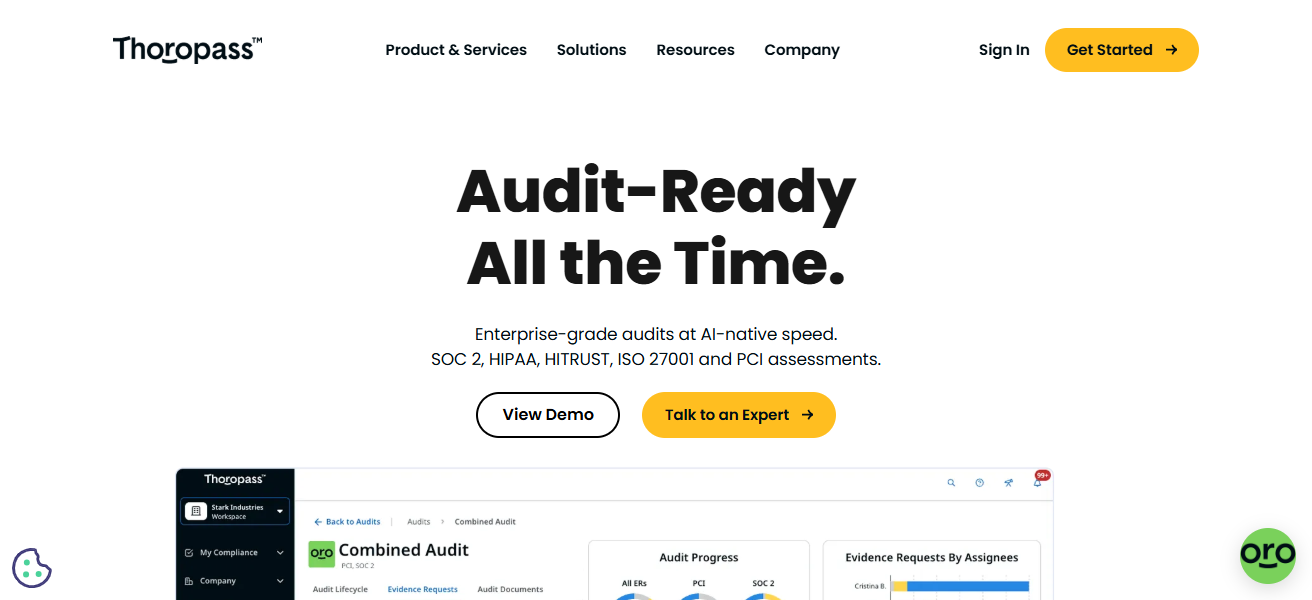
Thoropass boosts compliance and audit cost and time efficiency by automating the repeatable tasks and providing visibility to the status.
Thoropass integrates audit experts with the organization’s workflow to manage complex audit stages and to streamline internal controls and multi-framework audits.
Features Thoropass
- Integrated audit & compliance execution – Audit guided automation.
- Automated evidence collection & AI validation – Attests and collects evidence for requirements.
- Multi-framework support – Consolidate multiple frameworks like SOC 2, ISO, PCI, and others.
- Transparent audit tracking – Audit task, evidence, and milestone tracking.
| Pros | Cons |
|---|---|
| Blend of automation + advisory for audits | Dependency on advisory can slow processes |
| Supports 30+ frameworks (SOC 2, HIPAA, PCI, ISO) | Limited customization for large enterprises |
| Excellent customer support with dedicated contacts | Performance issues as organizations scale |
5. Scrut Automation
Scrut Automation is a tool for audit and compliance that streamlines the processes of tracking, managing evidence, and monitoring controls across various standards and frameworks.
It collects evidence automatically, manages control requirements, and creates custom reports, which allows teams to remain audit-ready with reduced manual work.
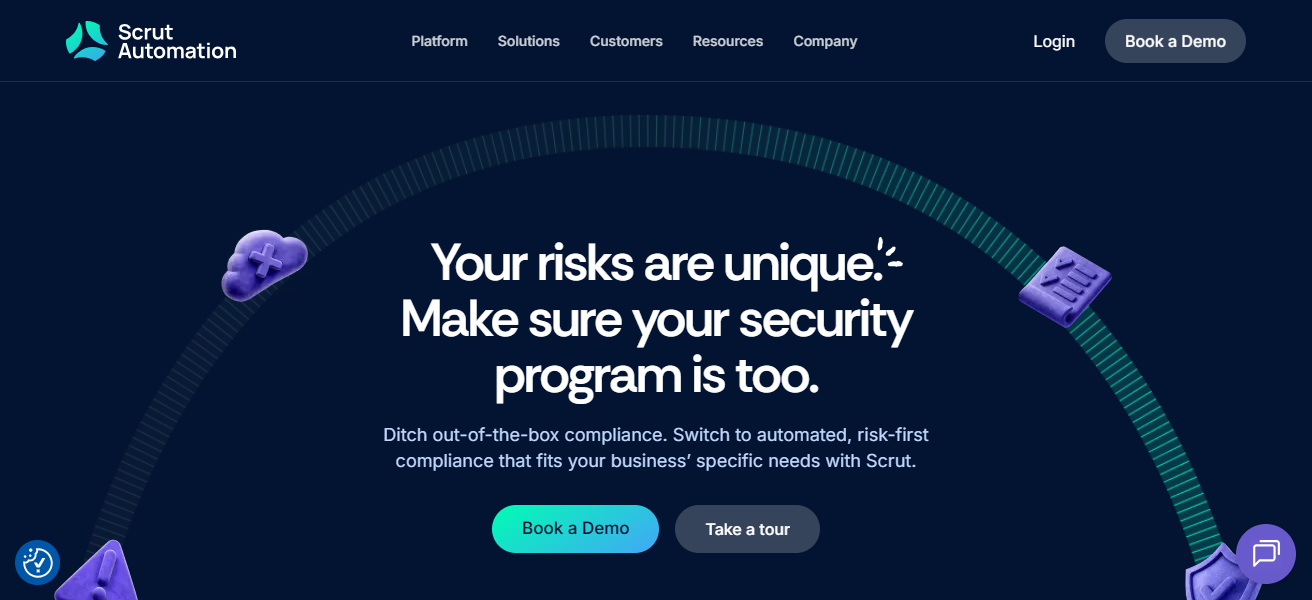
Real-time risk and task monitoring enables more effective gap identification and proactive issue remediation.
Customizable dashboards from Scrut Automation provide teams with insights and a clear overview of controls and progress on audits throughout the entire lifecycle.
Features Scrut Automation
- Multi-framework compliance mapping – Reducing repetitive efforts by mapping controls to several frameworks.
- Central evidence repository – Evidence and artifacts are stored and indexed in one system.
- Cloud security monitoring – Gaps in compliance are tested against cloud settings. Automated.
- Smooth audit collaboration – Audits are streamlined with evidence sharing and user access for auditors.
| Pros | Cons |
|---|---|
| Ease of use with intuitive dashboards | Limited advanced features compared to bigger platforms |
| Strong customer support with fast response times | Newer platform still maturing in enterprise adoption |
| Automated compliance workflows for PCI, ISO, SOC | Customization constraints for complex audits |
6. SafetyCulture
SafetyCulture is an application-based platform designed for audits and inspections that assists organizations in streamlining internal controls and audits, as well as ensuring compliance across teams.
Users have the ability to design personalized checklists, set audits to repeat, and record audit evidence through pictures and notes on mobile devices.
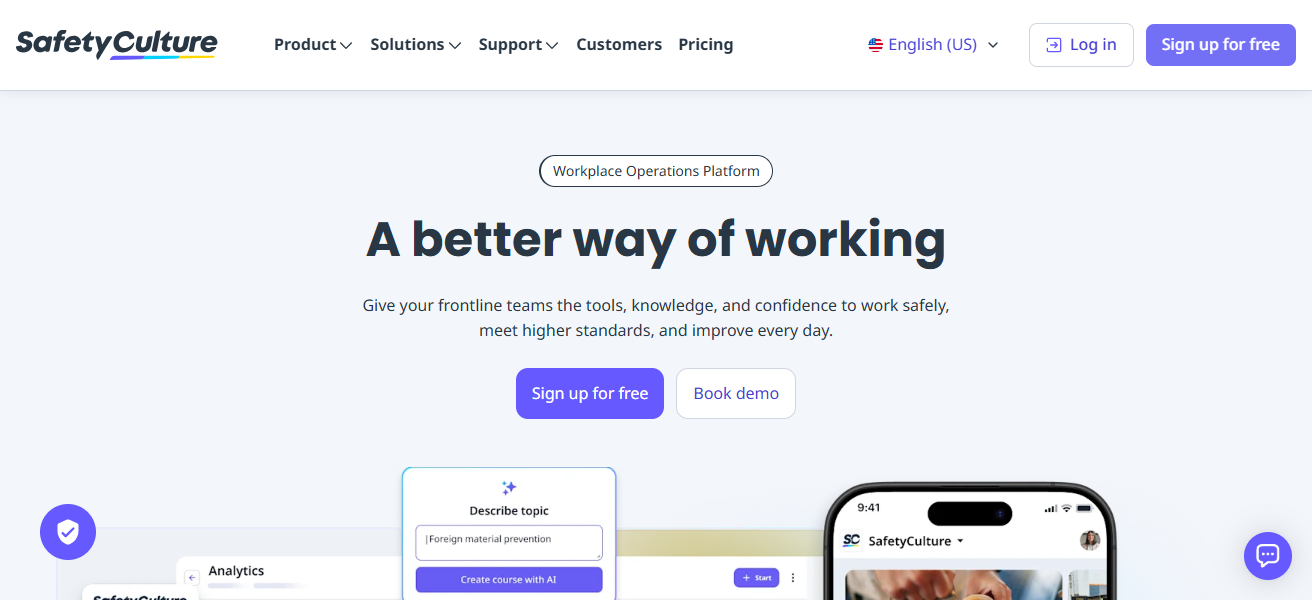
With customizable user experience and analytics, audit teams are able to quickly and effectively track and analyze risks, as well as distribute corrective actions.
For operational and safety audits, it is especially useful and helps in cross-departmental control and reporting through an easily accessible interface.
Features SafetyCulture
- Custom audit workflows – Unique checklists and inspection processes can be built and assigned.
- Mobile first inspections – Audits, photos, and notes can be captured on mobile devices.
- Real-time data sync – Teams can instantaneously see submitted results of an audit.
- Data analytics & reporting – Trends and risks are identified from audits to provide insight from outcomes.
| Pros | Cons |
|---|---|
| Mobile-first inspections with 100K+ templates | Weak scheduling features beyond inspections |
| Global adoption across 75K+ organizations | Customer support issues reported |
| AI-powered template generator for audits | Limited workforce management (no timesheets, availability tracking) |
7. Resolver
Resolver provides a unique and comprehensive platform for risk and audit management by combining risk assessment, incident tracking, internal audit processes, and operational workflow compliance all in one solution.
It assists companies in recognizing possible control deficiencies, focusing remediation efforts on more critical problems, and consolidating audit records.

The analytics and dashboards from Resolver offer ready-to-use insights across business units, improving internal control ecosystems.
The correlation of audit findings and risk enhances proactive remediation and provides tighter governance across audit cycles.
Features Resolver
- Risk-linked audit planning – Link risks to audit actions to set priorities.
- Auditing Issues and Incidents – Link findings from the audits with the incidents and the steps taken to resolve them.
- Automated Data Retrieval – Gathers data from other platforms to aid in the audit preparation.
- Visualization with Heatmaps – Executives can view graphical reports and watch for shifts and changes.
| Pros | Cons |
|---|---|
| Strong reporting and analytics features | Interface complexity for non-technical users |
| Risk intelligence platform integrates compliance and audit | Limited customization for niche industries |
| Good customer service with responsive support | Pricing concerns for smaller firms |
8. Onspring
Onspring allows for customization and automation when it comes to internal control and auditing. It has flexible workflows, adjustable dashboards, and customizable reporting, making it adaptable to any and every audit methodology and any organizational structure.
Onspring decreases manual work by automating important audit tasks such as scheduling timelines, managing workpapers, and notifying issues.
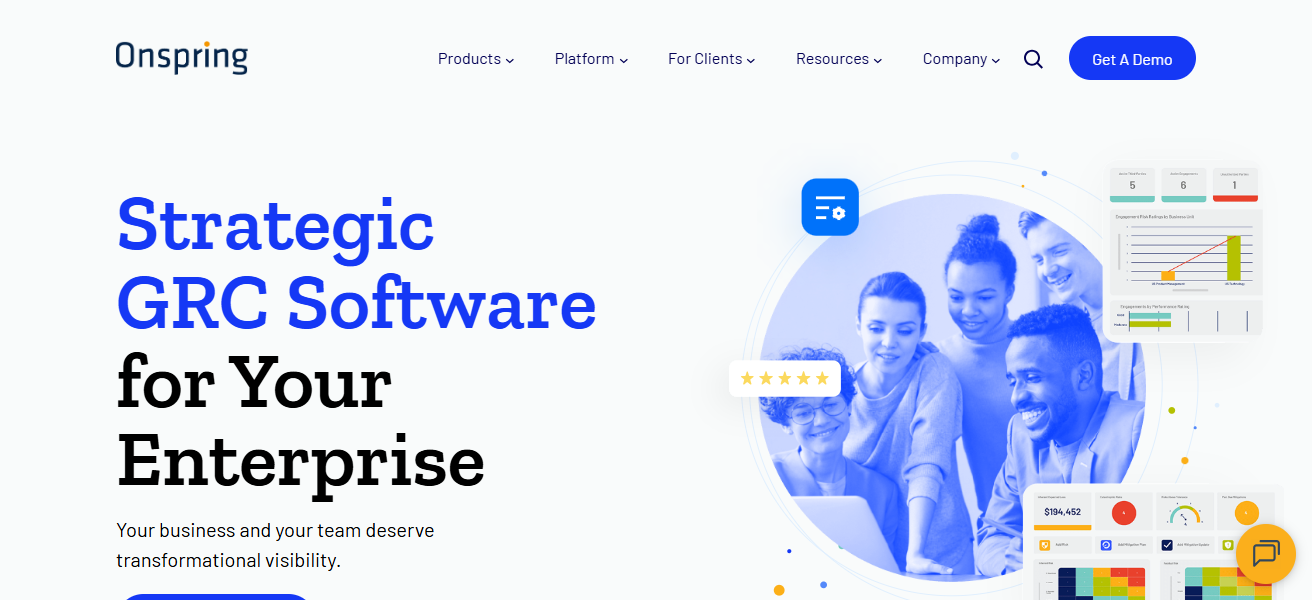
It requires little coding and lets teams adjust and customize processes, eliminating the need for extensive IT help. This makes Onspring optimal for organizations of any size to streamline control tracking and enhance transparency in auditing.
Features Onspring
- Customization with No-code – Make changes to workflows, dashboards, and fields without needing the IT department.
- Dashboards that are Dynamic – Provides audits data that users can explore and view in real-time.
- Workpapers for Audits that are Automated – This service makes the audit file preparing and reviewing processes more efficient.
- Management of Projects and Resources – Visually manage the progress of audits and timelines of projects
| Pros | Cons |
|---|---|
| Highly customizable workflows | Field deletion limitations in setup |
| Intuitive design and ease of integration | Steep learning curve for advanced features |
| Flexible no-code platform for GRC and audits | Cost concerns for smaller teams |
9. MetricStream
MetricStream is a sophisticated management suite for audits, risk, and internal controls tailored for enterprise customers and large companies with complicated regulatory requirements.
Advanced audit planning, risk-based execution, and reporting are some of the features. Due to its flexible architecture and integration with other governance systems, it provides seamless control assessments across business units and geographies.
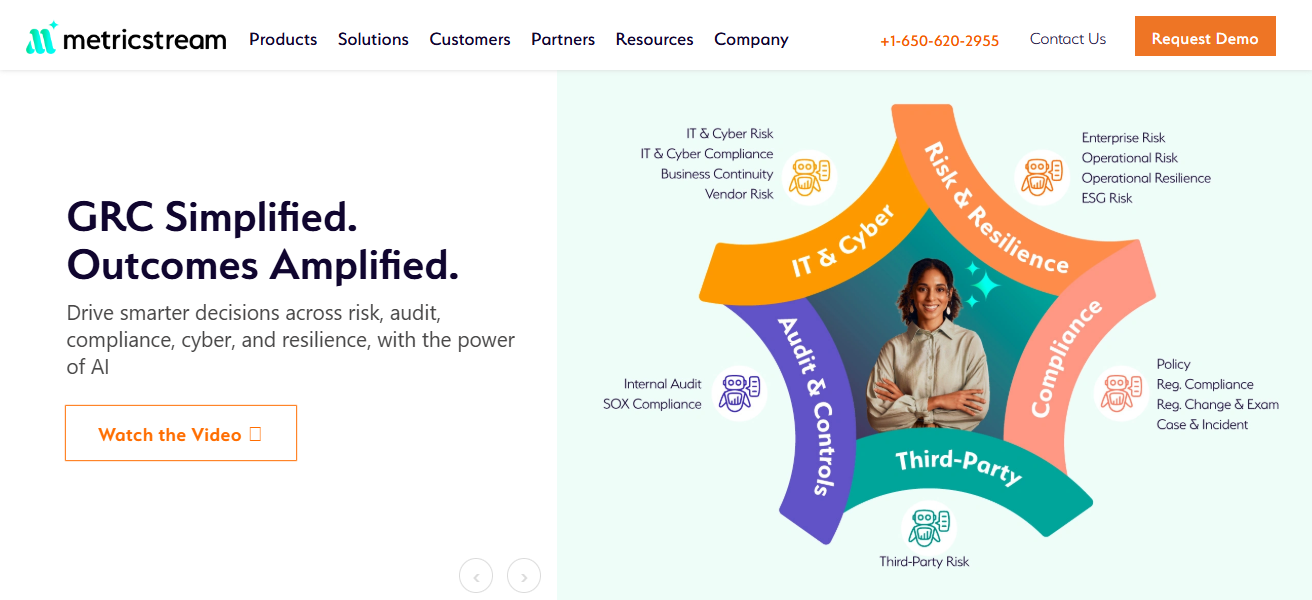
Its strong analytics and configurable workflows aid Chief Audit Executives in refining audit programs to enhance performance and compliance while providing valuable insights to align with strategic goals and regulatory requirements.
Features MetricStream
- Planning Audits on the Basis of Risk – Balance audits with enterprise risk assessments.
- An audit world that is properly Centralized – Unified model on entities, processes, and risk.
- AI for Issue Management – Apply artificial intelligence and machine learning to discover problems, categorize them, and suggest corrective actions.
- Dashboards and reports that are Comprehensive – Craft advanced reports on risk and audits.
| Pros | Cons |
|---|---|
| Comprehensive GRC platform with deep audit features | High cost of ownership |
| Strong automation for compliance workflows | Long implementation cycles |
| Ideal for large enterprises in regulated industries | Steep learning curve |
10. TeamMate+
TeamMate+ is a renowned internal audit management system designed for audit teams requiring compliance support with structured methodologies.
It integrates with global compliance support. It integrates with global compliance support. It integrates with global compliance support.
It integrates with global compliance support. It assists with audit planning, fieldwork, testing, and reporting and has built-in risk assessment, workpaper management, and issue tracking.
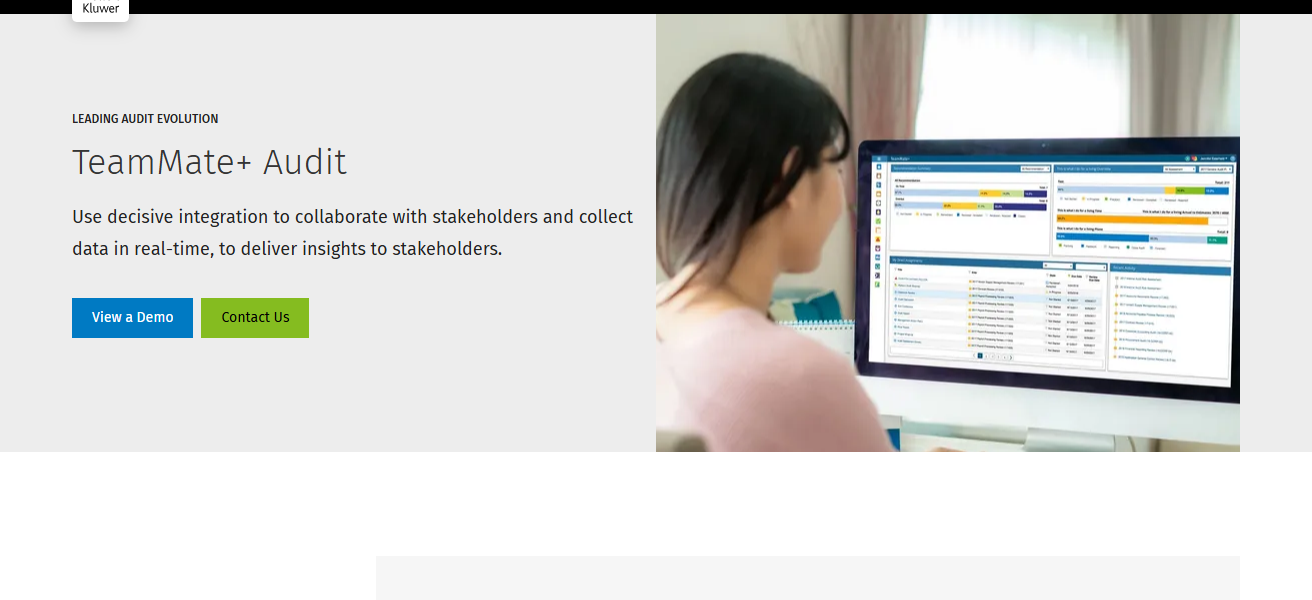
Multinational and public sector organizations trust TeamMate+ for its framework support and regulatory emphasis.
Its documentation and tracking capabilities makes it a solid option for teams who value consistency and rigor in traditional auditing.
Features TeamMate+
- Control the Workpapers and Documents – Centralized storage that includes versioning and audit history.
- Support for Audit Lifecycle – End-to-end monitoring of planning, fieldwork, findings, and reports.
- Dashboards that are Customizable – Custom views for stakeholders and auditors.
| Pros | Cons |
|---|---|
| Easy to use with organized audit workpapers | Onboarding takes time |
| Integrated workflow streamlines audits | Customer support ratings lower than competitors |
| Flexible document management for compliance | Interface feels dated compared to newer tools |
How We Choose Best Software for Internal Controls & Audit Management
- End-to-end audit coverage – Assists in planning, execution, reporting, and remediation all within one platform.
- Internal control management – Consolidated control documentation, testing, and tracking of audit evidence.
- Automation capabilities – Turned automated processes for workflows, reminders, evidence collection, and approvals.
- Reporting & dashboards – Speedy, real time, and customizable reporting of audit and risk management.
- Risk coverage – Better control of audit and prioritization, by relating risk to the audit and controls.
- Compliance framework support – SOX, ISO, SOC, and all HIPAA laws, as well as other internal policies.
- Integration options – Links to ERP, cloud, and document management systems.
- Scalability & pricing value – Grows with the organization and offers good ROI.
- Security & access control – Restrictive data protection, audit trails, and access control by role.
- Ease of use – Simple design with the need for only a little bit of training.
Conclusion
In conclusion, there is a need to choose software that assists in audits, internal control management, and managing regulatory compliance.
Audit management software should facilitate automated workflows, evidence centralization, and real-time control updates across multiple compliance frameworks.
Additionally, investing in solid software improves the operational efficiency of audits, processes, and continuous regulatory compliance.
FAQ
It is a platform that helps organizations plan, execute, monitor, and report audits while managing internal controls and compliance.
To automate audits, track controls, ensure regulatory compliance, reduce risks, and improve efficiency.
Internal auditors, compliance teams, risk managers, and finance departments.
Audit planning, workflow automation, control management, evidence tracking, risk assessment, and reporting dashboards.
Yes, most tools support SOX, ISO, SOC, HIPAA, and other regulatory frameworks.