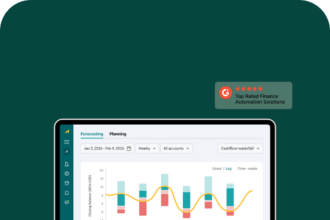
In this article, I will discuss the Best Software for Operational Risk Analytics, focusing on top tools that help organizations identify, assess, and manage operational risks effectively.
From real-time monitoring and automated reporting to compliance tracking and advanced analytics, these software solutions empower businesses to make informed decisions, enhance risk visibility, and strengthen overall operational resilience across departments and processes.
Key Points & Best Software For Operational Risk Analytics
| Software | Key Point |
|---|---|
| Atlas Systems | Unified real-time risk visibility |
| LogicManager | Strong compliance framework integration |
| Resolver | Automated incident-to-risk linkage |
| MetricStream | Scalable enterprise governance features |
| RSA Archer | Customizable dashboards for executives |
| ServiceNow Risk Management | Workflow automation across IT and operations |
| RiskWatch | Continuous monitoring with KRI tracking |
| Protecht.ERM | Integrated third-party risk oversight |
| IBM OpenPages | AI-driven analytics for predictive risk |
| SAI360 | Industry-specific compliance modules |
10 Best Software For Operational Risk Analytics
1. Atlas Systems
Atlas Systems integrates real-time monitoring, data visualization, and automated threat detection to offer a powerful operational risk analytics solution.
Organizations can be proactive in reducing risk and preventing them from escalating through continuous risk detection and key risk indicator (KRI) tracking.
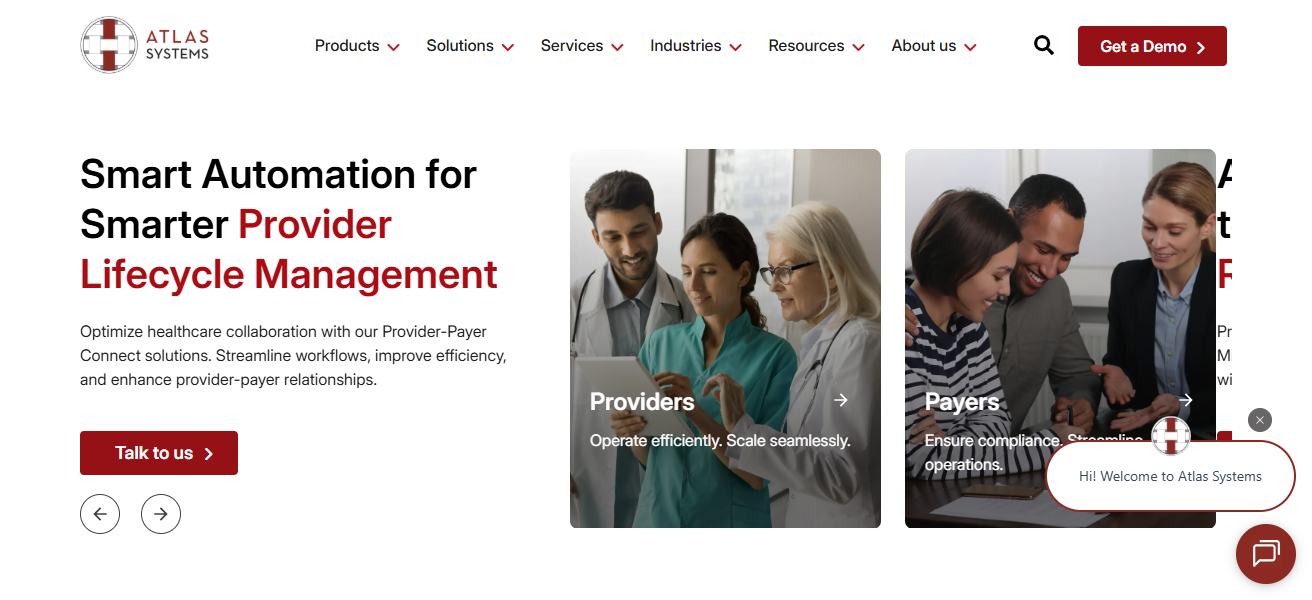
Atlas, with its unified risk repository and AI-driven analytics, assists companies in recognizing, evaluating, and prioritizing risks across processes, systems, and external vendors.
The platform’s automated and adaptable workflows enhance operational oversight and compliance, allowing risk teams to utilize insight driven dashboards to respond rapidly to new challenges with data, and to efficiently business objectives with risk management.
Atlas Systems Features
- AI-driven Third-Party Risk Management: Automates vendor due diligence and monitoring.
- Provider Data Monitoring: Tracks and assesses the accuracy of provider data and digital experiences in real-time.
- Cybersecurity IT Risk Management: Integrates IT risk management to avoid and control costs concerning threats.
- Gartner Recognition: Listed in the 2025 Market Guide for Third-Party Risk Management Vendors.
| Pros | Cons |
|---|---|
| Real-time AI-powered threat detection | Steep learning curve for new users |
| 24×7 managed SOC support | Higher cost compared to mid-tier tools |
| Vendor performance tracking and cloud security | Limited customization for smaller firms |
2. LogicManager
Risk Ripple Analytics, LogicManager discovers hidden interdependencies and provides insights into how one operational risk can lead to others, making it one of the best platforms for operational risk analytics in Risk Ripple.
LogicManager consolidates and centralizes risk, controls, policies, and incidents so organizations can create consistent workflows for the assessment and mitigation of risks.
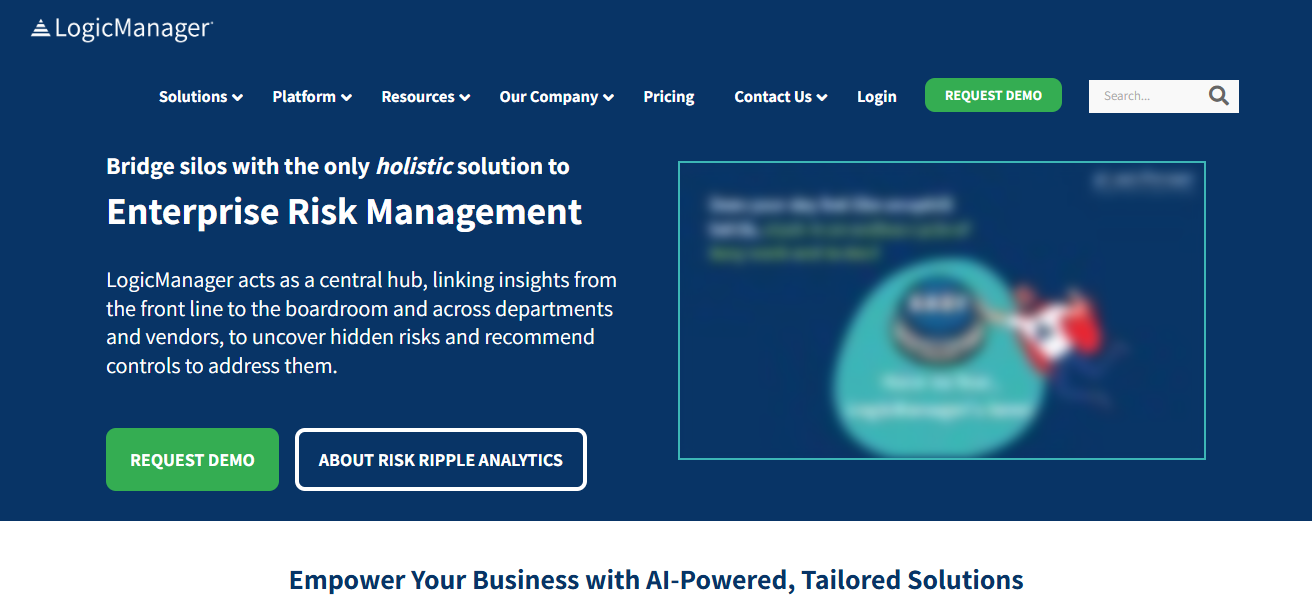
LogicManager uses dashboards, configurable reports, and heat maps to improve organizations’ visibility of risk trends and their exposure to them.
LogicManager’s no-code design for dashboards, reports, and integrations enables the alignment of risk data to business objectives, especially in large and mid-sized teams.
This greatly improves inter-departmental collaboration and streamlines the focus on resilience and decision-making.
LogicManager Features
- Risk Insights and Centralization: Connects insights throughout an organization to provide a cohesive view of risk.
- Risk Ripple Intelligence (AI): Discovers and assesses the impacts of previously unseen risks throughout an organization.
- Vendor Performance Monitoring: Tracks compliance and contractual obligations of suppliers.
- Incident and Action Alerting: Provides real-time notifications concerning incidents and actions to be taken.
| Pros | Cons |
|---|---|
| Strong compliance and governance integration | Interface can feel outdated |
| Highly recommended by users (100% willing to recommend) | Limited advanced analytics compared to peers |
| Flexible workflows for risk assessments | Requires training for full adoption |
3. Resolver
Resolver’s Operational Risk Analytics Solution presents a unique approach to operational risk analytics by consolidating risk, incident, controls, and compliance data into a unified system.
Resolver enables organizations to monitor operational, financial, and reputational risks in real time, facilitating immediate action to counter threats.

The software provides predictive analytics on scenario analysis and dashboards to track and report on key risk indicator (KRI) performance and other trends.
In addition to other operational functions, Resolver addresses audit, business continuity, and third-party risk, and aids organizations in assessing the impact of risks and adjusting the focus of mitigation activities. With the focus on real-time data, Resolver promotes the proactive management of risks.
Resolver Features
- Operational, IT, and Compliance Risk Assessment (Multi-Dimensional): Simultaneously evaluates operational, IT, and compliance risks.
- Business Impact of Incidents: Links incidents to their respective impacts on the business.
- Decision Support Lacking Context: Provides real-time (Decision Support) analytics for intelligence and context.
- Reporting for Executives: Reduces the reporting time to 95%.
| Pros | Cons |
|---|---|
| Automated incident-to-risk linkage | Can be complex for small teams |
| Strong reporting and visualization tools | Integration with legacy systems may be challenging |
| Good for operational and IT risk | Pricing not transparent |
4. MetricStream
Designed for complicated risk situations, MetricStream is an enterprise-grade GRC and operational risk analytics solution.
It brings together risk information from various business units and centralizes it, which facilitates uniform assessment, monitoring of key indicators, and analytics of dynamic portfolios.
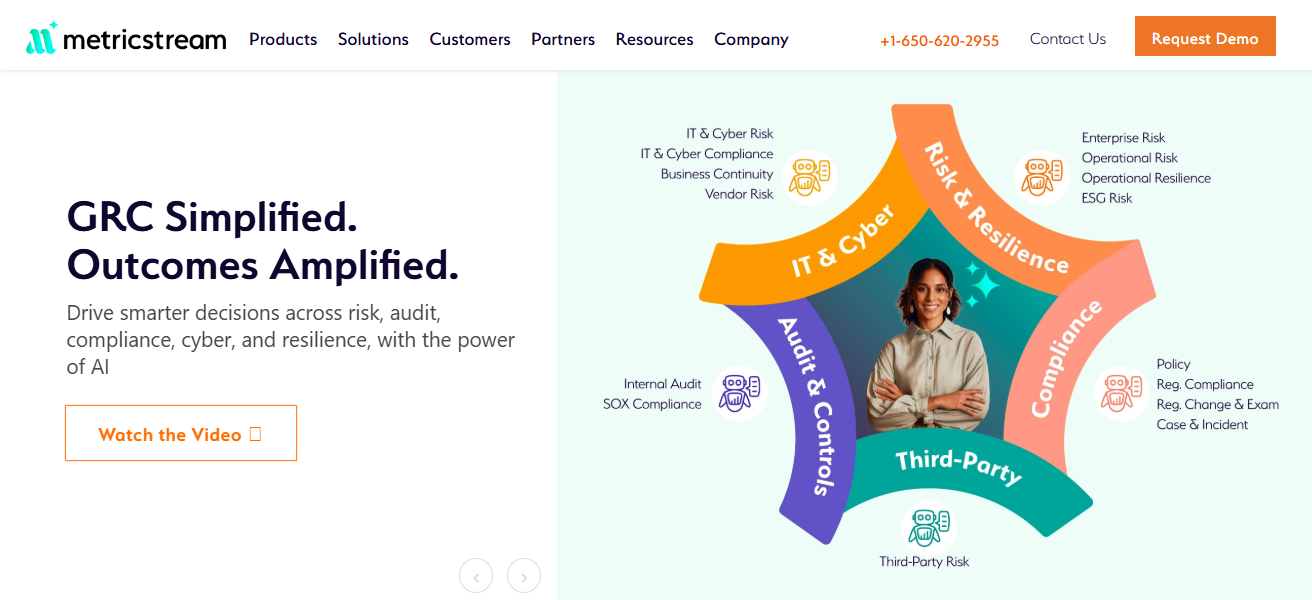
Thanks to AI-driven insights, automated processes, and customizable dashboards, MetricStream assists organizations in identifying risk trends, managing compliance obligations, and prioritizing action.
It also facilitates extensive operational risk functions, including risk control self-assessments, loss event tracking, and KPI monitoring.
This self-assessment tool provides leadership with real-time insights into risk exposure and performance against strategic objectives.
MetricStream Features
- Integrated Governance, Risk, and Compliance (GRC) Programs: Seamlessly combine the components of governance, risk, and compliance.
- Predictive Insights: Offers analytics powered by artificial intelligence throughout the different silos of risk.
- Operational and Compliance Risk Monitoring: Provides real-time tracking and monitoring of operational and compliance risks.
| Pros | Cons |
|---|---|
| Scalable enterprise governance features | Lower user recommendation rate (66%) |
| Comprehensive GRC coverage | Implementation can be resource-heavy |
| Strong automation and workflow tools | Customization requires technical expertise |
5. RSA Archer
As a risk management solution, RSA Archer offers strong operational risk analytics, utilizing a unified data model and modular architecture. He helps, confers, assesses, and evaluates control, supports compliance, and manages audits.
Archer’s dashboards, capable of configuration, and his reporting analytics provide a longitudinal analysis of key operational risk metrics and trends.
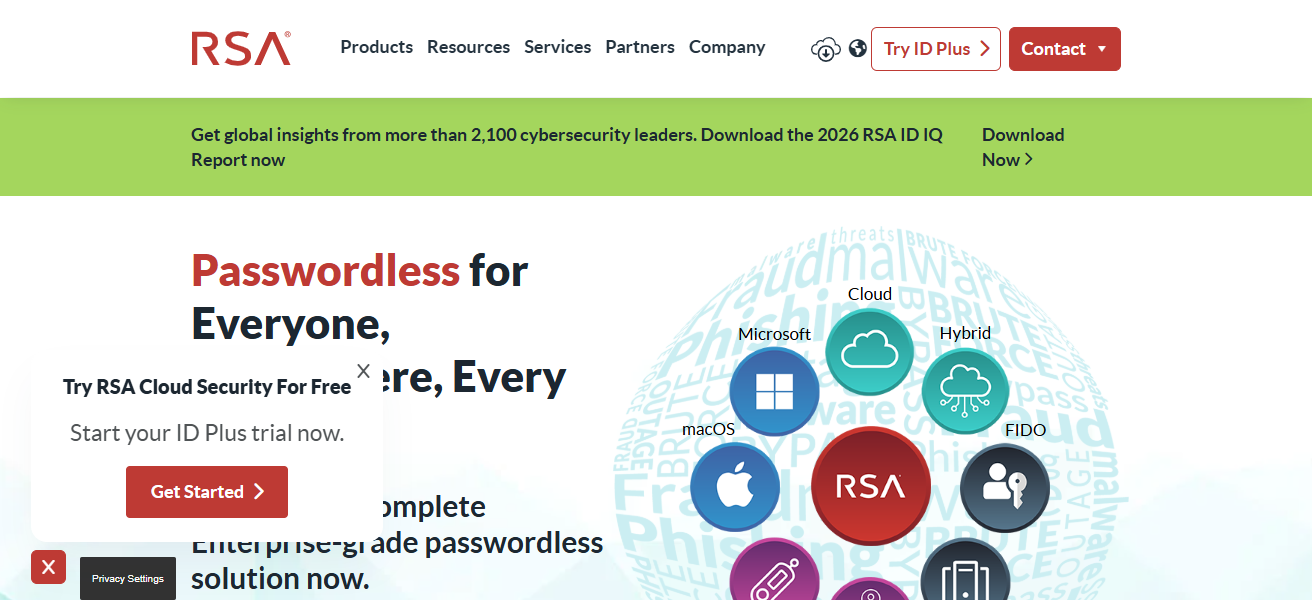
He automates risk assessments and monitoring, ensuring that risk owners are alerted and provided insights.
This abundance of insight, alerts, and risk deployment automations are, in conjunction with regulatory modifications, operational risk complexities, and risk program coordination, most suitable for large enterprises.
RSA Archer Features
- Centralized risk framework: Inputs, processes, and outcomes are streamlined.
- Automated risk management: Integrated modules for risk identification, assessment, and mitigation.
- Maturity model support: Facilitates transformation for organization’s from compliance-driven to risk-centric.
- Holistic monitoring: Operational, cyber, and third-party risk coverage.
| Pros | Cons |
|---|---|
| Customizable dashboards for executives | Complex setup process |
| Strong reputation in GRC space | High licensing costs |
| 92% user recommendation rate | Requires dedicated admin support |
6. ServiceNow Risk Management
ServiceNow Risk Management is operational risk analytics integrated into cross-enterprise workflows within GRC and integrated risk product suite.
It captures operational risk, control, and policy data and creates dashboards for risk identification, assessment, and reporting.
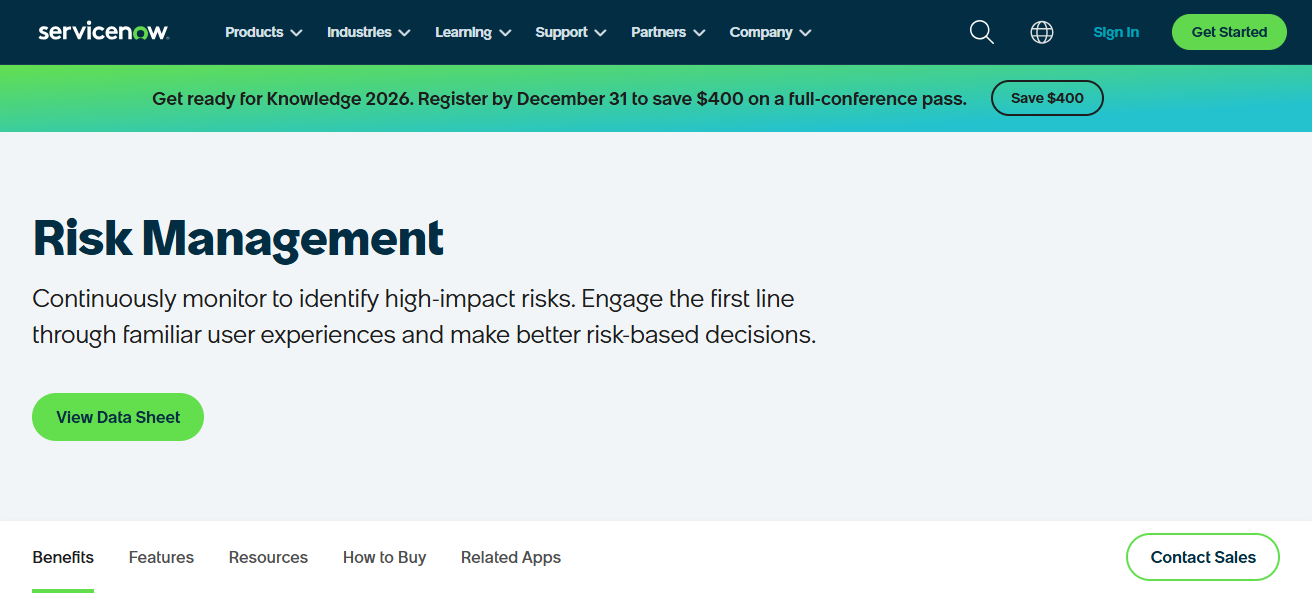
It automates risk processes and enriches incident, third party, compliance, audit data with risk data and reduces manual work while increasing visibility.
Analytics and alerts empower and promote consistent risk management across organizational silos. This helps to operationalize and strategize risk thinking with proactive decision making.
ServiceNow Risk Management Features
- Automated workflows: Risk management is embedded into IT and business workflows.
- Continuous monitoring: Posture and risk of high impact change are monitored in real time.
- Role-based dashboards: Insights for executives and managers are customized.
- Mobile accessibility: Action and monitoring capabilities from any location.
| Pros | Cons |
|---|---|
| Workflow automation across IT and operations | Best suited for enterprises, less for SMBs |
| Integration with ServiceNow ecosystem | Customization can be complex |
| Real-time dashboards and reporting | Costs scale quickly with modules |
7. RiskWatch
RiskWatch supports businesses in assessing, managing, and reporting operational risks through cloud-based analytics and operational risk management.
Automated risk assessments, compliance reporting, and other advanced reporting features help teams understand and report operational risk.
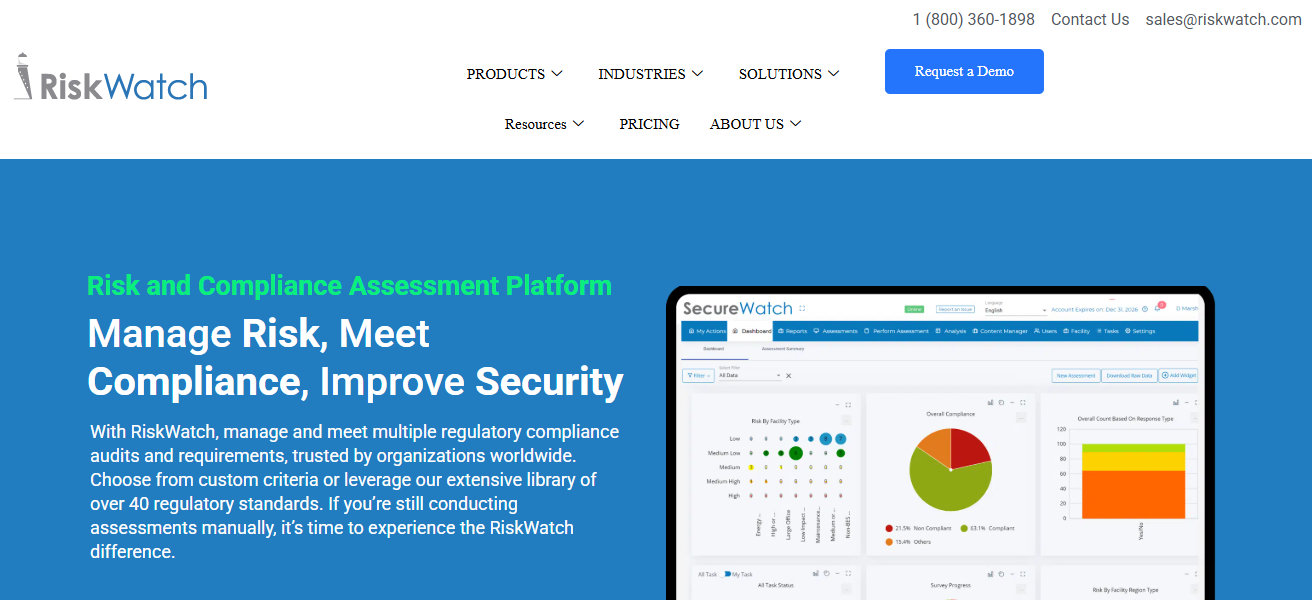
RiskWatch is cloud-based analytics and operational risk management. Flexible configuration of risk dashboards and matrices reporting industry or company is provided.
Real-time analytics provide quick identification of operational risk and required actions, making it suitable for customizable analytics with compliance reporting for frameworks in healthcare, finance, and manufacturing.
RiskWatch Features
- Automated risk assessments: Assessment time can be reduced by 80%.
- Predefined workflows: Efficiency is increased by the use of templates.
- Comprehensive risk templates: Strategic, financial, IT, and HR risk coverage.
- Real-time monitoring: The seamless tracking of KRIs and remediation is automated.
| Pros | Cons |
|---|---|
| Continuous monitoring with KRI tracking | Interface less modern compared to competitors |
| Strong focus on operational risk | Limited global support |
| Affordable compared to enterprise tools | Not as feature-rich for compliance |
8. Protecht.ERM
An integrated platform for enterprise risk management, Protecht.ERM, provides operational risk analytics using dashboards, KRIs, incident tracking, and risk registers.
Organizations can map risks, controls, and incidents together to analyze and monitor risk trends and exposures across the business.
The platform helps teams analyze, visualize, and report on real-time data by filtering, combining, and performing trend analyses.
This data can then be tailored for board-level strategic planning. Protecht’s configurable dashboards
forms, and workflows non-code tailoring of risk measurement and assessment methods, fostering a risk-aware culture and enhancing operational resilience.
Protecht.ERM Features
- Dynamic risk assessments: KRI, compliance breaches, and resilience are managed.
- Configurable dashboards: Decision-making is supported by structured visualization.
- Vendor and IT risk oversight: Integration of third-party and technology risk management.
- Audit and compliance modules: Regulatory tracking and support for internal audits.
| Pros | Cons |
|---|---|
| Integrated third-party risk oversight | Limited brand recognition outside APAC |
| User-friendly interface | Fewer advanced AI features |
| Strong compliance and audit modules | Customization options limited |
9. IBM OpenPages
IBM OpenPages integrates various Oprational Risk Analytics and GRC components, such as self-assessments, loss-event tracking, and controls, providing actionable insights into operational blind spots.
OpenPages provides scenario analysis, enhanced reporting, and compliance workflow support to help organizations understand risk trends and effects within regulatory and operational parameters.
Utilizing IBM’s cognitive and analytical technologies, OpenPages provides organizations with the ability to conduct predictive risk assessments and scalable operational risk analytics.
OpenPages allows risk professionals to consolidate operational risk data, automate workflow processes, and grant executives actionable risk intelligence to support Strategic Business Decisions.
IBM OpenPages Features
- Integrated risk data: Consolidation of RCSA, loss events, scenarios, and KRIs data.
- Automated monitoring: Simplifies the measurement and monitoring of operational risks.
- Decision Support System: Offers analysis for better mitigation.
- Document and process management: Improves compliance and operational effectiveness.
| Pros | Cons |
|---|---|
| AI-driven analytics for predictive risk | Implementation complexity |
| Strong integration with IBM ecosystem | High cost for smaller organizations |
| Comprehensive GRC coverage | Requires skilled technical staff |
10. SAI360
SAI360 provides a streamlined solution for operational and enterprise risk management, combining risk information, control assessments, and incident history into integrated dashboards.
It enables real‑time reporting, automated alerts, and standardized assessments to help organizations identify and mitigate operational risks before they develop into more serious issues.
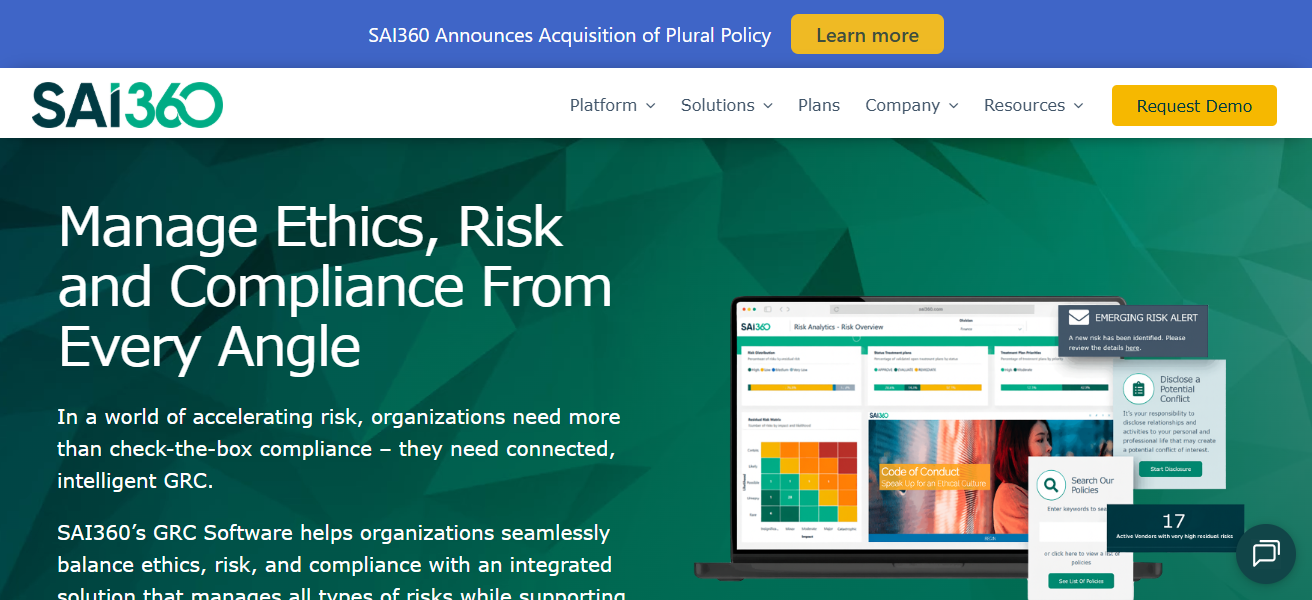
The platform incorporates incident and loss management, third party risk, and executive reporting, while aligning operational risk management with contemporary global standards, including ISO 31000 and Basel Accords.
With an emphasis on integrated governance, risk, and compliance, SAI360 enables risk teams to understand operational and strategic risk exposure comprehensively.
SAI360 Features
- Comprehensive risk visibility: Provides dashboards and real-time visibility.
- Unified risk profile: Merges data across the enterprise for precise evaluations.
- Collaborative interfaces: Involves all lines of defense in the risk process.
- Bowtie diagrams & analytics: Uses advanced reporting for the visualization of risks and controls.
| Pros | Cons |
|---|---|
| Industry-specific compliance modules | Interface can feel dated |
| Strong global presence | Customization requires consulting support |
| Good integration with HR and compliance | Costs scale with enterprise deployment |
Cocnlsuion
In cocnlsuion Choosing the best software for operational risk analytics enables organizations to proactively identify risks, strengthen controls, and improve decision-making.
The right solution offers real-time insights, automated workflows, and compliance support tailored to business needs.
By investing in a reliable platform, organizations can enhance resilience, reduce operational losses, and maintain long-term regulatory and operational stability.
FAQ
It is software that helps organizations identify, measure, monitor, and mitigate risks arising from internal processes, systems, people, and external events.
It improves risk visibility, reduces losses, ensures regulatory compliance, and supports better decision-making through data-driven insights.
Banks, financial institutions, healthcare providers, manufacturing firms, and large enterprises with complex operations benefit the most.
Key features include risk assessments, incident tracking, KRIs, dashboards, reporting, compliance management, and workflow automation.
Yes, some tools offer scalable and cloud-based solutions suitable for small and mid-sized organizations.