In this article, I will examine Best Software for Regulatory Change Management and explains how organizations stay compliant with changes in the evolving regulatory landscape.
- What Is Regulatory Change Management Software?
- Key Points & Best Software For Regulatory Change Management
- 10 Best Software For Regulatory Change Management
- 1. Thomson Reuters Regulatory Intelligence
- 2. Wolters Kluwer OneSumX
- 3. LogicManager
- 4. SAI360
- 5. NAVEX Global
- 6. Diligent Compliance
- 7. Regology
- 8. ComplySci
- 9. CURA Software
- 10. Smartsuite
- How To Choose Best Software for Regulatory Change Management
- Conclusion
- FAQ
These tools assist organizations in the efficient management and automation of workflows pertaining to monitoring, impact analysis, and compliance.
With the right software, organizations can improve audit preparedness, mitigate risks, and manage to update changes on a timely basis, all while maintaining governance within a wide array of departments and jurisdictions.
What Is Regulatory Change Management Software?
Regulatory change management tools help companies monitor, analyze, and respond to changes in laws, regulations, and industry practices.
These tools help businesses automate compliance monitoring, continuously reviewing regulatory databases to identify pertinent changes. The solution provides impact analysis to help businesses assess how changes affect internal policies, controls, and operations.
Automated alerts for stakeholders notify employees about crucial changes. Embedded compliance workflows help employees take action and answer the compliance questions.
Overall, these tools reduce manual work and compliance-related risks, improve audit preparedness, and help organizations automate the achievement of regulatory compliance across different divisions and countries.
Key Points & Best Software For Regulatory Change Management
| Software | Key Point |
|---|---|
| Thomson Reuters Regulatory Intelligence | Global coverage of regulatory updates with customizable alerts and impact analysis |
| Wolters Kluwer OneSumX | Integrated compliance management with risk assessment and audit-ready reporting |
| LogicManager | Centralized risk and compliance workflows with automated monitoring |
| SAI360 | Flexible GRC platform offering regulatory tracking, policy management, and training |
| NAVEX Global | Comprehensive compliance suite with regulatory alerts, risk scoring, and remediation tracking |
| Diligent Compliance | Board-level visibility into regulatory changes with dashboards and reporting |
| Regology | AI-powered regulatory mapping across jurisdictions for faster compliance alignment |
| ComplySci | Specialized for financial services with monitoring of SEC, FINRA, and global regulations |
| CURA Software | Risk-driven compliance management with customizable workflows and reporting |
| Smartsuite | Modern workflow automation for regulatory updates, impact assessments, and task assignment |
10 Best Software For Regulatory Change Management
1. Thomson Reuters Regulatory Intelligence
Thomson Reuters Regulatory Intelligence collects and analyzes global regulatory changes for compliance professionals. It helps them monitor, interpret and act on changes.
It collects and analyzes regulatory content from multiple authorities and jurisdictions and provides filtered and relevant changes and updates to help organizations avoid distractions.
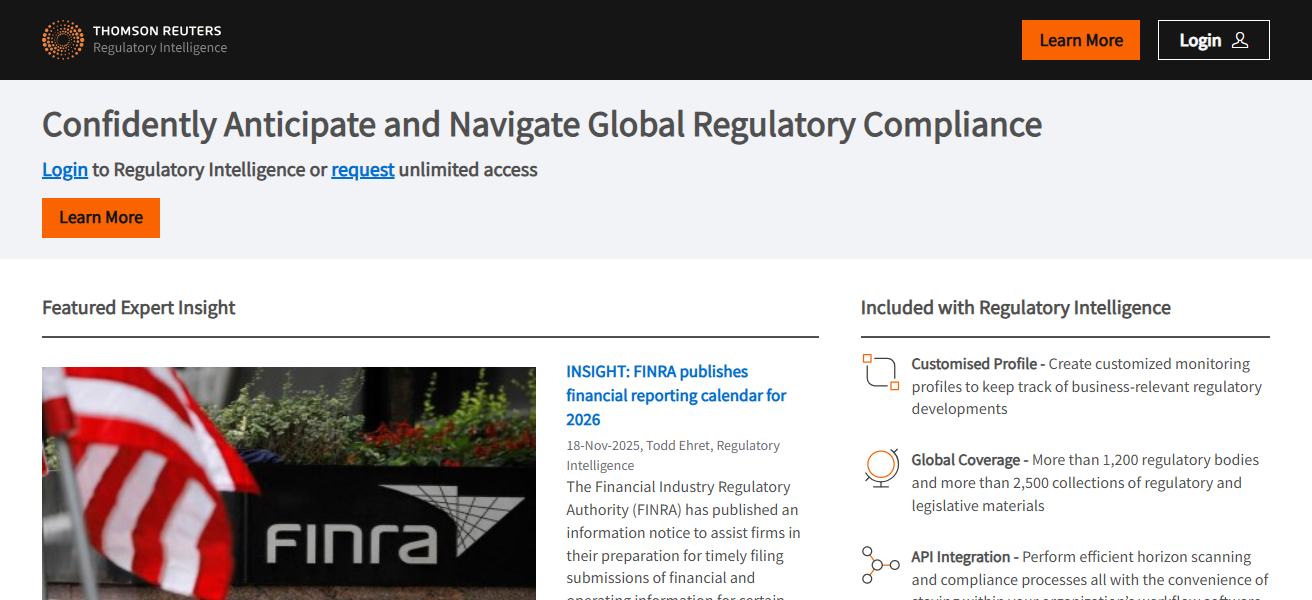
With the evolving requirements, compliance professionals understand the timelines, impacts, and requirements on the different business units.
The solution keeps teams ahead of the compliance challenges in financial services and corporate governance. It improves decision-making and content-access, and reporting improves to reduce risk and to assist in complex challenges.
Thomson Reuters Regulatory Intelligence Features
- Global Regulatory Content: Offers recent rules, instructions, and any modifications to regulations pertaining to all jurisdictions, aiding compliance teams.
- Advanced Search and Filtering: Allows users to find regulations, relevant to a country, industry, or topic, and to cut down the time researching documents manually.
- Impact Analysis Tools: Creates a foundation for assessing the implications of modifications to policies, procedures, and controls, aiding compliance teams’s strategic choices.
- Alert and Subscription Management: Users receive alerts to changes in specific subjects of regulations to ensure that they do not overlook essential modifications.
| Pros | Cons |
|---|---|
| Extensive global regulatory coverage across industries. | Can be expensive for smaller organizations. |
| Highly trusted and regularly updated content. | May have a steep learning curve for new users. |
| Strong filtering and search capabilities. | Complex configuration might require expert setup. |
| Helps reduce manual research and errors. | Some advanced features may require additional training. |
| Integrates with compliance workflows and alerts. | Customization options may be limited for niche needs. |
2. Wolters Kluwer OneSumX
OneSumX Reg Manager, like Wolters Kluwer’s OneSumX suite, is made for simplifying the management of regulatory changes for the financial industry.
It provides automated regulatory alerts, a library of structured regulations, and AI-based tools to help compliance professionals monitor and manage changes for Federal and State agencies.
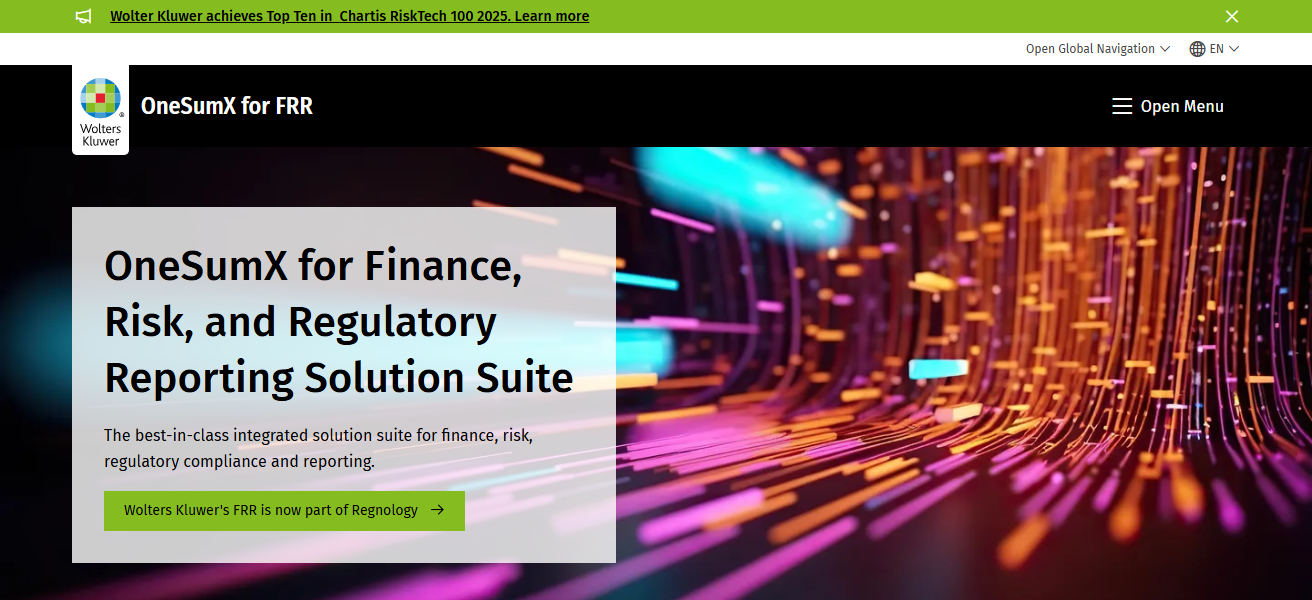
The software uses cutting-edge tools and regulatory compliance know-how to analyze changes and updates, assign them to relavant regulations, manage and execute workflows to capture compliance actions and mitigation.
OneSumX improves reporting and visibility for firms, allowing them to expand their compliance capabilities and respond to changing regulations with more confidence.
Wolters Kluwer OneSumX Features
- Automated Regulatory Monitoring: Users receive notifications regarding changes that may trigger new compliance issues for the organization.
- Compliance Workflow Integration: Changes modify actions in workflows, assisting teams in task, role, and status management.
- Analytics and Reporting: Assists in the visualization of compliance status and regulatory coverage through dashboards and scorecards.
- Regulatory Library: Extensive collection of regulations and instructions by country, helping compliance in multiple jurisdictions.
| Pros | Cons |
|---|---|
| Deep regulatory library with automated alerts. | May be too feature-rich for small teams. |
| Advanced analytics for impact assessment. | Setup and customization can take time. |
| Combines regulatory change with compliance workflows. | Pricing can be on the higher side. |
| Supports multiple jurisdictions and languages. | Users may need training to fully leverage capabilities. |
| Good audit documentation and reporting. | Interface may feel dated to some users. |
3. LogicManager
LogicManager provides a centralized solution for managing regulatory changes, helping companies gather, analyze, and respond to regulatory updates from the same source.
It enhances oversight to compliance by monitoring, automating workflows, and routing regulatory changes, both new and old, to appropriate stakeholders.
The system is designed to provide changes in the timelines of updates. Teams can assess the impact of changes, and the system will prompt them to take required action.
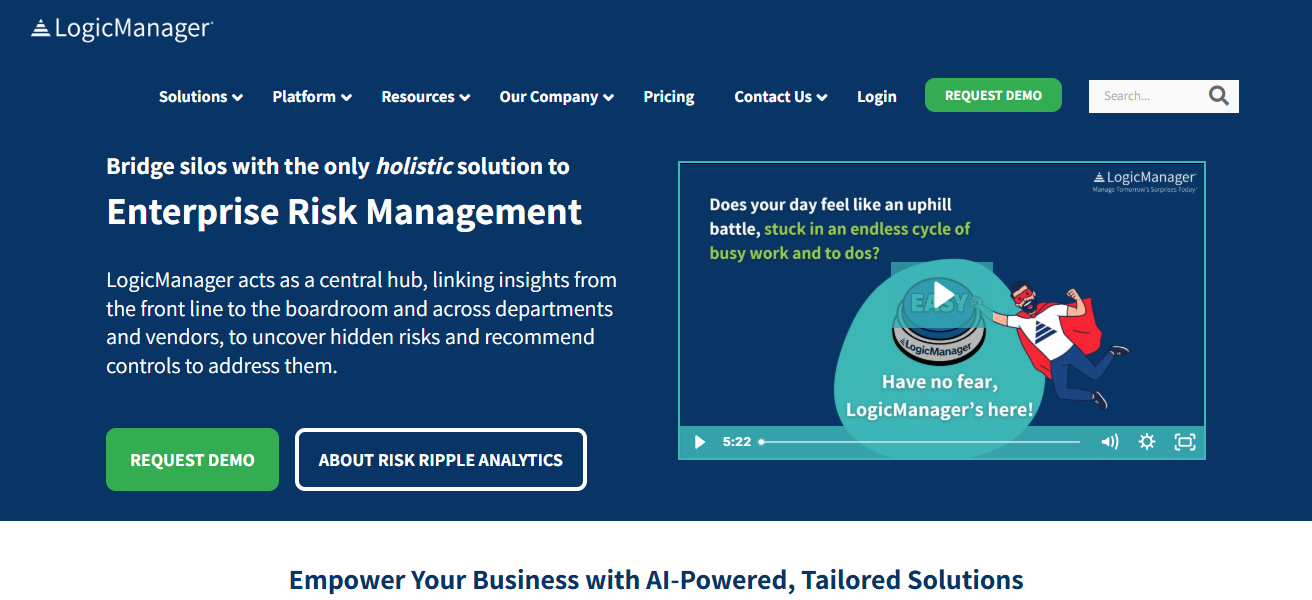
With dashboard and access control features, LogicManager helps customers see their compliance position, and avoid penalties or compliance issues caused by unaddressed updates.
It integrates regulatory changes with other risk and compliance programs to offer proactive governance, and minimizes manual processes.
LogicManager Features
- Centralized Compliance Hub: One platform to consolidate and organize regulatory changes, policies, controls, and risk information.
- Automated Task Assignments. Sets new tasks and deadlines automatically when changes of regulation affect compliance work.
- Dashboards & Reporting. Visual dashboards and reports give snapshots of compliance status, changes over time, and levels of risk so that insights can be gained easily.
- Custom Workflows. More flexibility in designing workflows and approval processes to reflect the governance configurations of the organization.
| Pros | Cons |
|---|---|
| Centralized platform for risk & compliance. | Reporting dashboards could be more intuitive. |
| Automated workflow and stakeholder notifications. | Some users find initial setup complex. |
| Good visibility across teams and controls. | Advanced features may require professional services. |
| Strong integration with broader GRC functions. | Customization can be time-intensive. |
| Helps prevent compliance gaps proactively. | Smaller organizations may find it overwhelming. |
4. SAI360
SAI360 provides Regulatory Change Management as a component of its GRC platform. Regulatory Change Management integrates with the other GRC components and acts as a guide for organizations, helping them monitor laws, regulations, and guidance for various jurisdictions.
Users of the platform will receive curated content feeds daily. It provides the ability for users to sort regulatory changes, assess regulatory impact, and link regulatory changes to internal policies, processes, and controls.
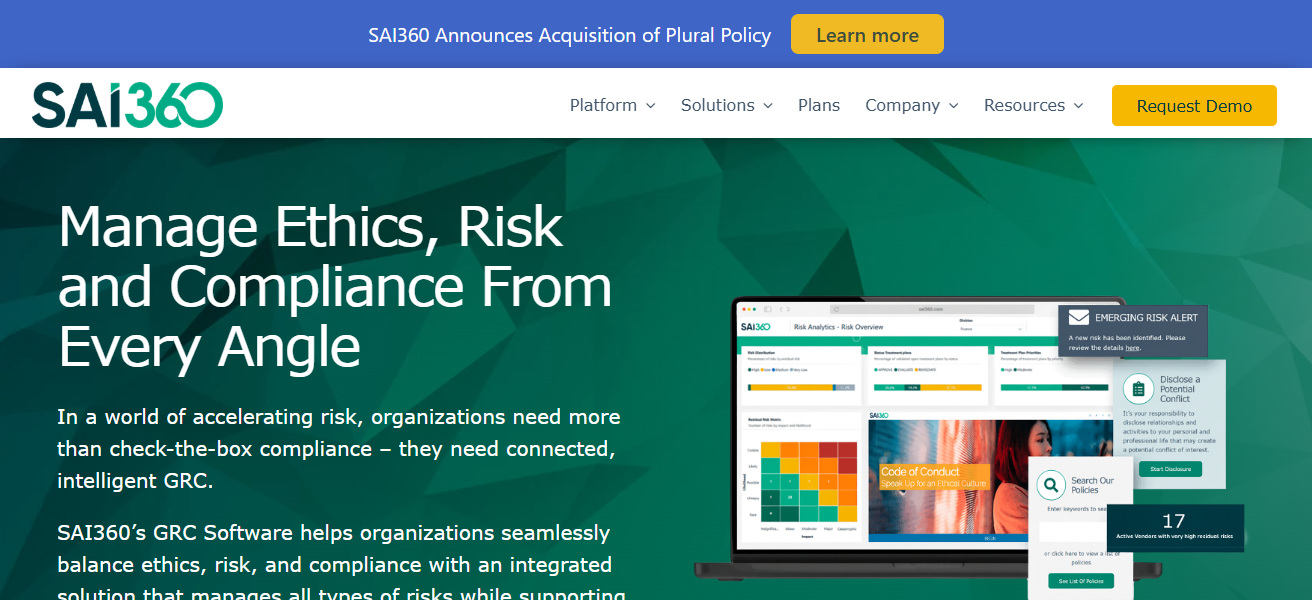
Through the use of automated workflows, the stakeholders are assigned tasks, and they receive notifications to ensure that cross-business unit actions are harmonized.
The reporting provided by SAI360 is audit-ready and highlights risk and compliance progress, in addition to providing real-time dashboards.
The integration of insights from regulations, policies, and the risk framework helps to decrease the efforts of compliance teams and improve the quality of the efforts.
SAI360 Features
- Audit-Ready Reporting.: Automatic reports that assist in maintaining compliance records and preparing for regulatory inspections.
- Daily Regulatory Updates. Collection of daily updates on regulations and industry guidance to inform teams.
- Policy & Process Linkage. Direct connection of changes in regulations to internal policies, controls, and processes.
- Automated Notifications. Notifies stakeholders upon the occurrence of new relevant changes, which eliminates the need to track changes manually.
| Pros | Cons |
|---|---|
| Daily curated regulatory feeds. | Implementation may take longer. |
| Strong linkage between regulations and internal policies. | User interface may feel complex. |
| Automated task assignment and impact tracking. | Some modules may require separate licensing. |
| Real-time dashboards and audit-ready reports. | May need training for full utilization. |
| Helps reduce manual monitoring effort. | Customization options can be limited. |
5. NAVEX Global
NAVEX Global’s compliance management software offers a range of services, including the management of regulatory changes.
It helps businesses draft and update policies, tracks and analyzes changes in regulation, and manages components of its compliance management program.
It also offers training, tools for managing the lifecycle of policies, and risk management functions to ensure that an organization’s actions in response to changes in regulation are understood and internalized.
NAVEX provides integrated risk and compliance systems to give unique operational perspectives and insights, aiding management in understanding and addressing the implications of regulatory changes.
Globally, thousands of organizations value the product that also provides ethics and reporting capabilities to enhance the compliance culture.
NAVEX Global Features
- Training and Awareness Modules. Compliance training linked to regulatory updates is provided through various modules.
- Integrated GRC Platform. Regulatory change management is included in a wider governance, risk, and compliance framework.
- Policy Lifecycle Management. Regulatory updates drive the creation, review, distribution, and revision of policies.
- Risk & Compliance Dashboards. Summary dashboards on the state and risk of compliance for leadership and frontline teams.
| Pros | Cons |
|---|---|
| Integrated GRC suite with compliance monitoring. | Can be expensive for small teams. |
| Helps align policies with regulatory updates. | Some features may be redundant for niche needs. |
| Supports training and ethics program modules. | Reporting can be less customizable. |
| Strong global compliance coverage. | Setup may require vendor support. |
| Widely used by mid-large enterprises. | Smaller organizations may underutilize features. |
6. Diligent Compliance
The Regulatory Change Management service provided by Diligent is integrated within its unified Governance, Risk, and Compliance (GRC) offering, which centralizes compliance data and monitors changes across various jurisdictions.
The GRC provides clients with automated updates and detailed impact assessment, which helps in tracking compliance proactively, thus minimizing the need for manual monitoring.
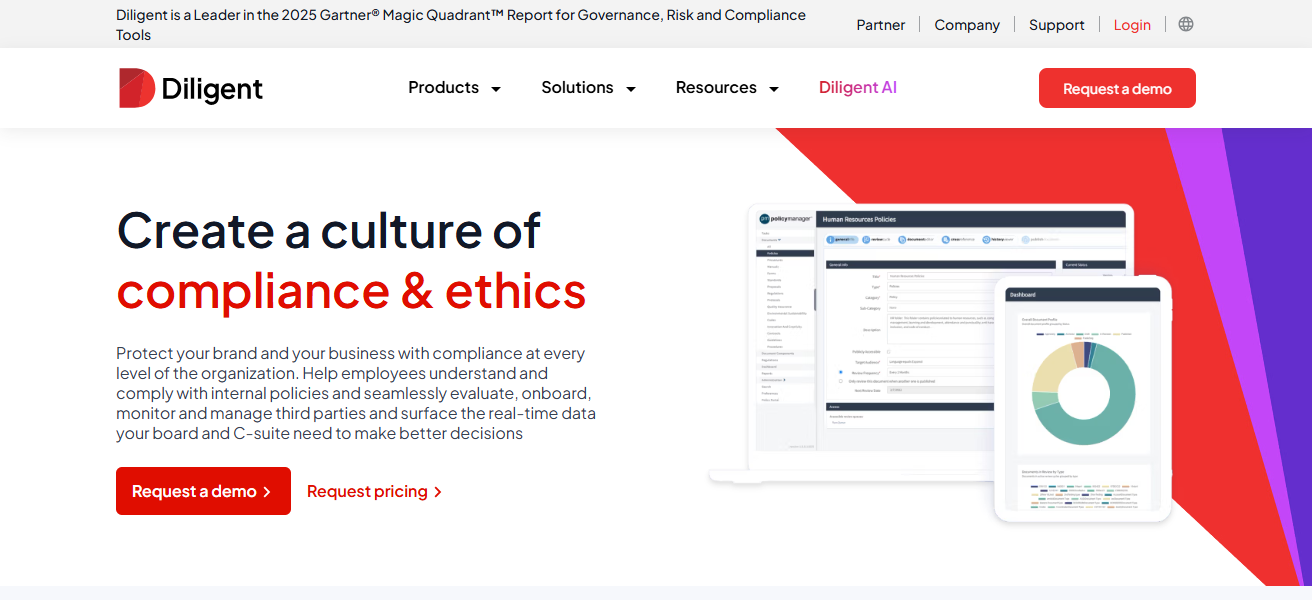
Clients gain access to integrated tools that combine regulatory change impact assessments, audit and risk readiness, and the Operational/Strategic Alignment tools to assess the impact of changes on Organizational Goals and Operational Risks.
Diligent’s solution also offers policy management and control mapping tools, which streamlines the audit and oversight documentation processes, and ensures that internal practices and regulatory expectations are in alignment.
Diligent Compliance Features
- Audit Support Tools: Features that facilitate the creation of documented workflows and preparation for internal and external audits.
- Unified Compliance Repository. Centralized location for regulatory updates, policies, and documentation of controls.
- Automated Alerts and Impact Analysis: Based on the updates it identifies, it sends automated alerts and analyzes the potential impact for the user.
- Control Mapping: Automatically connects regulations to controls so that teams can identify compliance readiness and coverage gaps.
| Pros | Cons |
|---|---|
| Unified platform for risk and compliance. | Some advanced analytics are limited. |
| Automated alerts and impact analysis. | Initial configuration can be complex. |
| Helps integrate regulatory intelligence with audits. | May require training for power users. |
| Centralized repository for compliance documentation. | Pricing may be higher than basic tools. |
| Supports control mapping and workflows. | Custom fields and reports may need support. |
7. Regology
Regology’s regulatory intelligence platform combines innovative AI technology with a proprietary Smart Law Library™ to streamline the processes of tracking, analyzing, and creating obligations for regulatory changes.
Customers can receive updates in real-time about changes to relevant regulations globally, allowing compliance teams to adjust to changes proactively.
The platform automates mundane processes, consolidates regulatory data and creates obligations, risks, controls, and policies to support response efforts.
Regology aids in the improvement of the quality of compliance insights for manual processes especially in industries that face intricate worldwide regulatory challenges
By optimizing the customization features, harnessing the AI-powered research tools, and reducing the challenges of regulatory change manual tracking.
Regology Features
- AI-Driven Regulatory Insights: Leverages AI to identify and classify regulatory changes, and monitor them on a continual basis.
- Smart Rule Library: Acts as a centralized repository for rules that are mapped to obligations to minimize the need for manual interpretation.
- Real-Time Updates: Provides users with continuous updates pertaining to the laws and regulations applicable to their user profile.
- Obligation Creation: Generates compliance obligations and associates them with relevant risks and controls.
| Pros | Cons |
|---|---|
| AI-assisted regulatory tracking. | Accuracy of AI insights may vary by region. |
| Smart categorization and obligation creation. | Newer product with evolving features. |
| Real-time global updates. | Smaller compliance teams may find it advanced. |
| Reduces manual workload significantly. | User interface may be less intuitive. |
| Flexible and customizable tracking. | Some regulatory sources may lag in coverage. |
8. ComplySci
Compliance software from ComplySci, now part of the Comply Platform, assists financial services institutions in managing their regulatory compliance programs with confidence.
It streamlines the compliance process by automating tedious compliance activities, detecting gaps in compliance frameworks, and generating audit trails for regulatory reporting.
The platform caters to heavily regulated and complex sectors such as asset management, investment banking, and brokerage.
With ComplySci’s process automation and workflow management tools, organizations can set up compliance workflows, integrate and assimilate data feeds, and supervise compliance processes.
This process automation diminishes the manual workload and enhances their regulatory compliance. It also improves their operational efficiency and provides a consistent framework for managing compliance programs.
ComplySci Features
- Alerts and Task Management: Manages tasks and alerts users to compliance updates to ensure that assigned tasks are completed.
- Compliance Workflow Automation: Automates the workflows and regulatory processes to minimize manual efforts.
- Audit Trail & Reporting: Documents decisions and actions to facilitate audits and provide reporting that shows transparency.
- Industry Focused Content: Provides targeted regulatory content with a specific focus on financial services.
| Pros | Cons |
|---|---|
| Tailored for financial services compliance. | Best fit mainly for finance industry. |
| Automates compliance workflows effectively. | May lack broader industry regulatory content. |
| Strong audit trails and reporting. | Initial data integration can be challenging. |
| Helps identify compliance gaps. | Feature set may be too specialized for general use. |
| Reduces manual tasks significantly. | Smaller firms may outgrow it quickly. |
9. CURA Software
CURA Software Solutions provides tools to help organizations manage and document their compliance activities across their operations.
CURA’s compliance tools include policy management, reporting, and risk assessment, but in terms of regulatory compliance
CURA assists in detailing and documenting how regulations map to business processes to ensure compliance.
The system keeps track of and documents regulatory compliance, and provides users and their teams with visibility into the status of current compliance efforts and documents
Which helps streamline the organizing of compliance efforts so that consistency and accountability can be maintained across all divisions.
The platform’s flexibility also provides improved integration of pending regulatory changes into compliance, risk management, and more comprehensive workflows.
CURA Software Features
- Process-based Compliance Mapping: Maps regulatory requirements to internal processes, controls, and roles.
- Central Compliance Dashboard: Displays the status and outstanding tasks of compliance actions.
- Documentation & Evidence Tracking: In one place stores Complain evidence and supporting documentation.
- Custom Workflow Support: Teams can set up workflows to ensure compliance duties are performed according to internal guidelines.
| Pros | Cons |
|---|---|
| Customizable platform for compliance tracking. | Regulatory change features less advanced than peers. |
| Maps regulations to internal processes. | Smaller regulatory library than specialized tools. |
| Good visibility into compliance status. | Reporting capabilities may be limited. |
| Fits well into broader compliance programs. | Not as automated for change alerts. |
| Encourages accountability across teams. | Fewer out-of-the-box integrations. |
10. Smartsuite
SmartSuite is a leading regulatory change management solution which consolidates regulatory updates, analyzes impacts to policies and controls, and automates remediation workflows on a no-code platform.
SmartSuite empowers compliance teams to track change, document workflows, assign actions to stakeholders, and provide audit-ready evidence through customized dashboards and reports.
SmartSuite reduces compliance fragmentation by integrating regulatory information to actionable insights and structured workflows creating improved visibility and collaboration.
SmartSuite’s flexibility and user-friendly design is ideal for banks, credit unions, and companies wanting a consolidated automated solution to manage the entire lifecycle of regulatory change.
SmartSuite Features
- Flexible No‑Code Platform: Empowers compliance functions and workflows to be built by firms without programming.
- Centralized Update Tracking: Monitors regulatory developments while linking them to internal policies and associated actions.
- Custom Dashboards: Visual dashboards that show compliance status, activity, and KPI in real time.
- Automated Task & Reminder System: Provides reminders and assigns actions to colleagues to ensure that regulatory tasks are completed.
| Pros | Cons |
|---|---|
| No-code platform with flexible workflows. | May require template building by users. |
| Centralizes update tracking with task assignments. | Not as specialized for deep regulatory research. |
| Custom dashboards and reporting. | Some compliance functions might need extensions. |
| Scales with team size and complexity. | Regulatory content feeds may be limited. |
| Good for audit-ready documentation. | Users may need training to build complex views. |
How To Choose Best Software for Regulatory Change Management
Regulatory Coverage Make sure the software contains relevant and recent regulatory content about your firm’s industry and the jurisdictions you operate in.
Automation Capabilities Look for software features that automate monitoring, alerts, impact analysis, and task assignments. It would lessen the need for manual work.
Workflow and Task Management Select the software that provides customizable workflows, and where you can set approvals, and notifications, and where you can assign responsibilities.
Integration Support Check if the software can integrate with other third-party solutions like your GRC, policy, risk, audit, and document management.
User Experience and Training User-friendly solutions with training and support materials promote faster adoption.
Conclusion
To sum up, the ideal software for managing the changes in regulations allows companies to manage compliance, mitigate exposure, and simplify processes by automating the monitoring of changes, analyzing the potential impacts, and managing notifications.
Automated monitoring means that businesses are able to respond to changes in regulations efficiently, while maintaining process improvements and governance.
The right software will also ensure assignments are managed in a timely manner and audits can be performed at any time.
FAQ
Regulatory change management software tracks and manages updates to laws, standards, and regulations automatically.
It helps organizations stay compliant, reduce risk, and avoid penalties from missed regulatory changes.
Compliance teams, legal departments, risk managers, and regulated industries like finance, healthcare, and energy.
They use automated feeds, alerts, and curated content to track updates across jurisdictions.
Yes — most integrate with GRC, policy, audit, and risk management systems.