In this article, I will examine cutting-edge software solutions for Regulatory Reporting Automation. For financial institutions and businesses, these tools aid in managing global compliance.
- Key Points & Best Software For Regulatory Reporting Automation
- 10 Best Software For Regulatory Reporting Automation
- 1. AxiomSL (now Adenza)
- 2. Wolters Kluwer OneSumX
- 3. Workiva
- 4. FIS Regulatory Reporting Manager
- 5. Oracle Financial Services Analytical Applications (OFSAA)
- 6. SAP Regulatory Reporting
- 7. Moody’s Analytics RegReporter
- 8. Vermeg MEGA Suite
- 9. BearingPoint FiTAX
- 10. Usercentrics CMP
- How We Choose Best Software For Regulatory Reporting Automation
- Conclusion
- FAQ
While reporting regulations can be demanding and require a lot of time, today’s software can simplify the processes of collecting, validating, and creating reports.
With the right software, businesses can improve granular accuracy, minimize submission errors, and boost efficiency in fulfilling regulatory requirements.
Key Points & Best Software For Regulatory Reporting Automation
| Software | Key Point |
|---|---|
| AxiomSL (now Adenza) | Risk data aggregation for Basel compliance |
| Wolters Kluwer OneSumX | Integrated regulatory change management |
| Workiva | Cloud-based collaborative reporting |
| FIS Regulatory Reporting Manager | Financial institution scalability |
| Oracle Financial Services Analytical Applications (OFSAA) | Granular financial data modeling |
| SAP Regulatory Reporting | Native ERP integration |
| Moody’s Analytics RegReporter | Automated stress testing outputs |
| Vermeg MEGA Suite | Cross-border regulatory coverage |
| BearingPoint FiTAX | Specialized tax reporting automation |
| Usercentrics CMP | Privacy regulation compliance (GDPR/CCPA) |
10 Best Software For Regulatory Reporting Automation
1. AxiomSL (now Adenza)
Adenza (formerly AxiomSL) serves as an automated regulatory reporting tool for banks and financial services companies.
End-to-end regulatory reporting, coupled with efficient data integration, validation, and workflow automation, allows for regulatory reporting across multiple regions.
Basel III, IFRS, and Dodd-Frank, when applied to the relevant jurisdictions, are no longer a source of concern. Processing data in real time and providing audit trails for risk calculations is a true differentiator.
Its ability to provide institutions with the ability to customize reporting frameworks is coupled with a decrease in operational risk.
Its ability to scale for large institutions makes it a leader in the field of regulatory reporting and is particularly useful in monitoring the efficiency, transparency, and accuracy of regulatory submissions.
Features AxiomSL (Adenza)
- End-to-End Regulatory Automation: Cross-jurisdictional data gathering, transformation, validation, and submission automation.
- Multi-Regulatory Automation: Automation of regulatory reporting for Basel III, IFRS, Dodd-Frank, etc.
- Real-Time Reporting: Instant calculation, reporting, and risk analytics.
- Consistency and Compliance: Significant operational risk and manual error reduction through audit trail and workflow reporting.
| Pros | Cons |
|---|---|
| End-to-end automation for regulatory reporting | Can be expensive for smaller institutions |
| Supports multiple global frameworks (Basel III, IFRS, Dodd-Frank) | Implementation can be complex and time-consuming |
| Real-time data processing and advanced risk calculations | Requires trained specialists to maximize capabilities |
| Robust audit trails and compliance documentation | UI may feel less intuitive for new users |
| Highly scalable for large financial institutions | Customization can require professional services |
| Reduces operational risk and manual errors | Licensing and ongoing costs can be high |
2. Wolters Kluwer OneSumX
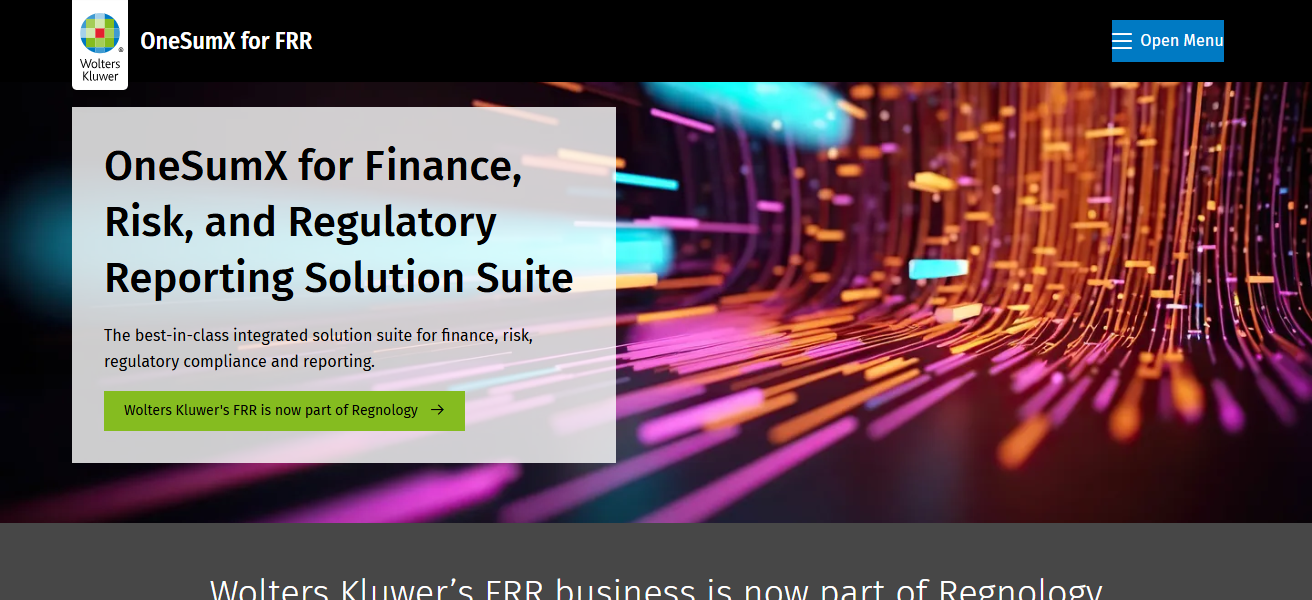
Wolters Kluwer’s OneSumX automates the collection, validation, and reporting of risk, finance, and compliance data for regulatory reporting.
It offers submissions for worldwide regulations, including the Basel, IFRS, Solvency II, and CCAR frameworks. OneSumX optimizes and consolidates the data collection and reporting process, as well as reducing manual edits and errors.
The constructed and integrated datapath workflows lead to improved governance and full auditability, and superficial edits to reporting dashboards.
The posited and constructed dashboards permit scenario modeling, stress testing, and risk analytics to help organizations manage compliance.
OneSumX has a regulatory intelligence focus, keeping financial institutions abreast of regulatory evolutions to prioritize timely and delta compliant reporting across jurisdictions.
Features Wolters Kluwer OneSumX
- Integrated Risk, Finance, and Compliance: Merging disparate data sets into one integrated reporting platform.
- Regulatory Intelligence: Continuous updates on changes to Basel, IFRS, Solvency II, and CCAR.
- Workflow Automation: Error reduction and increased efficiency through streamlined processes in reporting, validation, and auditing.
| Pros | Cons |
|---|---|
| Centralizes data collection and validation | Higher initial setup and configuration costs |
| Supports multiple global regulations | Can be complex for smaller teams to manage |
| Integrated workflows and dashboards improve governance | Custom reports may require technical expertise |
| Scenario modeling and risk analytics capabilities | Updates for regulatory changes may need manual intervention |
| Strong regulatory intelligence updates | May require significant training to use effectively |
| Reduces manual errors and improves reporting accuracy | Integration with legacy systems can be challenging |
3. Workiva
Workiva has a cloud-based platform to assist with regulatory reporting and compliance. It’s main focuses are collaboration, transparency, and data integrity.
Their platform has the ability to integrate data from many sources and generate reports automatically fo rthe various types of reporting such as financial, risk, and ESG.
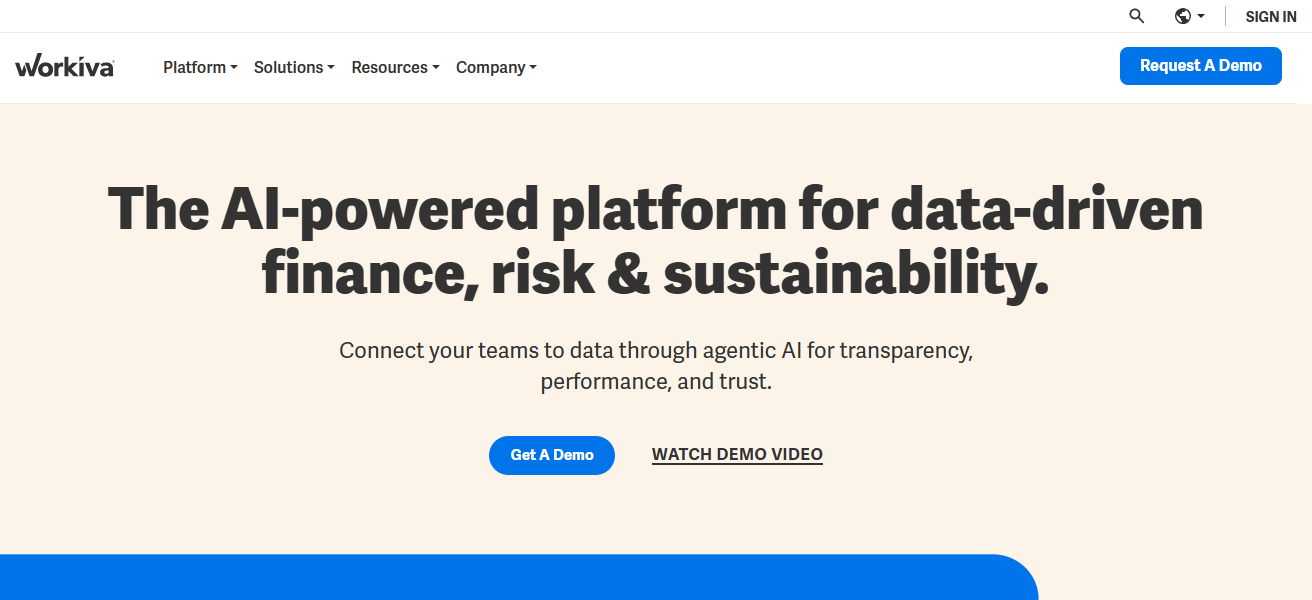
With Workiva’s platform, teams can manage workflows, track changes, and report all with audit-ready reporting. Their advanced data linking and reporting features lead to more efficiency and less errors.
Their platform also aids with SOX, SEC filings, and sustainability reporting. The flexiblity, scalability, and cloud-native design of the Workiva platform helps make complex reporting more manageable.
Features Workiva
- Cloud-Based Collaboration: Shared real-time updates and multi-user collaboration for finance, risk, and ESG reporting.
- Data Merging: Automated report generation from multiple internal and external data sources.
- Reporting Transparency: Change tracking, data linking, and regulatory compliance.
- Flexible Framework Support: Supports SOX, SEC filings, sustainability, and other compliance requirements.
| Pros | Cons |
|---|---|
| Cloud-based platform with real-time updates | Subscription costs can be high |
| Integrates multiple data sources seamlessly | Heavy reliance on internet connectivity |
| Supports ESG, financial, and risk reporting | May need initial customization for complex workflows |
| Intuitive interface and collaboration features | Advanced analytics are limited compared to specialized tools |
| Tracks changes and ensures audit-ready reports | Some features may be unnecessary for smaller organizations |
| Reduces manual effort and errors | Export options can be restrictive in certain formats |
4. FIS Regulatory Reporting Manager
FIS Regulatory Reporting Manager provides comprehensive tools for automating regulatory compliance in the banking and financial services sector.
It gathers and consolidates data from various systems for reliable and consistent reporting across multiple jurisdictions.
It covers a wide variety of regulatory frameworks including Basel III, Dodd-Frank, and MiFID II. It provides sustained process automation, improving data accuracy and workflow integration.
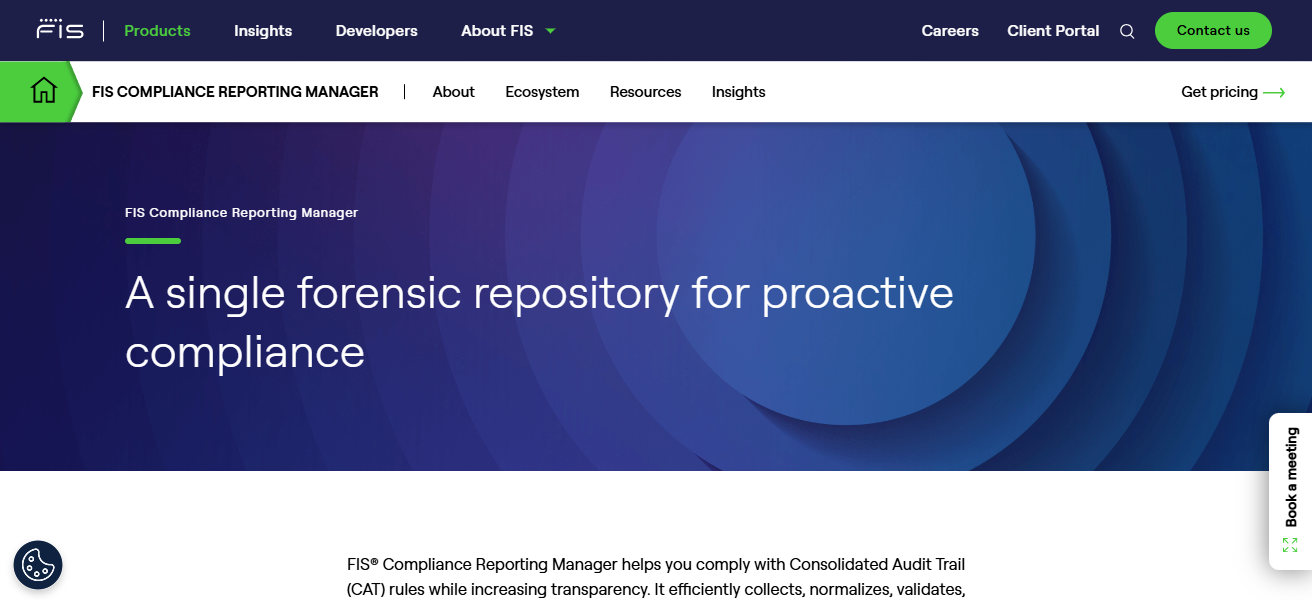
Its advanced data accuracy and workflow integration. Its advanced data compliance validation, reconciliation, and auditing features decrease operational risk.
Additionally, FIS provides reporting and analytics for decision support. Data consolidation, process automation, and regulatory updates help institutions maintain efficient reporting.
Features FIS Regulatory Reporting Manager
- Centralized Data Management: Consolidates information from various platforms and systems to ensure consistency in reporting.
- Multi-Jurisdiction Compliance: Supports global regulations, including Basel III, Dodd-Frank, and MiFID II.
- Automation & Validation: Lessens manual work through automated error detection and reconciliation.
- Analytics & Insights: Supports decision-making through reporting and insightful analytics in real time.
| Pros | Cons |
|---|---|
| Centralizes data for consistent reporting | Initial implementation can be lengthy |
| Supports Basel III, Dodd-Frank, MiFID II | User interface may feel outdated |
| Automation reduces manual effort and errors | Some customization requires technical support |
| Real-time reporting and analytics | Costly for smaller institutions |
| Validation, reconciliation, and audit tracking | Advanced features may require training |
| Scalable and updated for regulatory changes | Integration with non-FIS systems can be complex |
5. Oracle Financial Services Analytical Applications (OFSAA)
OFSAA by Oracle is a suite of tools designed to help manage finances, regulatory reporting, and risk analytics.
OFSAA automates reporting for global regulations, including Basel III, IFRS, and CCAR. OFSAA provides data consistency, accuracy, and auditability by integrating data from various reporting sources.
The advanced analytics and risk management modules assist institutions in evaluating their capital, liquidity, and credit risk.
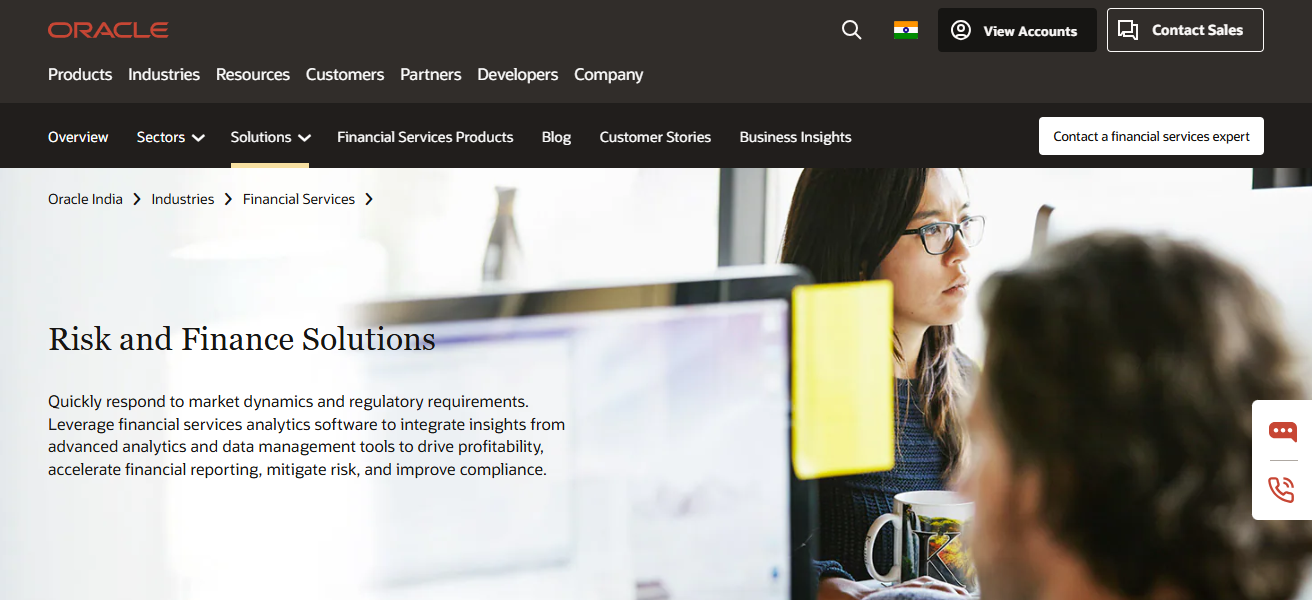
The scalability and flexibility of the platform enable customization to different regulations and additional business requirements.
The combination of workflow management, audit trails, and validation tools reduce the operational burden and ensure OFSAA is compliant. The operational reporting capabilities help make OFSAA a preferred financial institution partner.
Features Oracle Financial Services Analytical Applications (OFSAA)
- Comprehensive Analytics: Regulatory reporting is integrated with analytics and risk financial management.
- Global Regulatory Compliance: Basel III, IFRS, and CCAR are some of the global standards supported.
- Data Integration & Workflow: Data from various sources is consolidated, with traceability and validation.
- Customizable & Scalable: Different frameworks can be adapted, along with business requirements in large enterprises.
| Pros | Cons |
|---|---|
| Comprehensive regulatory reporting and risk analytics | Implementation and licensing costs are high |
| Supports global regulations (Basel III, IFRS, CCAR) | May require specialized IT resources |
| Advanced analytics for risk assessment | Can be complex for small-to-medium institutions |
| Integrates data from multiple sources | Customization is time-intensive |
| Workflow management, validation, and audit features | Occasional performance lag with large datasets |
| Scalable and flexible for different frameworks | Learning curve for new users is steep |
6. SAP Regulatory Reporting
SAP Regulatory Reporting, financial institutions can cover local and global regulators’ requirements without worrying about time boundaries.
The solution automates integration, collection, validation, and reporting from SAP and non-SAP systems. It covers IFRS, Basel, and local reporting frameworks.
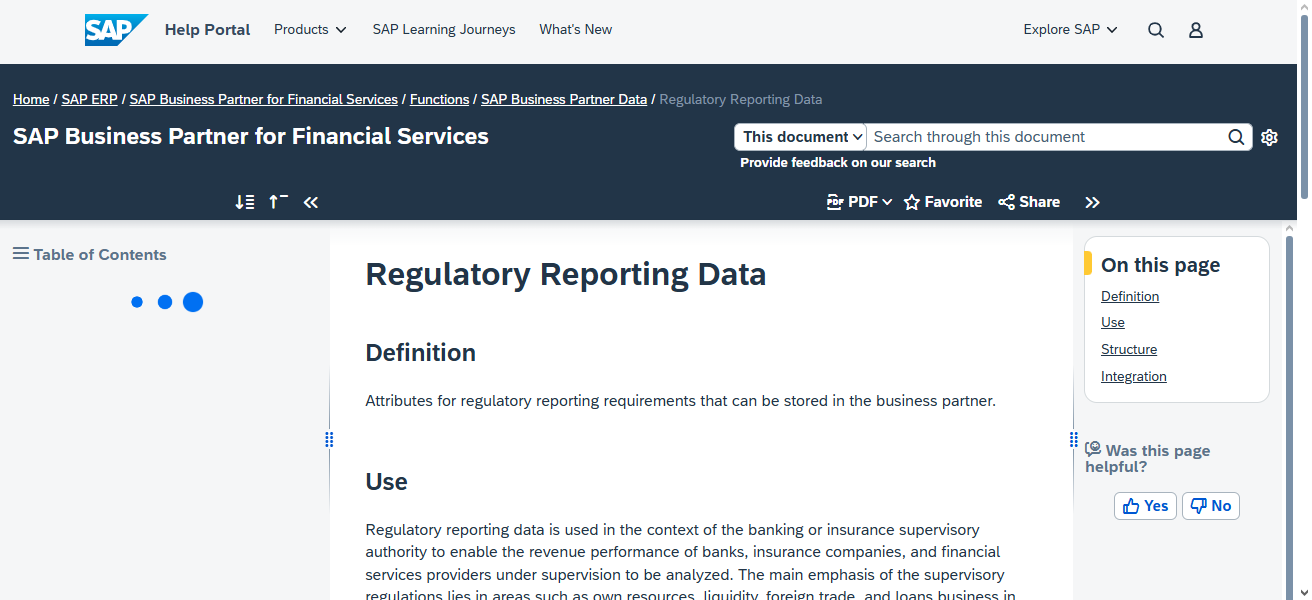
SAP Regulatory Reporting combines accuracy, transparency, and auditability with compliance controls, workflow management, and reconciliation.
Advanced analytics and real-time monitoring provide insights into risk and compliance. SAP Regulatory Reporting minimizes manual effort, consistent reporting, and reduction of operational risk while adapting to the ever-changing requirements of regulators.
Features SAP Regulatory Reporting
- Data Collection & Automation: Reporting is automated by using data from integrated SAP and non-SAP systems.
- Framework Compliance: Supports IFRS, Basel, and country-specific reporting requirements.
- Analytics & Monitoring: Risk and compliance insights are provided through real-time dashboards.
- Built-in Controls & Auditability: Ensures transparency and reduces operational errors
| Pros | Cons |
|---|---|
| Automates data collection and report generation | May require SAP expertise for setup |
| Supports IFRS, Basel, and country-specific frameworks | Integration with non-SAP systems can be complex |
| Built-in controls, workflow management, and reconciliation | Higher cost for smaller institutions |
| Advanced analytics and real-time monitoring | Custom report creation can be technical |
| Improves accuracy and auditability | Not as intuitive for non-technical staff |
| Reduces manual effort and operational risk | Limited flexibility for some emerging regulations |
7. Moody’s Analytics RegReporter
Moody’s Analytics RegReporter provides a reporting solution for the financial services industry’s regulatory compliance reporting automation.
It integrates and analyzes data from various sources to produce reports in compliance with international regulations such as Basel III, CCAR, Dodd-Frank, etc.
Comprehensive regulatory reporting, automation of validation, workflows, and audits to enhance error reduction and data integrity control. It is adaptable to local and international regulatory changes.
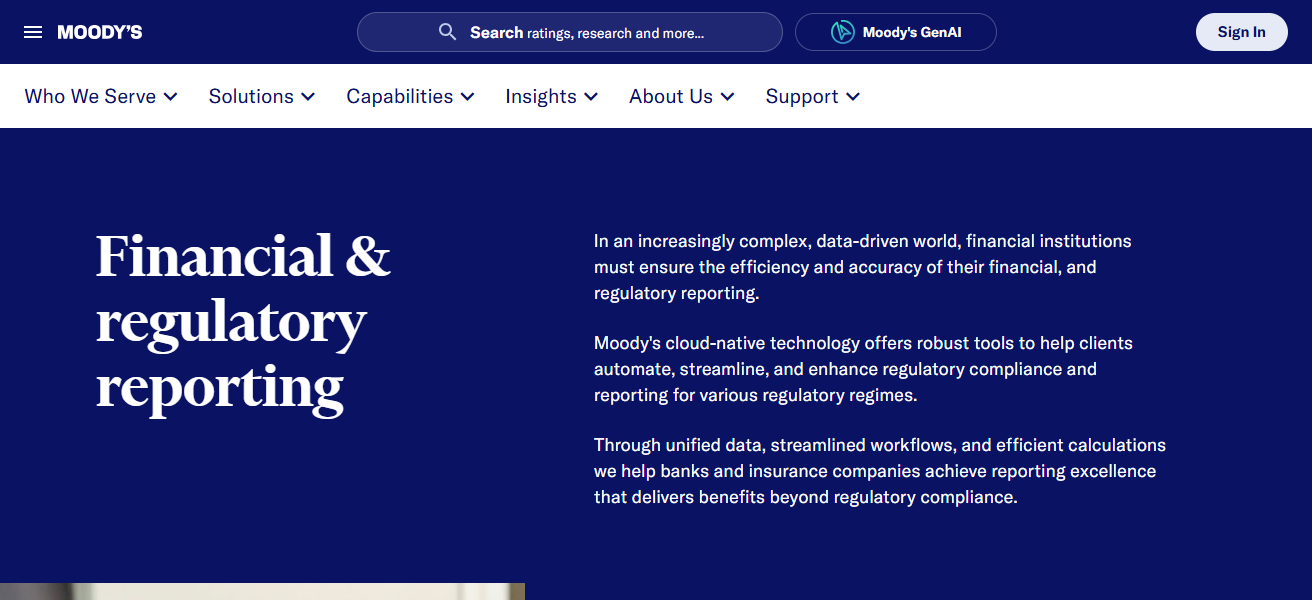
In addition, Moody’s Analytics RegReporter provides tools for proactive compliance management, including risk analysis and scenario analysis.
For financial services, ease of use and automation with real-time reporting is critical for regulatory reporting, and we believe that RegReporter provides these advantages.
Features Moody’s Analytics RegReporter
- Multi-Source Data Consolidation: Merges data from different systems to represent accurate data.
- Global Regulatory Support: Management for Basel III, CCAR, Dodd-Frank, and other cross-border regulations.
- Automated Workflows & Data Validation: Reduces manual errors and increases audit preparedness.
- Risk and Scenario Analysis: Offers data for advanced compliance and risk management
| Pros | Cons |
|---|---|
| Automates compliance for banking regulations | Setup and configuration can be time-consuming |
| Supports Basel III, CCAR, and Dodd-Frank | Licensing fees can be high |
| Workflow automation and validation features | Limited flexibility for non-standard reports |
| Flexible architecture for local and cross-border regulations | User interface could be more modern |
| Scenario analysis and risk assessment tools | Some features require specialized training |
| Real-time reporting and audit-ready submissions | Advanced customization may need vendor support |
8. Vermeg MEGA Suite
Vermeg MEGA Suite aims to simplify compliance operations for banks and financial institutions. It offers full automation for the compliance data lifecycle, from collection, transformation, and validation to submission to the authorities.
The suite is flexible as it can be configured to meet different regional requirements and supports multiple regulations, including Basel, Solvency II, and IFRS. MEGA Suite reduces operational risk and manual work through its transparency, accuracy, and auditability features.
The integrated reporting and analytics dashboards assist in risk monitoring and decision-making. The scalability of the platform is ideal for large and mid-sized institutions looking for reliable automation in regulatory reporting.
Features Vermeg MEGA Suite
- Total Process Automation: Data collection, transformation, validation, and submission.
- Multi-Framework Support: Basel, Solvency II, IFRS, and regional compliance.
- Integrated Analytics & Dashboards: Tools to monitor and evaluate risk, performance, and reporting accuracy.
- Institutional Scalability: Accommodates large and mid-sized financial institutions.
| Pros | Cons |
|---|---|
| End-to-end automation for regulatory reporting | Initial implementation can be complex |
| Supports multiple frameworks (Basel, Solvency II, IFRS) | May require IT resources for integration |
| Emphasizes transparency, accuracy, and auditability | Limited brand recognition compared to bigger competitors |
| Integrated analytics and dashboards for decision-making | Some modules may be overkill for smaller firms |
| Scalable for mid-sized and large institutions | Cost may be high for smaller organizations |
| Reduces operational risk and manual errors | Updates may require consulting support |
9. BearingPoint FiTAX
FiTAX by BearingPoint is a tax and regulatory reporting automation service focused on the efficiency of compliance. It aids institutions in fulfilling reporting requirements on corporate tax, VAT, and other regulatory submissions.
With data integration from multiple sources, FiTAX ensures data accuracy, traceability, and audit readiness. Its automation features decrease manual computations and the potential for mistakes while offering a defined workflow for review and approval.
The platform is designed to tackle evolving regulatory frameworks and tax laws, ensuring current compliance.
FiTAX’s reporting and analytics features facilitate operational efficiency and transparency. Its adaptable and scalable nature makes it ideal for organizations seeking to improve tax and regulatory reporting.
Features BearingPoint FiTAX
- Automation for Tax and Regulatory Reporting: Efficiently manages corporate tax, VAT, and other submissions.
- Centralized Data Management: Allows for accuracy, traceability, and audit-readiness.
- Compliance Management & Workflow Automation: Encapsulated structured workflows reduce errors and improve compliance.
- Proactive Adaptability to Tax Legislation: Keeps pace with changing tax laws and environments.
| Pros | Cons |
|---|---|
| Automates tax and regulatory reporting | Focused mainly on tax rather than full financial compliance |
| Supports corporate tax, VAT, and complex regulations | Limited global regulation coverage compared to competitors |
| Centralized data for accuracy and audit readiness | Integration with legacy systems can be complex |
| Structured workflow for review and approval | Advanced analytics features are limited |
| Reduces manual effort and calculation errors | Implementation may take time for large datasets |
| Flexible and scalable design | Requires ongoing monitoring for legislative changes |
10. Usercentrics CMP
Uerscentrics CMP focuses more on privacy compliance and data governance than reporting tools and center more around compliance.
It focuses on automation around collection and management of user consents and documentation to facilitate compliance with the GDPR, CCPA, and other global user data privacy regulatory frameworks.
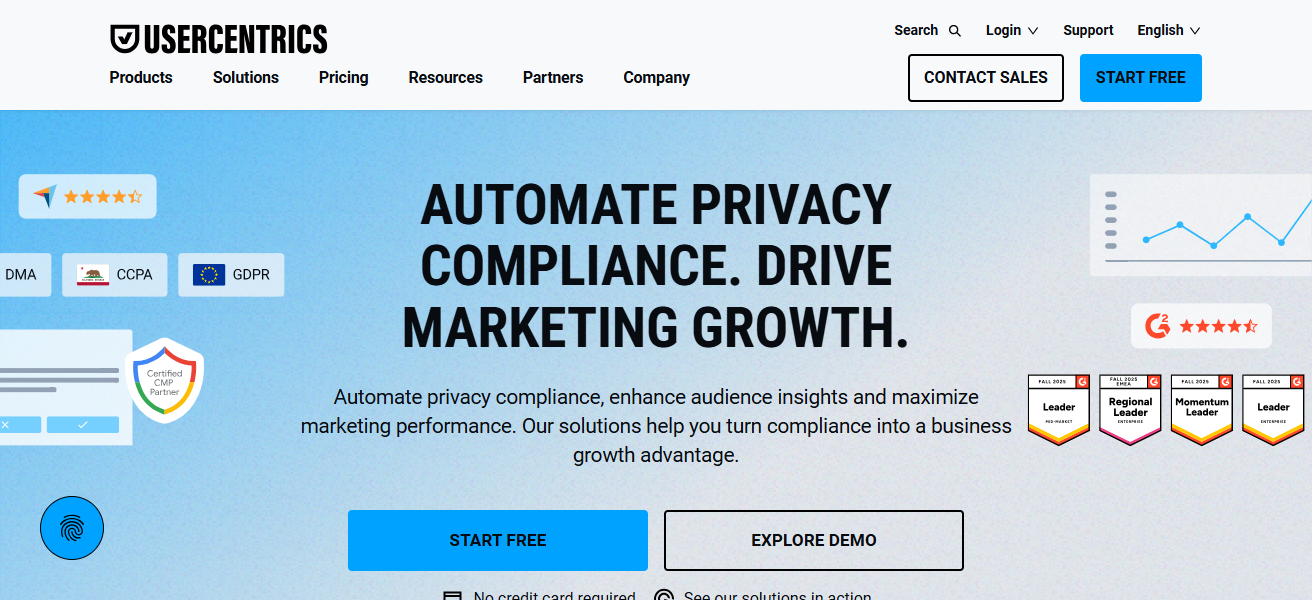
The platform focuses on organizations maintaining audit logs, transparency, and legal compliance. With customizable consent banners, workflow automation, and reporting dashboards, the Usercentrics CMP avoids manual tracking to reduce compliance risks.
While it’s not an economic reporting tool, it handles personal data which needs to be regulated with privacy and consent management tools.
Features Usercentrics CMP
- Automation for Consent Management: Automates collection, management, and documentation of user consents to encourage privacy compliance.
- Support for Regulatory Compliance: Complies with one or more of the GDPR, CCPA, and other privacy laws.
- Customizable Banners & Workflows: Provides flexible user consent experiences.
- Audit-Ready Dashboard & Reporting: Monitors consent and provides transparency for audits.
| Pros | Cons |
|---|---|
| Automates consent management for GDPR, CCPA, and privacy laws | Not a full financial or regulatory reporting tool |
| Maintains audit-ready records for compliance | Limited functionality outside privacy management |
| Customizable consent banners and workflows | Best suited for data privacy, not tax or finance reporting |
| Reduces manual tracking and compliance risk | Smaller organizations may not need full feature set |
| Dashboard analytics for transparency | Pricing can be high for smaller websites |
| Supports global privacy regulations | Not suitable for financial institutions’ reporting needs |
How We Choose Best Software For Regulatory Reporting Automation
- Regulatory Coverage: Identify if the software complies with your jurisdiction’s regulations (Basel III, IFRS, Dodd-Frank, Solvency II, etc.).
- Data Integration: Check if the software can connect, pull, and merge data from various internal and external sources.
- Automation & Accuracy: Select software that has features like automated report generation, validation, and reconciliation that limit the likelihood of human error.
- Scalability: Software should be able to support the increased volume of data and complexity of reports as the organization progresses.
- Audit & Compliance: Software should contain strong trail audit, manage report compliance, and workflow of the regulations.
- User-Friendly Interface: Software has to be accessible, contain dashboards and reporting templates and should allow collaboration.
- Cost & ROI: Consider the value of the software in placing a cost to the licensing, implementation, and continuing support of the software.
- Vendor Support & Updates: Check the vendor’s record in supporting the client and implementing changes to the software when regulations shift.
Conclusion
To sum up, selecting appropriate software for automating regulatory reporting is crucial for financial institutions and businesses to maintain accuracy, efficiency, and compliance.
AxiomSL, OneSumX, Workiva, and other recent software solutions simplify data processing, minimize manual entry errors, and generate reports ready for auditing.
Choosing such solutions optimizes time, improves compliance, and fosters better decision-making in today’s intricate financial conditions.
FAQ
It is a platform that automates data collection, validation, and submission to comply with financial regulations.
It reduces manual errors, saves time, ensures compliance, and provides audit-ready reports.
Primarily banks, financial institutions, insurance companies, and large corporations.
Common frameworks include Basel III, IFRS, Dodd-Frank, Solvency II, and local reporting standards.
By automating workflows, validations, and report generation, minimizing manual effort.