In this article, I will talk about the Best Subscription Commerce Platforms for businesses to sell products and services using a recurring billing model.
Brands are focusing on subscription commerce to capture predictable revenue, retain customers, and grow. Having the right platform will streamline payments, subscription customization, and customer experience for sustained business success.
Key Points & Best Subscription Commerce Platforms
| Platform | Key Point |
|---|---|
| Wix | Beginner-friendly drag-and-drop builder |
| Shopify | Robust app ecosystem for subscriptions |
| Subbly | All-in-one subscription-first platform |
| Recurly | Advanced billing and analytics tools |
| Stripe | Global payment infrastructure with subscription APIs |
| Magento | Highly customizable enterprise-level solution |
| BigCommerce | Scalable SaaS platform with subscription add-ons |
| Podia | Best for creators selling memberships |
| WooCommerce | Flexible WordPress plugin with subscription extensions |
| Sellfy | Simple setup for digital product subscriptions |
10 Best Subscription Commerce Platforms
1. Wix
Wix is an easy-to-use website builder and subscription commerce provider. Its eCommerce and membership tools for small businesses and creators allow them to customize their website with easy drag-and-drop design.
Built-in hosting is also offered along with customizable subscription plans to automate billing for recurring services and access to content or physical products.
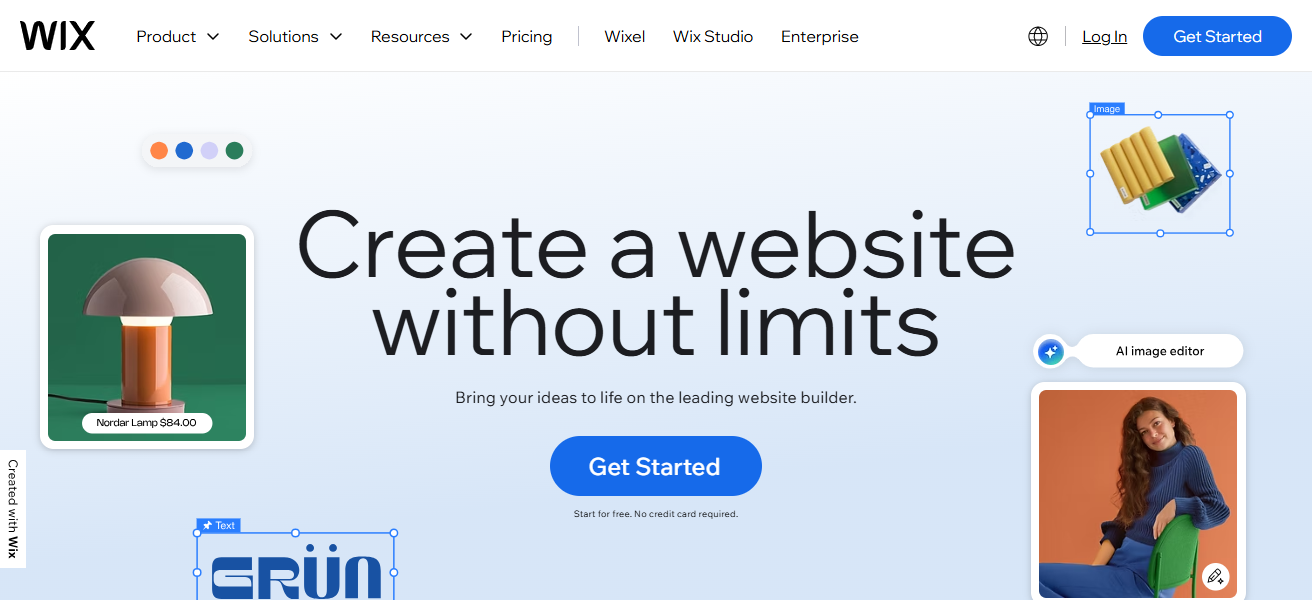
Email marketing, analytics, and customer management tools can be found in its extended App Market. Wix is perfect for beginners who want an uncomplicated subscription store.
Wix Features
- App Market: Integrate with CRM, analytics, and other apps to improve your eCommerce email marketing.
- Drag and Drop site builder: no coding necessary to design your subscription page.
- Recurrency Payments: eCommerce features allow for automatic billing and support for a subscription plan.
- Membership and Control Access: Tiered access options allow you to create member-only services or content.
| Pros | Cons |
|---|---|
| Easy drag-and-drop builder with quick setup and no coding needed. | Subscription features are basic compared to dedicated platforms. |
| Affordable pricing and built-in hosting. | Fewer advanced tools for recurring revenue optimization. |
| Good for small businesses, creatives, and service providers. | Limited scalability for large subscription catalogs. |
| Integrated marketing apps (email + SEO). | Less flexible payment options than specialist systems. |
2. Shopify
Shopify stands as one of the leading subscription commerce platforms with unique offerings. Their subscription billing features are complemented by the Recharge and Bold subscription apps, which handle tiered plans, subscription products, and billing.
For merchants, Shopify’s seamless integration of payment and customer data management with inventory control is a big plus.

Along with reliable inventory management, Shopify also provides data-driven marketing, multi-channel marketing, and website themes that adapt to your storefront.
Shopify is a reliable and professional app system that suits any enterprise looking to increase their subscription billing.
Shopify Features
- Recurring Billing via Apps: Use apps like Bold and Recharge to support subscription products.
- App Ecosystem: Access thousands of analytics, marketing, loyalty, and fulfillment apps.
- Multi-Channel Selling: Sell on the web, in-person, social, and marketplaces.
- Robust Store Management: Manage orders, customers, and inventory through one dashboard.
| Pros | Cons |
|---|---|
| Powerful ecosystem, reliable uptime, and scalable infrastructure. | Subscription requires third-party apps (e.g., Recharge), adding cost. |
| Excellent multi-channel selling (online, social, POS). | Platform fees can add up for small sellers. |
| Great inventory, analytics & customer-management tools. | Customization beyond themes needs coding or experts. |
| Strong app store for extensions and features. | Some apps charge transaction percentages. |
3. Subbly
Subbly only focuses on subscription sales as a commerce platform and is a subscription-first platform. It is made for creators, coaches, and product-based industries that depend on recurring revenue.
Subbly offers recurring payments, flexible subscription rules, customer portals, and dunning management. It provides templates, upsells, and integrations with email tools, so you can easily and quickly launch subscription boxes and digital memberships.

The subscription can be for services as well. Subbly is known for its deep subscription features, affordability, and simplicity. You do not need third-party add-ons.
Subbly Features
- Customer Portal: Subscribers have the ability to manage their own plans, billing, and upgrades.
- Custom Checkout Flows: Adjust experiences for upsells, onboarding, and trials.
- Recurring Revenue with Flexible Billing Cycles: Built for a subscription-first business model with adjustable billing cycles.
- Integrations: Easily link systems for fulfillment, analytics, and email.
| Pros | Cons |
|---|---|
| Enterprise-grade recurring billing engine. | More complex setup; best for larger businesses. |
| Advanced dunning, retry logic & revenue reporting. | Higher cost for small businesses. |
| Strong API and CRM integrations. | Not a full storefront—needs external store or CMS. |
| Supports complex pricing models and global billing. | Requires technical knowledge to customize deeply. |
4. Recurly
Recurly is an enterprise subscription billing platform designed for fast growing digital media, SaaS, and subscription companies. It manages billing automation, recurring revenue, and complex scenarios.
Odd pricing, global currencies, revenue assuring payment retries, and sophisticated analytics are some of the revenue functions. Developers are provided with numerous integrations through banking and other systems.
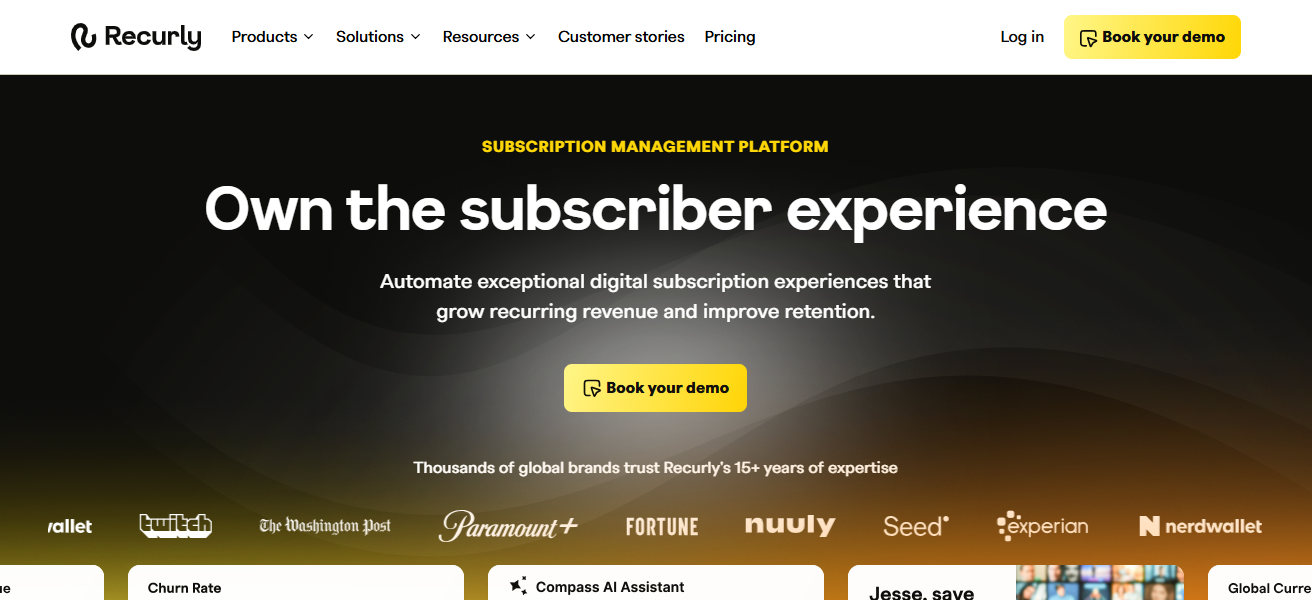
Built-in compliance, automation, and other revenue functions ease tax, and security. Automation and complex billing scenarios are managed by invoicing and billing. It is equipped for advanced subscription management.
Recurly Features
- Dunning & Retried: Safeguard against lost payments to minimize churn.
- Advanced Billing Logic: Control upgrades, downgrades, trials, and plans based on usage.
- Revenue Reporting: Subscription metrics and forecasting analytics.
- API & Integrations: Integrates with revenue tools, accounting, and CRMs.
| Pros | Cons |
|---|---|
| Enterprise-grade recurring billing engine. | More complex setup; best for larger businesses. |
| Advanced dunning, retry logic & revenue reporting. | Higher cost for small businesses. |
| Strong API and CRM integrations. | Not a full storefront—needs external store or CMS. |
| Supports complex pricing models and global billing. | Requires technical knowledge to customize deeply. |
5. Stripe
Stripe is widely used for payment processing and managing subscriptions due to its developer flexibility and worldwide reach.
Businesses utilizing Stripe Billing can set up plans for recurring payments, bill customers based on usage, and set up trial periods and coupons.
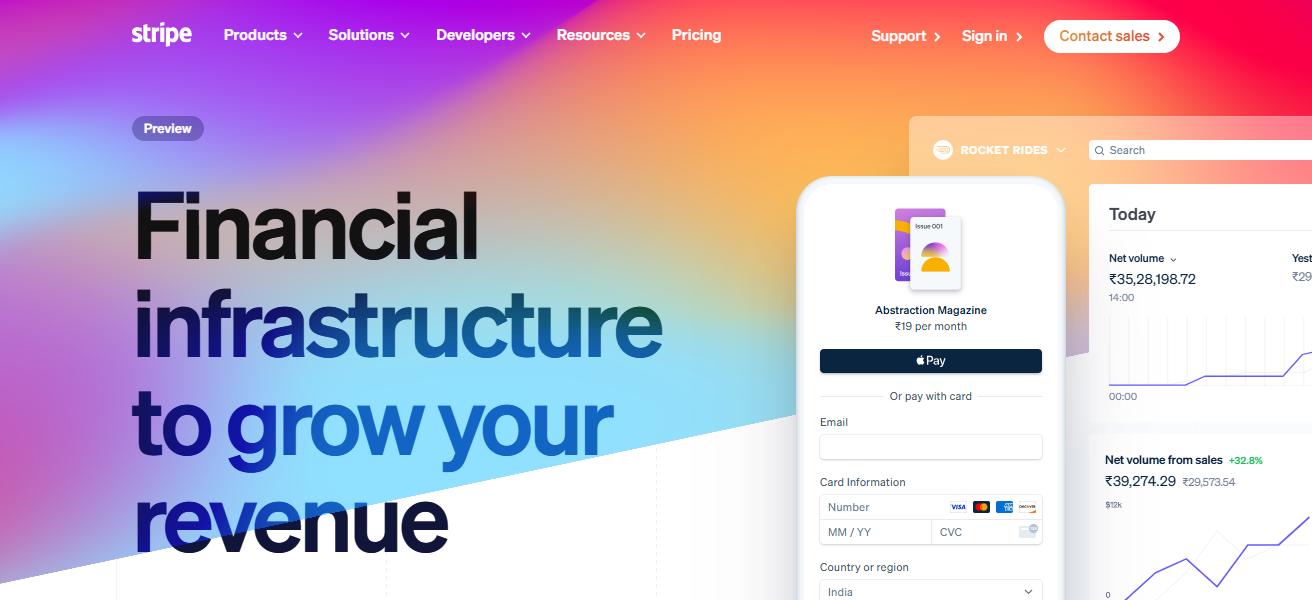
Businesses can choose invoices to be sent automatically and smart revenue recognition. Businesses can customize subscription logic to their liking, and deep integrations with their app and marketplace are also possible because Stripe’s API is so flexible.
Startups as well as enterprises can benefit from the fraud protection, dashboards, financial reporting, and other Burn rate management features they offer.
Stripe Features
- Stripe Billing: Flexible billing tools for recurring, metered, or usage-based billing.
- Global Payment Support: Support for various local payment methods, cards, and wallets in multiple currencies.
- Developer API: Custom subscription logic for extensive customization.
- Built-In Security: Compliance with PCI, fraud protection, and dispute management.
| Pros | Cons |
|---|---|
| Best-in-class developer tools & API for billing logic. | Needs developer support for custom flows. |
| Global currency and payment method support. | No native storefront—needs integration. |
| Stripe Billing handles trials, usage billing, coupons. | Transaction fees can be high for low-volume stores. |
| Built-in analytics, fraud protection & reporting. | Not ideal for non-technical users alone. |
6. Magento
Magento, now called Adobe Commerce, is an extensible, open-source eCommerce platform with significant subscription capabilities via extensions.
It is built for merchants who want to be able to fully control their store’s functionality, branding, and customer experience.
With its subscription add-ons, Magento manages recurring billing and customer management, as well as flexible product plans.
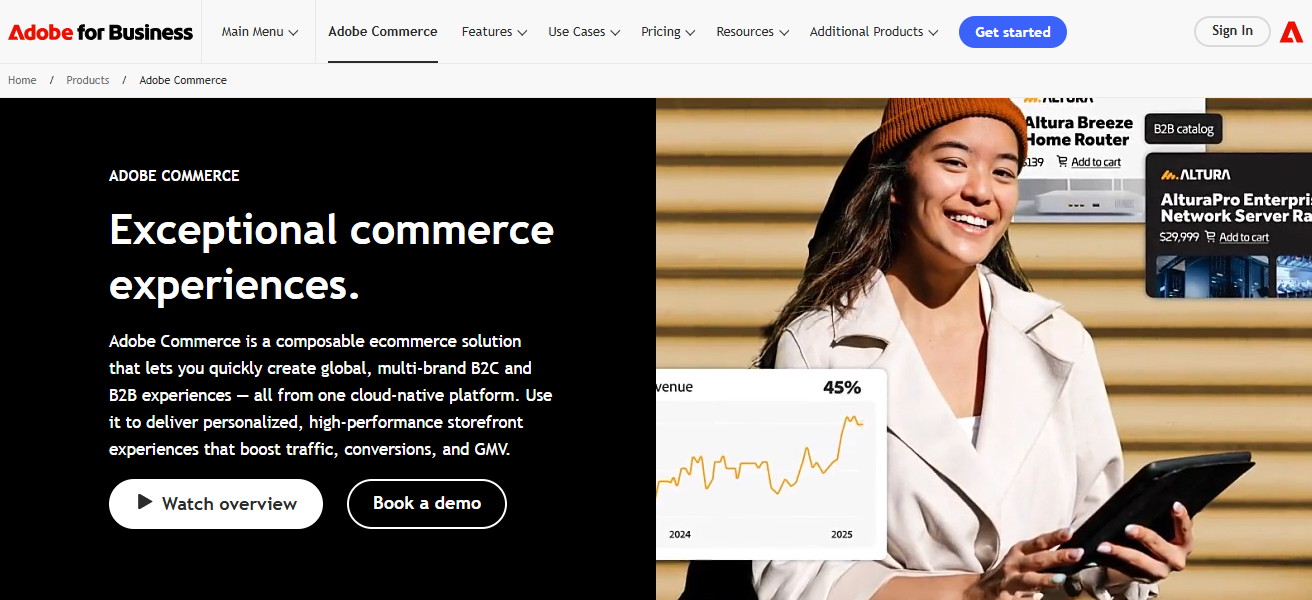
More enterprise-focused features include advanced SEO, the ability to support multiple stores, and a variety of performance optimization tools.
Magento is great for larger companies that have the development resource to support a fully customized subscription commerce solution.
Magento (Adobe Commerce) Features
- Full Customization: Almost complete freedom over logic and storefront.
- Subscription Extensions: Plugins for recurring billing.
- Scalability: Supports multiple storefronts, large catalogs, and high traffic.
- Enterprise Features: Segmentation of customers and advanced rules and SEO for promotions.
| Pros | Cons |
|---|---|
| Extremely customizable; built for complex catalogs. | Requires developers and higher maintenance. |
| Scales to large subscription commerce needs. | Hosting and development add to cost. |
| Enterprise features: multi-store, SEO, performance. | Not beginner-friendly. |
| Powerful inventory and customer segmentation. | Subscription needs extensions/plugins. |
7. BigCommerce
BigCommerce allows users to create an eCommerce Business that can grow with their needs.\n It provides built-in to support Subscription Commerce to built-in integrations like Rebillia or Chargebee recurring billing.
It has secure checkout, and flexible product tools. BigCommerce has strong SEO, multi-channel, and outstanding performance, all along with an analytics and marketing automation.

Their flexible APIs take the platform to the next level. With all of these features, BigCommerce sticks out to mid and large size merchants looking to grow along with their subscription model needs.
BigCommerce Features
- Recurring Payments via Integrations: Supports recurring billing by using apps such as Chargebee.
- Built-In SEO & Marketing: Convert and attract new subscribers using these tools.
- Multi-Channel Integration: Sell on eBay, Amazon, and more.
- Flexible APIs: Integrate with your fulfillment, ERP, and CRM systems.
| Pros | Cons |
|---|---|
| Strong native eCommerce tools and performance. | Recurring billing depends on apps like Chargebee. |
| Scales well with traffic and product count. | Learning curve for advanced features. |
| Multi-channel selling and SEO optimization. | Apps may increase monthly costs. |
| Flexible APIs for integrations. | Subscription is not built-in without add-ons. |
8. Podia
Podia is a platform that lets creators sell digital products, memberships, and courses, as well as manage community features and email marketing without any tech hassle.
The platform takes care of member management, content dripping, and recurring payments. Their easy-to-use dashboard supports creators in audience engagement through newsletters, and in product bundling and upselling.

Educators, coaches, and independent creators who focus on subscription revenue and digital products will find everything they need in one place with Podia.
Podia Features
- All-In-One Creator Platform: Sell subscriptions, memberships, and courses.
- Hosted Pages: No technical preparation needed for a ready storefront.
- Email Marketing Tools: Campaigns and newsletters to subscribers for their engagement.
- Community Features: Forums and messaging for members.
| Pros | Cons |
|---|---|
| Built for creators selling subscriptions and digital products. | Limited physical product support. |
| Simple UI with email & community features included. | Less scalable for large eCommerce catalogs. |
| No coding needed; fast product setup. | Basic analytics compared to others. |
| Great for courses, memberships, and digital content. | Payment features less advanced than Stripe/Shopify. |
9. WooCommerce
WooCommerce is an eCommerce plugin that is costless and turns a WordPress website into a highly customizable online store.
With WooCommerce subscriptions, merchants can sell recurring products and/or services. WooCommerce is flexible when it comes to design and features as it is built on WordPress.
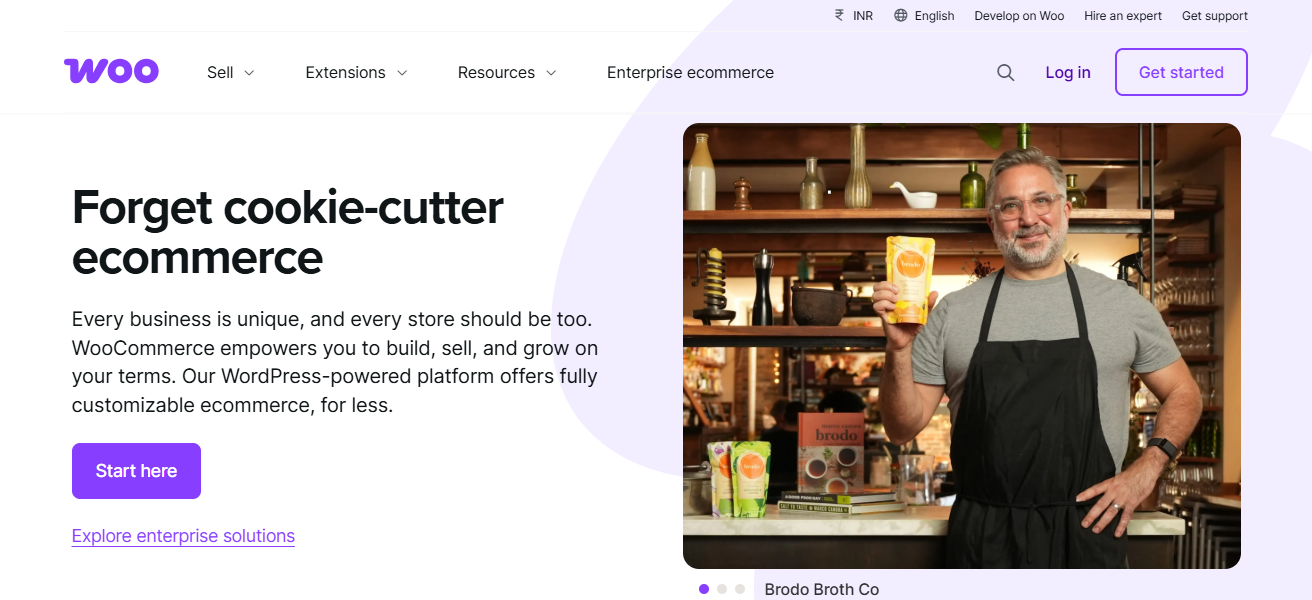
This also means they have a large plugin ecosystem to integrate payment processors, marketing, membership, and analytics tools.
Marketing memberships and analytics tools are also available. This makes WooCommerce perfect for businesses wanting flexible and content driven commerce in a WordPress setting.
WooCommerce Features
- WordPress Integration: Design and content managed completely from your end.
- Subscription Plugins: Recurring products via WooCommerce Subscriptions.
- Extensive Add-On Plugins: Memberships, bookings, analytics, and more.
- No Platform Fees: Pay only hosting and gateway fees.
| Pros | Cons |
|---|---|
| Full control via WordPress with huge plugin library. | Needs WordPress experience and maintenance. |
| Flexible subscription extensions (WooCommerce Subscriptions). | Hosting, security & backups are your responsibility. |
| No platform fees beyond payment gateway. | More setup effort than hosted platforms. |
| Ideal for content-driven stores. | Can get slow without optimization. |
10. Sellfy
Sellfy is an easy-to-use subscription commerce platform that is tailored to small businesses, digital content vendors, and creators.
You can set up your store in minutes to sell subscriptions, digital downloads, physical products, and product bundles.
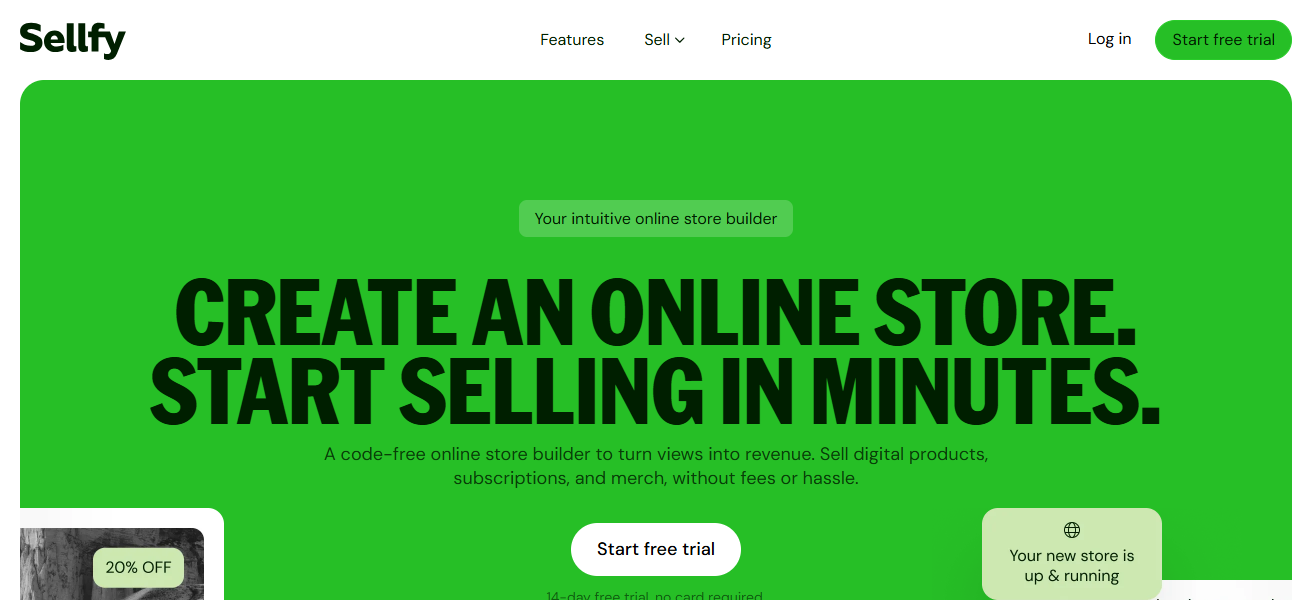
Sellfy takes care of the tricky stuff like recurring payments and customer management, and you can customize your storefront and use built-in marketing tools like email campaigns and discount codes.
With no complicated technical stuff, it is an ideal platform for independent developers, writers, and artists to monetize their work.
Sellfy Features
- Simple Setup: Quick creation of stores with subscription and digital products.
- Built-In Storefront: Hosted platform with customizable design.
- Recurring Billing: Automatic management of subscription payments.
- Marketing Tools: Includes coupons, upsells, and email campaigns.
| Pros | Cons |
|---|---|
| Easiest setup for creators, digital sellers & small shops. | Limited advanced subscription tools. |
| Handles recurring billing, storefront, and payment tools. | Fewer integrations than Stripe/Shopify. |
| Built-in marketing: discount codes, email. | Not ideal for large catalogs or enterprise. |
| Good balance of simplicity & features. | Basic analytics and shipping tools. |
How We Choose Best Subscription Commerce Platforms
- Subscription Features: Subscribers should be able to receive and manage cycles; payments should renew automatically.
- Ease of Use: No technical complexities, just dashboards to manage subscriptions, customers, and products.
- Payment Flexibility: Reliable revenue collection on payments for subscriptions across currency, payment gateways, and security.
- Scalability: The platform accommodates evolving business requirements of subscribers, products, and traffic effortlessly.
- Customization Options: Flexibility in business branding, pricing, and operational structures at diverse workflow requirements.
- Integrations: Increased business efficiency through automation with compatible marketing, accounting, CRM, and analytics tools.
- Pricing Transparency: Subscription management costs for businesses are predictable with straightforward pricing and no surprises.
- Customer Management: Long-term relationships with customers through self-service, retention, and churn minimization are easier with tools.
Conclusion
To summarize, With their recurring invoicing, customer handling, and growth management features, top Subscription Commerce Platforms streamline business processes.
These platforms help businesses automate collections, unlock customer payment satisfaction, and predict revenue.
Be it an individual creator, a small business, or a big corporation, the proper platform guarantees optimal subscription function operations and sustained success in an increasingly tough environment.
FAQ
Platforms that help businesses sell products or services with recurring billing.
To automate billing, retain customers, and generate predictable revenue.
SaaS, eCommerce stores, creators, membership sites, and service providers.
Many support multi-currency and international payment methods.