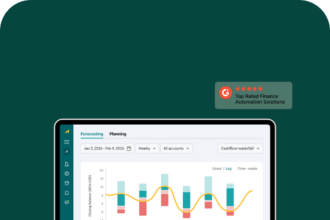
This article focuses on the Best Supply Chain Financing Platforms and how they assist businesses in enhancing cash flow, building supplier relationships, and managing working capital.
- Key Poinst & Best Supply Chain Financing Platforms
- 10 Best Supply Chain Financing Platforms
- 1. PrimeRevenue
- 2. Taulia
- 3. Orbian
- 4. Demica
- 5. C2FO
- 6. Kyriba
- 7. HSBC Supply Chain Finance
- 8. Citibank SCF
- 9. SAP Ariba Supply Chain Finance
- 10. NeuraSpark
- How To Choose Best Supply Chain Financing Platforms
- Cocnlsuion
- FAQ
Give early payments, flexible financing, and enhanced visibility into supply chain finance. For companies focused on improving liquidity, diminishing financial risk, and fostering sustainable growth, understanding the appropriate supply chain financing solution is imperative.
Key Poinst & Best Supply Chain Financing Platforms
| Platform | Key Point |
|---|---|
| PrimeRevenue | Global leader in multi-funder SCF solutions |
| Taulia | Strong integration with ERP systems like SAP |
| Orbian | Flexible programs with multinational reach |
| Demica | Specializes in receivables and payables financing |
| C2FO | Dynamic discounting marketplace for early payments |
| Kyriba | Treasury-focused SCF with strong analytics |
| HSBC Supply Chain Finance | Robust banking-backed liquidity programs |
| Citibank SCF | Wide global coverage with strong compliance |
| SAP Ariba Supply Chain Finance | Seamless procurement-finance integration |
| NeuraSpark | AI-driven risk management and cash flow visibility |
10 Best Supply Chain Financing Platforms
1. PrimeRevenue
PrimeRevenue optimizes supply chain finance by connecting buyers, suppliers, and finance providers.
Through the creation of flexible working capital solutions, PrimeRevenue empowers companies to bolster supply chain liquidity by strategically optimizing receivables and payables.
PrimeRevenue’s analytics and risk management tools enhance cash flow visibility to all participants in the supply chain.
Its global presence and integration functionality position PrimeRevenue as a preferred partner to multi-national companies in need of operational agility, improved supplier relationships, and reduced financing costs.
PrimeRevenue – Features
- Marketplace for multiple funders: Buyer’s, supplier’s, and multiple funder’s connections to diversify liquidity choice.
- Working Capital Tools: Cash flow and payment term extensions are optimized and constructed strategically, which improve overall working capital.
- Reporting: Analytics and adjustable dashboard reporting can offer visibility into financial matters in real time.
- Integration with ERPs: Straightforward automation of payment and invoice processing with all major ERPs.
| Pros | Cons |
|---|---|
| Strong global network connecting buyers, suppliers, and financial partners. | Can be complex to implement for smaller businesses. |
| Excellent analytics and working capital visibility tools. | Pricing and setup may be expensive for mid-size companies. |
| Robust ERP integrations streamline finance operations. | Requires training for full utilization. |
2. Taulia
Taulia provides a sophisticated supply chain finance tool that enables organizations to free up cash locked in payables and receivables.
Taulia offers early payment, dynamic discounting, and automated work-streams that allow suppliers to receive payment sooner, while buyers improve their capital.
Taulia provides better financial analytics and planning, and more complex supplier ecosystems. The analytics and interface improve financial planning.
The flexibility and scalability of Taulia’s products improves collaboration and financial well-being in global supply chain networks.
Taulia – Features
- Dynamic Discounting: Buyers can offer discounts to suppliers if they agree to be paid earlier.
- Early Payment Programs: Offers suppliers the option of being paid early to enhance their cash flow.
- AI Enhanced Analytics: Identifies cash flow and other financing opportunities for the organization and predicts them.
- Supplier Portal: A self-service portal to manage invoices, payment selections, and financing options.
| Pros | Cons |
|---|---|
| Dynamic discounting and early payment options boost cash flow. | Best value when used with larger ERP ecosystems. |
| Intuitive user interface with strong analytics. | Some advanced features may feel overwhelming initially. |
| Helps strengthen supplier relationships through flexible financing. | Funding terms may vary by provider. |
3. Orbian

Orbian specializes in supply chain finance, particularly in buyer-led working capital solutions. Orbian improves liquidity in supply chain finance by providing early payment options to approved suppliers without changing buyer payment terms.
With risk controls, onboarding, and execution on its platform, simplicity and transparency make it appealing to large multinationals with complicated supply chain structures.
Orbian’s financing model promotes and sustains financial health for suppliers, strengthening relationships and optimizing operational efficiency across diverse industries.
Orbian – Features
- Buyer-led Financing: Buyers can drive financing initiatives across their entire supplier ecosystems.
- Multi-Currency Support: Supports global payments in multiple currencies.
- Onboarding Tools: Streamlined tools to assist suppliers with onboarding to the platform.
- Risk controls: Built-in risk management and compliance monitoring for secure financing.
| Pros | Cons |
|---|---|
| Focused on buyer-led financing for large supplier networks. | Not ideal for smaller supplier bases. |
| Streamlined supplier onboarding process. | Limited flexibility for basic discounting use cases. |
| Supports global multi-currency operations. | Features may exceed needs of simpler SCF programs. |
4. Demica
Demica is an example of a supply chain finance and receivables finance platform geared towards assisting organizations in managing their liquidity and working capital.
Invoice discounting and dynamic discounting, as well as other types of financing, are offered by Demica in order to meet the adaptable, tailored financing needs of clients.

Demica’s technology most often integrates with enterprise systems and provides users with real time data, automated workflows, and other services in order to facilitate quick decision making.
Because Demica places an emphasis on mitigating risk and transparency, it enables users to work more collaboratively, which increases cash flow in unpredictable markets and enhances financial resilience.
Demica – Features
- Receivables finance: Provides customizable invoice discounting and supply chain financing.
- Automation: Streamlines processing and approval workflows to lower the need for manual activities.
- Real-time data: Receive up-to-date visibility on financed receivables with access to centralized data.
- Compliance support: Includes features to assist companies with meeting regulatory and audit requirements.
| Pros | Cons |
|---|---|
| Strong automation and risk monitoring capabilities. | Complex configuration may require dedicated resources. |
| End-to-end financing solutions for invoices. | Some features may be overkill for basic programs. |
| Supports multi-currency and compliance needs. | Onboarding timeline can be longer. |
5. C2FO
C2FO runs a flexible working capital marketplace where buyers and suppliers streamline cash flow together.
On the platform, suppliers can offer discounts to receive early payments on their approved invoices, while buyers set their discount terms to manage their liquidity.
Competitive pricing and accessibility to all business tiers are further enhanced by C2FO’s real-time bidding system.
The platform’s international reach and the ease of use enable businesses to optimize their cash conversion cycles, cut down on financing expenses, and strengthen relationships in their supply chains.
C2FO – Features
- Dynamic marketplace: Competitive financing alternatives are created as suppliers compete for early payment terms.
- Flexible funding: Buyers and suppliers can determine their own discount rates and terms.
- Fast setup: With little IT complexity and effortless onboarding, your program can be launched in no time.
- Cash flow optimization: By reducing receivables or optimizing payables, working capital ratios are improved.
| Pros | Cons |
|---|---|
| Marketplace model allows dynamic rate setting by suppliers. | Not as deep enterprise financing options as some competitors. |
| Easy onboarding and flexible funding. | Fewer advanced analytics tools. |
| Helps optimize cash flow for both buyers and suppliers. | Limited ERP integration compared with large platforms. |
6. Kyriba
Kyriba offers a complete platform for treasury and supply chain finance that improves working capital optimization and liquidity management.
Its services include cash management, payment solutions, risk services, and supply chain finance. Kyriba helps businesses to

Enhance their supplier financing programs and improves the financing of receivables and the stretching of payables.
Kyriba empowers finance teams to manage liquidity, reduce risk, and drive sustainable growth across complicated supply ecosystems with actionable insight derived from sophisticated analytics and effortless ERP integration.
Kyriba – Features
- Treasury integration: supply chain finance, cash management, and risk management are bundled together.
- Cash visibility: Offers centralized views of liquidity and working capital across business units.
- Dynamic discounting: Features early payment programs for suppliers and flexible changes to discount rates.
- Forecasting tools: Advanced solutions for cash and financing needs include predictive analytics for planning.
| Pros | Cons |
|---|---|
| Combines treasury and supply chain finance functionalities. | Best value when part of broader treasury usage. |
| Strong cash flow forecasting and visibility tools. | Standalone SCF elements may feel lighter than dedicated SCF platforms. |
| Good supplier onboarding and automated workflows. | May require training for treasury teams. |
7. HSBC Supply Chain Finance
HSBC Supply Chain Finance provides multinational companies and their suppliers affordable working capital with global, buyer-led financing solutions.
From its large banking network, HSBC provides suppliers with early payment options and offers buyers extended payment terms, keeping supplier liquidity intact.
The digital platform simplifies supplier onboarding and payment transactions, while providing the buyer with advanced reporting and compliance features.
By helping to manage and forecast cash flow, the platform strengthens supplier liquidity and resilience, while building stronger commercial partnerships.
HSBC Supply Chain Finance – Features
- Global Financial Network: Provides Supply Chain Financing from HSBC’s Global Financial Network.
- Reverse Factoring: Buyers can lengthen payment terms while suppliers get paid sooner.
- Cross-border Financing: Addresses global trade and cross-border financing.
- Financing from SMEs: Provides financing to smaller suppliers who do not have credit.
| Pros | Cons |
|---|---|
| Backed by a global bank with strong financing credibility. | Financing costs can be higher depending on arrangements. |
| Wide range of SCF solutions including factoring and reverse factoring. | Traditional banking processes can involve manual steps. |
| Helps SMEs access affordable working capital. | Onboarding may require detailed documentation. |
8. Citibank SCF
Supply Chain Finance by Citibank provides customized financing solutions that improve working capital for both buyers and suppliers globally.
With early payment programs and structured payables solutions, Citibank enables companies to optimize their cash conversion cycles while preserving key supplier relationships.
Citibank’s global reach and trade finance expertise facilitate complicated cross-border transactions.
Digital transaction management and analytics tools provide clarity, efficiency, and risk mitigation, empowering businesses to overcome market challenges and enhance their financial performance.
Citibank SCF – Features
- Global Financing Network: Extensive banking network supports cross-border supply chain finance.
- Tailored Solutions: Structured financing solutions designed to meet customers’ needs by industry, company size, and supply chain.
- Risk Mitigation: Tools and reporting to keep an eye on supplier credit risk and financial stability.
- Payment Automation: Electronic processing and controls automate and streamline payables and receivables.
| Pros | Cons |
|---|---|
| Strong global infrastructure supporting cross-border financing. | Programs may be tied to broader banking relationships. |
| Helps improve working capital for both buyers and suppliers. | Compliance requirements may slow onboarding. |
| Offers tailored financing solutions for complex supply chains. | Not as flexible as pure fintech platforms. |
9. SAP Ariba Supply Chain Finance
SAP Ariba Supply Chain Finance collaborates with the Ariba Network to provide synchronized financing solutions that quicken payment to suppliers while optimizing working capital for buyers.
Through the combination of procurement and financing, the platform facilitates pre-approved early invoice settlements through financial institutions.

This provides operational ease and improves the predictability of cash flow. SAP Ariba SCF delivers analytics and transaction visibility
for tactical planning and enhances the supplier ecosystem. Its integration with SAP ERP systems and scalability attributes suit complex and large enterprises.
SAP Ariba Supply Chain Finance – Features
- Integrated Procurement: Close connectivity with Ariba Network and procurement processes.
- Supplier Financing: Early payment capability via external financial providers.
- Invoice Financing: Capture and reconciliation of invoices centralized, and augmented for improvement of accuracy.
- Ecosystem Access: Access to a large ecosystem of suppliers to facilitate broader adoption of financing.
| Pros | Cons |
|---|---|
| Seamless integration between procurement and finance. | Best suited for organizations already using SAP products. |
| Large supplier network through Ariba ecosystem. | Advanced finance capabilities may be limited to procurement workflows. |
| Improves invoice processing and payment automation. | May require SAP expertise for configuration. |
10. NeuraSpark
NeuraSpark is an innovative supply chain finance platform dedicated to the use of AI and data analytics for working capital improvement.
The platform develops customized predictive financing solutions and insights so companies can optimize cash flow and minimize financing expenses.

NeuraSpark improves automation, risk assessment, and transparency throughout the supply chain to support better decision making.
Its scalable technology offers automatic integration with a variety of enterprise systems. This makes it particularly appealing to organizations wanting to maintain innovative, technology-centered financing solutions that improve supplier collaboration and operational flexibility.
NeuraSpark – Features
- Artificial Intelligence: Predicts working capital gaps and available financing solutions using Artificial Intelligence.
- Predictive risk scoring: Uses new analytics for market and supplier data for deeper risk assessment.
- Automated workflows: Minimizes manual work and fast-tracks approval processes.
- Scalable architecture: Flexible design that adjusts to expanding business requirements and interconnects with other systems.
| Pros | Cons |
|---|---|
| Leverages AI and analytics for smarter financing decisions. | May have a smaller funding partner network. |
| Predictive insights improve risk assessment and cash flow planning. | Emerging platform with fewer enterprise case studies. |
| Automated workflows reduce manual efforts. | Integration options may be less extensive initially. |
How To Choose Best Supply Chain Financing Platforms
Assess business needs. Before ranking platforms, evaluate cash flow issues, invoice volumes, and working capital objectives.
Evaluate integration. Assess ease of connection to your ERP, accounting, and procurement systems for automation and accuracy.
Supplier adoption. Select platforms with extensive supplier financing and seamless onboarding to optimize financing engagement.
Global support. Consider platforms with multiple currencies, languages, and compliance to global regulations.
Funding options. Assess financing alternatives with early payment discounting and dynamic funding flow rate options.
Analytics capability. Platforms with real-time dashboards, predictive analytics, and actionable insights about working capital are preferred.
Cost transparency. Assess pricing for fees, discounting, and hidden charges within and among platforms.
Risk management. Opt for platforms with integrated credit risk assessment and compliance monitoring.
Scalability. Assess whether the platform can support your growing business and expanding supplier ecosystem.
Customer Support. Choose platforms with comprehensive training, responsive help desks, and guidance during implementation.
Cocnlsuion
In the end, selecting the most appropriate supply chain financing platforms enables companies to optimize cash flow, build stronger relationships with suppliers, and achieve better overall financial health.
The right financing platforms provide a range of funding solutions, easy system compatibility, excellent analytics, and support from anywhere in the world.
When financing strategies are tailored to business objectives, organizations improve the effectiveness of working capital, lower risk, and create a supply chain that is sustainable and resilient in the face of challenges.
FAQ
They help buyers and suppliers improve cash flow through early payment and financing options.
Businesses with large supplier networks or long payment cycles benefit the most.
Suppliers get early payments while buyers extend payment terms without harming relationships.
Yes, most platforms use secure systems, compliance checks, and risk management tools.
Yes, many platforms support SMEs by offering easier access to affordable financing.