
This article will focus on the best systems for handling multi-entity finance management globally. Managing numerous subsidiaries in different countries, currencies, and tax systems can be challenging.
- Key Points & Best Systems for Managing Multi-Entity Finances Globally
- 10 Best Systems for Managing Multi-Entity Finances Globally
- 1. Oracle NetSuite
- 2. Sage Intacct
- 3. SAP S/4HANA Cloud
- 4. Microsoft Dynamics 365 Finance
- 5. Acumatica Cloud ERP
- 6. Workday Financial Management
- 7. Tipalti
- 8. QuickBooks Online
- 9. Gravity Software
- 10. Epicor ERP
- How To Choose Best Systems for Managing Multi-Entity Finances Globally
- Conclusion
- FAQ
However, today’s cloud-based ERP and financial management systems offer simplified multi-entity consolidations, automated intercompany transactions, and compliance management.
I will discuss the leading solutions that enable organizations to optimize operational efficiency and global financial performance.
Key Points & Best Systems for Managing Multi-Entity Finances Globally
- Oracle NetSuite Cloud ERP offering global financial consolidation, compliance, automation, and scalability for multi-entity organizations.
- Sage Intacct Provides advanced multi-entity accounting, real-time reporting, and automated consolidations across diverse global subsidiaries.
- SAP S/4HANA Cloud Intelligent ERP enabling real-time financial insights, compliance, and streamlined operations for complex multinational enterprises.
- Microsoft Dynamics 365 Finance Offers AI-driven financial management, global compliance, and seamless integration with Microsoft’s enterprise ecosystem.
- Acumatica Cloud ERP Flexible cloud platform supporting multi-entity accounting, scalability, and real-time visibility across international operations.
- Workday Financial Management Delivers unified financials, analytics, and compliance tools for multinational organizations seeking agility and transparency.
- Tipalti Specializes in global payables automation, compliance, and multi-currency support for international vendor management.
- QuickBooks Online Simplified cloud accounting solution with limited multi-entity support, suitable for small global businesses.
- Gravity Software Built on Microsoft Power Platform, offering multi-entity financial management tailored for growing global companies.
- Epicor ERP Industry-focused ERP providing global financial management, compliance, and scalability for manufacturing and distribution enterprises.
10 Best Systems for Managing Multi-Entity Finances Globally
1. Oracle NetSuite
NetSuite by Oracle integrates multi-entity finance management and global operations on a unified cloud platform. It supports over 29 languages and 190 currencies.
Its OneWorld feature automates intercompany transactions and tax compliance, and currency consolidations on a real-time basis.
Role-based and region-based subsidiary management dashboards and reporting have been enhanced by recent updates featuring automation of revenue recognition, predictive revenue cash analytics, and AI.
NetSuite’s real-time consolidation can cut month-end closings from weeks to days and is focused on compliance, scalability, and enhanced operational visibility.
| Pros | Cons |
|---|---|
| Supports 29+ languages and 190 currencies, ideal for multinational operations. | Can be expensive for small businesses due to licensing and implementation costs. |
| OneWorld module automates intercompany transactions and consolidation in real time. | Implementation can be complex and requires skilled consultants. |
| AI-driven insights, predictive cash flow, and automated revenue recognition. | Customization can increase cost and deployment time. |
| Reduces month-end close cycles significantly. | Some users report steep learning curves for finance teams. |
2. Sage Intacct
Sage Intacct is designed with multi-entity finance functionality, advanced cloud automation capabilities, and deep multi-currency, tax, and intercompany elimination automation.
Its AI dashboards offer live oversight of subsidiaries, resulting in fast consolidation and reduced global operational error.
Updates 2025 to targeted multi-jurisdiction compliance, such as global tax rules, enhanced APIs, and multi-book functionalities paired with IFRS and GAAP posed compliance functions.
Intacct provides mid-market firms focused on compliance localized operational flexibility and oversight. It is designed for ease of integration and use across multiple subsidiaries or entities to centralize financial functions.
| Pros | Cons |
|---|---|
| Strong multi-entity automation with intercompany eliminations. | Limited manufacturing or supply chain integration compared to larger ERPs. |
| Multi-book functionality supports IFRS and GAAP simultaneously. | May require third-party add-ons for extensive global compliance. |
| AI dashboards provide real-time visibility and fast consolidation. | Pricing may scale steeply with number of entities. |
| Flexible API integrations for expanding business needs. | Limited customization for niche industries without additional development. |
3. SAP S/4HANA Cloud
SAP S/4HANA Cloud has a centralized finance module which allows multi-currency consolidations and automated reconciliations so SAP S/4HANA Cloud supports real-time processing and immediate reporting.
It is capable of analysis and reporting predictive analytics and cash flow analysis globally. The updates for 2026 include anomaly detection and reporting ESG which is automated and located in the cloud.
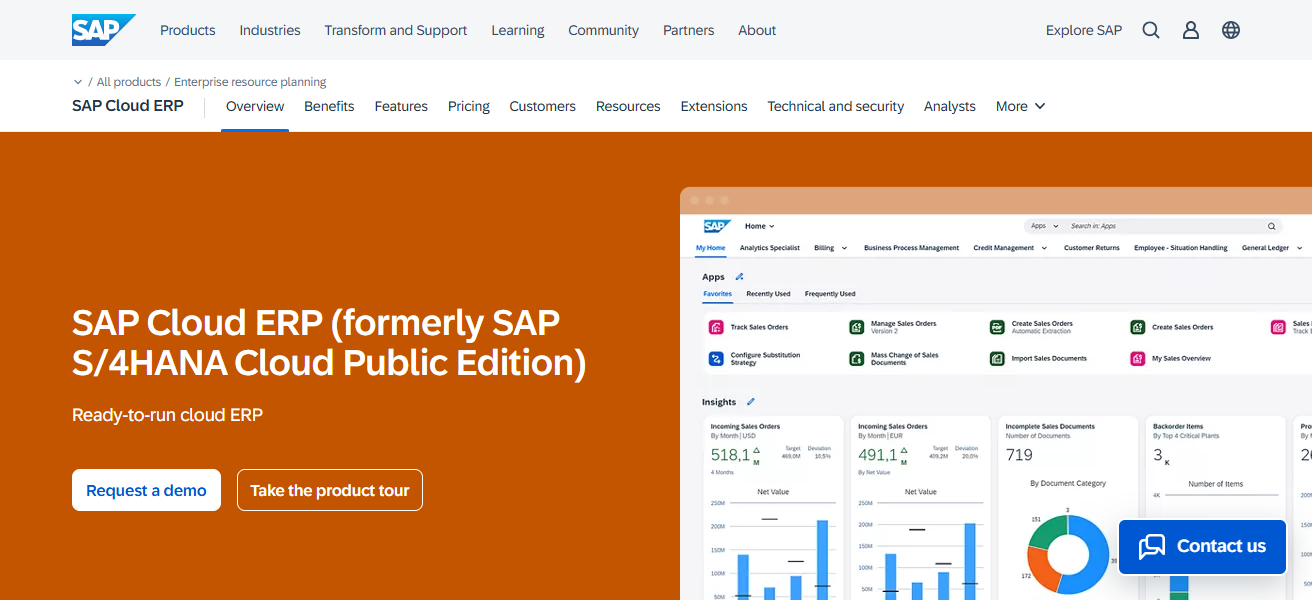
It also has the ability to streamline multinational financial operations of large organizations. With large organizations in mind
SAP S/4HANA Cloud has great scalability as well as large and complex integrations with the supply chain and procurement modules.
| Pros | Cons |
|---|---|
| Enterprise-grade multi-entity consolidation and compliance. | Very high licensing and implementation costs, often suited for large enterprises. |
| Real-time processing with predictive analytics and AI anomaly detection. | Complex deployment requiring specialized SAP consultants. |
| Strong integration with supply chain, procurement, and ESG reporting. | Overwhelming for mid-market companies due to feature complexity. |
| Cloud-based intercompany workflow automation reduces manual errors. | Long implementation cycles (often 6–12 months). |
4. Microsoft Dynamics 365 Finance
Automated settlements, inter-company accounting, and real-time analytics make Dynamics 365 Finance a valuable tool for multi-entity financial management.
With more than 180 supported currencies, and compliance with VAT, GST, and local tax regulations, Dynamics 365 Finance handles cross-region real-time analytics seamlessly.
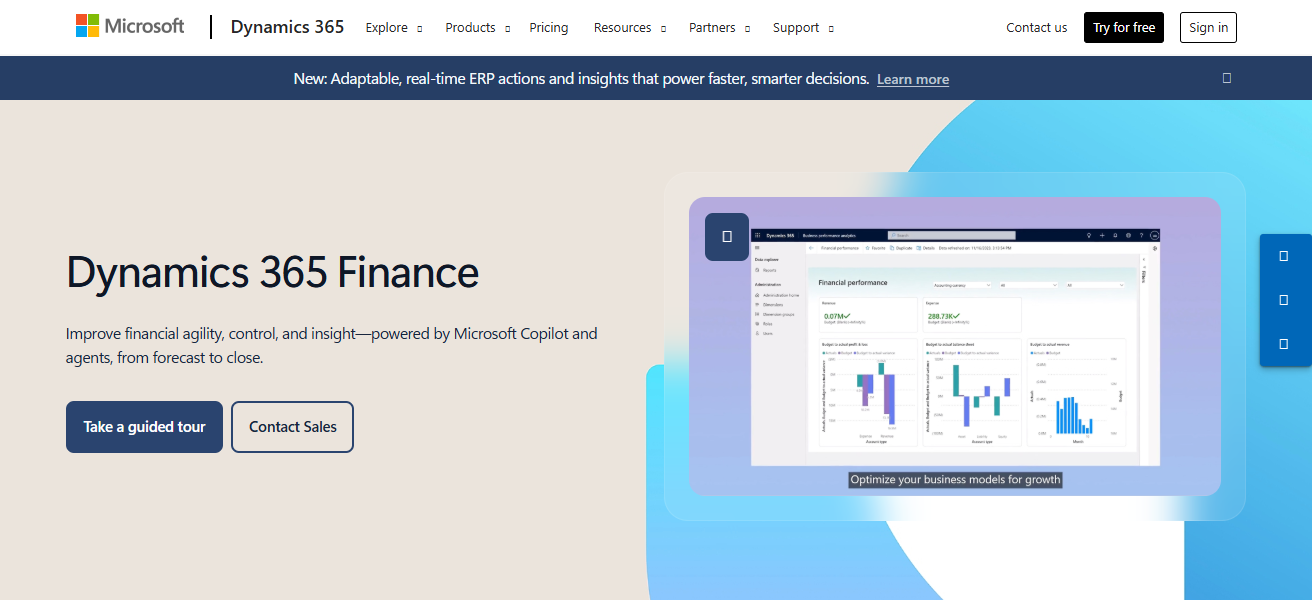
Global subsidiaries benefit from AI-enhanced financial analysis as well as predictive budgeting. Updates in 2025 improved multi-entity closing cycles, reporting, and analytics overall.
Dynamics 365 Finance integrates with Microsoft Teams, Power Platform, and Azure, and delivers scalable operational compliance and efficiency for enterprises with global operations.
| Pros | Cons |
|---|---|
| Supports 180+ currencies and regional tax compliance. | May require Power Platform expertise for advanced customizations. |
| AI-driven financial insights and predictive budgeting. | Some reporting features may require additional licenses or tools. |
| Seamless integration with Teams, Power BI, and Azure ecosystem. | Smaller mid-market organizations may find it more complex than necessary. |
| Fast multi-entity closing and real-time analytics. | Users report UI can be cluttered for complex operations. |
5. Acumatica Cloud ERP
Acumatica Cloud ERP provides centralized dashboards, intercompany transactions, and automated currency conversions to support multi-entity finance management for growing global companies.
It allows for multiple legal entities, multiple tax jurisdictions, and multiple accounting standards. The platform also provides custom workflows and real-time reporting for all subsidiaries, in its support of flexibility.
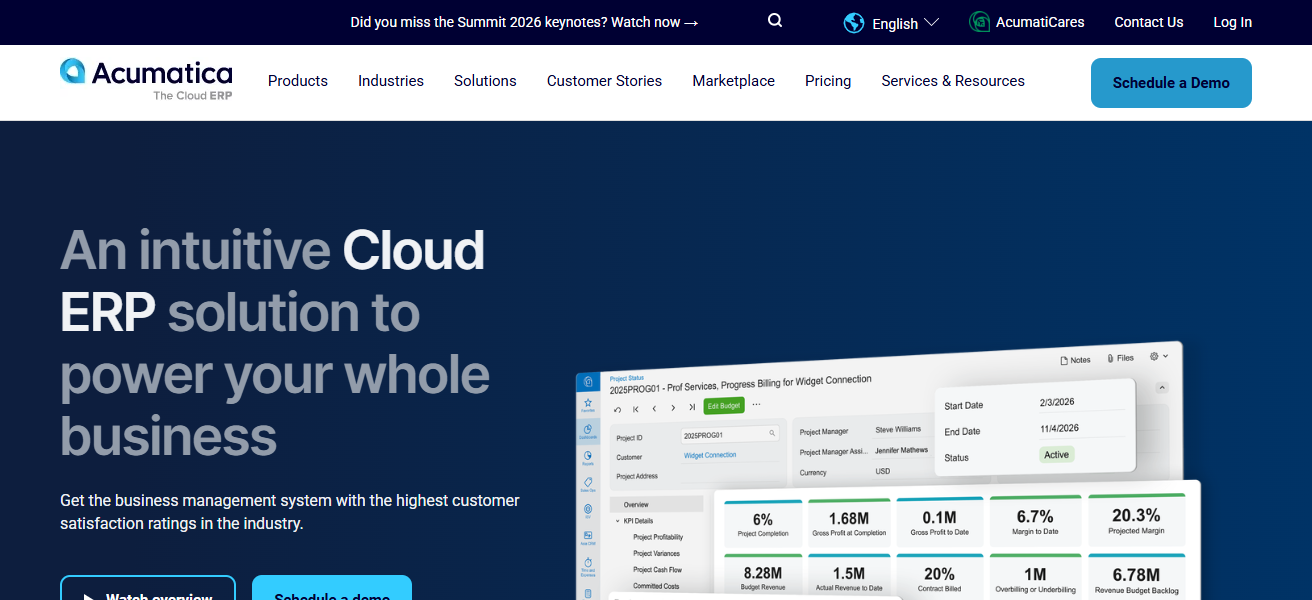
Acumatica will launch AI-assisted cash management, predictive financial analysis, and improved APIs with third-party financial systems in 2024-2025.
With a subscription model, mid-market companies looking for flexibility in cloud scalability and integrated operational insights across geo distributed entities find value.
| Pros | Cons |
|---|---|
| Flexible multi-entity dashboards and real-time reporting. | Some advanced global tax functionalities require third-party add-ons. |
| Subscription-based model with transparent pricing. | Can be less feature-rich than large ERPs for enterprise-scale needs. |
| AI-assisted cash management and predictive financial analysis. | Limited brand recognition compared to Oracle or SAP. |
| Highly customizable workflows and API integrations. | Deployment may require technical consulting for multi-entity setup. |
6. Workday Financial Management
Workday Financial Management facilitates unified finance and HR data, allowing for precise global workforce and financial planning.
With automated inter-company transactions, real-time consolidations and multi-currency support, Workday provides global multi-entity capabilities.
Workday’s AI analytics suite helps with cash flow forecasting, compliance, and resource allocation. The 2025 updates include improved ESG financial reporting, multi-book accounting and spend management.
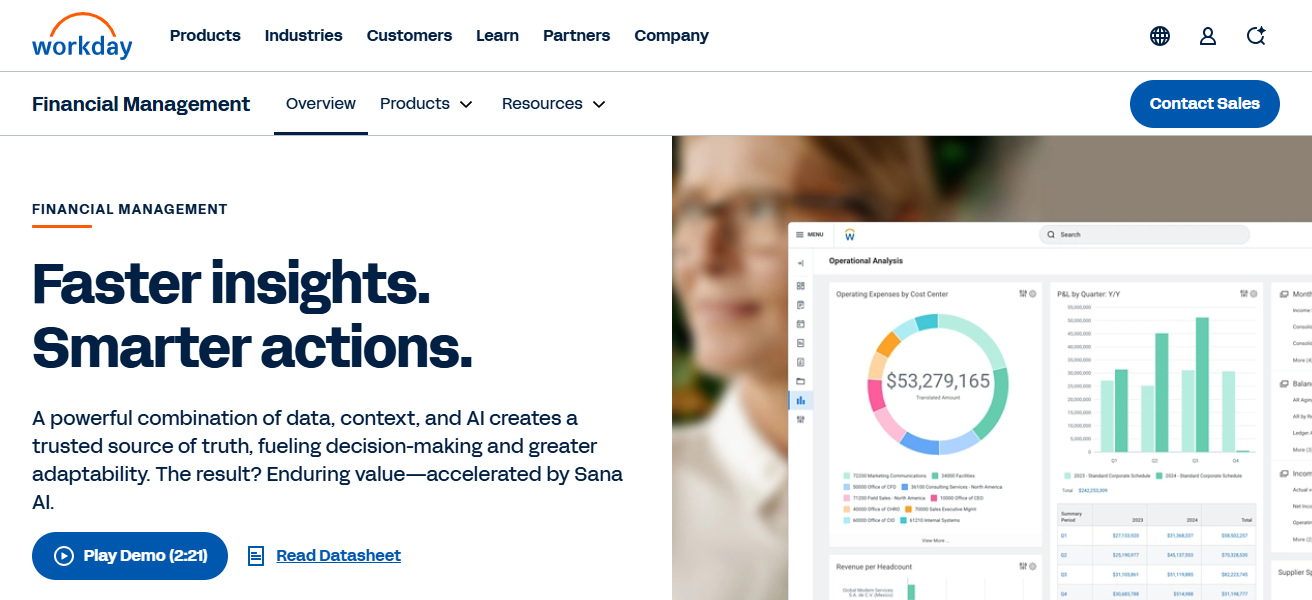
Enterprises benefit from the cloud-native architecture and role-based access control with real-time reporting.
This provides accurate upstream and downstream financial visibility consolidated across all subsidiaries and legal entities.
| Pros | Cons |
|---|---|
| Unified finance and HR for global workforce planning. | High cost and longer deployment times for large organizations. |
| Real-time multi-entity consolidations and multi-currency support. | Not ideal for smaller mid-market businesses due to complexity. |
| AI analytics, ESG reporting, and intelligent spend management. | Some advanced reporting may require additional configuration. |
| Cloud-native with strong security and access controls. | Limited offline functionality due to cloud-first architecture. |
7. Tipalti
Focusing on global payables and multi-entity cash management, Tipalti automates supplier payment processing, tax compliance, and currency conversions.
With intercompany transaction automation, it streamlines processes for over 190 countries and a variety of currencies.
Tipalti reduces operational risk and errors by offering AI-driven tax form validation, early payment optimization, and fraud detection.
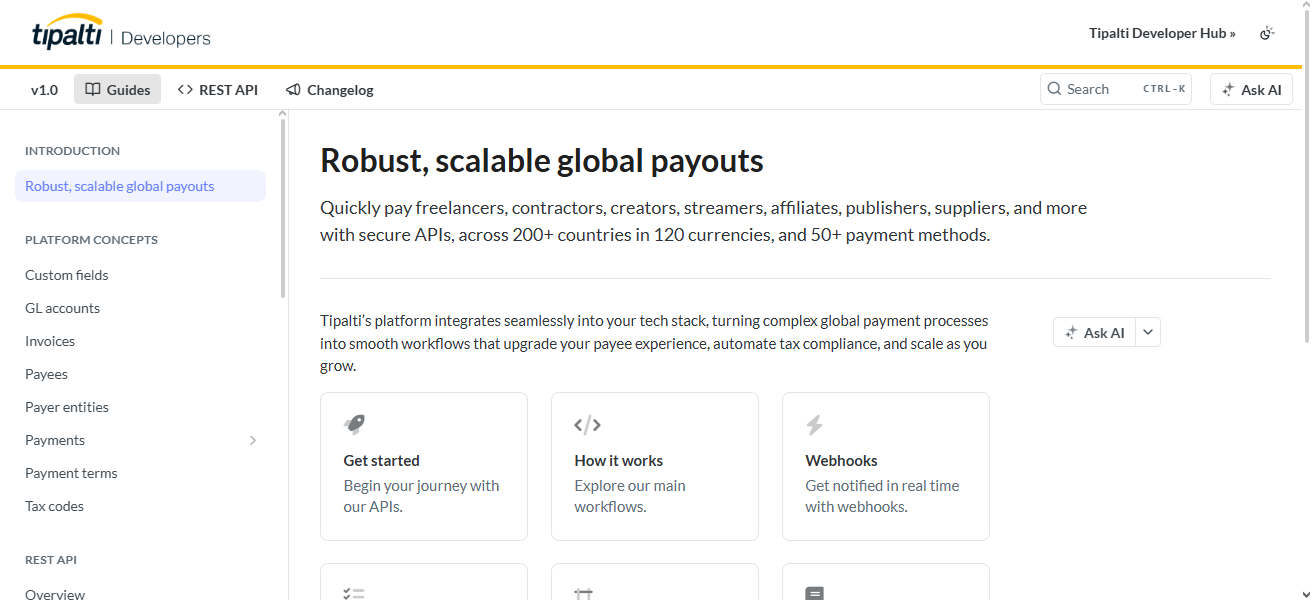
2025 updates promise expanded global tax regulations, enhanced ERP integrations, and the addition of real-time financial reporting.
For organizations managing multi-entity accounts payable processes, Tipalti streamlines compliance across jurisdictions, reduces manual processes, and optimizes working capital on a global scale.
| Pros | Cons |
|---|---|
| Automates global payables across 190+ countries and multiple currencies. | Primarily focused on accounts payable; lacks full ERP functionality. |
| AI-driven fraud detection and tax compliance. | May require integration with core ERP for full financial management. |
| Early payment optimization and cash flow efficiency. | Reporting capabilities may be limited compared to enterprise ERPs. |
| Streamlines multi-entity AP with automated workflows. | Subscription pricing can increase for high-volume operations. |
8. QuickBooks Online
QuickBooks Online caters to small and medium-sized enterprises by providing multi-entity finance management and automated intercompany accounting.
Additionally, it offers real-time consolidated reporting and supports multiple currencies. With QuickBooks Online, subsidiaries can function independently, and the parent organization can maintain oversight from the cloud.
QuickBooks Online will have multi-entity reporting and bookkeeping, plus improved tax and payroll system integrations in 2025.
Though it does not offer features comparable to large-scale ERPs, QuickBooks Online helps businesses with multiple entities to manage operations, automate financial processes, and adhere to tax compliance.
| Pros | Cons |
|---|---|
| Cloud-based multi-entity accounting for small to mid-sized businesses. | Limited multi-currency and global compliance capabilities compared to ERPs. |
| Automated intercompany accounting and consolidated reporting. | Not suitable for complex multinational operations. |
| AI-assisted bookkeeping for routine financial tasks. | Advanced analytics and ERP-level automation are lacking. |
| Cost-effective and easy to deploy. | Scaling to large enterprises may require migration to full ERP. |
9. Gravity Software
Gravity Software’s multi-entity accounting system has features for automated intercompany transactions, multi-currency transactions, and consolidated reporting.
As a product built on Microsoft Dataverse, it offers real-time reporting, customizable workflow automation and integrations, and Office 365 plug-ins.
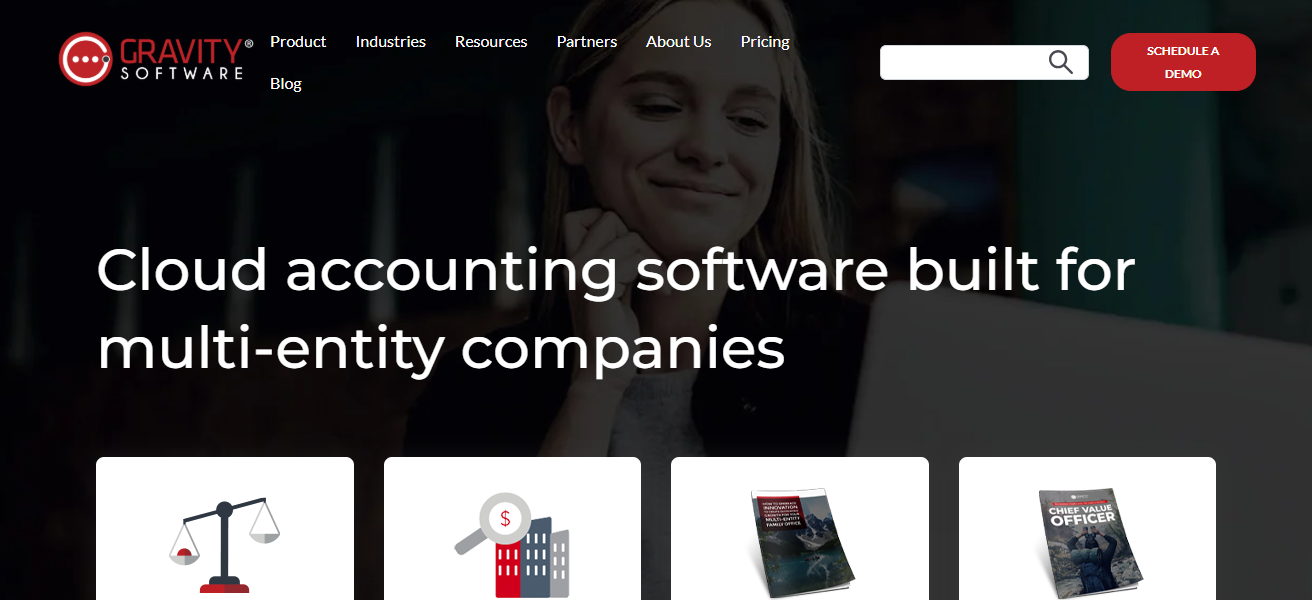
The 2024-2025 updates include augmented AI reporting, sophisticated budgeting, and compliance for global operations.
Gravity Software is directed towards mid-market organizations in need of more refined control over the financials of multiple entities
Blending enterprise consumption, straightforward implementation, absolute transparency in pricing, and integration with today’s productivity applications.
| Pros | Cons |
|---|---|
| Cloud-native, built on Microsoft Dataverse with Office 365 integration. | Less known brand; support network smaller than Oracle/SAP. |
| Real-time insights, flexible workflows, multi-currency handling. | Some advanced multi-entity financial modules may be limited. |
| AI reporting, advanced budgeting tools, scalable for mid-market. | Certain global tax rules may require customization. |
| Transparent pricing and simpler deployment. | Not ideal for extremely large enterprise operations. |
10. Epicor ERP
Epicor ERP provides multi-entity financial management with real-time consolidation and multi-currency transactional support, as well as automated global tax compliance.
The financial modules sit on top of the manufacturing, supply chain, and distribution modules. The 2025 enhancements will include AI-driven automated cash flow forecasting, intercompany reconciliation, and global reporting dashboard enhancements.
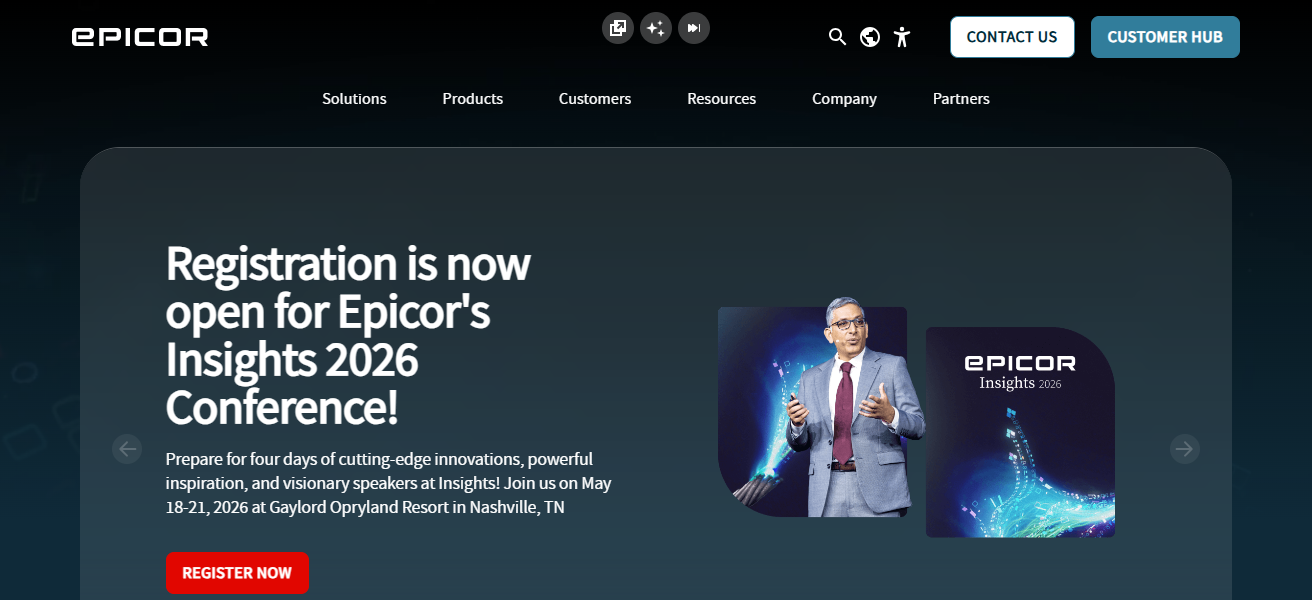
Given the strong presence in global manufacturing and distribution, Epicor’s solution will enhance the control and compliance for multi-entity accounting, reduce the month-end close cycle, and enhance visibility across the operation.
| Pros | Cons |
|---|---|
| Real-time multi-entity consolidation and global tax compliance. | Primarily focused on manufacturing/distribution; less suited for service-heavy enterprises. |
| AI-driven cash flow forecasting and intercompany automation. | Deployment can be complex for companies with many subsidiaries. |
| Integrates tightly with supply chain, manufacturing, and distribution. | Licensing costs may be high for smaller companies. |
| Improved month-end close cycles and operational visibility. | May require technical consulting for global expansion. |
How To Choose Best Systems for Managing Multi-Entity Finances Globally
Global Compliance: VAT/GST, local tax laws, IFRS and GAAP reporting are all supported.
Multi-Connectivity and Intercompany Automation: Automation of intercompany transactions, consolidations, and currency conversion is done here.
Analytics in Real-Time: For decision-making, it gives predictive insights and dashboards.
Integration: Payroll, HR, and ERP systems are integrated perfectly.
User Tours: The finance team finds it easy to use and requires very little training.
Costs and Return of Investments: Consider the costs of licensing, implementation and maintenance in comparison to the operational advantages gained.
Conclusion
To wrap up, it’s clear that selecting appropriate systems for managing multi-entity finances globally is essential for companies with multiple subsidiaries and complicated structures.
Sophisticated, cloud-based systems like NetSuite, SAP, and Workday enhance the simplicity of intercompany transactions, automate compliance and offer real-time insight into finances.
Choosing the right solution optimally balances efficiency, accuracy, and strategic clarity across all global entities.
FAQ
Managing finances across multiple subsidiaries, currencies, and countries.
Oracle NetSuite, SAP S/4HANA, Sage Intacct, Microsoft Dynamics 365, Workday, Acumatica, Tipalti, QuickBooks Online, Gravity Software, Epicor ERP.
Yes, most support 180–190+ currencies with automated conversion.
Yes, leading systems automate reconciliations and consolidations.