
This article focuses on the best wallets for enterprise crypto treasury management, highlighting wallets that offer the highest levels of security, compliance, and scalability.
With the growing adoption of digital assets, enterprises selecting a wallet to secure their funds, govern, and operationalize their wallets is becoming increasingly critical.
These wallets allow enterprises to treasury manage diplomatically and strengthen their operational resilience.
Key Points & Best Wallets for Enterprise Crypto Treasury Management
Fireblocks Provides secure MPC technology, multi-user approvals, compliance tools, and institutional-grade asset protection for enterprises.
Coinbase Custody Offers regulated custodial services, insurance coverage, and institutional-grade cold storage for large crypto treasuries.
BitGo Features multi-signature security, institutional custody, compliance reporting, and customizable treasury management for enterprise clients.
Ledger Enterprise Hardware-based solution with advanced governance, secure key management, and scalable treasury controls for organizations.
Copper Delivers ClearLoop technology, instant settlement, segregated accounts, and strong compliance features for enterprise crypto management.
Zengo Business Non-custodial MPC wallet eliminating single points of failure, enabling secure treasury operations across teams.
MPCVault Combines MPC and multisig, ensuring no single key compromise, ideal for enterprise-scale crypto treasury management.
Anchorage Digital Regulated U.S. custodian offering secure storage, staking services, and compliance-focused treasury management for institutions.
Gnosis Safe Open-source multisig wallet enabling customizable governance, transaction approvals, and decentralized treasury management for enterprises.
Uphold Business Custodial wallet with centralized controls, fiat integration, and transparent reporting for enterprise treasury management needs.
10 Best Wallets for Enterprise Crypto Treasury Management
1. Fireblocks
Fireblocks is an innovative wallet provider for enterprise level crypto treasury management and crypto wallet security. It utilizes multi-party computation (MPC) technology that removes single-entity failure points and keeps private keys secure.
Enterprise client features include enhanced governance controls, multi-lateral approval workflows, and institutional tailored compliance solutions.
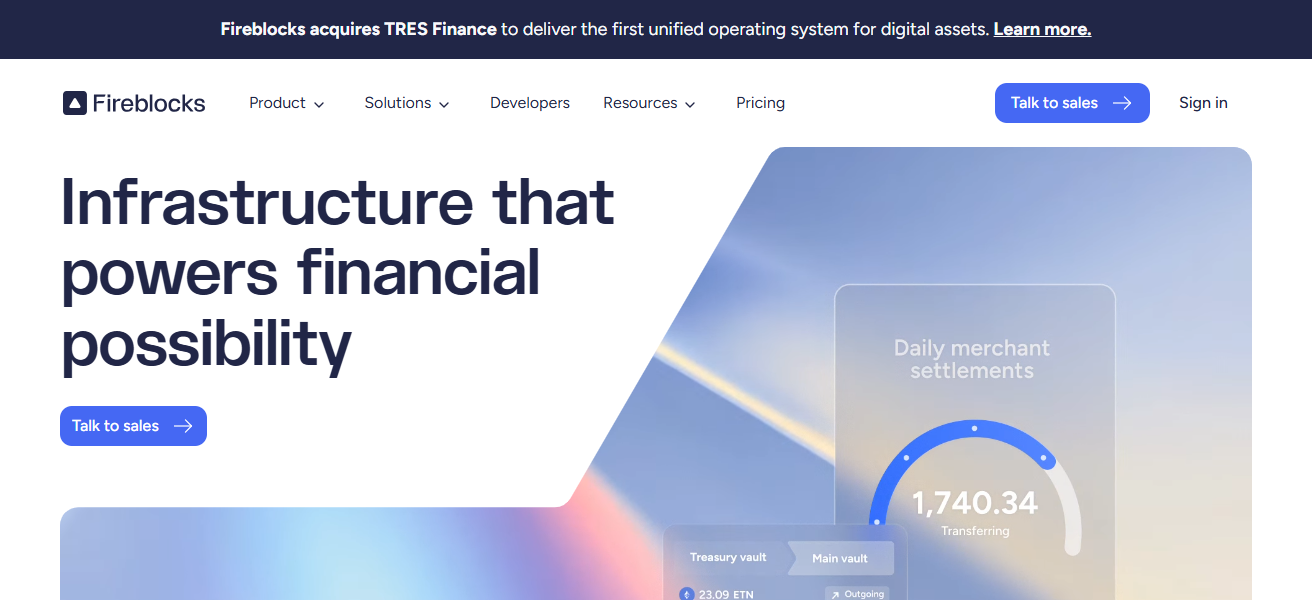
Fireblocks also provides integrations with various exchanges, custodians, and DeFi services for secure and easy transfer of integrated assets.
Its insurance offerings and compliance to regulations help organizations feel secure when managing large amounts of crypto assets.
All things considered Fireblocks offers enterprise-level digital asset operations with great efficiency and scalable security.
Fireblocks Features
- Uses multi-party computation (MPC) technology to secure private keys from potential single points of failure.
- Offers advanced treasury management for enterprises, including multi-tiered user approvals and comprehensive governance.
- Supports asset movements via integrations with custodians, exchanges, and DeFi services.
- Provides institutional-grade trust and security through compliance and insured offerings.
| Pros | Cons |
|---|---|
| Strong MPC security eliminates single points of failure. | Higher costs compared to simpler wallet solutions. |
| Advanced governance and multi-user approval workflows. | Requires technical expertise for setup and management. |
| Seamless integration with exchanges and DeFi platforms. | May be complex for smaller enterprises with limited resources. |
| Insurance coverage and regulatory compliance. | Limited flexibility for non-institutional users. |
2. Coinbase Custody
Coinbase Custody is specialized in providing custodial services compliant with regulations with respect to institutional clients and businesses crypto treasury services.
Furthermore, it provides cold storage services, and in the event of loss and theft, it is insured. Enterprises are able to be compliant with U. S. regulations, and it is a good option for companies that require legal protection.
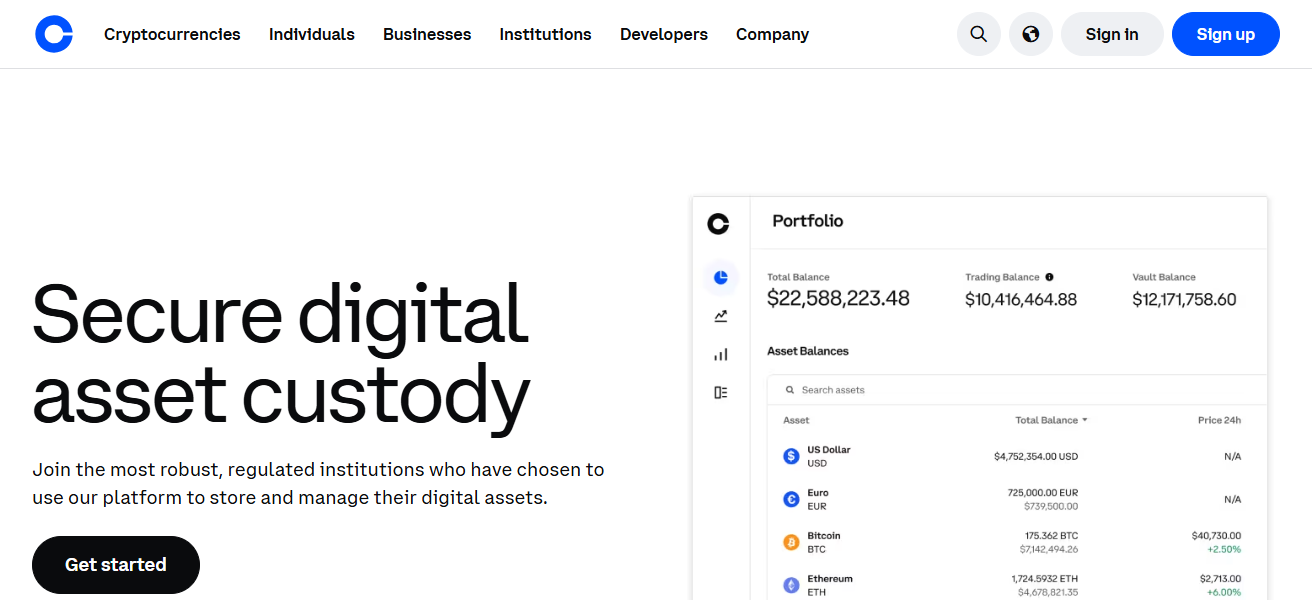
Besides, in a secure custody environment, enterprises can earn rewards with the staking services offered by Coinbase Custody.
Profit making treasury easily by custom liquidity and trading From Coinbase’s extended ecosystem, custody services come with institutional level infrastructure and reporting. Coinbase Custody is a reliable partner for enterprises needing to crypto safekeeping and management.
Coinbase Custody Features
- Provides custodianship with compliance to cold-storage and insured offerings.
- Offers enterprise-grade legal coverage guarantees by complying with U.S. legal stipulations.
- Offers enterprises means to safely earn rewards via support for staking services.
- Provides flexibility and liquidity for trading and treasury services via integrations within the Coinbase ecosystem.
| Pros | Cons |
|---|---|
| Regulated custodial service with strong legal safeguards. | Assets are fully custodial, reducing user control. |
| Cold storage with insurance protection. | Limited support for some emerging cryptocurrencies. |
| Staking services for earning rewards securely. | Higher fees compared to non-custodial solutions. |
| Integration with Coinbase ecosystem for liquidity. | Dependence on centralized infrastructure. |
3. BitGo
BitGo was one of the first companies in the industry to offer institutional crypto custody services and has built a solid reputation in enterprise multi-signature wallet technology.
Enterprises enjoy a customizable treasury workflow and receive digital asset risk protection, compliance reporting, and insured custody services.
Enterprises treasury portfolios can be of any breadth offered by BitGo’s various digital currencies. Treasuries can also utilize the multi-user approval system to increase governance and reduce the risk of unauthorized transactions.
For treasury system integrations, BitGo offers enterprise system APIs, which industry executives especially enjoy. Treasuries can utilize the system to streamline their workflow.
BitGo enjoys a solid reputation in the industry, along with regulatory approval, as a digital asset custodian for crypto institutions.
BitGo Features
- Uses multi-signature wallet technology for added security.
- Offers enterprises treasury workflows and compliance reporting tools.
- Supports multiple varying cryptocurrencies, and thus diversified portfolios.
- Offers system integrations via APIs, allowing enterprises to manage more efficiently.
| Pros | Cons |
|---|---|
| Multi-signature technology enhances institutional security. | Custodial model reduces direct asset control. |
| Customizable treasury workflows and compliance reporting. | Complex setup for enterprises without technical teams. |
| Wide cryptocurrency support for diversified portfolios. | Fees may be higher for smaller organizations. |
| APIs enable enterprise system integration. | Requires ongoing monitoring for governance efficiency. |
4. Ledger Enterprise
Ledger Enterprise provides institutional hardware wallet solutions for crypto treasury management.
Liquidity providers combine Ledger’s trusted hardware security modules (HSMs) with cutting-edge governance solutions that guarantee offline protection for private keys.
Enterprises get adaptable secure access, transaction approval workflows, and large-scale crypto custody governance.
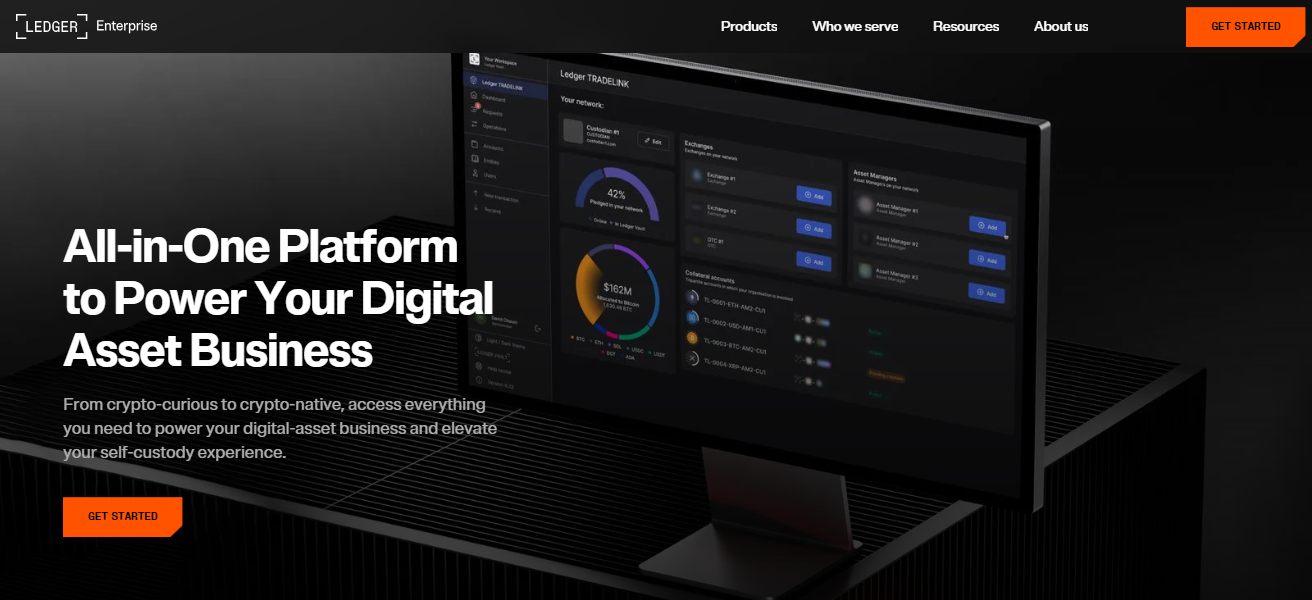
Ledger Enterprise also works with compliance solutions, making it appropriate for regulated companies. Its hardware-centric strategy tackles cyber assault threats, providing the greatest defenses against Internet dangers.
Ledger Enterprise provides clients with the crypto security industry’s strongest reputation and the confidence to manage digital assets securely across all teams and departments.
Ledger Enterprise Features
- Uses hardware security modules (HSMs) from Ledger to keep keys offline and secure.
- Offers configurable transaction approval workflows and access controls.
- Offers integrations with compliance organizations.
- Offers added security through their hardware-first approach.
| Pros | Cons |
|---|---|
| Hardware-based security with HSMs for offline protection. | Physical devices require secure handling and logistics. |
| Customizable access controls and approval workflows. | Limited scalability compared to cloud-based solutions. |
| Strong defense against cyberattacks. | Hardware replacement can be costly. |
| Compliance tool integration for regulated enterprises. | Less flexible for dynamic DeFi interactions. |
5. Copper
Copper offers ClearLoop to businesses. ClearLoop offers instant settlements across exchanges without the need to move the underlying assets.
This means that counterparty risk is minimized while custody is still safe. Businesses get the additional benefits of segregated accounts, compliance, and configurable governance.
Copper is also very flexible and supports different digital assets. This allows enterprises to diversify their treasury.

The infrastructure is designed around institutional clients, providing efficiency and transparency to crypto operations.
Aligning to regulations is also a plus with Copper. Businesses remain compliant while using the platform to manage their crypto treasury.
With the instant settlement, custody, and the counterparty risk, Copper remains a preferred option for crypto treasuries.
Copper Features
- Offers ClearLoop technology to settle instantly without asset movement.
- Offers counterparty risk mitigation with secure custodianship.
- Offers customizable governance controls and segregated accounts.
- Aligns the compliance with the institutional crypto operations.
| Pros | Cons |
|---|---|
| ClearLoop technology enables instant settlement. | Relatively new technology may face adoption challenges. |
| Reduces counterparty risk with segregated accounts. | Custodial model limits user autonomy. |
| Strong compliance alignment for institutions. | Higher costs for premium services. |
| Supports diverse digital assets. | Requires trust in Copper’s infrastructure. |
6. Zengo Business
Zengo Business utilizes non-custodial wallets and MPC technology to avoid single points of failure. Enterprises operate keyless, secure, and safe from exposed or compromised private keys.
With multi-user governance, Zengo Business allows teams to work collaboratively to manage treasury functions at multiple levels.
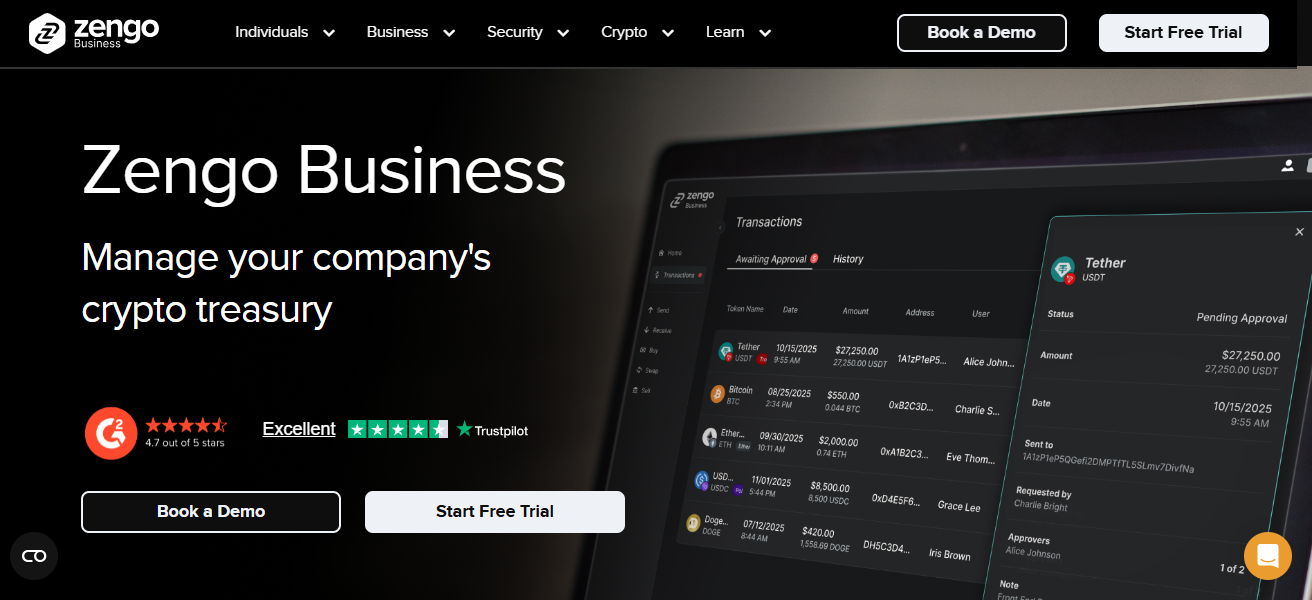
Zengo Business also offers wallets that seamlessly integrate with DeFi platforms. Zengo Business provides enterprises with a safe and secure way to manage crypto treasuries with advanced cryptography, and focuses on simplicity and scalability.
Zengo Business Features
- Non-custodial MPC wallet removes single points of failure.
- Secure keyless procedures with private keys never being exposed.
- Multi-user governance is provided for treasury management.
- Access to secure decentralized finance is provided through DeFi platform integrations.
| Pros | Cons |
|---|---|
| Non-custodial MPC wallet ensures full control. | Limited institutional adoption compared to custodial options. |
| Keyless operations eliminate private key exposure. | May lack advanced compliance features. |
| Multi-user governance for collaborative management. | Less insurance coverage than custodial wallets. |
| DeFi integration for decentralized finance opportunities. | Requires user responsibility for security practices. |
7. MPCVault
MPCVault integrates multi-party computation (MPC) and multisignature for advanced crypto treasury management.
By securely splitting and distributing key shares across multiple parties, it removes single point compromise.
Enterprises get key governance frameworks, institutional tiered multi user approvals, and workflow compliance.
Flexible digital asset coverage optimizes treasury management for institutions with varied holdings. Focused on scalable infrastructure, strong cryptographic and enterprise controls, allows enterprises to safely manage their large treasury holdings.
Enterprises valuing resiliency and strong accountability in digital asset management will especially benefit from the advanced security provided by MPCVault.
MPCVault Features
- Robust security through the combination of MPC and multisignature technology.
- No compromise through the distribution of key shares to multiple parties.
- Compliance and governance policies that are customizable are provided.
- Infrastructure that is scalable with the support of various digital assets.
| Pros | Cons |
|---|---|
| Combines MPC and multisignature for robust security. | Complex governance setup may challenge smaller enterprises. |
| Distributes key shares to prevent compromise. | Limited brand recognition compared to larger custodians. |
| Customizable governance and compliance features. | May require specialized technical expertise. |
| Supports diverse assets with scalable infrastructure. | Adoption still growing among institutions. |
8. Anchorage Digital
Anchorage Digital offers crypto custody and treasury management services to enterprises and is a custodian regulated in the U.S. and is a trusted institution due to their cold storage, insurance, and compliance with federal regulations.
Earning enterprises staking services. Digital also provides governance, multi user-approval, and treasury transparency reporting tools.
Their infrastructure is adaptable and supports a variety of crypto-assets. With regulatory approval and institutional-level security, Anchorage Digital stands out to enterprises in need of crypto treasury management services.
Anchorage Digital Features
- Secure cold storage solutions from the regulated U.S. custodian.
- Federal regulation compliance with insurance coverage.
- Staking services for earning rewards in a secure way are supported.
- Enterprises receive governance solutions and reporting transparency.
| Pros | Cons |
|---|---|
| Regulated U.S. custodian with federal compliance. | Custodial model reduces direct control of assets. |
| Cold storage with insurance protection. | Limited global availability compared to decentralized solutions. |
| Staking services for secure rewards. | Higher fees for institutional services. |
| Governance tools and transparent reporting. | Dependence on centralized infrastructure. |
9. Gnosis Safe
Gnosis Safe offers a customizable governance policy that supports enterprise treasury management and provides accountability through transaction approvals.
Additionally, its design allows for various integrations across decentralized finance, treasury management, and other services, including compatible treasuries.
Moreover, Gnosis Safe is a non-custodial treasury management solution, allowing enterprises to retain full control over their diversified digital assets.
Finally, the transparency and community-centered development is indicative of Gnosis Safe’s trust within the ecosystem of decentralized and collaborative treasury management services, giving enterprises the safe and flexible solutions to accomodate their ever-changing needs.
Gnosis Safe Features
- Secure decentralized finance access through integrations with DeFi platforms.
- Open source multi signature wallet for treasury management.
- Enterprise transparency and community-driven development for accountability.
- Multiple signatures for transactions to ensure accountability.
| Pros | Cons |
|---|---|
| Open-source multisignature wallet ensures transparency. | Requires technical knowledge for setup and governance. |
| Multiple approvals enhance accountability. | No insurance coverage compared to custodial wallets. |
| Integrates with DeFi platforms securely. | Governance complexity may slow transactions. |
| Community-driven development fosters innovation. | Less regulatory alignment for institutions. |
10. Uphold Business
Uphold Business custodian wallets are designed for companies that need to manage crypto treasuries and need centralised controls, fiat integration, and report transparency for compliance and accountability.
Companies get safe custody, insurance, and end customers get access to the entire Uphold ecosystem for trading and liquidity. Its digital treasury infrastructure is optimized for crypto diversification.

Uphold Business places great importance on keeping regulatory worries at bay for its customers. These digital assets end customers manage will be safe, and they will be assured treasury management will be practical, compliant, and efficient.
Uphold Business Features
- Centralized controls and fiat integration with custodial wallet.
- Secure custody and insurance for enterprises.
- Treasury diversification through various digital assets support.
- Compliance with institutional grade security and reporting transparency.
| Pros | Cons |
|---|---|
| Custodial wallet with centralized controls and fiat integration. | Custodial model reduces user autonomy. |
| Insurance coverage ensures asset protection. | Limited DeFi integration compared to non-custodial wallets. |
| Supports diverse digital assets for diversification. | Fees may be higher for enterprises. |
| Transparent reporting and compliance alignment. | Dependence on centralized infrastructure. |
Cocnlsuion
In cocnsluion Selecting a wallet for enterprise crypto treasury management comes down to security, compliance, and scalability.
Fireblocks, Coinbase Custody, BitGo, and Ledger Enterprise offer institutional-grade protection. Gnosis Safe and Zengo Business offer a more decentralized protection.
All wallets balanced governance, asset diversification, and risk management so enterprises can protect digital assets and improve treasury management.
FAQ
A secure solution for organizations to store, manage, and govern large-scale digital assets efficiently.
They provide advanced security, compliance, governance, and scalability beyond standard retail crypto wallets.
Fireblocks, Zengo Business, and MPCVault leverage MPC to eliminate single points of failure.
Custodial wallets hold assets on behalf of enterprises, while non-custodial wallets give full user control.