
In this post , I will pinpoint which wallets are most suitable for regulated crypto firms, emphasizing the elements of security, compliance, and scalability.
With the growing institutional adoption of digital assets, selecting the proper wallet becomes fundamental to protecting assets and aligning with regulations.
Such solutions optimize crypto management for businesses while maintaining the transparency, governance, and trust in the financial operations.
Key Points & Best wallets for regulated crypto businesses
Fireblocks Institutional-grade wallet offering secure MPC technology, compliance tools, and streamlined treasury management.
Coinbase Custody Regulated custodial wallet providing insurance, compliance audits, and institutional-grade cold storage protection.
Ledger Enterprise Hardware-based enterprise solution ensuring offline storage, multi-user governance, and strong regulatory compliance features.
Uphold Business Wallet Custodial wallet supporting fiat-crypto integration, transparent reporting, and compliance with global financial regulations.
Qredo Decentralized custody platform using MPC, audit trails, and compliance-friendly governance for institutional clients.
Zengo Business Non-custodial MPC wallet eliminating single points of failure, ensuring compliance and secure asset management.
Crypto.com DeFi Wallet Supports regulated businesses with DeFi access, strong encryption, and compliance-aligned transaction monitoring features.
Tangem Wallet Smartcard-based hardware wallet offering scalable enterprise security, compliance readiness, and multi-user transaction approvals.
MPCVault Non-custodial wallet combining MPC and multisig, ensuring compliance, resilience, and institutional-grade asset protection.
MetaMask Institutional Enterprise-focused version of MetaMask with compliance controls, audit trails, and secure DeFi access.
10 Best wallets for regulated crypto businesses
1. Fireblocks
Fireblocks is an institutional-grade wallet option focusing on regulated providers in the crypto space.
It uses cutting-edge Multi-Party Computation (MPC) technology to eliminate single failure points. With this, Fireblocks provides maximum protection for digital assets.
Along with this, Fireblocks provides compliance options with transaction monitoring, audit trails, and customizable governance so users can better track and manage their assets.
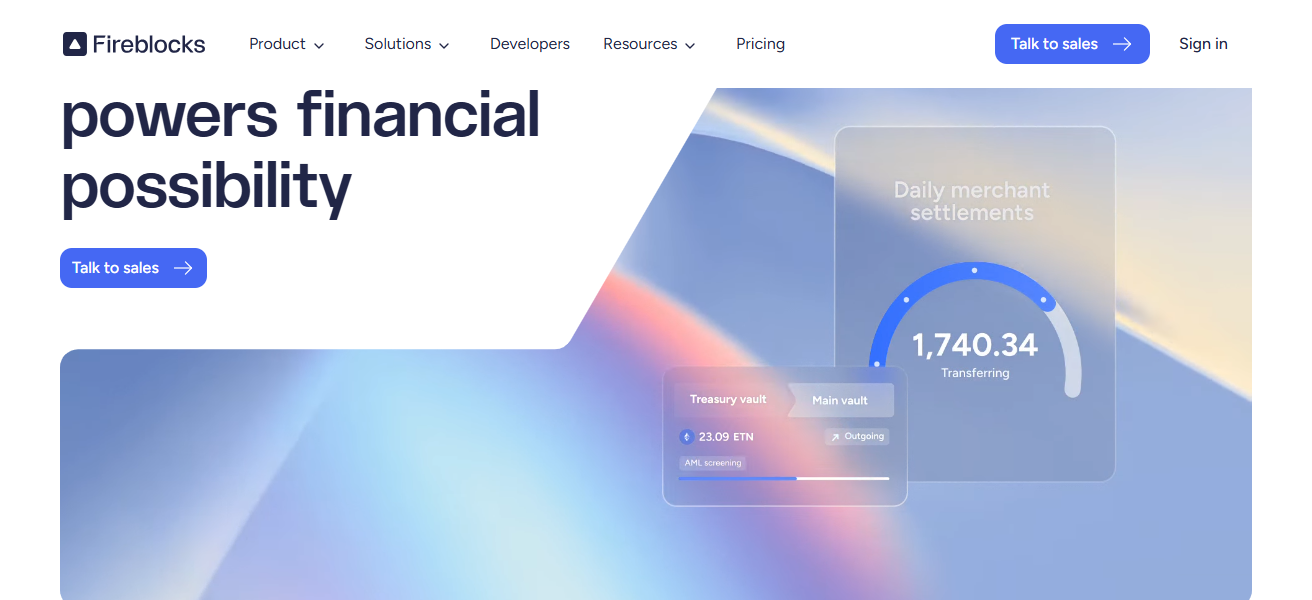
Fireblocks provides seamless treasury management. This means businesses can safely transfer assets between exchanges, counterparties, and custodians.
Fireblocks offers regulatory coverage and is trusted by banks, fintechs, and asset managers globally.
Their comprehensive liability coverage, compliance integrations, and scalability make them the go-to for large enterprises with high-volume crypto transaction compliance.
Fireblocks Features
- Implements state-of-the-art MPC technology to remove potential single points of failure to maximize asset safety.
- Offers compliance-oriented features like transaction monitoring, audit trail creation, and governance policy customization.
- Supports streamlined treasury management across platforms, custodians, and counterparties.
- Trusted by banks, fintechs, and asset managers for regulatory coverage and insurance.
| Pros | Cons |
|---|---|
| Advanced MPC technology ensures maximum security. | High cost may limit smaller businesses. |
| Seamless treasury management across exchanges and custodians. | Complex setup requires technical expertise. |
| Compliance-focused with audit trails and governance policies. | Primarily designed for large institutions. |
| Insurance coverage adds extra protection. | Limited flexibility for small-scale operations. |
2. Coinbase Custody
Coinbase Custody secured wallet solution for institutions and crypto firms. They offer custody and cold storage with the best security in the industry, keeping your assets offline, with no breaches.
The platform is fully insured, making it reliable for firms with huge amounts of crypto. They operate within the law and take SOC audits for better trust, earning for themselves the transparency badge.
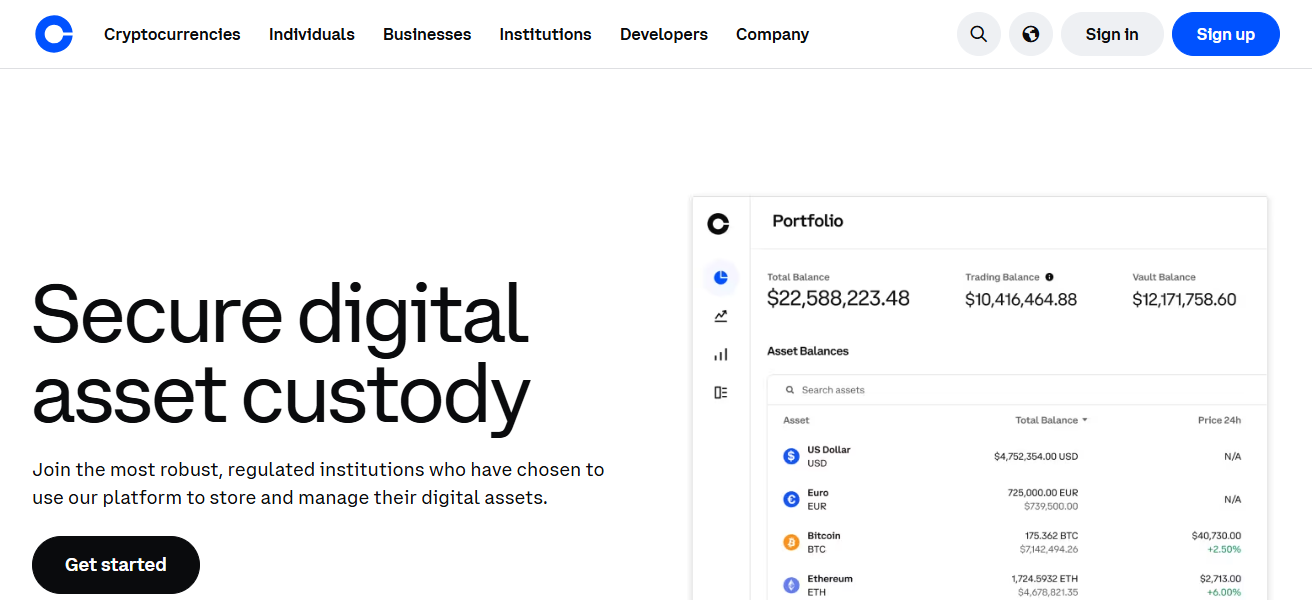
They are also part of the wider Coinbase ecosystem, which makes trading and settlement easy. Coinbase Custody is best for firms with high focus on law adherence and keeping their assets safe.
Coinbase Custody Features
- Cold storage solution with the highest degree of offline cyber protection.
- Offers fully insured custodial wallet for the peace of mind of institutional clients.
- Complies with U.S. laws including SOC audits for transparency and accountability.
- Coinbase ecosystem integration for smooth trading and settlement.
3. Ledger Enterprise
Ledger Enterprise offers specialized wallet solutions and hardware wallets for regulated businesses.
It provides a combination of offline cold storage with enterprise-grade governance tailored toward compliant and secure asset management.
The solution offers multi-user capabilities, customizable approval hierarchies, and granular audit logging making it effective for structurally complicated businesses.
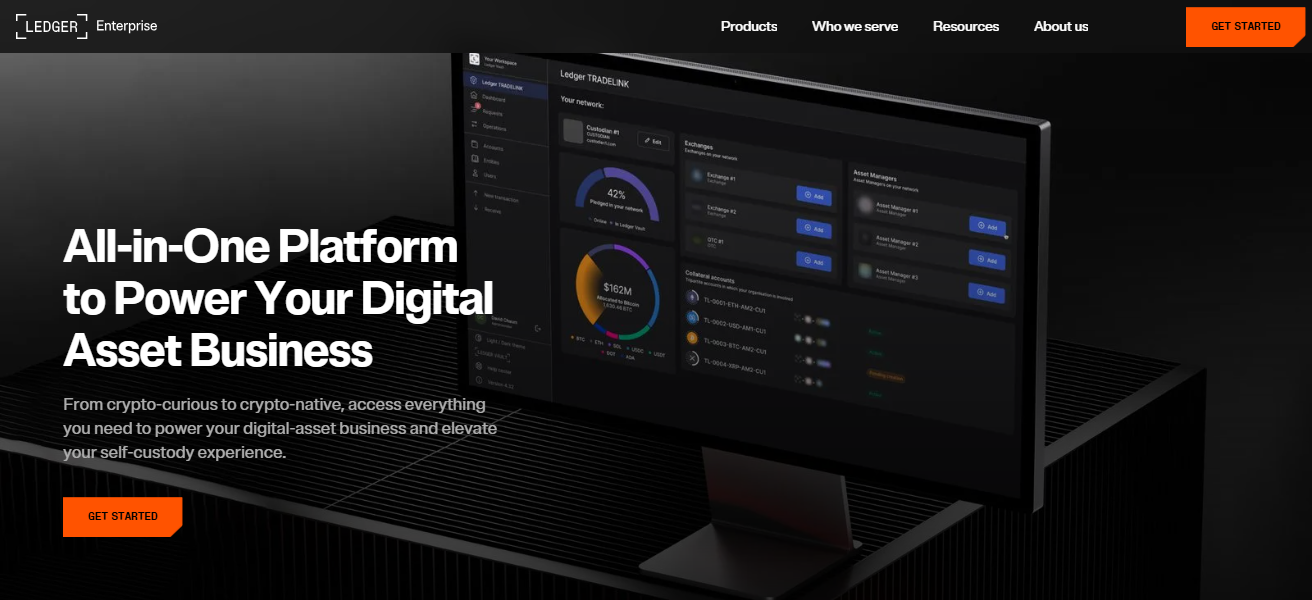
It also offers integration with other treasury management systems, making it ideal for crypto businesses with varying degrees of complexity in their crypto portfolios.
With the extra bonus of bespoke shielding for the hardware wallets, it provides an additional layer of protection against hacking.
With Ledger Enterprise, businesses can manage their operational processes with a high level of security and regulatory compliance.
Ledger Enterprise Features
- Offers a hardware wallet with tamper-proof cold storage for regulated businesses.
- Facilitates multi-user governance with custom flexible approval workflows and audit trail logs.
- Allows integration with treasury systems for portfolio management at scale.
- End-to-end operational value with strong regulatory and operational protection.
| Pros | Cons |
|---|---|
| Cold storage with industry-leading offline protection. | Custodial model reduces user control over assets. |
| Fully insured solution for institutional investors. | Higher fees compared to non-custodial wallets. |
| Complies with U.S. regulations and SOC audits. | Limited global regulatory coverage outside the U.S. |
| Seamless integration with Coinbase ecosystem. | Less customizable governance workflows. |
4. Uphold Business Wallet
Uphold Business Wallet is a custodial solution designed for crypto companies that need compliance and transparency.
With seamless fiat-to-crypto integration, companies can now manage their traditional and digital assets in one place.
Uphold Business Wallet focuses on regulation, and so provides extensive reports, transaction tracking, and compliance with international money distribution regulations.
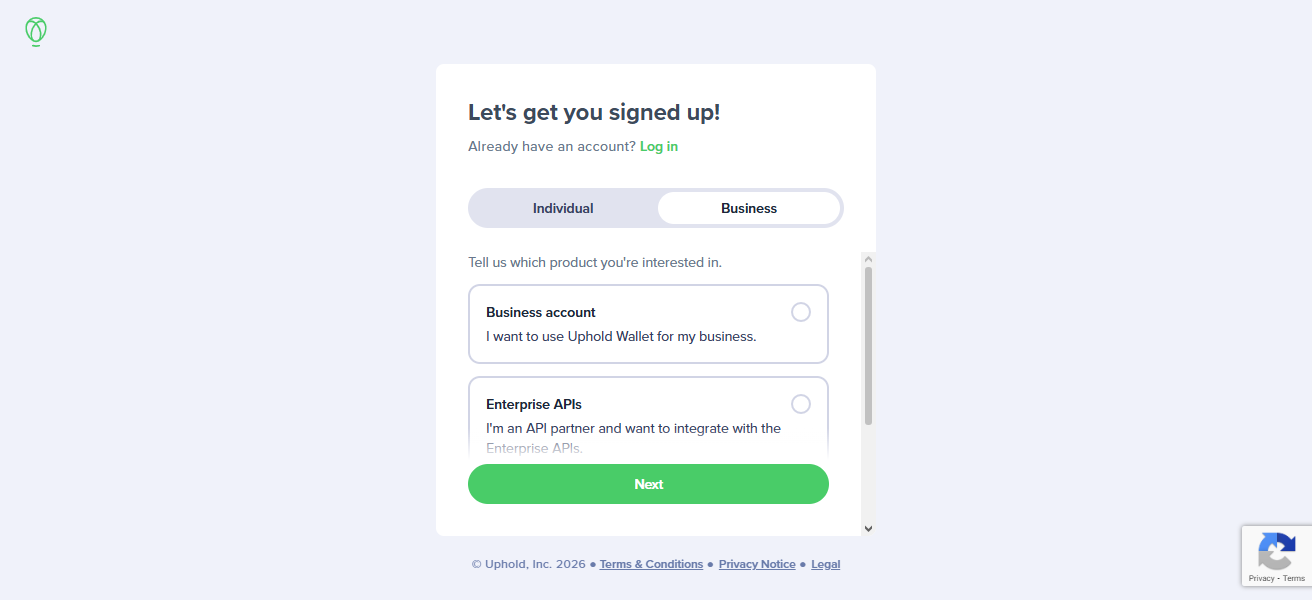
The wallet’s customers have easy-to-navigate, strong security with encryption and multi-factor authentication. The wallet also has liquidity services so businesses can manage and move their funds easily.
Business Wallet is a great option for companies looking for a regulated, flexible, crypto and fiat finance offering solution.
Uphold Business Wallet Features
- Custodial wallet with built-in fiat-to-crypto capabilities for flexible asset management.
- Implements compliance features including transaction monitoring and reporting.
- Encrypts data and adds multi-factor authentication to provide security.
- Allows seamless fund movement across platforms with built-in liquidity services.
| Pros | Cons |
|---|---|
| Supports fiat-to-crypto integration seamlessly. | Custodial model reduces direct asset control. |
| Detailed reporting and transaction monitoring. | Limited advanced governance features. |
| Strong security with encryption and MFA. | Not ideal for large institutional portfolios. |
| Provides liquidity services for efficient fund movement. | Less focus on DeFi opportunities. |
5. Qredo
Qredo is a decentralized custody platform that is designed for institutional crypto businesses working with regulators.
Using custody with no central keeper and with the help of the risk mitigating and the single point of failure avoiding MPC technology
Qredo focuses on the custody and the customers’ compliance through auditability, governance, customizable approval workflows, and compliance management systems.
Qredo’s compliance networks ensure the management of the customers’ secure assets while meeting the regulatory requirements for custody.
Qredo balances networks with decentralized liquidity and cross-platform instant settlement, making Qredo a perfect match for customers in the world of DeFi and institutional cross-border crypto trading. Qredo is undoubtedly a leader in innovative custody.
Qredo Features
- Provides a decentralized custody solution with the use of MPC technology for safe asset management.
- Supply the audit trail and governance control functions for compliance within the system.
- Builds resilience and transparency with decentralized systems.
- Cross-platform liquidity and settlement for institutional trading.
| Pros | Cons |
|---|---|
| Decentralized custody with MPC technology. | Relatively new compared to traditional custodians. |
| Strong compliance with audit trails and governance. | Adoption may be slower among conservative institutions. |
| Resilient decentralized infrastructure. | Requires technical knowledge for integration. |
| Facilitates cross-platform liquidity and settlement. | Limited insurance compared to custodial solutions. |
6. Zengo Business
Zengo Business is catered for enterprises that uphold compliance and security and is a non custodial wallet solution.
Cutting private keys with the aid of MPC tech means no risk of theft or loss of private keys. Zengo even holds compliance friendly transaction monitoring, audit trails, and governance controls that fit the needs of highly regulated firms.
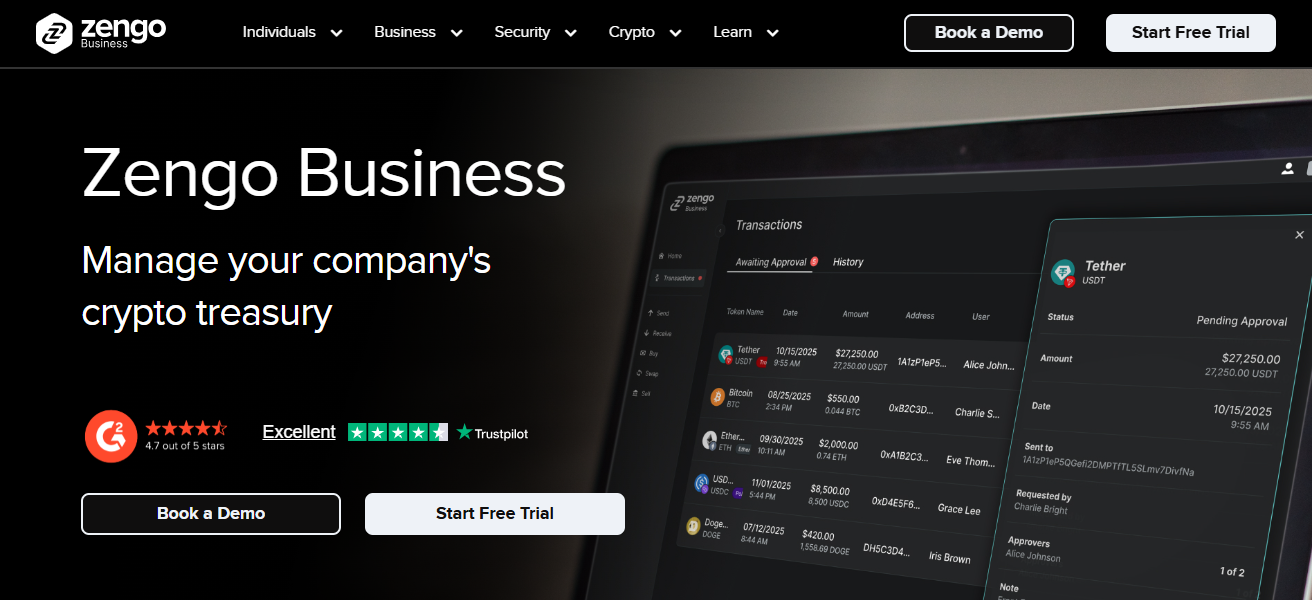
Providing compliance tools coupled with advanced cryptographic techniques means Zengo Business identifies the crossroad of tech and regulation.
Supported multi user access means firms can configure approval workflows and clear accountabilities.
With a user-friendly interface and sophisticated security controls, Zengo Business helps teams optimize the management of digital assets.
Zengo Business Features
- Non-custodial MPC wallets with no private keys for added security.
- Transaction monitoring, audit logs, governance control compliance.
- Multi-user with approval workflow controls.
- Simple interface for asset management at the enterprise level.
| Pros | Cons |
|---|---|
| Non-custodial MPC wallet eliminates private keys. | Less recognized among large institutions. |
| Compliance-friendly with monitoring and audit logs. | Limited integrations with traditional finance systems. |
| Multi-user access with approval workflows. | May lack advanced liquidity services. |
| Intuitive interface for enterprise teams. | Smaller ecosystem compared to competitors. |
7. Crypto.com DeFi Wallet
Maintaining compliance while accessing decentralized finance is an option for regulated businesses using the Crypto.com DeFi Wallet.
It features proprietary transaction monitoring, private key management, and full encryption for asset protection.
The wallet is integrated with the Crypto.com ecosystem and works with multiple cryptocurrencies, providing businesses with trading and liquidity services.
Audit trails and governance controls are some of the compliance features that meet the needs of businesses that are subject to regulatory control.
While exploring DeFi, the Crypto.com DeFi Wallet allows businesses to manage their assets effectively.
The Crypto.com DeFi Wallet is an option for regulated businesses that want to access DeFi and emerging blockchain ecosystems.
Crypto.com DeFi Wallet Features
- Provides DeFi access with encrypted private key management.
- Integrated with Crypto.com ecosystem, supports multiple cryptos.
- Governance controls and audit trail for compliance.
- Simple interface for asset management and DeFi access.
| Pros | Cons |
|---|---|
| Secure access to DeFi with encryption. | Higher risk exposure due to DeFi volatility. |
| Supports multiple cryptocurrencies. | Custody responsibility lies entirely with users. |
| Seamless integration with Crypto.com ecosystem. | Compliance features less robust than custodial wallets. |
| User-friendly interface for asset management. | Limited governance workflows for enterprises. |
8. Tangem Wallet
Tangem Wallet is a smartcard-based hardware solution for businesses needing scalable crypto asset custody. Each card acts as a cold-storage wallet offering protective storage that is tamper resistant.
Cyber threats are mitigated, and Tangem’s multi-user governance provides businesses with the ability to implement workflow and compliance approvals.
Its portability and scalability are major assets for organizations needing to manage a wide range of crypto assets across multiple teams.
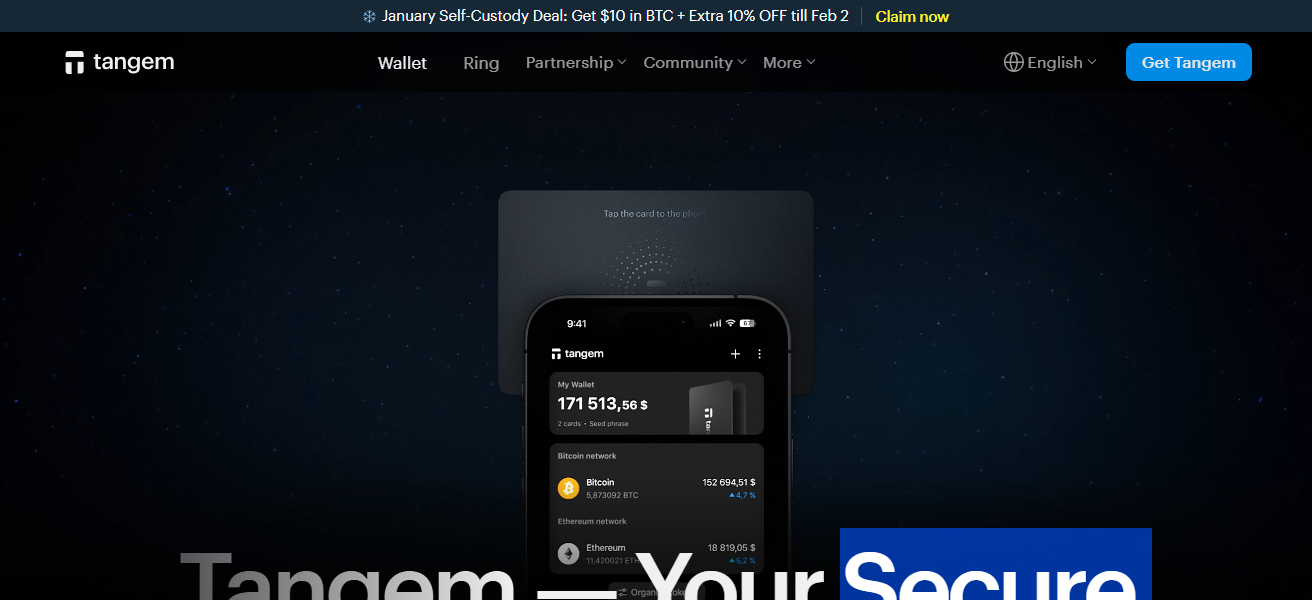
Tangem Wallet provides businesses with audit trails and transaction monitoring, ensuring crypto portfolio management is compliant.
Its simplicity and security are ideal for regulated enterprises, making Tangem a wallet provider that offers scalable digital asset management.
Tangem Wallet Features
- Hardware wallet with a smartcard that offers cold storage security with cold storage that is tamper resistant.
- Multi-user and compliance with governance and approval workflow.
- A portable and scalable enterprise solution for varied portfolios.
- Regulatory compliance with audit trails and transaction monitoring.
| Pros | Cons |
|---|---|
| Smartcard-based hardware wallet with tamper resistance. | Physical cards can be lost or damaged. |
| Multi-user governance with compliance workflows. | Less suited for high-frequency trading. |
| Portable and scalable for diverse portfolios. | Requires distribution of multiple cards for teams. |
| Provides audit trails and monitoring. | Limited DeFi integration options. |
9. MPCVault
MPCVault gives you the ability to combine the security offered by Multi-Party Computation (MPC) and multisig technologies with the non-custodial wallet to protect institutional-grade wallets.
There is no single point of failure. Wallets are safe from cyber attacks and internal staff errors. MPCVault balances compliance and security with audit trails, governance policy documentation, and adjustable custom workflow approvals.
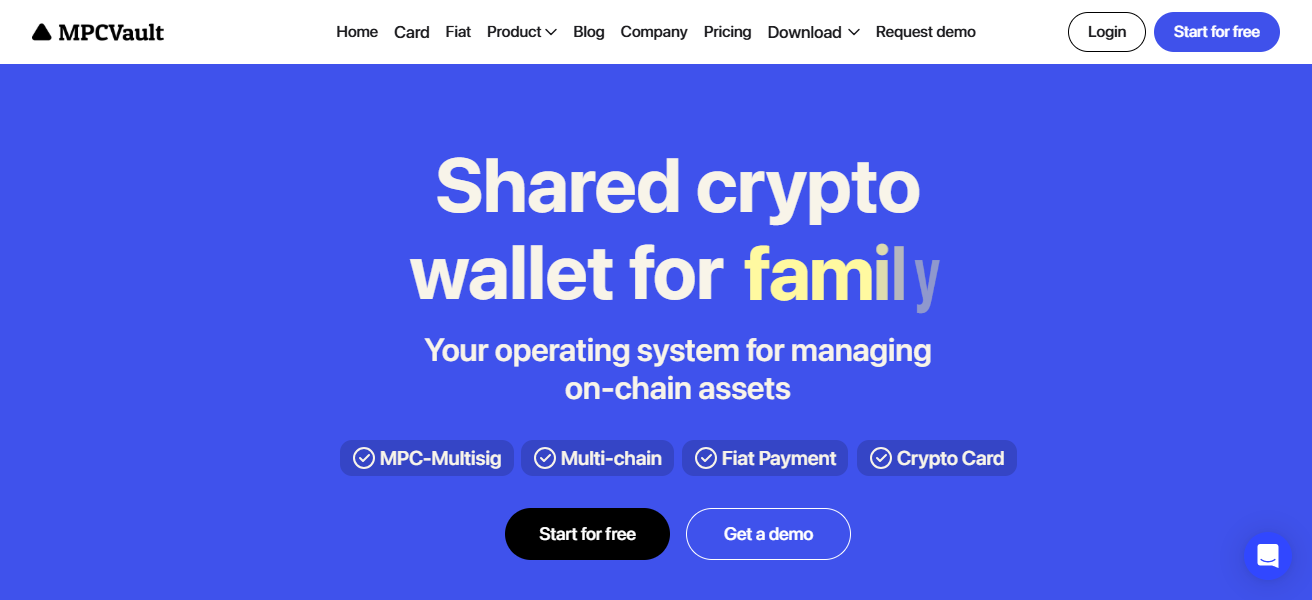
Its design improves scalability and meets the requirements of large enterprises with numerous crypto wallets. MPCVault integrates with custodians and trading platforms to provide seamless liquidity.
By using state-of-the-art cryptography and a focus on tailoring features to meet compliance standards, MPCVault gives sophisticated, digitally resilient (for operational efficiency) custodial solutions for regulated businesses.
MPCVault Features
- Wallet that is non-custodial and combines MPC and multisig for institutional level security.
- Audit trails, governance, and approval workflows for compliance.
- Infrastructure that is scalable for big enterprise portfolios.
- Provides liquidity management with trading platforms and custodians.
| Pros | Cons |
|---|---|
| Combines MPC and multisig for strong security. | Complex setup may challenge smaller firms. |
| Compliance features with governance and audit trails. | Less user-friendly compared to mainstream wallets. |
| Scalable infrastructure for large portfolios. | Limited brand recognition globally. |
| Integrates with trading platforms and custodians. | May require specialized technical support. |
10. MetaMask Institutional
MetaMask Institutional focuses on regulated enterprises compared to the regular version of the MetaMask wallet.
It allows users to access DeFi through a fully integrated compliance control and audit trail. MetaMask Institutional also allows governance by multiple users
Which enables organizations to structure different approval and responsibility workflows. It works with custodians and compliance solution partners to help institutions operate within regulations.
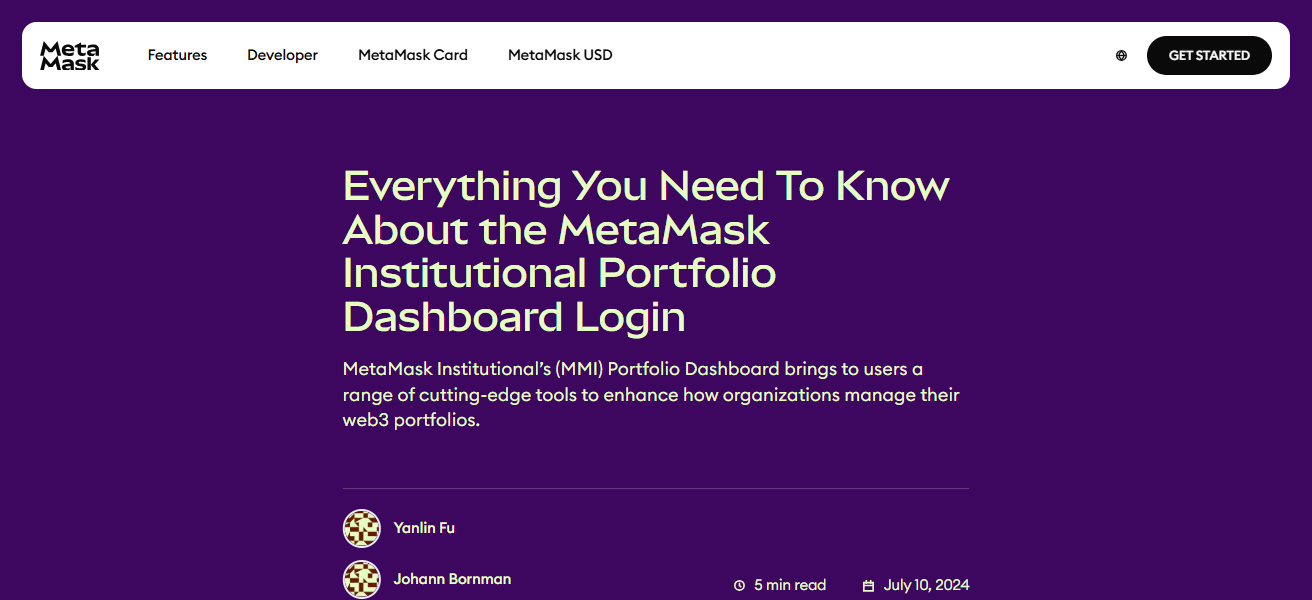
MetaMask also works with users’ businesses to achieve a balance between familiarity and enterprise-grade security and compliance.
MetaMask Institutional is a wallet that enables regulated organizations to access the world of DeFi while using the same DApps as other users.
MetaMask Institutional Features
- Secure access to DeFi applications with an enterprise-grade wallet.
- Adds compliance controls, audit trails, and governance workflows.
- Merges with custodians and compliance partners for regulatory alignment.
- Friendly interface and enterprise-level security.
| Pros | Cons |
|---|---|
| Secure enterprise access to DeFi applications. | Exposure to DeFi risks and volatility. |
| Compliance controls and audit trails included. | Custody depends on integrated providers. |
| Governance workflows for multi-user organizations. | Less suited for traditional custodial needs. |
| Familiar interface with enterprise-grade security. | Requires training for institutional teams. |
Cocnlsuion
In cocnsluion Choosing the best wallets for regulated crypto businesses is essential to balance security, compliance, and scalability.
Solutions like Fireblocks, Coinbase Custody, and Ledger Enterprise provide institutional-grade protection, while options such as Qredo and MetaMask Institutional bridge regulated operations with DeFi.
Ideal wallet selection fosters transparency, governance, and operational endowments, empowering businesses to adapt and prosper in the constantly metamorphosing economy of digital assets.
FAQ
Wallets designed to meet compliance, security, and governance standards for institutional crypto operations.
They ensure transparency, compliance with laws, and secure management of large crypto holdings.
Yes, it offers MPC security, compliance tools, and treasury management for institutions.
It provides insured cold storage and complies with U.S. financial regulations.