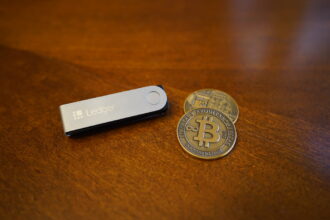
This article will address the best wallets for enterprise-grade secure key management. These wallets offer cutting-edge crypto security, compliance, and scalability for the protection of digital assets.
They range from MPC to hardware isolation, ensuring resilience, efficiency, and trust for large-scale crypto operations.
Key Points & Best Wallets for Secure key Management At Scale
Fireblocks Provides MPC-based security, fast transaction settlement, and compliance tools for institutions managing assets globally.
BitGo Offers institutional-grade custody, insurance coverage, and advanced key management with multi-signature wallet technology.
Vaultody Non-custodial enterprise wallet emphasizing governance flexibility, operational control, and scalable infrastructure for businesses.
Cobo Custody Supports MPC and hardware isolation, enabling secure multi-chain asset management with institutional compliance standards.
Safeheron Delivers customizable governance policies, MPC security, and seamless integration for enterprises scaling digital asset operations.
Ledger Enterprise Hardware-based wallet solution with enterprise-grade security modules, ensuring private keys remain isolated and tamper-proof.
Zengo Eliminates seed phrases using MPC cryptography, simplifying secure key management for teams handling assets collaboratively.
Coinbase Custody Regulated custody service offering cold storage, insurance, and institutional-grade compliance for large-scale crypto management.
Anchorage Digital Chartered digital bank providing secure custody, staking, and governance tools with advanced key management infrastructure.
Cregis Enterprise wallet platform focusing on operational efficiency, compliance, and scalable key management for institutional adoption.
10 Best Wallets for Secure key Management At Scale
1. Fireblocks
Fireblocks offers top tier digital asset management services to institutions and store their keys using MPC based secure key storage.
The platform allows companies to move assets seamlessly and securely between an unlimited number of exchanges, wallets, and counterparties.
It is especially designed for firms who need to scale their crypto business in a compliant and secure way, as it comes with governance, compliance, and insurance.
Its infrastructure allows private keys to remain secure from outside and insider threats, and it also allows unlimited and scalable infrastructure.
Its streamlined workflows, automated policies and monitoring, Fireblocks allows companies to digital assets in a compliant and resilient manner.
Fireblocks Features
- MPC Security: Eliminates single points of failure with Multi-Party Computation key management.
- Scalability: Facilitates cross-exchange global transfers with speed and security.
- Compliance Tools: Institutions receive audit trails, policy governance, and regulatory frameworks.
- Insurance Coverage: Trust is built with institutions through theft and loss protection.
| Pros | Cons |
|---|---|
| Advanced MPC security eliminates single points of failure | Higher cost compared to smaller-scale solutions |
| Fast, scalable asset transfers across platforms | Complex setup for new institutions |
| Strong compliance and governance tools | Requires technical expertise for integration |
| Insurance coverage for digital assets | Limited accessibility for small businesses |
2. BitGo
Built with multi-signature technology, BitGo is one of the primary crypto wallets and custody services. The company claims its wallet has some of the best secure key management in the industry, and it works by reducing the need for more unauthorized people to access transaction approvals.
BitGo is also one of the few companies that offer insurance on digital assets, which is why many big crypto companies trust them. They have global compliance and offer digital trading and settlement systems.
They also have efficient, scalable, and transparent systems, so businesses can manage their assets effectively. For all these reasons, BitGo is one of the best companies for digital asset management.
BitGo Features
- Multi-Signature Technology: Minimizes transaction approvals and illegitimate access.
- Insurance Protection: Loss, theft, and hacking protection for digital assets.
- Institutional Custody: Large-scale secure crypto portfolios for enterprises.
- Regulatory Compliance: Global standards with audit-ready frameworks.
| Pros | Cons |
|---|---|
| Multi-signature technology enhances transaction security | Transaction speed can be slower due to multiple approvals |
| Insurance coverage builds institutional trust | Premium services may be costly |
| Strong regulatory compliance | Limited flexibility for non-institutional users |
| Proven track record in custody solutions | Less innovative compared to newer MPC-based wallets |
3. Vaultody
Vaultody focuses on providing organizations fully remote control over their digital assets. Because of its emphasis on flexible governance, businesses can control key management by setting tailored policies and permissions for remote governance.
Using advanced crypto engineering, Vaultody protects and works with private keys over multiple blockchains. Its infrastructure is scalable, making it fit for institutions with diverse portfolios.
By combining operational efficiency with strong security, Vaultody offers enterprises autonomy over their assets and minimizes reliance on custodians.
This approach ensures resilience, compliance, and trust in large-scale digital asset management.
Vaultody Features
- Non-Custodial Control: Enterprises preserve control of the private keys and governance.
- Flexible Governance: Permissioning and workflows can be tailored for secure collaboration.
- Scalable Infrastructure: Large institutional portfolios and multi-chain assets supported.
- Advanced Cryptography: Security methods that protect with advanced security technologies.
| Pros | Cons |
|---|---|
| Non-custodial model ensures full control of assets | Responsibility for security lies entirely with the enterprise |
| Flexible governance policies | Less insurance coverage compared to custodial solutions |
| Scalable infrastructure for large portfolios | May require advanced technical management |
| Advanced cryptographic protection | Smaller ecosystem compared to established custodians |
4. Cobo Custody
Cobo Custody has enterprise-grade wallet solutions that offer secure key management via MPC and hardware isolation. They support multi-chain assets and allow institutions to manage portfolios as they see fit.
Emphasis on compliance is evident as Cobo provides governance controls and audit-ready infrastructure that is tailored for regulated entities.
Trading desks, exchanges, and DeFi protocols are all available integrated systems on their platform to ensure operational efficiency and scale.
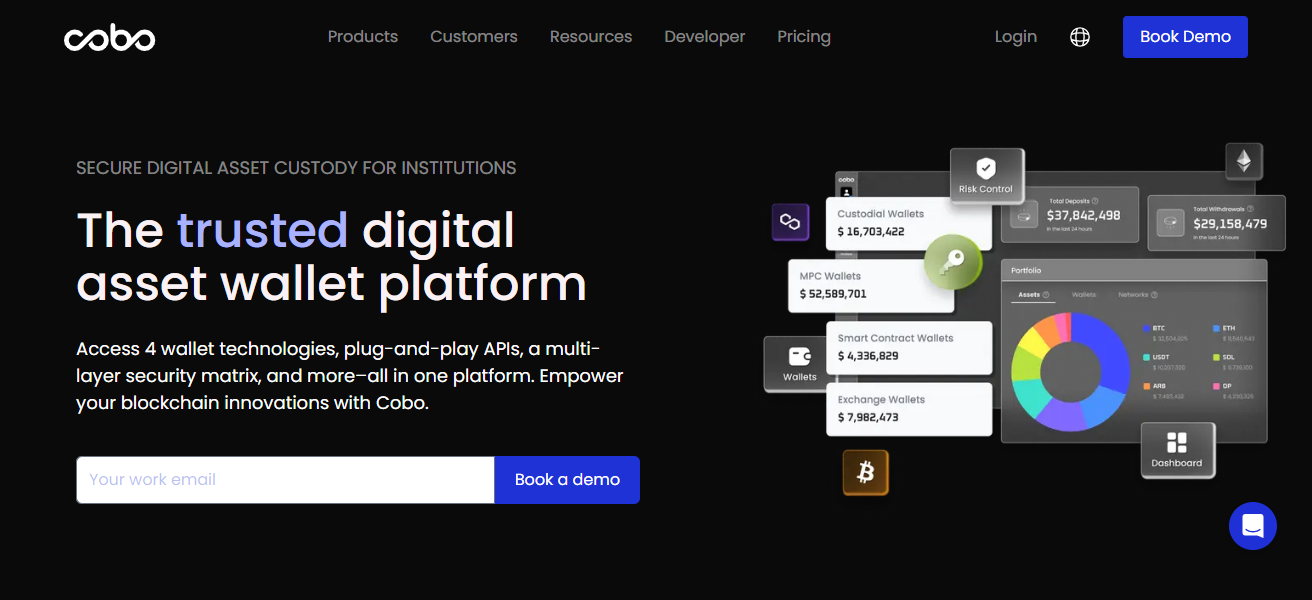
By utilizing advanced cryptography paired with institutional-grade security, Cobo Custody protects key pairs from external and internal threats.
Many enterprises choose their infrastructure for security, compliance, and efficiency in digital asset management on a global scale.
Cobo Custody Features
- MPC + Hardware Isolation: Key protection at the crypto and hardware level combined.
- Multi-Chain Support: Diverse blockchains can be securely managed.
- Compliance Ready: A regime of governance and audit for institutions and their control.
- Operational Efficiency: Integration with DeFi, trading desk, and exchange is seamless
| Pros | Cons |
|---|---|
| Combines MPC and hardware isolation for strong security | Higher complexity in deployment |
| Supports multi-chain assets | Premium pricing for enterprise features |
| Compliance-ready infrastructure | Limited availability in some regions |
| Seamless integration with exchanges and DeFi | Requires institutional-level resources |
5. Safeheron
Safeheron is focused on customizable governance and wallet solutions built on secure MPC key management.
Enterprises can use operational control at scale by instituting granular policies on transaction approval.
Safeheron applies cutting-edge cryptography to remove fail-safes and compromise potential from private keys.
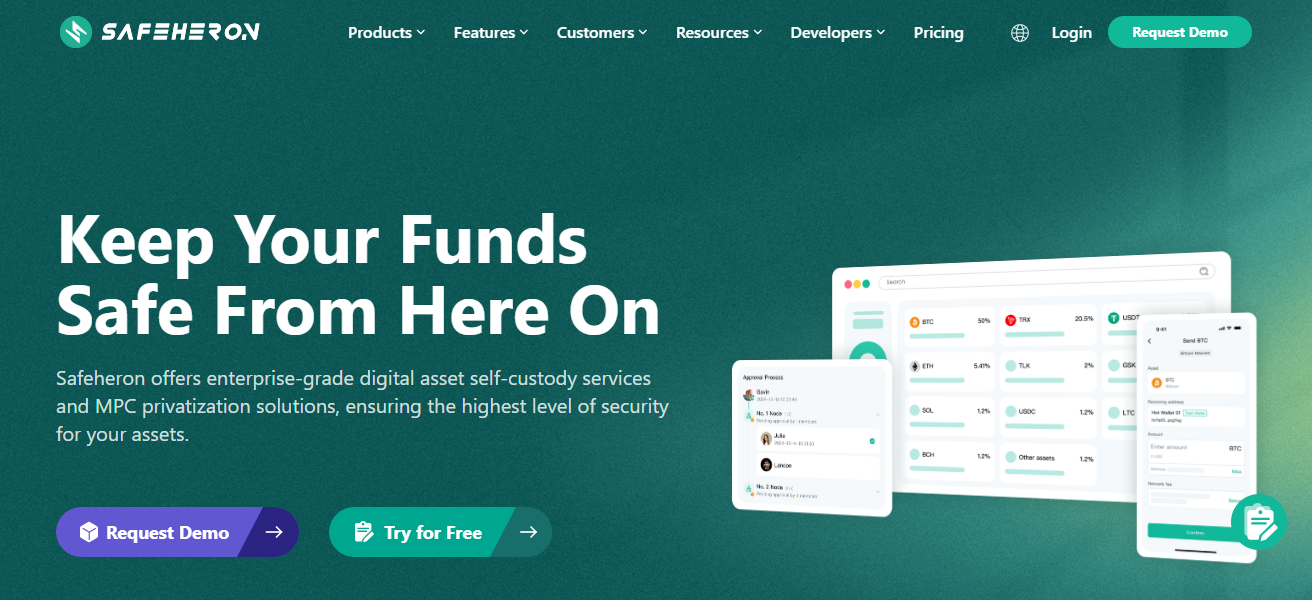
Operating in a multi-chain environment, Safeheron offers seamless integrations with institutional workflows and support for multi-chain assets.
Safeheron is built for transparency, flexibility, compliance, and scale. Organizations can safely manage their digital assets and retain the flexibility needed to innovate.
The strong governance and ease of use that Safeheron offers sets it apart for enterprises that value operational efficiency, and security in their digital asset management.
Safeheron Features
- Custom Governance Policies: Enterprises can specify detailed transaction approval policies.
- MPC Security: Removes single points of failure in key management.
- Multi-Chain Integration: Facilitates multichain asset management for institutions.
- Transparency & Compliance: Provides audit-ready infrastructure for regulated institutions.
| Pros | Cons |
|---|---|
| Customizable governance policies | May be complex for smaller teams |
| MPC-based security eliminates single points of failure | Less brand recognition compared to larger custodians |
| Multi-chain support for diverse assets | Limited insurance coverage |
| Transparent and compliance-focused | Requires technical expertise for setup |
6. Ledger Enterprise
Ledger Enterprise adapts the proven Ledger hardware wallet technology for institutions by providing tamper-proof hardware modules for secure key management.
It keeps private keys safe from online exposure and attacks. In addition to key management, Ledger Enterprise offers governance, compliance, and scalable tools for institutions dealing with large digital asset portfolios.
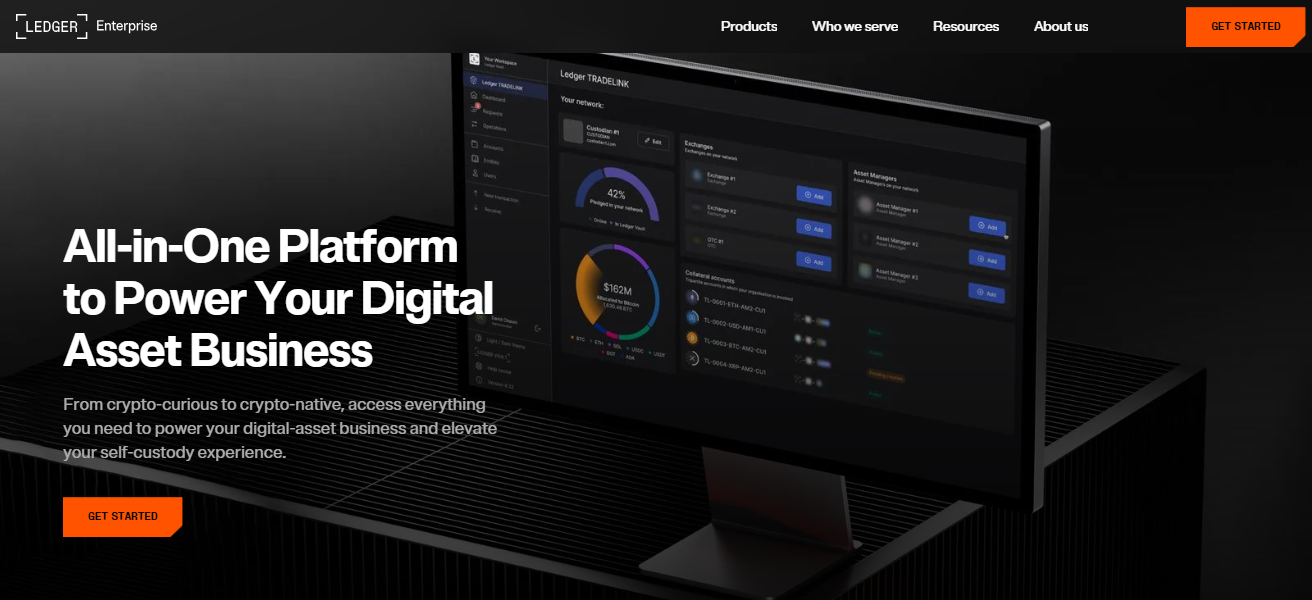
Its infrastructure supports multi-chain wallets, providing additional flexibility to enterprises with broad asset coverage.
By merging enterprise security with management tools, Ledger Enterprise achieves and communicates trust.
Institutions benefit from its strong, positive reputation for secured asset management, operational efficiency, and compliance management at scale.
Ledger Enterprise Features
- Hardware-Based Security: Keeps private keys in removable, secure, and tamper-proof hardware modules.
- Enterprise Governance: Provides policy enforcement and compliance tools.
- Scalable Operations: Large and complex cross-chain portfolios.
- Proven Track Record: Long-standing trusted hardware technology for institutions.
| Pros | Cons |
|---|---|
| Hardware-based tamper-proof security | Hardware devices can be costly |
| Proven track record with Ledger technology | Less flexible compared to MPC solutions |
| Enterprise governance tools | Requires physical device management |
| Scalable for large portfolios | Integration may be slower than cloud-based solutions |
7. Zengo
Zengo provides a one-of-a-kind wallet solution that removes the need for traditional seed phrases using MPC cryptography for secure key management.
This method removes the onboarding friction and risk of recovery phrases being lost or stolen. Zengo is designed for teams and enterprises, offering collaborative asset management with robust security.
Its infrastructure supports scalability, accommodating organizations with a high traffic of digital assets.
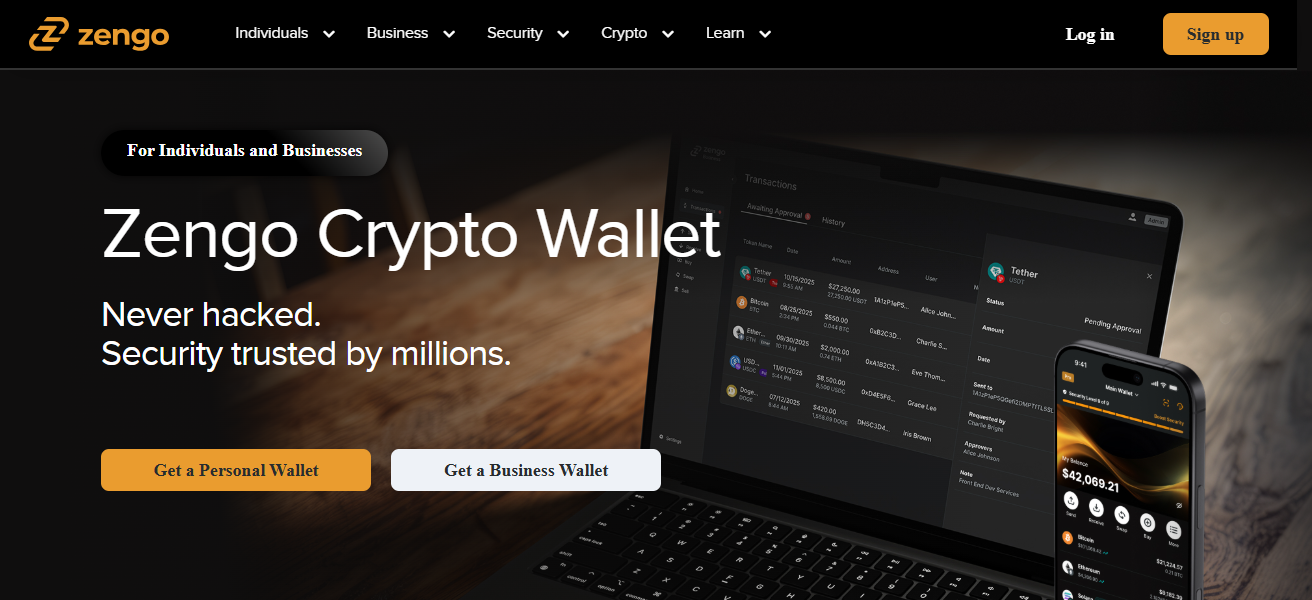
By combining user experience with cutting-edge cryptography, Zengo is designed to keep digital assets secure and accessible.
Zengo also offers enterprises streamlined workflows, compliance, and operational resilience, making it a state-of-the-art solution for scalable digital asset management.
Zengo Features
- Seedless Security: No recovery phrases by using MPC cryptography.
- Collaborative Management: Secure teamwork in asset management.
- Scalable Infrastructure: Digital asset volumes managed by enterprises.
- User-Friendly Design: Secure onboarding and operations simplicity.
| Pros | Cons |
|---|---|
| Seedless security eliminates recovery phrase risks | Less traditional approach may concern conservative institutions |
| User-friendly design simplifies onboarding | Limited enterprise governance features |
| MPC cryptography ensures strong protection | Smaller ecosystem compared to custodial giants |
| Collaborative management for teams | Insurance coverage less comprehensive |
8. Coinbase Custody
Coinbase Custody provides an insured digital asset custody solution with robust cold storage and key management. For businesses needing digital asset management, Coinbase Custody’s adherence to U.S. regulations provides peace of mind.
Custody integrates digital assets management with governance controls, an audit-ready environment, and trading platform connectivity.
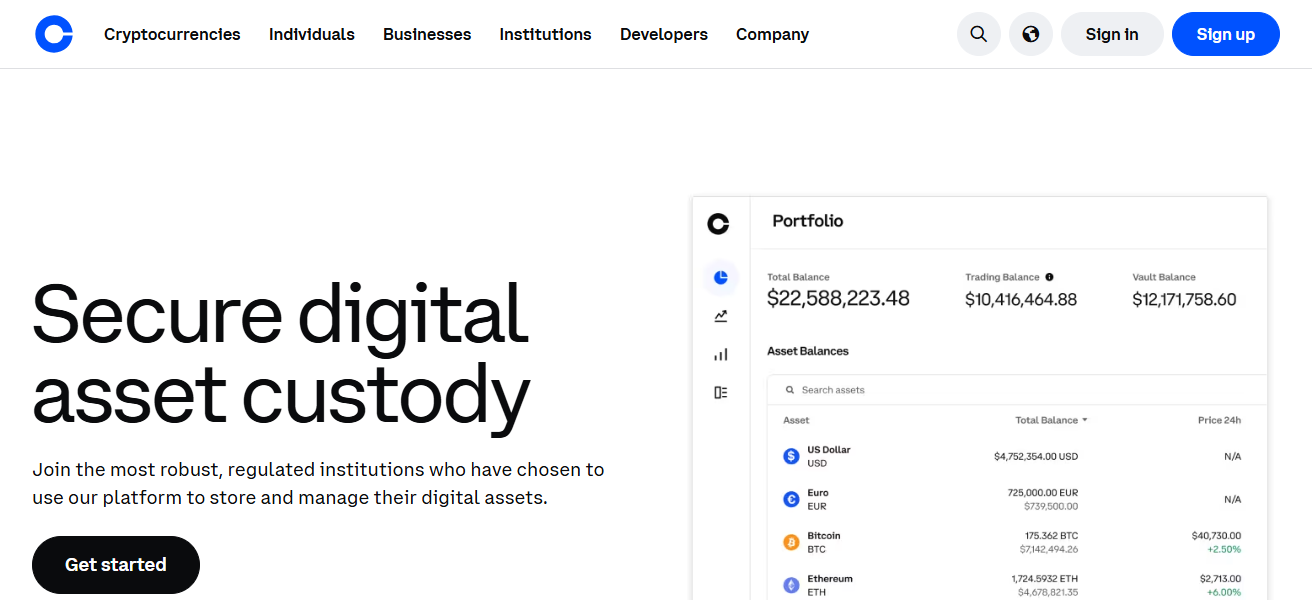
Its infrastructure is built for scale, allowing businesses to consolidate and manage large portfolios across multiple blockchains.
Coinbase Custody combines operational resilience with trust to prove its security and efficiency. Its history of providing security, compliance, and scale makes it a trusted institutional custody solution.
Coinbase Custody Features
- Cold Storage Security: Private keys are stored offline.
- Regulated Custody: Compliance with US regulations.
- Insurance Coverage: Institutional asset theft or loss protection.
- Scalable Management: Management of complex portfolios across multiple blockchains.
| Pros | Cons |
|---|---|
| Cold storage ensures maximum security | Slower access to assets due to offline storage |
| Regulated under U.S. frameworks | Limited availability outside certain jurisdictions |
| Insurance coverage builds trust | Higher fees for institutional services |
| Scalable for large portfolios | Less flexibility for smaller enterprises |
9. Anchorage Digital
Anchorage Digital is a chartered digital bank that offers custody, staking, and governance services for institutional clients.
It offers advanced key management systems where private keys are protected using cryptography and hardware isolation.
Anchorage Digital operates under a compliance-first approach with U.S. regulations, ensuring trust and transparency.
Its custody solution integrated with other financial services, such as lending and staking, provides digital banks with a seamless solution.
Digital banks have custody, staking, lending, and other services integrated into one platform. Digital banks are able to manage and scale their digital assets with trust and transparency.
Anchorage Digital Features
- Chartered Digital Bank: Compliance with US trust regulation and frameworks.
- Advanced Key Management: Secure custody via a blend of combined cryptography and hardware isolation.
- Integrated Services: Custody, staking, lending, and governance.
- Scalable Infrastructure: Efficient sustaining of varied institutional portfolios.
| Pros | Cons |
|---|---|
| Chartered digital bank with regulatory trust | Limited availability outside U.S. |
| Advanced key management with hardware isolation | Higher costs for premium services |
| Integrated services like staking and lending | Complex onboarding process |
| Scalable infrastructure for institutions | Requires institutional-level resources |
10. Cregis
Cregis is a flexible enterprise wallet solution focused on operational efficiency and seamless scalable key management.
It is compliant by design with governance, audit, and regulation frameworks built in. Focused on cross-chain digital asset management, Cregis enables institutions to manage multi-chain portfolios with ease.
Advanced cryptography and key management techniques are used to safeguard private keys from external threats, as well as internal mishandling.
Cregis puts a premium on scalability and resilience, allowing the enterprise to optimize the digital asset operational workflow.
The simplified and efficient management of digital assets at scale, with governance and compliance features, makes Cregis a compelling digital asset enterprise wallet solution.
Cregis Features
- Enterprise Wallet Platform: Built to manage keys securely and at scale.
- Compliance Features: Built-in governance controls and infrastructure designed for audits.
- Multi-Chain Support: Facilitates the management of various blockchain holdings.
- Operational Efficiency: Optimizes institutional workflows in the digital assets space.
| Pros | Cons |
|---|---|
| Enterprise wallet platform designed for scalability | Less established compared to industry leaders |
| Strong compliance and governance tools | Limited global recognition |
| Multi-chain support for diverse assets | May lack advanced insurance coverage |
| Streamlined operational workflows | Requires institutional adoption for full benefits |
Conclusion
To conclude, the top wallets for secure key management at scale offer businesses sophisticated cryptographic safeguards, operational efficiency, and compliance readiness.
Fireblocks, BitGo, and Ledger Enterprise provide resilience, while Cobo Custody and Anchorage Digital offer scalability.
These wallets, in unison, provide institutions the confidence and security needed to manage growth and protect digital assets.
FAQ
Fireblocks is recognized for its MPC-based security and fast, scalable digital asset transfers.
BitGo offers multi-signature wallets, insurance coverage, and strong regulatory compliance for enterprises.
Vaultody is non-custodial, giving enterprises full control over private keys and governance policies.
Cobo combines MPC cryptography with hardware isolation, ensuring strong protection for institutional assets.