
This article will cover the Best Working Capital Optimization Platforms that assist companies in enhancing liquidity, cash flow management, and building stronger bonds with suppliers.
Such platforms offer creative supply chain finance, dynamic discounting, and treasury management solutions to help organizations
free up trapped cash, cut costs, and achieve sustainable growth in the highly competitive global marketplace.
Key Points & Best Working Capital Optimization Platforms
- C2FO — Early payment programs that accelerate supplier cash flow
- SAP Taulia — Supply chain finance with dynamic discounting and flexible funding options
- PrimeRevenue — Multi-funder supply chain finance enabling global liquidity solutions
- SAP Ariba — Integrated procurement and working capital tools for enterprises
- Kyriba — Treasury and liquidity management with strong forecasting capabilities
- Coupa Pay — Spend management platform with embedded working capital optimization
- Infor Nexus — Cloud-based supply chain finance with visibility into receivables
- Tradeshift — Digital supplier financing and invoice management
- FIS Working Capital — Financial technology platform offering liquidity and receivables management
- OpenText Business Network — Integrated B2B network supporting invoice-to-pay and financing
10 Best Working Capital Optimization Platforms
1. C2FO
C2FO is an international capital management solution that helps companies obtain liquidity by working with early payment programs.
With early payment programs, suppliers can receive accelerated payment from their buyers for a discount, thereby alleviating cash flow problems while also financing cheaper.
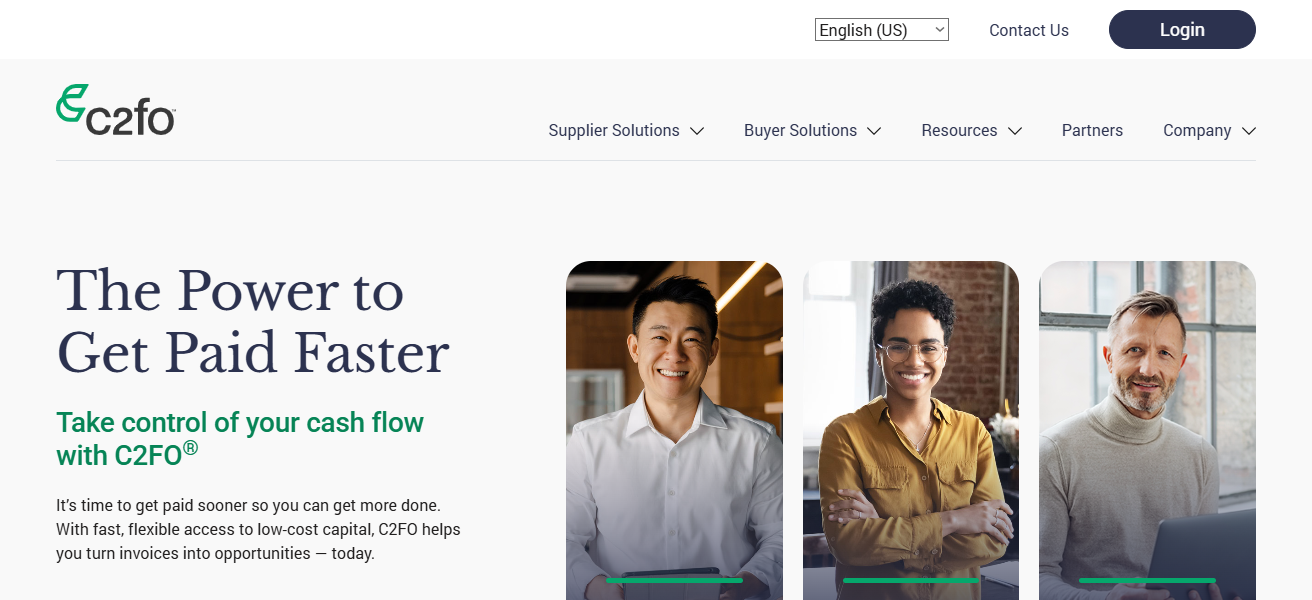
Buyers can strengthen their relationships with suppliers, and even lower their costs. The program balances buyers’ cash availability with suppliers’ urgency through dynamic pricing, thereby creating a working capital marketplace.
By removing obstacles and providing transparency, C2FO empowers companies to manage their liquidity better, strengthen their financial position, and improve the resilience of their supply chain.
C2FO Features
- Allows for early payment marketplace where suppliers can quickly obtain liquidity.
- Implements dynamic pricing to align supplier cash requirements and buyer funds.
- Improves supplier relationships through various payment flexibility.
- Minimizes dependency on conventional financing such as loans or credit lines.
| Pros | Cons |
|---|---|
| Provides suppliers with quick access to liquidity through early payments | May require suppliers to offer discounts, reducing margins |
| Flexible marketplace model matching cash needs with available funds | Effectiveness depends on buyer participation |
| Improves supplier relationships and financial stability | Smaller suppliers may face limited negotiation power |
2. SAP Taulia
Taulia (now part of SAP) is a top company offering supply chain financing solutions. Taulia’s services, including dynamic discounting, invoice financing, and supplier early payment programs, help businesses access trapped liquidity.
Buyers get flexible payment terms, and sellers get paid sooner. Taulia’s compatibility with ERP systems makes it easy for big companies to adopt.
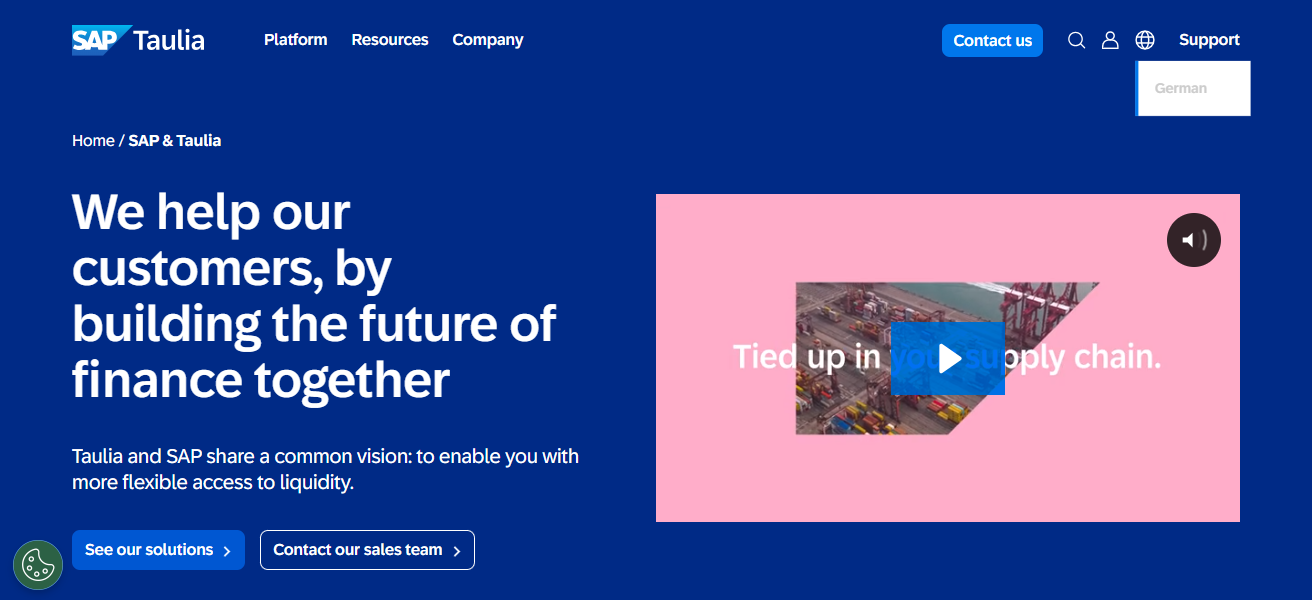
Taulia’s extensive global network provides customers a strong funding base to scale programs in different countries.
Taulia combines technology and financial expertise to help businesses improve working capital, lower risk, and enhance supply chain resilience.
SAP Taulia Features
- Provides dynamic discounting and supply chain finance solutions.
- Integrates easily with SAP ERP systems for seamless adoption.
- Establishes a global funding network for multinational operations.
- Allows buyers to increase payment terms with suppliers obtaining cash access.
| Pros | Cons |
|---|---|
| Strong supply chain finance with dynamic discounting | Implementation can be complex for smaller firms |
| Seamless ERP integration, especially with SAP systems | Best suited for large enterprises, less flexible for SMEs |
| Global reach and strong funding network | Requires significant setup and supplier onboarding |
3. PrimeRevenue
PrimeRevenue’s liquidity solutions for companies worldwide involve supply chain finance multi-funder platforms.
By linking buyers, suppliers, and banks, it offers flexible financing solutions across various industries.
One of PrimeRevenue’s competitive advantages is its ability to manage large and complex funding programs, increasing both its scale and stability.

While buyers manage their cash flow better and exercise their payment control, suppliers are paid earlier.
In addition to reporting and analytical tools for working capital management, PrimeRevenue offers supply chain efficiency, cost savings, and improved liquidity through its global network.
PrimeRevenue Features
- Facilitates multi-funder supply chain finance for scalability and consistency.
- Offers global liquidity solutions across industries and geographies.
- Provides working capital performance analysis and reporting.
- Enables buyers to refine payment terms without disrupting supplier relationships.
| Pros | Cons |
|---|---|
| Multi-funder model ensures scalability and stability | Complexity in managing multiple funders |
| Global liquidity solutions across industries | May be more suitable for large corporates than mid-sized firms |
| Advanced analytics and reporting tools | Setup and integration can be resource-intensive |
4. SAP Ariba
SAP Ariba is a procurement and supply chain management solution that incorporates partnerships for working capital optimization for all its modules.
It helps customers manage suppliers, contracts, and payments while providing financing solutions to enhance liquidity.
SAP Ariba streamlines operations and reduces costs through invoice-to-pay automation and supplier financing programs.
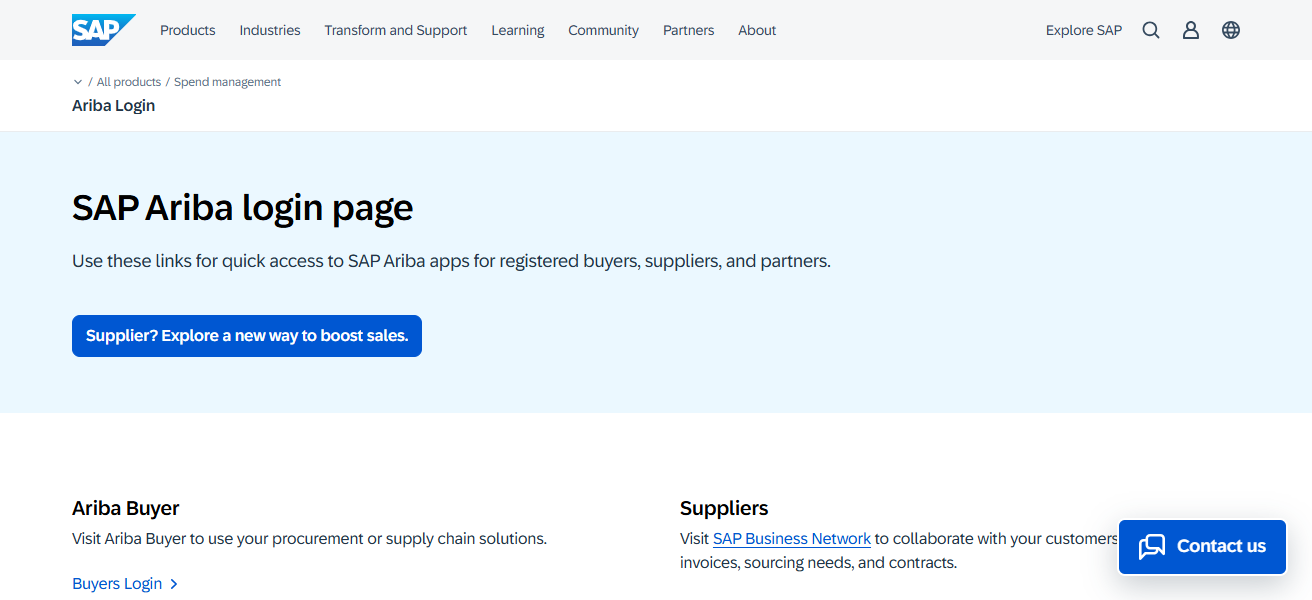
The solution runs on the SAP ERP ecosystem for integrated data flow and visibility across all financial processes.
With the optimization of procurement processes and working capital solutions, SAP Ariba helps customers enhance supplier collaboration, unlock cash flow, and achieve business growth sustainably.
SAP Ariba Features
- Merges procurement management with tools for optimizing working capital.
- Streamlines invoice-to-pay workflows for efficiency and regulatory compliance.
- Offers supplier financing solutions to enhance liquidity.
- Integrates with the SAP ecosystem for comprehensive visibility and control.
| Pros | Cons |
|---|---|
| Integrated procurement and working capital optimization | Can be costly for smaller organizations |
| Strong supplier collaboration and contract management | Requires SAP ecosystem for full benefits |
| Streamlined invoice-to-pay automation | Complexity in customization and deploymen |
5. Kyriba
Kyriba offers a treasury and liquidity management platform with tools for cash optimization and forecasting. Kyriba assists companies with risk management and working capital optimization by providing real-time cash position visibility.

Cash forecasting and risk management, along with payments and supply chain finance, are some of Kyriba’s solutions, which are offered through a cloud-based platform. Kyriba uses predictive analytics to assist companies with liquidity and funding decisions.
For large companies, its integration and global services make it ideal for centralized treasury operations. Kyriba helps companies improve agility, reduce costs, and build resilience in ever-changing economic circumstances.
Kyriba Features
- Offers treasury and liquidity management with liquidity management.
- Incorporates predictive analytics in cash forecasting tools.
- Works with currency and interest rate exposure risk management.
- Global with cloud-based and integration capabilities.
| Pros | Cons |
|---|---|
| Advanced treasury and liquidity management tools | May be over-featured for smaller businesses |
| Real-time cash visibility and forecasting | Requires strong internal finance expertise |
| Cloud-based with global reach | Implementation can be time-consuming |
6. Coupa Pay
Coupa Pay is integrated into the suite of Coupa’s spend management solutions, which provide working capital optimization tools.
Pay consolidates the management of payments, supplier financing, and liquidity into one solution.
Coupa Pay streamlines processes with procurement and expense management for visibility across the entire spend management continuum.
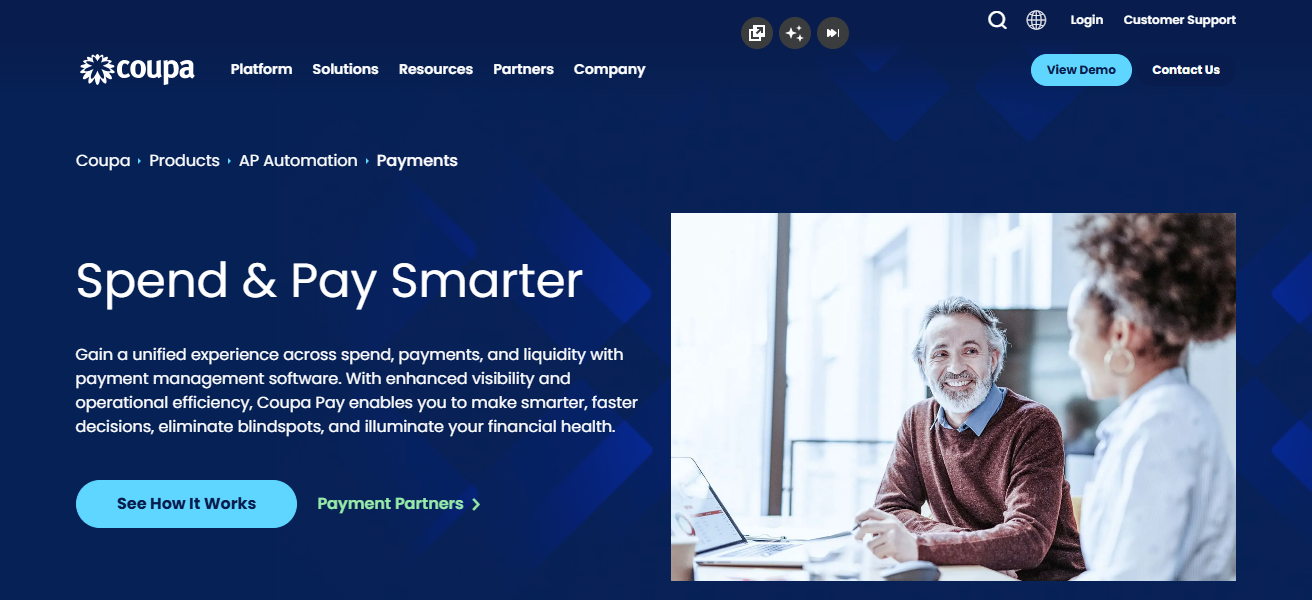
Faster payments are a plus for suppliers, whereas buyers are able to optimize cash flow and reduce costs.
The solution is global payment capable, including virtual cards, cross-border payments, and financing, to support payment versatility.
Optimized working capital coupled with spend management allows Coupa Pay to assist organizations in improving supplier management and financial performance.
Coupa Pay Features
- Adds working capital optimization to spend management.
- Enables virtual cards, cross-border payments, and supplier financing.
- Helps with procurement and expense management with added visibility.
- Strengthens supplier relationships through quicker and more dependable payments.
| Pros | Cons |
|---|---|
| Embedded working capital optimization within spend management | Limited standalone treasury features compared to specialized platforms |
| Supports virtual cards and cross-border payments | May require Coupa ecosystem adoption |
| Enhances supplier relationships with faster payments | Integration complexity for non-Coupa users |
7. Infor Nexus
Infor Nexus is a cloud-based platform that offers supply chain visibility and finance. It links buyers, suppliers, and finance companies for quick payment and liquidity flow.
Users can access real-time shipment, inventory, and receivable analysis to manage supply chain working capital.
Infor Nexus is ideal for multinational companies because it facilitates supplier financing, trade finance, and invoice management.
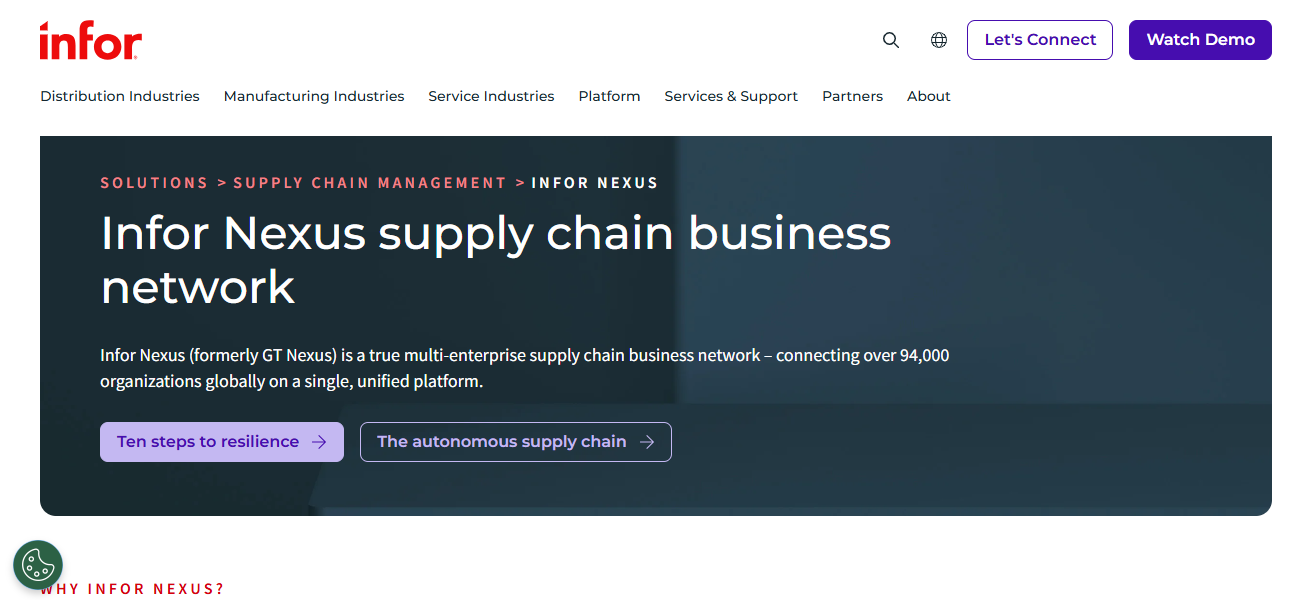
It’s unique in providing supplier chain transparency alongside financial services to improve partnerships and decrease risk.
Nexus enables companies to increase liquidity, solidify relationships with suppliers, and improve operational robustness by integrating finance with supply chain activities.
Infor Nexus Features
- Improves resilience and efficiency with integrated finance and operations.
- Can provide supply chain finance and visibility on a cloud-based platform.
- Offers real-time tracking on inventory, shipments, and receivables.
- Offers supplier financing programs to support liquidity.
| Pros | Cons |
|---|---|
| Cloud-based platform with supply chain visibility | May be complex for companies with limited digital maturity |
| Real-time receivables and shipment tracking | Requires strong supplier adoption |
| Combines finance and operations for resilience | Best suited for global enterp |
8. Tradeshift
Tradeshift’s platform operates in invoicing, B2B payments, and supplier financing. Businesses can digitize their procurement processes and accounts payable, while providing financing options to their suppliers.
Tradeshift’s marketplace model enables buyers, suppliers, and financing partners to optimize liquidity in their marketplace. Buyers can extend their payment terms and suppliers get quicker access to their cash.
The platform features invoice automation and analytics, and compliance to help organizations streamline business processes.
By digitalizing financial workflows and embedding supplier financing, Tradeshift helps businesses improve operational efficiency, cut costs, and enhance the resilience of their supply chains.
Tradeshift Features
- Supports *digital invoicing and *supplier financing* on its platform.
- In a marketplace model, connects funders, buyers, and suppliers.
- Financial workflows automation includes compliance and analytics.
- Enhances accounts payable and procurement processes.
| Pros | Cons |
|---|---|
| Digital invoicing and supplier financing | Smaller suppliers may struggle with onboarding |
| Marketplace approach connects buyers, suppliers, and funders | May require significant supplier participation |
| Streamlines compliance and analytics | Can be complex for companies with fragmented supply chains |
9. FIS Working Capital
FIS Working Capital creates liquidity and receivable management optimization tools. It automates invoice-to-pay processes and provides supply chain finance tools, dynamic discounting, and invoice-to-pay automation.
FIS provides scalable solutions using its financial services expertise. Suppliers are able to access cash more rapidly , and buyers are able to adjust payment terms more easily.
Beyond optimizing working capital, the platform provides analytics and reporting. Because of its technology and global capacity, FIS Working Capital aids organizations in decreasing financing costs, improving financial efficiency, and unlocking liquidity.
FIS Working Capital Features
- Offers supply chain finance and dynamic discounting solutions.
- Helps to automate invoice-to-pay processes for more efficiency.
- Offers tools for tracking liquidity with analytics and reporting.
- Built on a robust financial technology infrastructure for scalable solutions.
| Pros | Cons |
|---|---|
| Strong financial technology infrastructure | May be more tailored to banks and large corporates |
| Offers supply chain finance and dynamic discounting | Smaller firms may find it less accessible |
| Scalable solutions with analytics | Implementation can be resource-heavy |
10. OpenText Business Network
OpenText Business Network is a B2B solution which facilitates supplier financing and invoice-to-pay processes. Customers and suppliers are linked to a digital network.
Users are able to make payments and are billed quicker. The network has electronic invoicing, compliance, and payment financing tools, helping businesses reduce operational costs.
Buyers and suppliers have cash-flow and payment-early-option flexibilities, respectively. OpenText’s balance of digital connectivity and working capital Betters Business Networks.
It improves efficacy and pliability. Furthermore, OpenText’s integrations are tailored to enterprises needing cross-financial and supply-chain processes visibility.
OpenText Business Network Features
- Offers buyers and suppliers integrated B2B connectivity.
- Supports electronic invoicing and compliance across multiple industries.
- Provides early payment options to enhance supplier liquidity.
- Guarantees end-to-end visibility across the financial and supply chain processes.
| Pros | Cons |
|---|---|
| Integrated B2B network for invoice-to-pay | Best suited for enterprises with complex supply chains |
| Supports electronic invoicing and compliance | May require significant IT integration |
| Early payment options improve supplier liquidity | Smaller suppliers may face adoption challenges |
Conclusion
In closing, Best Working Capital Optimization Platforms enable businesses to access liquidity, optimize cash flow, and strengthen supplier relationships.
With tools such as supply chain finance, dynamic discounting, and treasury management, companies lower costs, enhance resilience, and achieve sustainable growth.
Selecting the optimal platform secures financial agility and long-term success in the increasingly competitive global marketplace.
FAQ
They are digital solutions that help businesses improve liquidity, manage cash flow, and strengthen supplier financing.
They unlock trapped capital, reduce financing costs, and improve supply chain resilience.
Large enterprises and mid-sized firms with complex supply chains gain the most value.
Yes, suppliers gain faster payments and reduced reliance on loans or credit lines.
Many, like SAP Taulia and SAP Ariba, integrate seamlessly with ERP systems.