
This article is about Decision-Making AI That Automatically Chooses Crypto, Stocks, or Saving. These sophisticated platforms leverage machine learning and automation to analyze markets, manage risks, and allocate funds strategically.
- Key Points & Decision-Making AI That Chooses Between Crypto, Stocks, or Saving Automatically
- 10 Decision-Making AI That Chooses Between Crypto, Stocks, or Saving Automatically
- 1. AlgosOne
- 2. Wealthfront
- 3. RockFlow
- 4. eToro
- 5. Pionex
- 6. Betterment
- 7. M1 Finance
- 8. Tickeron
- 9. Public.com
- 10. Cryptohopper
- Conclsuion
- FAQ
So they help investors get personalized strategies on real time, and better financial decisions from multiple assets in no time by removing emotional bias as well.
Key Points & Decision-Making AI That Chooses Between Crypto, Stocks, or Saving Automatically
AlgosOne — AI analyzes market trends across crypto and stocks, automatically allocating funds for optimal decisions.
Wealthfront — Automated AI manages diversified portfolios, balancing stocks and savings based on risk tolerance and goals.
RockFlow — AI‑driven investing optimizes capital allocation between crypto and traditional markets for maximum return and reduced risk.
eToro — Social trading platform uses AI insights to suggest stocks, crypto, or saving strategies to users.
Pionex — Crypto trading bots automate decisions, optimizing buy/sell strategies based on real‑time market movements.
Betterment — Robo‑advisor AI automatically allocates investments between stocks and saving goals for long‑term growth.
M1 Finance — Intelligent automated investing blends customizable portfolios with dynamic rebalancing across stocks and savings.
Tickeron — AI signals predict stock and crypto trends, assisting automated decision‑making for investment strategies.
Public.com — Social investment app with AI insights guiding users between stocks, crypto, and saving priorities.
Cryptohopper — Crypto trading AI automates strategy execution, choosing optimal trades based on data‑driven signals.
10 Decision-Making AI That Chooses Between Crypto, Stocks, or Saving Automatically
1. AlgosOne
In 2026 AlgosOne launched AIAO (AlgosOne AI Optimizer), tokenized incentive with crypto trading intelligence.
Using machine learning it identifies high-potential trades, while also managing risk across crypto, equities and cash savings.
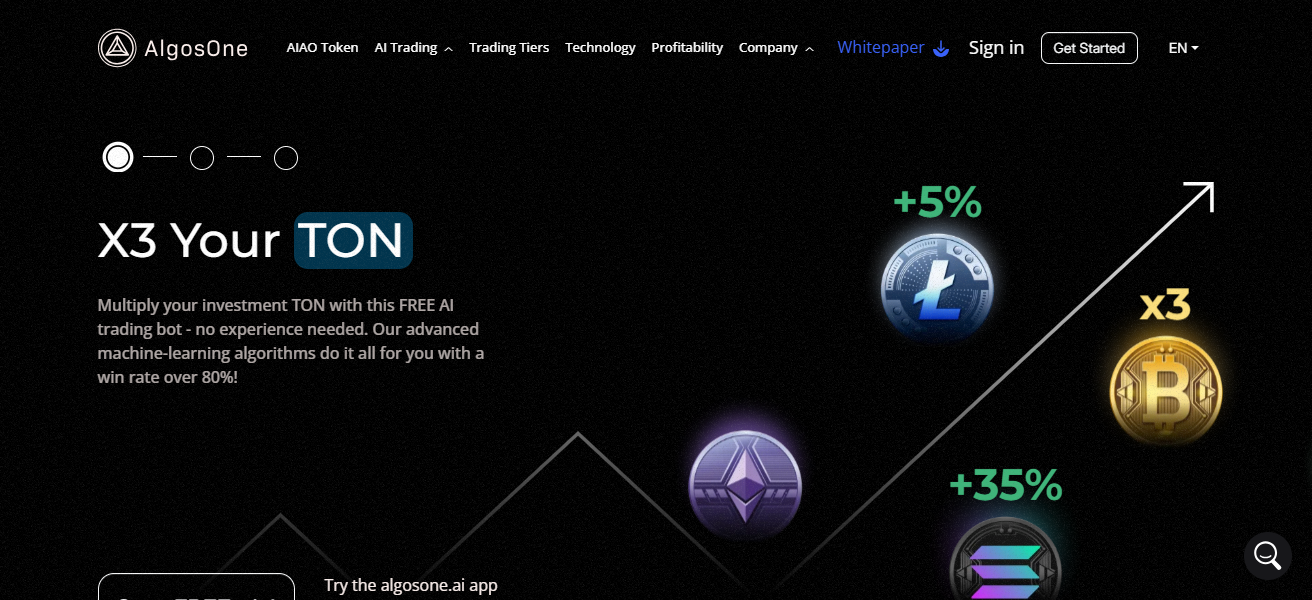
Early adopters were both shaken out and assisted by a rock-solid underlying structure that certainly seems appealing to algorithmic traders.
Its ecosystem integrates access to exchanges and automated portfolio balancing, providing users with seamless transitions between asset classes. AlgosOne is the next-gen AI trading hub for retail and professional investors.
| Pros | Cons |
|---|---|
| Advanced AI optimizer balances crypto, stocks, and savings | Still relatively new, limited long-term track record |
| Seamless exchange integration for automated trading | Volatility in crypto strategies may affect stability |
| Appeals to both retail and professional investors | Complex setup may challenge beginners |
2. Wealthfront
Wealthfront is a leading robo-advisor in 2026 at ~0.25% fees with tax-loss harvesting and direct indexing analysis. It’s AI synergy handles automated portfolio allocation involving your stocks, ETFs and savings accounts.
The Cash Account now offers a 3.25% APY with FDIC insurance, which can be competitive against traditional banks.

Wealthfront’s AI can eliminate emotional bias, automatically rebalancing portfolios and optimizing for tax efficiency.
It’s ideal for investors who appreciate “set-and-forget” automation with institutional-grade strategy, blending the benefits of growth and safety without daily oversight.
| Pros | Cons |
|---|---|
| Low fees (0.25%) with tax-loss harvesting | Limited customization compared to DIY platforms |
| Cash account yields competitive APY | Focused mainly on ETFs, less crypto exposure |
| Automated rebalancing removes emotional bias | Not ideal for active traders seeking frequent moves |
3. RockFlow
Backed by Ant Group and Monolith Capital, RockFlow uses AI agents including Bobby to manage portfolios across crypto and equities. In 2026, it unveiled RockAlpha trading arenas that allow AI models to battle in actual equity markets.
Focusing on tech titans such as NVIDIA and Microsoft, its AI Titans portfolio delivered a back-tested return on investment of 51.82%.
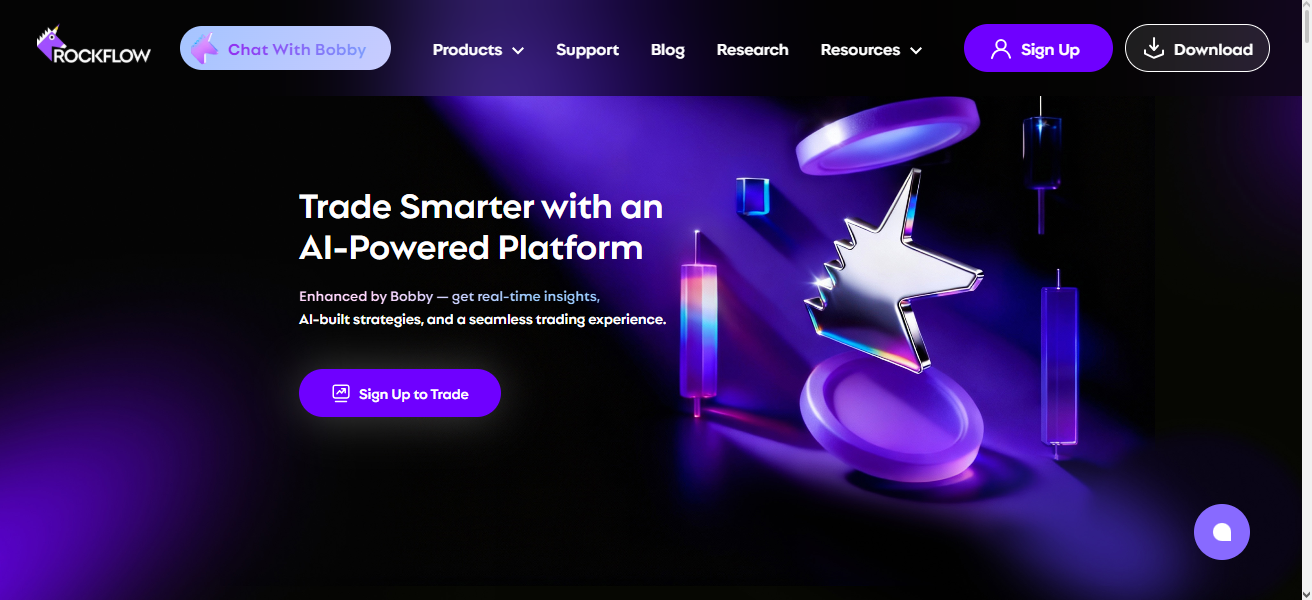
RockFlow breaks down barriers and makes professional-grade AI trading accessible to retail investors. Its agentic approach enables users to shift between stocks, crypto, and savings in real-time catering to the market of gamified but serious investing.
| Pros | Cons |
|---|---|
| AI Titans portfolio showed strong ROI (51.82%) | High reliance on tech-heavy assets |
| Gamified AI trading arenas encourage innovation | Still expanding beyond Asia, limited global reach |
| Backed by Ant Group and Monolith Capital | May be complex for casual investors |
4. eToro
In 2026 eToro launched Agent Portfolios which allows users to connect their personal AI agents to live trading accounts. This lets retail investors deploy hedge-fund-level strategies without proprietary infrastructure.

eToro’s AIs monitor markets, execute trades and rebalance your portfolios for you across crypto, stocks and ETFs. $20.5B AUM, eToro is scaling AI driven user retention & institutional adoption
This goal-oriented design fundamentally transforms investing from manual clicks into streamlined, intent-based automation — making it a leader in democratized AI trading.
| Pros | Cons |
|---|---|
| Agent Portfolios allow hedge-fund-level automation | Fees can be higher than pure robo-advisors |
| Large user base ($20.5B AUM) ensures liquidity | Advanced features may overwhelm beginners |
| Supports crypto, stocks, ETFs seamlessly | Regulatory restrictions vary by region |
5. Pionex
Pionex 12 free integrated AI trading bots (no coding) In 2026, it improved liquidity engines by aggregating the order books of Binance and Huobi.
Grid Trading and Arbitrage bots trade crypto positions against stablecoin savings automatically. Trust is enhanced by the US FinCEN regulation for Pionex.

Its AI integration now features ChatGPT-powered strategy assistants, which aid users in creating personalized trading strategies.
With no minimum deposit, it is suitable for beginners looking to implement automated crypto strategies with risk management.
| Pros | Cons |
|---|---|
| 12 free AI bots with no coding required | Focused mainly on crypto, limited stock exposure |
| Regulated under US FinCEN for trust | Strategies may be too basic for professionals |
| Aggregates liquidity from Binance & Huobi | Limited customization compared to API-first platforms |
6. Betterment
Betterment launched its AI-enabled Account Recommender in March 2026, which integrates advisor logic with AI-generated explanations. It customizes strategies across stocks, bonds, crypto ETFs and savings accounts.

Three-quarters of clients want AI insights, according to surveys, and Betterment meets the demand through automating tax optimization, rebalancing and retirement planning.
Its AI keeps portfolios in sync with life events and market changes to make it a good option for long-term investors seeking personalized financial advice.
| Pros | Cons |
|---|---|
| AI-enabled account recommender adapts to life events | Less control for investors who want stock picking |
| Strong tax optimization and retirement planning | Crypto exposure limited to ETFs |
| User-friendly with institutional-grade automation | Fees slightly higher than DIY brokers |
7. M1 Finance
Lastly, in 2026 M1 Finance has moved beyond automatic portfolio allocation and rebalancing powered by AI to include tax optimization.
It allows users to select individual stocks or ETFs like traditional robo-advisors but automates management for them in doing so.
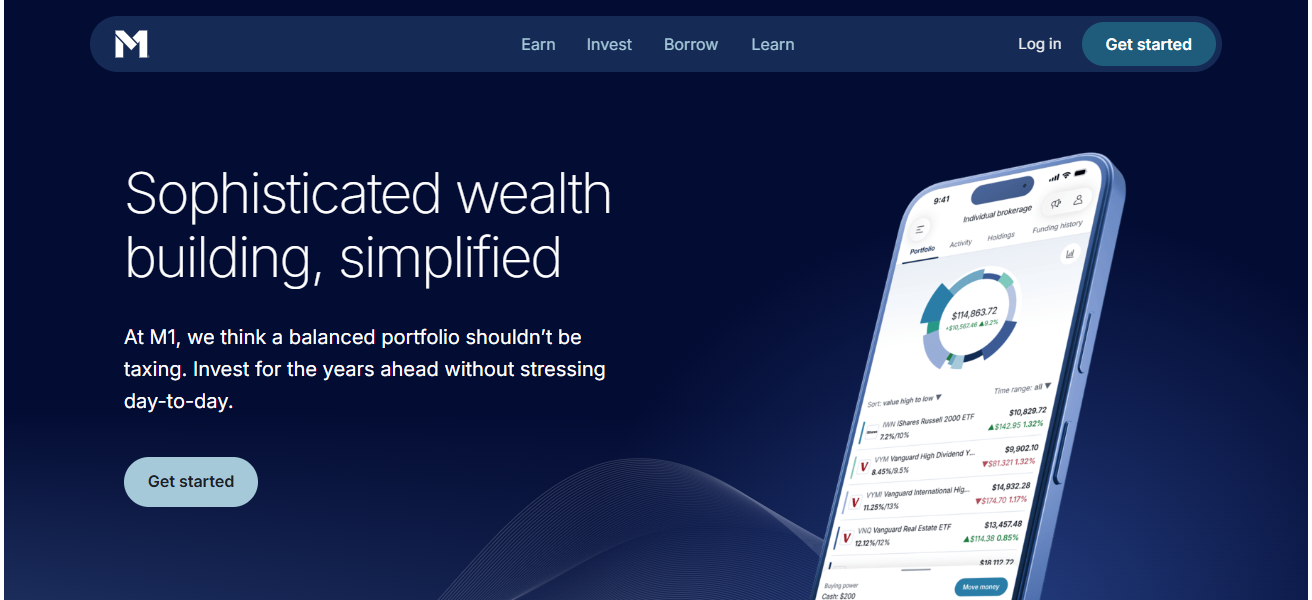
Its AI augments human judgment, assessing sector rotations and cash flows. M1 finds that prudent positioning is the key to alpha generation as the Dow surpasses 50,000 It’s SEC-compliant but allows flexibility.
M1 best suits investors who want control but also automation, offering some personalized stock picks and more AI-driven efficiency.
| Pros | Cons |
|---|---|
| Combines AI automation with user stock selection | Requires investor input, not fully hands-off |
| SEC-regulated with strong compliance | Tax optimization less advanced than Wealthfront |
| Flexible “pie-based” portfolio design | Beginners may find customization overwhelming |
8. Tickeron
In 2026, Tickeron’s AI trading agents are producing annualized returns between 56% and up to 125%, with a win rate of anywhere from 68–83%.
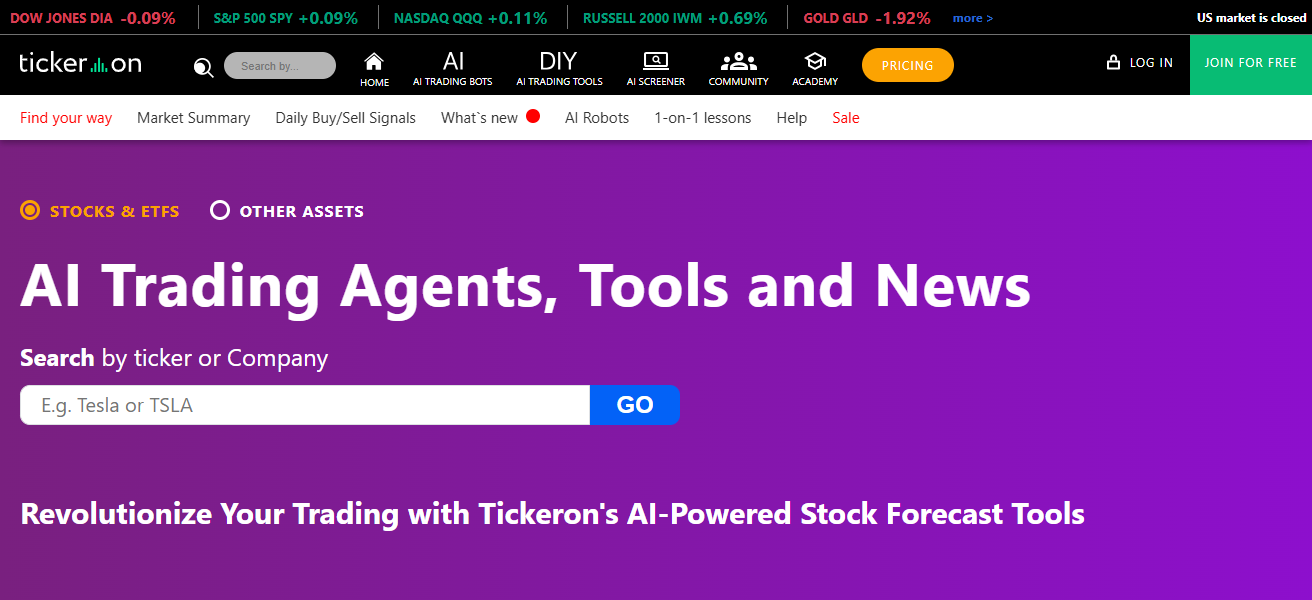
Their AI robots are also trained with dip-buyers, trend and sector rotation covering stocks ETFs & crypto. It offers tools like pattern recognition, buy/sell signals, and bots at various risk levels.
Tickeron: Sign up for beginners (daily signals), pros (DIY AI tools) The star feature is – AI virtual agents with profit factors up to 4.1 It is an advanced decision making platform.
| Pros | Cons |
|---|---|
| AI agents deliver high returns (up to 125%) | High-risk strategies may not suit conservative investors |
| Pattern recognition and sector rotation tools | Subscription fees for premium bots |
| Suitable for both beginners and pros | Requires active monitoring for best results |
9. Public.com
Cryptohopper’s Algorithmic Intelligence (AI) lets bots learn and adapt strategies automatically. In 2026, its marketplace expanded, allowing users to buy/sell strategies and templates.
Bots integrate TradingView alerts and external signals, deciding between crypto trades or holding stable assets. Its cloud-based infrastructure ensures 24/7 automation.
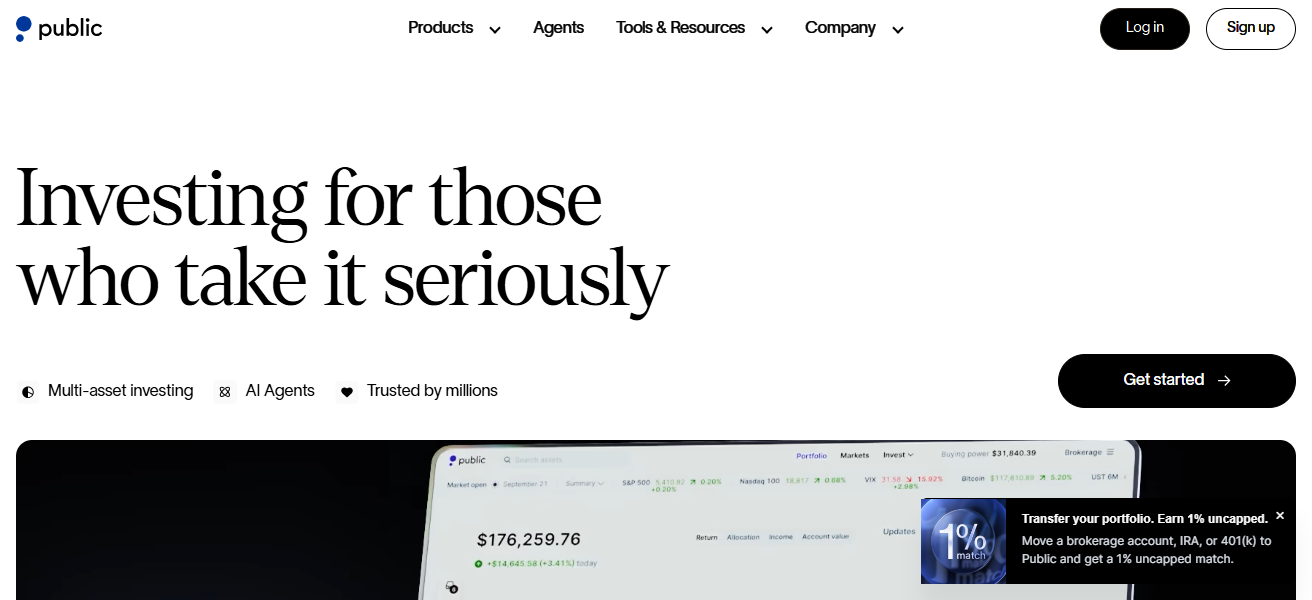
Cryptohopper is popular among beginners and pros, offering a structured path from simple automation to advanced rule-building. It remains a leading AI crypto bot with strong adaptability.
| Pros | Cons |
|---|---|
| First agentic brokerage with AI agents | Still evolving, features may be experimental |
| Multi-asset support: stocks, crypto, treasuries | Limited advanced trading tools compared to pro platforms |
| High-yield cash account (3.3% APY) | Best suited for retail, less for institutions |
10. Cryptohopper
Cryptohopper’s Algorithmic Intelligence (AI) enables the bots to learn & modify the strategies automatically. Its marketplace was expanded in 2026, allowing the buying/selling of strategies and templates by users.

Bots amalgamate TradingView alerts with proxies from external signals to identify and execute crypto trades or hold in stable assets. It is Cloud based architecture makes it work 24*7 automatically.
Cryptohopper is a favorite of both beginners and pros, building a clear evolution from basic automation to complex rule-building. It is one of the leading AI crypto bots with high adaptability.
| Pros | Cons |
|---|---|
| Algorithmic Intelligence adapts strategies automatically | Focused mainly on crypto, limited stock/savings tools |
| Marketplace for buying/selling strategies | Requires learning curve for advanced rule-building |
| Cloud-based bots run 24/7 | Performance depends heavily on chosen signals |
Conclsuion
Ultimately, it is revolutionizing individual money management in 2026 via Decision-Making AI That Selects Among Crypto, Stocks, or Cash Automatically These platforms leverage real-time data, risk management and intelligent capital allocation across many asset classes.
Eliminating emotional bias and adjusting instantaneously to the macroeconomic environment, they can help investors attain all of these points without performing blatant due diligence and slaving away for long term wealth.
FAQ
It’s AI that automatically allocates funds between crypto, stocks, or savings based on market conditions and user goals.
It analyzes real-time data, risk levels, and user preferences to choose the best asset class.
Yes, platforms like Pionex and Cryptohopper are beginner-friendly.
No, it complements them by removing emotional bias and automating decisions.