
This paper will analyze the foremost platforms in the trading of green energy and carbon-neutral trading.
- Key Points & Exchanges leading In Green Energy and Carbon-Neutral Trading
- 10 Exchanges leading In Green Energy and Carbon-Neutral Trading
- 1. European Energy Exchange (EEX)
- 2. Nord Pool
- 3. Intercontinental Exchange (ICE)
- 4. Shanghai Environment and Energy Exchange (SEEE)
- 5. California Carbon Allowance Market (CCA)
- 6. Singapore Exchange (SGX)
- 7. Japan Exchange Group (JPX)
- 8. Chicago Climate Exchange (CCX)
- 9. Korea Exchange (KRX)
- 10. Indian Energy Exchange (IEX)
- Conclsuion
- FAQ
These platforms are pioneers in developing integrated, transparent carbon markets, renewables support, and emissions reductions.
From Europe to Asia and North America, they are essential in developing new energy systems and achieving climate positive and economically sustainable systems globally.
Key Points & Exchanges leading In Green Energy and Carbon-Neutral Trading
European Energy Exchange (EEX) Operates renewable power markets, supporting carbon-neutral electricity trading across Europe with transparent pricing mechanisms.
Nord Pool Largest electricity market in Europe, pioneering renewable integration and cross-border carbon-neutral energy trading solutions.
Intercontinental Exchange (ICE) Provides carbon credit futures, enabling global investors to hedge emissions and support sustainable energy transitions.
Shanghai Environment and Energy Exchange (SEEE) China’s primary carbon trading platform, driving renewable adoption and emission reduction through regulated carbon markets.
California Carbon Allowance Market (CCA) Facilitates cap-and-trade programs, incentivizing renewable energy investments and reducing greenhouse gas emissions statewide.
Singapore Exchange (SGX) Expands into carbon credits and green energy derivatives, positioning Asia as a hub for sustainable trading.
Japan Exchange Group (JPX) Introduced carbon-neutral indices, promoting renewable energy investments and sustainable finance in Asian markets.
Chicago Climate Exchange (CCX) Early pioneer in carbon trading, fostering renewable energy projects and emission reduction commitments across industries.
Korea Exchange (KRX) Hosts Korea’s Emissions Trading Scheme, encouraging renewable energy adoption and carbon-neutral industrial practices nationwide.
Indian Energy Exchange (IEX) India’s leading renewable energy marketplace, promoting solar, wind, and green certificates for carbon-neutral trading.
10 Exchanges leading In Green Energy and Carbon-Neutral Trading
1. European Energy Exchange (EEX)
The European Energy Exchange (EEX) is located in Leipzig, Germany, and is the largest power exchange in Europe.
EEX is an active and transparent marketplace for electricity, natural gas, emission allowances, and carbon-related indices.
EEX is innovative in developing new products and services which are essential in assisting Europe to become dominant in renewable energy and sustainable emission trading.
EEX actively assists Europe in developing emission trading systems and, therefore, leads Europe in sustainable energy and a climate-neutral Europe market.
European Energy Exchange (EEX) Features
- Transparency for markets for electricity, natural gas, and emissions trading.
- Provides carbon-neutral trading solutions for Europe’s renewable energy integration.
- Offers compliance carbon indices for global markets.
- Europe’s leading position in sustainable energy and climate action.
2. Nord Pool
Nord Pool is the largest electricity market operator in Europe and is located in Norway. They trade in cross-border renewable energy.
In 1996, Nord Pool opened their services and began offering day-ahead and intraday market transparency and efficiency services.
Nord Pool promotes carbon-neutral trade by incorporating renewable energy sources and provides timestamped energy certificates through initiatives like EnergyTag.
Nord Pool is one of the signatories of the UN 24/7 Carbon-Free Energy Compact. They are also developing systems intraday trading systems for increased renewable energy sources.
Nord Pools first mover advantage is trading carbon contracts under the Emissions Trading Scheme which was EU initiated and furthers Nord Pools significance in the energy market.
Nord Pool Features
- The largest electricity market in Europe and is based in Norway.
- Provides trading in cross-border renewable energy and carbon-neutral trading.
- Delivers efficient energy distribution through day-ahead and intraday markets.
- Signatory of the UN’s 24/7 Carbon-Free Energy Compact.
3. Intercontinental Exchange (ICE)
Intercontinental Exchange (ICE), based in the U.S., is a major player in the global carbon trading and environmental markets.
ICE is the largest carbon derivatives trader and carbon futures contracts trader in the EU, UK, and California. ICE also trades in Renewable Energy Certificates (RECs) and Low Carbon Fuel Standards (LCFS) credits.
For four consecutive years, ICE’s environmental contracts have had a notional value of over 1 trillion dollars, attesting to the company’s magnitude and dominance.
ICE helps the world decarbonize by providing strong markets for carbon credits including the aviation market CORSIA. Strong infrastructure and credibility make ICE a major player in carbon-neutral energy trading.
Intercontinental Exchange (ICE) Features
- The largest carbon derivatives and environmental markets trader globally.
- Offers futures for the EU Allowance, UK Allowance, and California Carbon.
- Offers credits for Renewable Energy Certificates and Low Carbon Fuel Standards.
- Supports global decarbonization via CORSIA and other aviation-focused frameworks.
4. Shanghai Environment and Energy Exchange (SEEE)
Since 2013 as one of China’s first pilot program emissions trading systems, the Shanghai Environment and Energy Exchange (SEEE) has become the most prominent carbon trading platform in the country.
SEEE captures auctions and secondary market trading within the country’s national market emissions.
SEEE serves as the primary trading partner in China’s expanding carbon market related to burning fossil fuels in the steel and cement industries.
SEEE, along with the UNDP, collaborates with most international organizations to facilitate merging of the global carbon markets.
SEEE, along with its partner organizations, aids in the development of renewable energy and reduction of emissions to strengthen the global objectives of arbitrary climate changes while playing a major role in the Green Transition in Asia.
Shanghai Environment and Energy Exchange (SEEE) Features
- Launched in 2013, it is the first carbon trading platform in China.
- Supports allowance auction and secondary market trading.
- Broadens the national carbon market to heavy industry.
- Develops international collaboration for global carbon market integration.
5. California Carbon Allowance Market (CCA)
The California Carbon Allowance Market (CCA), launched in 2012, is one of the world’s most advanced cap-and-trade systems.
Covering approximately 75% of California’s greenhouse gas emissions, it incentivizes emission reductions through allowance auctions and trading.
Linked with Québec under the Western Climate Initiative, CCA creates a broader North American carbon market.
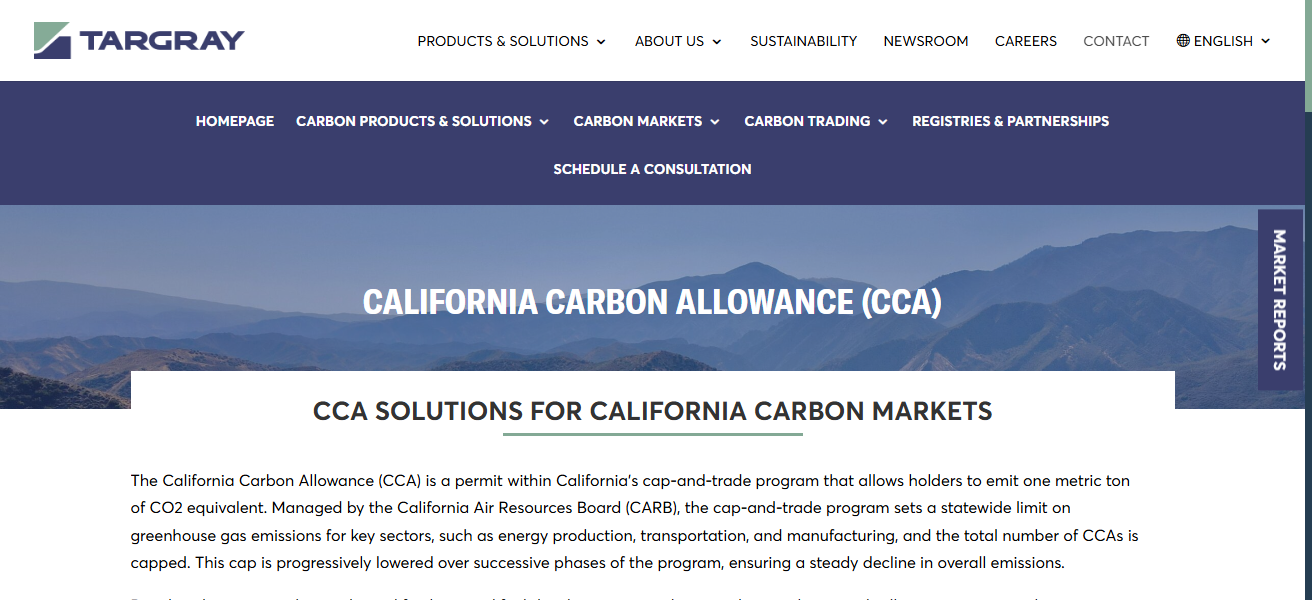
The program includes price ceilings, reserve tiers, and offset credit restrictions to ensure environmental integrity.
Despite recent price volatility, CCA remains a cornerstone of California’s climate policy, driving renewable energy investments and supporting the state’s ambitious emission reduction targets through transparent and regulated carbon-neutral trading mechanisms.
California Carbon Allowance Market (CCA) Features
- A cap-and-trade system covering 75% of California’s emissions.
- Linked with California under the Western Climate Initiative.
- Has price ceilings, reserve tiers, and offset limitations.
- Supplies California with renewed energy and reduced emissions.
6. Singapore Exchange (SGX)
The Singapore Exchange (SGX) has established itself as leading sustainable finance and carbon trading center in Asia.
By aiming to enhance liquidity and transparency for the global carbon credit market through Climate Impact X (CIX), SGX assists the trading of carbon credits on a global scale.
With CIX, participants can trade and have access to verified and efficient contracts for carbon credits derived from nature-based solutions and CORSIA-related aviation credits.
SGX’s partnership in renewable energy attribute certificates also helps businesses achieve sustainability objectives.
By fusing finance with the environmental markets, SGX enhances Singapore’s center of excellence for carbon trading, and drives Asia’s sustainable energy and carbon-neutral economic growth.
Singapore Exchange (SGX) Features
- Offers trading in nature-based carbon credits.
- Facilitates trading in carbon credits through Climate Impact X.
- Partnered with other exchanges in Asia to support trading in Renewable Energy Certificates.
7. Japan Exchange Group (JPX)
Japan Exchange Group (JPX), through the Tokyo Stock Exchange, has established a Carbon Credit Market to support Japan’s goal of carbon neutrality by 2050.
Trial trading began in 2023, with full-scale operations expected by 2026. JPX’s market design balances decarbonization with economic realities, offering credits from domestic and international sources, including GX-ETS and Joint Crediting Mechanism projects.
By leveraging its financial infrastructure, JPX provides a transparent and regulated platform for carbon-neutral trading.
This initiative reflects Japan’s pragmatic approach to climate policy, ensuring sustainable energy investments while maintaining economic stability in its transition toward a low-carbon future.
Japan Exchange Group (JPX) Features
- Launched a carbon credit market to support Japan’s 2050 carbon neutrality goal.
- Started trial trading in 2023; expected full trading operations by 2026.
- Offers carbon credits from domestic and international sources.
- Regulates trading to ensure carbon credits are traded in a fair and transparent manner.
8. Chicago Climate Exchange (CCX)
Opened in 2003, the Chicago Climate Exchange (CCX) was the world’s first carbon dioxide emissions trading system with an legally voluntarily cap-and-trade system.
CCX also operated for six other greenhouse gases. CCX covered major greenhouse gas emissions, allowed companies to pledge to and report emissions, and also focused on trading carbon credits.
CCX operated with 330 corporations, with notable participants Ford and DuPont. It reported the trading of 680 million metric tons of CO₂ equivalents.
Closing in 2010, CCX was the first carbon trader system, and without CCX, the world’s carbon markets would have operated without the historical significance of CCX. Its influence is still seen globally in today’s emissions trading systems.
Chicago Climate Exchange (CCX) Features
- First ever voluntary cap and trade program in the world.
- Started trading in six major greenhouse gases.
- Over 300 businesses traded at the peak of CCX.
- CCX is a pioneer of emissions trading systems.
9. Korea Exchange (KRX)
Beginning in 2015, the Korea Exchanges (KRX) Korea Emissions Trading System (K-ETS) has allowed for the regulation of carbon emissions through the recording of allowance credits
Along with the offset credits and also the acquisition of carbon credits, in the transportation, power, and manufacturing sectors and has been the first of its kind in East Asia.
Recently, KRX has coordinated with Xpansiv for the expansion of carbon credits to global and CORSIA-compliant credits and the voluntary carbon market.
Moreover, this partnership improves South Korea’s standing as a carbon-neutral trading market, and KRX’s integration of renewable energy and emissions reduction meets South Korea’s climate
Objectives as well as establishes South Korea’s prominence in the global market for environmental sustainability.
Korea Exchange (KRX) Features
- Started operating the Korea Emissions Trading System since 2015.
- Covers emissions from the power, transport and manufacturing industries.
- Voluntary carbon credits partnered with Xpansiv.
- Enhances Korea’s engagement in carbon trading.
10. Indian Energy Exchange (IEX)
Indian Energy Exchange (IEX) is India’s first power trading platform facilitating trading of power and renewable energy across the country.
It integrates solar and wind through Green Certificates and has also ventured into carbon markets with its subsidiary, International Carbon Exchange (ICX). ICX enables trading of voluntary carbon credits and assists industries in achieving their sustainability goals.
IEX provides transparency and competition which incentivizes the adoption of renewables and the trading of carbon credits in India’s energy sector.
With thousands of participants, including utilities and industrial consumers, IEX is instrumental in aiding India meet its low-carbon economy and climate change goals.
Indian Energy Exchange (IEX) Features
- Offers India’s premier power trading platform for trading of electricity and renewables.
- Offers green certificates for trading of solar and wind energy.
- Offers International Carbon Exchange for voluntary carbon credits.
- India’s energy sector is supported in carbon-neutral trading.
Conclsuion
In Conclsuion The exchanges pioneering green energy and carbon-neutral trading are setting the groundwork for the future of sustainable markets.
They help industries shift to cleaner energy by facilitating transparent carbon pricing, renewable integration, and emissions reduction.
From Europe’s EEX and Nord Pool to Asia’s SGX and JPX, these exchanges help to climate mitigate and innovate to achieve the long-term sustainability of the environment.
FAQ
A marketplace where renewable electricity and carbon-neutral products are traded transparently.
They help reduce emissions by pricing carbon and incentivizing renewable energy adoption.
European Energy Exchange (EEX) and Nord Pool are major leaders in Europe’s green energy markets.
Intercontinental Exchange (ICE) offers carbon credit futures and renewable energy certificates worldwide.