In this article, I will explain how to rank in ChatGPT’s search using Generative Engine Optimization (GEO).
- Key Points & 10 Generative Engine Optimization (GEO) Secrets To Rank on ChatGPT Search
- 10 Generative Engine Optimization (GEO) Secrets To Rank on ChatGPT Search
- 1. Conversational Keywords
- 2. Structured Formatting
- 3. Contextual Depth
- 4. Authority Signals
- 5. Semantic Richness
- 6. Engagement Hooks
- 7. Adaptive Tone
- 8. Answer Precision
- 9. Content Freshness
- 10. User-Centric Flow
- Conclsuion
- FAQ
We will cover how toget AI driven results for your content, with tips on how to use conversational keywords, structure optimization, contextual optimization, and engagement optimization.
Following these techniques will give you increased visibility and improved user satisfaction, and will help your content rise in prominence in ChatGPT search results.
Key Points & 10 Generative Engine Optimization (GEO) Secrets To Rank on ChatGPT Search
Conversational Keywords Use natural, question-based keywords that match how users actually ask ChatGPT for answers.
Structured Formatting Organize responses with headings, lists, and tables to improve readability and ranking visibility.
Contextual Depth Provide comprehensive, layered explanations that anticipate follow-up questions and satisfy user curiosity fully.
Authority Signals Reference credible sources, expert opinions, and data to establish trustworthiness within generated content.
Semantic Richness Include synonyms, related terms, and contextual variations to strengthen relevance across diverse queries.
Engagement Hooks Ask reflective questions or offer insights that encourage users to continue exploring your content.
Adaptive Tone Match user intent with friendly, professional, or technical tone for personalized conversational resonance.
Answer Precision Deliver concise, direct answers first, then expand with supporting details for layered comprehension.
Content Freshness Update examples, statistics, and references regularly to align with evolving user expectations.
User-Centric Flow Prioritize clarity, progression, and logical flow so users feel guided through meaningful discovery.
10 Generative Engine Optimization (GEO) Secrets To Rank on ChatGPT Search
1. Conversational Keywords
For effective ranking on ChatGPT search, natural, question-based keywords are vital. Users do not ask questions in an academic tone. Instead, they like using jury-way questions like,
“How do I…” or “What is the best way to…”. Therefore, to give your content a better chance of ranking, use natural sentences, academic questions won’t help.
Provide questions and answers to avoid repetition, and to give the content a better chance of ranking, natural, conversational sentences are better than academic, and direct answer questions better than vague open questions.
| Pros | Cons |
|---|---|
| Matches how users naturally ask questions, improving discoverability. | Overuse may make content too casual or informal for professional topics. |
| Enhances user engagement by aligning with actual user intent. | May reduce effectiveness for very technical or niche queries that require precise terminology. |
| Helps ChatGPT understand context and provide accurate responses. | Could limit keyword variety if focused only on one conversational style. |
2. Structured Formatting
In ChatGPT, well-structured content ranks better. Dividing your content into clearly marked sections, using lists, tables, and headings provides a clear and logical flow to your document.
Using headings to separate sections makes scanning and reading easier and helps focus on important sections.

Complex lists, tables, and well-structured headings make it easier to analyze and compare data, which improves ranking.
Organized content also provides better authority to your document and helps improve the content ranking. Systematically organized content provides better ranking and better user experience.
| Pros | Cons |
|---|---|
| Improves readability and comprehension for users. | Requires extra effort to organize content consistently. |
| Makes content scannable with headings, lists, and tables. | Over-formatting may feel rigid or unnatural in conversational AI. |
| Helps AI highlight key points for better GEO visibility. | Can slow content creation if templates are too complex. |
3. Contextual Depth
When depth is added to responses, it helps the user understand the response holistically, along with answering follow-up questions.
It also helps to include background information, examples, and nuances of the response, rather than just the basic and surface-level information
To enhance user trust and satisfaction and reduce the chances of the user seeking information from multiple places. Providing information that counters or raises questions to multiple perspectives secures the best response.
Depth added to responses, demonstrates that the user understands the question rather than just matching words, and provides the best information, which enhances their credibility.
It also makes the response to the question more valuable and informative, improving their rank in the ChatGPT response systems.
| Pros | Cons |
|---|---|
| Anticipates follow-up questions, satisfying curiosity fully. | Deep explanations can overwhelm users seeking quick answers. |
| Enhances perceived authority and expertise. | Requires more research and preparation. |
| Reduces need for users to search elsewhere. | May increase word count, affecting readability for casual users. |
4. Authority Signals
Including expert opinions, credible sources, and data in your content will increase trust in your content.
Reliability can be signaled when references, studies, and reputable, documented sources in the industry are utilized.
Content that demonstrates and prioritizes applicable knowledge when answering highly specialized and technical questions will be prioritized by ChatGPT.

Author citations reassures the user that they have provided the correct answer, which in turns increases user interaction and shareability of the content.
References, studies, and citations provide adequate evidence to support the claim. To meet the users’ demands
it is advantageous to improve your content’s user satisfaction and its GEO ranking within the AI search system by appropriately incorporating credible sources and evidence.
| Pros | Cons |
|---|---|
| Builds trust with credible sources and data. | Excessive references can disrupt conversational flow. |
| Improves perceived expertise and reliability. | Some users may find frequent citations distracting. |
| Signals to AI that content is trustworthy. | Harder to maintain if sources frequently change. |
5. Semantic Richness
Utilizing the broadest potential meanings of the main topic enhances potential relevance across a variety of user intents.
When users ask questions, they phrase things differently, and the main topic flexibility addresses this variation.

For example, “AI writing tools” could also be a search for “generative text software,” or “AI content generators.
Including such variations will better assist the system to understand your focus and improve the matching potential.
Ultimately the wider range of focus areas will also improve potential user satisfaction for a specific main topic as well as providing a more natural conversational outcome.
| Pros | Cons |
|---|---|
| Captures diverse user queries through synonyms and related terms. | Too many variations can dilute the main message. |
| Strengthens relevance for broader search intent. | May increase complexity of writing. |
| Helps AI understand nuanced meanings. | Risk of keyword stuffing if not done naturally. |
6. Engagement Hooks
Using the content to create a user journey as opposed to providing all of the answers will deepen user engagement.
Adding participation incentives such in the case of the example question like “what if this approach fails” will not only lead to higher engagement but also extended time on the page,
which could positively affect GEO rankings, contributing to the search engine satisfaction regarding the user’s quest.

Wait time also creates additional challenges for the AI to analyze the purpose of the content. Incorporating participation incentives will get users to think more and invoke additional actions
which will create a journey and improve user experience when combined with content that has a goal of providing answers.
| Pros | Cons |
|---|---|
| Encourages users to reflect and explore further. | Overuse may feel manipulative or interrupt the flow. |
| Increases session time and interaction. | May confuse users if hooks are unclear or irrelevant. |
| Makes content more memorable and interactive. | Requires creativity and context awareness. |
7. Adaptive Tone
You should adjust your tone to match user intent; tone can be more casual, more business-like, or even more complicated or technical.
A more casual tone works best in response to a conversational query, while a more complicated query is best served with a more analytic tone.
Tone alignment ensures that the user feels understood, which improves the freedom with which the user can communicate, and leads to increased engagement and satisfaction.

It is important to match tone to the user’s preferences to improve results from Chat GPT, as predictive algorithms place high importance on the conversational fit of the given response.
In addition to increased trust and decreased cognitive overload, correctly matching the tone also improves the quality of the output which is important as it allows content to retain its credibility
while also being more relaxed, ensuring that the industry experts as well as the casual learners will enjoy the content.
| Pros | Cons |
|---|---|
| Aligns with user intent, improving engagement. | Switching tones frequently may seem inconsistent. |
| Builds rapport and conversational resonance. | Hard to standardize across different content types. |
| Makes technical content approachable for casual users. | Risk of oversimplifying complex topics. |
8. Answer Precision
Users appreciate direct and concise answers, so set your answer up as a summary followed by context or more detailed hypotheticals to deepen the user’s understanding.
Be sure to answer the user’s question to meet intent in the response, and then answer the user’s question to fully complete the response.

It is important to meet intent in the response so be sure to answer the user’s question before providing more detail, as this will also improve the precision of the response and reduce the ambiguity.
In conversational AI, meeting intent in the response is important as it improves the user’s satisfaction and engagement.
| Pros | Cons |
|---|---|
| Provides immediate clarity with concise answers. | May feel too brief if details are omitted. |
| Supports layered comprehension with follow-up explanations. | Balancing brevity and depth can be challenging. |
| Improves user satisfaction by delivering quick solutions. | Requires careful structuring to avoid confusion. |
9. Content Freshness
It’s important to keep examples, figures and references current in order to keep content relevant. Stale content will detract from credibility and will start to bring down GEO.
Fresh content will improve relevance to current trends, technologies, and user expectations, leading to more visibility in search engines as they are becoming more AI driven.

When content is updated more often, both users as well as search engines are more likely to see content as active, accurate and reliable.
Even small data updates or a recent case study will improve content engagement. By keeping content fresh, it creates authoritative and competitive content, and it shows that you are keeping up to date with developments in your niche or industry.
| Pros | Cons |
|---|---|
| Keeps content relevant with updated examples and statistics. | Requires continuous monitoring and updating. |
| Signals reliability and authority to users and AI. | Outdated references can harm credibility if not refreshed. |
| Aligns with evolving trends and user expectations. | Time-intensive to maintain for large content libraries. |
10. User-Centric Flow
Organizing content in a user centered way will show clarity and logical thinking. Organize everything in a way that will show meaningful order, and offer transitions so that the next point builds off of the current one.
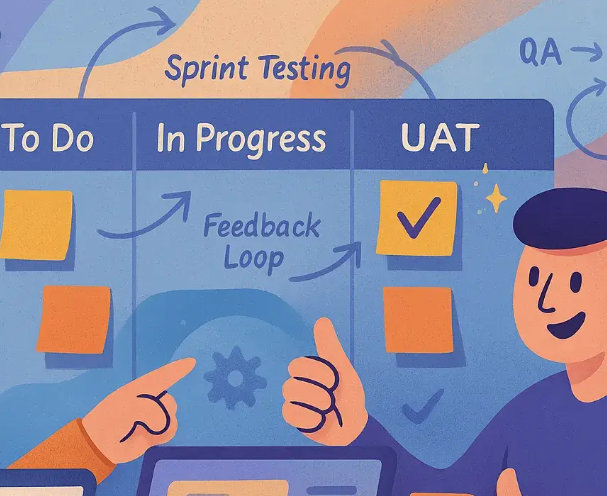
When content is organized user centered, cognitive effort is reduced, which will keep user engagement high.
Content that is written in a way that is user centered will keep people coming back to use the content again.
| Pros | Cons |
|---|---|
| Guides users through content logically, enhancing understanding. | Designing intuitive flows may take more effort initially. |
| Reduces cognitive load and confusion. | Can become too rigid if over-structured. |
| Improves engagement and satisfaction by prioritizing clarity. | Requires frequent testing to ensure optimal progression. |
Conclsuion
To summarize, optimizing for Generative Engine Optimization (GEO) is a necessity for ranking well for ChatGPT search.
Engaging users and the AI can be accomplished by using conversational keywords, appropriate formatting, sufficient depth and clarity of context, and the use of authority indicators.
In this ever-evolving search landscape powered by AI, continuing to modify and refine your content will support its sustained visibility, engagement, and credibility.
FAQ
GEO is the practice of optimizing content for AI-driven platforms like ChatGPT to improve discoverability and engagement using conversational strategies.
They match how users naturally ask questions, increasing the chance your content is surfaced in AI search results.
Headings, lists, and tables make content readable, scannable, and easier for AI to highlight key points.
Providing layered explanations anticipates follow-up questions, enhancing user satisfaction and authority.