This article analyzes Liquid Restaking Tokens (LRTs): Puffer Finance and Ether.fi points systems risk comparison.
- Overview
- Puffer Finance: Risk Analysis
- Risks Associated with Contracts and Validators
- Risks Associated with Liquidity and the Market
- Risks Associated with Governance and Incentives
- Ether.fi: Risk analysis
- Comparative Risk Table
- Key Takeaways
- Liquid Restaking Tokens: Puffer vs. Ether.fi Risks Pros And Cons
- Cocnlsuion
- FAQ
It will discuss these protocols’ positions regarding validator security, liquidity, and user incentives, in addition to the relative risks and prospects of theirhttps://coinworldstory.com/10-best-perplexity-ai-alternatives-for-academic-research/ differing approaches to staking and rewards to manage these complexities.
Overview
Liquid Restaking Tokens (LRTs) are one of the latest innovations in Ethereum’s staking ecosystem aimed to maximize the capital efficiency of staked ETH by enabling users to “restake” staked ETH across multiple protocols while maintaining liquidity.
LRT holders don’t lock ETH in a validator; instead they transfer staked ETH to a validator in exchange for an LRT that represents their staked position. LRT holders are free to participate in other DeFi lending, trading, or yield farming applications.
The props of having the dual utility of earning staking rewards while still keeping liquidity are affecting `but they are also risky because of anchor instability, smart contract bugs, the validator’s not keeping the peg. Therefore, LRTs position themselves to have complex systemic and incentive-driven risks in exchange for yield.
Puffer Finance: Risk Analysis
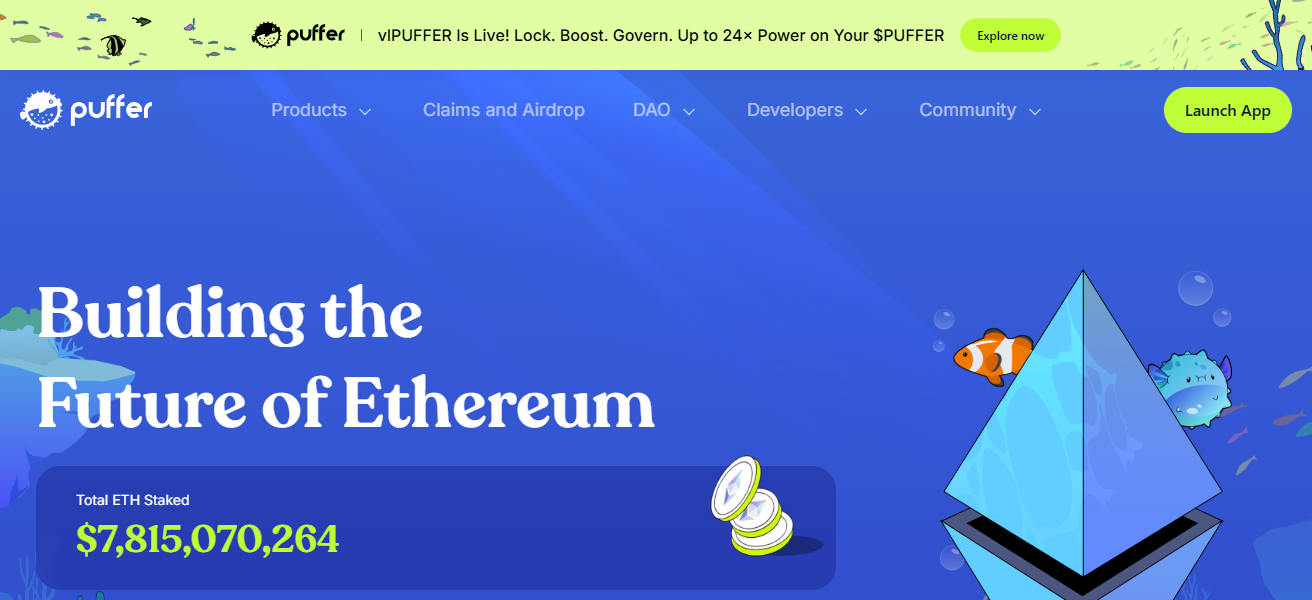
Restaking protocols provide liquidity by issuing their own tokens. Since Puffer Finance is a liquidity restaking protocol, its token is pufETH.
Risks Associated with Contracts and Validators
Puffer Finance has a proprietary anti-slashing solution, which reduces restaking risk by avoiding the loss of validator currency.
On the one hand, a fully open validator configuration builds a strong ecosystem. On the other, it opens a gap for insufficiently skilled participants to improperly configure their nodes and lose the slashing.
Funding and backing by reputable organizations like Binance Labs and grants solidifies their standing within the ecosystem. Technical risk, however, is always present.
Risks Associated with Liquidity and the Market
Total Value Locked (TVL) of More than $794 million: Although their scale reduces the present dangers of a slashing event, it exposes Puffer to (concentrated) systemic risk.
Multiple integrations within Decentralized Finance (DeFi): Although integrations increase their operating utility, the risk of system failure across multiple apps and layers (Lending, L2s) is significant.
APY averages 7.4%: This encouraging return attracts participants and increases the risk of a crash should prices of ETH fall.
Risks Associated with Governance and Incentives
Decentralized Autonomous Organization (DAO) Governance: In a rapid-outcome environment, the spread of governance can slow down necessary changes.
A high level of reliance on a speculative token system to attract users runs the risk of creating a “token economy” that enables short-sighted behaviors, including ramping up participants’
interactions with the system beyond its designed functionality and potentially creating a system that is abusive to the protocol.
Ether.fi: Risk analysis
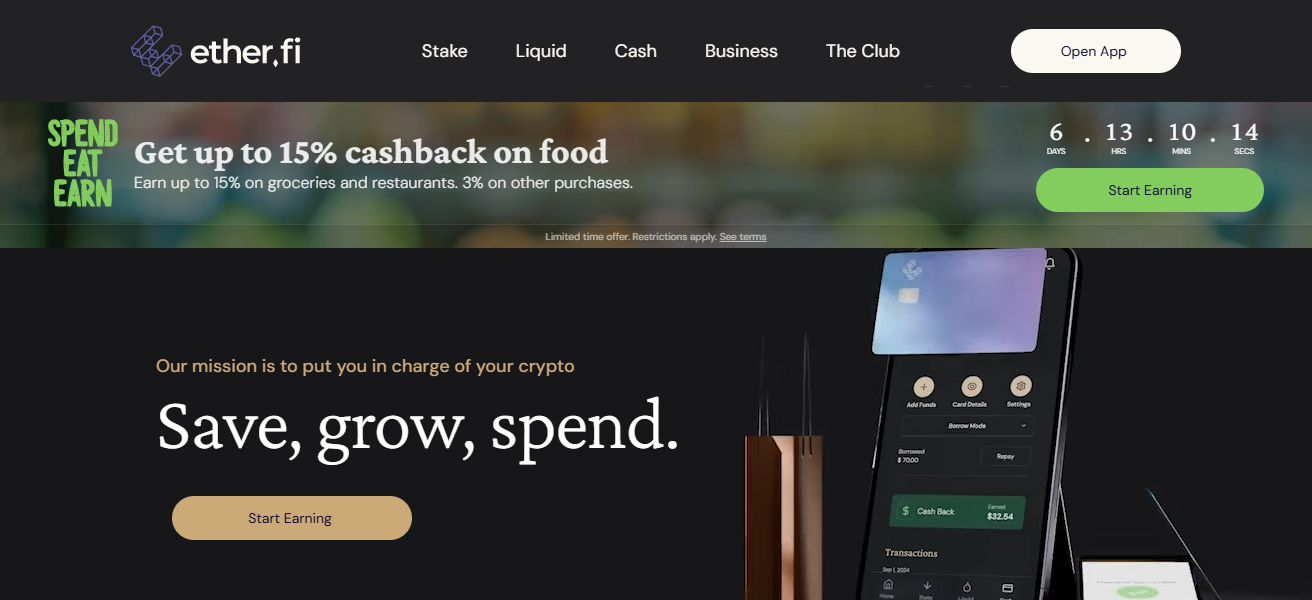
Ether.fi uses a points-gaming mechanism to LRT weETH and eETH.
Smart Contracts & Peg Risks
Peg Stability Monitoring: Ether.fi analyzes eETH/weETH deviations from ETH, categorizing them as Critical, Warning and Normal. While this level of analysis is good, it does not mitigate the risk of eETH/weETH depegging.
Collateral Risk: Wrapped Ether.fi ETH (weETH) sits in lending markets. This entails it being collateral damage in a liquidation cascade, should the peg break.
Liquidity & Market Risks
Liquidity Risks: Since the DEX (Curve, Balancer) has a good liquidity pool, this reduces the slippage, yet it increases the risk.
Points System: Users might determine the liquidity for the pool based on the points rather than the yield, and thereby drive the liquidity to a sub-optimal state.
Rapid TVL Growth: This is a double-edged sword. While rapid TVL growth increases systemic risk, it also increases risk management.
Incentive & Governance Risks
Points System: While the points gamification mechanism rewards people for doing certain activities, it also encourages people to take on more leverage and more risk.
Chaos Labs: Risk portal offers good analytics and observability (which is a positive) but in the end its analytics depend on people reacting to it.
Comparative Risk Table
| Dimension | Puffer Finance | Ether.fi |
|---|---|---|
| Smart Contract Risk | Anti-slashing tech, permissionless validators | Peg monitoring, collateral risk in lending |
| Liquidity Risk | Large TVL, broad DeFi integrations | Concentrated in Curve/Balancer, peg instability |
| Incentive Risk | DAO governance, airdrop speculation | Points gamification, risk of irrational behavior |
| Systemic Risk | Validator mismanagement, contagion via integrations | Depegging cascades, liquidity pool concentration |
| Yield Profile | ~7.4% APY, sustainable but leveraged | Points-driven rewards, potentially distortive |
Key Takeaways
Puffer Finance: Increased attention to validator safety and anti-slashing is positive, but governance delay and speculation incentive risks remain.
Ether.fi: Points system creates behavioral risks that could destabilize liquidity and peg, but risk transparency and liquidity pools are positives.
Overall: Puffer is less technically vulnerable, and Ether.fi is more vulnerable to market psychology and gamified incentives.
Liquid Restaking Tokens: Puffer vs. Ether.fi Risks Pros And Cons
Puffer – Pros
| Pros | Explanation |
|---|---|
| High Yield Potential | Puffer often offers competitive returns compared to other protocols, attracting yield-focused investors. |
| Integration with EigenLayer | Provides exposure to Actively Validated Services (AVSs), enabling compounded rewards. |
| Growing Ecosystem | Puffer is expanding rapidly, which may lead to more opportunities for airdrops and partnerships. |
Puffer – Cons
| Cons | Explanation |
|---|---|
| Smart Contract Risks | As a newer protocol, Puffer faces higher risks of vulnerabilities in its code. |
| Slashing Exposure | Restaking increases the chance of validator penalties, which can reduce principal. |
| Lower Security Reputation | Compared to Ether.fi, Puffer is not yet considered the safest option in the market. |
Ether.fi – Pros
| Pros | Explanation |
|---|---|
| Non-Custodial Design | Stakers retain control of their keys, reducing custodial risk. |
| Strong Security Audits | Ether.fi has undergone rigorous audits, making it one of the most trusted protocols. |
| Market Leader | With high TVL and adoption, Ether.fi is considered the most established liquid restaking protocol. |
| Institutional Appeal | Its security-first approach attracts institutional investors seeking safer exposure. |
Ether.fi – Cons
| Cons | Explanation |
|---|---|
| Lower Yield vs. Competitors | Ether.fi prioritizes safety, which can mean slightly lower returns compared to riskier protocols. |
| Complexity of Restaking | Users must understand EigenLayer mechanics, which can be challenging for beginners. |
| Competition Pressure | With many new protocols emerging, Ether.fi must continue innovating to maintain dominance. |
Cocnlsuion
To summarize, Liquid Restaking Tokens offer both innovation and risk within Ethereum’s staking ecosystem.
Puffer Finance focuses on anti-slashing, validator safety, and sustainable technology; however, Ether.fi’s points system contributes to gamification of stake/lending and misalignment of user incentive liquidity abuse.
This illustrates that to have sustainable growth, one must find an equilibrium of yield, governance, and psychology of the market in order to protect stake liquidity and systemically stabilize the ecosystem.
FAQ
LRTs allow staked ETH to be reused across protocols, offering liquidity while earning staking rewards.
It uses anti-slashing technology to protect validators and emphasizes technical resilience.
A gamified reward mechanism that incentivizes user activity but may distort behavior.
Puffer Finance prioritizes validator protection through advanced safeguards.