In this post , I will highlight apps that help you trick your brain into saving more money, making it easier to develop good saving habits.
These apps utilize behavioral psychology, gamification, and automation to make saving easier, more rewarding, and even a little subconscious.
These apps aim to make saving easier and more effective to everyone by rounding up purchases, rewarding you when you reach goals, and a number of other consistent and small actions.
Key Poinst & Apps That Trick Your Brain Into Saving More Money
- Qapital – Automates savings using behavior triggers like workouts or skipped coffees, turning saving into fun rewards.
- Acorns – Rounds up purchases to invest spare change, promoting small, consistent savings through behavioral economics.
- Digit (Oportun) – Analyzes habits to auto-transfer subtle amounts into savings, avoiding psychological pain of manual saving.
- Chime – Rounds up purchases and auto-saves paycheck percentages, encouraging effortless saving with early deposit benefits.
- YNAB (You Need A Budget) – Assigns every dollar a job upfront, nudging conscious spending and preventing overspending impulses.
- Rocket Money (formerly Truebill) – Cancels unused subscriptions and sets savings goals, revealing hidden spending to encourage smart saving.
- Long Game – Gamifies savings with real cash prizes, replacing delayed gratification with instant, enjoyable financial rewards.
- Goodbudget – Digitizes envelope budgeting, visually limiting category spending to curb expenses and enhance saving habits.
- Jar (India-focused) – Invests UPI spare change into digital gold, promoting passive, consistent micro-savings with long-term impact.
- MoodWallet – Encourages daily reflection on spending, fostering intentional decisions and healthier money habits over shame-driven spending.
10 Apps That Trick Your Brain Into Saving More Money
1. Qapital
The app Qapital utilizes behavioral-based savings rules to assist users with thinking about savings. The user can establish rules that will trigger an automated savings deposit.
For example, a user could establish a rule that will save them $5.00 if the user completes the workout or $5.00 if the user does not buy a coffee.
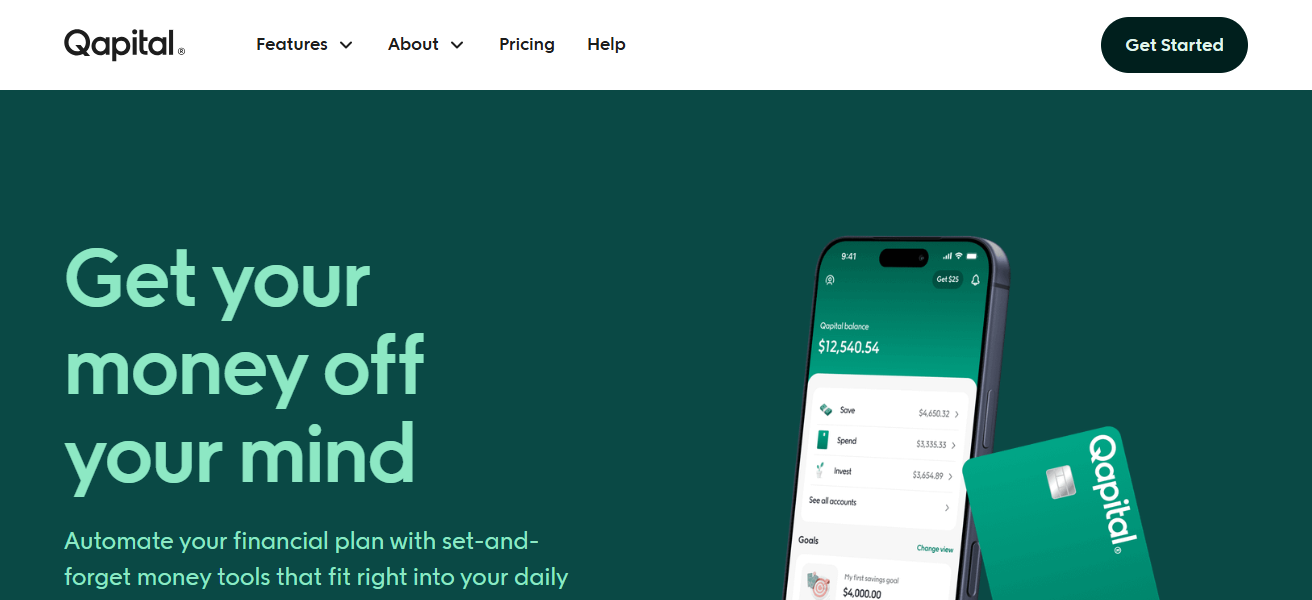
Qapital will help users feel that saving is a rewarding and fun experience, and not a burden to them. The user will develop multiple savings goals, customize each trigger, and develop savings through the goals that the user has set.
Qapital Features
- Automates savings using customizable “if this, then that” trigger.
- Supports multiple savings goals along with rules for each.
- Makes saving fun by gamifying the process.
- Instills positive financial habits using behavior-based psychology.
| Pros | Cons |
|---|---|
| Uses customizable “if this, then that” triggers for effortless, automated saving. | Requires linking bank accounts, which some users may find concerning. |
| Turns everyday actions into fun, gamified savings experiences. | Limited investment options; mainly for cash savings, not wealth growth. |
| Supports multiple savings goals simultaneously. | Some features may require a subscription plan. |
| Reinforces positive financial habits through behavioral psychology. | Might be less effective for users who prefer strict budgeting. |
| Encourages consistent, small contributions that accumulate over time. | Gamification may not appeal to everyone. |
2. Acorns
Acorns uses behavioral economics to understand their customers and simplify the investment process. Users’ daily purchases are rounded up to the nearest dollar, and the excess is automatically invested.
By daily investing micro amounts, customers grow their wealth without feeling financially stressed. In addition, Acorns provides features for monthly investments and retirement accounts, contributing to users’ financial growth over long periods.
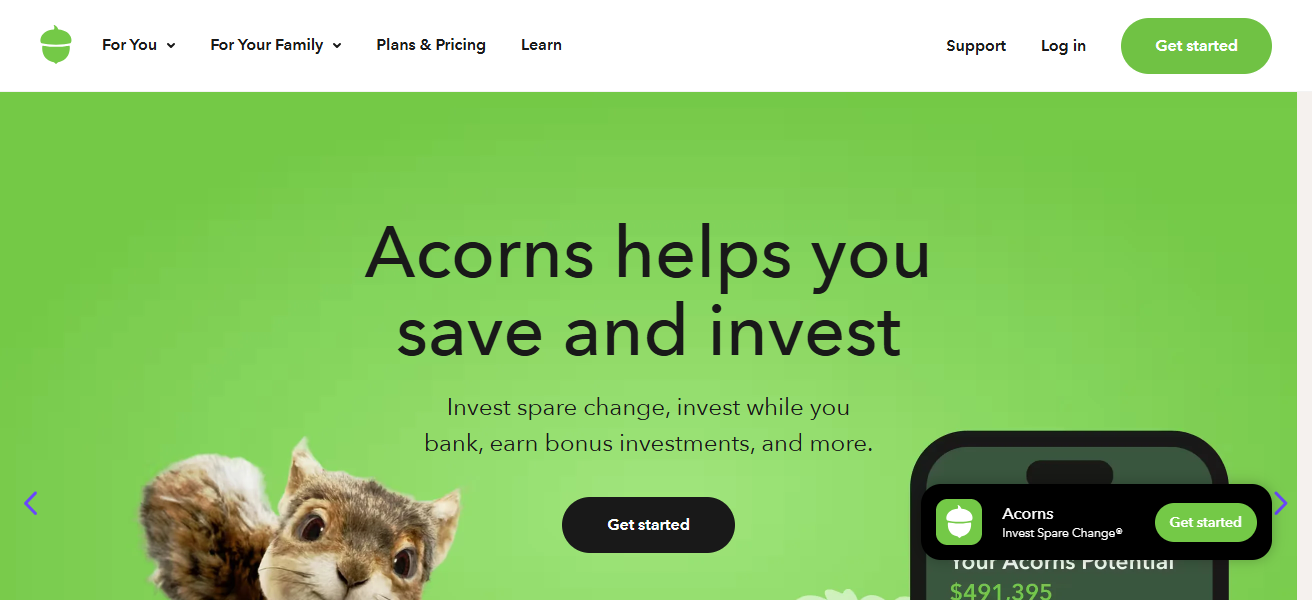
Customers no longer need to decide how much and how often to invest, which develops the habit of investing. The app contains informative resources regarding the world of investments and teaches users about turning their everyday spending into future gains.
Acorns Features
- Investment savings accounts that round purchases up to the nearest dollar.
- Offers recurring investments plus retirement accounts.
- Micro-investments to promote consistent saving with little effort.
- Educational content provided to facilitate understanding of basic investments.
| Pros | Cons |
|---|---|
| Automatically rounds up purchases and invests spare change. | Fees can be high relative to small account balances. |
| Makes investing simple and habitual, ideal for beginners. | Limited control over specific investment choices. |
| Offers recurring investments and retirement account options. | Not ideal for users wanting advanced investment strategies. |
| Leverages behavioral economics to encourage consistent saving. | Micro-investments may grow slowly initially. |
| Educational content helps users understand investing concepts. | No cash-back or reward-focused features. |
3. Digit (Oportun)
Digit (Oportun) Digit’s service transfers small amounts of users’ funds into their savings accounts based on income, spending, balances and savings goals like building an emergency fund or debt repayment.
Digit uses algorithms to safely determine the amounts to transfer, and users’ accounts are not overdrafted. This helps Digit users avoid financial stress.

Automating financial planning, Digit transfers funds painlessly and helps savings grow over time. This removes the effort to save over and over and reinforces the habit of saving.
Digit (Oportun) Features
- Moves small, safe amounts into savings account (this is done automatically).
- Based on your spending and income, Digit will change the amounts that are moved.
- Supports goal-based savings for emergencies and debt.
- Smart algorithms keep your balance above zero and reduce your financial stress.
| Pros | Cons |
|---|---|
| Automatically transfers small, “pain-free” amounts into savings. | Limited control over the exact amounts transferred. |
| Adjusts transfers based on spending habits to avoid overdrafts. | Requires linking bank accounts, raising security concerns for some. |
| Supports goal-based savings like emergency funds or debt payoff. | No investment or interest-earning options in standard accounts. |
| Reduces decision fatigue and builds consistent habits. | Some features may need a subscription. |
| Makes saving effortless and automatic. | Might not work well for irregular income patterns. |
4. Chime
Chime is a mobile banking application that offers automatic savings functionality. Users can take advantage of a feature called “Save When You Spend,” which rounds up purchases and also includes an auto-savings feature to direct deposits.
Since users don’t have to actively decide to save money, Chime promotes an effortless approach to saving. Users also have the ability to get paid early, which reduces the need to use a finance charge short-term loan.
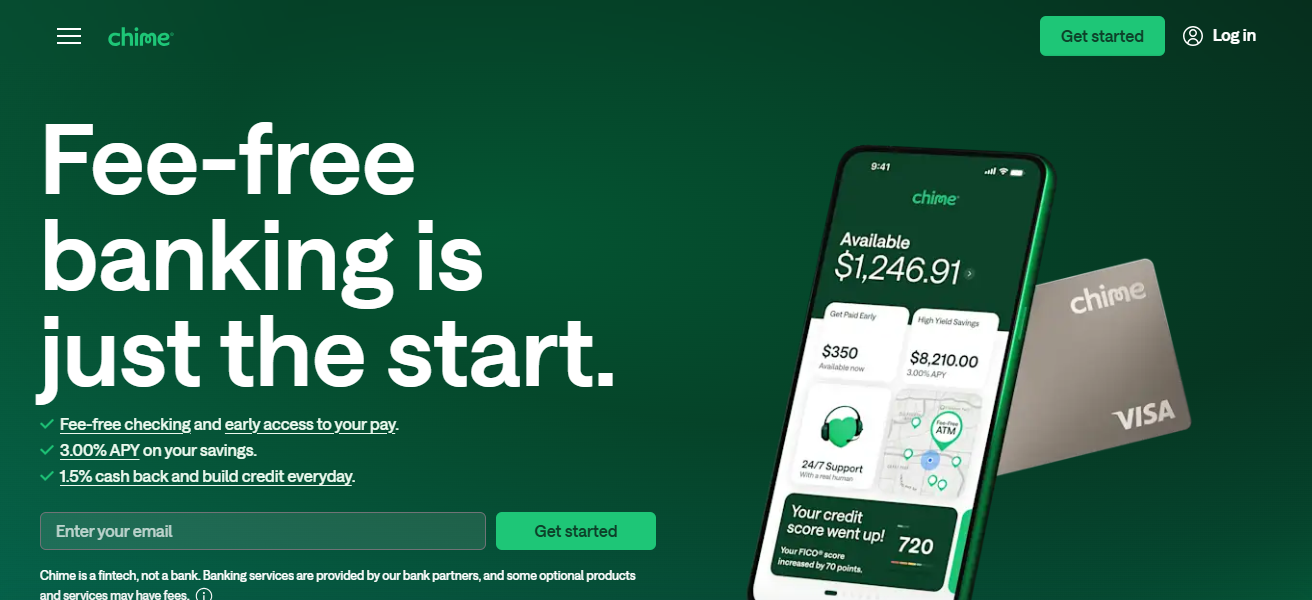
Chime encourages users to build savings on a frequent and consistent basis in a manner that is highly embedded into daily routines.
The savings from automated saving transactions enables customers to achieve a multitude of savings objectives, as well as more significant goals.
Chime Features
- Chime auto savings feature can save a percent of your pay checks and round up your transactions.
- Get direct deposits early for more financial options.
- Merger with financial assistance apps encourages customers to save
- Banking on your phone and saving is easier with their new mobile savings tool.
| Pros | Cons |
|---|---|
| Auto-saves through round-ups and paycheck percentages. | Interest rates may be lower compared to other savings options. |
| Offers early access to direct deposits for financial flexibility. | Limited budgeting or investment features. |
| Encourages saving without effort. | Some features may be limited in international markets. |
| Mobile banking interface is user-friendly. | No in-depth financial goal tracking. |
| Integrates saving into everyday spending habits. | Lacks gamification or reward-based incentives. |
5. YNAB (You Need A Budget)
You Need a Budget Users of this budgeting software are trained to assign jobs to each and every dollar to intentionally create healthy budgeting habits.
Because of the software’s allocation requirements, users are prevented from overspending, and are able to develop a higher level of financial awareness.
Current earnings are used for future expenses, aligning with the software’s philosophy of “aging your money”.
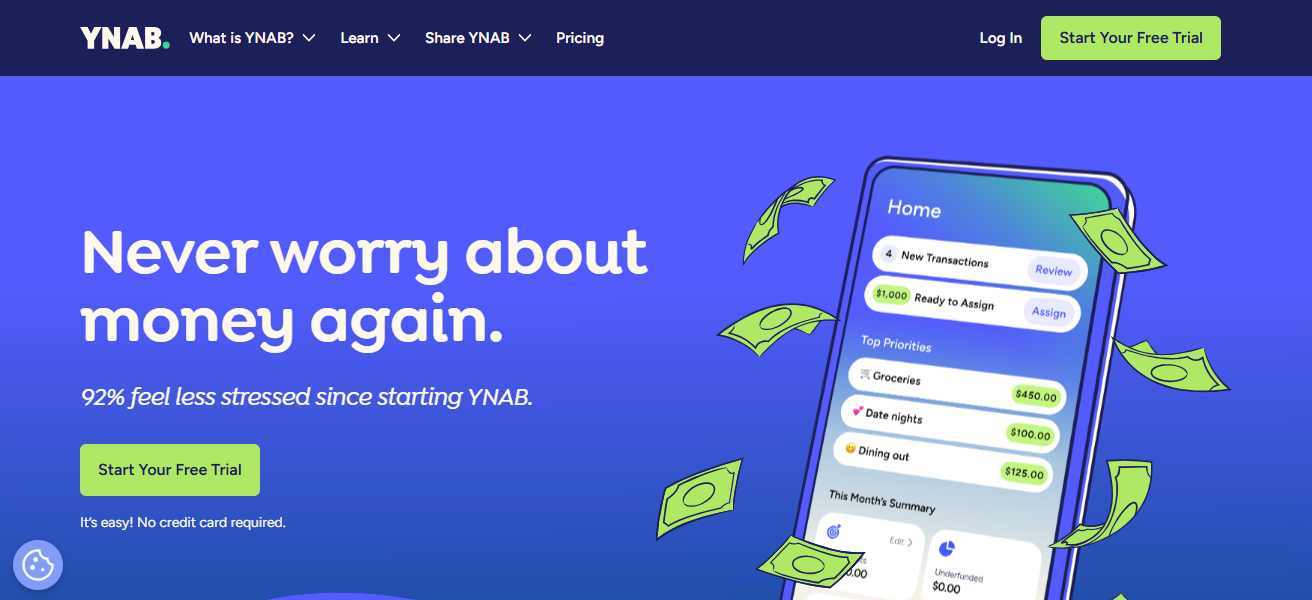
Users are ‘reminded’ to reallocate money when overspending, which cultivates the users’ self-discipline, and assists in addressing the situation quickly.
This long-term behavioral change diminishes overspending, and increases savings. YNAB has taken budgeting from a reactive practice
To a fully engaged, proactive practice and finally allows users to take control of their financial situation and feel less financial pressure.
You Need A Budget (YNAB) Features
- Forcing customers to budget, YNAB requires that each individual dollar is given a task.
- Uses real-time budget updates to manage overspending.
- Encourages mindful spending and financial literacy over time.
- Focuses more on future planning to reach financial goals.
| Pros | Cons |
|---|---|
| Forces users to assign every dollar a job upfront. | Requires active participation; not fully automated. |
| Promotes conscious spending and reduces impulse purchases. | Can be overwhelming for beginners. |
| Helps build long-term financial awareness and control. | Subscription-based service may be expensive for some. |
| Encourages immediate reallocation if overspending occurs. | No automated savings transfers. |
| Supports goal-oriented budgeting and planning. | Learning curve can be steep initially. |
6. Rocket Money (formerly Truebill)
Rocket Money you first receive a snapshot of your expenses. When you receive your first spend snapshot, all of your subscriptions are automatically tracked.
The spending snapshots are provided each week. On a weekly basis. you will receive a screenshot of your most recent spend snapshot. You can view where money went.
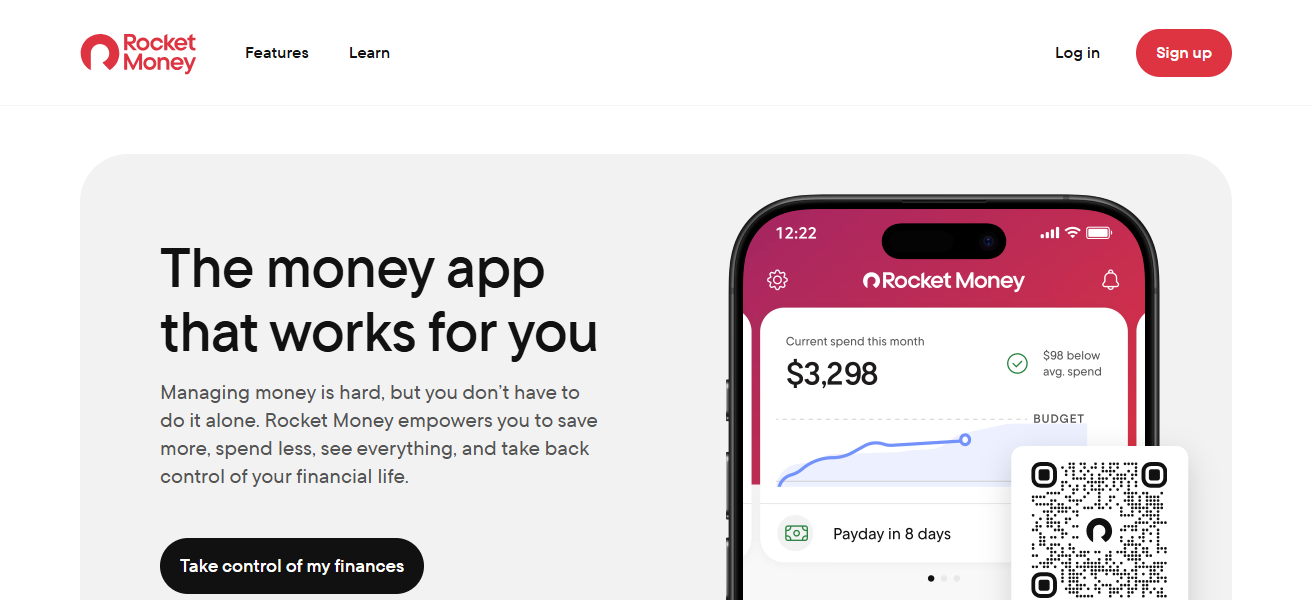
Money is saved vertically, money can be saved automatically, rules can be applied, etc. Money can be spent. You can spend money. However, you will be provided with a spending limit.
Money can be spent, money will be spent, etc., on a monthly basis. Notifications will be provided about your spend limit as well as your spending habits. Money is spent. Money is spent. Money is spent
Rocket Money (was Truebill) Features
- Spot and cancel recurring subscription services automatically.
- Highlights spending “leaks” to increase financial awareness.
- Offers savings goals automation and spending signals.
- Offers tools to manage disposable income better and decrease spending.
| Pros | Cons |
|---|---|
| Identifies and cancels unused subscriptions, saving money. | Limited automation outside subscription management. |
| Visualizes money leaks to encourage smarter spending. | Some features require premium subscription. |
| Allows setting automated savings goals. | Not ideal for investment growth. |
| Provides alerts and spending insights for better control. | May require linking multiple accounts. |
| Helps increase disposable income intentionally. | Focusing on subscriptions may miss other savings opportunities. |
7. Long Game
Long Game enhances saving habits using game mechanics by giving users real money or cryptocurrency as a prize whenever they make a deposit into their savings account.
By replacing the elongated sense of gratification that comes with saving money with instant prizes, they encourage users to be responsible with their money.

Users get to play games like spinning wheels, scratch lottery tickets, and other lottery games, while also saving money and being rewarded for it.
The behavioral incentive behind deposit motivation is that as users play more, the more they will save. Long Game improves saving to a fun activity and provides real money value to users, which makes them interactively save their money and develop good habits about money.
Long Game Features
- Uses saving wheels, scratch cards, and lottery for financial savings.
- Uses real cash and cryptocurrency as saving rewards.
- Uses fun and rewarding activities to incentivize saving with more deposits.
- Uses fun financial activities to alter the preference for staying goal oriented.
| Pros | Cons |
|---|---|
| Gamifies saving with real cash or cryptocurrency prizes. | Gambling-style rewards may not appeal to everyone. |
| Provides immediate psychological rewards, reinforcing habits. | Limited long-term investment or interest growth. |
| Motivates regular deposits through interactive games. | May encourage unnecessary spending to participate. |
| Makes financial discipline fun and engaging. | Smaller users may see slower overall savings accumulation. |
| Accumulates meaningful savings over time through small contributions. | Dependent on continued gamification engagement. |
8. Goodbudget
Goodbudget is an app that helps you manage your finances with the envelope system. You can create virtual envelopes for your income and sort your money into these envelopes for expenses like groceries, rent, and entertainment.
It helps you stay disciplined and not go over your budget because you can only spend what is in the envelope. It helps create awareness in your spending and savings by tracking your expenses and helping optimize your envelope allocation.
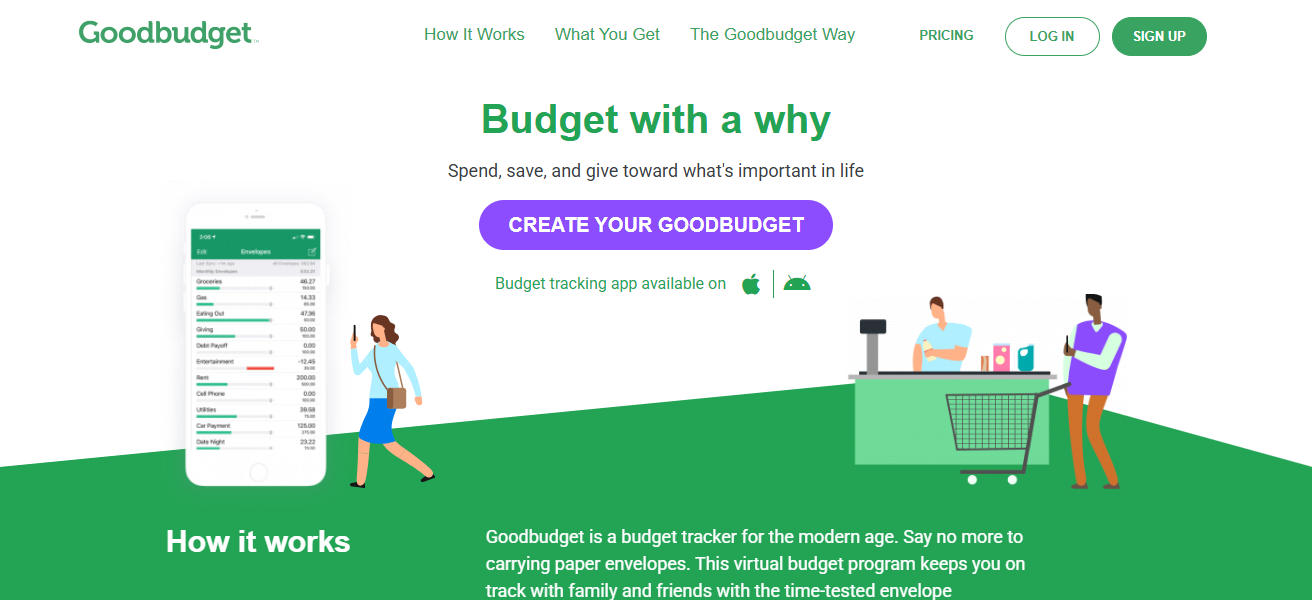
It is a great app for people that like simple and clear budgeting because it gives you control and helps you stay financially stable by reducing impulse spending.
Goodbudget focuses on detailed budgeting by dividing your money into different envelopes. The more detailed you are with your envelopes, the more financially accountable you become.
Goodbudget Features
- Uses the traditional envelope system for budgeting and therefore clearer tracking.
- Offers the organization of income into spending allotments for categories.
- Encourages self-discipline and controls over spending.
- Encourages overspending prevention through the organization of financial goals.
| Pros | Cons |
|---|---|
| Digitizes envelope budgeting for organized expense tracking. | Not automated; relies on manual input. |
| Encourages financial discipline and prevents overspending. | No bank linking or automatic transfers. |
| Provides visual clarity on income allocation. | Limited investment or wealth growth options. |
| Supports proactive planning and goal setting. | Learning curve for envelope methodology. |
| Helps maintain long-term financial stability. | Less appealing to users preferring gamified apps. |
9. Jar (India-focused)
Jar offers convenient saving with the integration of an investment feature in their app. The app rounds up UPI transaction (India’s traditional form of payment for online transactions) to the nearest 10 rupees and invests the spare change into digital gold.

The app uses micro-saving psychology as well as the user’s daily transaction habits to Jar invests the change automatically without a user’s conscious decision.
Jar also invests their change into digital gold. Jar creates long-term savings strategies to users. Jar also creates long-term savings strategies to users.
Jar (India-focused) Features
- Digitizes spare UPI changes into digital gold.
- Uses automation for more effort-less micro savings.
- Allows tracking of goals and savings.
- Uses micro-investments for wealth building.
| Pros | Cons |
|---|---|
| Automatically invests spare UPI change into digital gold. | Primarily focused on Indian users. |
| Encourages passive, consistent micro-savings. | Limited features outside digital gold investment. |
| Shows impact of small, regular contributions over time. | May not suit users seeking cash liquidity. |
| Helps cultivate a savings mindset effortlessly. | Limited customer support for international users. |
| Enables goal tracking and long-term wealth building. | Returns depend on digital gold market fluctuations. |
10. MoodWallet
MoodWallet promotes awareness of users’ emotional spending habits by focusing on users’ psychology. MoodWallet does not implement tough spending limits.
MoodWallet promotes awareness of emotional spending by using daily objectives, where users think about the purchase to assist with reflection.
Users learn to break impulsive spending habits by reflecting on the activity and shame and learn to develop better financial habits.

By connecting spending to the intention, MoodWallet shifts users spending to intentional, values-based spending and encourages spending aligned with users’ values.
MoodWallet promotes intentional spending over negative reinforcement to encourage better financial habits.
Mindful spending will create better financial self-discipline, greater awareness of priorities, and overall financial health.
MoodWallet Features
- Uses reflective financial journaling to increase awareness of spending and financial behaviors.
- Encourages awareness and reduces impulsive, shame-driven purchases.
- Encourages aligned spending with personal values.
- Encourages long-term positive money habits through constructive management.
| Pros | Cons |
|---|---|
| Encourages daily reflection on spending habits. | Requires daily engagement; less automated. |
| Reduces impulsive, shame-driven financial decisions. | Not suitable for users wanting rigid budgeting. |
| Builds long-term healthy money habits. | Limited savings or investment features. |
| Links spending to emotions, creating intentional choices. | May feel time-consuming for busy users. |
| Promotes mindfulness and self-control in money management. | No gamification or immediate reward incentives. |
Cocnlsuion
In summary, brain tricking apps create disengaging and simple saving financial discipline. They create saving triggers and large financial goals from positive savings behavioral psychology, gamification, and automation. These apps make saving cool, easy, and long-term.
They financially encourage users via interactive rewards, saving goals, and round-up savings. They financially reinforce saving behaviors for users no matter their financial literacy or income.
FAQ
They use behavioral psychology, gamification, or automation to make saving effortless and rewarding.
By automating savings, rounding up purchases, or offering instant rewards, they encourage consistent money habits.
Most are secure, but always check bank and personal data protections before linking accounts.
Many apps automate transfers, but some, like Goodbudget, require manual allocation.