With KAST Card as a case study
- Stablecoin Saving VS. Stablecoin Spending
- Why Stablecoins Became a Real Savings Tool
- Why Spending Matters Just as Much as Saving
- What Actually Matters in 2026: Simplicity, Clarity, Control
- How to Decide How Much to Keep as Stablecoins
- Three Habits that Make this Work Long-Term
- More than Spending: Why People Choose Crypto Cards in 2026
- A Quick Reality Check: Fees Still Exist, so Look for Transparency
- Closing thought
Stablecoins are popular in 2026 for a simple reason: they help people keep their money stable without worrying about market ups and downs.
But when it comes to actually using stablecoins in everyday life, the real question is:
Do you keep stablecoins as savings, or do you actually spend them?
Most people do both. What really matters is building a routine that feels simple, predictable, and easy for you to stick with.
Stablecoin Saving VS. Stablecoin Spending
Stablecoin saving means you keep your money in stablecoins to keep its value steady. People do this to set money aside for future expenses, avoid local currency changes, or handle money from different countries without constantly converting it.
Stablecoin spending means using that same balance to pay for things in real life. In 2026, this usually happens through cards, because most places accept cards – not direct stablecoin payments.
So the “simple setup” often looks like this:
- Keep stablecoins as your base balance
- Pay like normal (tap, swipe, or enter card details)
- The store gets paid in regular money through the card system, while the stablecoin part is handled in the background.
In other words, you are not trying to change how the world accepts payments. You are simply changing what you hold before you spend.
Why Stablecoins Became a Real Savings Tool
Stablecoins became popular as a savings layer because they solve everyday problems:
- Stay stable without dealing with market ups and downs, while still using digital finance.
- Faster movement: Transfers can be quicker than international banking options.
- 24/7 Usability: No weekends, no “bank hours,” no waiting to move value.
For many people, stablecoins are not a trading strategy. They’re simply a clearer way to keep your money stable when local currency is unpredictable, your income comes from different countries, or banking access is limited.
Why Spending Matters Just as Much as Saving
Saving only matters if you can actually use your money when you need it. That’s where stablecoin spending makes the difference.
In 2026, people are using stablecoins for:
- Everyday purchases (groceries, rides, restaurants)
- Subscriptions and online shopping
- Travel bookings and work expenses
- Sending money instantly to friends or teammates
The big shift is that spending now feels normal.
When stablecoins are connected to card payments, checkout becomes simple:
tap → approved → done.
No need to search for merchants that accept crypto directly. No need to manually swap assets before every small purchase.
What Actually Matters in 2026: Simplicity, Clarity, Control
Stablecoins feel useful when three things are true:
- Simplicity: You can keep your money and pay for things without switching between multiple apps.
- Clarity: You can understand fees and see what is happening when you spend.
- Control: You know how your balance is used at checkout, instead of being surprised by hidden costs.
This is why people increasingly prefer “one system” setups: one place to hold money, one way to spend it, and one app to track everything.
A “one system” approach: keep funds stable, spend normally
A clean way to handle stablecoin saving and spending is to use one provider for both.
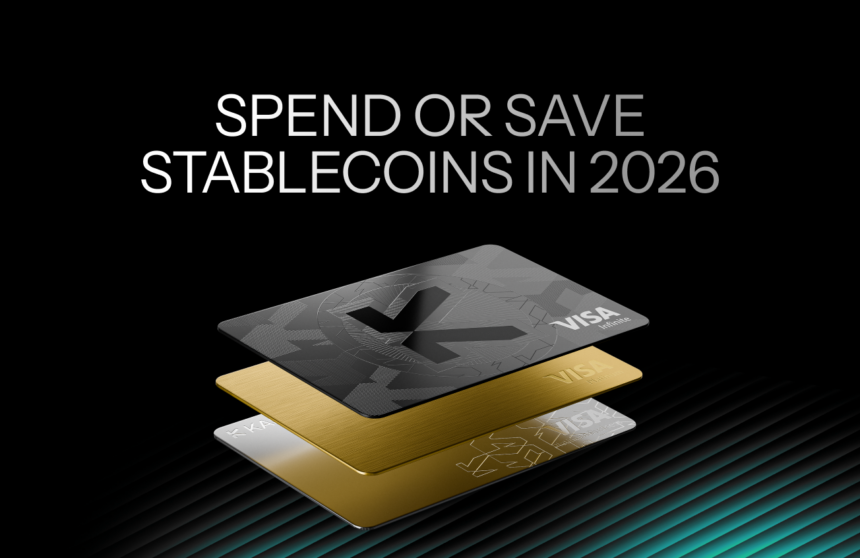
KAST is built around an account-first model. You can keep your balance in one card like KAST, then use it anywhere Visa is accepted. From the store perspective, it is a normal card payment. From the user’s perspective, it feels like any other checkout: swipe, tap, or pay online.
This matters because it removes a common problem: having to think about conversions every time you want to pay. Instead of planning exchanges, you can just focus on your budget and spending.
A simple real-life example: earn in stablecoins, spend just like with a regular card
Imagine you are a contractor getting paid in stablecoins. Your expenses are not “twice a month.” They happen daily: transport, food, subscriptions, and small surprises.
A routine that works for many people looks like this:
- Keep incoming funds in stablecoins so value stays predictable.
- Maintain a buffer for the next week or two of expenses.
- Use the card for daily purchases anywhere Visa is accepted.
The benefit is boring in a good way: you stop thinking about conversions at every checkout. You keep value stable, and you still spend like normal.
How to Decide How Much to Keep as Stablecoins
If you want a simple rule that works for most people, think in terms of time:
- Keep stablecoins for money you do not need today.
- This is your money set aside for planning and upcoming needs.
- Make everyday spending simple and smooth.
Use a setup that lets you pay normally while your stablecoin balance stays easy to manage.
The goal is not to “maximize” something. The goal is to reduce stress and reduce the number of decisions you have to make.
Three Habits that Make this Work Long-Term
If you want stablecoin saving and spending to feel like a real money system (not a hobby), three habits help:
- Separate “buffer money” from “daily money.” Even if it’s all in one app, just think of it as money for this week and money for later.
- Track fees the same way you would with a traditional card. That means knowing what happens with ATM withdrawals and what changes when you spend in a non-USD currency.
- Treat stablecoins like digital cash. Use strong security, enable alerts, and do not keep long-term holdings in the same place you use for daily spending.
More than Spending: Why People Choose Crypto Cards in 2026
In 2026, many crypto cards do more than just help people spend. They also add benefits that make everyday payments more rewarding.
Cashback is one of the most popular bonuses because it is simple: spend normally, get something back.
With KAST, users can earn up to 3% cashback, depending on card type.
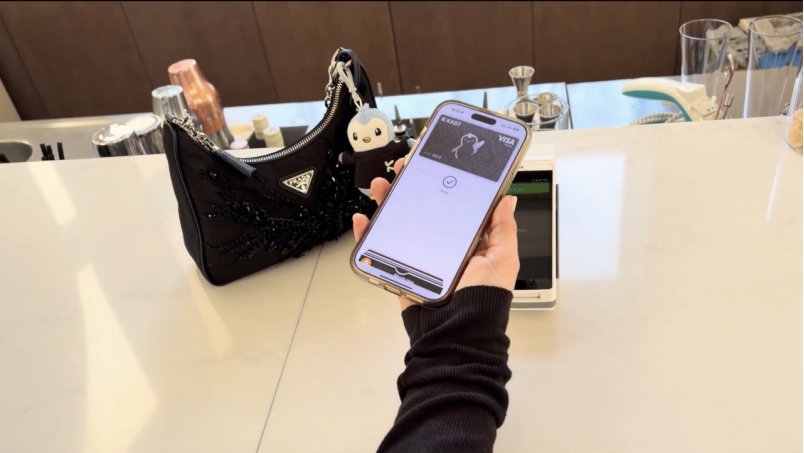
Another feature that matters in real life is phone wallet support. When a card connects to Apple Pay or Google Pay, the payment experience becomes even simpler: you can pay contactless with your phone in seconds.
That matters because “stablecoin spending” only becomes real when it works everywhere, including quick purchases, travel moments, and daily routines.
A Quick Reality Check: Fees Still Exist, so Look for Transparency
Stablecoins make money habits easier, but it’s still smart to pay attention to fees and limits. Before you commit to any setup, check:
- ATM fees (if you plan to withdraw cash)
- FX fees (if you spend in non-USD currencies)
- how the balance is debited at checkout (conversion rate, any small-transaction fee, and what happens if a payment is declined)
If you’re using a card-based setup like KAST, the same rule applies: don’t assume “zero fees.” Look at the numbers before you rely on it day-to-day.
Here’s what that can look like (example fee schedule):
- Card spend in USD: 0%
- Card spend in non-USD: 0.5%–1.75% FX fee (varies)
- Small non-USD transaction fee: $0.10 for transactions under $25
- Declined card transaction (insufficient balance): $0.50
- ATM withdrawal (USD): $3 + 2% of the withdrawal amount
- ATM withdrawal (non-USD): $3 + 2% + FX fee (plus any local ATM operator surcharge)
- On-chain stablecoin withdrawals: network fee + 0.1% (varies by chain)
A good platform makes this clear up front, so you can plan around the real costs and avoid surprises at the worst time (like while traveling).
Closing thought
In 2026, the real shift is not that stablecoins exist. It is that stablecoins finally fit into normal life. People want stable balances they can trust, payments that work in the real world, and a setup that is simple enough to stick with.
If you want stablecoins that actually fit real life, the best starting point is a setup that makes saving and spending feel like one system.
Explore KAST Card Here