
This article is about The Future of Credit Scores: Global Credit Scoring Models Explained. The world is changing. So is how we evaluate credit risk.
The integration of ai, alternative data, and global integration are changing how we assess and score credit risk.
These changes lead to more precise, inclusive and flexible credit assessments. Helping people and businesses around the world to assess trust and finance.
Overview
In this digital economy, trust scores are most important. Technology is changing the world, and trust scores influence a person’s ability to secure a mortgage, get a loan, rent a property, or secure a credit card.
However, credit scoring is being reassessed old school models. There is a greater need for smarter and more inclusive models than the old school credit scores.
There is a greater need for more sophisticated models to score credit. The models are to be agnostic and reflect the credit consumer’s behavior.
Understanding Traditional Credit Scoring
Initially, credit scoring was designed to measure risk in lending to consumers. FICO scores, for example, use scoring models that encompass several variables, including payment history, amounts owed, length of credit history, types of credit, and new credit.
Customers are assigned scores that range from 300 to 850, and those who have scores that are closer to 850 have a lower risk than those who have a score of 300.

However useful these models are in predicting the risk of default, they have their limitations. For one, traditional credit scoring models leave out credit invisible consumers or users who have thin credit files.
This is especially true for young users, new entrants immigrants, and economically developing nations.
In addition, the use of past financial records may not be an accurate reflection of a person’s current financial behavior or in predicting financial behavior to come.
Global Variations in Credit Scoring Models
Every region in the world has its own credit scoring systems, shaped by the unique financial activities, regulations, and technology of that area, such as in the following examples of the U.S, UK, China, and India.
United States: FICO and VantageScore are the two pioneers in the industry, having developed systems tailored to the banking sector and their credit card usage.
United Kingdom: Credit suppliers are Experian, Equifax, and TransUnion, and the scoring of credit-related behaviors and the scores are influenced by the transcription of gradual borrowing and other public documents.
China: Sesame Credit is a system that combines social behavioral data, such as the timeliness of payments and social activities with finances, a system that in the social domain is controversial, but is a pioneer in the technology.
India: CIBIL, Experian India, and Equifax India compute credit scores focusing mainly on repayment comportment, credit utilization and financial discipline that assist a lender in risk aversion within the rapidly growing credit market.
These offer a different problem, a globalized world has different credit scoring systems, an economy needs those systems to function seamless.
The Rise of Alternative Data and AI in Credit Scoring

The most important change in credit scoring is the use of alternative data. Traditionally, lenders looked only at a potential borrower’s
Credit data and credit reports, and now lenders review data such as utility payments, rental payments, recent employment, recent education credentials, recent and social media activity, as well as patterns of smartphone usage.
This data allows banking institutions to provide loans to individuals who otherwise may have been considered “unscoreables” because they have no credit data or credit report history.
Machine learning and artificial intelligence are the most important factors in this change. Credit models based on artificial intelligence can analyze data and find patterns that no human can and use those patterns to predict behaviors such as repayment that traditional models wouldn’t.
For example, a machine learning model may identify the fact that a person who has no credit history is likely to be financially responsible because they reliably pay a cell phone bill every month.
Challenges and Ethical Considerations
The promise of technology in this field, while having potential to be inclusive is also controversial. It is critical that alternative data models preserve the privacy of potential borrowers, avoid bias, and be transparent.
For example, assessing social media activity to determine credit risk might be considered unfair or similarly assessing borrower’s social media activity to determine credit risk is likely to be considered unfair or similarly
Social media activity in assessing a borrower’s social media activity in order to assess credit risk is likely to be considered unfair. Most countries have begun to devise regulations around the use of AI in credit scoring, but the world still has a long way to go in AI harmonization.
Envisioning Tomorrow: The Future of Credit Scoring

The future of credit scoring is set to be even more inclusive, flexible, and interconnected. This will look like the following;
Credit Scoring Portability: Systems that allow individuals to move their credit records with them to other countries.
Real-Time Credit Scoring: AI models that score individuals’ credit in real time based on their most recent financial behaviors.
Credit Accessibility Through Alternative Data: Reduced financial exclusion in credit underserved areas.
Better Decision Making with Analytics: Lender’s informed choices will reduce financial loss.
All in all, the credit scoring system will move away from being static and universal to being more dynamic and integrated with technology, especially AI.
With alternative data and collaboration across borders, credit scoring will be more inclusive and more accurate that will improve the financial relationships of individuals and organizations across the world.
Who benefits from modern credit scoring models?
Young adults, lower income, immigrants, and people with little or no traditional credit history are usually left out of the Financial Services Industry.
New credit scoring systems, based on analytical AI, and alternative data, are starting to make it possible to offer these people loans, credit cards, and a whole range of financial services.
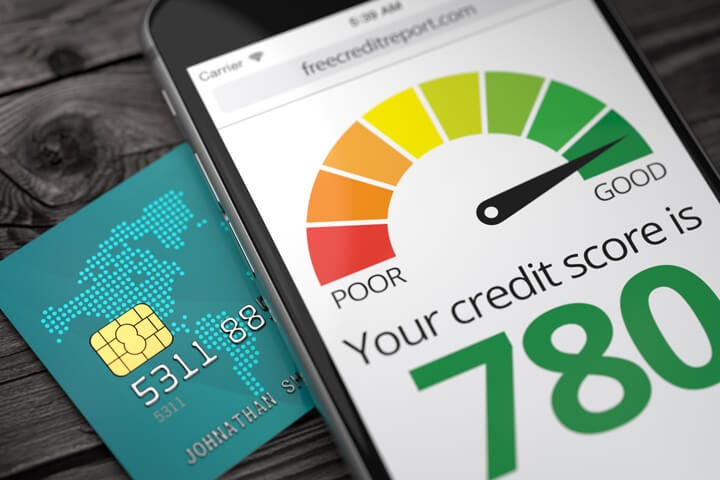
These systems analyze payment history, employment digital history to make it possible to extend diverse financial services to these financially excluded people, enabling them to build a credit reputation and become active participants in the world economy.
Conclusion
To sum up, the future of credit scoring is heading in the direction of inclusivity, accuracy, and global reach. With the help of AI, alternative datasets, and real-time analytics, the assessment of financial accessibility will be available to even more people.
As the world’s credit systems grow more interconnected and intelligent, the potential for accurate evaluations of financial trust will be greater around the globe. Smarter systems will ensure fairness in the assessment of credit.
FAQ
A credit score is a numerical representation of an individual’s creditworthiness based on financial behavior, such as loan repayment and credit usage.
They influence loan approvals, interest rates, rental agreements, and even job opportunities in some countries.
Models vary by country, reflecting local financial systems, regulations, and data availability. For example, the US uses FICO, while China incorporates social credit metrics.
Alternative data includes utility payments, rental history, employment records, and even digital behavior, helping assess people with limited traditional credit history.
AI analyzes large datasets to predict repayment behavior more accurately and dynamically, updating scores in real time.