
This article focuses on the Top Revenue Based Financing Options For Scaling SaaS Companies. As SaaS companies expand, flexible financing options that support growth while preserving equity become critical.
Providing founders-friendly financing solutions with the flexibility of structuring repayments based on growth, Revenue Based Financing becomes a solid option.
In this article, we will discuss the financing platforms that enable SaaS founders to grow and maintain their ecosystem.
Key Poinst & Top Revenue-Based Financing Options for Scaling SaaS Companies
Capchase Provides upfront capital against predictable SaaS revenues, enabling growth without equity dilution or rigid repayment schedules.
Pipe Transforms recurring revenue streams into tradable assets, offering instant liquidity for scaling SaaS operations effectively.
Clearco Offers non-dilutive funding tied to future revenues, supporting SaaS marketing, product expansion, and operational scaling.
Founderpath Specializes in SaaS financing, advancing capital based on monthly recurring revenue, preserving founder ownership and control.
Ratio Integrates embedded financing into SaaS billing, accelerating cash flow while offering flexible payment terms to customers.
Uncapped Provides quick, revenue-based loans without personal guarantees, ideal for SaaS founders seeking fast, scalable funding.
Lighter Capital Delivers growth capital through revenue-based repayment, aligning funding with SaaS performance and minimizing founder risk.
Bigfoot Capital Supports SaaS companies with tailored financing solutions, linking repayments directly to recurring subscription revenues.
Earnest Capital Invests via revenue-share agreements, empowering SaaS founders to grow sustainably without traditional venture capital pressures.
RevUp Capital Focuses on early-stage SaaS businesses, offering flexible revenue-based financing to accelerate product-market fit achievement.
Top Revenue-Based Financing Options for Scaling SaaS Companies
1. Capchase
Capchase stands out among revenue-based financing companies tailored to SaaS. Simplifying revenue-based financing, Capchase enables founders to receive capital to scale based on dependable recurring revenue.
Upfront subscription revenue financing with Capchase supports investment into growth initiatives, such as product, marketing, and team expansion, as financially constricted businesses invest.
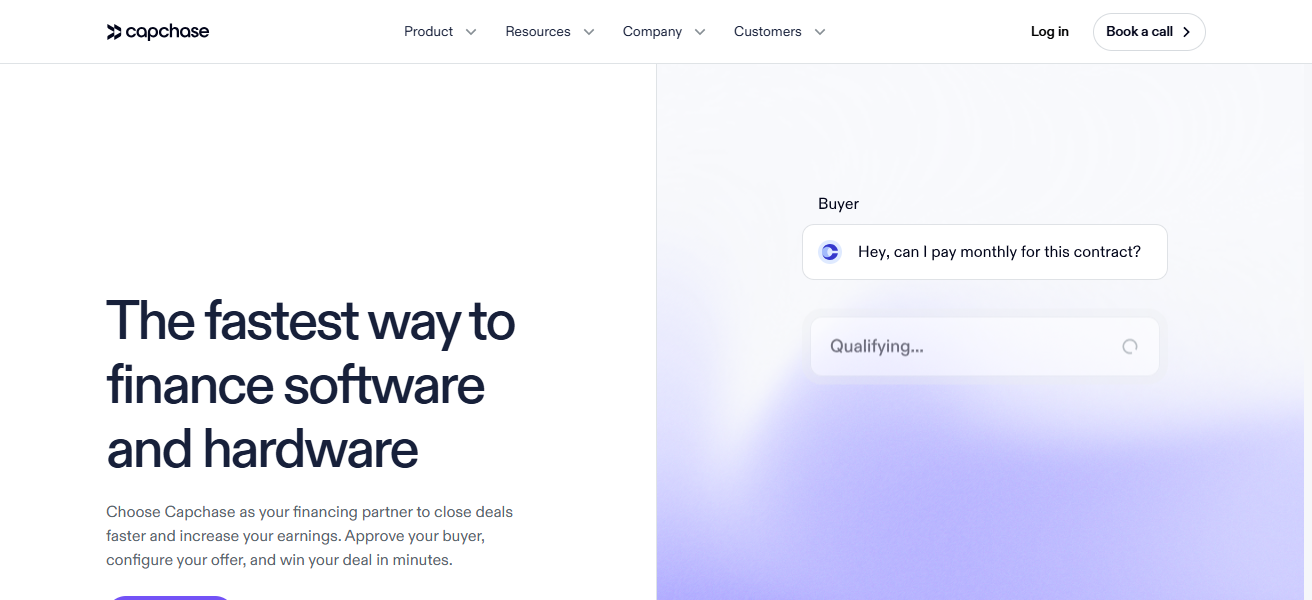
Capchase’s flexible repayment plans based on company performance eliminates the stress financing with traditional lenders brings.
SaaS founders accelerate growth with Capchase while keeping company ownership. For SaaS companies with impressive MRR and poor cash flow, Capchase alleviates the stress of VC financing to growth.
Capchase Features
- Offers upfront funding based on predictable recurring revenue from SaaS.
- Provides repayment plans based on company performance.
- Supports growth strategies such as scaling marketing, hiring, and product building.
- Keeps founder equity safe from dilution.
| Pros | Cons |
|---|---|
| Provides upfront capital based on predictable SaaS revenues. | Requires strong recurring revenue to qualify. |
| Flexible repayment aligned with company performance. | Limited support for very early-stage startups. |
| Preserves founder ownership by avoiding equity dilution. | May not suit companies with irregular cash flow. |
| Enables investment in growth initiatives quickly. | Repayment obligations still reduce future cash inflows. |
2. Pipe
Pipe turns recurring revenue streams into tradable assets, giving SaaS companies instant liquidity. Instead of waiting months for subscription payments, founders can sell their contracts for revenue predictability to investors and get instant cash.
This model gives flexibility by allowing companies to reallocate resources to scale operations, marketing, or product improvement.

Pipe creates a direct marketplace for SaaS companies and institutional investors, enabling competitive pricing and streamlined payment flows.
Pipe converts future revenue into working capital, lessening the need for equity or traditional debt funding.
This is especially important for SaaS companies with subscription revenue, as it enables them to increase their growth rate while maintaining control and financial autonomy.
Pipe Features
- Recurring revenue streams are transformed into assets for liquidity.
- Provides instant cash flow through the sale of secured future revenue contracts to investors.
- Provides competitive and transparent marketplace commoditized streams.
- Provides financial flexibility and rapid growth.
| Pros | Cons |
|---|---|
| Converts recurring revenues into tradable assets for liquidity. | Works best for companies with stable subscription contracts. |
| Provides instant cash flow without equity dilution. | Marketplace rates may vary depending on investor demand. |
| Transparent transactions with institutional investors. | Less suitable for businesses with unpredictable revenues. |
| Enables faster scaling and reinvestment. | Requires strong revenue predictability for favorable terms. |
3. Clearco
Clearco’s funding model makes it a good fit for SaaS founders as it consists of future revenue funding that is not dilutive.
While VC funds make you give up equity, Clearco funds based on revenue. The funding is typically used for growing the business, acquiring customers, or marketing.
Since the model is data-driven, Clearco ensures fairness by analyzing the business data prior to the funding.
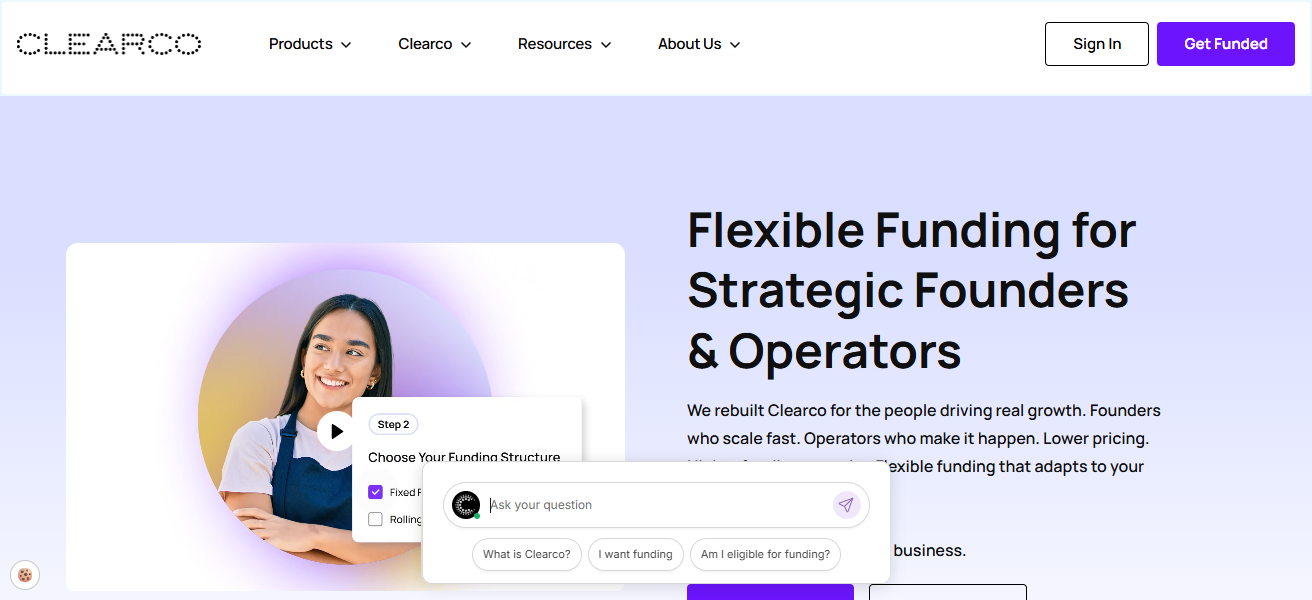
The repayment is generally a percentage of future revenue, so as the business grows, so does the revenue.
SaaS businesses appreciate the stress of paying back funds that don’t fit the business cycle. Clearco helps founders grow more, with a more focused approach to profitability and less dilution and sell pressure.
Clearco Features
- Future-revenue-based funding that is non-dilutive.
- Financing is offered at an equitable and customized basis due to the data-driven model.
- Relatively, the revenue repayment is structured as a responsive percentage.
- Marketing, customer acquisition, and scaling operations are supported.
| Pros | Cons |
|---|---|
| Non-dilutive funding tied to future revenues. | Repayment percentage may feel high during slower months. |
| Data-driven approach ensures fair financing terms. | Focuses heavily on marketing spend, less flexible for other uses. |
| Flexible repayment adjusts with performance. | Requires strong revenue metrics for approval. |
| Supports customer acquisition and scaling operations. | May not suit companies needing long-term capital stability. |
4. Founderpath
Founderpath finances SaaS companies by providing capital based on monthly recurring revenue. They help founders obtain cash flow without losing equity or board control.
Founderpath analyzes churn, growth, and MRR to customize each funding offer. SaaS founders repay their funding based on revenue, allowing them to spend more on product.
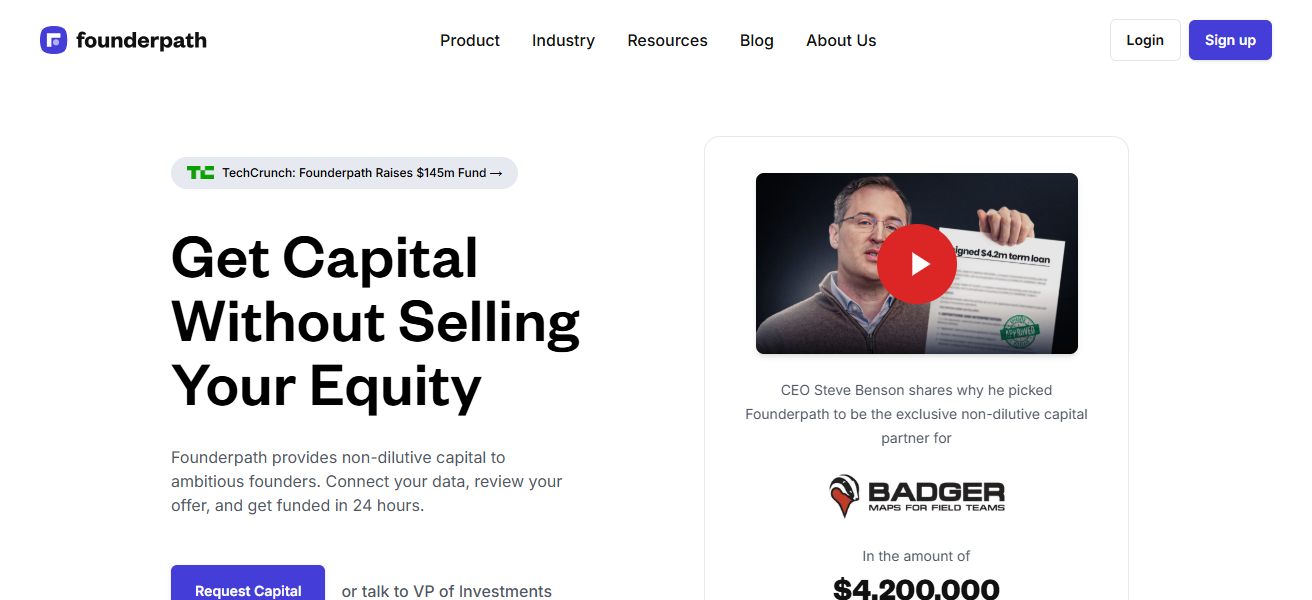
Then, it onboards more customers and supports them, maintaining their cash. Founderpath helps growing SaaS companies obtain funding without traditional venture capital. It allows them to scale while keeping control and ownership.
Founderpath Features
- Based on MRR (monthly recurring revenue), capital is advanced.
- Funds are quickly accessible, and equity and board control are not lost.
- Eligibility is determined from SaaS metrics such as growth rate and churn.
- Revenue growth is the basis for repayment.
| Pros | Cons |
|---|---|
| Advances capital based on monthly recurring revenue. | Limited to SaaS companies with measurable MRR. |
| Quick access to funds without equity loss. | Smaller funding amounts compared to venture capital. |
| Tailored solutions based on SaaS metrics. | Repayment obligations reduce future revenue flexibility. |
| Founder-friendly model preserving independence. | Not ideal for businesses with high churn rates. |
5. Ratio
Ratio incorporates embedded financing into SaaS billing systems for cash flow acceleration and flexible customer payment terms.
SaaS companies gain upfront revenue, while clients have the option to pay over time. By minimizing customer acquisition friction, Ratio enhances deal-closing velocity and user base expansion.

Its financing model complements SaaS growth, maintaining cash flow stability and customer satisfaction.
Ratio is especially beneficial for enterprises, as it provides longer payment terms. It gives SaaS founders the confidence to scale operations while addressing liquidity and customer flexibility.
Ratio Features
- Financing is embedded into SaaS billing systems.
- Provides customers with flexible payment options to reduce upfront revenue.
- Minimizes friction in customer acquisition and deal closure.
- Supports customer satisfaction and cash flow stability.
| Pros | Cons |
|---|---|
| Embeds financing directly into SaaS billing systems. | Requires integration into billing infrastructure. |
| Provides upfront revenue while offering flexible customer terms. | May complicate billing processes for smaller companies. |
| Helps close deals faster by reducing friction. | Best suited for enterprise-focused SaaS businesses. |
| Balances liquidity needs with customer satisfaction. | Limited applicability for consumer-focused SaaS models. |
6. Uncapped
Uncapped offers fast revenue-based loans that don’t require personal guarantees or equity dilution. SaaS companies can receive funding due to high revenue predictability, which works best for high-growth companies.
The platform is transparent with its funding, along with its flexible repayment terms that are tied to revenue performance. This means that during slow revenue months, companies can have flexible payment options.
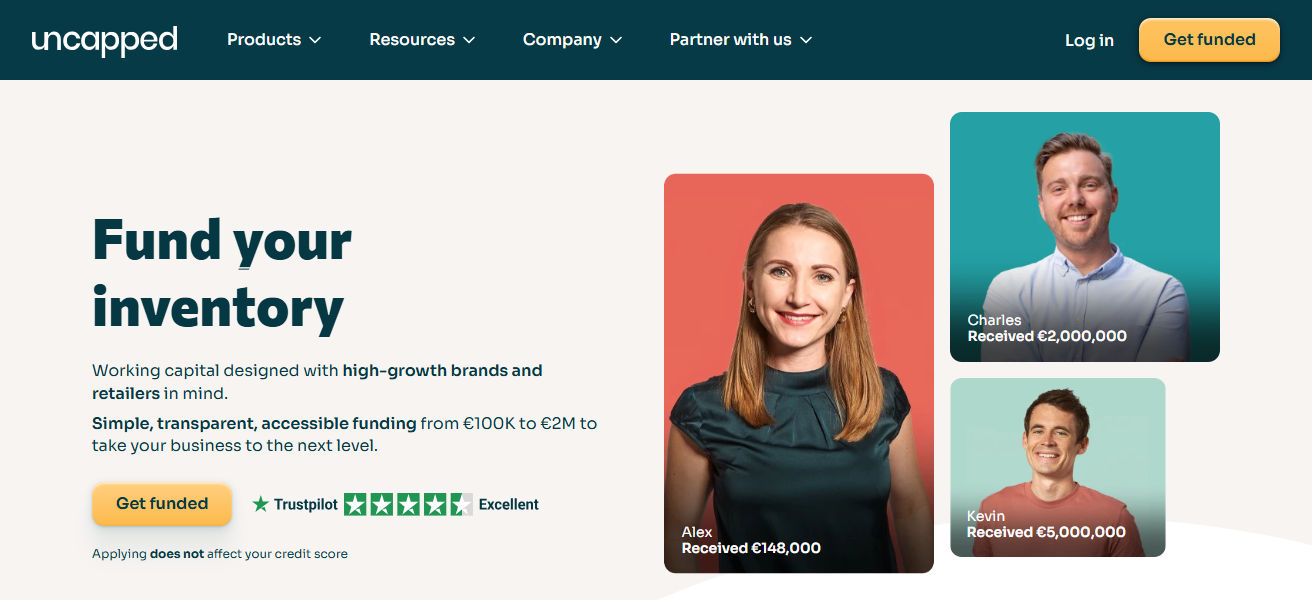
Funding from Uncapped is commonly used for hiring, product expansions, or marketing campaigns. Its funding is also appealing to founders since they can receive immediate capital, without having to go through long approval processes.
Uncapped finances the repayment terms to lower the company’s financial risk to grow. Uncapped offers SaaS founders the ability to maintain ownership while also having the funding to grow the company.
Uncapped Features
- Offers fast loans with no personal guarantees and no equity dilution.
- Flexibility is given with revenue-related repayments.
- Quick decisions with straightforward conditions.
- Great for supporting advertising, recruitment, and product development.
| Pros | Cons |
|---|---|
| Quick loans without personal guarantees or equity dilution. | Funding limited to companies with predictable revenues. |
| Transparent terms and fast approval process. | Repayment obligations tied to revenue may strain cash flow. |
| Flexible repayment aligned with performance. | Not ideal for very early-stage startups. |
| Supports marketing, hiring, and product expansion. | Loan sizes may be smaller than venture capital rounds. |
7. Lighter Capital
Lighter Capital provides funding through revenue-based repayment, linking financing with performance of SaaS companies.
Business owners get money upfront and pay back a portion of their revenue each month, which reduces financial stress and creates flexibility.
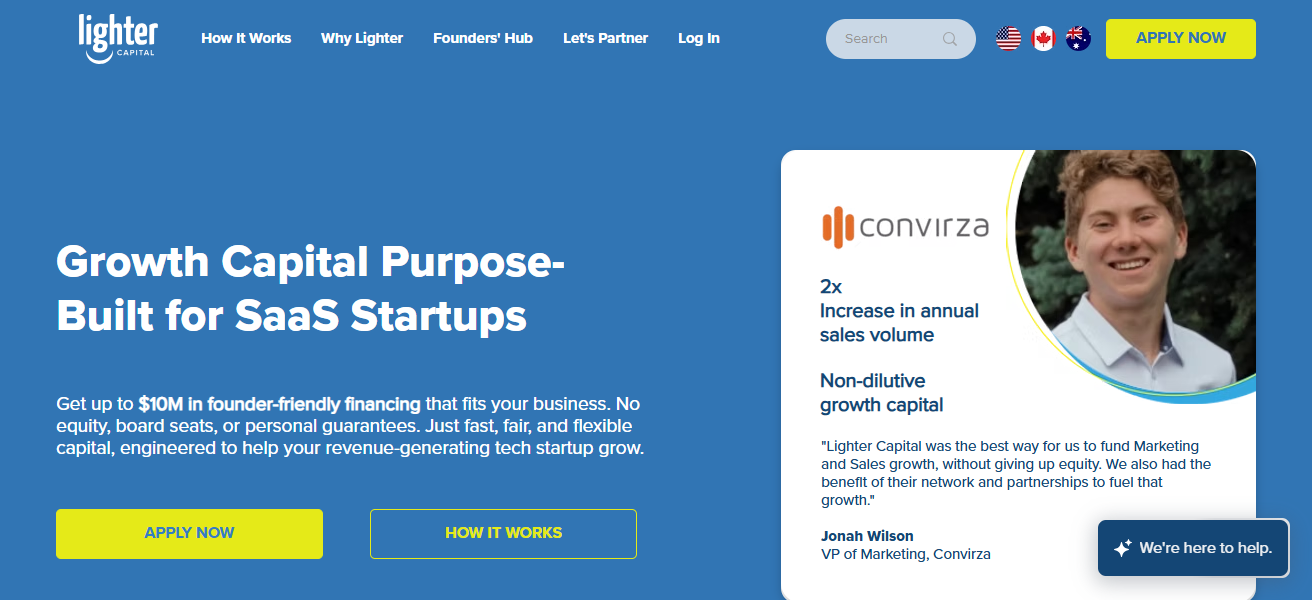
This model is less risky than regular loans since less money is owed during slower periods. Lighter Capital is great for SaaS companies with consistent recurring revenue but no venture capital.
Funding is available for operational expansion, marketing, and product development. Keeping equity allows founders to focus on growth and keep control.
Lighter Capital provides a founder-centric model which allows growth on their own terms without traditional debt financing.
Lighter Capital Features
- Furnishes growth capital that is also paid back via revenue.
- Paybacks vary with revenue earned each month.
- Risk is decreased compared to standard loans.
- Maintains founder equity and allows for responsible growth.
| Pros | Cons |
|---|---|
| Revenue-based repayment adjusts with monthly performance. | Requires consistent recurring revenue for eligibility. |
| Minimizes risk compared to traditional loans. | Funding amounts may be limited for larger-scale needs. |
| Preserves founder equity and control. | Repayment reduces available future cash flow. |
| Supports sustainable scaling and growth. | Less suitable for companies with volatile revenues. |
8. Bigfoot Capital
In partnership with SaaS companies, Bigfoot Capital creates financing solutions tied directly to subscription revenues.
SaaS capital is tied to a revenue-based model so that companies make repurchases based on how well they especially during slow-growth periods.
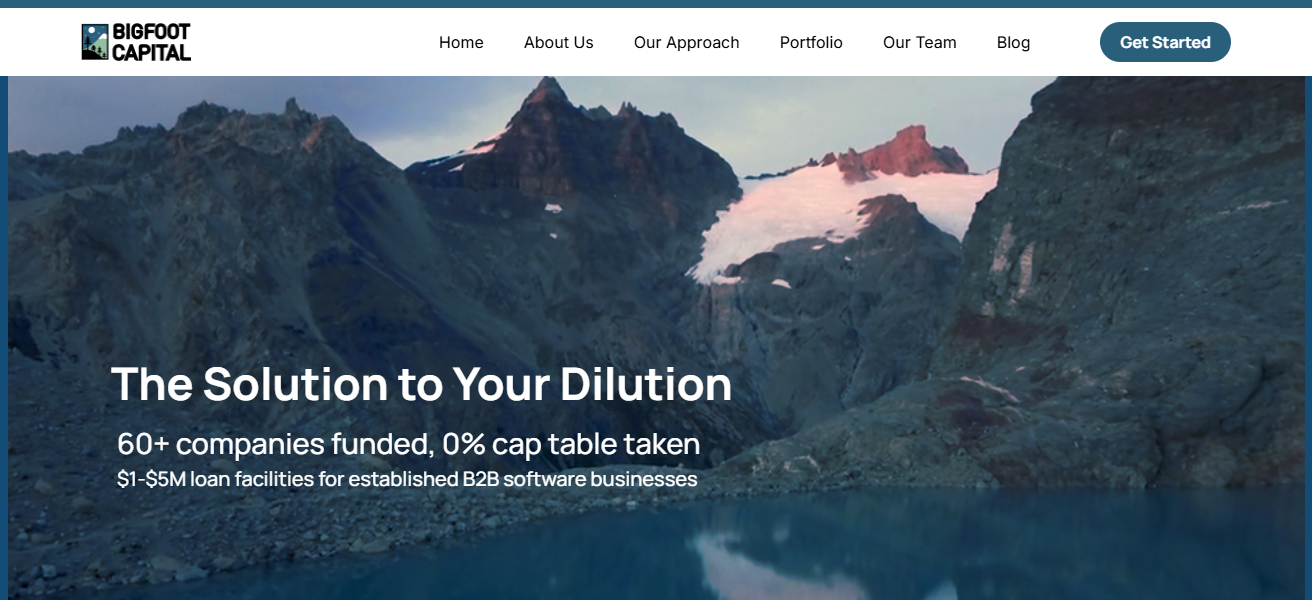
Bigfoot Capital uses metrics like MRR, churn, and retention to create funding options. These solutions also allow SaaS companies to recapture the capital into self-funding the growth operational tiers, customer growth, and innovation in products.
Because Bigfoot Capital does not dilute equity, SaaS founders keep full ownership. With its flexibility, Bigfoot is perfect for SaaS companies that want to grow without limits. Finally, it enables SaaS founders to expand without the traditional financing constraints.
Bigfoot Capital Features
- Custom financing to recurring subscription revenue streams.
- Less pressure with company performance based repayments.
- Funds based on SaaS metrics such as churn and retention.
- Supports operational scaling and product development without equity dilution.
| Pros | Cons |
|---|---|
| Tailored financing linked to subscription revenues. | Limited to SaaS businesses with measurable metrics. |
| Repayments aligned with company performance. | Smaller funding amounts compared to equity financing. |
| Customized funding options based on churn and retention. | May not suit companies with irregular growth patterns. |
| Supports scaling operations and product innovation. | Repayment obligations reduce reinvestment flexibility. |
9. Earnest Capital
For SaaS companies, Earnest Capital provides what are called revenue-share agreements, meaning no pressure traditional venture capital financing would apply. Instead of equity, Earnest provides financing in exchange for a set revenue share. This allows founders to focus on growth.
Earnest Capital also focuses on building partnerships by providing support through mentorship and community funding.

Community funding provides SaaS founders with financial resources and flexible repayment plans that curve with revenue performance.
These funds can be allocated towards operational scaling, marketing, and product development. For founders who would like growth capital that is in alignment with their values and sustainable business goals, Earnest Capital is right.
Earnest Capital Features
- Provides revenue-share agreements rather than equity investments.
- Company performance determines repayment flexibility.
- Community and mentorship support are funded.
- Founder autonomy is complemented with steady growth.
| Pros | Cons |
|---|---|
| Revenue-share agreements instead of equity dilution. | Repayment percentage may feel restrictive during slow growth. |
| Provides mentorship and community support alongside funding. | Smaller funding compared to traditional venture capital. |
| Flexible repayment structures adjust with performance. | Focuses on sustainable growth, less aggressive scaling. |
| Empowers founders to maintain independence. | May not suit companies seeking rapid expansion. |
10. RevUp Capital
RevUp Capital prioritizes financing early stage SaaS companies flexible as they grow. Financing through the model provides them with upfront capital in exchange for a portion of their future revenues.
RevUp Capital focuses on assisting founders as their business is going through the product/market fit stage to help them spend resources on customer acquisition, product building, and scaling.
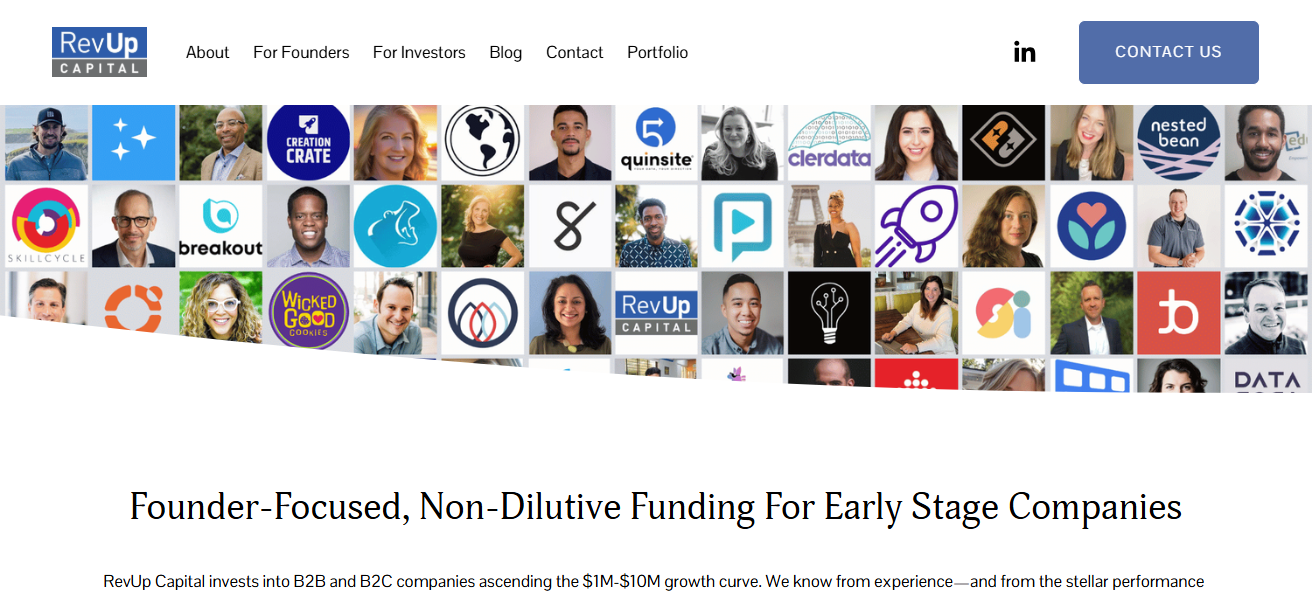
Financial strains from slow months are alleviated through revenue based repayments. Founders avoid equity dilution, and as a result, they keep control of the company.
RevUp Capital helps SaaS companies grow and become valuable non-dilutive funding partners as they focus on sustainable growth.
RevUp Capital Features
- Targets early-stage SaaS companies that are still finding product-market fit.
- Upfront funding is given for a share of future revenues.
- Revenue-based repayment schedules.
- Supports founders to grow sustainably without dilution.
| Pros | Cons |
|---|---|
| Focuses on early-stage SaaS businesses. | Limited to companies with early product-market fit. |
| Provides upfront capital in exchange for revenue share. | Smaller funding compared to later-stage financing options. |
| Repayments adjust with revenue performance. | Repayment obligations reduce available future cash. |
| Helps founders grow sustainably without equity dilution. | May not suit businesses needing large-scale capital quickly. |
Cocnlsuion
In conclusion, revenue-based financing caters to SaaS companies’ needs for flexible, non-dilutive growth capital that is aligned with recurring revenue streams.
Companies like Capchase, Pipe, Clearco, and others, empower founders to scale operations, innovate, and retain ownership.
These financing options are best suited for sustainable growth and success in paylines SaaS because of the linked repayments, lessening financial pressure.
FAQ
It’s a funding model where repayments are tied to future revenues instead of fixed schedules.
Capchase advances predictable subscription revenues, enabling expansion without equity dilution.
Pipe converts recurring revenues into tradable assets, offering instant liquidity through its marketplace.
Clearco provides non-dilutive funding tied to revenue performance, ideal for marketing and scaling.