
This article will focus on the best alternative credit providers for non-conventional business models. These innovators help entrepreneurs, freelancers, and atypical businesses with financing options outside the traditional banking system.
Using cutting-edge technology, p2p networks, and rapid funding methods, alternative credit providers pioneer accessibility, adaptability, and business prospects, particularly for companies ignored by banking institutions.
Key Points & Top Alternative Credit Lenders for Non-Traditional Business Models
Kiva – Provides microloans through crowdfunding, empowering small businesses globally with affordable community-backed financing.
Funding Circle – Peer-to-peer lending platform connecting investors with SMEs, offering flexible loans without traditional banking hurdles.
BlueVine – Specializes in invoice factoring and credit lines, helping businesses manage cash flow without collateral requirements.
OnDeck – Offers short-term loans and credit lines, using technology-driven underwriting for quick approvals and tailored financing.
Lendio – Marketplace connecting businesses with multiple lenders, simplifying access to diverse loan products and competitive rates.
Prosper – Peer-to-peer lending platform enabling entrepreneurs to secure funding directly from individual investors nationwide.
PayPal Working Capital – Provides loans based on PayPal sales history, ensuring accessible financing for e-commerce and online sellers.
Square Capital – Offers loans to merchants using Square payments, leveraging transaction data for personalized funding solutions.
Credibly – Focuses on small business loans with flexible repayment terms, supporting companies with limited credit histories.
RupeeBoss (India) – Facilitates MSME financing via NBFCs, crowdfunding, and fintech platforms, easing access for unconventional businesses.
Top Alternative Credit Lenders for Non-Traditional Business Models
1. Kiva
Kiva is an exceptional alternative credit lender because it allows communities to lend microloans and provide capital to those in need.
By offering loans to customers who face challenges from traditional banks, Kiva financially empowers entrepreneurs with innovative business ideas.
Kiva facilitates a direct connection to international lenders who value the entrepreneurs and their business concepts.
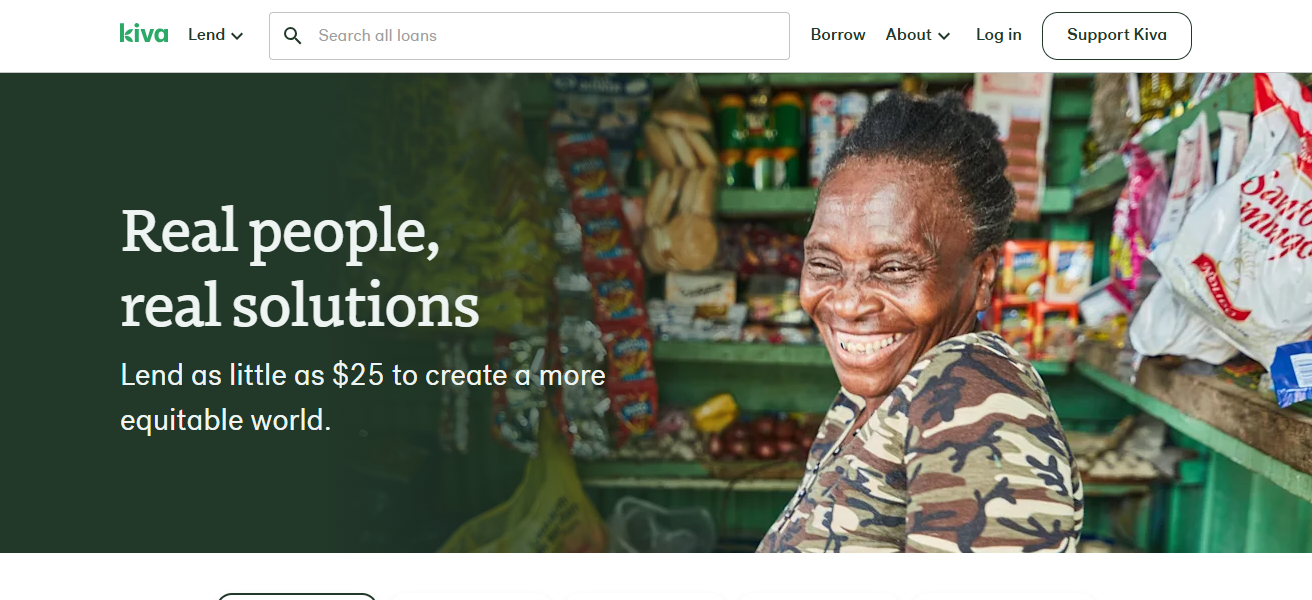
Kiva’s mission to provide interest-free loans to customers who banks often ignore is financially empowering to customers.
Kiva supports social innovation and social good by financially supporting small businesses and building community trust and collaboration on a global scale.
Kiva Features
- Loans with no interest and no geographical restrictions.
- Global funding for micro-entrepreneurs lacking traditional funding.
- Supports businesses that are bank-ignored.
- Supports social entrepreneurship and global citizenship.
| Pros | Cons |
|---|---|
| Zero-interest loans accessible worldwide. | Limited loan amounts compared to traditional lenders. |
| Empowers underserved entrepreneurs. | Relies heavily on community funding availability. |
| Promotes social impact and collaboration. | Approval process can be slower due to crowdfunding. |
| Supports non-traditional business models. | Not ideal for larger capital needs. |
2. Funding Circle
Funding Circle’s reputation as an alternative credit lender and peer-to-peer lending platform comes from connecting small businesses and investors.
Their innovative business model and cutting-edge technology allow them to evaluate risk and provide business loans faster than traditional banks.
They strengthen small businesses that other traditional lenders would typically overlook enabling them to provide flexible financing.
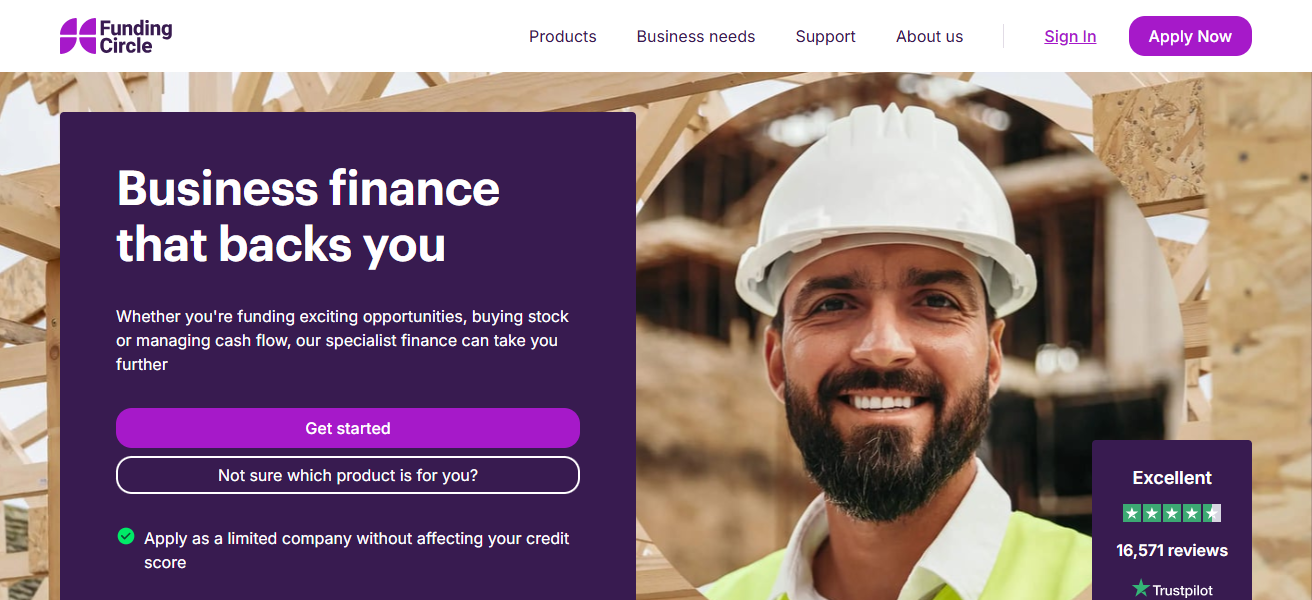
By connecting small businesses with flexible financing to non-linear funding sources, Funding Circle increases innovation and entrepreneurship
Making them a valuable partner for unconventional businesses needing financing outside traditional banking services.
Funding Circle Features
- Offers peer-to-peer lending whereby SMEs borrow from individual investors.
- Funding decisions and approvals made through digital automation.
- Unconventional businesses are serviced through funding flexibility.
- Enables businesses to create and grow entrepreneurial opportunities.
| Pros | Cons |
|---|---|
| Peer-to-peer lending connects SMEs with investors. | Requires strong business performance history. |
| Fast approvals using technology-driven assessments. | Interest rates may be higher than banks. |
| Flexible loans for unconventional ventures. | Limited options for startups without track record. |
| Decentralizes capital flow. | Repayment terms can be strict. |
3. BlueVine
BlueVine’s position amongst the best alternative credit lenders can be credited to its cash flow solutions aimed at unconventional businesses.
Invoice factoring and flexible credit lines are great for working capital access. and for making irregular revenue stream businesses secure working capital without the typical collateral.
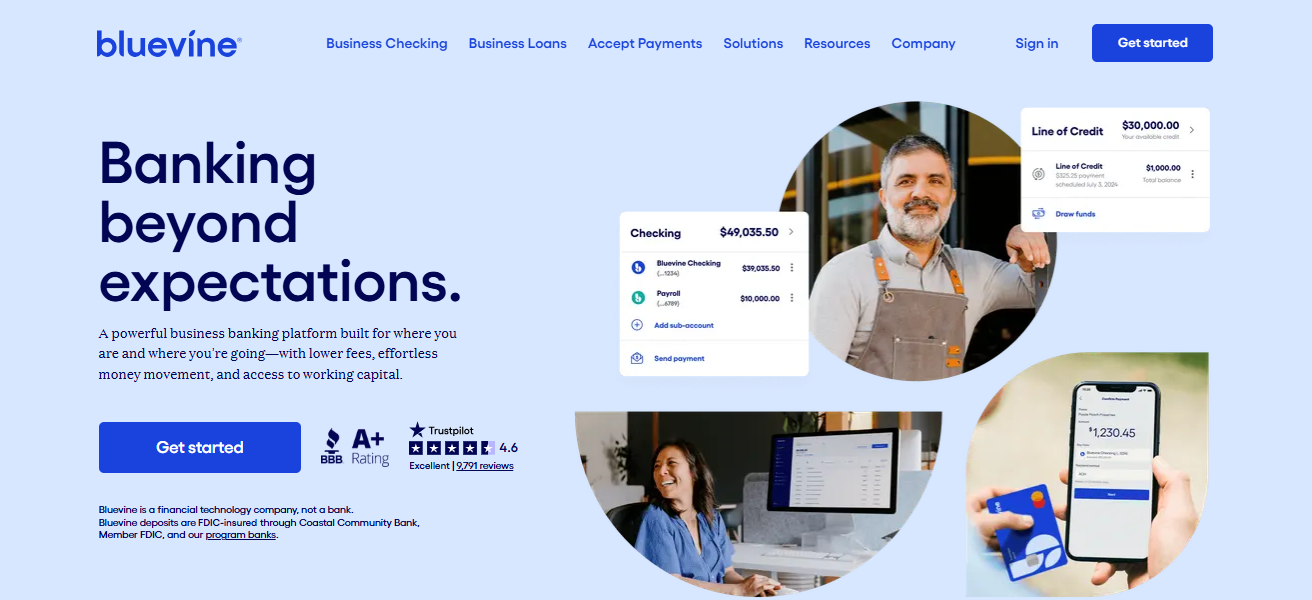
This is especially true for startups, freelancers, and service-based companies. BlueVine’s focus on speed, flexibility, and ease of access supports unconventional
Business models and helps stabilize and grow their businesses. This is what makes it exceptional amongst alternative finance providers.
BlueVine Features
- Business credit lines and invoice financing available.
- Supports businesses with inconsistent cash flow.
- No funding collateral requirements.
- Funding flexibility.
| Pros | Cons |
|---|---|
| Offers invoice factoring and credit lines. | Loan sizes may be smaller for new businesses. |
| Supports irregular cash flow models. | Factoring fees can reduce profits. |
| Quick access to working capital. | Limited availability outside certain regions. |
| No collateral requirements. | Not suitable for very large financing needs. |
4. OnDeck
OnDeck partners with businesses to provide credit loans and automated business line of credit products. They lead the industry by quickly assessing risk with the help of their proprietary algorithms.
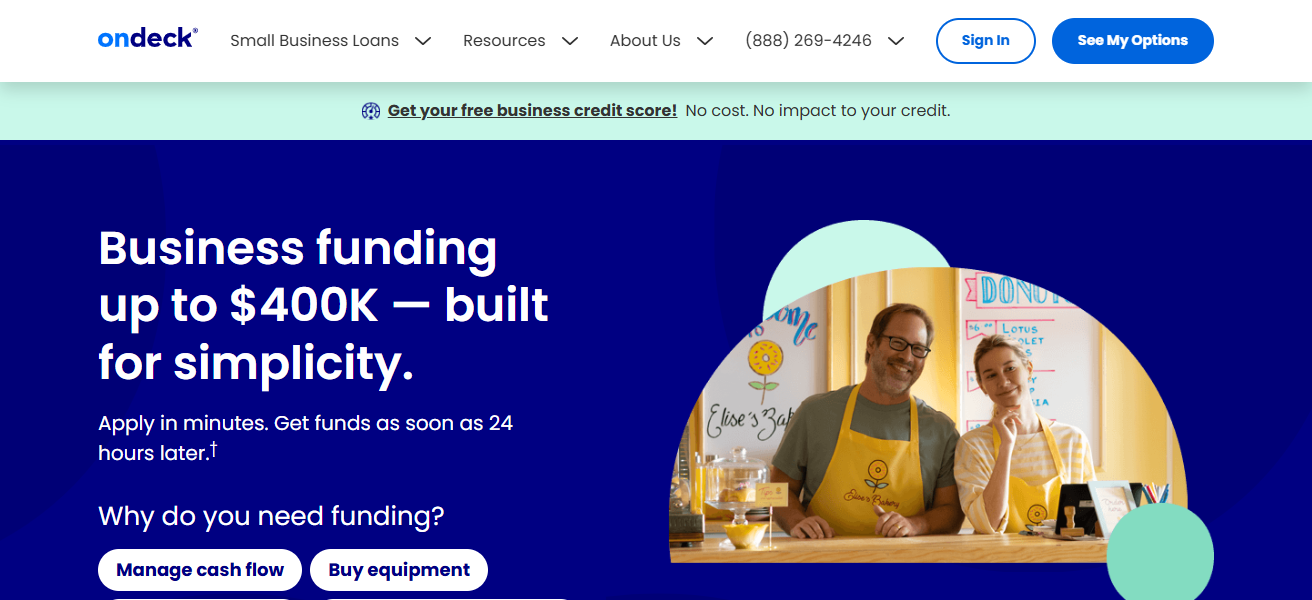
They are especially adept in lending to businesses with non-traditional and flexible models. Real-time performance of the non-traditional revenue generating businesses is assessed by OnDeck, breaking the usual mold of reliant credit scoring, and ensuring lending accessibility.
This quick shift to flexible models is critical in the business development of seasonal and niche models, enabling them to secure financing.
OnDeck Features
- Provides short-term business loans and lines of credit.
- Uses tech-enabled credit underwriting for speed.
- Based on up-to-date business activities.
- Accommodates non-traditional business revenue streams
| Pros | Cons |
|---|---|
| Provides short-term loans and credit lines. | Higher interest rates than traditional banks. |
| Technology-driven underwriting ensures speed. | Short repayment periods may strain cash flow. |
| Focuses on real-time business performance. | Not ideal for businesses needing long-term financing. |
| Accessible for unconventional revenue models. | Requires consistent revenue to qualify. |
5. Lendio
Lendio is one of the best alternative credit lenders as it provides access to a wide variety of financing solutions using a marketplace model.
Its distinctive model facilitates the pairing of unique non-traditional businesses with a multitude of lenders, resulting in customized one-of-a-kind solutions.
Lendio does not adhere to traditional, inflexible, banking standards; rather, it gives power to the entrepreneurs through choice, full transparency, and competitive pricing.
This is especially beneficial to startups and niche businesses with unpredictable revenue streams. Lendio is a vital alternative business financing partner.
Lendio Features
- Business financing marketplace with several lenders.
- Provides many financing solutions for competitive rates.
- Business financing made less complicated.
- Solutions designed for startup businesses and other specialized businesses.
| Pros | Cons |
|---|---|
| Marketplace connects businesses with multiple lenders. | Can be overwhelming with too many loan options. |
| Offers diverse loan products. | Approval depends on lender criteria, not Lendio itself. |
| Simplifies complex financing processes. | May involve higher fees through certain lenders. |
| Tailors solutions for startups and niche ventures. | Not all lenders are equally flexible. |
6. Prosper
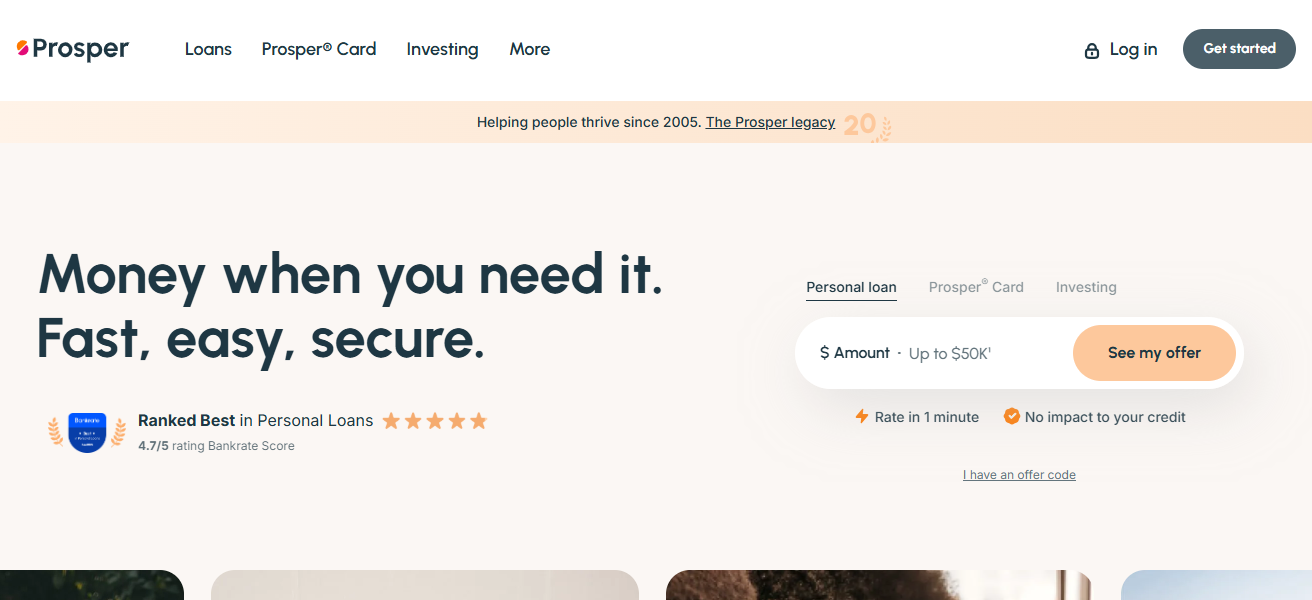
For entrepreneurs looking for non-traditional funding, Prosper is a leader in peer-to-peer lending as it was one of the first to offer this model.
Prosper’s niche is in facilitating lending relationships between individual investors and borrowers without having to rely on conventional banking.
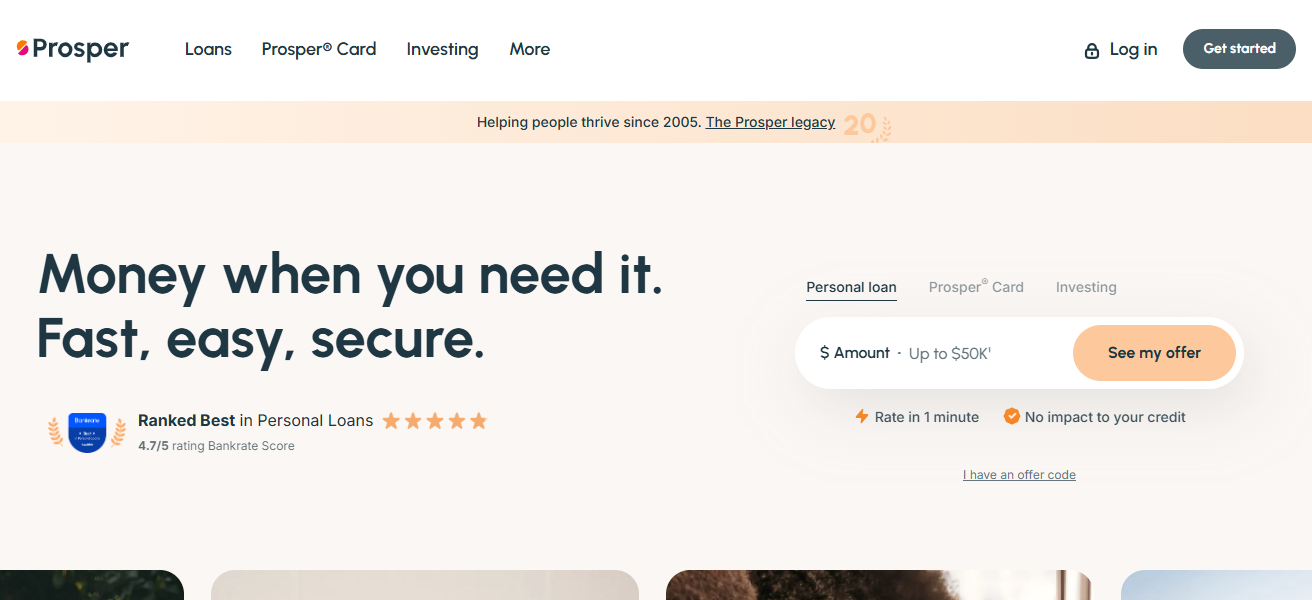
This model allows non-traditional businesses, including freelancers, startups, and niche businesses, to obtain funding for what they can do instead of jamming them in a box with conventional credit restrictions.
Prosper’s model of creating a community of trust between the investor and the borrower is essential for caring of businesses that do not fit in to the conventional financial world.
Prosper Features
- Provides peer-to-peer lending for businesses.
- Direct lending from individuals to business owners.
- Non-traditional business financing available.
- Provides trust-based financing for businesses.
| Pros | Cons |
|---|---|
| Peer-to-peer lending platform. | Loan sizes may be limited. |
| Connects borrowers directly with investors. | Interest rates vary widely. |
| Accessible for unconventional business models. | Requires strong borrower credibility. |
| Builds trust-driven funding ecosystem. | Not suitable for urgent large-scale funding. |
7. PayPal Working Capital
One of the best alternative credit lenders is PayPal Working Capital, as it customizes financing for PayPal merchants.
The company’s one-of-a-kind offering is based on the PayPal sales history of the merchant, which means no credit checks or lengthy applications.
This is beneficial to non-traditional businesses, especially in e-commerce or small digital entrepreneurship, as it allows them to obtain funding based on transaction performance.
PayPal Working Capital is able to provide fast funding to flexible, innovative, and unconventional businesses by integrating with their existing payment activities.
PayPal Working Capital Features
- Business financing based on sales history with PayPal.
- No credit reports are pulled.
- Integrated directly with sales transactions.
- Offers working capital flexibility to online merchants.
| Pros | Cons |
|---|---|
| Loans based on PayPal sales history. | Only available to PayPal merchants. |
| No traditional credit checks. | Loan size limited by sales volume. |
| Seamless integration with online transactions. | Repayment tied to sales may reduce flexibility. |
| Quick and accessible financing. | Not suitable for offline businesses. |
8. Square Capital
Square Capital has distinguished itself as an alternative credit lender by using Square’s payment ecosystem transaction data to customize its offers.
Its competitive advantage is extending credit to merchants as sales-driven loans, creating access for merchants with atypical business structures, and those with no credit history.
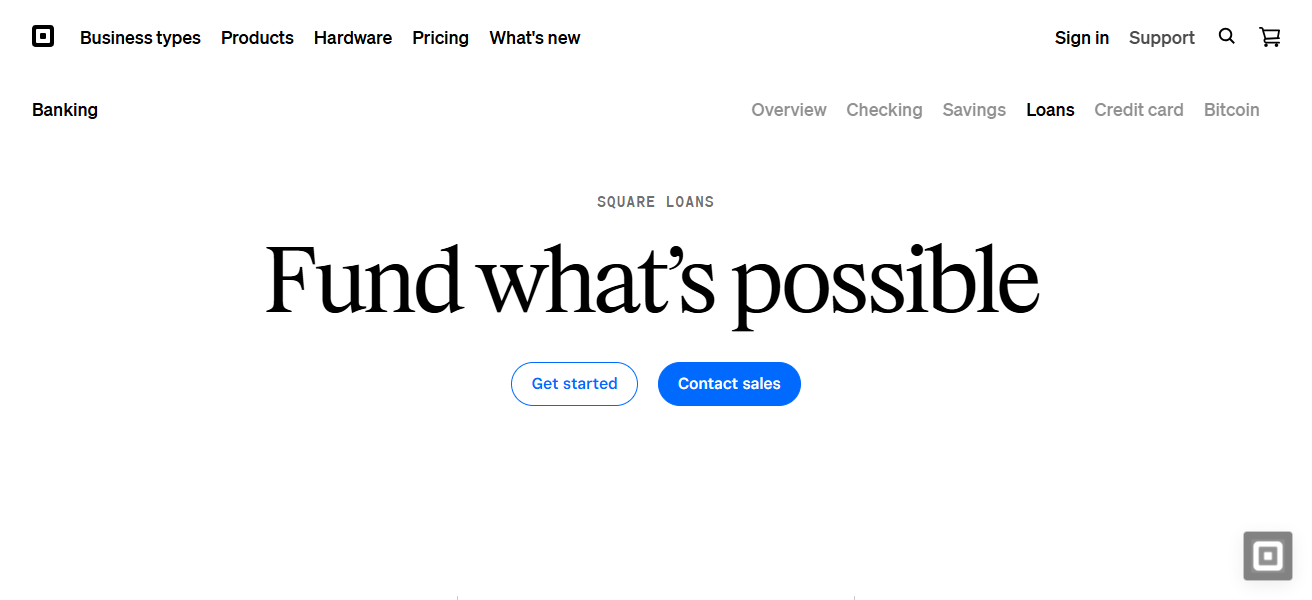
This funding stream is integrated into the business systems, enabling entrepreneurs to access capital for scale without the friction of conventional underwriting or collateral.
Square Capital’s partnership with daily sales enables businesses to repay their loans, fostering growth and supporting the acceleration of high-velocity non-traditional businesses.
Square Capital Features
- Square merchant specific loans
- Uses transactional data for funding decisions
- No collateral loans with fast approvals
- Sales-based Daily Remittances
| Pros | Cons |
|---|---|
| Loans tailored to Square merchants. | Only available to Square users. |
| Uses transaction data for decisions. | Loan size depends on sales history. |
| Quick approvals without collateral. | Repayment tied to daily sales may strain cash flow. |
| Flexible funding aligned with business activity. | Limited to merchants using Square ecosystem. |
9. Credibly
Credibly is considered one of the best alternative credit lenders because of its focus on small business accessibility financing, even when the small business lacks a credit history.
They provide the most value to small businesses with non-traditional, flexible business models because of their unique cash flow business model, allowing small businesses to repay their loans on a schedule best for them.
Rather than creating inflexible financial targets and benchmarks, Credibly’s focus on business performance allows more entrepreneurs to obtain financing when traditional banks would say no.
Credibly is one of the best alternative financing partners because of its financing flexibility that allows small businesses to non-conventionally scale their businesses.
Credibly Features
- Small business loans
- Cash flow flexible repayments
- Helpful for thin credit histories
- Supports sustained growth for unconventional business models
| Pros | Cons |
|---|---|
| Focuses on small business loans. | Interest rates can be higher. |
| Flexible repayment terms. | Shorter loan durations may limit growth. |
| Accessible for limited credit histories. | Requires consistent revenue for approval. |
| Supports sustainable growth. | Not ideal for large-scale financing. |
10. RupeeBoss (India)
RupeeBoss stands out as a leading alternative credit lender in India by connecting unconventional businesses with different financing options.
It has a unique business model that consolidates loans from NBFCs, fintech companies, and crowdfunding platforms, thus, providing loans to MSMEs and startups who are typically neglected by formal banks.
RupeeBoss enhances business models with the ability to obtain capital quickly by simplifying difficult loan procedures.
This inclusive business model fosters innovation, economic growth, and the financial autonomy of individuals, thus, establishing RupeeBoss as a key player in India’s alternative lending ecosystem.
RupeeBoss (India) Features
- Aggregates loans from NBFCs, fintechs, and crowdfunding.
- Reduces complexity of loans for MSMEs
- Customized refinements for startups and unconventional businesses
- Deepens financial inclusion within India’s lending ecosystem
| Pros | Cons |
|---|---|
| Aggregates loans from NBFCs, fintech, and crowdfunding. | Loan terms vary across providers. |
| Simplifies loan processes for MSMEs. | Interest rates may differ significantly. |
| Tailored solutions for startups. | Approval depends on third-party lenders. |
| Expands financial access across India. | Limited global reach outside India. |
Conclusion
To sum up, Top Alternative Credit Lenders for Non-Traditional Business Models offer creative financing options that traditional banks do not.
Using peer-to-peer lending, transaction-based funding, and adaptive repayment plans, they support new businesses, freelancers, and atypical enterprises.
These lenders are focused on accessibility and opportunity for growth, making them essential partners for businesses that are typically left out of traditional financing.
FAQ
Kiva offers zero-interest, community-funded microloans, empowering small businesses globally with accessible financing.
It connects SMEs directly with investors through peer-to-peer lending, offering flexible loans and quick approvals.
BlueVine provides invoice factoring and credit lines, ideal for companies with irregular cash flow.
OnDeck uses technology-driven underwriting to deliver fast short-term loans and flexible credit lines.
Lendio simplifies financing by connecting businesses with multiple lenders, offering diverse loan products.