In this post , I will examine The Best Crypto GameFi Models That May Survive the Next Bull Run. The GameFi sector of the blockchain gaming industry is rapidly changing.
- Key Points & Best Crypto GameFi Models That May Survive the Next Bull Run
- 10 Best Crypto GameFi Models That May Survive the Next Bull Run
- 1. Immutable (IMX)
- 2. Gala (GALA)
- 3. Ronin (RON)
- 4. Beam (BEAM)
- 5. Axie Infinity (AXS)
- 6. Illuvium (ILV)
- 7. Pixels (PIXEL)
- 8. Xai (XAI)
- 9. Apecoin (APE)
- 10. Portal (PORTAL)
- Conclusion
- FAQ
Some projects, due to their innovation, scalability, and robust communities, are beginning to stand out.
The models offer integrated blockchain technology with play-to-earn systems and DeFi, providing genuine asset ownership and captivating gaming experiences, and are, therefore, likely to be among the leaders during the next crypto gaming surge.
Key Points & Best Crypto GameFi Models That May Survive the Next Bull Run
| GameFi Project | Key Strengths |
|---|---|
| Immutable (IMX) | Scalable Layer-2 solution for NFTs and games with zero gas fees |
| Gala (GALA) | Ecosystem of blockchain games and music with strong community backing |
| Ronin (RON) | Custom sidechain built for Axie Infinity, optimized for gaming transactions |
| Beam (BEAM) | Focused on privacy and scalability for gaming and DeFi applications |
| Axie Infinity (AXS) | Pioneer of Play-to-Earn model with NFT-based gameplay and breeding |
| Illuvium (ILV) | AAA-quality RPG with open-world exploration and NFT battles |
| Pixels (PIXEL) | Social farming game with NFT integration and strong user engagement |
| Xai (XAI) | GameFi infrastructure enabling real ownership and interoperability |
| Apecoin (APE) | Utility token for Yuga Labs’ metaverse and gaming ecosystem |
| Portal (PORTAL) | Cross-chain gaming platform connecting players and developers |
10 Best Crypto GameFi Models That May Survive the Next Bull Run
1. Immutable (IMX)
ImmutableX is an Ethereum Layer-2 scaling solution focused on NFTs and Web3 gaming. It utilizes ZK-Rollup technology to facilitate gasless instantaneous transactions while Ethereum security is maintained.
IMX powers staking, governance, and protocol fees, therefore, incentivizing developers and users. Tools such as shared order books and APIs facilitate ImmutableX in supporting high-performance games, such as Gods Unchained and Guild of Guardians.
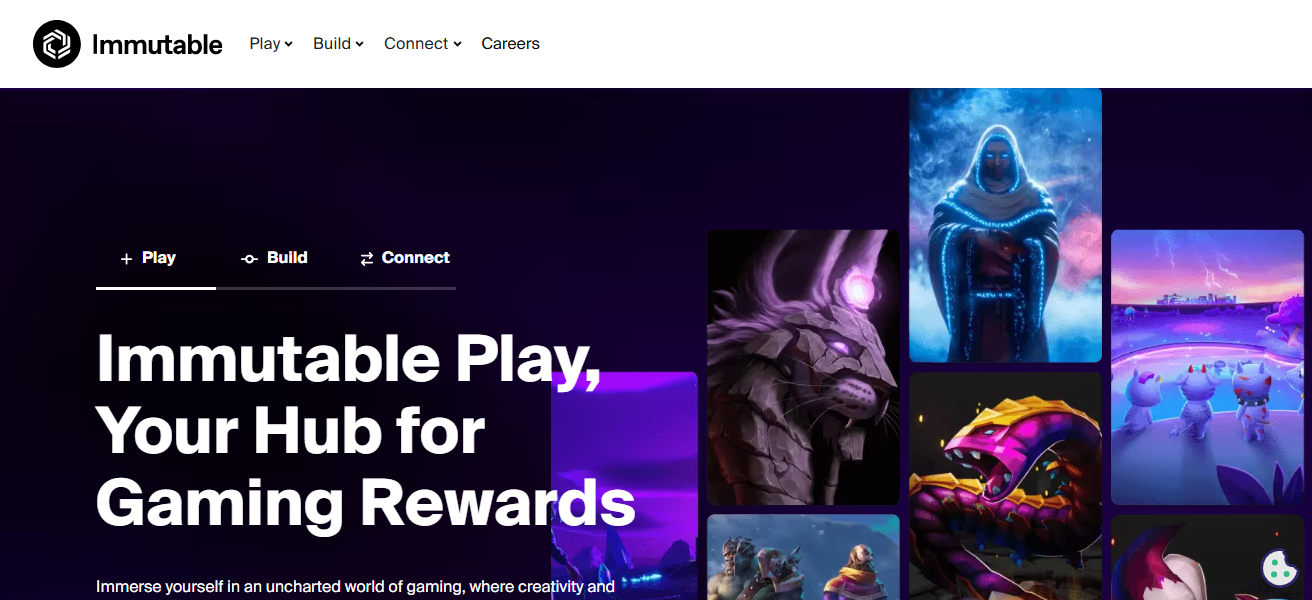
ImmutableX’s concentration on scalability and user experience makes it an attraction in the GameFi ecosystem. It is popular among developers needing low-cost infrastructure and players needing frictionless gaming.
Features Immutable (IMX)
| Feature | Description |
|---|---|
| Layer-2 Scaling | Uses ZK-Rollups for fast, gas-free transactions on Ethereum |
| NFT Marketplace Integration | Supports major NFT games like Gods Unchained and Guild of Guardians |
| Developer-Friendly Tools | Offers APIs and SDKs for easy game integration |
| IMX Token Utility | Used for staking, governance, and transaction fees |
| Eco-Friendly Infrastructure | Reduces energy consumption compared to traditional blockchains |
2. Gala (GALA)
Gala Games is a decentralized GameFi platform, giving players the ability to own NFTs representing real value in the game, and enabling true game asset ownership.
The platform is built on Ethereum. Players earn GALA tokens by playing any of the various games in the platform, such as TownStar and Spider Tanks.
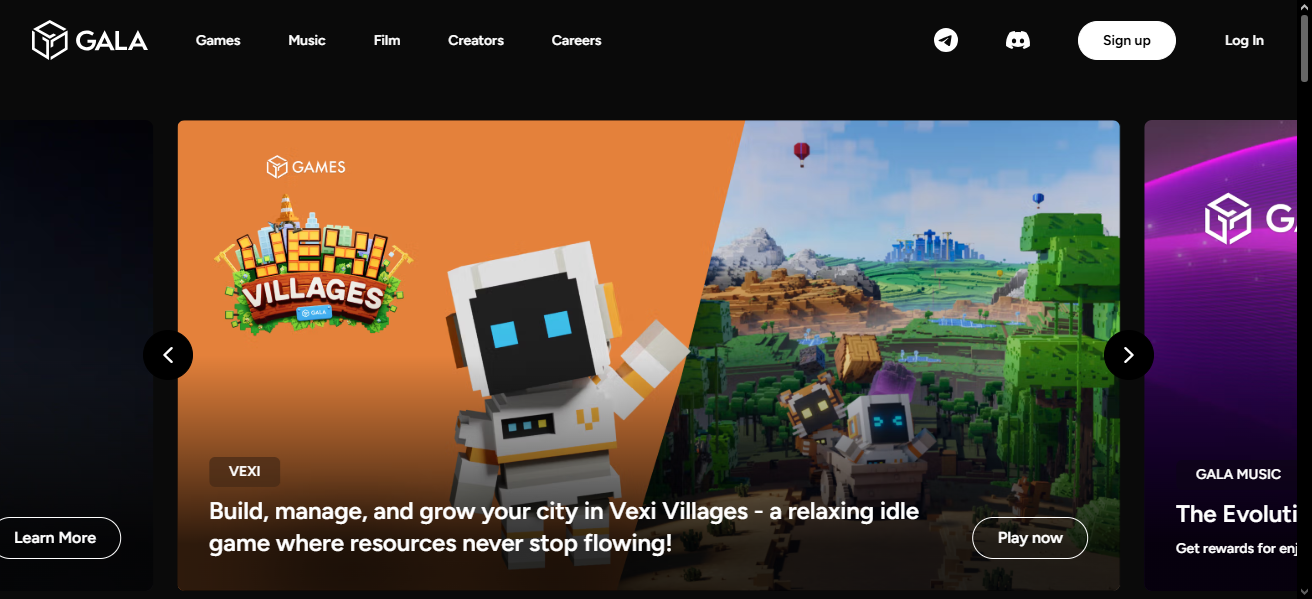
Even beyond gaming, the Gala ecosystem is inclusive of music and films. Gala Games is the first decentralized platform of its kind to function like Steam.
Players invest in games, earn returns, and are rewarded for gaming. With a deep community focus and a rising range of Web3 entertainment, Gala is poised to revolutionize gaming on the blockchain.
Features Gala (GALA)
| Feature | Description |
|---|---|
| Decentralized Gaming Ecosystem | Hosts multiple games with player-owned assets |
| GALA Token Rewards | Earned through gameplay and node operation |
| Cross-Media Expansion | Includes music and film platforms |
| NFT Ownership | Players own in-game items as NFTs |
| Community Governance | Token holders vote on ecosystem decisions |
3. Ronin (RON)
Ronin was created by Sky Mavis to support Axie Infinity and other blockchain games on Ethereum sidechain. Based on GameFi optimized fast and low-cost transactions, it resolves Ethereum scalability problems.
As a Proof-of-Authority validator, Ronin guarantees security and precision gameplay without congestion, facilitating microtransactions and NFT trading.
Axie Infinity’s success has demonstrated Ronin’s viability, especially as it grows with more games and collaborations.
The unique infrastructure and focus on developers further enhance Ronin’s odds of being a long-term player in GameFi.
Features Ronin (RON)
| Feature | Description |
|---|---|
| Ethereum Sidechain | Built for Axie Infinity to reduce gas fees and improve speed |
| Proof-of-Authority Consensus | Ensures fast and secure transactions |
| NFT Trading Optimization | Enables seamless in-game asset exchange |
| Ronin Wallet | Custom wallet for managing game assets |
| Developer Expansion | Supports new games beyond Axie Infinity |
4. Beam (BEAM)
Beam is a subset of Merit Circle DAO which is a blockchain gaming ecosystem on Avalanche. It is optimized for Web3 games due to its capacity to provide fast execution and low fees for in-game transactions.
Beam provides a range of developer tools which includes APIs and SDKs to ease blockchain incorporation. Its emphasis on scalability and user experience addresses traditional challenges in GameFi.
Decentralized asset management is designed to create fully connected ecosystems for players and developers. Innovative infrastructure and increasing uptake place Beam within the front ranks of blockchain gaming.
Features Beam (BEAM)
| Feature | Description |
|---|---|
| Avalanche Subnet | Offers low fees and high throughput for gaming transactions |
| Merit Circle DAO Integration | Backed by a leading gaming DAO |
| Developer SDKs | Simplifies blockchain integration for game developers |
| Asset Management Tools | Supports decentralized ownership and trading |
| Scalable Infrastructure | Designed for mass adoption in Web3 gaming |
5. Axie Infinity (AXS)
Axie Infinity is one of the first games to utilize the ‘play-to earn’ model, where users can collect, breed, and battle Axie Infinity’s NFT creatures, called Axies.
Developed by Sky Mavis, Axie Infinity operates on the Ronin sidechain and uses a dual-token system, AXS and SLP, allowing users to perform low fee transactions.
Gamers play on Axie Infinity to earn tokens and trade them for virtual land, Axies and other NFTs.
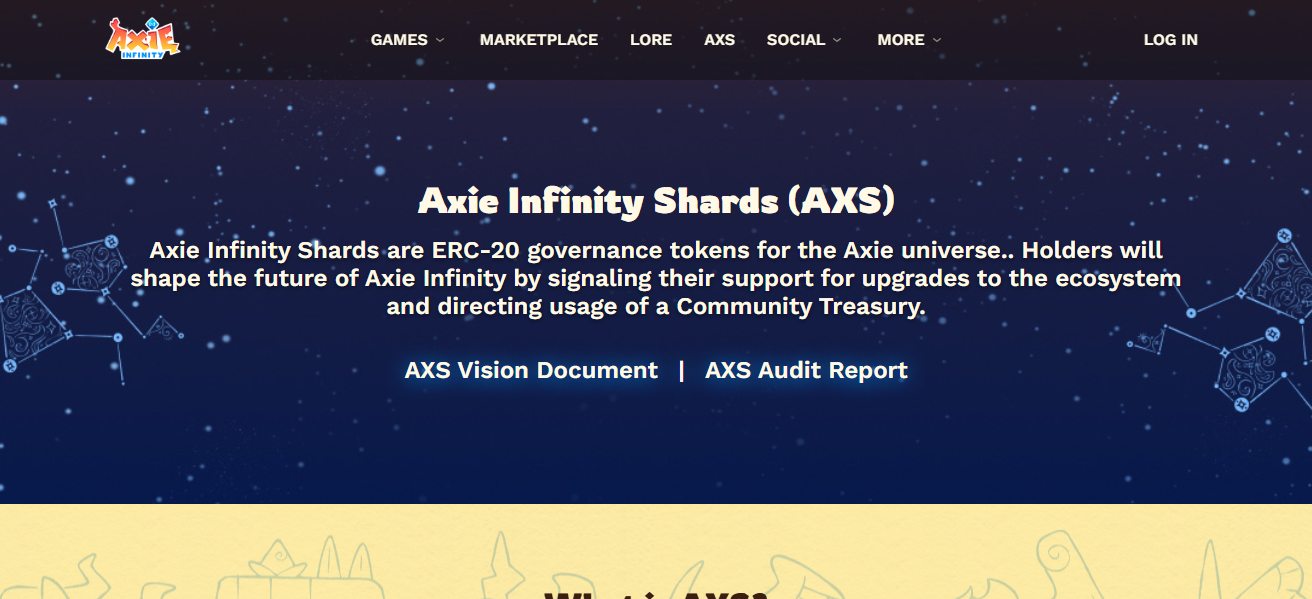
Axie Infinity’s outstanding growth during 2021 demonstrated the GameFi industry potential, and the GameFi industry potential is being upheld by the ongoing
Axie Infinity updates aimed to improve sustainability. Innovative mechanics and a loyal community keeps Axie Infinity relevant, even during market fluctuations.
Features Axie Infinity (AXS)
| Feature | Description |
|---|---|
| Play-to-Earn Model | Players earn tokens through battles and breeding |
| Dual Token System | Uses AXS and SLP for governance and rewards |
| Ronin Chain Integration | Enables low-cost, fast transactions |
| NFT Creatures | Axies are tradable and breedable NFTs |
| Virtual Land Ownership | Players can buy and develop land in Lunacia |
6. Illuvium (ILV)
Illuvium is a AAA-quality blockchain RPG on Ethereum that merges open-world exploration with auto-battler gameplay. Players compete with collectible battle NFTs called Illuvials.
The game allows users to stake ILV tokens and earn rewards. Illuvium integrates DeFi and GameFi. With high production value and amazing gameplay
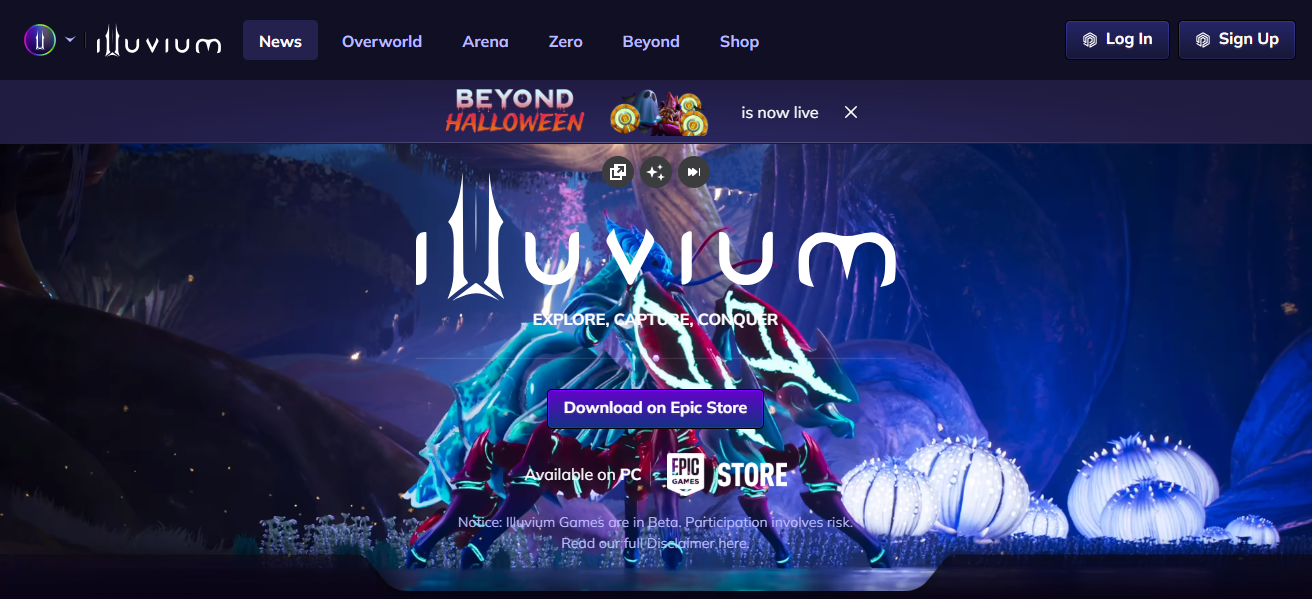
Illuvium is trying to connect non-blockchain gaming with gaming on the blockchain and give players real ownership of their assets.
Due to its innovative approaches and solid dev team, Illuvium is on track to be a flagship title in the GameFi space.
Features Illuvium (ILV)
| Feature | Description |
|---|---|
| AAA-Quality Graphics | High-end visuals and immersive gameplay |
| Open-World Exploration | Players explore and capture Illuvials |
| Auto-Battler Mechanics | Strategic combat system with NFT creatures |
| ILV Staking | Earn rewards by staking tokens |
| Ethereum Integration | Built on Ethereum with Layer-2 scaling |
7. Pixels (PIXEL)
Pixels integrates social farming with GameFi for players who want to blend classic gaming with blockchain possession. While earning PIXEL tokens, players collect resources, finish quests, and construct communities.
The game centers around social interaction, allowing players to create and contribute content, enriching the ecosystem.
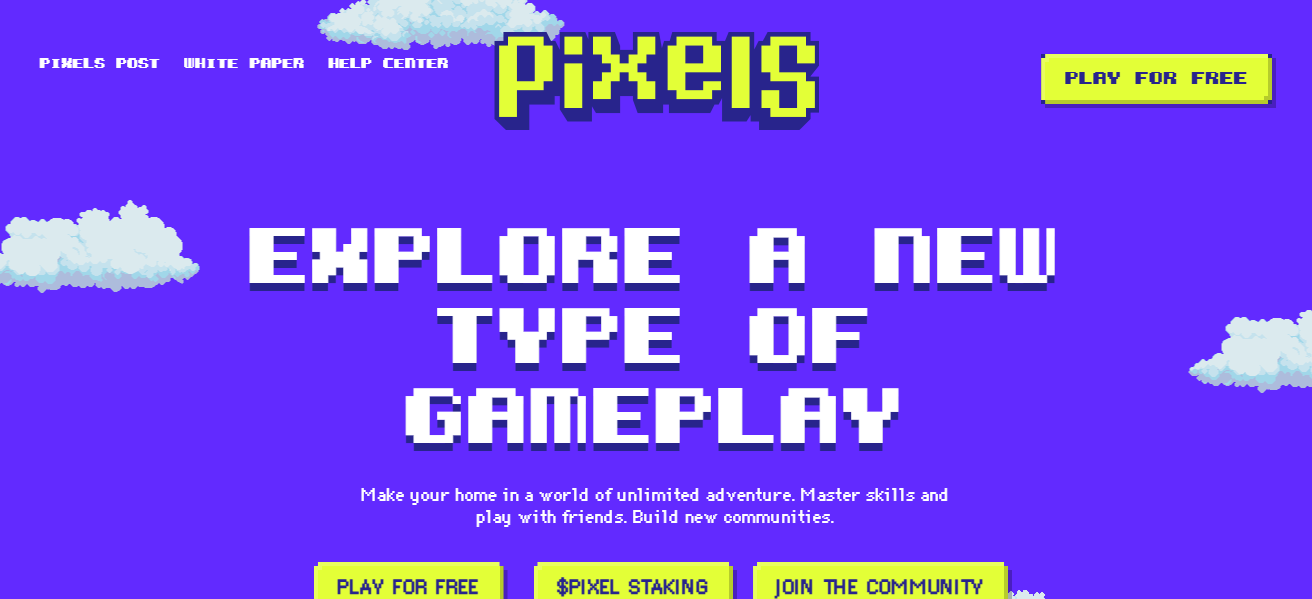
Players receive NFTs as in-game assets, ensuring possessory ownership and the ability to trade in a free market.
Because of the strong community and engaging mechanics, Pixels has become popular. The unique qualities of the Pixels GameFi framework are the limitless structure and the emphasis on player ingenuity.
Pixels is one of the first to combine entertaining gaming with potential profit in the GameFi ecosystem.
Features Pixels (PIXEL)
| Feature | Description |
|---|---|
| Social Farming Gameplay | Combines farming mechanics with social interaction |
| NFT Asset Ownership | Players own and trade in-game items |
| PIXEL Token Utility | Used for rewards and governance |
| Quest System | Engaging tasks and progression paths |
| Community-Driven Design | Emphasizes user-generated content and collaboration |
8. Xai (XAI)
Xai is a Layer-3 blockchain built on Arbitrum Orbit, meant to support scalable and customizable GameFi applications. Developed by Offchain Labs and backed by the Xai Foundation, it has rapid, low cost, and parallel transaction processing.
Xai merges gaming and DeFi, empowering players to transform their accomplishments into monetary assets. Its ecosystem comprises and versatile titles, such as Planet-X and The Lost Glitches.
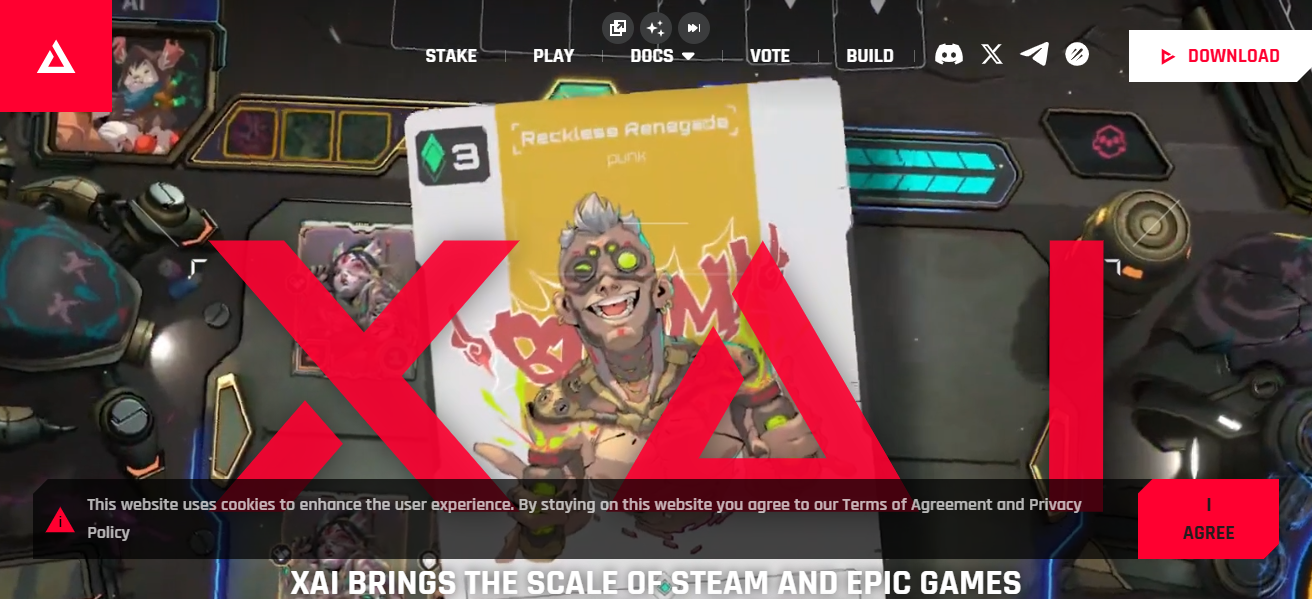
Xai focuses on developer resources and user orientation, fundamentally transforming the gaming infrastructure blockchain for the better.
Its dual-income strategy and proprietary GameFi technology stack predict legacy GameFi and GameFi solutions.
Features Xai (XAI)
| Feature | Description |
|---|---|
| Layer-3 Blockchain | Built on Arbitrum Orbit for scalability |
| Parallel Processing | Supports high-performance gaming applications |
| Developer Tools | Offers SDKs and APIs for game integration |
| GameFi + DeFi Integration | Converts achievements into financial assets |
| Ecosystem Games | Includes titles like Planet-X and The Lost Glitches |
9. Apecoin (APE)
Apecoin serves as the utility token within the Bored Ape Yacht Club (BAYC) ecosystem, which is venturing into GameFi, the metaverse, and DeFi.
Apecoin facilitates transaction, governance, and rewards distribution across all of Yuga Labs’ projects, including Otherside, a virtual world which combines NFT integration and gameplay.
Apecoin also allows users to make in-game purchases, participate in staking, and vote within the community. Apecoin’s strong popularity and cultural impact provide it with a distinct advantage in the GameFi industry.
As continued developments for BAYC arise, Apecoin’s capabilities in providing decentralized entertainment and player ownership are also expanding. This is a valuable currency for investors interested in the integration of gaming and digital identity.
Features Apecoin (APE)
| Feature | Description |
|---|---|
| Utility Token for BAYC | Powers Yuga Labs’ metaverse and gaming projects |
| Governance Mechanism | Token holders vote on ecosystem proposals |
| In-Game Currency | Used for purchases and staking in Otherside |
| Cultural Relevance | Strong brand recognition and community support |
| NFT Integration | Tied to Bored Ape NFTs and virtual land |
10. Portal (PORTAL)
Portal is a GameFi platform designed for cross chains and easy access to Web3 games. It enables users to game on different blockchains while using one account and eliminates the hassles of token swapping or bridging.
PORTAL token is a gaming currency which can be used for payments, staking and governance as well. Portal has a game launchpad and also provides node validation support.

Its user experience and extensive cross-platform support is what makes it a portal to the decentralized world of gaming.
As interoperability and seamless integration become necessary, the Portal infrastructure will be a tier 1 provider for GameFi.
Features Portal (PORTAL)
| Feature | Description |
|---|---|
| Cross-Chain Gaming Access | Play games across multiple blockchains with one account |
| Universal Gaming Token | PORTAL token used for transactions and governance |
| Game Launchpad | Supports new game development and distribution |
| Node Validation | Users can run nodes to support the network |
| Seamless UX | Removes barriers like bridging and token swaps |
Conclusion
In conclusion, these GameFi models redefine blockchain gaming because of their scalability, immersive gameplay, and strong tokenomics.
They are likely to succeed in the coming bull run because of their active communities and robust ecosystems.
Innovative Web3 projects like Immutable, Gala, and Axie Infinity provide real ownership, positioning themselves as emblematic leaders in the future of decentralized entertainment as Web3 adoption continues to increase.
FAQ
GameFi combines gaming and decentralized finance, allowing players to earn crypto through gameplay.
They offer scalability, active communities, real asset ownership, and innovative gameplay mechanics.
It provides gas-free NFT transactions using Layer-2 scaling on Ethereum.
Gala hosts a wide range of games and entertainment platforms with player-owned assets.
Yes, it pioneered Play-to-Earn and continues evolving with new features and updates.