
This article will examine the Best Tax-Advantaged Investment Vehicles for High-Income Earners. These high-income earners investment vehicles reduce the amount of taxes you have to pay and increase the amount of money you can grow for the long term.
- Key Poinst & Top Tax-Advantaged Investment Vehicles for High-Income Earners
- 10 Top Tax-Advantaged Investment Vehicles for High-Income Earners
- 1. 401(k) Plans
- 2. Roth IRA
- 3. Health Savings Accounts (HSAs)
- 4. Municipal Bonds
- 5. Deferred Compensation Plans
- 6. 529 College Savings Plans
- 7. Cash Value Life Insurance
- 8. Qualified Opportunity Funds (QOFs)
- 9. SEP IRA
- 10. Charitable Remainder Trusts (CRTs)
- Cocnlsuion
- FAQ
Depending on the different types of retirement accounts you have (i.e. 401(k)s and Roth IRAs), your money can grow without the burden of taxes.
Additionally, 529 education plans and charitable trusts provide unique benefits. High-income earners will have future financial security and success with the use of these vehicles.
Key Poinst & Top Tax-Advantaged Investment Vehicles for High-Income Earners
401(k) Plans Employer-sponsored retirement accounts allow pre-tax contributions, reducing taxable income while growing investments tax-deferred.
Roth IRA Contributions are taxed upfront, but withdrawals in retirement are completely tax-free, offering long-term benefits.
Health Savings Accounts (HSAs) Triple tax advantage: deductible contributions, tax-free growth, and tax-free withdrawals for qualified medical expenses.
Municipal Bonds Interest income is generally exempt from federal taxes, and often state taxes, making them attractive for wealthy investors.
Deferred Compensation Plans High-income earners defer part of salary, reducing current taxable income while postponing taxes until retirement.
529 College Savings Plans Contributions grow tax-free, and withdrawals for qualified education expenses avoid federal taxes, supporting family education goals.
Cash Value Life Insurance Policies accumulate tax-deferred cash value, accessible through loans or withdrawals without immediate tax consequences.
Qualified Opportunity Funds (QOFs) Investors defer capital gains taxes by reinvesting into designated opportunity zones, potentially reducing future tax liabilities.
SEP IRA Designed for self-employed individuals, allows large pre-tax contributions, lowering taxable income while growing retirement savings tax-deferred.
Charitable Remainder Trusts (CRTs) Provide income stream to donor, reduce taxable estate, and offer charitable deduction while supporting philanthropic causes.
10 Top Tax-Advantaged Investment Vehicles for High-Income Earners
1. 401(k) Plans
A 401(k) plan is a type of retirement plan used by employers to help employees save for retirement.
Employees contributions are made with pre-tax dollars, meaning employees reduce their taxable income. Investments, however, grow tax-deferred, meaning employees do not pay taxes on them until funds are withdrawn.
Employers often ‘match’ a percentage of an employee’s contribution. This is often a greater perk for higher income employees.

401(k)s allow higher contributions than other retirement accounts since employees are able to defer larger amounts of tax liabilities with tax deferral significantly lowering their tax obligations.
Wealth grows powerfully with 401(k)s through compounding since money withdrawn is taxed as ordinary income.
Money ‘matched’ by employers is free money employees are able to retire with therefore maximizing 401(k) contributions is a great idea. 401(k)s provided employees with great tax reductions making them is one of the best retirement vehicles available.
401(k) Plans Fetures
- Contributions are pre-tax, meaning they lower your taxable income.
- Employer matches can significantly boost retirement savings.
- Investments can grow untouched by taxes until you withdraw.
- The high contribution limits can be a help to more wealthy earners.
| Pros | Cons |
|---|---|
| Pre-tax contributions reduce taxable income immediately. | Withdrawals taxed as ordinary income in retirement. |
| Employer matching boosts retirement savings. | Limited investment options compared to other accounts. |
| High contribution limits benefit wealthy earners. | Early withdrawals face penalties and taxes. |
| Tax-deferred growth compounds over decades. | Required minimum distributions begin at retirement age. |
2. Roth IRA
A Roth IRA is unique because retirement account withdrawals are tax free, but contributions are made with after-tax income.
This is favorable for high-income earners as they may be subjected to higher tax brackets in the future.

Despite income limits that prevent direct contributions, higher earners can use the “backdoor Roth” loophole. Inside the Roth, investments grow tax-free, and there are no required minimum distributions.
Additionally, the ability to withdraw contributions without penalties increases liquidity. For those looking for long-term tax diversification, Roth IRAs hedge against future tax increases while still providing tax-free retirement income streams.
Roth IRA Fetures
- Contributions are made with after-tax dollars.
- Withdrawals during retirement are tax-free.
- Enjoy flexibility because there are no required minimum distributions.
- The backdoor Roth strategy allows high earners to participate.
| Pros | Cons |
|---|---|
| Withdrawals in retirement are completely tax-free. | Income limits restrict direct contributions. |
| No required minimum distributions, offering flexibility. | Contributions are made with after-tax dollars. |
| Tax-free growth on investments. | Backdoor Roth strategy can be complex. |
| Liquidity: contributions can be withdrawn penalty-free. | Lower contribution limits compared to 401(k). |
3. Health Savings Accounts (HSAs)
Health Savings Accounts (HSAs) have a unique opportunity for triple tax advantages. Contributions are tax-deductible. Account growth is tax-free.
Finally, withdrawals are tax-free for qualified medical expenses. For people with high incomes, high-deductible health plans create a dual function for HSAs—an account for healthcare expenses and a stealth retirement account.

Unlike flexible spending accounts where money is ‘use it or lose it’ HSAs grow and accumulate. Investment options are also available in the account, allowing tax-free growth if money is invested in tax-free compounding vehicles (e.g., stocks, bonds, and mutual funds).
HSAs even have added tax benefits after age 65. Non-medical withdrawals are taxed the same as traditional IRAs. For wealthy individuals, HSAs functions to support medical expenses and grow retirement savings.
Health Savings Accounts (HSAs) Fetures
- Enjoy a triple tax advantage: tax deduction, tax-free growth, tax-free withdrawals.
- Funds roll over year after year (unlike FSAs) which can be invested.
- Long-term compounding is possible.
- After 65, withdrawals for non-medical are taxed like IRAs.
| Pros | Cons |
|---|---|
| Triple tax advantage: deductible, tax-free growth, tax-free withdrawals. | Only available with high-deductible health plans. |
| Funds roll over annually, unlike FSAs. | Non-medical withdrawals before 65 incur penalties. |
| Can be invested for long-term compounding. | Contribution limits are relatively low. |
| After 65, withdrawals for non-medical taxed like IRAs. | Healthcare expenses must qualify to remain tax-free. |
4. Municipal Bonds
Municipal bonds are a form of debt financing by state and local government entities. They are generally considered low risk and tax free at the federal and sometimes state level.
They are typically lower yielding compared to corporate bonds, however, due to the tax free nature of the bonds, the effective yield may be higher, especially in higher tax brackets.

The tax savings are often more than the difference in yields. Although the returns are typically lower than corporate bonds, investing in municipal bonds diversifies an investor’s portfolio.
They are tax free investments, with low risk, governmental backing, and are a good option for investors earning high incomes and investing from a state/city with high taxable income.
Municipal Bonds Fetures
- Interest income is exempt from federal taxes.
- State and local taxes may also be exempt.
- The lower yields are offset by the tax savings.
- A safe, government-backed diversification option.
| Pros | Cons |
|---|---|
| Interest income exempt from federal taxes. | Lower yields compared to corporate bonds. |
| Often exempt from state/local taxes too. | Credit risk varies by municipality. |
| Safe, government-backed diversification option. | Less liquidity than other investments. |
| Attractive for high-income earners in high-tax states. | Returns may not keep pace with inflation. |
5. Deferred Compensation Plans
High-income earners can take advantage of deferred compensation plans that allow them to delay receiving a portion of their salary or bonuses until retirement.
This is beneficial to the employee since it lowers their current taxable income and pushes the tax liability to the future.
Taxes are typically lower when the employee decides to withdraw the funds. These plans provide flexibility and are generally geared towards executives and other employees that are strategically important to the company.

The funds in the plans are invested and the employee can benefit from the compounding effect of tax-deferred growth to enhance their overall wealth.
Despite the tax benefits and wealth accumulation that can be enjoyed from deferred compensation plans, there is a risk to the employee of the employer becoming financially insolvent.
For employees that are tax sensitive and fully confident in the future success of their employer, these plans can be strategically valuable in tax planning and retirement income deferral.
Deferred Compensation Plans Fetures
- Salary/bonus postponement can help lower current taxes.
- Taxes are still deferred until distributions are taken during retirement.
- Investments can grow tax-deferred over time.
- Employer stability is important for security.
| Pros | Cons |
|---|---|
| Postpone salary/bonus to reduce current taxes. | Funds tied to employer’s financial stability. |
| Taxes deferred until retirement distributions. | Limited access until payout schedule. |
| Investments grow tax-deferred over time. | Early withdrawal restrictions apply. |
| Flexible payout structuring for retirement planning. | Not available to all employees. |
6. 529 College Savings Plans
529 plans provide tax benefits for those saving for education expenses. When savings are used for tax exempt qualified expenses (i. e. housing, tuition, books), they can be withdrawn tax free, as are those savings which have grown through invested interest.
State tax deductions and tax credits can also be gained when contributions are made to 529 plans, creating yet another tax benefit to high income earners.

Contributions can also be switched to another beneficiary. Recent regulatory changes have also made it easier to use 529 plan contributions for K-12 tuition and to pay student loans.
529 plans have become an easier and more tax efficient tool for wealthy families to plan for their children’s education.
529 College Savings Plans Fetures
- Contributions grow tax-free to be used for education.
- Withdrawals for qualified expenses are tax-free.
- State tax deductions can apply.
- Beneficiaries can be changed.
| Pros | Cons |
|---|---|
| Contributions grow tax-free for education. | Funds restricted to qualified education expenses. |
| Withdrawals for qualified expenses avoid taxes. | Non-qualified withdrawals incur taxes and penalties. |
| State tax deductions may apply. | Investment options vary by state plan. |
| Beneficiaries can be changed flexibly. | Contribution limits differ across states. |
7. Cash Value Life Insurance
Whole life and universal life insurance policies offer life insurance protection and include a savings account component that grows cash value.
The cash value grows automatically and without immediate taxation, while policyholders can access the cash through policy loans and withdrawals.
If the loans are done following the appropriate rules, they can stay free of taxation, and so are a good option for high-income earners looking for ways to add income during retirement.

There are no limits to how much can be paid into insurance policies like there are for retirement accounts, making them a flexible option for saving and investing.
Added to that, the death benefit is paid out to the policy’s beneficiaries tax-free. Combining these features, cash value life insurance is also a good option for tax-deferred growth and liquidity for estate planning for wealthy people.
Cash Value Life Insurance Fetures
- Combines a death benefit with a savings component.
- Cash value appreciates without being subjected to taxes.
- If you play your cards right, tax-free loans and withdrawals can be an option
- No contribution restrictions for high-earning individuals
| Pros | Cons |
|---|---|
| Combines death benefit with savings component. | Premiums are higher than term insurance. |
| Cash value grows tax-deferred. | Loans reduce death benefit if unpaid. |
| Loans/withdrawals often tax-free if managed. | Complex structure compared to other investments. |
| No contribution limits for wealthy earners. | Returns may be lower than other investments. |
8. Qualified Opportunity Funds (QOFs)
Opportunity zones are special geographic areas in need of economic development. Qualified Opportunity Funds (QOFs) are a tax incentivized way of helping investors’ money grow while also helping underserved areas.
Investors can defer taxes on any capital gains that they realize and reinvest into QOFs. If investors reinvest the capital gains within 180 days after realizing them, taxes can be deferred for the amount of time the money is in the QOF.
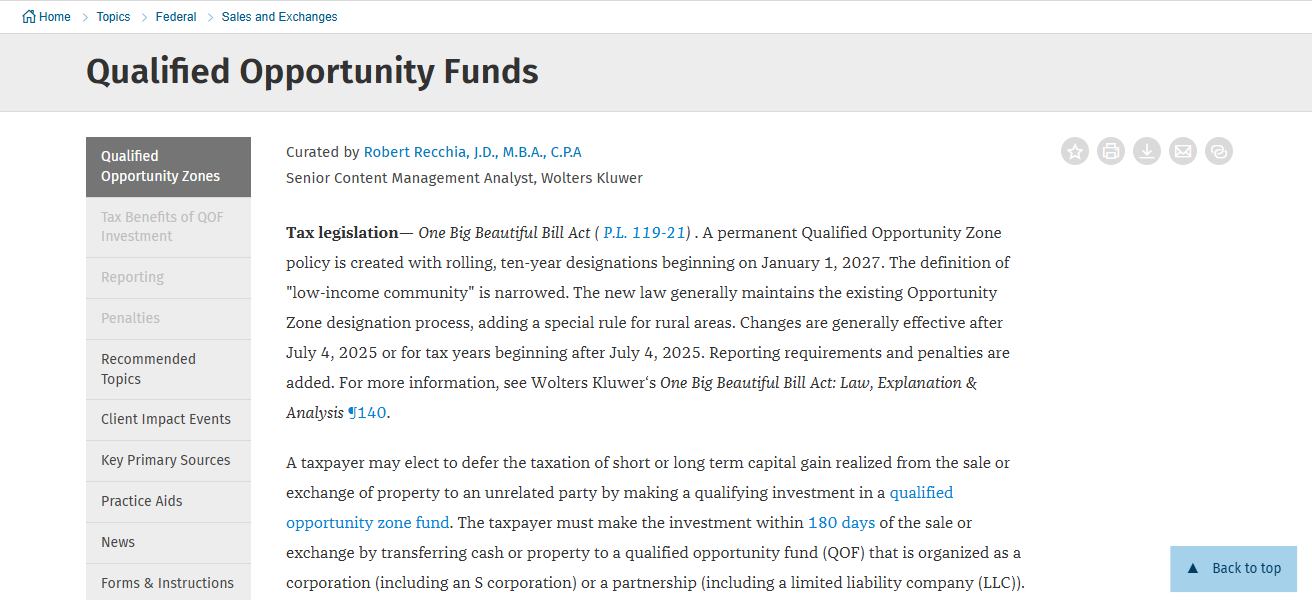
If the money is kept in the QOF for at least 10 years, the tax on any appreciation of the QOF investment is not taxed. Wealthy investors are incentivized to put their money into QOFs because they are socially responsible investments.
The economic growth of the area around the opportunity zone is a risk for investors. If no growth occurs, investors may not realize the returns on their investments and also lose the opportunity
To defer capital gains taxes. Investors have the opportunity for impactful investments and tax deferments.
Qualified Opportunity Funds (QOFs) Fetures
- If you reinvest your capital, you can defer your taxes.
- If held for a long time, taxes can be reduced or even eliminated.
- Investments are focused on distressed areas known as opportunity zones.
- Offers the potential for positive tax outcomes and a value added social outcome.
| Pros | Cons |
|---|---|
| Defer capital gains taxes by reinvesting. | Investments depend on local economic growth. |
| Reduce or eliminate taxes with long holding. | Long-term commitment required for benefits. |
| Investments target distressed opportunity zones. | Higher risk compared to traditional funds. |
| Aligns tax benefits with social impact. | Complex compliance rules must be followed. |
9. SEP IRA
Self-employed individuals and small business owners can take advantage of SEP IRAs, which allow larger pre-tax contributions than traditional IRAs.
Contributions lower an investor’s taxable income, while deferring taxes on growing investments until retirement.
Since only employers can fund the retirement plan, they also have a complete flexible range of contribution options.
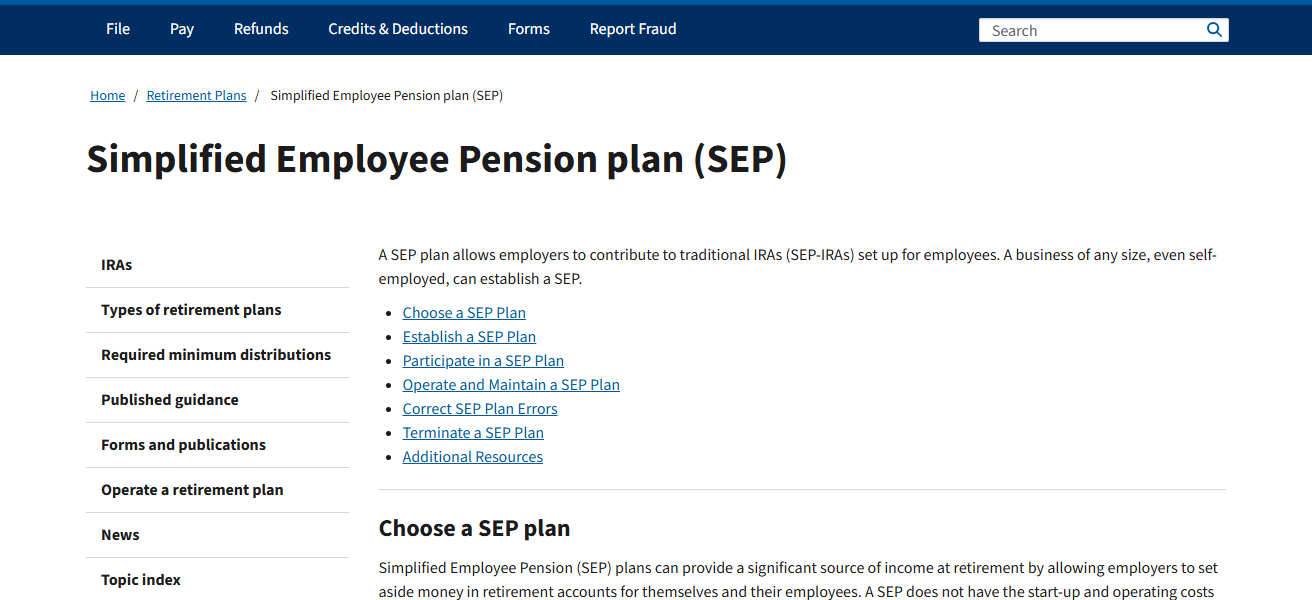
SEP IRAs are fantastic for business owners wanting to increase retirement contributions due to high contribution limit s for high-income earners.
Withdrawals of funds are taxed like traditional IRAs, as ordinary income. SEP IRAs are an effective retirement solution for small business owners as they convert tax expenses into growth assets while fulfilling employer and employee retirement plan objectives.
SEP IRA Fetures
- Large pre-tax contributions lower your taxable income.
- For the self-employed and small business owners.
- An employer-sponsored plan, with variable contribution flexibility.
- Tax-deferred growth is granted until retirement withdrawals.
| Pros | Cons |
|---|---|
| Large pre-tax contributions lower taxable income. | Employer-only contributions required. |
| Designed for self-employed and small businesses. | Withdrawals taxed as ordinary income. |
| Employer-funded, flexible contribution levels. | No Roth option available. |
| Tax-deferred growth until retirement withdrawals. | Contribution percentage must be equal for employees. |
10. Charitable Remainder Trusts (CRTs)
Self-employed individuals and small business owners can take advantage of SEP IRAs, which allow larger pre-tax contributions than traditional IRAs.
Contributions lower an investor’s taxable income, while deferring taxes on growing investments until retirement.
Since only employers can fund the retirement plan, they also have a complete flexible range of contribution options.
SEP IRAs are fantastic for business owners wanting to increase retirement contributions due to high contribution limit s for high-income earners.
Withdrawals of funds are taxed like traditional IRAs, as ordinary income. SEP IRAs are an effective retirement solution for small business owners as they convert tax expenses into growth assets while fulfilling employer and employee retirement plan objectives.
Charitable Remainder Trusts (CRTs) Fetures
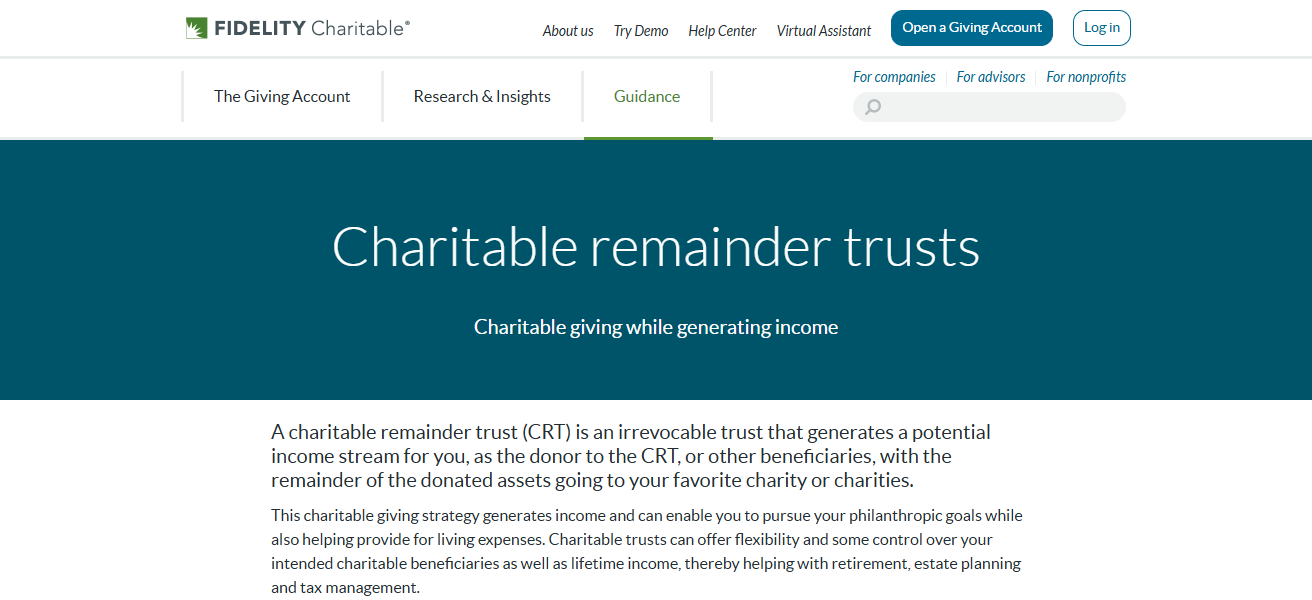
- Provide lifetime income to donor.
- Less tax burden due to an Immediate charitable deduction.
- on appreciated assets, capital gains can be postponed.
- After the donor’s lifetime, the remainder goes to the charity.
| Pros | Cons |
|---|---|
| Provide lifetime income to donor. | Complex to establish and administer. |
| Immediate charitable deduction reduces taxes. | Irrevocable once assets are transferred. |
| Defer capital gains on appreciated assets. | Legal and administrative costs are high. |
| Remainder benefits charity after donor’s lifetime. | Less flexibility compared to other trusts. |
Cocnlsuion
In closing, tax-advantaged investment vehicles are powerful tools for wealth accumulation and tax burden reduction for high-income earners.
Retirement accounts, Roth IRAs, HSAs, municipal bonds, and charitable trusts offer a variety of benefits for retirement, estate planning, and more.
With the right combination of growth, liquidity, and tax efficiency, these vehicles aligned with personal and family goals, can protect financial goals for the long term.
FAQ
They reduce taxable income, allow employer matching, and provide high contribution limits with tax-deferred growth.
It offers tax-free withdrawals in retirement and no required minimum distributions, ensuring flexibility.
They provide triple tax advantages: deductible contributions, tax-free growth, and tax-free medical withdrawals.
Yes, they are government-backed and provide tax-exempt interest income, ideal for high-tax brackets.