
In this article, I’m going to cover Top Treasury Trackers, concentrating on ETFs that offer U.S. government bonds exposure across various maturities.
- Key Points & Top Ton Treasuries Trackers
- 10 Top Ton Treasuries Trackers
- 1. iShares U.S. Treasury Bond ETF (GOVT)
- 2. SPDR Bloomberg 1-3 Month T-Bill ETF (BIL)
- 3. iShares 1-3 Year Treasury Bond ETF (SHY)
- 4. iShares 7-10 Year Treasury Bond ETF (IEF)
- 5. iShares 20+ Year Treasury Bond ETF (TLT)
- 6. SPDR Portfolio Long Term Treasury ETF (SPTL)
- 7. Vanguard Short-Term Treasury ETF (VGSH)
- 8. Vanguard Intermediate-Term Treasury ETF (VGIT)
- 9. Vanguard Long-Term Treasury ETF (VGLT)
- 10. iShares Treasury Floating Rate Bond ETF (TFLO)
- Conclusion
- FAQ
These trackers are held for their safety, liquidity, and income generation prospects. Knowing these Treasury ETFs will assist you in making investment choices, whether you need short-term safety, intermediate-term balance, or long-term income generation.
Key Points & Top Ton Treasuries Trackers
| Treasury ETF | Key Point |
|---|---|
| iShares U.S. Treasury Bond ETF (GOVT) | Broad exposure to U.S. Treasuries across maturities. |
| SPDR Bloomberg 1-3 Month T-Bill ETF (BIL) | Focuses on ultra-short maturity Treasury bills for liquidity. |
| iShares 1-3 Year Treasury Bond ETF (SHY) | Tracks short-term Treasuries, lower interest rate risk. |
| iShares 7-10 Year Treasury Bond ETF (IEF) | Provides intermediate-term exposure to Treasuries. |
| iShares 20+ Year Treasury Bond ETF (TLT) | Popular for long-term Treasuries, higher duration risk. |
| SPDR Portfolio Long Term Treasury ETF (SPTL) | Low-cost long-duration exposure to Treasuries. |
| Vanguard Short-Term Treasury ETF (VGSH) | Conservative option with short-term Treasuries. |
| Vanguard Intermediate-Term Treasury ETF (VGIT) | Balanced mid-term Treasury exposure. |
| Vanguard Long-Term Treasury ETF (VGLT) | Focuses on extended maturity Treasuries. |
| iShares Treasury Floating Rate Bond ETF (TFLO) | Tracks floating-rate Treasuries, less sensitive to rate hikes. |
10 Top Ton Treasuries Trackers
1. iShares U.S. Treasury Bond ETF (GOVT)
GOVT gives investors the opportunity to have broad market exposure to U.S. Treasury securities across the spectrum, including short-term treasury bills, medium-term notes, and long-term bonds.
For investors who want an all-inclusive, government-backed, fixed income, diversified portfolio, it is optimal for them to invest in GOVT.
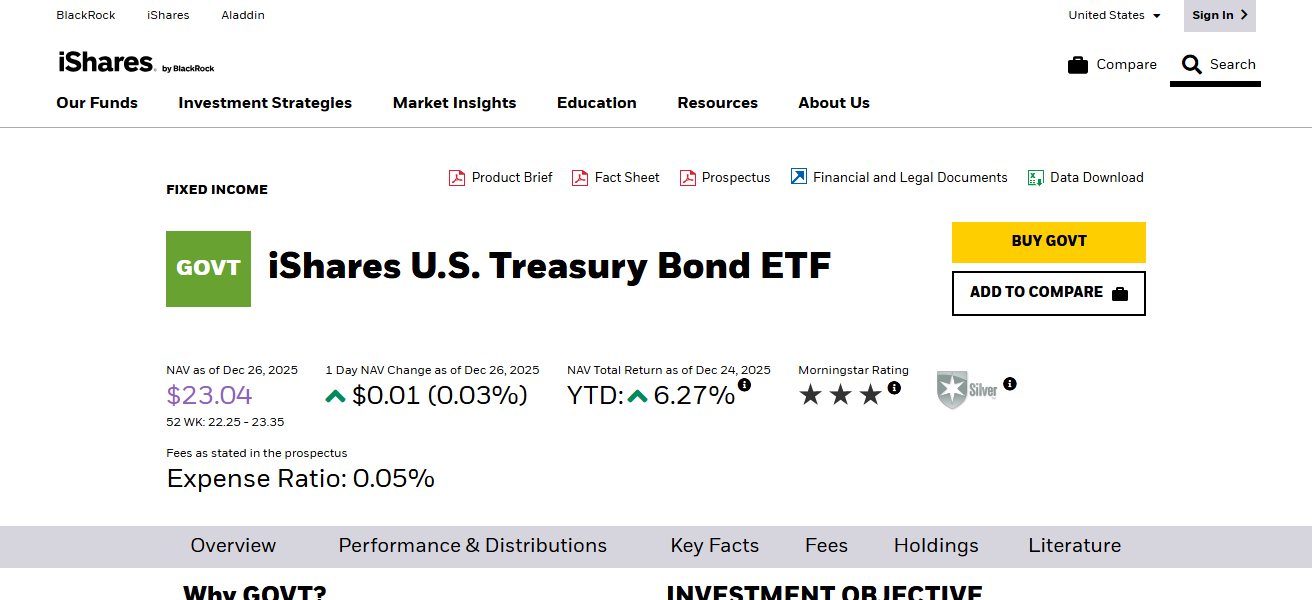
GOVT is an ETF that will provide investors with consistent interest income. It will guard investors from volatility in the equity market.
GOVT tracks the U.S Treasury market, and that allows investors to capture the movement in interest rates. It also protects investors with the safety and liquidity of government securities.
| Pros | Cons |
|---|---|
| Broad exposure to all U.S. Treasury maturities. | Moderate interest rate sensitivity due to mix of maturities. |
| Low credit risk as government-backed securities. | Yields may be lower than corporate bonds. |
| Provides diversification across short, medium, and long-term Treasuries. | Can underperform in rising interest rate environments. |
| Highly liquid and widely traded. | Less focused strategy compared to targeted maturity ETFs. |
2. SPDR Bloomberg 1-3 Month T-Bill ETF (BIL)
BIL invests in U.S. Treasury bills with maturities between 1 and 3 months. It’s a liquid, low risk, and conservative ETF with almost no interest rate risk.
BIL is often used by investors to park cash temporarily, or to fulfill a low-risk allocation in their portfolio.
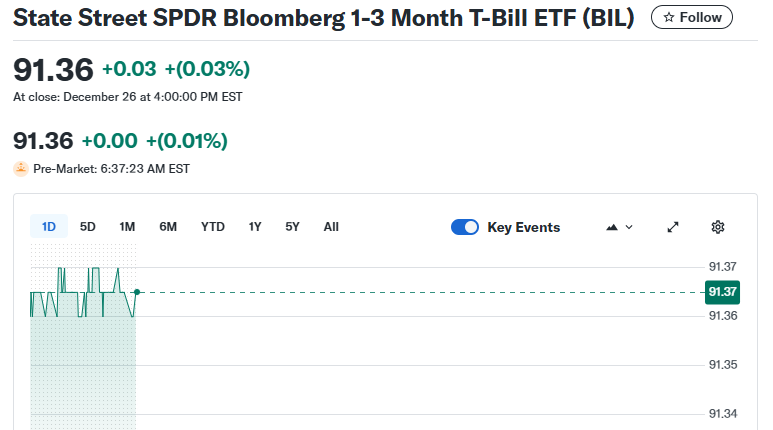
Because of its short-term structure, BIL helps investors preserve their capital and gain even during volatile markets, with the added benefits of safety, liquidity, and immediate access to government-backed securities.
| Pros | Cons |
|---|---|
| Ultra-low interest rate risk due to short maturities. | Very low yield compared to other Treasuries. |
| Highly liquid and safe, ideal for cash parking. | Minimal potential for capital appreciation. |
| Preserves capital during market volatility. | Returns may not beat inflation. |
| Excellent for conservative investors or short-term allocations. | Short-term focus limits income generation. |
3. iShares 1-3 Year Treasury Bond ETF (SHY)
The fund SHY invests in U.S. Treasury bonds with maturities between one and three years. This means they have low risk and modest yield.
It is appropriate for conservative investors as they want predictable income for shorter durations. Compared to other bonds, it is less sensitive to interest directly and is appropriate for risk-averse investors.
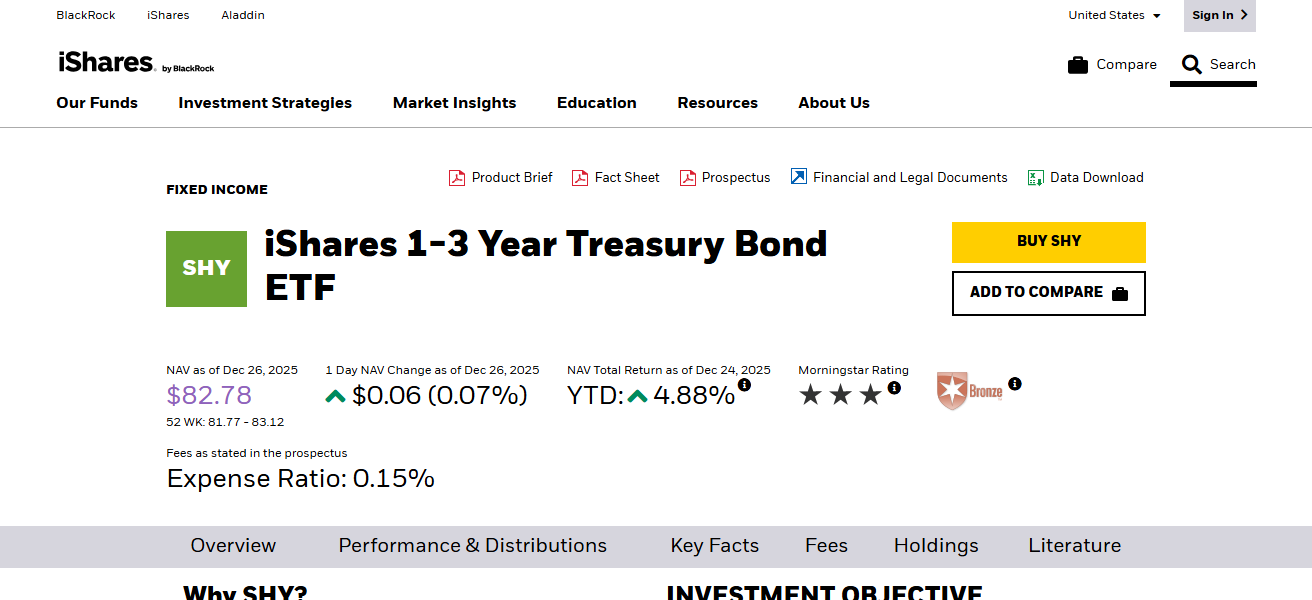
This is a stable holding in portfolios fixed in income, or as an alternative to cash. It has broad investments in short-duration government securities. This means it is safe, liquid, and will earn interest while not losing money.
| Pros | Cons |
|---|---|
| Low interest rate risk with short-term bonds. | Lower yields than intermediate or long-term Treasuries. |
| Government-backed, highly secure investment. | Limited potential for price appreciation. |
| Suitable for conservative portfolios and cash alternatives. | May underperform during falling interest rates. |
| Provides predictable income with minimal volatility. | Short duration may reduce portfolio diversification benefits. |
4. iShares 7-10 Year Treasury Bond ETF (IEF)
IEF specializes in U.S. Treasury bonds with maturities between seven and ten years. By targeting Bonds that have an interest rate risk that is moderate yields that are higher than short term Treasury Bonds.
This ETF works well for investors that want a balanced interest income with price appreciation. IEF is frequently used to hedge against Equity exposure, or to diversify fixed income portfolios.
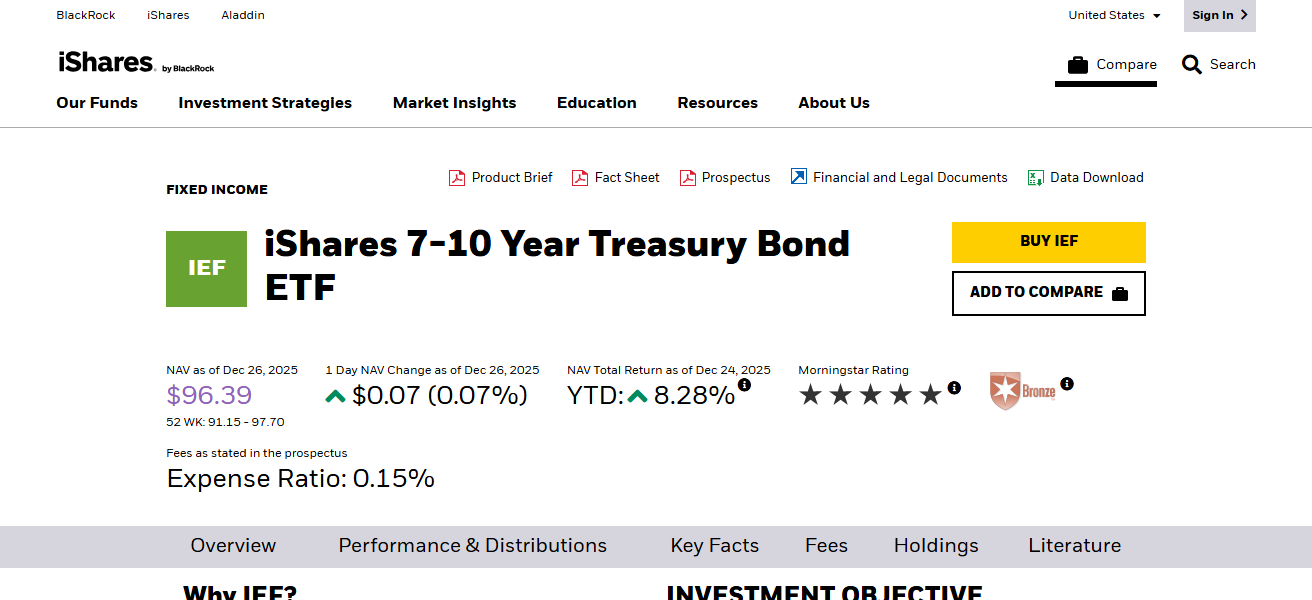
Bonds that are backed by the government are stable, and the bonds that are intermediate in structure help the investors come up with trends for interest rates without the added volatility of long term bonds.
| Pros | Cons |
|---|---|
| Balanced yield vs. risk for intermediate-term Treasuries. | Moderate interest rate sensitivity. |
| Provides stable income and diversification. | Longer duration exposes to potential price drops when rates rise. |
| Government-backed, low credit risk. | Limited upside compared to long-term bonds. |
| Useful for hedging equity exposure. | Returns depend on interest rate trends. |
5. iShares 20+ Year Treasury Bond ETF (TLT)
TLT targets U.S. Treasury bonds that are over 20 years old. With TLT, you can get the biggest changes in interest rate, resulting in big profits when interest rates fall and big losses when interest rates rise.
People who TLT brings people who care about income and who appreciate long durations on Treasuries.
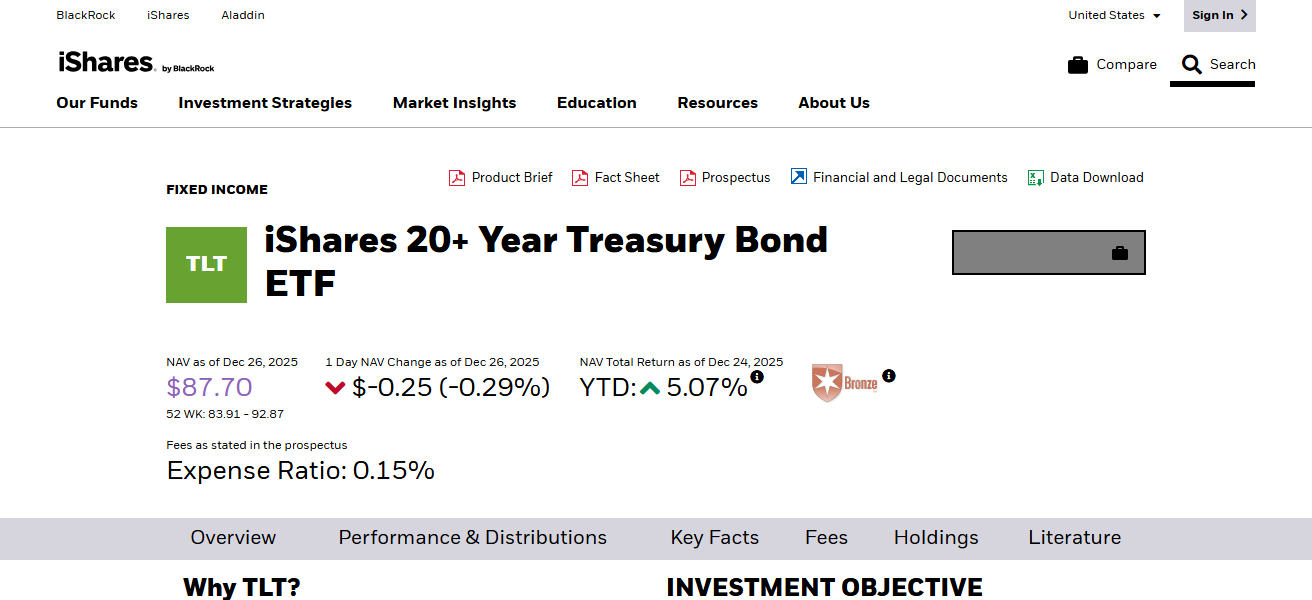
Also, TLT brings people who want to ensure that the credit risk of the bonds is backed by the U.S. government and appreciate the equity market downturns.
Overall, TLT offers the best long term interest rate predictive diversification. TLT is good for diversifying a treasury bond portfolio.
| Pros | Cons |
|---|---|
| Highest yield among Treasury ETFs. | Very sensitive to interest rate changes. |
| Potential for significant capital appreciation in declining rate environments. | Large losses possible if rates rise. |
| Government-backed and highly liquid. | Higher volatility makes it riskier for conservative investors. |
| Effective hedge against equity market downturns. | Less suitable for short-term investors. |
6. SPDR Portfolio Long Term Treasury ETF (SPTL)
SPTL exposes investors to extremely long U.S. Treasuries, usually over ten years. Pay and bond price appreciation are expected to be steady, with gains coming from interest rate shifts.
SPTL helps investors diversify their portfolios and serve as a hedge against equity volatility. The fund is stable and long-term focused thanks to low credit risk, liquidity, and government backing.
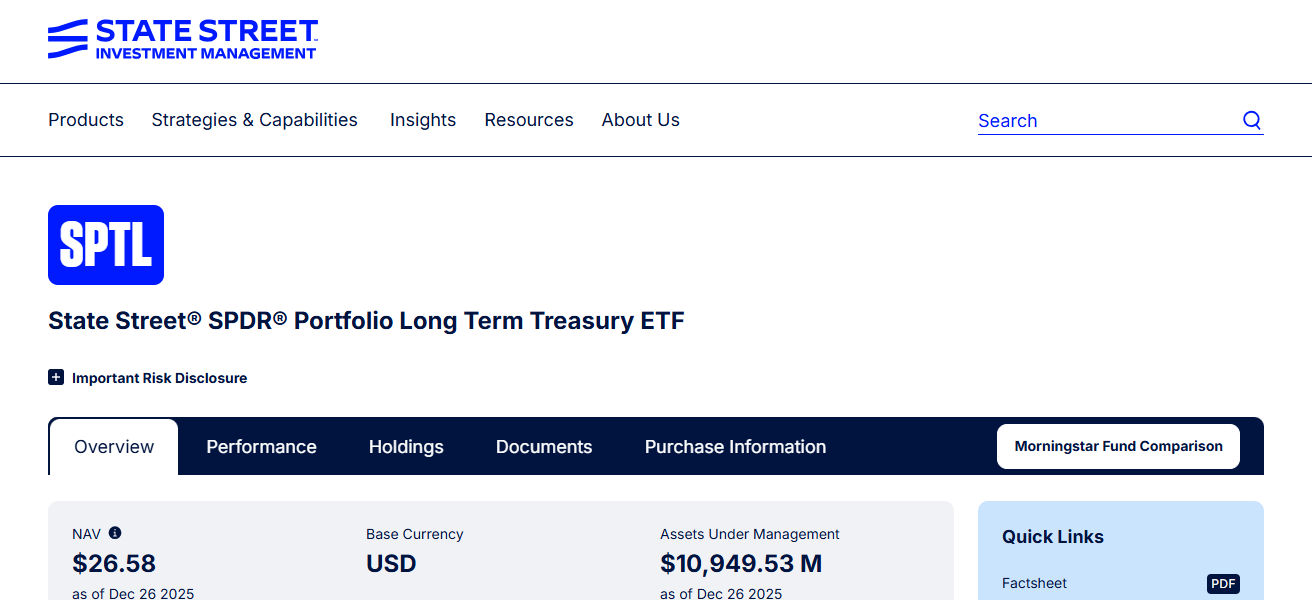
SPTL is sensitive to interest rate changes, especially compared to short-term duration ETFs, but investors are able to take advantage of falling interest rate environments while earning stable and predictable interest from U.S. Treasuries.
| Pros | Cons |
|---|---|
| Provides exposure to long-term Treasury bonds. | Sensitive to interest rate changes. |
| Offers steady income and potential price appreciation. | Lower liquidity than some shorter-term ETFs. |
| Government-backed with low default risk. | Returns can fluctuate significantly with market rates. |
| Useful for portfolio diversification and hedging. | Long-term focus increases volatility risk. |
7. Vanguard Short-Term Treasury ETF (VGSH)
VGSH focuses on U.S. Treasury securities that mature in one to three years, prioritizing stability and capital preservation. Treasury securities are of great interest to conservative investors to ensure reliable income.
Due to VGSH’s very short duration, VGSH has a minimized interest rate risk. VGSH’s high liquidity makes it a suitable cash-equivalent or low-risk portfolio choice. VGSH offers a short-term investment alternative during periods of high market volatility.
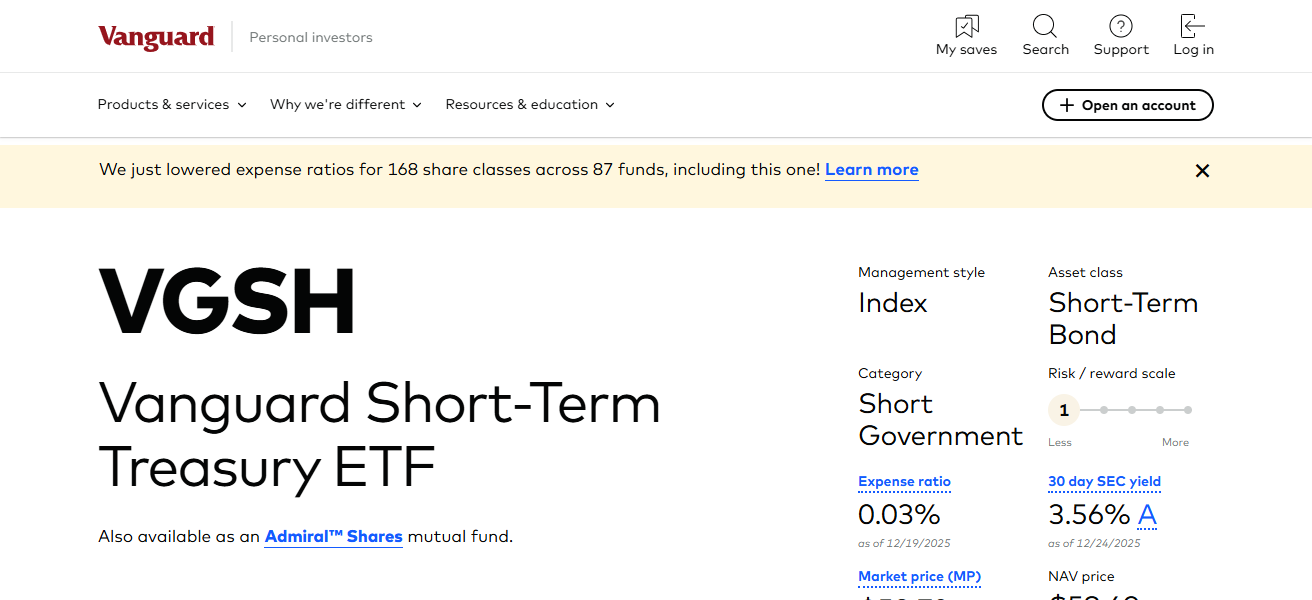
VGSH offers a modest return, and ETF characters that follow a wide, short-term Treasury index provide diversifying exposure to Treasury securities, low default risk, and government securities with consistent interest payments.
| Pros | Cons |
|---|---|
| Short-duration Treasury bonds minimize interest rate risk. | Yields are modest compared to intermediate or long-term Treasuries. |
| Safe, low-risk investment with government backing. | Limited capital appreciation potential. |
| Highly liquid and stable for conservative portfolios. | Returns may not keep up with inflation. |
| Good for cash alternatives or low-risk allocation. | Short-term focus limits income growth. |
8. Vanguard Intermediate-Term Treasury ETF (VGIT)
VGIT invests in U.S. Treasury bonds with maturities between three and ten years. VGIT’s intermediate-term focus Treasury bonds yield higher returns than the short-term bonds while lessening the impact of interest rate changes compared to long-term bonds.
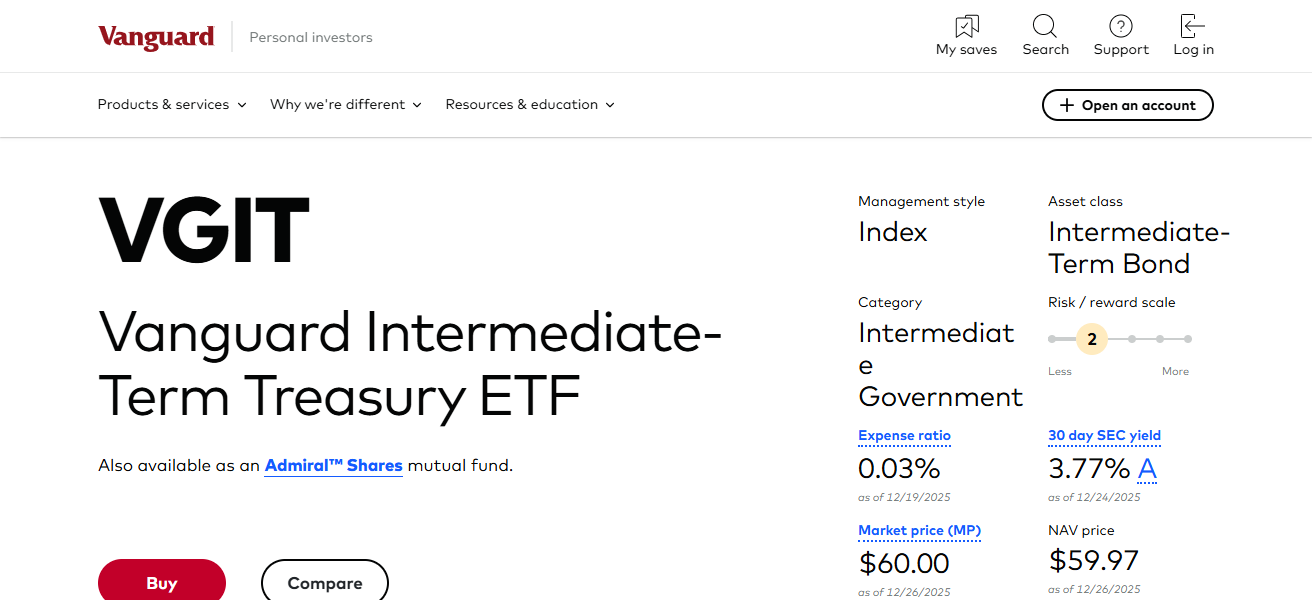
VGIT is designed for investors looking for income Generating , capital preservation , and diversification of their portfolios. VGIT’s holdings are government backed which increases stability and liquidity.
VGIT provides investors with the ability to expect moderate interest rate changes while earning consistent income and lessening the impact of volatility associated with longer duration Treasuries.
| Pros | Cons |
|---|---|
| Balanced risk and yield with 3–10 year bonds. | Moderate sensitivity to interest rate changes. |
| Steady income with lower risk than long-term Treasuries. | Returns lower than long-term Treasury ETFs. |
| Government-backed, highly secure investment. | Moderate volatility in volatile interest rate environments. |
| Useful for diversification and income stability. | Capital gains limited compared to long-term bonds. |
9. Vanguard Long-Term Treasury ETF (VGLT)
VGLT invests specifically in U.S. Treasury Bonds which have a maturity of over ten years. VGLT also has a higher yield than most of its competitors, but will also have a higher interest rate sensitivity.
VGLT will be best suited for investors who are seeking income and a long-term capital appreciation.
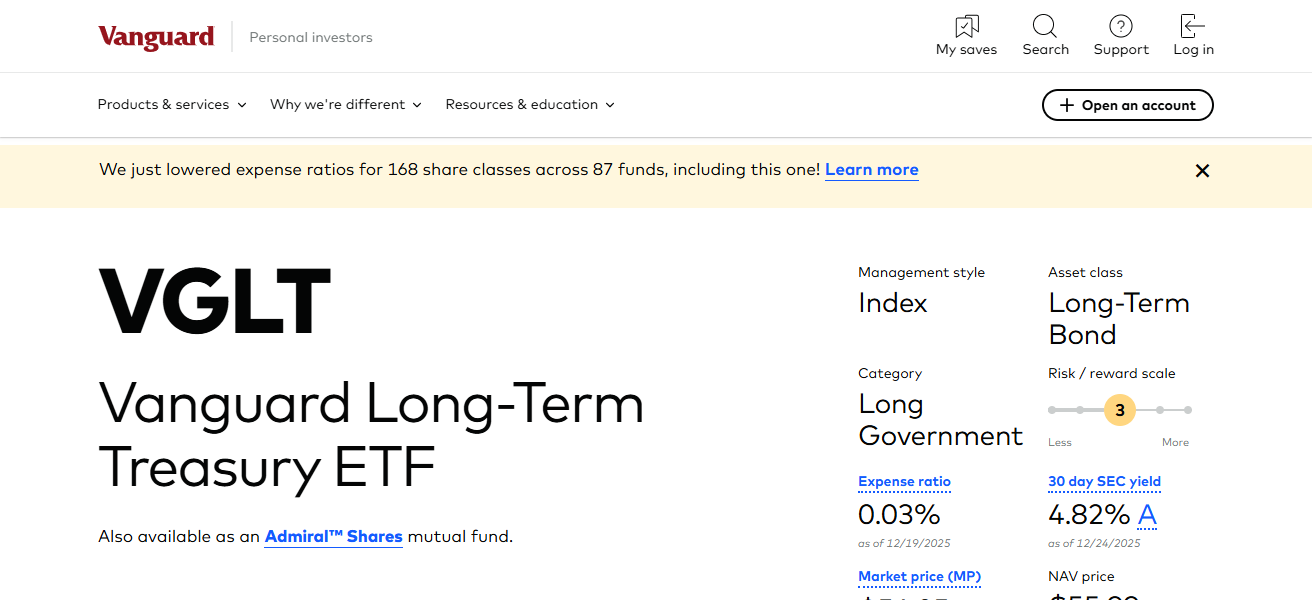
VGLT is typically used for adding diversification to a portfolio, and to hedge against any declining markets in equities. VGLT’s treasury backed bonds provide security and liquidity.
Bonds also provide benefits to investors when interest rates are declining. This ETF is a key strategy for interest rate risk and increasing potential price appreciation in Treasuries.
| Pros | Cons |
|---|---|
| Offers higher yield than short- or intermediate-term Treasuries. | Highly sensitive to interest rate movements. |
| Potential for capital appreciation if rates fall. | Greater volatility and price risk. |
| Government-backed, low default risk. | May underperform in rising rate environments. |
| Useful for diversification and hedging equities. | Long duration increases exposure to rate swings. |
10. iShares Treasury Floating Rate Bond ETF (TFLO)
TFLO buys U.S. Treasury floating rate notes which have adjustable interest rates based on short-term Treasury yields.
Compared to fixed-rate Treasuries, TFLO has less interest rate risk because of its adjustable rates, making it favorable in rising rate environments. It pays interest that grows alongside market rates, while preserving the safety and liquidity characteristics of government bonds.
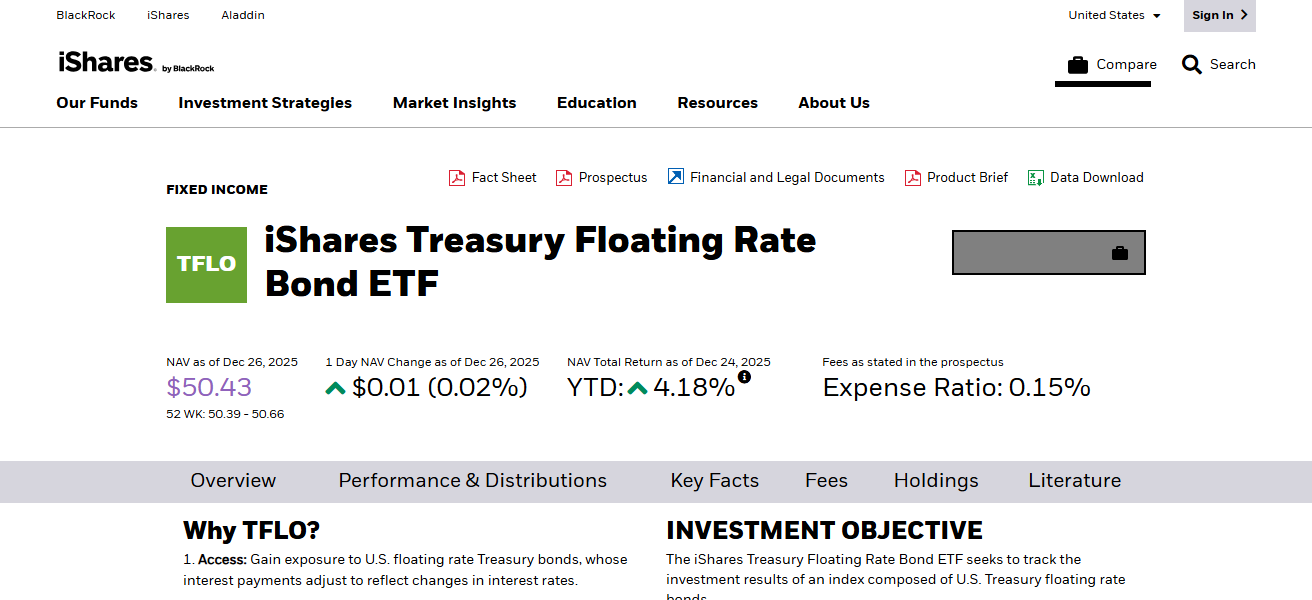
Investors need TFLO in order to diversify and manage interest rate risk in a fixed-income portfolio. It offers protection from inflation while providing steady low-risk returns because of its floating rate.
| Pros | Cons |
|---|---|
| Floating-rate bonds reduce interest rate risk. | Yields are variable and may be lower than fixed-rate long-term Treasuries. |
| Government-backed, low default risk. | Less predictable income compared to fixed-rate bonds. |
| Performs well in rising interest rate environments. | Limited price appreciation potential. |
| Diversifies fixed-income portfolios and mitigates rate risk. | Not ideal for investors seeking fixed, stable returns. |
Conclusion
Lastly, Top Treasury ETFs provide investors with safety and government-backed exposure Along with reliability and government backing, these ETFs provide income, portfolio diversification, and protection against market volatility, covering all your needs.
Short ETFs minimize risk and Long and floating-rate ETFs provide greater yield or protection against interest rate risk Short-term risk, long-term reward. Right or risk, what’s your income goal
FAQ
Treasury ETFs are exchange-traded funds that invest in U.S. government bonds, including bills, notes, and bonds. They provide a safe, liquid way to earn interest income while reducing credit risk.
BIL and VGSH are ideal for short-term goals. They invest in 1–3 month or 1–3 year Treasuries, minimizing interest rate risk and preserving capital.
TLT, SPTL, and VGLT focus on long-term Treasuries (10+ years), offering higher yields but higher interest rate sensitivity.
ETFs like IEF and VGIT balance yield and risk, providing moderate income with less volatility than long-term bonds.
TFLO invests in floating-rate notes whose interest adjusts with short-term Treasury yields, reducing interest rate risk in rising rate environments.