In this article, I will discuss the Best AI Agents for Data Aggregation & Reporting Tools that help modern businesses automate data processing, improve performance tracking, and generate accurate stakeholder reports.
These AI solutions streamline workflows, reduce manual effort, and deliver real-time insights. You will learn how top tools enhance productivity, decision-making, and scalable reporting systems for startups and enterprises.
Key Poinst & Best AI Agents For Seamless Performance Data Aggregation and Stakeholder Reporting
| AI Agent | Explanation |
|---|---|
| DataRobot | Automates predictive analytics, enabling startups to build scalable machine learning models quickly |
| Zapier AI | Connects apps and automates workflows for seamless data aggregation and reporting efficiently |
| Microsoft Copilot | Assists teams with AI-driven insights, improving productivity and stakeholder reporting accuracy significantly |
| Google Vertex AI | Provides scalable AI infrastructure for advanced analytics and real-time data processing capabilities |
| IBM watsonx | Delivers enterprise-grade AI tools for a compliance-focused data aggregation reporting solutions platform |
| Snowflake Cortex | Enables intelligent data cloud analytics with AI-powered insights for enterprises globally |
| Airtable AI | Simplifies project tracking and automates reporting using embedded AI assistants workflow optimization |
| UiPath AI | Automates business processes and improves efficiency through intelligent AI agents and robotic automation |
| Notion AI | Enhances documentation and knowledge management with smart AI writing assistance features integration |
| Tableau AI | Transforms data visualization and reporting with AI driven analytics dashboards, capabilities insights |
10 Best AI Agents For Seamless Performance Data Aggregation and Stakeholder Reporting
1. DataRobot
DataRobot is an AI platform that assists companies in streamlining predictive modeling and organizing their data.
The platform is helpful to companies focused on optimizing the construction, deployment, and maintenance of their ML systems.
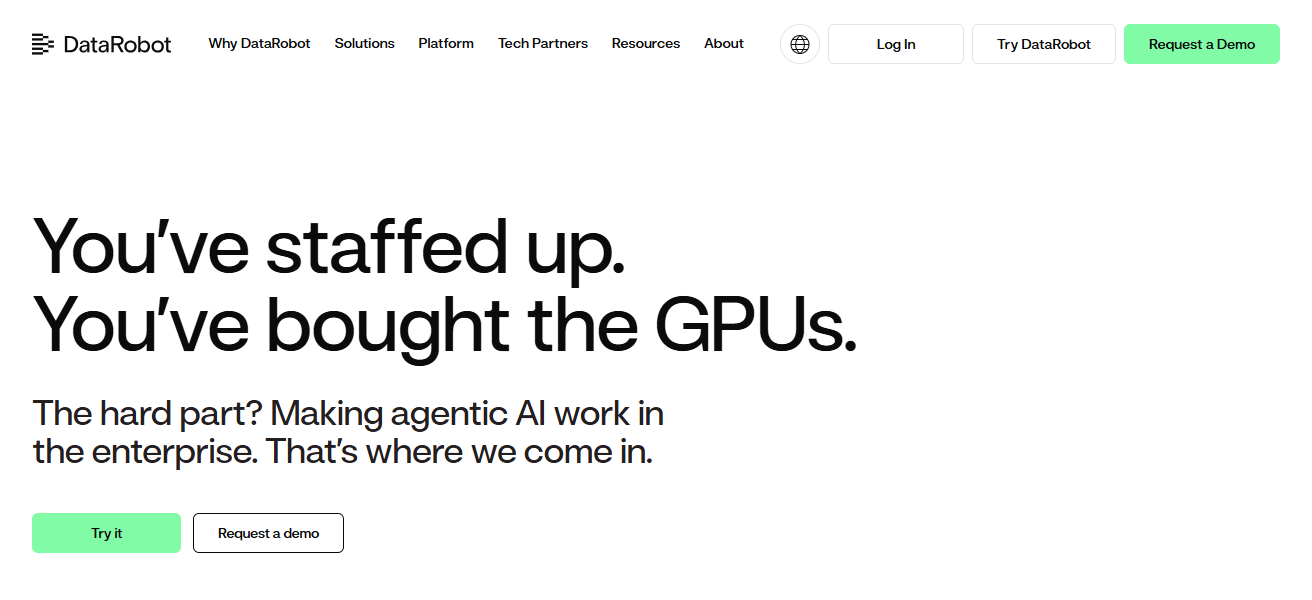
Automation in DataRobot cuts down a company’s data-related workload. As an additional benefit, the platform’s cloud-based system ensures efficiency in the speed and accuracy of reporting in a timely manner within a company’s various divisions and across industries.
DataRobot – Key Features
| Feature | Description |
|---|---|
| Automated ML | Builds machine learning models without manual coding effort |
| Predictive Analytics | Provides accurate forecasting for business and market trends |
| Model Deployment | Deploys AI models quickly into production environments |
| Data Governance | Ensures compliance and control over enterprise data usage |
| Scalable Cloud AI | Supports large-scale enterprise AI workflows efficiently |
2. Zapier AI
Zapier AI takes the automation of data-related workflows to the next level through its integration with thousands of applications.
Its continued development in 2025, with intuitive task integrations and logic-based, real-time trigger-based decision making, simplifies many time-consuming tasks for companies when interfacing with multiple different applications.
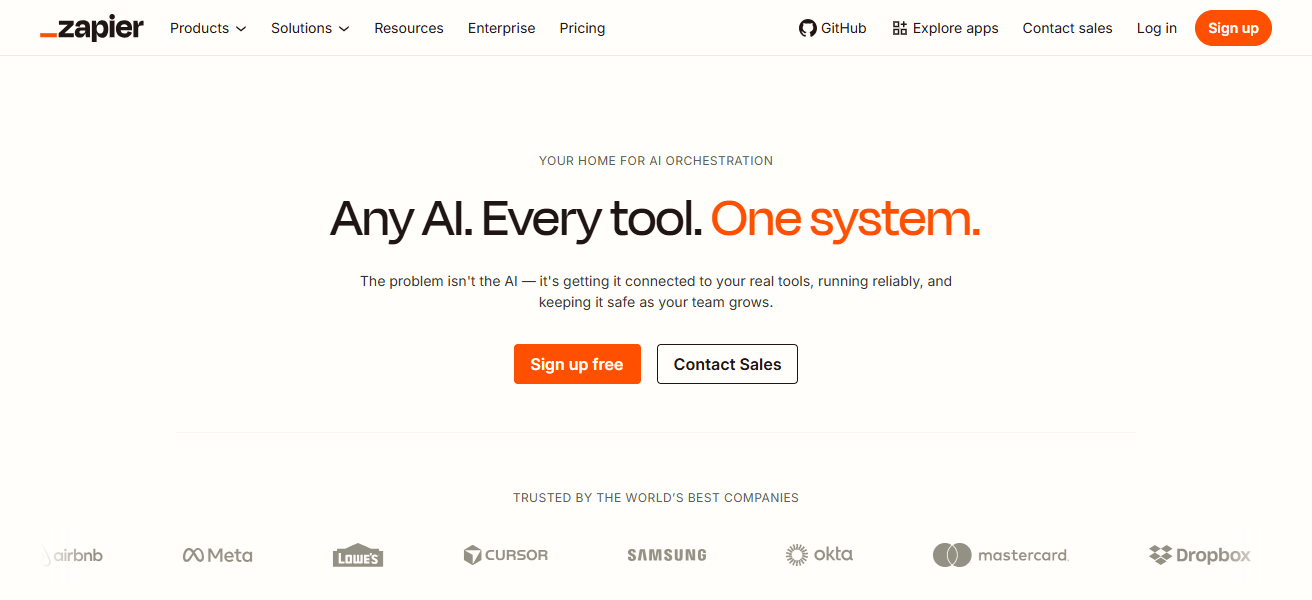
Zapier AI quickly and efficiently provides real-time reporting and business analytics by optimizing and streamlining enterprise workloads.
Zapier AI – Key Features
| Feature | Description |
|---|---|
| App Integration | Connects 6000+ apps for seamless workflow automation |
| Task Automation | Eliminates repetitive manual business processes instantly |
| AI Triggers | Smart event-based automation for real-time actions |
| Data Syncing | Keeps all business tools updated with live data |
| Workflow Builder | No-code interface for creating automation pipelines easily |
3. Microsoft Copilot
Microsoft Copilot’s AI builds a bridge by seamlessly integrating workplace Microsoft applications to automate time-consuming reporting tasks.
The Copilot application is an extremely efficient tool for data and analytics teams. With modern updates for 2025, Microsoft Copilot now supports enterprise-level security and improved context for reporting.
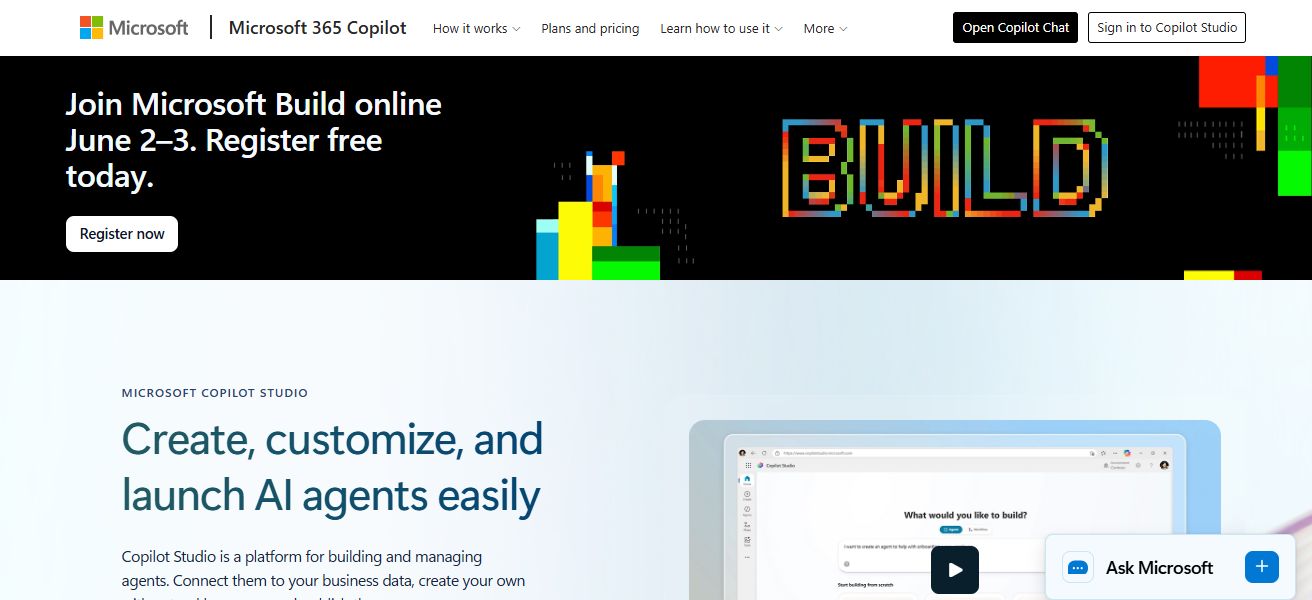
Microsoft Copilot works alongside stakeholders to optimize and improve cross-departmental communications and reporting activities on time through its realtime synchronization of data.
Microsoft Copilot – Key Features
| Feature | Description |
|---|---|
| AI Assistance | Provides smart suggestions across Microsoft 365 apps |
| Data Summarization | Converts complex datasets into simple insights quickly |
| Report Generation | Automates stakeholder reports with structured outputs |
| Context Awareness | Understands documents and user intent intelligently |
| Enterprise Security | Ensures data protection within the Microsoft ecosystem |
4. Google Vertex AI
Google Vertex AI delivers an all-in-one machine learning infrastructure for data analysis and reporting. Developers can train, deploy, and manage models across cloud systems with ease.

Automation, generative AI, and faster processes will be available in 2025. Its predictive analytics and real-time reporting to stakeholders let companies plan and execute business operations.
Google Cloud Integration offers scalable, enterprise-grade, worldwide solutions. Vertex AI continues as the primary platform for AI to transform business operations.
Google Vertex AI – Key Features
| Feature | Description |
|---|---|
| ML Training | Builds and trains machine learning models at scale |
| Cloud Integration | Fully integrated with Google Cloud ecosystem |
| Real-Time Processing | Handles live data streaming and analytics efficiently |
| AutoML Tools | Simplifies AI development with minimal coding effort |
| Generative AI | Supports advanced AI model generation capabilities |
5. IBM Watsonx
IBM Watson is a type of AI used for enterprise. Its specific AI focuses are a combination of governance, compliance, and data aggregation.
It allows companies to develop responsible AI systems for more accurate reporting. In 2025, IBM plans to develop WatsonX with greater model transparency and flexible compliance.
Companies use WatsonX to improve and simplify reporting to stakeholders and to design workflows to help make decisions. It includes hybrid cloud capabilities.
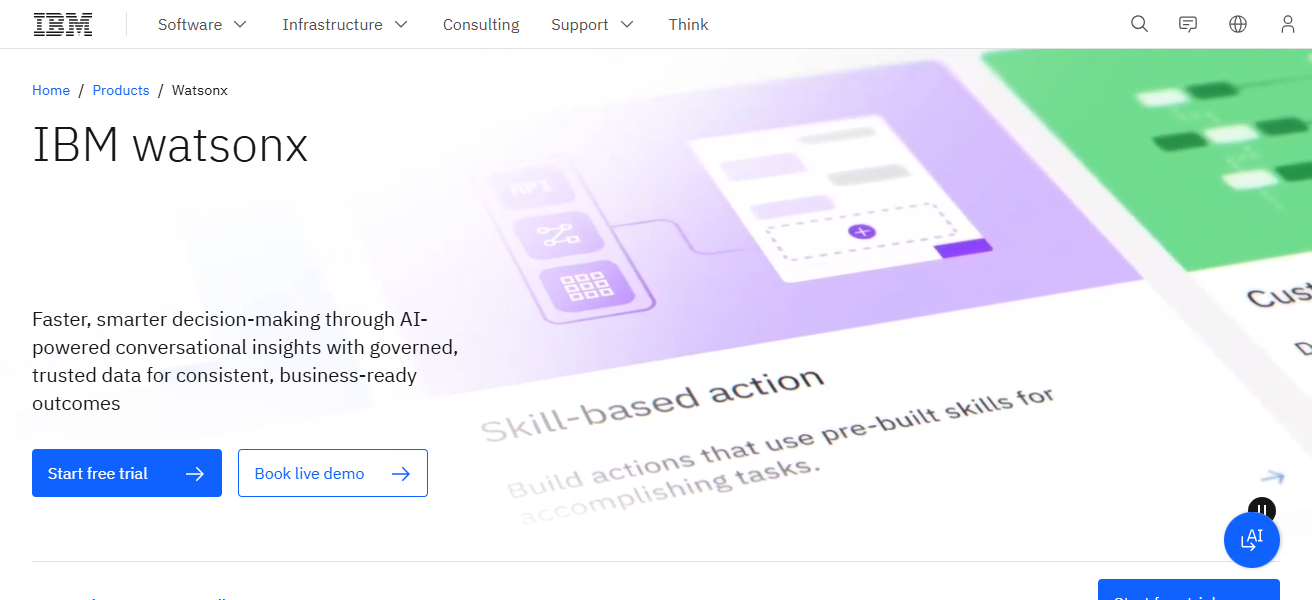
IBM is committed to developing the WatsonX ecosystem with AI governance to enable enterprises to simplify data-driven decisions and to increase the accuracy for determining intelligent reporting.
IBM Watsonx – Key Features
| Feature | Description |
|---|---|
| AI Governance | Ensures responsible and ethical AI usage |
| Compliance Tools | Helps meet global regulatory standards easily |
| Hybrid Cloud | Works across on-premise and cloud environments |
| Data Security | Strong enterprise-grade data protection features |
| Explainable AI | Provides transparency in AI decision-making processes |
6. Snowflake Cortex
Snowflake Cortex has designed the future of data cloud analytics in enterprise reporting and intelligent insights with the power of AI to process and analyze data.
It enables companies to aggregate data and provide intelligent and advanced analytics with the ability to visualize the reported analytics.
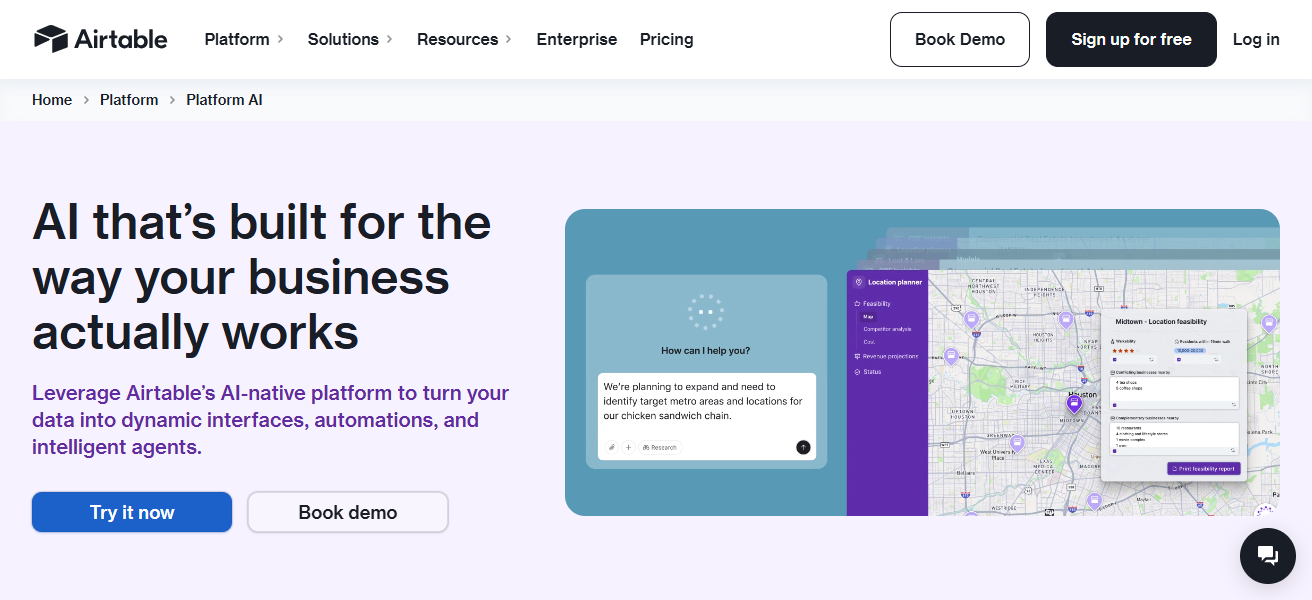
In 2025, Snowflake’s Cortex will provide advanced data pipelines and improve natural language processing. Companies are using Snowflake Cortex for intelligent reporting to provide analytics and help with decision-making.
Snowflake Cortex has designed a modern and intelligent data analytics platform that supports flexible enterprise environments across safety and security. Snowflake Cortex is the most widely used data analytics platform across all industries.
Snowflake Cortex – Key Features
| Feature | Description |
|---|---|
| Data Cloud AI | Combines AI with cloud data warehousing |
| Natural Language Query | Lets users analyze data using simple language |
| Real-Time Analytics | Processes live enterprise data instantly |
| Scalable Architecture | Handles massive datasets efficiently |
| Automated Insights | Generates AI-driven business intelligence reports |
7. Airtable AI
Airtable AI has simplified project management with intelligent automations to improve collaborative workflows.
It allows teams to aggregate data, monitor project progress, and automate the production of progress reports.

AI’s advanced workflow optimizations will come with its 2025 updates. Airtable is used by many startups and newer companies because of its automations and the ability to reach stakeholders.
Airtable AI has a flexible database that can scale with the startup’s growth. Airtable AI has a no-code platform specifically for enterprises and offers extensive and up-to-date reporting for project automation with cross-collaboration improvements.
Airtable AI – Key Features
| Feature | Description |
|---|---|
| No-Code Platform | Builds workflows without programming skills |
| AI Task Automation | Automates repetitive project management tasks |
| Collaboration Tools | Enables real-time team collaboration |
| Smart Database | Combines spreadsheet and database functionality |
| Reporting Automation | Generates instant project and performance reports |
8. UiPath
UiPath AI uses intelligent robotic process automation and machine learning to streamline repetitive business tasks.
Reduced manual workloads and improved efficiency are enhanced by increased capabilities of adaptive AI agents and adaptive automation workflows.
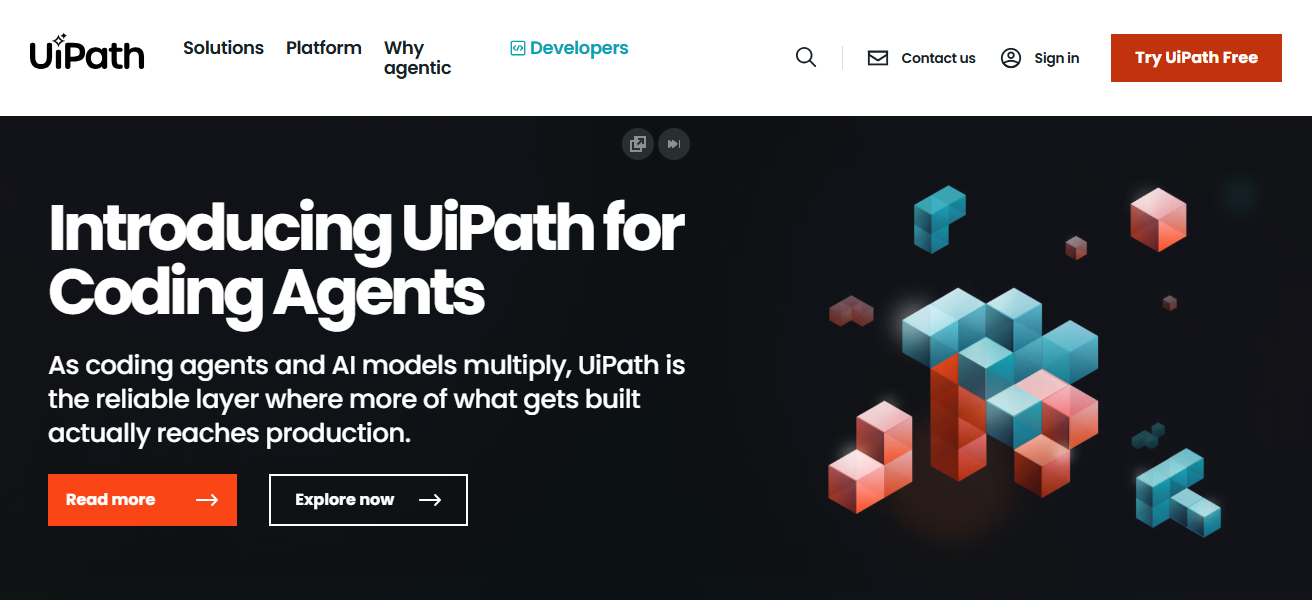
If your organization needs rapid reporting and regulatory compliance, UiPath seamlessly integrates with most of the enterprise cross-functional systems.
UiPath’s AI is a powerful business tool that offers intelligent scalability, operating transformations, and rapid digital automation to its users across various industries.
UiPath AI – Key Features
| Feature | Description |
|---|---|
| Robotic Automation | Automates repetitive enterprise tasks efficiently |
| Process Mining | Identifies workflow inefficiencies automatically |
| AI Workforce | Uses intelligent bots for operations |
| System Integration | Works across multiple enterprise platforms |
| Compliance Automation | Ensures regulatory workflow adherence |
9. Notion AI
Intelligent writing and organizing features make Notion AI a whole and versatile tool for documentation and knowledge management.
Summarizing and structuring the complex information is a team effort that Notion AI makes easier. 2025 enhancements include improved AI suggestions, adaptive to editing, and enhanced collaboration.
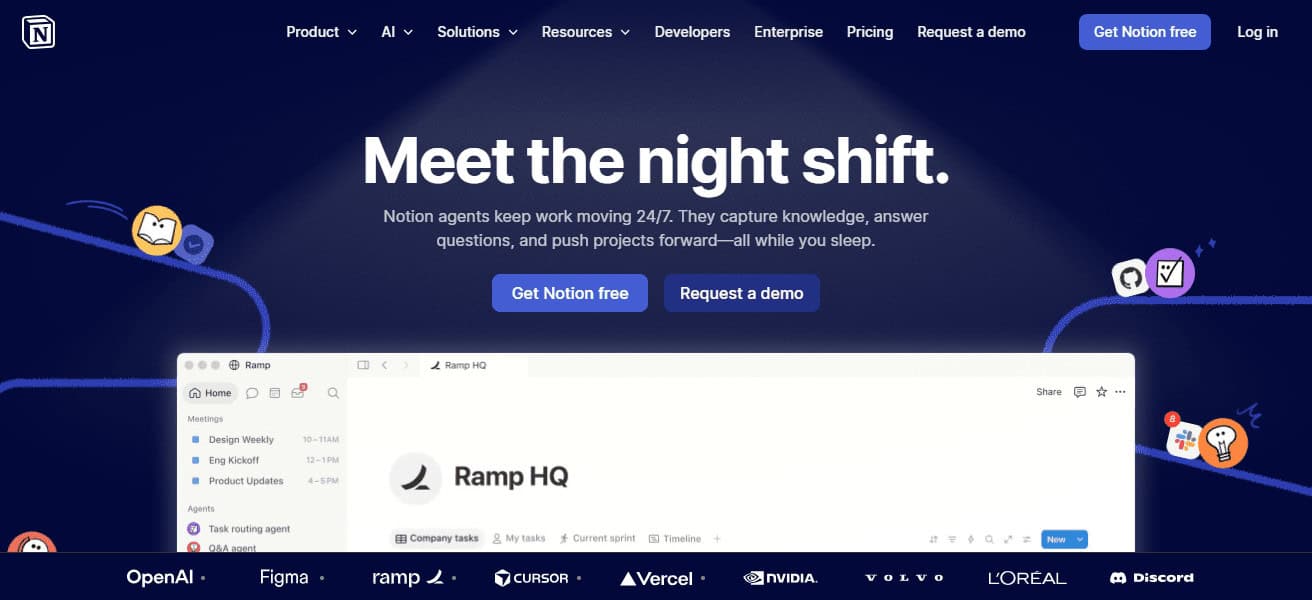
Startups prefer Notion for managing documentation, reporting, and workflows due to the flexible integration and ecosystem built into the productivity apps.
Startups globally today utilize Notion AI to provide unified and real-time knowledge management and reporting to cross-functional teams in a distributed and hybrid workplace.
Notion AI – Key Features
| Feature | Description |
|---|---|
| Smart Writing | Generates and improves written content instantly |
| Knowledge Base | Organizes company data in structured format |
| Summarization | Converts long notes into short insights |
| Workflow Integration | Works with productivity and team tools |
| AI Suggestions | Provides contextual recommendations while working |
10. Tableau AI
Tableau AI is a market leader and the preferred advanced analytics and machine learning-based data visualization and reporting tool that offers smart and interactive dashboards to enterprise clients and facilitates advanced data-driven decisions.

Tableau AI is constantly evolving to empower its clients with smarter business decisions. Tableau AI 2025 innovations will include advancements in predictive analytics and automated data insights.
Businesses use Tableau for real-time reporting with the performance of integrated enterprise analytics services through its cloud services.
Tableau AI is continuously evolving to meet the analytics needs of data-intensive enterprises on a global scale.
Tableau AI – Key Features
| Feature | Description |
|---|---|
| Data Visualization | Creates interactive charts and dashboards |
| AI Forecasting | Predicts future business trends accurately |
| Real-Time Dashboards | Displays live performance metrics |
| Advanced Analytics | Uses ML for deeper insights |
| Business Reporting | Generates automated stakeholder reports |
Conclusion
AI agents are becoming essential tools for modern businesses aiming to improve data accuracy, operational efficiency, and stakeholder communication.
From automation platforms like Zapier AI to enterprise analytics systems like Tableau AI and DataRobot, each solution plays a vital role in transforming raw data into actionable insights.
As organizations continue to adopt AI-driven workflows, these tools will remain central to scalable reporting, productivity enhancement, and intelligent decision-making across industries.
FAQ
What are AI agents used for in business?
They automate data processing, reporting, workflows, and decision-making tasks.
Which AI agent is best for automation?
Zapier AI and UiPath AI are top choices for workflow automation.
Which tool is best for data visualization?
Tableau AI is widely used for advanced dashboards and reporting.
Can AI agents replace manual reporting?
They significantly reduce manual work but still require human oversight.
Are these AI tools suitable for startups?
Yes, most tools offer scalable and startup-friendly pricing models.