
This article will cover the Best Automated AI Risk Calculators To Spot Fraudulent Liquidity Pools and describe how these innovations allow investors to avoid losing money to unsafe DeFi projects.
AI tools are designed to examine smart contracts and find risks that are not readily detectable, and analyze liquidity patterns as they shift. In this guide, I will detail the leading safety-focused platforms within the decentralized finance (DeFi) ecosystem.
Key Poinst & Best Automated AI Risk Calculators To Spot Fraudulent Liquidity Pools
- TokenSniffer AI analyzes smart contracts for hidden liquidity pool risks
- De.Fi Scanner detects malicious liquidity pools using automated AI algorithms
- Honeypot.is identifies scam tokens and fake liquidity traps in seconds
- RugDoc AI evaluates liquidity stability and flags high-risk projects
- GoPlus Security scans decentralized pools for suspicious contract behavior patterns
- CertiK AI risk engine audits liquidity pools and detects fraud
- SolidProof AI reviews smart contracts to uncover liquidity manipulation risks
- BscScan AI tools monitor liquidity pool transactions for abnormal activity
- DappRadar AI evaluates DeFi pools for a scam probability scoring system
- PeckShield AI detects fraudulent liquidity pools and alerts investors instantly
10 Best Automated AI Risk Calculators to Spot Fraudulent Liquidity Pools
1. TokenSniffer AI
TokenSniffer AI is one of the most popular examples of automated liquidity pool risk assessment tools in DeFi. It can evaluate smart contracts to reveal ownership privileges, if the liquidity is really locked, and tricky tokenomics.
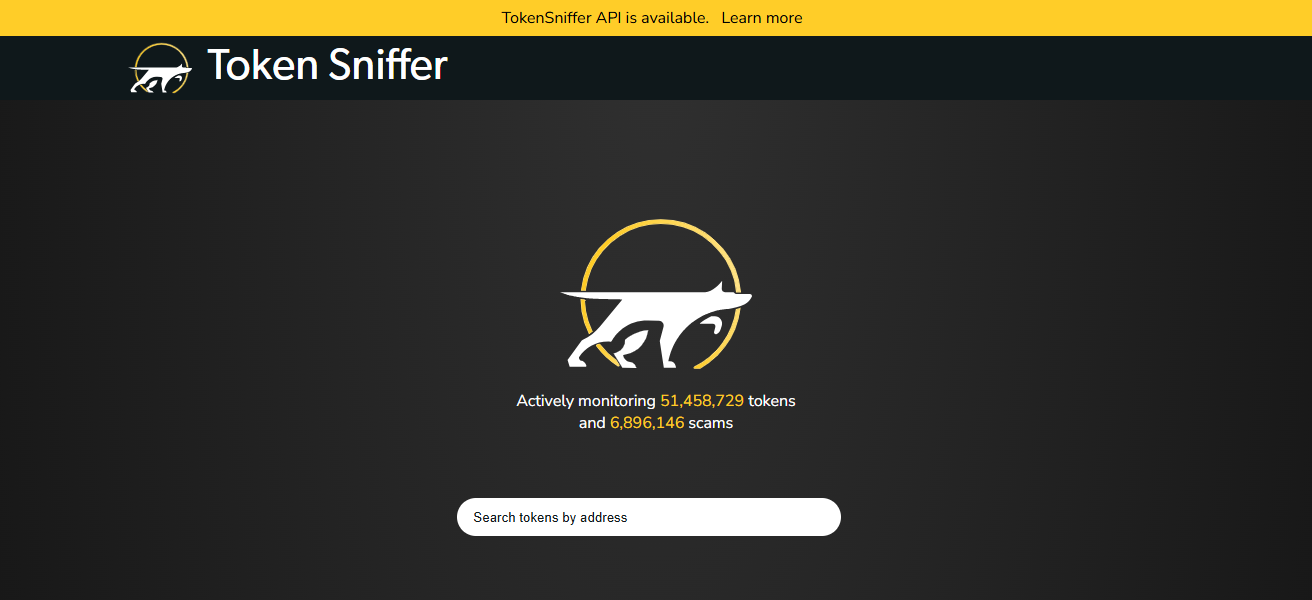
TokenSniffer AI assigns risk levels to smart contracts based on the on-chain behavior of the contract and the way the contract is coded.
Recently, the tool has started to leverage AI for the detection of anomalies in the blockchain, providing enhanced protection to its users against rug pulls and unreliable DeFi projects.
TokenSniffer AI Features
- Detects secret ownership privileges within smart contracts
- Recognizes deceptive liquidity locking mechanisms
- Offers real-time risk scores based on blockchain activities
- Employs AI-powered anomaly detection to identify abnormal token structures
2. De.Fi Scanner
De.Fi Scanner is one of the most modern DeFi risk assessment tools using AI for security. De.Fi Scanner assesses various aspects of a liquidity pools’ smart contrac
Including permissions, wallet distribution, and transaction behavior to assess the smart contract for liquidity migration and hidden malicious mint functions.
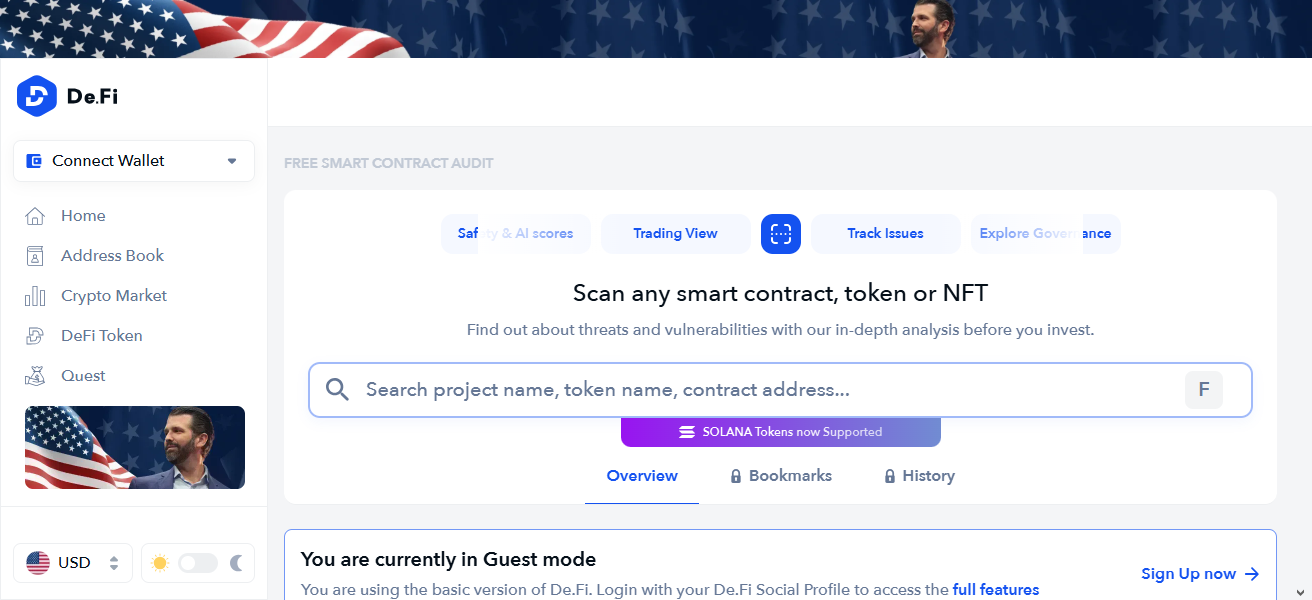
De.Fi Scanner’s latest update improves security among active liquidity pools by implementing cross-chain monitoring for Ethereum, BNB Chain and Polygon.
De.Fi Scanner Features
- Evaluates wallet distribution within liquidity pools
- Discovers hidden mint functions within smart contracts
- Evaluates cross-chain activity on Ethereum, BNB, and Polygon
- Detects irregular liquidity migration patterns
3. Honeypot.is
Honeypot.is is one of the fastest of the AI-based checkers to detect honeypot scams and fake liquidity traps of all kinds.
It tests if token scams restrict the selling of tokens by simulating buy and sell transactions. The platform is designed to protect users from liquidity traps that are designed to restrict selling of the tokens and trap users funds permanently.

It has the latest machine learning models for detection of new scams and increases its protection against DeFi advanced scams activities across the latest token ecosystems.
Honeypot.is Features
- Mimics buying and selling for confirmation
- Recognizes token selling restrictions due to honeypot
- Identifies deceptive liquidity lock in a snap
- Detects continuously evolving scams using ML models
4. RugDoc AI
RugDoc AI analyzes the safety of DeFi projects and the liquidity of investments before people put money down.
They utilize automated rating systems to assess the locking of liquidity, ownership of the contract, and the developer’s reputation.

The site also verifies community reports by AI for a more definitive answer. Upgrades include fraud prediction models that recognize the unsettling behaviors of developers and early movements of liquidity pools that suggest a rug pull.
RugDoc AI Features
- Scans liquidity locking stability and duration
- Analyzes developer trust and contract ownership risk
- Blends AI score and community risk assessment
- Uses early detection of stable liquidity to predict rug pulls
5. GoPlus
GoPlus Security is an AI that conducts real-time assessments to find problematic smart contracts while monitoring decentralized liquidity pools.
It looks at the permissions of transactions, the liquidity of pools, and how they shift across multiple blockchains.

The system is installed into wallets and DeFi dashboards for immediate monitoring. With its newest AI, it is able to assess behavior to detect rug pulls and exploits that are hiding by early cover up actions that other auditing systems do not recognize.
GoPlus Features
- Evaluates real-time transactions in liquidity pools
- Detects irregular approvals and permission modifications
- Uses AI to identify stealth rug pulls
- Directly plugs into your wallet to issue real-time notifications
6. CertiK AI
The CertiK AI Risk Engine has made great improvements to liquidity pool auditing. It is one of the many advanced blockchain securities systems.
AI monitoring combined with formal verification and advanced analyses of on-chain data makes this system a fraud risk sentinel.
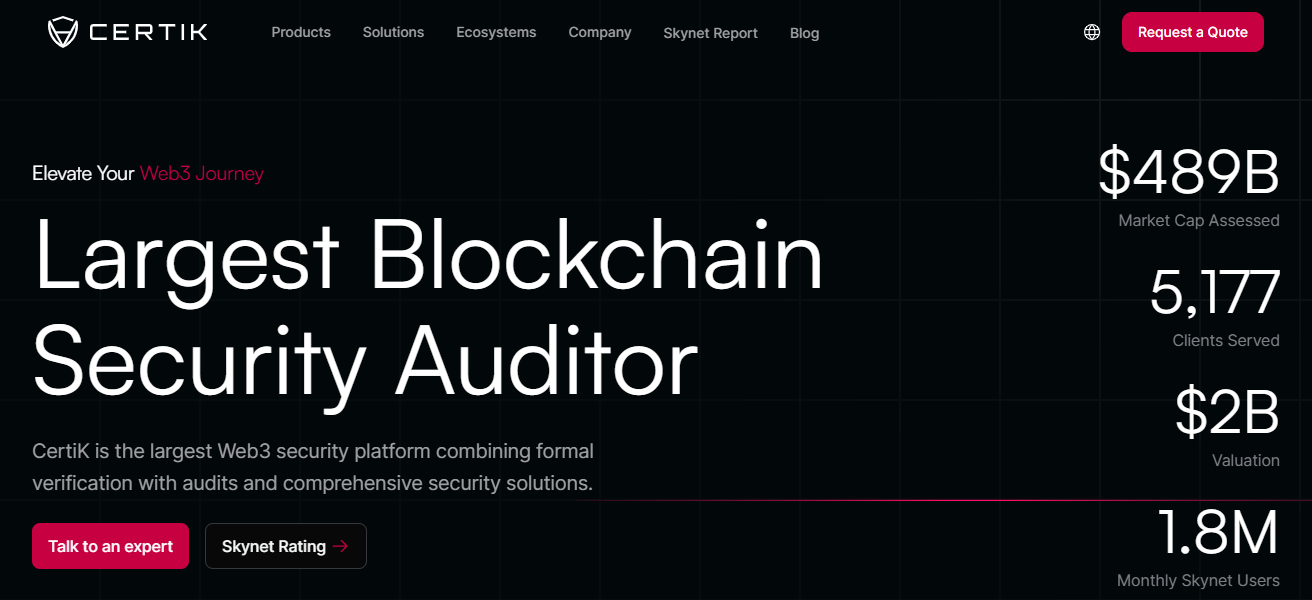
It is capable of liquidity and fund movement manipulation, the presence of hidden admin keys and beyond.
The latest innovations on this system include monitored dashboards that constantly update and track risk scores, providing investors with the most up-to-date safety tracking on DeFi fraud and exploit systems.
CertiK AI Features
- Conducts formal verification of smart contracts
- Observes liquidity and fund movement abnormalities
- Discovers concealed admin keys and other issues
- Offers real-time, flexible risk score dashboards
7. SolidProof AI
SolidProof AI centers around automated smart contract audits to uncover manipulative liquidity activities and dishonest actions within DeFi space.
It analyzes the fairness of token distribution, the locking of liquidity, and the decentralization of ownership. Its system issues comprehensive reports on risk severity.
Recently, SolidProof AI added contract simulations enhanced by AI to predict liquidity pool behavior under market stress. With this, investors can prevent exposure to unstable or purposefully misleading crypto projects.
SolidProof AI Features
- Analyzes the fairness and balance of token distribution
- Validates the status of liquidity locks and the contract’s transparency
- Models the impact of market dynamics on liquidity
- Provides comprehensive automated risk audit reports
8. BscScan AI
BscScan AI tools provide automated liquidity monitoring along with blockchain scanning capabilities.
It conducts investigations on transaction histories, wallet activity, and token movements within liquidity pools.

BscScan AI is able to detect schemes like mass liquidity withdrawals or synchronized actions among various wallets.
Recently, AI-integrated alert systems have been embedded to boost the speed of fraud detection, simplifying the process of spotting questionable DeFi actions on the Binance Smart Chain.
BscScan AI Features
- Monitors liquidity wallet transactions
- Identifies instant large withdrawal of liquidity
- Discovers wallet movement manipulation
- Issues AI-led alerts for questionable actions on the blockchain
9. DappRadar AI
DappRadar AI incorporates sophisticated analytics to assess liquidity pools within DeFi and render a fraud score.
Some of the variables analyzed are user interest, liquidity volume, the consistency of trading activity, and the robustness of the smart contract.

DappRadar AI combines information from multiple blockchains to enhance accuracy for risk analyses.
Its latest innovations in the AI space have been models that incorporate a liquity collapse forecast into their analytics.
DappRadar AI Features
- Provides a scam probability rating for DeFi pools
- Studies the behavior of trading and liquidity trends
- Compiles and analyzes data across multiple blockchains
- Employs predictive AI to determine if liquidity is likely to drop
10. PeckShield AI
PeckShield AI is an advanced blockchain security solution that identifies risky liquidity pools almost instantly.
PeckShield employs machine learning to identify strange fund movements, exploit flows and suspicious smart contract upgrades.

The application sends users alerts when scam and rug pull attempts are identified. The most recent application updates have included automated threat intelligence, which improves the early warning systems and increases the ability to counter adaptive DeFi threat schemes.
PeckShield AI Features
- Real-time tracking of blockchain fund movement
- Monitors exploit patterns and rug pull indicators
- Provides instant fraud alerts to users and platforms
- Employs threat intel for advanced fraud scoping and prevention
Alternative Automated AI Risk Calculators for Fraudulent Liquidity Pool Detection
1. AIShield DeFi Analyzer
The AIShield DeFi Analyzer uses machine learning and automated smart contract auditing methods to protect users from malicious liquidity pools.
It monitors blockchain activity and looks for abnormal patterns such as suspicious liquidity inflows or sudden withdrawals.
The AIShield DeFi Analyzer scans smart contracts for hidden risks caused by insufficient code audits.
It uses advanced data processing and prediction based AI models to detect the risks associated with DeFi projects early so users can avoid liquidity rug pulls and liquidity traps.
2. ChainGuard Risk Engine
The primary function of the ChainGuard Risk Engine is to analyze wallet behavior on the blockchain to identify orchestrated on-chain attacks against new liquidity pools.
It studies large wallet activity, transaction patterns, and abnormal token movement across decentralized exchanges.

The ChainGuard Risk Engine recognizes patterns of attack used to drain liquidity or pump and dump.
Behavioral AI models combined with a persistence watch on the blockchain offers users notification of previous undiscovered risks posed by DeFi projects.
3. CryptoScan Sentinel AI
The CryptoScan Sentinel AI system uses a combination of automated audits of developer behavior and analysis of liquidity and tokenomics, and assigns a probability
of a project of being a scam based on the stability and dispersal of token liquidity. It also monitors developer wallet activity for signs of suspicious behavior.
CryptoScan Sentinel analyzes the data for users of DeFi projects to help them recognize the projects’ validity while avoiding liquidity pools that pose the risk of collapse and manipulation.
4. BlockAudit Smart AI System
BlockAudit Smart AI System aims to mimic smart contract operations and make latent vulnerabilities visible ahead of investors entering liquidity pools.
It automates tests for contract executions to find dangerous functionalities like unauthorized minting, liquidity draining, and backdoor entry.

It also assesses rug pull threats by scrutinizing contract designs and the logic of monetary flows. Utilizing simulation tech and AI-centric audits, BlockAudit delivers a higher level of transparency to the market and empowers traders to make safer DeFi investments with more assurance.
How We Choose The Best Automated AI Risk Calculators to Identify Fraudulent Liquidity Pools
- AI Detection Accuracy – Tools chosen because of great rates for identifying scams and rug pulls
- Real-Time Monitoring – Tools that can evaluate liquidity pools and find threats as they happen
- Smart Contract Analysis – Tools that focus on finding hidden risks and exposed code
- Cross-Chain Support – Tools that operate on Ethereum, BNB Chain, Polygon, and other chains
- Risk Scoring System – User friendly AI scoring of risk that is easy to understand
- Fraud Pattern Detection – Tools that can find honeypots, fake liquidity, and liquidity manipulation
- Security Reputation – Tools that have a great reputation and are commonly used in DeFi security and auditing
- Alert System Speed – Tools that can provide fast alerts about concerning liquidity or contract actions
- Data Transparency – Tools that provide clear reporting and on-chain analytics
- User Accessibility – Tools that have an easy to use interface and are helpful for novice and expert liquidity pool users
Conclusion
In conclusion, the Best Automated AI Risk Calculators to Spot Fraudulent Liquidity Pools are indispensable in their contribution to safety in decentralized finance.
The tools help investors by identifying scams and analyzing smart contracts, as well as monitoring liquidity behavior in real time.
These tools utilize AI and blockchain analytics to reduce risk exposure, eliminate rug pulls, and encourage better investing in the rapidly developing crypto sphere.
FAQ
How do these AI tools detect fraudulent liquidity pools?
They scan contracts, wallet activity, liquidity locks, and abnormal transaction patterns automatically.
Which is the best AI tool for detecting rug pulls?
TokenSniffer AI, CertiK, and PeckShield are widely used for rug pull detection.
Are AI liquidity pool scanners accurate?
They are highly accurate but should be combined with manual research for safety.
Can these tools detect honeypot scams?
Yes, tools like Honeypot.is specifically test tokens for buy/sell restrictions.
Do these AI tools work on all blockchains?
Most advanced tools support Ethereum, BNB Chain, Polygon, and other major networks.