
This article will describe the best tokenized insurance risk pools offering alternative decentralized payouts in the rapidly developing DeFi landscape.
We think blockchain insurance is the future of coverage risk. They have built transparent, automated, and community-centric systems to pay out claims.
Readers will learn how the top protocols manage decentralized risk pools and payout claims, as well as the ways they manage risk while offering alternative decentralized solutions to protect the digital assets and smart contract users from around the world.
Key Poinst & Best Tokenized Insurance Risk Pools Offering Alternative Decentralized Payouts
| Tokenized Insurance Risk Pool | Explanation |
|---|---|
| Nexus Mutual | Nexus Mutual provides decentralized coverage for smart contract failure payouts globally accessible |
| Etherisc | Etherisc enables tokenized insurance products for crop flight delay coverage systems globally |
| Bridge Mutual | Bridge Mutual offers peer-to-peer risk underwriting for crypto ecosystem protection protocol network |
| InsurAce | InsurAce protocol provides multi-chain insurance coverage for DeFi users worldwide decentralized platform |
| Unslashed Finance | Unslashed Finance delivers risk sharing pools protecting digital asset investors globally accessible |
| Ensuro | Ensuro builds capital-efficient insurance pools powered by blockchain smart contracts network system |
| Bridge Protocol | Bridge Protocol insurance offers decentralized coverage for DeFi staking risks ecosystem layer |
| Tidal Finance | Tidal Finance creates customizable risk pools for decentralized finance markets insurance platform |
| Armor Protocol | Armor Protocol shields DeFi users through smart contract coverage aggregation security layer |
| Cover Protocol (NXM inspired) | NXM inspired Cover Protocol provides flexible decentralized insurance marketplace solutions token ecosystem |
10 Best Tokenized Insurance Risk Pools Offering Alternative Decentralized Payouts
1. Nexus Mutual
Nexus Mutual protects users against smart contract exploits by providing coverage for DeFi users. Nexus has members rather than traditional policyholders.
Because of this, members have greater control over the system and greater confidence that issues will be resolved promptly in the case of a claim.
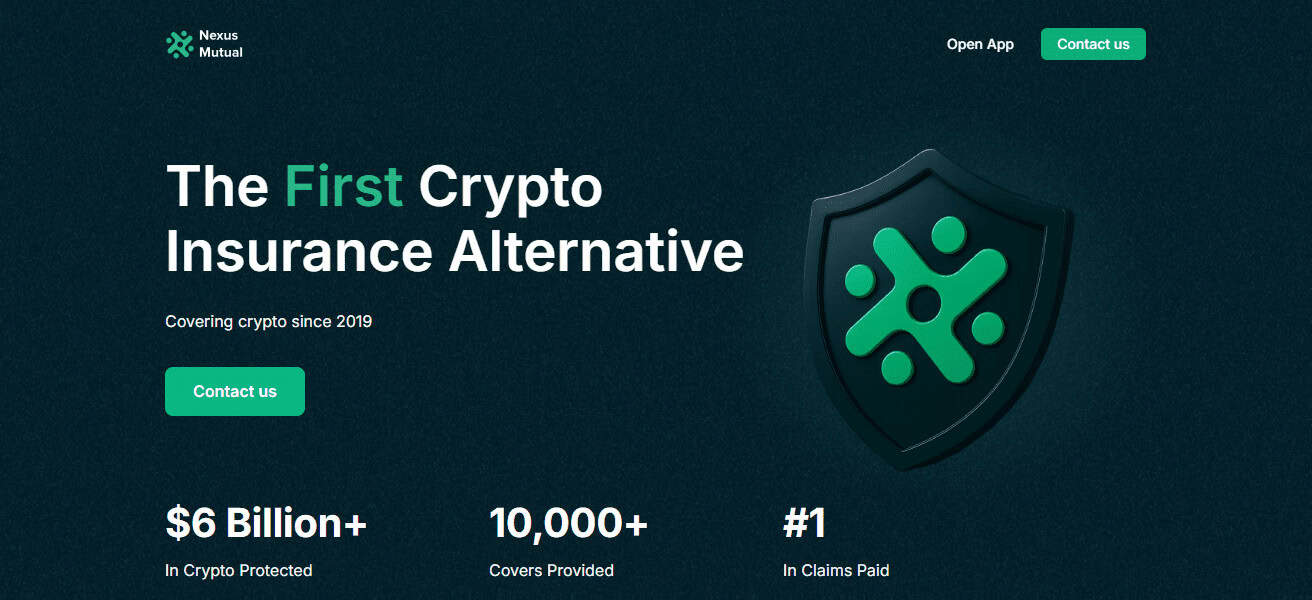
Nexus Mutual is easily one of the most popular ways to buy insurance in the crypto space and for good reason. Utilizing blockchain technology increases clarity.
| Pros | Cons |
|---|---|
| Strong community-driven governance model | Requires KYC for full participation |
| Proven track record in DeFi coverage | Coverage options still limited |
| Transparent on-chain claims process | Premiums can be relatively high |
2. Etherisc
Etherisc is a framework for building blockchain based insurance and covers everything from flight delay insurance to parametric crop insurance.
Etherisc uses smart contracts to automatically process claims, which eliminates delays that are common with manual processing.

Etherisc has developed a low-cost and transparent solution for users that is easily adaptable and customizable.
Developers can create insurance-based dApps in a variety of different industries and markets. Etherisc is growing quickly and getting a lot of use.
| Pros | Cons |
|---|---|
| Supports real-world insurance use cases | Adoption still developing globally |
| Smart contract automated claims system | Complex setup for beginners |
| Strong oracle integration capabilities | Limited liquidity in some pools |
3. Bridge Mutual
Operating in the crypto insurance space, Bridge Mutual provides a decentralized peer-to-peer insurance system. Users provide liquidity to insurance pools, underwrite risk, and are rewarded.
Bridge Mutual promotes transparency in the claims and governance processes. Improvements in recent months have introduced better incentives for staking and covered more DeFi protocols.
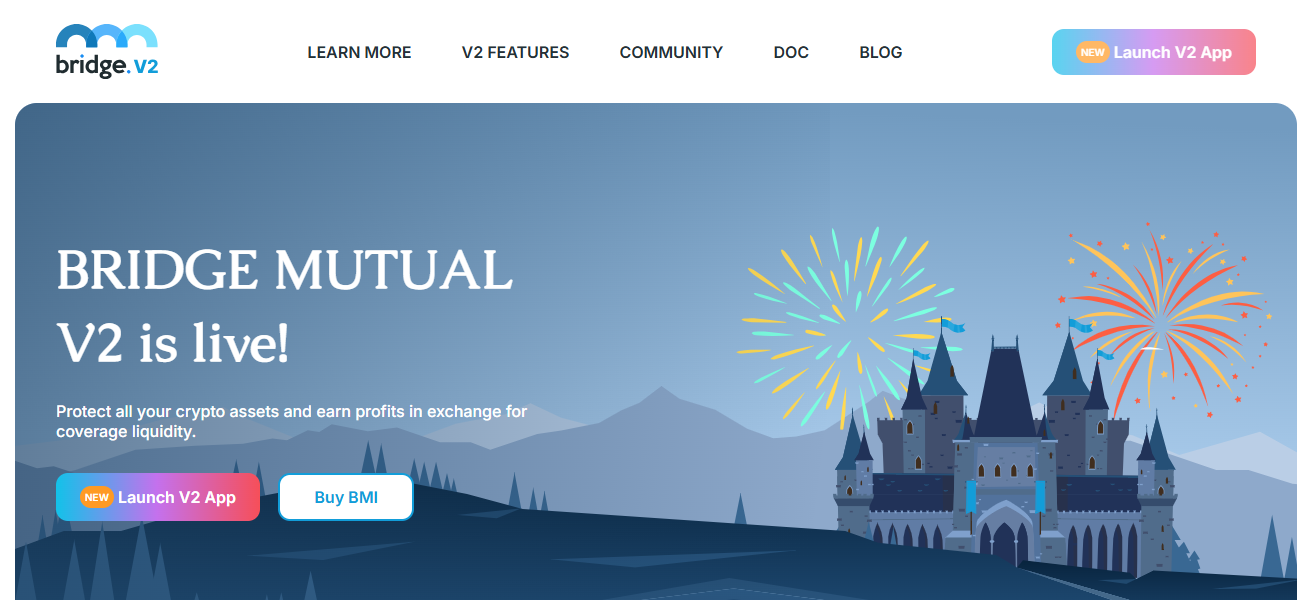
Bridge Mutual is an evolving, scalable, community-based, and proactive insurance solution across globally digital assets.
| Pros | Cons |
|---|---|
| Peer-to-peer underwriting model | Risk assessment depends on users |
| Attractive staking rewards system | Smaller ecosystem than competitors |
| Wide DeFi protocol coverage | Occasional liquidity fluctuations |
4. InsurAce
To serve DeFi users on all blockchains, InsurAce has emerged as a multi-chain, decentralized insurance solution.
InsurAce insurance can be structured to cover several different assets within a single policy. Capital efficient, and cross-chain ready, InsurAce is rapidly innovating to improve risk assessment and automate claims to speed things up.

A reliable insurance solution, InsurAce is committed to covering as many DeFi applications as possible and critical to improving the overall ecosystem.
| Pros | Cons |
|---|---|
| Multi-chain insurance coverage support | Interface can feel complex |
| Portfolio-based insurance efficiency | Limited awareness outside crypto users |
| Fast automated claim processing | Depends heavily on DeFi activity |
5. Unslashed Finance
Unslashed Finance provides assurance to crypto users by pooling decentralized insurance capital. Cover is based on the liquidity of the participants, and Unslashed promotes a flexible underwriting model with a transparent governance framework.
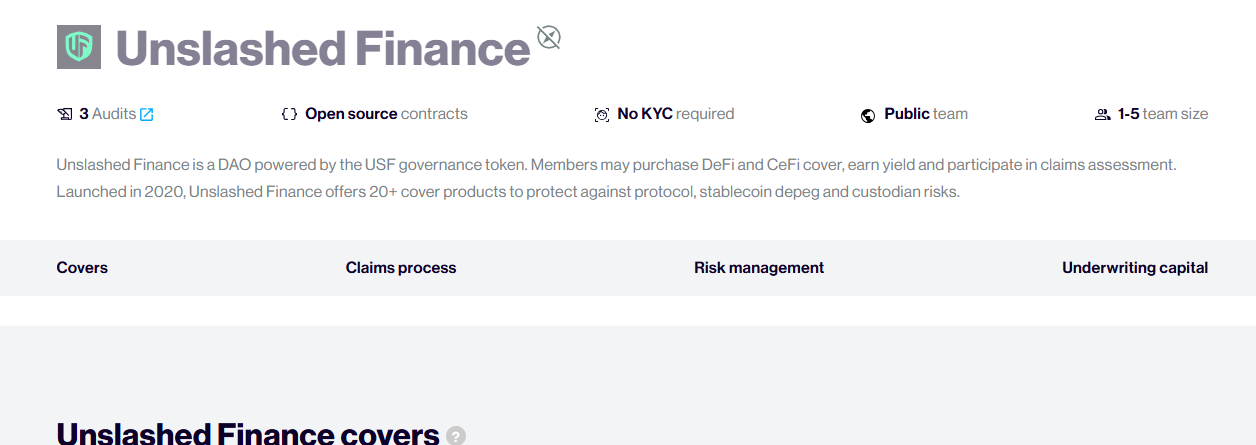
Recent innovations have focused on integrating DeFi and improving yield strategies. Unslashed Finance is a community-based insurance solution for crypto users.
The focus on sustainability and integration is a trusted solution across the rapidly evolving blockchain.
| Pros | Cons |
|---|---|
| Diversified risk pooling mechanism | Smaller market penetration |
| Institutional and retail support | Limited product variety |
| Strong transparency in governance | Returns vary with market conditions |
6. Ensuro
Ensuro is a protocol designed for capital efficiency in insurance that is built on blockchain technology.
Smart contracts are used to facilitate automated risk pooling, and participants provide the underwriting capital and earn interest from the insurance premiums.
This protocol strives to improve the accuracy of risk pricing through the combination of actuarial models and decentralized data.
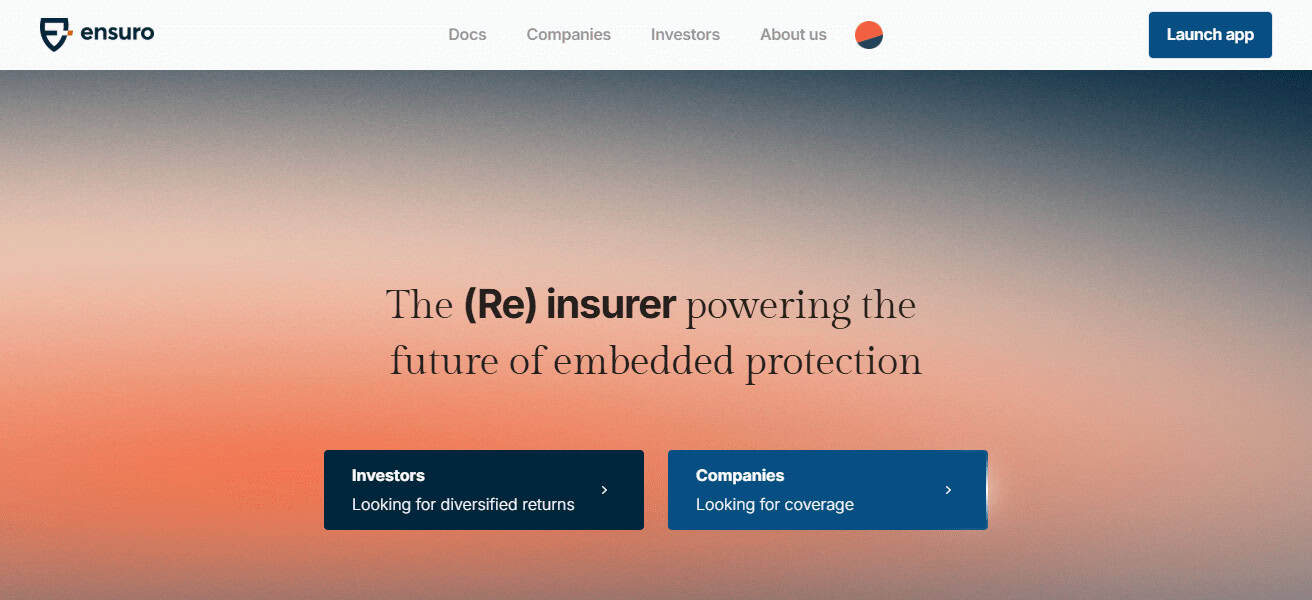
Recent innovations and developments have concentrated on enhancing the existing integrations of real-world insurance and scalability.
Ensuro strives to be the leading infrastructural provider for parametric insurance on Web3 with an emphasis on the adoption of institutional clients.
| Pros | Cons |
|---|---|
| Efficient capital utilization model | Early-stage ecosystem development |
| Real-world insurance integration potential | Limited DeFi adoption so far |
| Automated actuarial risk pricing | Complex financial structure |
7. Bridge Protocol
Bridge Protocol is a decentralized insurance layer designed to safeguard participants in staking and DeFi from smart contract risk. It offers automated acceptance of claims and offers pooled coverage.
The protocol implements a blockchain governance model to facilitate an open and transparent assessment of the risk and to provide a governance model that is community-focused.
Improvement of the incentives for staking-based insurance and improved interoperability among the insurance pools are some of the recent advancements.
Bridge Protocol continues to provide a foundational coverage layer in the protection of decentralized finance.
| Pros | Cons |
|---|---|
| Strong staking risk protection layer | Limited independent adoption data |
| Community-based governance system | Narrow focus on DeFi staking |
| Cross-chain expansion capability | Smaller liquidity pools |
8. Tidal Finance
Tidal Finance is a risk pooling marketplace for decentralized finance that enables the creation and management of insurance pools that span a number of DeFi protocols.

It offers flexible risk underwriting and enables liquidity providers to select their risk exposure. This protocol improves utilization of capital through coverage pools and pricing that is not static.
Recent innovations have focused on cross chain insurance and governance. Tidal Finance is leading the way in decentralized risk management in finance on a global scale with the flexibility to support multiple blockchain ecosystems.
| Pros | Cons |
|---|---|
| Customizable insurance pool creation | Requires technical understanding |
| Flexible underwriting options | Competition from larger protocols |
| Cross-chain support expansion | Market is still highly volatile |
9. Armor Protocol
Armor Protocol automates smart contract insurance by aggregating various insurance platforms. To enhance customer experience, Armor Protocol builds a unifying insurance layer.
It automates the payment of insurance premiums and the process of submitting claims using smart contracts.
Other notable improvements involve advanced underwriting algorithms and the inclusion of even more DeFi protocols.
Armor Protocol is committed to fortifying decentralized security infrastructure. It provides users with coverage that evolves as the threats in the DeFi ecosystem evolve.
| Pros | Cons |
|---|---|
| Aggregates multiple insurance providers | Dependent on partner protocols |
| Automated coverage system | Limited standalone insurance products |
| Easy user experience interface | Past restructuring affected trust |
10. Cover Protocol
Cover Protocol constructs a decentralized insurance marketplace by utilizing the earliest DeFi protection models.
DeFi users can buy, sell, or even create their own insurance to cover protection against smart contract risks. Cover Protocol uses community governance to assess risks and validate claims.
Cover Protocol focuses on improving cross-chain operability and liquidity. Cover Protocol is a customizable insurance layer for decentralized finance users.
| Pros | Cons |
|---|---|
| Flexible decentralized coverage creation | Earlier versions faced stability issues |
| Community-driven pricing model | Liquidity availability can vary |
| Supports multiple DeFi risks | Ecosystem less active than competitors |
How We Choose the Best Tokenized Insurance Risk Pools
- Assess the depth of decentralization and transparency in governance.
- Evaluate the history of audits and the security of smart contracts.
- Analyze the reliability and speed of claim payouts.
- Review the liquidity of insurance risk pools.
- Examine support across multiple chains and ecosystems.
- Evaluate the adoption in the real world and the user base.
- Compare the utility of the tokens and the staking rewards.
- Consider the integration of oracles and risk data.
- Consider capital and underwriting.
- Track the innovation and the potential long-term sustainability.
Conclusion
In conclusion, the Best Tokenized Insurance Risk Pools Offering Alternative Decentralized Payouts provide a paradigm shift for blockchain-based risk management solutions.
These platforms offer DeFi users comprehensive insurance protection that is transparent, automated, and community-based.
Advanced security for smart contracts, cross-chain interoperability, and rapid claims settlement minimize the need for conventional insurance.
As more users and developers adopt these risk management protocols, they will continue to positively impact the security and safety of DeFi globally.
FAQ
How do decentralized insurance payouts work?
Smart contracts automatically process claims and distribute funds without intermediaries.
Are these insurance pools safe to use?
Safety depends on audits, governance, and smart contract security strength.
What is the main benefit of DeFi insurance pools?
They offer transparent, fast, and community-driven risk coverage systems.
Do users earn money from insurance pools?
Yes, liquidity providers often earn rewards and staking incentives.
Which risks do these platforms usually cover?
They mainly cover smart contract failures, hacks, and DeFi protocol risks.